

15 Best Star Trek Characters Of All Time, Ranked
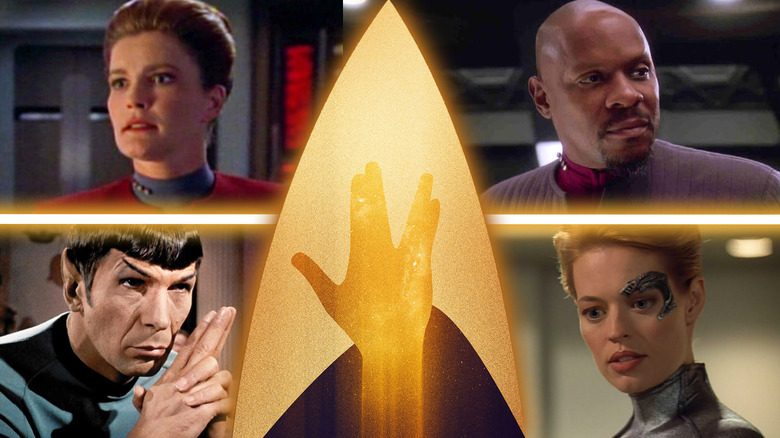
Six decades since its debut, and "Star Trek" remains the greatest sci-fi franchise of all time, but it doesn't earn that distinction without memorable characters. Each television series and movie has its own cohesive ensemble of fan-favorite figures working on behalf of Starfleet. That said, as with any long-running property, there are just some characters that consistently rise above the rest. These characters have not only come to represent the franchise but are given fascinating individual arcs in contrast to their counterparts.
With all of this in mind, we're highlighting the greatest figures from across the franchise's history, each bringing something vital and unique to the expansive and enduring property. While not everyone's favorite can make the list, we've narrowed it down to who we feel are the clear standouts.
Keeping us coming back to the iconic sci-fi franchise, here are the 15 best "Star Trek" characters of all time, ranked.
15. Jonathan Archer
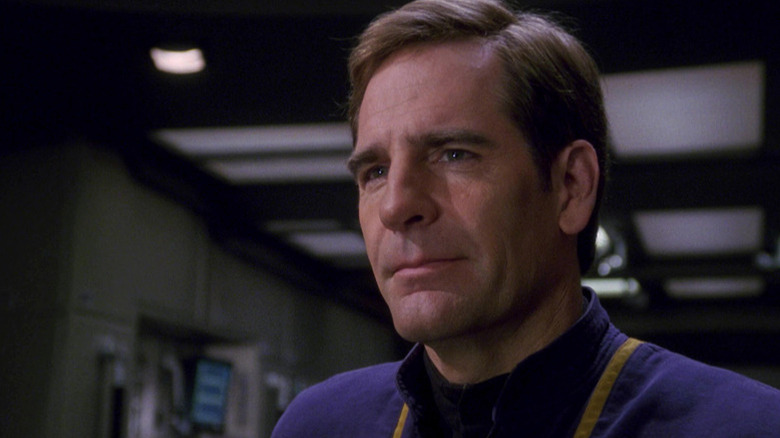
Roughly a century before the events of "Star Trek: The Original Series," the first starship Enterprise, the Enterprise NX-01, cruised the cosmos in "Star Trek: Enterprise." This starship was captained by Jonathan Archer (Scott Bakula), who often employed then-new technology as he explored the galaxy. As the prequel series progressed, Archer became a wartime leader after Earth was attacked by an alien alliance known as the Xindi. By the end of the show, Archer becomes a crucial figure in the founding of the United Federation of Planets, a fixture throughout the franchise.
Archer makes this list because of the sheer historical impact his character's exploits leave on the franchise. A prolific trailblazer for his time, Archer makes first contact with numerous civilizations, most notably the Andorians, and he's key in saving Earth from the Xindi. Bakula brings a wry sense of humor to his role but is still ready to leap into action, especially in the later seasons. Scott Bakula has since proposed his own "Enterprise" spin-off, and hopefully, it'll come to pass, giving him a send-off far better than his show's notorious series finale.
14. Miles O'Brien
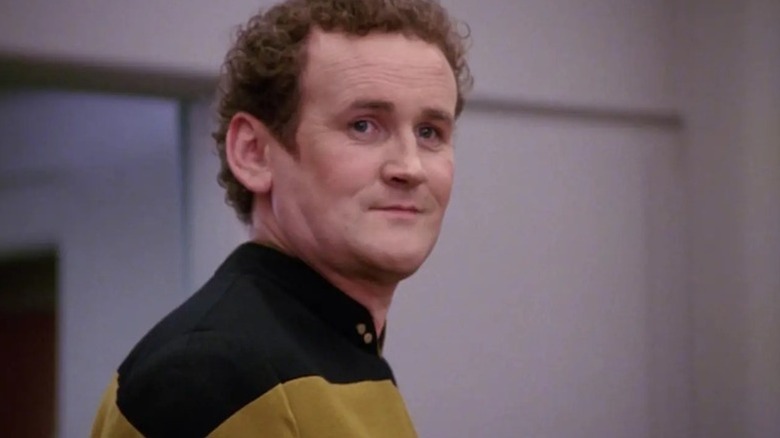
Debuting as the transporter chief on the Enterprise-D in "The Next Generation," Miles O'Brien (Colm Meaney) plays a much larger "Star Trek" role. Over the course of "TNG," O'Brien becomes a more prominent fixture on the Enterprise, going on to marry Keiko Ishikawa (Rosalind Chao). At the start of "Star Trek: Deep Space Nine," O'Brien becomes the chief of operations of the space station, relocating with Keiko and their growing family. O'Brien later becomes the chief engineer of the USS Defiant, playing a major part in helping Starfleet emerge triumphant from the galaxy-spanning Dominion War.
"Lower Decks" made Miles O'Brien the most important man in "Star Trek" history, and the animated series definitely has some merit in that argument. O'Brien essentially represents the everyman in the midst of all the spacefaring spectacle within "Star Trek," with a clear professional and personal arc. At the same time, O'Brien reminds audiences the importance of the everyman archetype, that even the most unassuming figure can be completely competent and crucial in their own way. Bringing a working-man appeal to the franchise, O'Brien is no less game-changing without the flashier nature of other main characters.
13. Christopher Pike
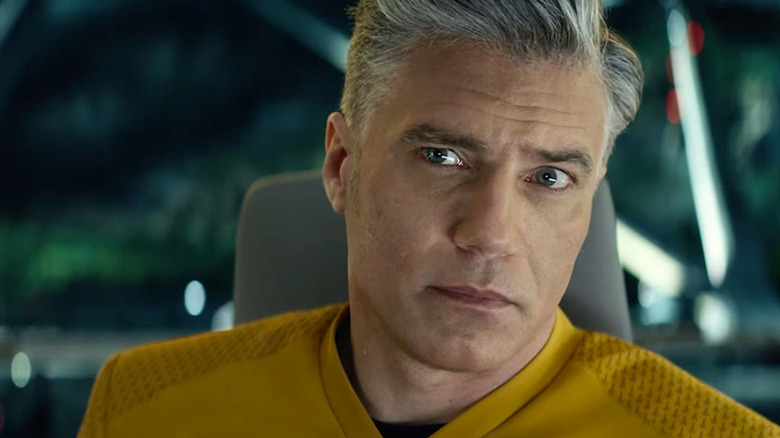
The original captain of the Enterprise wasn't Jim Kirk but Christopher Pike, played by Jeffrey Hunter in the show's first pilot episode "The Cage." Since then, there's been multiple versions of Captain Christopher Pike, though he is generally accepted as the Enterprise's captain before Kirk in different continuities. In the Kelvin Timeline, Pike (Bruce Greenwood) serves as a mentor to a younger Kirk (Chris Pine) before being killed. In "Strange New Worlds," Pike (Anson Mount, above) operates as a tragic figure aware of his complicated future but continuing to make a difference with the time he has left.
With all due respect to Jeffrey Hunter and Sean Kenney, it's really Bruce Greenwood and Anson Mount's interpretations of Chris Pike that have made him such a memorable character. What's more incredible is that the two actors provide noticeably different portrayals of the ill-fated captain, one as a surrogate father to Kirk and the other as a compassionate leader. Mount's Pike leaves a deeper mark on the character, the benefit of multiple seasons of television including "Star Trek: Discovery" Season 2. A footnote in "Star Trek" history that grew into a deeply nuanced figure, Christopher Pike is the melancholic alternative to most leads in the franchise.
12. Q
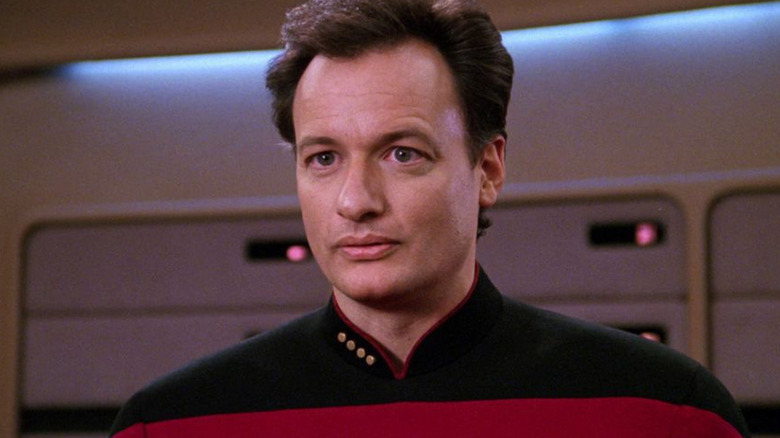
Omnipotent characters can be tricky to make interesting rather than detached and clinical, but Q (John de Lancie) stands as a clear exception. The very first antagonist in "Star Trek: The Next Generation," Q decides the Enterprise crew will represent humanity to decide if the species is worthy of existence. Over the course of the franchise, Q becomes something of a frenemy for the Starfleet characters he encounters, especially Jean-Luc Picard (Patrick Stewart). This culminates in Q helping Picard overcome his childhood trauma in "Star Trek: Picard" Season 2, albeit in his own time-bending way.
Q is the most powerful "Star Trek" character, yet de Lancie brings such a mischievous and smug humanity to his role. De Lancie brings everything from a playfulness, a hostile arrogance, and occasionally, a need for help through the character's surprisingly robust history with the franchise. The best Q moments throughout the franchise have some blend of these tonalities and nuances, while his reality-shaping powers offer interesting storytelling possibilities. The ultimate cosmic trickster, Q is an ally and adversary all at once, playing by his own rules, just as we like him.
11. Nyota Uhura
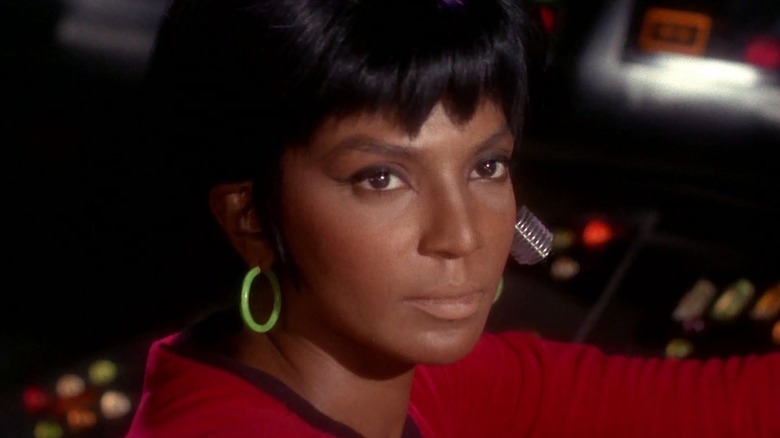
The communications officer on Kirk's Enterprise, Nyota Uhura is a staple on "The Original Series" and its subsequent six movies, with Nichelle Nichols originating the role. Zoe Saldaña plays the character in the Kelvin Timeline, while Cecilia Rose Gooding portrays a younger Uhura in "Strange New Worlds." An expert in Starfleet's communications technology, Uhura can also masterfully decipher alien languages and signals. This impressive aptitude is something that's really underscored by Gooding's portrayal of the character whenever she is placed in the spotlight.
Just like George Takei's Hikaru Sulu, Nichols' Uhura underscores how groundbreakingly diverse "The Original Series" was for its time in its realization of creator Gene Roddenberry's vision. Roddenberry deliberately hid Uhura's casting from Paramount to subvert industry-entrenched racism as a reminder how important her character is to television history. But beyond the revolutionary nature of her casting, Uhura is another sterling example of unwavering professionalism and expertise that "Star Trek" is known for. At this point, it's impossible to imagine the "TOS" era crew without Uhura, more so than many of the other supporting characters as a testament to her presence.
10. Data
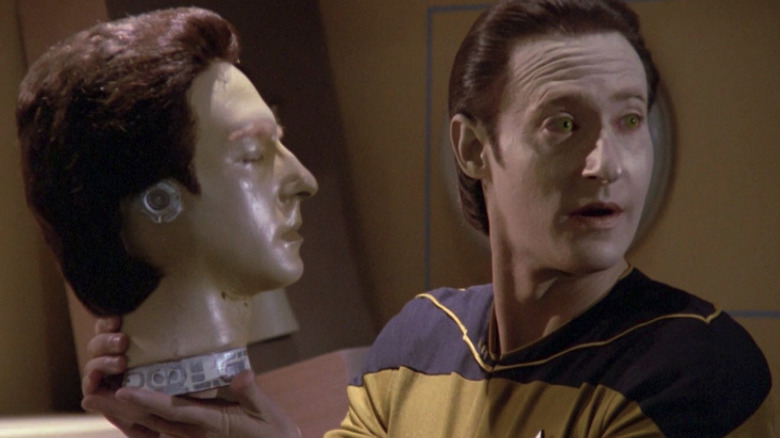
"Star Trek" really thrives with a prominent detachedly clinical character somewhere in a given series or movie's ensemble cast. For "The Next Generation," that role is expertly accomplished by Data (Brent Spiner), the Enterprise-D's chief operations officer. A sentient android, Data spends much of his free time trying to better understand the humanity he aspires to join himself. This arc is mirrored by Data's evil identical brother Lore, also played by Spiner, who embraces the more malicious and baser possibilities of his synthetic nature.
Some of the most essential "Star Trek: The Next Generation" episodes feature Data as their narrative center. Because of Data's synthetic makeup, his character is a natural fit for a lot of the franchise's ethical and philosophical themes surrounding existence, sentience, and humanity. More than just fulfilling the logical archetype originated in the franchise by Spock, Data is a steadying presence in "TNG" stories, helping the series distinguish itself from its predecessor. A fascinating figure that still feels relatively underutilized after "TNG," Data is easily Brent Spiner's best "Star Trek" character.
9. Leonard McCoy
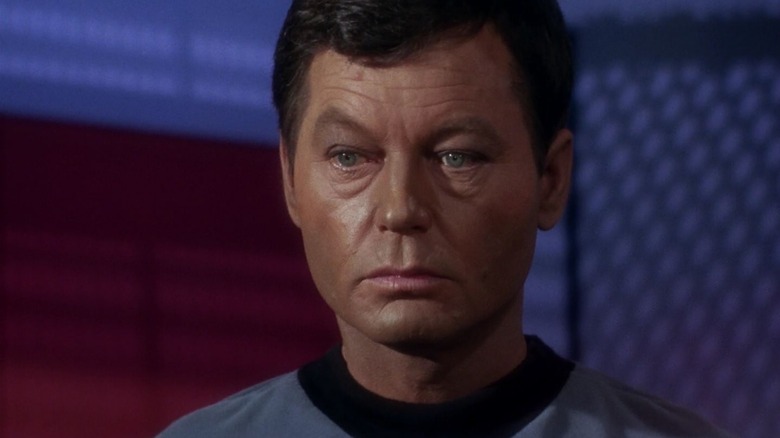
Though he doesn't get as much credit as he deserves, Leonard McCoy is an integral part of the core trifecta in "The Original Series" and its accompanying movies. Nicknamed Bones throughout "Star Trek," McCoy is the chief medical officer on the Enterprise, initially played by DeForest Kelley and played by Karl Urban in the Kelvin Timeline. A venerable country doctor, McCoy brings an old-school approach to medicine, though is a clear expert in his field. McCoy is also something of the starship's resident curmudgeon, routinely butting heads with Spock, frustrated by his emotionally foreclosed demeanor.
If Spock offers Kirk a perspective rooted in analytical restraint, McCoy brings fiery emotion and uncompromised medical compassion to the Enterprise. Though the character's frequent jabs about Spock's mixed heritage quickly get tiresome, it's clear that the two are close friends in their quieter moments. That triumvirate dynamic extends and grows in the movies, though it is, unfortunately, something that the Kelvin Timeline never quite fully recaptured. With Thomas Jane joining "Strange New Worlds" as McCoy, it'll be interesting to see how the Paramount+ series puts its own spin on the character.
8. Kathryn Janeway
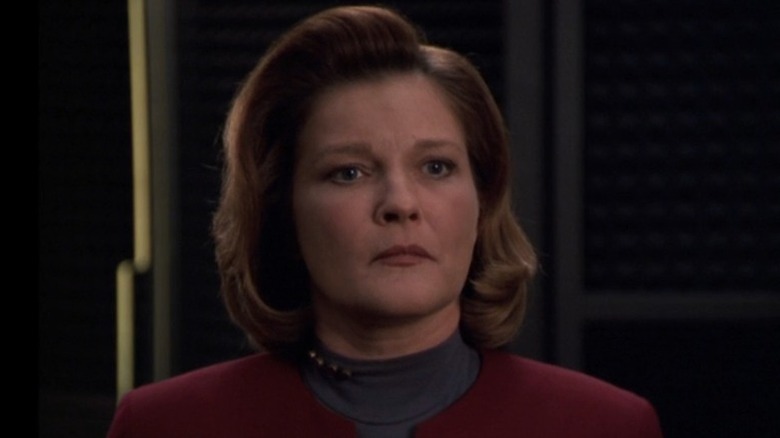
The entire premise around "Star Trek: Voyager" brought a survivalist element to its deep-space exploration, with its titular starship separated from Starfleet support on the other side of the galaxy. Leading the displaced starship is Captain Kathryn Janeway (Kate Mulgrew), who sought to bring back her crew safely to Federation space from decidedly hostile territory. This meant that Janeway often clashed with the franchise's ideals in order for the ensemble to survive. In order to proceed home as quickly as possible, Janeway was a deal-maker and rule-breaker always towards the greater good.
The lengths Janeway endured for the benefit and care of her crew are best exemplified in the "Star Trek: Voyager" series finale. The two-parter had a time-traveling older Janeway sacrifice herself to get her friends home faster, with several avoiding a tragic fate in the process. But this level of self-sacrifice and high-intensity decision-making was already a recurrent part of Janeway's character, something that she usually handled with grace and poise. In the pantheon of "Star Trek" captains, Janeway made the best she could with a raw deal, a leader constantly under pressure but ultimately successful in her mission.
7. Dukat
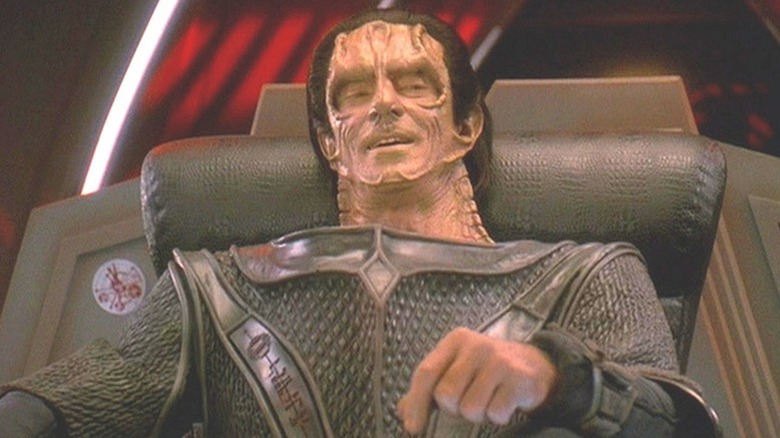
With its conflict-driven overarching storyline "Deep Space Nine" featured some of the best "Star Trek" villains of all time. This includes the Cardassian commander Dukat (Marc Alaimo), who maintains a recurring antagonistic presence on the show. As the figure who oversaw much of the brutal Cardassian occupation of Bajor, Dukat has a notorious history before "DS9" even starts, with his cruel reputation preceding him. Though he flirts with nobler inclinations on occasion, Dukat becomes a full-on villain when the Cardassian Union joins the Dominion to battle the Federation roughly halfway through the series.
Of all the villains that appear throughout "Star Trek" history, few go on a fuller character arc than Dukat. He goes from sneeringly smug ghost of DS9's past to wartime opposition to even a religious zealot by the end of the show. Alaimo handles these changes well, making the wildest divergences in Dukat's journey all the more understandable in his wider arc. A deliciously wicked recurring villain that adversarially personifies the wartime stakes in "DS9," Dukat is a foe that we love to root against.
6. Benjamin Sisko
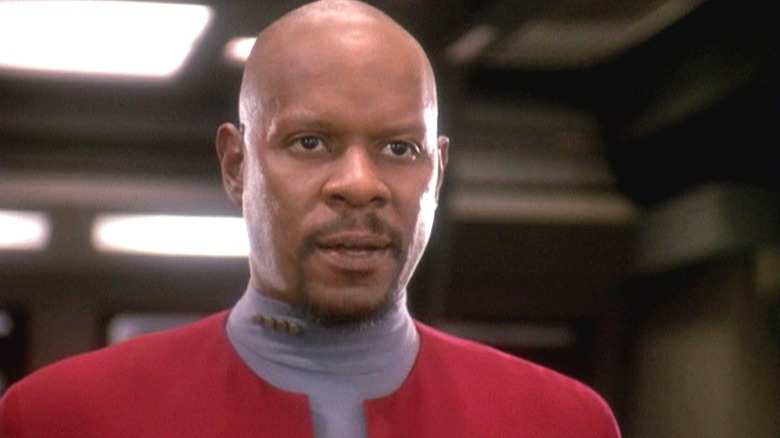
The counterpoint to Dukat throughout "Deep Space Nine" is Benjamin Sisko (Avery Brooks), the space station's Starfleet commander. Audiences are introduced to Sisko on the worst day of his life, as he loses his wife to a Borg attack during the events of "TNG." That unresolved grief initially informs Sisko's early depictions without compromising his sense of duty and leadership qualities. Halfway through the series, Sisko becomes a battlefield commander during the tense Dominion War storyline, a role that visibly takes a toll on his psyche and soul.
These elements separate Sisko from other "Star Trek" captains, as the series lead whose personal suffering is a prominent hallmark of the character. Sisko is a character who is introduced mired in turmoil and deep grief and who is haunted by the moral cost of winning a war. But through it all, Sisko preserveres, getting the job done no matter the personal price exacted on him. The most underrated captain of the franchise's classic era, Benjamin Sisko deserves all his flowers, especially given what he endures.
5. Worf
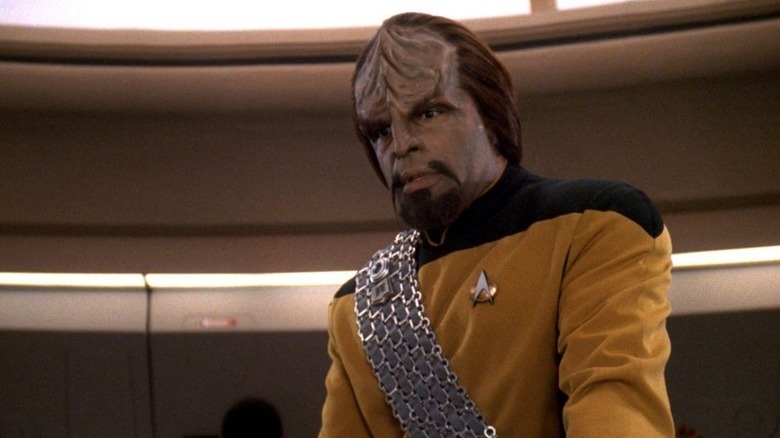
Another senior officer on the Enterprise-D in "The Next Generation" that deserves a well-earned shoutout is Worf. Played by Michael Dorn, Worf is the first unequivocally heroic Klingon character in the franchise, signaling how much Starfleet had grown since the "TOS" era. Initially serving as the Enterprise-D's tactical officer, Worf becomes the starship's chief security officer before being transferred to Deep Space Nine. By the events of "Picard," Worf has become a more meditative warrior, at peace with his life and a valuable ally in the renewed conflict against the Borg and Changelings.
Worf is arguably the "TNG" character whose personal life is explored the most prominently throughout the course of the series, including his complicated relationship with the Klingon Empire. This continues into "DS9," with Worf's estranged dynamic with his son and his tragic romance with Jadzia Dax (Terry Farrell) coming into focus. Dorn deftly handles his character's evolution while clearly articulating the code of honor that defined the Klingons in the "TNG" era. The most outwardly conflicted figure on Picard's Enterprise, Worf maintains his duty and often pays dearly for his commitment.
4. Seven of Nine
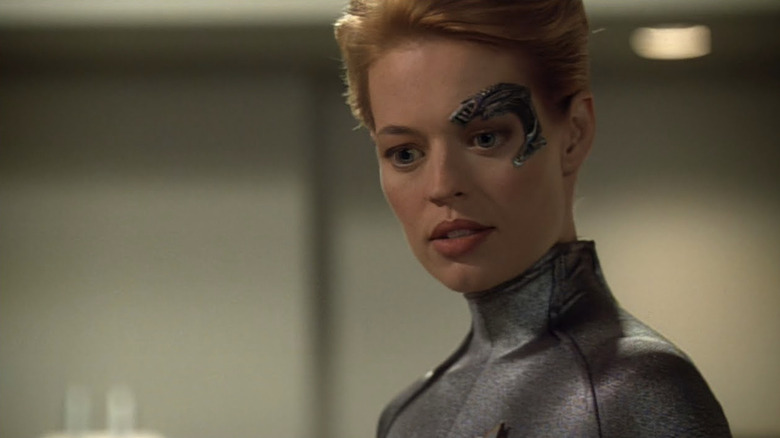
Though she didn't make her debut until halfway through the show, the face of "Voyager" is Seven of Nine. Played by Jeri Ryan, the character is a human, born Annika Hansen, who was assimilated into the Borg Collective as a child. Liberated as an adult to assist the USS Voyager during their temporary truce with the Borg against a mutual enemy, Seven becomes a fixture on the crew. While assisting the starship with its long journey home, Seven begins to regain her own sense of humanity, something continued on in "Picard."
Though "Voyager" admittedly made several big mistakes with Seven of Nine, the character endured and earned her fans despite them. A lot of that comes down to Ryan's performance, humanizing her role at a deliberate pace for over 100 episodes. When Seven resurfaces in "Picard," that inner pain is still apparent, initially isolating her from her Starfleet compatriots. It's that reappearance that vaults Seven's ranking here, especially placing her in a well-earned leadership role in "Picard" Season 3 signaling how far the character had come and grown.
3. James T. Kirk
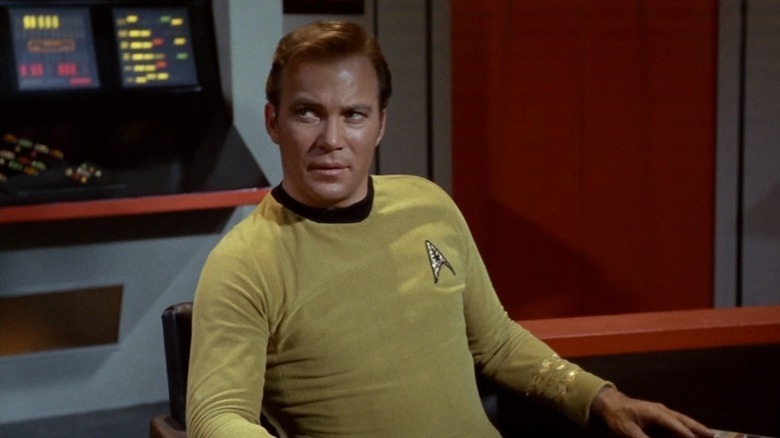
As wild as it sounds, James Tiberius Kirk has an incredibly underrated character arc in "Star Trek," in no small part because of early continuity errors and short-changed writing. Even before captaining the Enterprise, William Shatner's iteration barely survived a planetary genocide, tangeld with a vampiric cloud, and an impetuously genius Starfleet Academy cadet. After being promoted to command the Enterprise, Kirk is quick to action but often with the wisdom to know how to intervene. The best Kirk-centric "Star Trek" episodes feature a mix of his quick-thinking and action-readiness while occasionally offering elements of his personal backstory.
One of the problems with the Kelvin Timeline movies, is it overly emphasizes Kirk as a reckless figure, which isn't necessarily Chris Pine's fault, but how the character is written. Paul Wesley's Kirk performance touches on a bit of the devil may care attitude but with considerably more restraint and decorum. At his core, Kirk is a man of action that sometimes bends and breaks the rules, but he does so in an intelligently deliberate way. Those qualities still distinguish him from many other "Star Trek" lead characters while his background remains ripe for further narrative exploration.
2. Jean-Luc Picard
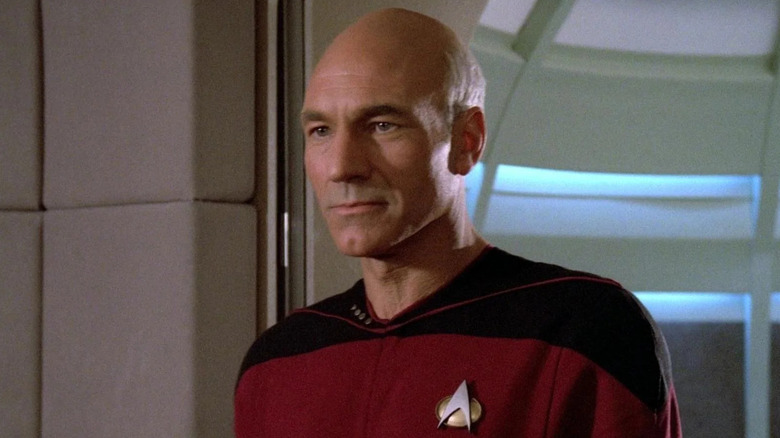
With seven seasons of "The Next Generation," four subsequent movies, and being the focal point of "Picard," Jean-Luc Picard is one of the most richly developed characters in the franchise. Initially a stern and unfailingly principled figure commanding the Enterprise-D, Picard (Patrick Stewart) gradually opens up as "TNG" progresses, with his personal life explored. This especially comes into focus after Picard is assimilated into the Borg Collective and rescued, emphasizing his trauma and vulnerabilities moving forward. Despite this harrowing ordeal, Picard remains a steadfast presence, embodying Starfleet's principles, even if the Starfleet Command strays from them.
That unfailing grace under fire is what makes Jean-Luc Picard such an enduring character for the franchise. Whereas many other main characters falter at times, Picard illustrates Starfleet ideals and their inherent price without wavering from his own sense of duty and responsibility. This isn't to say that Picard isn't without his own character flaws, but the best Jean-Luc Picard episodes highlight his qualities as a clear moral compass for the series. A firm guiding presence for the entire franchise, Jean-Luc Picard personifies the intelligent and measured storytelling that "Star Trek" is known for.
1. Spock
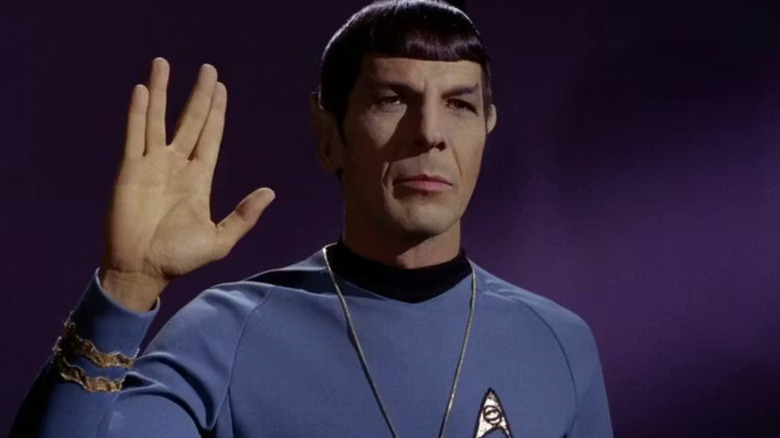
The breakout character of "The Original Series" and staple in the franchise for decades onward, Leonard Nimoy's Spock is as iconic as televised science fiction gets. The Enterprise's first officer, Spock is quietly at odds with mixed heritage, specifically his coldly logical Vulcan side with his repressed human emotions. This internal juxtaposition is something explored in Zachary Quinto's portrayal in the Kelvin Timeline movies, but it's especially present in Ethan Peck's depiction of Spock in various Paramount+ shows. Despite this, Spock is unflappably effective at his job, arguably at his best when he was a little less human but with the specter of those unrealized emotions in sight.
More than any other "Star Trek" character, Spock still serves as the face for the franchise across its 60-year history. This comes down to Nimoy's timelessly entertaining performance, bringing a distinctly otherworldly nature to his role but with a touch of repressed empathy. Quinto and Peck both do interesting things with their separate interpretations of the character but Nimoy still reigns as the best live-action Spock, capturing those subtle qualities. A fixture in the franchise for a reason, Spock brings the underlying appeal of "Star Trek" to the surface