

10 Most Confusing Movies And TV Shows Of 2025, According To Google
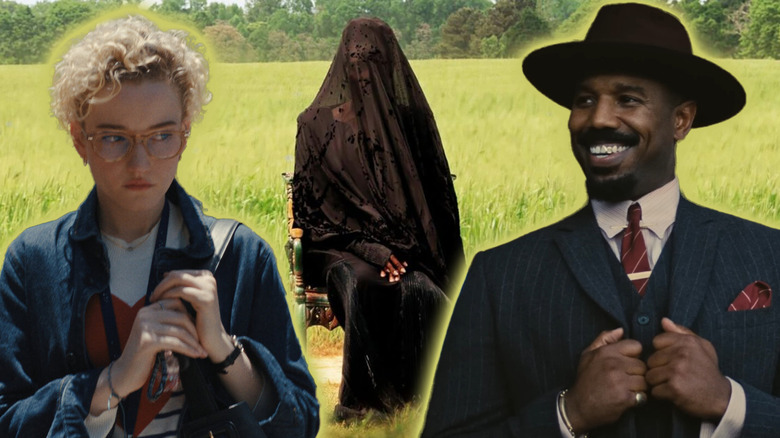
We may receive a commission on purchases made from links.
Thanks to the tech overlords at Google, /Film has been able to review some of the data that the search giant compiled for the annual Year in Search presentation, in which they take users on a look back through what they've been looking up for the past 365 days (funnily enough, it wasn't all about Labubus).
There weren't many surprises when it came to the world of entertainment — high-profile roles in "The Last of Us," "Eddington," "Materialists," and Marvel Studios' "The Fantastic Four: First Steps" somewhat predictably made Pedro Pascal the most-Googled actor in America, for example. What did jump out at us, however, was data they shared about the films and television series that were Googled the most with the word "explained."
Presumably, these were the 10 movies and shows that audiences needed the most help to understand — and, taking a look at them ourselves, we can see why. Google users seemingly sought out the analysis of critics and content creators alike to wrap their heads around several baffling twist endings, complex characters, and symbolically-heavy stories. While we've done our best to avoid explicitly spoiling any of the projects discussed below, be advised that you may want to skip over any films or series you plan on watching in the near future.
Wayward
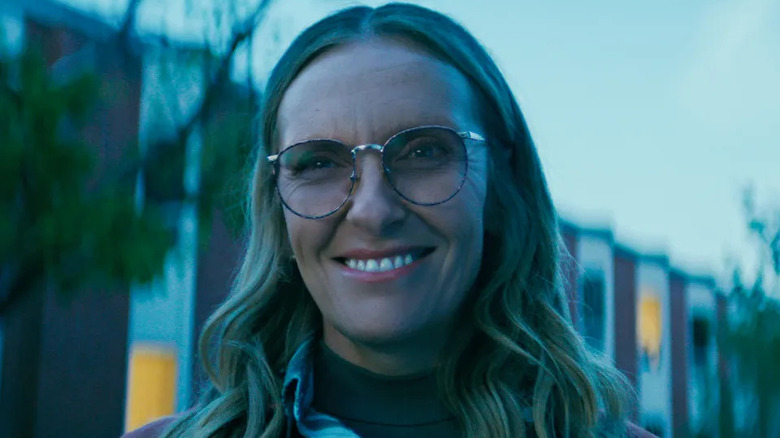
We'll give credit where it's due — there's absolutely nothing confusing about Netflix ordering a psychological thriller centered around Toni Collette. The "Hereditary" star takes a villainous turn in this mystery series created by Mae Martin, playing the enigmatic and influential head teacher of a secluded school that promises to turn troubled teens into productive members of society. As it becomes apparent that there must be more to this school than those outside its reach realize, lone cop Alex Dempsey (Martin) embarks on a dangerous investigation that threatens to upend a small town, his new family, and the past he can't escape.
Though arguably burdened by admirable thematic ambitions too unwieldy for what its pulpy teen drama tone was able to execute, "Wayward" did pose interesting questions about the relationship between childhood trauma and development. Given the lack of satisfying answers, it's likely audiences felt the need to dig deeper into thematic explainers — as well as theories and symbolism — to process the feelings the series stirred but couldn't carry.
Most of all, however, they were probably looking for clarification or confirmation about how the series finale is meant to be interpreted in the context of its last twist. Alex was the series' most dynamic character by far, and his fate — at least momentarily clouded by a fantastical stylistic choice that will have many viewers questioning what's real and what isn't — stands out as a shocking and appropriately somber way to bring "Wayward" to a close.
We Were Liars
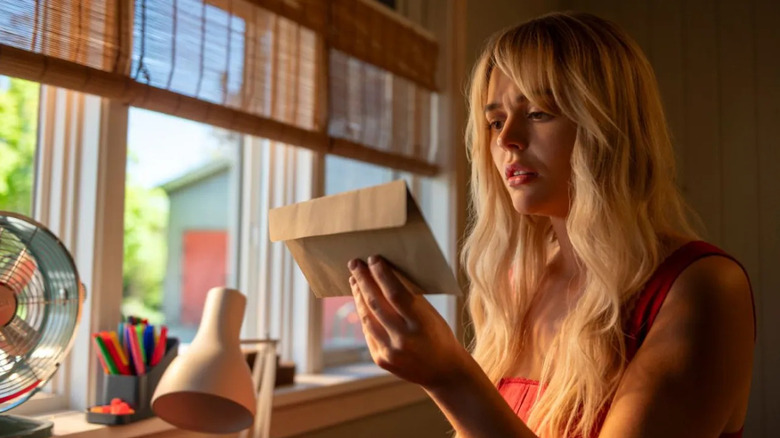
Based on the 2014 E. Lockhart novel of the same name, "We Were Liars" debuted on Amazon Prime Video in June of 2025 with an eight-episode first season. A teen thriller, similar in tone to "Pretty Little Liars" and "Gossip Girl" but with a more secluded and dangerous setting, it follows a young girl named Cadence Sinclair (Emily Alyn Lind) who wakes up injured and with trauma-induced amnesia on the lavish island her wealthy family calls home.
Undoubtedly the most confusing aspect of "We Were Liars" is making sense of its non-linear storytelling. Though it begins in the present day, with Cady trying to unravel the mystery of her accident while coping with isolation from her friends, the meat of the plot takes place in the past, where the four carefree "Liars" experience a summer of passion and personal discoveries relating to their dysfunctional upbringing.
It's difficult to describe much of this show without spoiling it entirely, but suffice it to say that this is one of those shows that uses a shrouded past to build up a late-game twist you'll likely see coming a mile away. Even so, once it is finally revealed to the audience, the circumstances of the revelation — particularly where her friends have been all season — are so incredible that viewers certainly had to confirm it with a Google. There's also plenty of symbolism throughout that they may have found intriguing, ranging from the obvious (the recurring black necklace that causes so much woe) to the more subtle (the show's use of "Wuthering Heights" is probably the most tragic employment of the literary classic in recent memory, aside from the trailer for the upcoming whitewashed film adaptation).
The Hunting Wives
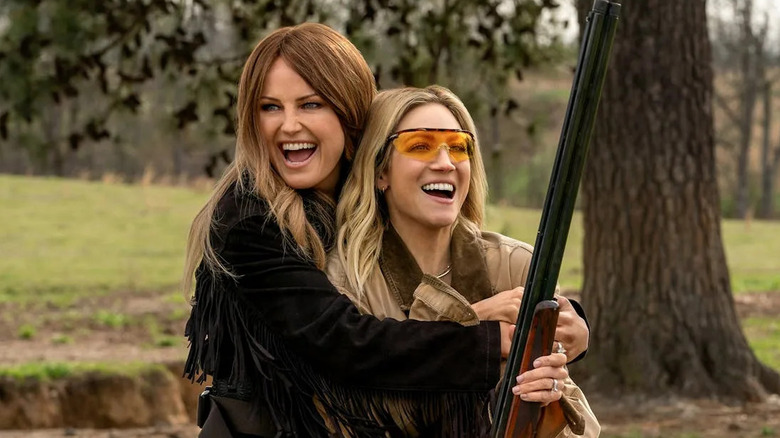
Despite being one of the most-watched new streaming series of 2025, "The Hunting Wives" has flown under the radar in the critical community. Reviews of this gun-country psychosexual thriller (based on May Cobb's 2021 novel of the same name) were broadly supportive, but few in number — on Rotten Tomatoes, it has less than half the reviews of "Wayward," another thriller released on the streamer this year. For Netflix subscribers, however, "The Hunting Wives" was clearly one of the best series released on the platform all year — and also one of the most head-scratching by its finale.
Brittany Snow ("The Night Agent," "Pitch Perfect") and Malin Akerman ("Billions," "Watchmen") star as Sophie O'Neill and Margo Banks respectively, two women who are living seemingly happy, perfect lives who are secretly hiding from the world (and perhaps themselves) in the quietly scandalous social world of a wealthy Texas community. By the end of the series, the only thing that outnumbers the bodies the titular Hunting Wives have shared are the bodies they've had to bury as a result.
Much of the show's intrigue surrounds Margo, the wife of a local politician (Dermot Mulroney) who is obviously dangerous from the first episode (in an otherwise predictably overwrought product, Malin Akerman delivers an unsettling performance worthy of your watch-time). The unraveling of her life is one of several mysteries Sophie needs to contend with before the devastating cliffhanger finale, which is almost certainly what had viewers rushing to their phones most. Then again, explaining the web of corpses that rapidly expands through the latter half of the series is just as difficult, given the simplest act leading up to each death was the murder itself.
Straw
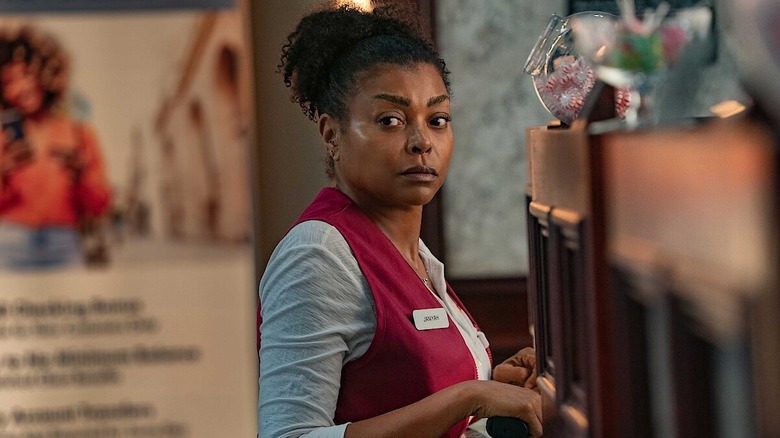
When it comes to some of the twist endings that got certain films or television series a spot on this list, we'll leave it up to the readers to determine which is more frustrating: an obvious, tropey "reveal" you start to expect halfway through a story or an 11th-hour rug-pull with little to no foreshadowing. If the placement of "Straw" in their rankings is any indicator, it seems Google users at large had more trouble accepting the latter of the two.
Written, directed, and produced by prolific filmmaker Tyler Perry and starring his frequent collaborator Taraji P. Henson, "Straw" is a vivid yet narratively uneven cautionary tale about what happens when good, struggling people finally reach their breaking point. Henson's Janiyah Wiltkinson is an impoverished single mother who can't afford to support herself or her chronically ill daughter (Gabby Jackson), despite working a thankless job at a grocery store. Through a series of wild contrivances (offset by cliches so banal you might assume the script were procedurally generated), Henson becomes a murderer and quasi-accidental bank robber, her necessarily extrajudicial attempt to take the small sum of money rightfully owed to her placing her at the center of a hostage situation. (If you'd like to see the best parts of this story stripped of the Hollywood schlock, check out the criminally underrated John Boyega thriller "Breaking.")
Powerful as Henson's performance is throughout the film, not even she can sell Perry's sudden twist at the film's climax, wherein he effectively undermines half the story for a shock that would make even Shyamalan scratch his head. It's the sort of ending that likely had viewers Googling to understand the story's interior logic rather than the urgent issues it was using as dramatic fodder.
House of Dynamite
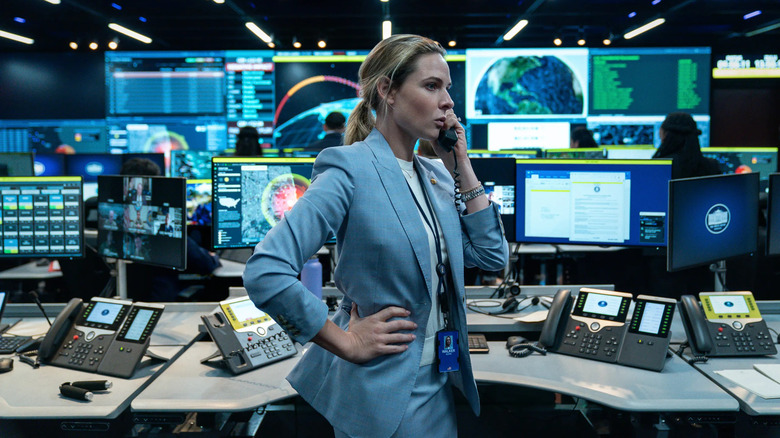
Twist endings weren't the only thing sending moviegoers to their keyboards in confusion. When it comes to the finale of Netflix's "A House of Dynamite" specifically, it may have had something to do with the relatively straightforward – yet all at once infuriating and brilliant — way the film comes to a close.
If the final moments of Christopher Nolan's "Oppenheimer" weren't enough to make the proliferation of nuclear arms terrifying enough, this political thriller from "Zero Dark Thirty" director Kathryn Bigelow will have your heart racing as the credits roll, even if the ending itself doesn't particularly land. Bigelow and screenwriter Noah Oppenheim subvert expectations throughout the film, most obviously in their decision to depict the lead up to a nuclear strike on U.S. soil by repeating the same countdown from three different perspectives within the American government (its structure has been widely compared to that of Akira Kurosawa's "Rashomon"). With dwindling options for diversion or retaliation, the U.S. President (Idris Elba), a senior officer in his Situation Room (Rebecca Ferguson), and the Deputy National Security Adviser (Gabriel Basso) make impossible choices in the face of armageddon to prevent inciting a nuclear world war.
With so much tension expertly built up by the film's relentless pace and disturbingly canny plot, the way "A House of Dynamite" ends is more devastating than it is traditionally satisfying. It's one of the many reasons its streaming destination is unfortunate, as its climax benefits from the focus of a communal theatrical experience.
Sirens
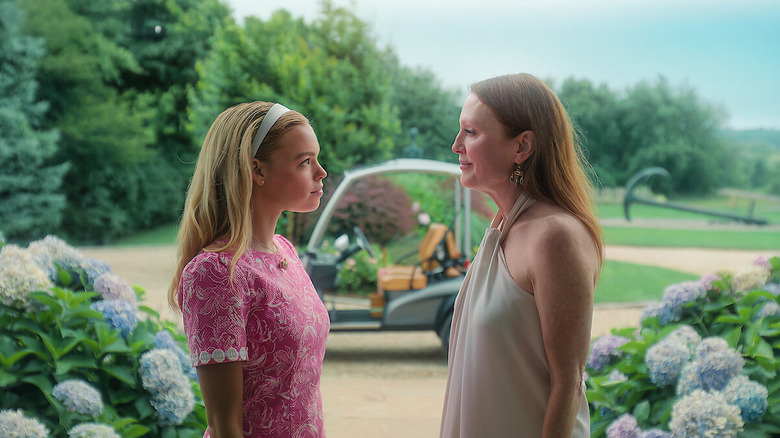
A modern-day Greek tragedy disguised as a luxurious dark comedy, "Sirens" has a lot to offer viewers intrigued enough by its story to delve deeper into its overt use of mythological symbolism. Created by Molly Smith Metzler from her stageplay "Elemeno Pea," the miniseries primarily follows the struggling, self-destructively selfless Devon DeWitt (Meghann Fahy) as she falls into a world of Michaela Kell (Julianne Moore), a charismatic woman whose wealth is only slightly less obscene than the mindless devotion of those drowning in her influence at her idyllic island home. Among them is Devon's younger sister Simone (Milly Alcock), at the start of the series a single promotion away from securing the kind of life neither of the sisters could have imagined growing up.
The battle for Simone's future — between a life of cold, callous comfort or painful self-sacrifice — is carried with a sharp, youthful sense of humor that keeps "Sirens" alluring even as it sails into dramatically shaky territory (it certainly helps that Netflix pulled out all the stops when it came to casting the show's ensemble). Netflix subscribers were absolutely entranced by its song, surely picking up on the not-so-subtle nods to Greek mythology in each episode. Apart from that, the ultimate choices made by Devon, Simone, and Michaela are provocative, potentially sparking in viewers an interest to see if entertainment writers and content creators shared (or posed a stimulating challenge to) their understanding of Metzler's ultimate commentary on seduction, class mobility, and moral sacrifice.
Adolescence
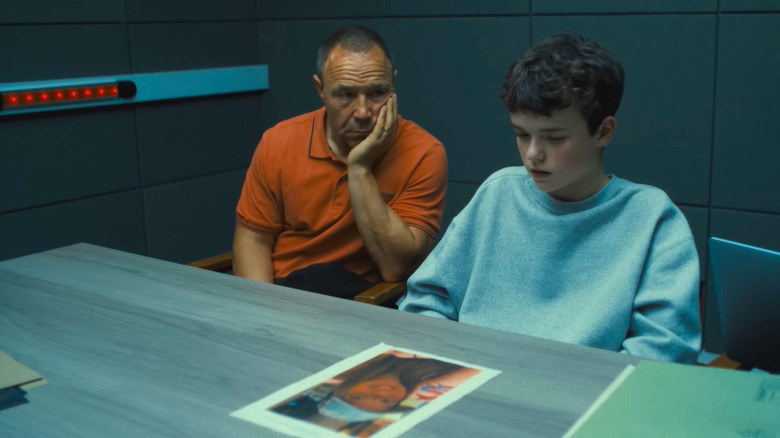
Few films or television shows released in 2025 were as memorable or chilling as "Adolescence," another miniseries put out by Netflix. Created by Jack Thorne ("Harry Potter and the Cursed Child") and Stephen Graham and strikingly directed by Philip Barantini (who previously worked with Graham on the 2021 feature "Boiling Point"), it explores the consequences of the real and troubling epidemic of harmful social media content targeted toward young men and boys that encourages them to engage in toxic, antisocial expressions of stereotypical masculinity. Content of this kind hails from a subsection of the internet known as the "manosphere," where adult men explain to viewers of all ages how — from their dangerously warped perspective — men and women should behave.
This is worth explaining up front, as the ending of "Adolescence" largely has to do with a family trying to reconcile how such content could have a greater influence on one of their own than they did. The series begins with a 13-year-old boy (the unbelievably talented young actor Owen Cooper) being arrested on suspicion of murdering a girl in his class. Though there is some element of the crime procedural at play (some Google users may have been trying to understand the lesser mystery surrounding the murder weapon or the psychological tactics used in episode 3's climactic interrogation), "Adolescence" is a true whydunnit that asks deeply challenging questions about parenthood, social conditioning, and the actual dangers of the rapidly evolving virtual world. More than anything, we'd wager audiences were trying to wrap their head around the pain of Graham's Eddie Miller, a father carrying an unimaginable kind of grief that's as complex as it is vividly tragic.
Weapons
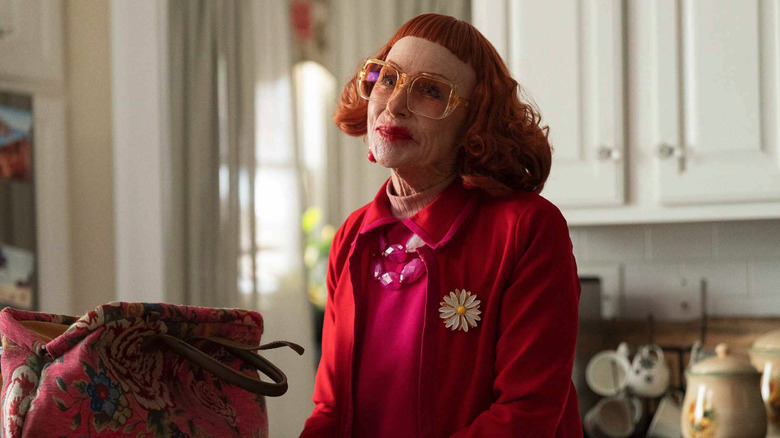
Another disturbing tale about children that can really only be described as light when compared to "Adolescence," Zach Cregger's "Weapons" trades explicit social commentary for titillating lore that the film avoids over-explaining. Like "A House of Dynamite," it too is told in a subversive, "Rashomon"-adjacent style that may have had some viewers confused in terms of the timelines alone.
The story revolves around the investigation of an uncanny phenomenon that sees an entire classroom of children (save a single boy named Alex, played by Cary Christopher) run willfully out of their homes and into the woods at precisely 2:17 A.M. one morning. Searching for answers, the town turns their suspicions toward the class' teacher Justine Gandy (Julia Garner), ultimately leading her to work with a relentless parent (Josh Brolin) and a hapless cop (Alden Ehrenreich) to find the missing children.
Cregger's ability to keep the audience guessing about who exactly is pulling the strands of the plot is a huge part of the fun of watching "Weapons" for the first time — and though the box office would indicate that most people reading this have probably seen the film already, we want to avoid spoiling it for everyone else.
That said, aside from getting clarity on the resolution of the film's central mystery, we suspect audiences were mostly Googling to understand the meanings behind certain symbols – the specific time of 2:17, for example, and the mysterious backstories of certain characters. There has also been somewhat heated discussion about whether or not the film intends to be an allegory for the epidemic of gun violence in American schools, which may have attracted the searches of viewers who interpreted the story as such after watching "Weapons" themselves.
Sinners
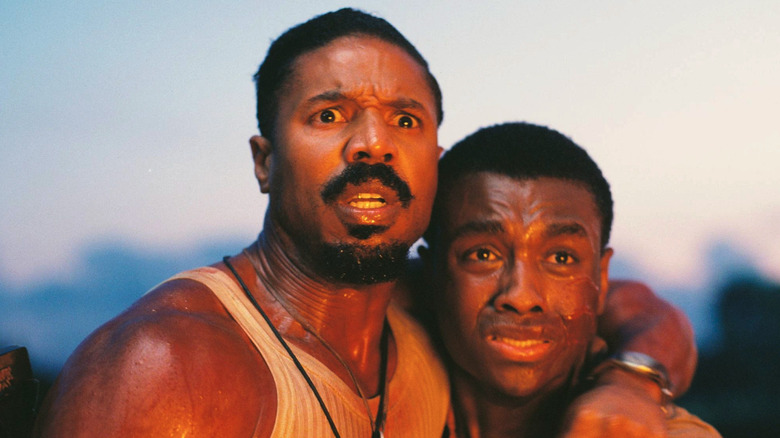
An even bigger horror blockbuster than "Weapons," "Sinners" was (for the most part) likely less confusing to audiences. But it was layered with symbolism and obviously informed by historical and musical influences. Ryan Coogler's genre-blending vampire western musical epic is an overwhelming feast for the senses, giving fans far too much to sink their teeth into to suck it all up in a single viewing.
First and foremost, there's the musical myth that inspired the story itself. Audiences might have picked up on the similarities between young Sammie's (Miles Caton) flight from the church to the devilish, musical delights of Smoke and Stack's (Michael B. Jordan) jazz den echoes the legend of blues musician Robert Johnson. There's also plenty to be unpacked about the way the film uses music, not only to create memorable scenes like its masterful act two musical number, but to reveal elements of character. Even Jack O'Connell's villainous Remmick — a near total outsider to all the musical magic happening inside the den — is given meaningful historical context through Coogler's use of Irish folk music. In exploring the connections between music, history, and culture in the Jim Crow south, Coogler also invites the audience to consider ideas of cultural transcendence, appropriation, and assimilation that entertainment writers have eagerly dissected in breakdowns of the film's themes.
As for the plot, some may have been Googling with questions about the resolution of the vampire bloodbath, the final showdown, and that surprising post-credits scene. The fates of some characters are a bit hard to square, as are the precise narrative rules vampires follow (or are supposed to follow) in this world.
The Woman in the Yard
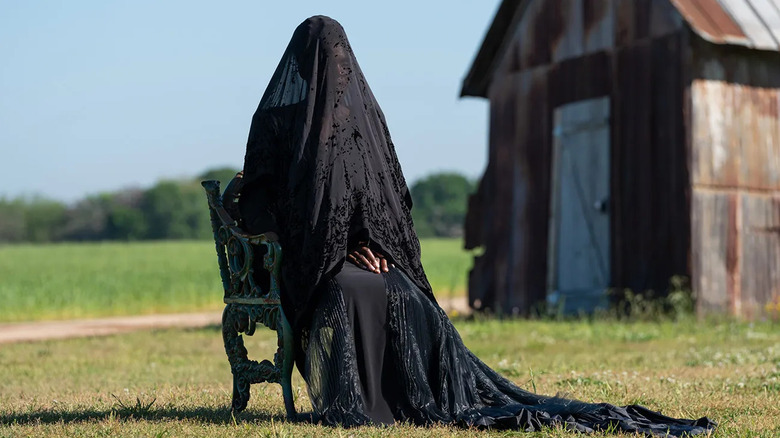
With most of the other films and television shows on this list, we have to speculate about what exactly might have sent viewers to Google in search of answers. When it comes to "The Woman in the Yard," we pretty much know exactly what would've done this.
Jaume Collet-Serra's ("Carry On," "Black Adam") directed this film, which could be described as Blumhouse's take on "The Babadook." "Till" star Danielle Deadwyler plays a grieving mother trying to adjust to single parenthood while recovering from a brutal car accident that claimed the life of her husband (Russell Hornsby). As both her rapidly deteriorating mental and emotional health remain neglected, a mysterious woman (Okwui Okpokwasili) appears in the yard. And she... mostly just kinda sits there menacingly, because it's a PG-13 horror movie at the end of the day.
As you might expect even having not seen the film, "The Woman in the Yard" is on this list because of its ending, though it's arguably more controversial and thought-provoking than the rest of the film would lead you to believe. The woman's ability to manipulate reality creates a lot of room for viewers to question the veracity of anything they're being shown on screen, and the mother's perspective is even less reliable as the story goes on. This doesn't necessarily make for a satisfying conclusion to the story, but there's something to be said for a movie like "The Woman in the Yard" that's confusing enough in its climax to keep viewers engaged months after its release (though that might have to do with the second audience it found on streaming).