

15 Most Shocking Oscars Upsets Of All Time
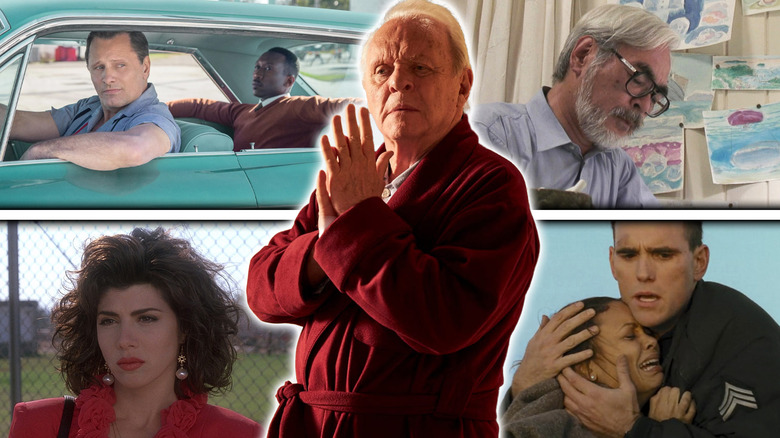
With the 98th Academy Awards in our rearview mirror, all anyone can talk about is Michael B. Jordan's win over Timothée Chalamet. The "Marty Supreme" star was deemed the favorite to win Best Actor going into the ceremony, largely due to a deceptively effective, self-manifesting "charm" offensive that crashed and burned as Oscars voters cast their ballots.
/Film recently broke down why the dramatic nature of this "upset" was somewhat overstated (as much as we'd love to give this "win" to the ballet dancers and opera singers out there, it ultimately belongs to Michael B. Jordan). That being said, all the commotion called to mind the most shocking wins and losses in Academy history. From nasty smear campaigns and votes split amongst legendary actors to honored fugitives and overlooked classics, these stories from Oscars past are every bit as unbelievable as they were when they first broke.
These are the most shocking Oscars upsets of all time.
15. How Green Was My Valley -- Best Picture
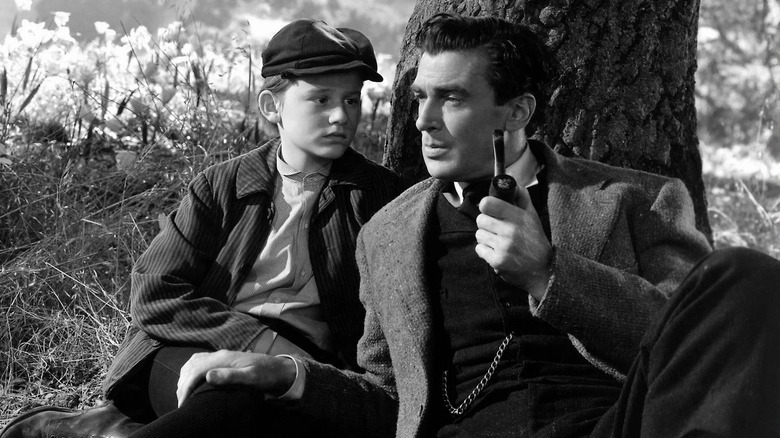
"Citizen Kane" wasn't always seen as a cinematic classic — William Randolph Hearst made quite sure of that. The revolutionary 1941 film — which used Hearst's life story and public persona as the basis for an epic about a powerful, complicated man who is ultimately unknown to anyone but himself — was subjected to a campaign of near-total suppression by the news giant from the moment of its release. Despite shrewd attempts from director-writer-star Orson Welles to use this obvious David and Goliath story in his bid to win the war of public opinion, his peers booed him and his film at the 14th Academy Awards in 1942.
Suffice it to say, "Citizen Kane" did not win Best Picture, despite being considered the best picture of all time today. It lost to John Ford's forgotten Oscar-winner "How Green Was My Valley."
14. Roman Polanski -- Best Director (The Pianist)
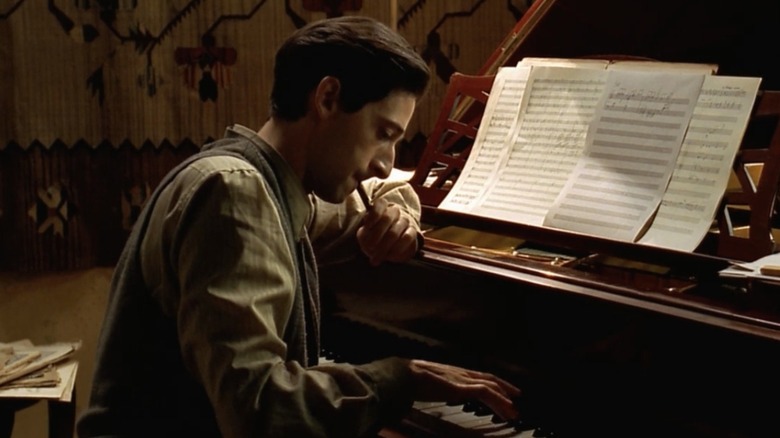
At the time, the biggest upset attributed to "The Pianist" at the 75th Academy Awards in 2003 was Adrien Brody's win for Best Actor. He defeated none other than Jack Nicholson ("About Schmidt") and Daniel Day-Lewis ("Gangs of New York") to become the award's youngest-ever recipient, and he was so shocked himself that he kissed presenter Halle Berry without consent. (The moment was, frankly, disgusting at worst and one of the most uncomfortable Oscars moments of all time at best.)
Devoid of all context, Brody's win actually holds up among critics on merit alone. The Best Director win for Roman Polanski, however, absolutely does not. Regardless of one's opinions about "The Pianist" — or Martin Scorsese's polarizing yet undeniably staggering period epic "Gangs of New York," which earned the infamously Academy-scorned filmmaker a Best Director nod that year — Polanski was unable to even attend the Oscars that year because he had been a fugitive for two decades. The Academy not only gave him the award, but some rose to their feet to honor him in his absence. Gross.
13. Billy Bob Thornton – Best Adapted Screenplay (Sling Blade)
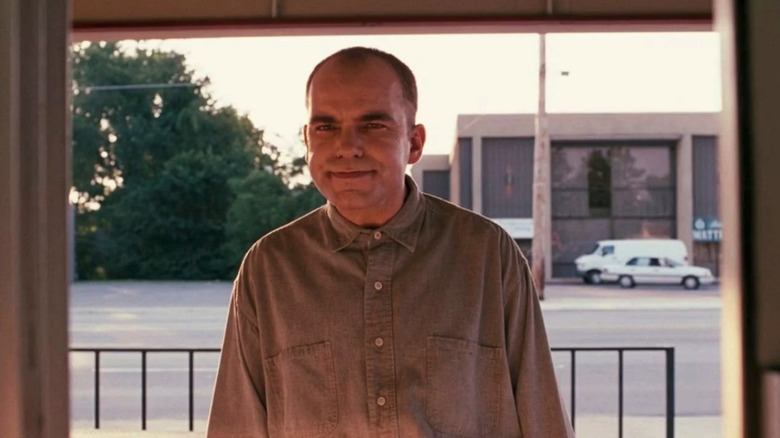
Billy Bob Thornton is part of a very small club of actors who earned Academy Award nominations for writing and starring in a single film, and he remains one of only five to win the former honor. In 1996, the future "Landman" star wrote the screenplay for "Sling Blade," an unsettling low-budget drama about a psychiatric patient who was charged with murdering his own mother when he was 12 years old. The story was originally conceived by Thornton for a short film he produced in 1994, making him eligible for the Best Adapted Screenplay category.
He was hardly the favorite going into the 69th Academy Awards, up against Kenneth Branagh's "Hamlet," Arthur Miller's own adaptation of his seminal stageplay "The Crucible," and the frontrunner, Anthony Minghella's romantic epic "The English Patient." The latter film took home Best Picture that evening, only losing three of the 12 awards it was nominated for, and one of them went to Thornton.
12. Olivia Colman -- Best Actress (The Favourite)
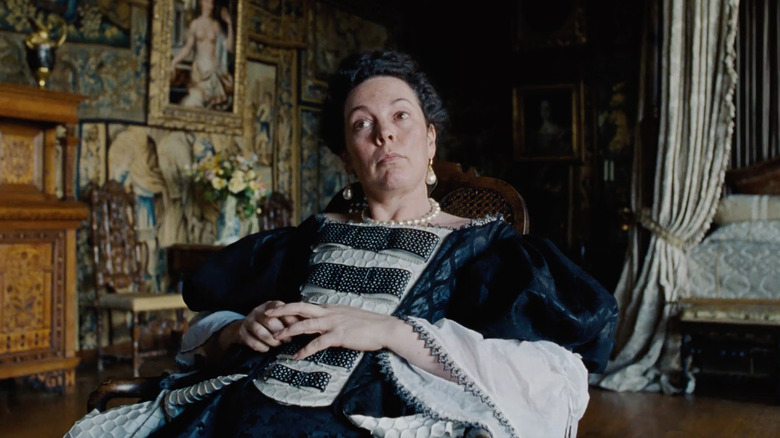
When Olivia Colman arrived at the 91st Academy Awards ceremony in 2019, she did so as something of a newcomer. Her starring role as the declining, maniacal Queen Anne in Yorgos Lanthimos' period satire "The Favourite" had helped the then lesser-known actor break into the mainstream awards season, where she overperformed (relative to her contemporary popularity) against actors like Melissa McCarthy ("Can You Ever Forgive Me?"), Lady Gaga ("A Star is Born"), and, most notably, Glenn Close.
Nominated for her seventh Oscar for playing the unsatisfied wife of a Nobel Prize-winning author, Close arrived that night tying the record for most acting nominations without a single win. Entertainment pundits theorized that the legendary star of "Fatal Attraction" and "Dangerous Liaisons" would be given the win as a "legacy" or "career" award (colloquial qualifiers that refer to wins generally understood to honor an actor's body of work, rather than that specific, often less remarkable performance).
Surprising everyone, including herself and her co-star Emma Stone, Colman won Best Actress. (With "The Wife" nominated in just one category, it's possible many voters simply didn't watch it.) In her acceptance speech, she called out to a gracious Close directly, saying, "You've been my idol for so long, and this is not how I wanted it to be." Close earned an eighth nomination in 2020 for her role in the unfortunate J.D. Vance biopic "Hillbilly Elegy." She still has yet to win an Oscar.
11. Hayao Miyazaki -- Best Animated Feature, Spirited Away
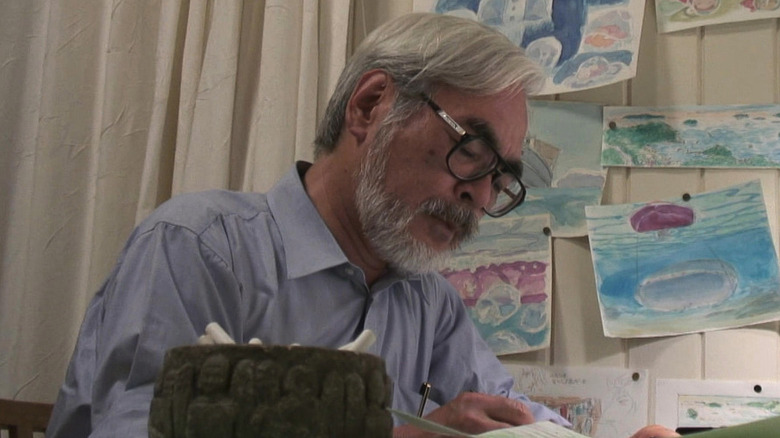
In hindsight, it's hard to even conceptualize a class of Best Animated Feature nominees that could compete with "Spirited Away." Hayao Miyazaki's form-defining fantasy tale is frequently hailed as the best animated movie of the 21st century, and in 2026, /Film ranked it as the second-best film to take home the Oscar in this category.
But at the time of the 75th Academy Awards in 2003, Miyazaki and Studio Ghibli were the underdogs going up against established Hollywood animation houses: Blue Sky ("Ice Age"), DreamWorks ("Spirit: Stallion of the Cimarron"), and the juggernaut Disney, who were nominated in the category not once, but twice. While "Treasure Planet" is still fighting for cult status today, "Lilo and Stitch" was the de facto frontrunner. Of course, "Spirited Away" ultimately won, though Miyazaki was not there to accept his award. He refused to attend in protest of America's illegal invasion of Iraq.
"Spirited Away" made history nonetheless as the first hand-drawn animated film to win Best Animated Feature. Two decades later, Miyazaki's "The Boy and the Heron" became the second (in what was considered to be a welcome upset over Sony's "Spider-Man: Across the Spider-Verse").
10. Art Carney -- Best Actor (Harry and Tonto)
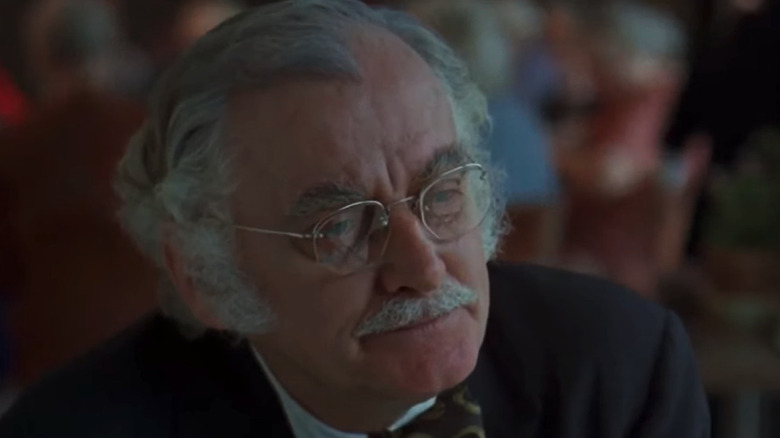
The 47th Academy Awards in 1975 had one of the strongest Best Actor classes of all time.
Albert Finney was nominated for playing Hercule Poirot in "Murder on the Orient Express," Dustin Hoffman for playing comedian Lenny Bruce in "Lenny," Jack Nicholson for his starring role in the peerless noir "Chinatown," and Al Pacino for his darker turn as Michael Corleone in "The Godfather Part II." The latter two actors were favored to win, with "The Godfather" taking home a number of awards that night, including Best Picture. So how the heck did Art Carney end up taking home the award?
In what is still remembered as one of the most controversial snubs in Oscars history, the "Honeymooners" star beat all four of his lauded opponents for playing one of the titular characters in the oft-forgotten road-trip dramedy "Harry and Tonto." His co-star was a cat. Putting aside the enduring legacies of Nicholson and Pacino's performances in their respective films, Carney's work in "Harry and Tonto" is arguably overlooked, though not to the extent that his win can be justified in hindsight. It's likely the two frontrunners split the vote enough for Carney to break through.
9. Moonlight -- Best Picture
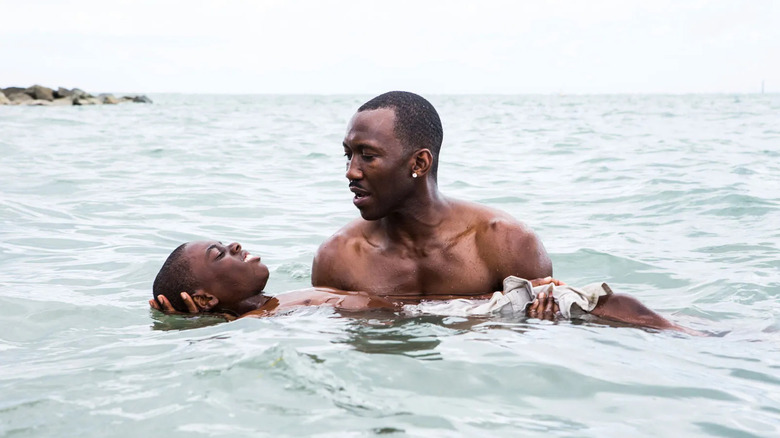
A victim of the most infamous flubs in the last decade of the Oscars (and arguably in the entire history of the ceremony), the "Moonlight" win for Best Picture at the 89th Academy Awards was unexpected yet entirely deserved. The favorite going in was "La La Land," Damien Chazelle's star-studded, 14-time-nominated musical about the magic of moviemaking — the kind of film that would (and, for most of the awards season, did) top Barry Jenkins and Terrell Alvin McCraney's restrained, challenging coming-of-age drama.
When it came time for Warren Beatty and Faye Dunaway to announce Best Picture, they were mistakenly given the envelope for Best Actress, which had gone to Emma Stone earlier that evening. Seeing the title "La La Land" on the card, the presenters announced it as the winner, surprising no one. The cast and crew of Chazelle's film took the stage, took "their" awards, and even gave a few acceptance speeches, only for the ceremony's stage managers to apparently begin taking the statues back in the middle of producer Fred Berger's moment. Hearing the commotion, he memorably ended his speech with the jaw-dropping line, "We lost, by the way." Moments later, producer Jordan Horowitz took the mic and informed "Moonlight" of their win. As Beatty and host Jimmy Kimmel tried to salvage the moment, Horowitz insisted on personally handing his award to its rightful winner.
Jenkins kept his speech that night brief, expanding on the moment a year later. Today, "Moonlight" remains one of the most critically acclaimed Best Picture winners of all time.
8. Alan Arkin -- Best Supporting Actor (Little Miss Sunshine)
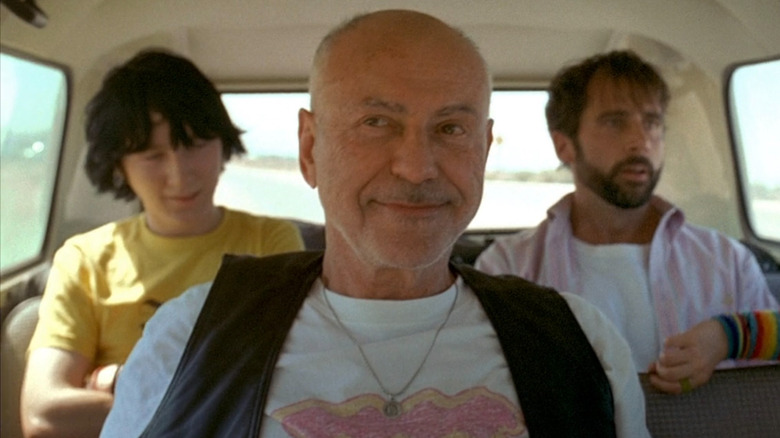
Depending on who you ask, Eddie Murphy is either one of the most iconic or most underrated actors in Hollywood. Some will accept both descriptors as an oxymoron that nonetheless makes a kind of sense as the years go by. But at the 79th Academy Awards in 2007, the comedic legend seemed primed to receive his flowers for a remarkable dramatic turn in "Dreamgirls." In the end, Alan Arkin won for the dramedy "Little Miss Sunshine."
This upset is often remembered through the lens of the so-called "'Norbit' effect." Commentators at the time theorized that Murphy's 2007 flop — released as Academy voters were casting their ballots — hurt his chances. It's a version of events the actor himself disputes.
As tempting as it is to concede to such a unique narrative, the truth is likely that the race between Murphy and Arkin was more of a toss-up than commentators expected. Both men had been celebrated Hollywood figures for decades, had given standout performances that year and were arguably both due for career Oscars, as Arkin had been nominated twice by that point.
7. Shakespeare in Love -- Best Picture
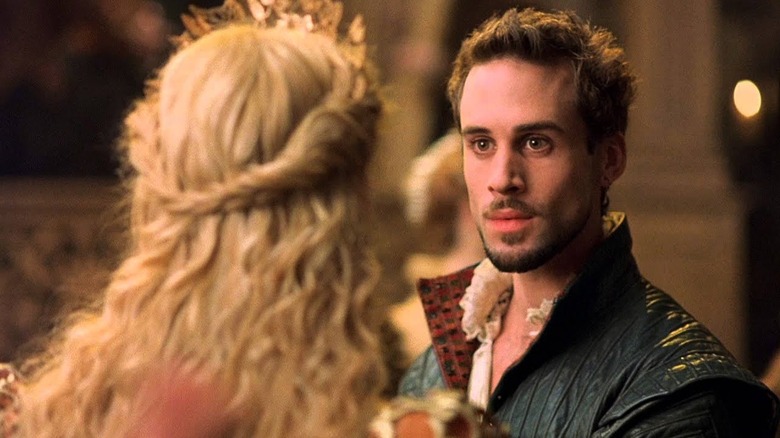
"Shakespeare in Love" winning Best Picture changed Oscars campaigns forever — arguably for the worse. Like most of the worst and widest-reaching stories in the entertainment industry, it can be traced back to one Harvey Weinstein.
The most infamous predator and criminal in Hollywood was once its most infamous producer, wielding his immense power at Miramax and later The Weinstein Company to bully his adversaries in the business. When it seemed all but certain that Steven Spielberg's landmark World War II drama "Saving Private Ryan" was going to clean up at the 71st Academy Awards in 1999, Weinstein got to work.
He spearheaded a then-unprecedented $5 million campaign that worked to influence voters with an extreme level of personal outreach while undermining confidence in Spielberg's work. It did the trick in the short-term, though history has proven itself to be the inevitable and final judge. "Saving Private Ryan" is still hailed as one of the greatest films ever made, and "Shakespeare in Love" is a footnote in Weinstein's contemptible biography.
6. Marisa Tomei -- Best Actress (My Cousin Vinny)
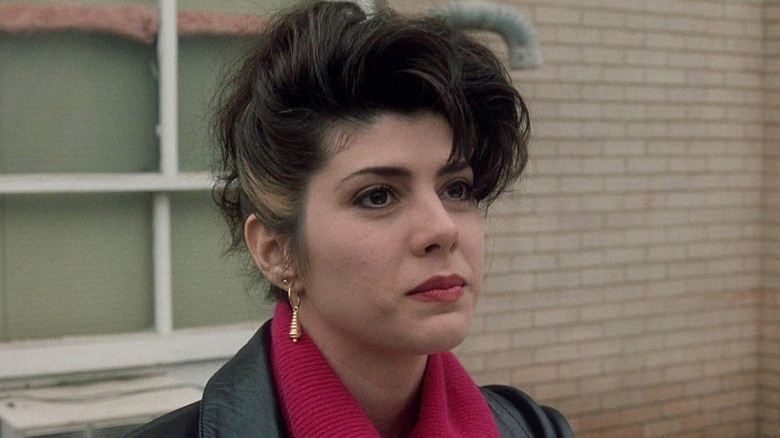
Art Carney beating Jack Nicholson and Al Pacino was certainly shocking, but even that win failed to generate the same level of speculation, outrage, and conspiracy theories as Marisa Tomei's. The future "Spider-Man" star won Best Actress at the 65th Academy Awards in 1993 for her role in "My Cousin Vinny," beating out four lauded, established actors: Judy Davis ("Husbands and Wives"), Joan Plowright ("Enchanted April"), Vanessa Redgrave ("Howards End"), and Miranda Richardson ("Damage").
The win was so shocking that many speculated Tomei had been given the award by mistake. But while contemporary theories lean toward vote splitting, we'd posit that Tomei might have simply been underestimated. After all, of the five films, "My Cousin Vinny" ultimately had the most cultural staying power. As for Tomei herself, she proved her inclusion was no fluke by receiving two further Academy Award nominations for "In the Bedroom" and "The Wrestler."
5. Crash -- Best Picture
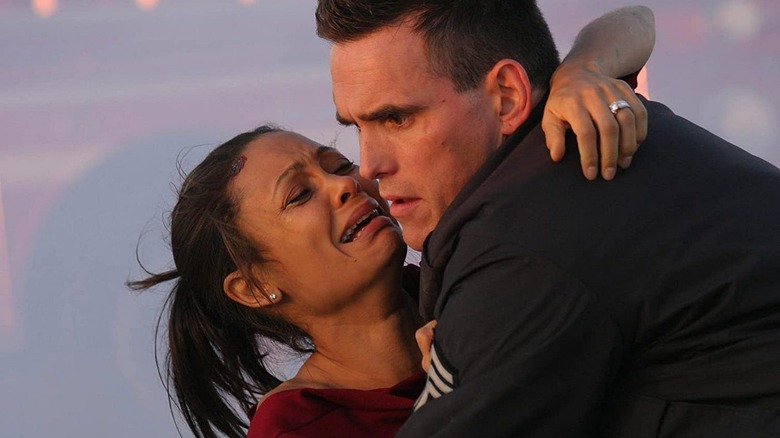
Since its win at the 78th Academy Awards in 2006, "Crash" has been widely regarded as the worst Best Picture winner in Oscars history. The film had its champions in the industry, as legendary film critic Roger Ebert gave it four stars and ranked it as his favorite movie of 2005, but mot even "Crash's" own director was as generous in his appraisal.
Every film that lost to "Crash" that night has had more positive staying power in both critical film discourse and pop culture at large. The prescience of George Clooney's "Good Night, and Good Luck" has only become more pronounced as the actor-director staged a Broadway adaptation in 2025 as CBS was being taken over by the censor-friendly and journalistically maladroit regime of Bari Weiss. In 2017, the New York Times listed Steven Spielberg's "Munich" as one of the best films of the 21st century. And "Brokeback Mountain" — the clear frontrunner going in — has also been recognized as such by the Times, holding a position within the top 20 as of their most recent ranking.
4. Grace Kelly -- Best Actress (The Country Girl)
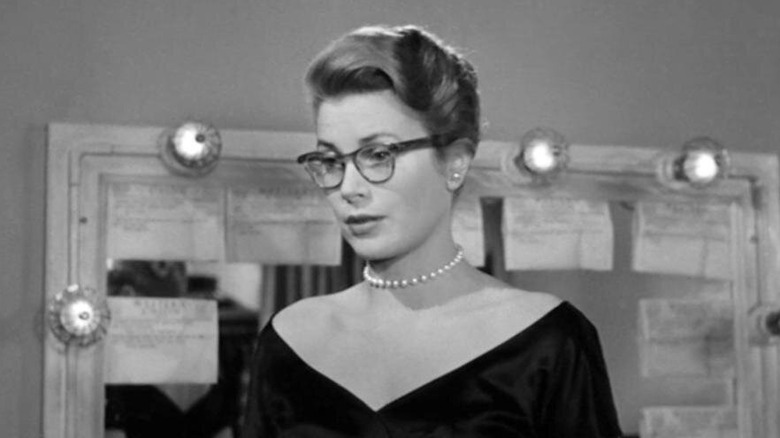
Judy Garland gave a number of classic performances following her breakout role in "The Wizard of Oz" in 1939. The greatest of these was in the 1954 remake of "A Star Is Born," which many believed would finally win the legendary actor the award she had long deserved. However, as was the case with Janet Gaynor 17 years before and Lady Gaga over 60 years after, this timeless, tragic tale about the rise and fall of such Hollywood stars would fail to earn its own star the recognition she expected.
At the 27th Academy Awards in 1955, the Oscar ultimately went to Grace Kelly for "The Country Girl," a Best Picture nominee you've probably never seen. It was a devastating shock for Garland, who had been preparing to receive the award with a full camera crew in the hospital room where she had given birth just days earlier. Kelly walked away from Hollywood entirely not long afterward. Garland received a Best Supporting Actress nod in 1961 for "Judgement at Nuremberg," but she lost to "West Side Story's" Rita Moreno.
3. Kevin Costner -- Best Director (Dances With Wolves)
Despite being the most Best Director-nominated filmmaker alive, Martin Scorsese has only won the award once (for 2007's "The Departed"). It remains the only directing Oscar he has ever won.
Any Scorsese loss could be argued for inclusion on this list. We already mentioned his loss to Roman Polanski ("Gangs of New York"/"The Pianist"), but he also lost to the late Robert Redford ("Ordinary People"/"Raging Bull"), Clint Eastwood ("Million Dollar Baby"/"The Aviator"), Alfonso Cuarón ("Gravity"/"The Wolf of Wall Street"), and Bong Joon-ho ("Parasite"/"The Irishman"). At the very least, the four losses mentioned were to films that were brilliant in their own right and reasonably debatable as superior to what Scorsese put out.
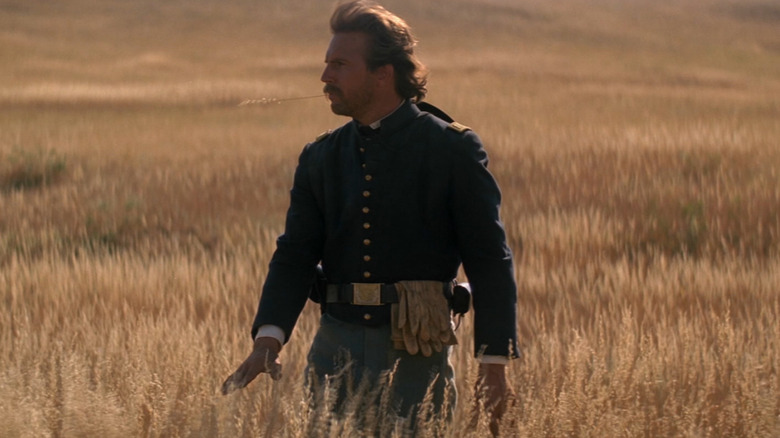
But in 1991, the year Scorsese came to the 63rd Academy Awards with his magnum opus "Goodfellas," he lost Best Director to Kevin Costner for "Dances With Wolves." The revisionist Western, now dismissed by most serious cinephiles, beat "Goodfellas" for Best Picture that same evening.
2. Green Book -- Best Picture
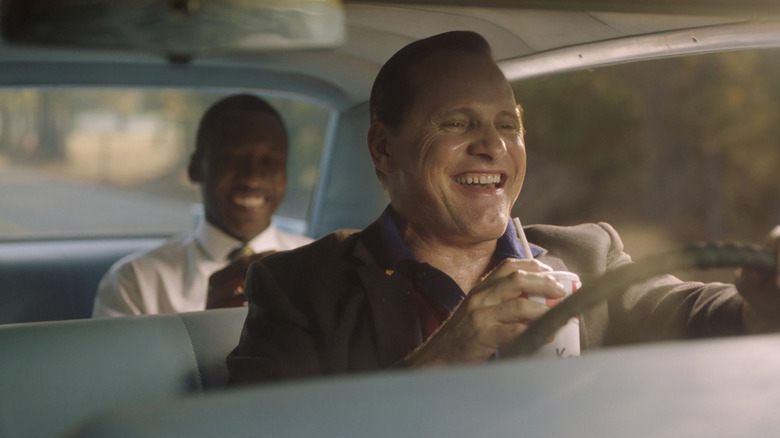
There wasn't exactly a clear winner going into the 91st Academy Awards in 2019, but "Green Book" should've been the clear loser. This cloying, dubiously accurate biopic about racism evoked comparisons to "Crash" and was by far the weakest and most popularly hated film nominated. Its class was largely comprised of films that had either a similarly divisive critical reception ("Vice," "Bohemian Rhapsody") or came from subgenres the Academy has been biased against historically (the remake "A Star Is Born," the superhero epic "Black Panther," and, most notably, the stunning foreign language historical drama "Roma").
While most righteously bemoan "Green Book" winning over "Roma," its defeat of the critically acclaimed, Oscar-suited Spike Lee drama "BlacKkKlansman" is almost insulting. Having been snubbed for "Do The Right Thing" and been awarded only an honorary Oscar in 2015 (during the same season he would ultimately boycott the ceremony due to a baffling lack of diversity in the nominees), this was a perfect opportunity for the Academy to kind of do the right thing, at least if they were going to continue ignoring foreign language films in the main category. Though Lee finally won his first Oscar that night for writing the film's screenplay, "Green Book" winning Best Picturewas so offensive to him that he stormed out of the building.
1. Anthony Hopkins -- Best Actor (The Father)
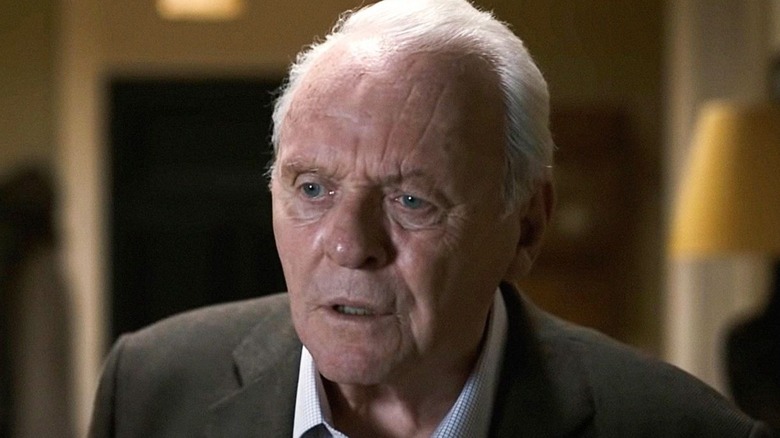
In 2020, Anthony Hopkins starred in "The Father," a quietly brilliant drama that was immediately hailed as one of the best films of the century. Hopkins' performance is the movie, and he undeniably deserved an Academy Award for it. But nobody, not even the Academy, thought he was going to win.
The following year, the 93rd Academy Awards were restructured for the first and final time to close the ceremony not with Best Picture, as is tradition, but with Best Actor. It was generally understood that this was done in anticipation of the late Chadwick Boseman winning the award for his performance in "Ma Rainey's Black Bottom," giving Hollywood and the world at large a chance to collectively honor a great talent taken from us so suddenly. Hopkins wasn't even present for the win, understandably unwilling to travel during the pandemic. Though he dedicated his award to Boseman the following day, his absentee, upset-victory was the most bizarre and uncomfortable finale the Academy had ever witnessed.