

15 Best TV Shows Of The 2000s, Ranked
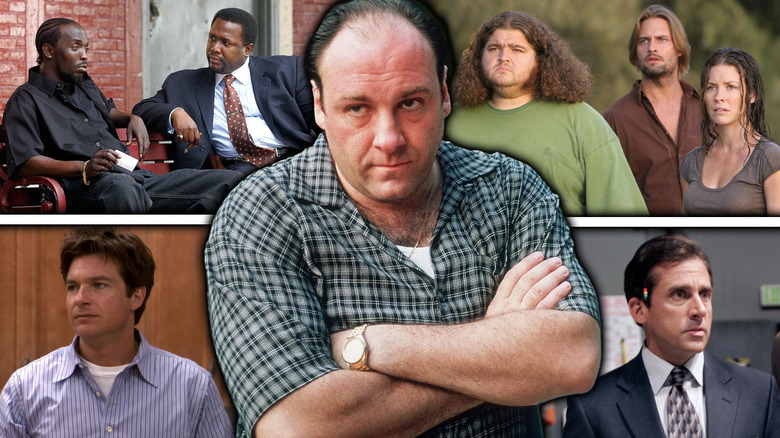
The 2000s were the riskiest and arguably most important decade for television as a narrative art form. Evolutions in style, distribution, and cultural appetite at large proved the medium was an artistic gold mine for those brave enough to strike — and after careful consideration, we've determined which shows emerged with the greatest wealth of quality, cultural and artistic impact, and legacy.
There are some exclusions hardcore TV fans will rightfully take note of. "Breaking Bad," "Mad Men," and "Game of Thrones" aired too late in the decade for us to consider them truly 2000s series. Similarly, shows that found most of their popularity and/or aired the majority of their episodes outside the decade like "It's Always Sunny in Philadelphia" were excluded — with one exception. Finally, certain shows that indeed shaped the decade — like, for example, "Dexter" — were nonetheless excluded based on the overall quality of the series.
The shows below aren't just definitive, enduring, and popular. These shows shaped the future of television as we now watch it, making them the best TV shows of the 2000s.
15. The Shield
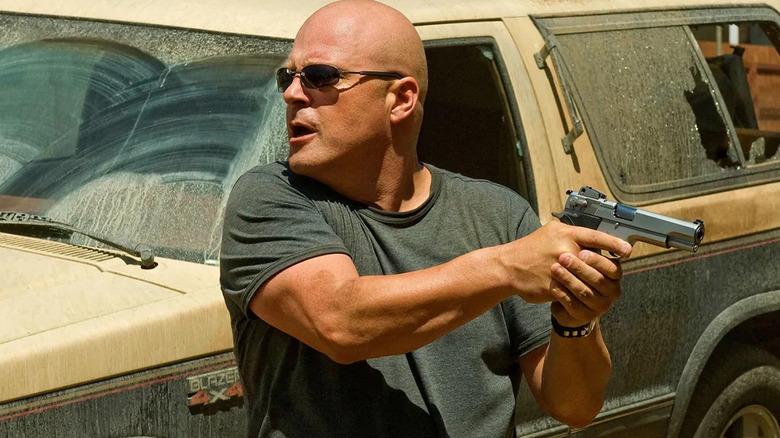
When TV historians talk about the defining antiheroes of contemporary television, you hear the same names from HBO, AMC, Showtime, and Netflix: Tony Soprano, Walter White, Don Draper, Dexter Morgan, Frank Underwood. (Heck, even "Dallas'" J.R. Ewing will get a well-deserved mention here and there.) But in 2002, before some of these men had even been thought of, and while "The Sopranos" was still in the middle of its argument that television protagonists could be truly irredeemable, FX introduced audiences to Michael Chiklis' Detective Vic Mackey, the corrupt cop at the heart of their game-changing crime drama "The Shield."
Audaciously evoking a real and infamously corrupt LAPD unit, the series incisively interrogates the once-seductive idea that anything done in the name of the law is inherently justified — a challenging dynamic that hits especially hard considering it aired coeval with America's destructive war on terror. Chiklis, Glenn Close, CCH Pounder, and series creator Shawn Ryan all earned Emmy nominations over the course of the show's run, with Chiklis winning Outstanding Lead Actor (Drama) for the pilot episode. The series also deserves credit for introducing future television superstar Walton Goggins in his first series regular role.
14. Everybody Hates Chris
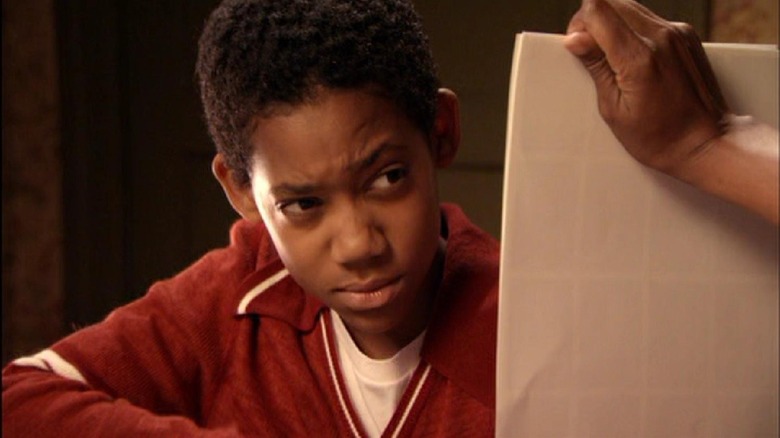
While most 2000s sitcoms shied away from the faux-autobiographical format of "Seinfeld," "The Fresh Prince of Bel-Air," and "Everybody Loves Raymond," Chris Rock's "Everybody Hates Chris" embraced it as openly. Starring a young Tyler James Williams as the future stand-up titan (with Rock providing narration for every episode), it fictionalizes his childhood in Brooklyn in ways that are both outrageously funny and surprisingly heartfelt.
Much of the UPN/CW series' ability to maintain this uniquely irreverent and reflective tone comes from its wildly talented cast, many of whom have gone on to star in other massive sitcoms that have helped define the genre in the following decades. Terry Crews and Tichina Arnold, who play Chris' parents Julius and Rochelle, are especially brilliant, anchoring the show even in a handful of wobbly, late-run episodes.
Aside from sparse nominations for costuming and cinematography, "Everybody Hates Chris" was regularly snubbed by the Emmys. Rock and co. did earn a Golden Globe nomination for Best TV Series in 2006, but they lost to ABC's "Desperate Housewives."
13. Battlestar Galactica
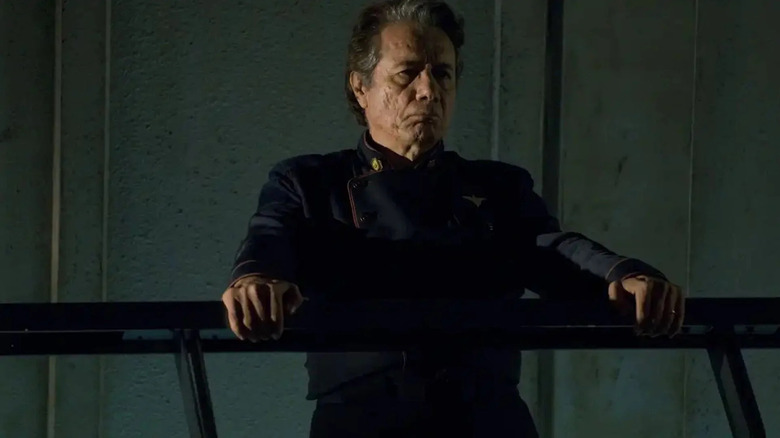
We'd be lying if we didn't hold some resentment against another peak 2000s series on this list for giving Syfy's "Battlestar Galactica" a lame reputation by association (Bears... Beats... We're getting ahead of ourselves). It isn't just a popular sci-fi action series that would attract the genre's devotees — it's a deeply philosophical and often profound piece of sociological storytelling that was arguably the best political drama of the 2000s when it first began.
"Battlestar Galactica" was one of the first true post-9/11 dramas to make it to air. It featured an ensemble cast anchored by Edward James Olmos' William Adama and Mary McDonnell's Laura Roslin, two leaders (one a soldier, the other a politician) in a far-flung, post-apocalyptic future who must lead a warship of human survivors on an intergalactic quest to find Earth. They wrestle deep ethical and philosophical dilemmas along the way relating to military combat, justice, and politics, tapping into the same identity crisis Americans were reckoning with throughout its run.
Yes, it was hardly, if ever, rooted in real science, never accepted by mainstream awards, and its final season remains one of the most divisive in TV history. Still, "Battlestar Galactica" was a landmark in sci-fi and fantasy storytelling on TV, paving the way for subsequent hits like "Game of Thrones."
12. House, M.D.
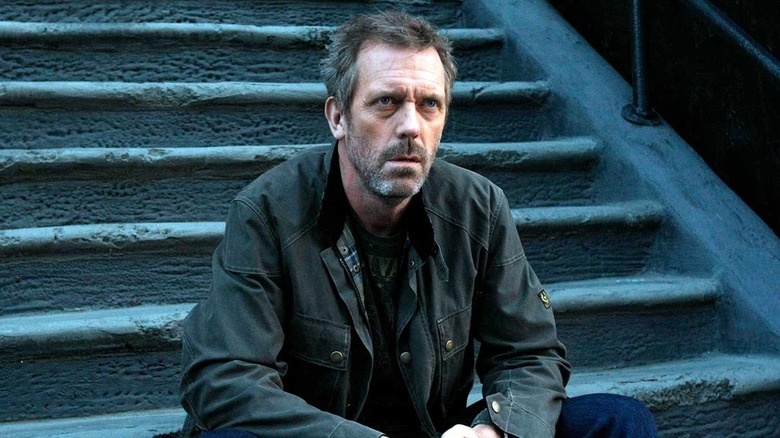
Despite having all the trappings of a stock medical procedural, Fox's "House, M.D." is actually one of the great, unsung antihero character studies of the 2000s. For over 170 episodes, Hugh Laurie gave a painstaking, career-defining performance as Dr. Gregory House, a brilliant diagnostician who (intentionally, on behalf of the series) treats his patients' baffling medical conditions the way Sherlock Holmes treats murders. Unfortunately, yet compellingly, House also embodies the literary icon's worst traits, including a narcissistic and abrasive personality.
Laurie's dynamic performance (coupled with the propulsive plotting of creator-showrunner David Shore) made "House" a critical darling as well as a popular hit. He received six nominations for Outstanding Lead Actor (Drama) over the course of the series' run, though he never won (he lost to Bryan Cranston for "Breaking Bad," and James Spader in "Boston Legal," as well as the star of a more sporty addition to this list further down). Along with four nods for Outstanding Drama Series, Shore earned a writing nomination for the season 1 episode "Three Stories," a remarkably constructed hour of television that stands among the decade's best.
11. The Office -- U.S. and U.K.
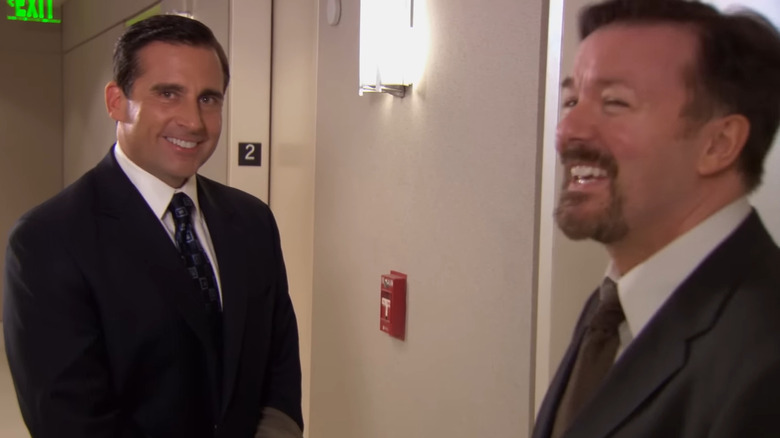
Okay. We're cheating a bit here.
But it's impossible to separate the U.K. and U.S. versions of "The Office," especially when discussing the most impactful shows of the decade. The original series, which ran for just two seasons on the BBC, quietly reshaped the sitcom genre internationally — not least of all because it's been remade over a dozen times by studios around the world.
It popularized a meaner, cringier sense of humor, a hilariously flat visual presentation, and most of all, the mockumentary format. The creators of "It's Always Sunny in Philadelphia" cited the British "Office" as a key influence for the first two innovations. As for the third, without it, the last two decades of TV comedy would be entirely different, without essential series ranging from "Parks and Recreation" to "Abbott Elementary."
Of course, its impact was greatly expanded by the U.S. version, which quickly dwarfed the original in popularity and is arguably remembered as the definitive series. It had some rough moments in later seasons, but the best episodes of "The Office" – including the Emmy-winning season 3 opener "Gay Witch Hunt" — remain timeless. "The Office" (U.S.) won the Emmy for Outstanding Comedy Series in 2006, following its triumphant 2nd season.
10. Friday Night Lights
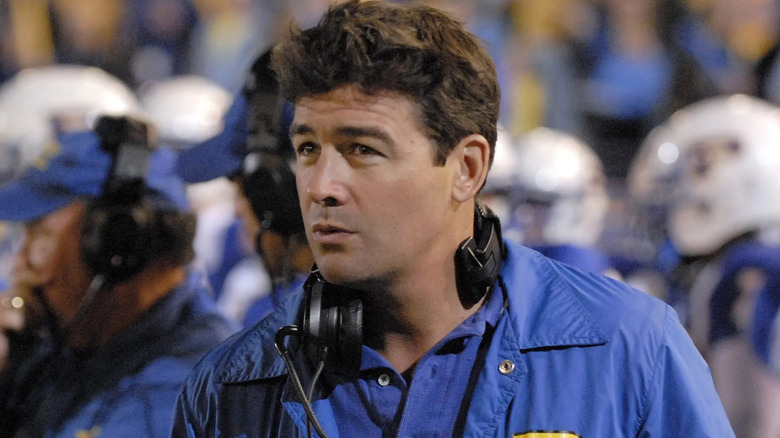
A TV translation of Peter Berg's 2004 film, "Friday Night Lights" continues to be the standard bearer for television sports dramas. The NBC series makes a moving case for the importance of sports, especially to small communities, using high school football as a means of organically exploring identity, opportunity, economic instability, and adulthood.
Its centerpiece is the relationship between Eric & Tami Taylor, the steadfast coach of the embattled Dillon Panthers and the educator and counselor who feels responsible for the team after they leave the field (played by Kyle Chandler and Connie Britton, respectively). Through moments of tension and teamwork, the series creates a marriage that feels uniquely mature, healthy, and developed.
"Friday Night Lights" earned 13 Emmy nominations throughout its run, including for Outstanding Drama Series. After its final season in 2011, showrunner (and future "Parenthood" creator) Jason Katims won an award for writing the series finale "Always." Chandler, meanwhile, took home his first Outstanding Lead Actor Emmy, beating a crowded field that included Michael C. Hall, Steve Buscemi, Timothy Olyphant, Jon Hamm, and Hugh Laurie.
9. 30 Rock
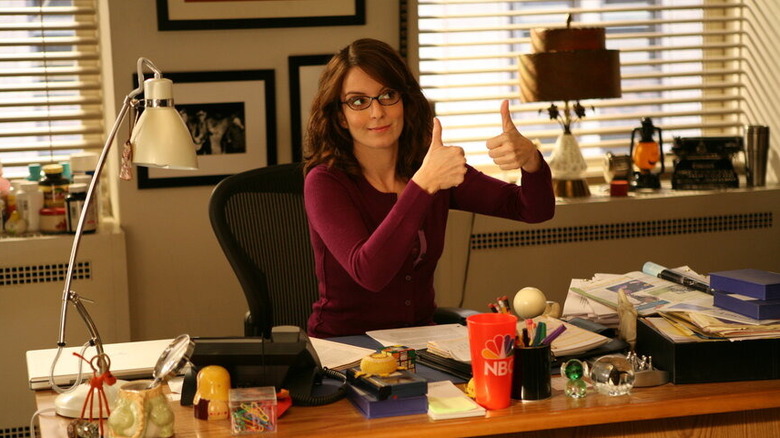
Regarded as an essential yet overshadowed sitcom, "30 Rock" is a monument to the peerless and underappreciated comic genius of Tina Fey. The "Saturday Night Live" alum created and starred in the series, which satirized the high-stakes, personality-driven world of producing a late-night sketch comedy series. From the top-billed series regulars (including Alec Baldwin, Tracy Morgan, and Jane Krakowski) to the bit players in the background, the show was packed with comedic talent — a necessity, given that Fey and her writers also packed the script with so many iconic gags and one-liners that it's still one of the most comedically dense sitcoms ever written.
Though it was never as popular as "The Office," "30 Rock" was consistently praised by critics throughout its run. Until 2024, it held the record for the most Emmy nominations received by a comedy series in a single season (the record is currently held by "The Bear" and "The Studio"). It won Outstanding Comedy Series three years in a row, and Baldwin and Fey both won multiple awards themselves, the latter winning in both the acting and writing categories.
8. Six Feet Under
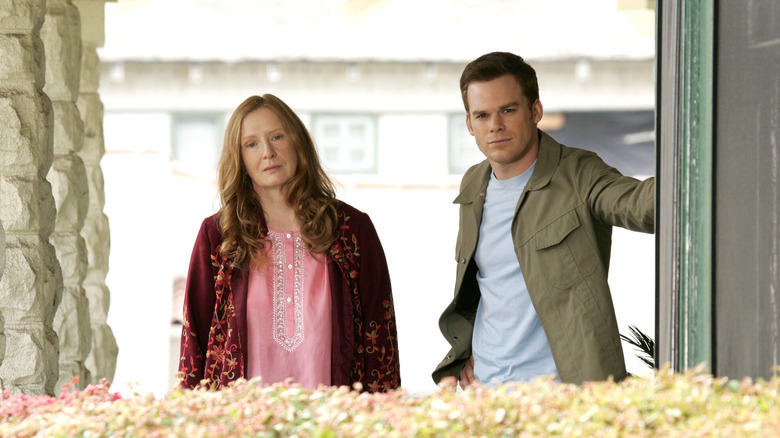
It's fitting that a series as meditative about the nature of finality as "Six Feet Under" is remembered for having the greatest series finale in television history. But that reputation undersells how important the show was throughout the entirety of its run – yes, even during its divisively bleak 4th season.
Coming off an Academy Award win for "American Beauty," Alan Ball's decision to create a television dramedy about a family-run funeral home was deceptively safe. As audiences watched the Fisher family struggle to accept themselves and each other despite tragically messy and imperfect lives, they bore witness to a kind of quiet, rich storytelling that TV often feels afraid of.
Ball and the cast and creative team of "Six Feet Under" earned 53 Emmy nominations throughout the series' lifespan, winning nine. That Ball lost in both the writing and directing categories is frankly baffling, even considering that it was up against arguably the greatest penultimate season of TV ever produced.
7. The West Wing
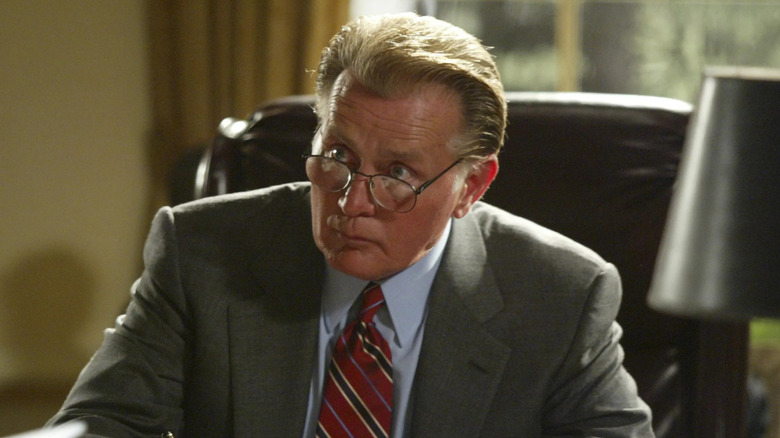
Yeah, "The West Wing" is such an idealistic portrayal of the American government that it borders on irresponsible. Creator-showrunner Aaron Sorkin has done the series' complicated legacy no favors by continuing to betray his own blurred line between this fantasy of bipartisan parity and competence, as well as the crisis facing the country today.
Putting all that aside, however, "The West Wing" had an undeniable and indelible impact on television in the 2000s. The morally righteous political crusade of the unbelievably brilliant President Bartlet (Martin Sheen) isn't realistic or practical, but it's a story told with such precision and energy that it's hard not to get swept up by it.
"The West Wing" was nominated for 95 Emmys and won 26, including four-straight Outstanding Drama Series wins before Sorkin left the series. Even though fans largely agree that the show's storytelling-saving-graces dwindled after his exit, the later seasons still have a handful of underrated episodes worth reconsidering.
6. Arrested Development
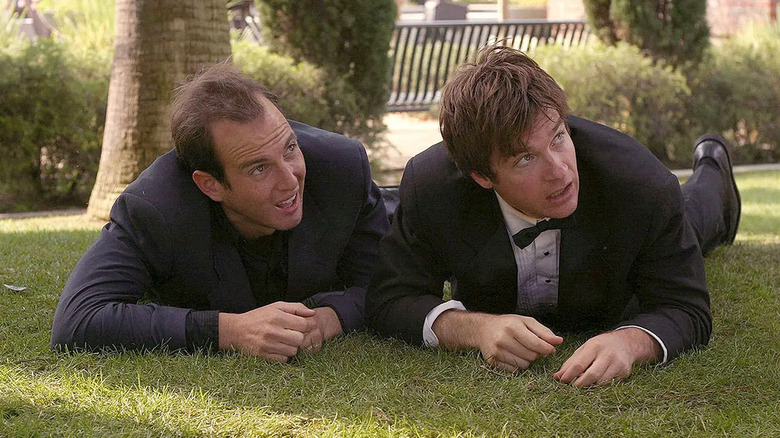
Defined by a perfect (yet somewhat premature) ending and an infamously rocky reboot on Netflix in the 2010s, the original three-season run of "Arrested Development" is arguably the greatest sitcom of the 21st century. (Had its legacy not been marred by subsequent, unnecessary seasons, it would have ranked even higher on this list.)
Mitchell Hurwitz's series was fresh, edgy, as densely comedic as "30 Rock," and twice as willing to alienate new audience members if it meant continuing one of its many incredible long-running gags (often carried by hilarious guest stars ranging from Ben Stiller to the late Carl Weathers). The perfectly dry Jason Bateman anchors an outstanding ensemble as the quintessential straight man Michael Bluth, the heir apparent to a family real estate empire who finds himself suddenly shouldering the responsibility of keeping them together through an unending series of scandals.
The series was a ratings dud for Fox that nonetheless earned more critical acclaim than the majority of the network's output during or since its run. It was nominated for 25 Emmy Awards, including Outstanding Comedy Series for all three of its original seasons. It won after its freshman season, beating the only comedy series ranked higher than it on this very list.
5. Lost
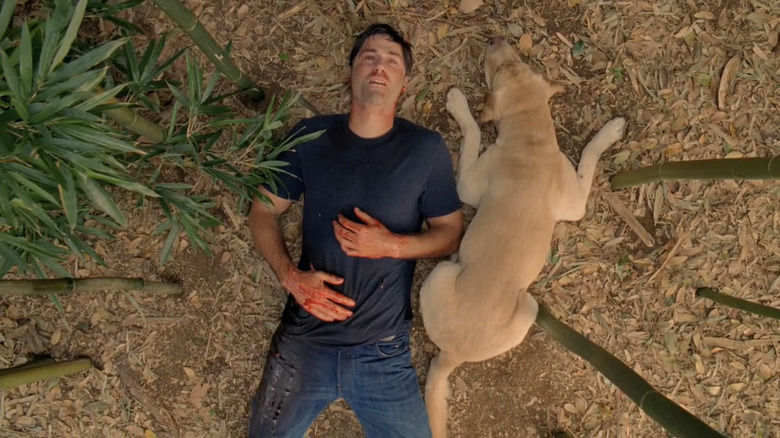
Over a decade of debates surrounding its polarizing series finale have robbed "Lost" of the legacy it deserves. For six seasons with some of the best episodes of television, this unpredictable survival drama about a group of castaways stranded on a strange, dangerous island was a weekly cultural event that proved network audiences had an appetite for storytelling on a much larger scale.
Creators Jeffrey Lieber, J.J. Abrams, and Damon Lindelof not only defined the modern mystery box thriller, but arguably laid the groundwork for bingeable TV. Regardless of its legacy, no show since has turned tens of millions of weekly viewers into armchair philosophers like "Lost."
"Lost" is also forgotten as a critical hit, with much of the ensemble cast receiving acclaim throughout its run. It won 10 of the 51 Emmys it was nominated for and took home the award for Outstanding Drama Series in its freshman season.
4. Curb Your Enthusiasm
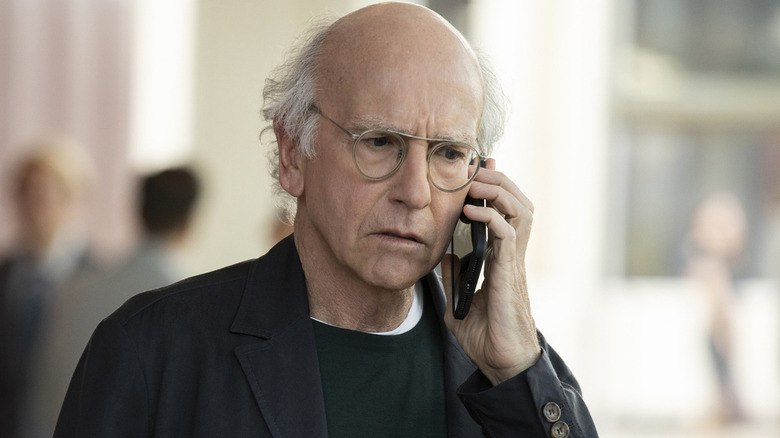
The only show we included that premiered most of its seasons outside the 2000s, "Curb Your Enthusiasm" still deserves a prominent place on our list. Running from 2000 to 2024 (with a significant hiatus after the 8th season in 2011), Larry David's HBO sitcom had almost as much of a profound impact on the genre as "The Office."
It had a pioneering use of cringe-comedy, observational humor revolving around social constructs and contracts, looser, improvisational dialogue, and a protagonist that was often unlikable and objectively in the wrong. The best episodes are deceptively chaotic feats of rigorous storytelling structure, the likes of which could only come from David's mad genius.
On the whole, "Curb" deserves further praise for staying consistent across all 12 seasons. It had 55 Emmy nominations throughout its run, though only two wins.
3. Deadwood
We'll come out and admit it — from here on, this list is "Oops! All HBOs!" And rightfully so.
The network is deservedly credited with pushing the boundaries of television throughout the 2000s, broadcasting edgy, formerly un-producable series ranging from the deliberately uncomfortable "Curb Your Enthusiasm" to the unrelentingly ruthless period Western "Deadwood."
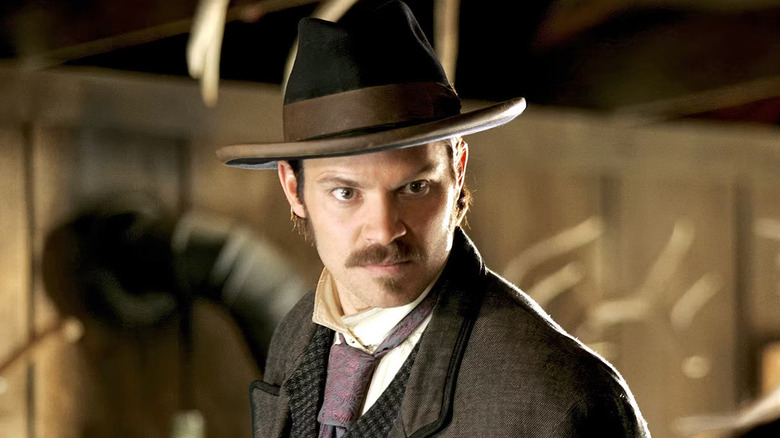
Starring Timothy Olyphant and Ian McShane as men forging their futures at seemingly opposite ends of the moral spectrum, "Deadwood" is a true television epic about the bloody struggle to survive the dawning of a new era. It's often a demanding deconstruction of the Western genre — but one that rewards careful viewers as richly as the gold mines of South Dakota.
Despite universal acclaim from critics (though it won just eight of its 28 Emmy nominations), "Deadwood" was cancelled prematurely after three seasons. It wasn't until 2019 that the series got a proper sendoff through an HBO film. Its fanbase stayed true throughout that decade of drought, maintaining "Deadwood's" legacy as one of the best and most underrated dramas of all time.
2. The Wire
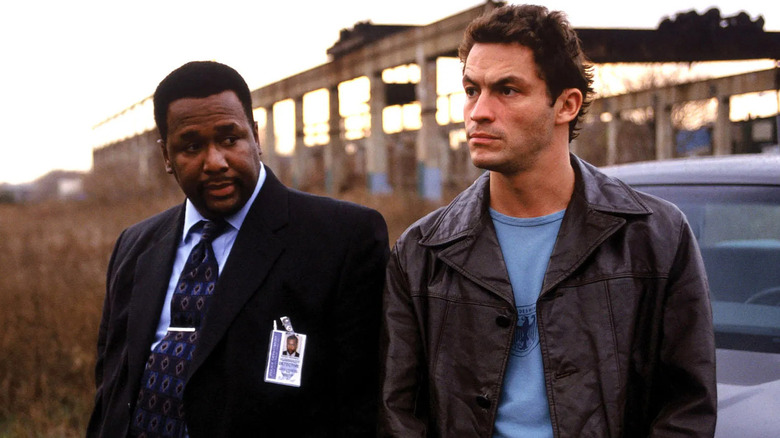
Where "The Shield" limited itself largely to a single unit and a few ostensibly extraordinary bad apples, "The Wire" did something far more ambitious — and arguably more important. David Simon and Ed Burns invited viewers across the country to face the reality unfolding on the streets of Baltimore, where the police, schools, and political establishment are decisively losing the so-called "war on drugs."
Rather than portray the agents of these institutions as helpless, infallible idealists or, conversely, white-collar criminals cartoonishly exploiting a crisis, "The Wire" constructed brilliant three-dimensional characters. The exemplar of the ensemble on the side of "law and order" is Dominic West's Jimmy McNulty — not a bad cop, but certainly not a good or even reliably competent one, often compromised by the unreasonable demands of his job as much as his own selfish, human needs. Through the eyes of characters like him, "The Wire" questions how much you can change a system that has already shaped you. Of course, the series was also famous for its empathetic portrayal of criminals like Omar Little (Michael K. Williams). Their actions are contextualized and explained, rather than patronizingly absolved or dismissed, making their individual moral descents genuinely tragic.
"The Wire" was never a hit on TV. During its five-season run, it was nominated for just two Emmy Awards. Today, it's rightfully and frequently debated as one of the greatest TV shows ever made.
1. The Sopranos
This isn't a shocking way to end our list. But it's really the only correct way.
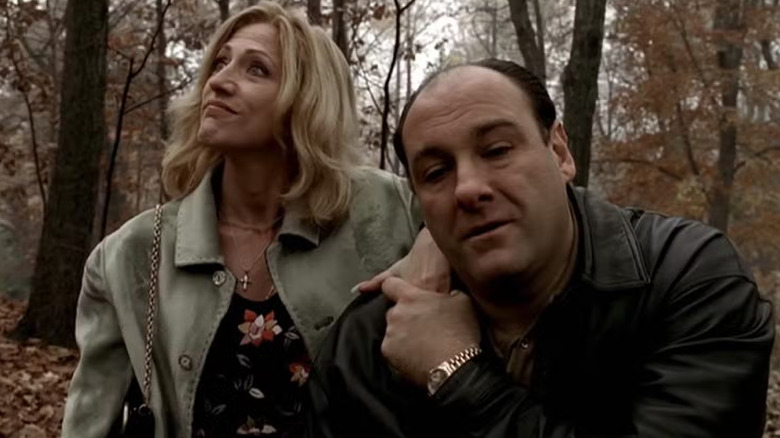
Heralding the rise of HBO as a network and the Golden Age of TV at large, "The Sopranos" immediately positioned itself as a challenging, important work of television. The tragedy of Tony Soprano (James Gandolfini) subverts the expectations of the mob drama subgenre and the medium of television as a whole, unfolding through a series of distinctive short films that prioritized long-term character growth over immediate payoff. Every season is thus near-perfect in hindsight and endlessly rewatchable.
Throughout its six-season run, "The Sopranos" was nominated for 112 Emmy Awards, winning 21 of them, including two awards for Outstanding Drama Series. The series helped establish HBO as the destination for prestige TV, influenced countless series (from "Breaking Bad" to "The Penguin"), and continues to age like a fine Chianti both stylistically and culturally. It had such a clear vision of where America was and where it was headed, watching it now carries an eerie mixture of nostalgia and foreboding understanding. Quasimodo may not have predicted all of this, but David Chase might've.
Suffice it to say, "The Sopranos" isn't just regarded as the best TV show made in the 2000s — it might be the best TV show ever made, period.