

15 Best Warner Bros. Movies Of All Time, Ranked
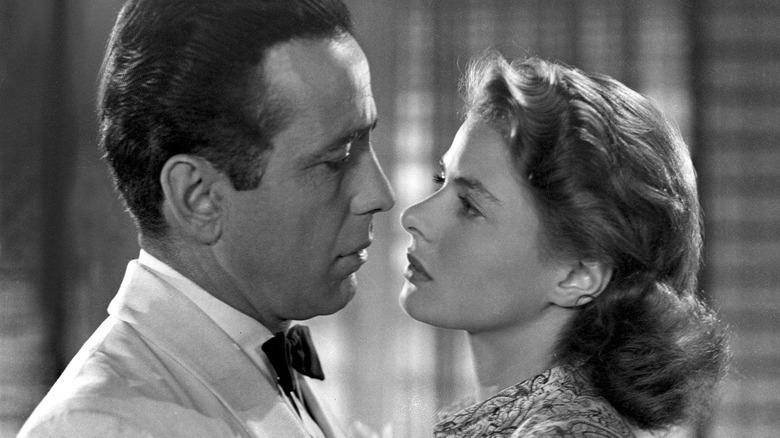
Founded on April 4, 1923 by the four Warner brothers, Harry, Albert, Sam, and Jack, Warner Bros. has been a major presence in Hollywood for over a century. Since then, the studio has released iconic blockbusters and boundary-pushing films virtually every decade. Warner Bros. has teamed up with some of the most influential filmmakers to ever grace the medium, including Stanley Kubrick, Martin Scorsese, and Howard Hawks. Simply put, Warner Bros. is a longstanding Hollywood institution and is the studio likely behind many of your personal favorite movies.
With Paramount poised to acquire Warner Bros., the venerable studio's future remains uncertain, as does much of the movie industry. This makes spotlighting the greatest releases from Warner Bros. all the more timely today, celebrating the studio's creative achievements. Whether it's genre-defining movies or films containing some of the most iconic performances ever recorded for the screen, we're highlighting the greats.
Celebrating the studio's extensive history, these are the best Warner Bros. movies of all time, ranked.
15. Blazing Saddles
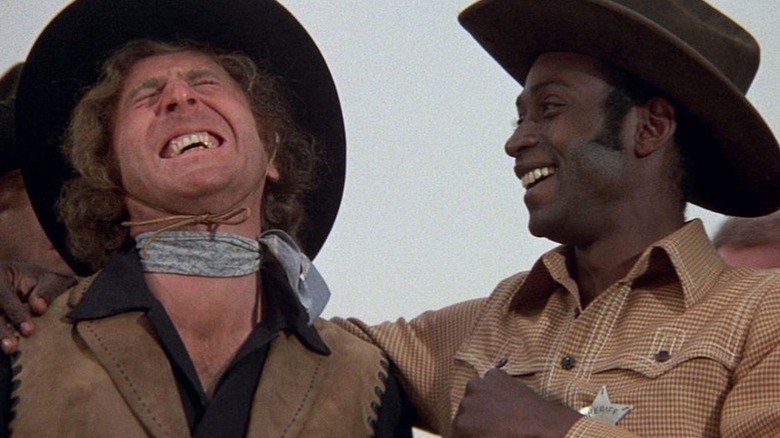
Warner Bros. has delivered countless memorable comedies over the years, including "Caddyshack" and "National Lampoon's Vacation." That said, "Blazing Saddles" is in a league of its own, both the funniest and most daring movie that filmmaker Mel Brooks has ever made. The movie has a Black sheriff, Bart (Cleavon Little) assigned to a frontier town to incite the racist locals and make the community vulnerable to a land grab. From there, the humor veers into the progressively absurd, culminating in the characters taking over the Warner Bros. studio backlots.
"Blazing Saddles" is the funniest movie of all time, according to the American Film Institute, which certainly earns it a place here. The gags come in fast and furiously, favoring laughs over logic every time to great effect, leaving the fourth wall obliterated by the time the credits roll. Cleavon Little and Gene Wilder make a pitch-perfect comedic duo, guiding audiences through jokes often powered by racial humor and satire that still has bite over 50 years later. A film that definitely doesn't pull its punches, right from its opening scene, "Blazing Saddles" is the best comedy that Warner Bros. has ever put out.
14. Goodfellas
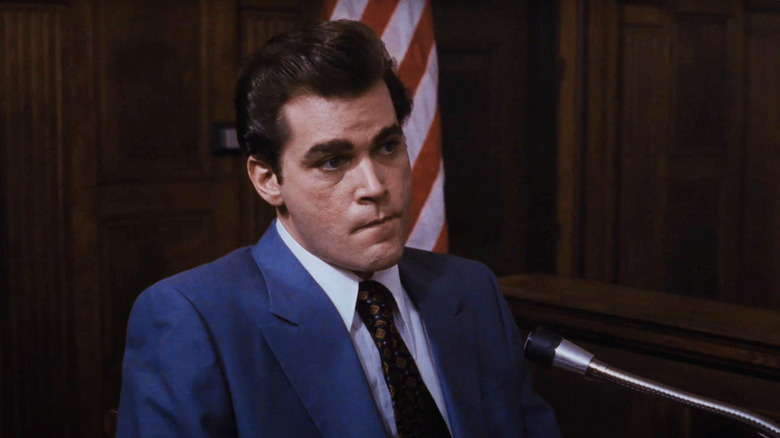
If there's anyone who defined the modern mob movie, it's filmmaker Martin Scorsese, starting with his 1990 movie "Goodfellas." The real life inspiration behind "Goodfellas" is mobster-turned-informant Henry Hill, with Ray Liotta playing the New York-based crook. The movie chronicles Henry getting mixed up with the mob, rising through the ranks in the '60s and '70s. Accompanying Henry on his dangerous rise and fall arc are fellow mobsters Jimmy Conway (Robert De Niro) and the hot-headed Tommy DeVito (Joe Pesci).
There is an underlying authenticity that informs a lot of "Goodfellas," really making the movie feel like it comes from a personal place for Scorsese. The Italian American filmmaker even goes as far as to cast his own mother in the film, with this genuine domesticity elevating the movie's prominent family-based sequences. At the same time, Scorsese punctuates the story with plenty of mobland violence to keep the stakes high, juxtaposed with dark humor to keep the proceedings from feeling overly self-serious. One of the best mob movies you need to see immediately, "Goodfellas" positioned Scorsese as Hollywood's leading crime flick filmmaker.
13. The Adventures of Robin Hood
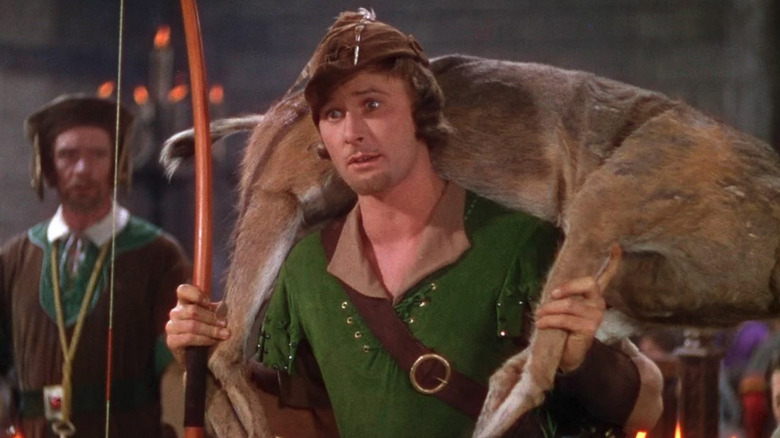
The movie that effectively immortalized Errol Flynn as a timeless Hollywood icon is the 1938 swashbuckler "The Adventures of Robin Hood." Playing the titular 12th century archer, Flynn commands every scene he's in, whether they're action-packed set pieces or quiet conversational sequences. The movie recounts Robin Hood leading his Merry Men against the villainous Prince John (Claude Rains) and his lethal enforcer Guy of Gisbourne (Basil Rathbone). In between thwarting Prince John's tyranny and evading his attempted ambushes, Robin romances the lovely Maid Marian (Olivia de Havilland).
Nearly 90 years later, Errol Flynn is still the definitive Robin Hood to grace the silver screen, effortlessly carrying much of the film. His swordfights against Rathbone's Guy are among the most memorable in the medium, expertly directed by Michael Curtiz and William Keighley, particularly the movie's climactic duel. Similarly, Flynn's chemistry with de Havilland is palpable and arguably never better, in the third of eight movies the duo would make together. Providing a rousing sense of fun that never lets up, "The Adventures of Robin Hood" is an enduring masterclass in delivering on-screen charisma.
12. Inception
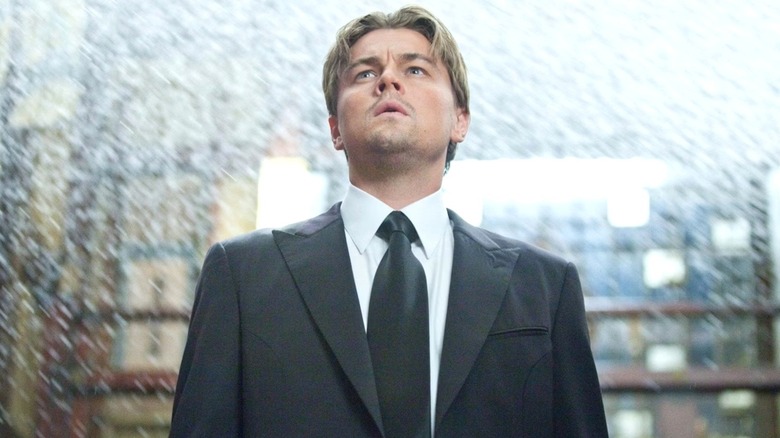
Nine of filmmaker Christopher Nolan's movies have been produced and distributed by Warner Bros., including the 2010 sci-fi thriller "Inception." One of the biggest original box office hits ever, the movie has Cobb (Leonardo DiCaprio) lead a team of specialists to steal secrets from targets by invading their dreams. The team's latest heist involves them embarking on a multi-layered dream to incept a dream into a high-profile figure, braving his nervous system's regimented defenses. Through this imaginative premise,
Over a decade after its release, "Inception" tops IMDb's list of the best sci-fi movies of all time, over genre heavy hitters like "Alien" and "Star Wars." The movie is arguably the most tightly constructed that Nolan has ever crafted, with its final act playing out across multiple set pieces, each interlinked across different time dilations. The movie also features one of the best ensemble casts Nolan has ever assembled, backed by a booming score composed by Hans Zimmer that continues to define his work. An ambitious triumph cementing Nolan as a true visionary bringing some of the most original ideas to the big screen, "Inception" remains Nolan's masterpiece.
11. The Big Sleep (1946)
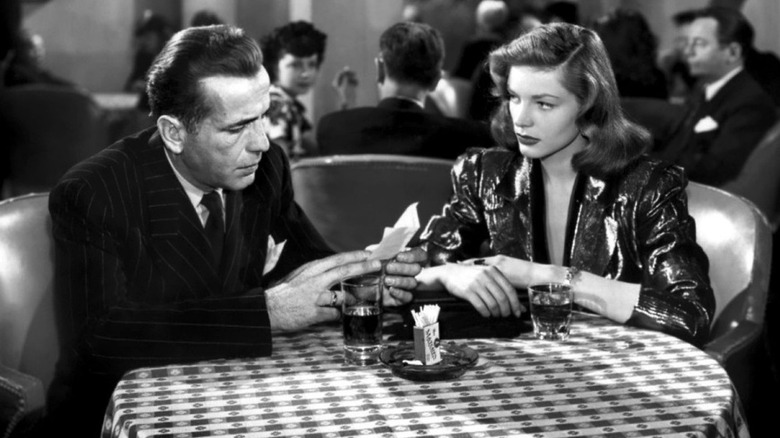
Humphrey Bogart was reigning king of noir cinema in the '30s and '40s, playing memorable private investigators like Sam Spade. One of Bogart's most career-defining roles was playing Philip Marlowe in "The Big Sleep," with Marlowe investigating a blackmail case that quickly leads to a healthy amount of murder. This pairs up Marlowe with Vivian Rutledge (Lauren Bacall), the older sister of the blackmail target in a criminal conspiracy that grows more complex as the movie proceeds. Even as the stakes escalates, Marlowe remains as cool as ice, with Bogart infusing his performance with plenty of dry wit.
When putting this list together, I was admittedly torn between including either this film or Bogart's earlier noir movie, "The Maltese Falcon." But the major strength that "The Big Sleep" has over "The Maltese Falcon" is the sensational on-screen pairing of Bogart and Bacall. Their chemistry led to an eventual real-life coupling and marriage that makes the whole movie feel more electric. One of the best noir movies ever made, Bogart was never cooler than he is in "The Big Sleep," with a heck of a scene partner to elevate the material.
10. Heat (1995)
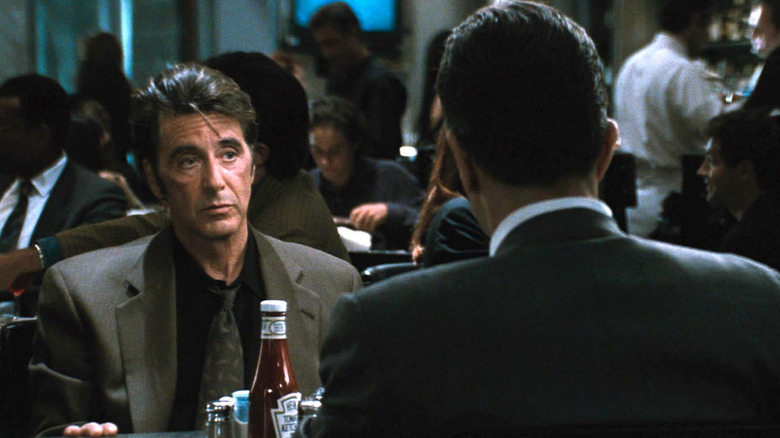
Up until its upcoming sequel, the only movie filmmaker Michael Mann directed for Warner Bros. is arguably his finest, "Heat." The 1995 movie revolves around the antagonistic dynamic between bank robber Neil McCauley (Robert De Niro) and Los Angeles police detective Vincent Hanna (Al Pacino). That cat-and-mouse energy goes to the next level as McCauley and his crew plan a massive heist in Downtown Los Angeles, which Hanna anticipates. Despite operating on opposite sides of the law, the respect between the two men is visible, illustrated in the movie's legendary diner scene between the characters.
Though Michael Mann doesn't consider "Heat" to be a crime movie, let's be real, it's a crime movie and darn good one at that. The heist sequences are some of the most tautly executed for the silver screen while the cast is in top form. While Mann has directed several excellent movies since, none have quite surpassed the bar set by "Heat," also standing as a highlight for Pacino and De Niro. A masterclass in cops-and-robbers stories that inspired other standout films like "The Dark Knight," "Heat" is a modern classic.
9. Dirty Harry
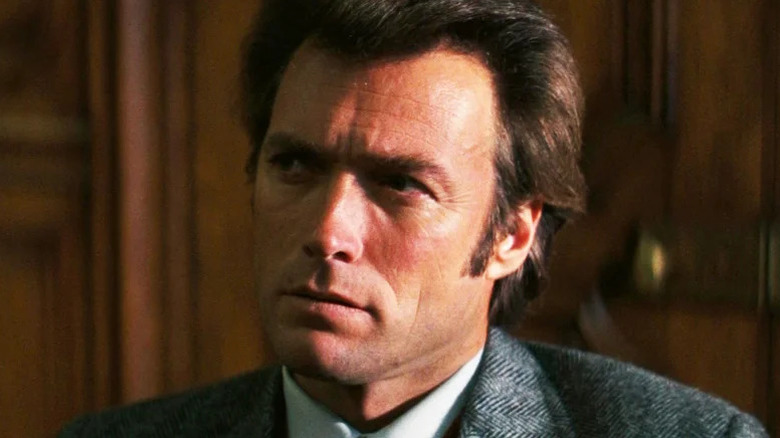
The concept of a cop defying superiors for the greater good was popularized by the 1968 movie "Bullitt," but those enduring tropes were more saliently presented in "Dirty Harry." The 1971 crime thriller gave star Clint Eastwood an iconic role outside of the Westerns he was best known for at the time and one cinema's most quotable cops. The movie pits San Francisco police detective Harry Callahan against Scorpio (Andy Robinson), who was loosely based on the Zodiac killer. The film's success spawned an entire series of "Dirty Harry" movies, but the 1971 original is still far and away its best.
Most people remember "Bullitt" for its stellar centerpiece car chase, but "Dirty Harry" really solidifies the bad boy police detective sub-genre beyond a single set piece. Clint Eastwood brings abrasive dark humor to the title role and a gruff demeanor that grounds the whole movie. This is matched by an unsettling antagonistic performance from Robinson, as he and Harry clash throughout the Bay Area. Embracing the controversial elements of its premise, including its fascistic underpinnings, "Dirty Harry" defined cop movies for decades, predating similar films like "The French Connection."
8. The Treasure of the Sierra Madre
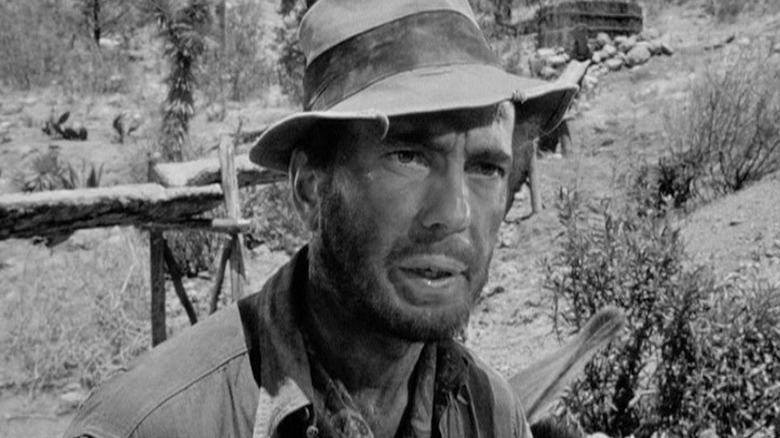
Humphrey Bogart doesn't get enough credit for the movies that he made outside of the noir genre, which includes the hard-bitten Western "The Treasure of the Sierra Madre." Bogart plays drifter Fred C. Dobbs, who falls in with two partners to go gold prospecting in Mexico. Finding a valuable lode, the group strike it rich but Dobbs grows murderously paranoid if he can trust the others. This mounting suspense and distrust fuels a bloody ending to "The Treasure of the Sierra Madre," juxtaposed by cruel irony.
"The Treasure of the Sierra Madre" gives Bogart his most despicable protagonist role in his celebrated career, which he takes full advantage of. The movie has its fair share of gunplay and hardscrabble stakes, but the real defining element is the greed and paranoia that informs so much of the tension. Bogart really sells his character becoming increasingly unhinged by the fortune he's amassed, before all that suspense crescendos in the movie's climax. The film was named by Clint Eastwood as one of his favorite Hollywood classics, and the Academy Award-winning filmmaker certainly has informed taste because the 1948 flick deserves the shoutout.
7. The Matrix
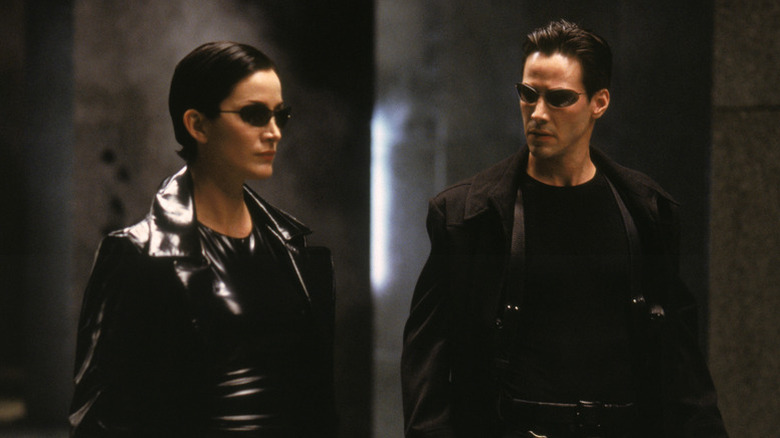
While the legacy of "The Matrix" may be distorted by its line of middling sequels, the 1999 movie really is a singular achievement when taken on its own merits. The movie has a hacker named Neo (Keanu Reeves) discover his world is an elaborate simulation by machines who have subjugated humanity. Falling in with freedom fighters, Neo taps into the possibilities of this cyberspace reality while learning about his prophesied destiny. Illustrating this reality-bending premise are cutting-edge visual effects that still hold up over 25 years later and tightly choreographed action set pieces.
Upon its debut, "The Matrix" broke the box office and cinema was never the same, with its visible impact noticeable relatively quickly. But while most viewers remember the movie best for the visual effects, the film boasts a strong story with clear existential themes. The movie's ensemble cast is firing on all cylinders as well, with Reeves joined by a breakout Carrie-Anne Moss and cool-as-ice performances from Laurence Fishburne and Hugo Weaving. An absolute triumph from the Wachowskis, "The Matrix" deserves to shine brighter than what became of its premise as a true sci-fi classic.
6. Unforgiven (1992)
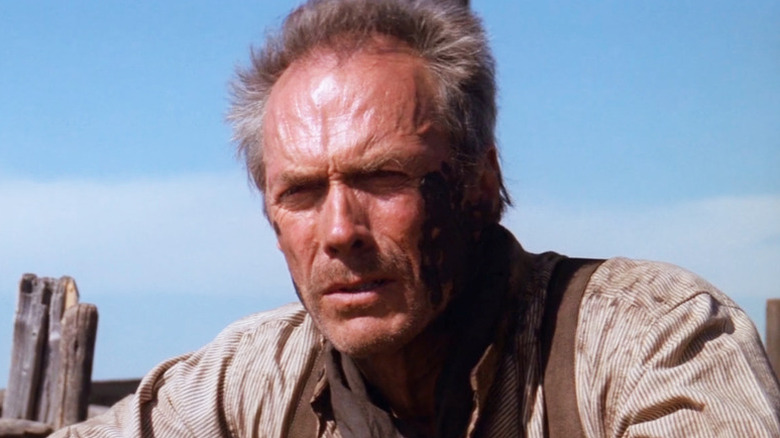
Some of the best movies directed by Clint Eastwood are Warner Bros. productions, including Westerns like "The Outlaw Josey Wales." But towering at the pinnacle of Eastwood's filmography, both as a director and actor, is his 1992 postmodern Western "Unforgiven." Eastwood stars as Will Munny, a former gunfighter who ditched his violent ways to raise his children as a single father on a failing farm. Munny is drawn back into gunslinging when he accepts a bounty to track down several vicious cowboys, putting him on a collision course with Sheriff Bill Daggett (Gene Hackman).
A fan poll named "Unforgiven" as the best Clint Eastwood movie, and, while perhaps unsurprising, that assessment is right on the money. Eastwood gives his most nuanced performance as Munny, conveying so much to the audience, even in his character's quiet scenes that punctuate the movie. Beyond Eastwood's on-screen presence, the movie plays out like a requiem to the genre that made him a star, deconstructing the image of the gunslinger until its tense climax. One of the greatest Westerns ever committed to the screen, "Unforgiven" is an understated achievement for the genre.
5. A Streetcar Named Desire (1951)
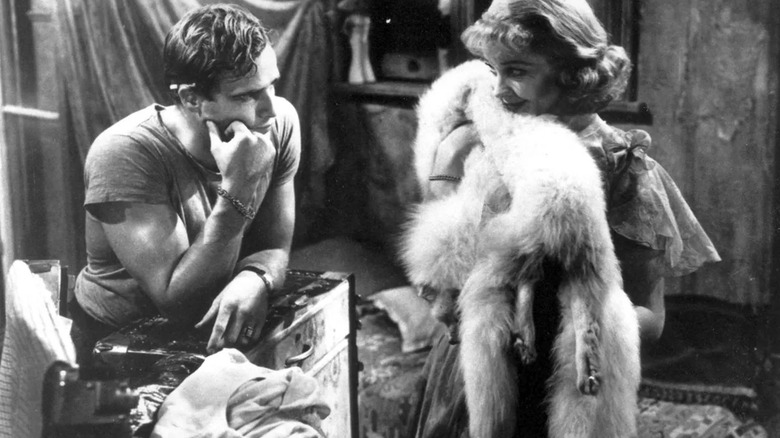
Warner Bros. has the distinction of working with some of the best actors of all time, not the least of which being Marlon Brando. The best movie that Brando did with Warner Bros. was the 1951 adaptation of the Tennessee Williams' play "A Streetcar Named Desire." Brando stars as the crude cad Stanley Kowalski, who terrorizes his family in New Orleans. This comes to a head between Stanley and his sister-in-law Blanche duBois (Vivien Leigh), with the latter suffering from her own mental health issues.
When it comes to staging cinematic melodrama, "A Streetcar Named Desire" is a masterclass in translating stage play to the silver screen. A relative unknown at the time, Brando lights up the screen, bringing a raw and unpredictable energy, especially compared to mainstream Hollywood actors at the time. He's matched by veteran actor Vivien Leigh and steady direction from Elia Kazan, bringing this moody tale to life. One of the best Marlon Brando movies, "A Streetcar Named Desire" revels in the contempt bred by familiarity.
4. Blade Runner
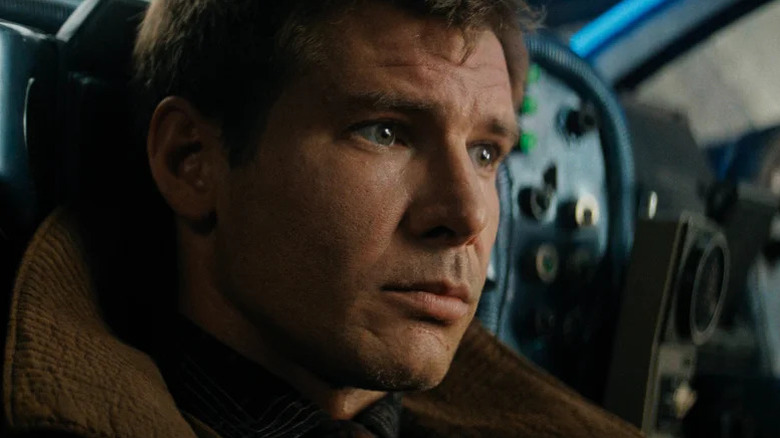
Compared to escapist sci-fi movies like "Star Wars" and "Star Trek" dominating the genre at the time, filmmaker Ridley Scott weaved a much more grounded story with "Blade Runner." Set in the then-future of 2019, a group of lifelike androids, known as replicants, go on the run in Los Angeles. Police detective Rick Deckard (Harrison Ford) is tasked with putting them down while contending with his own identity crisis. Across this sumptuously realized cyberpunk vision of the future, there is plenty of neo-noir action and philosophical themes about the nature of self-actualization.
Making "Blade Runner" was the hardest thing Ridley Scott ever did, a challenge that extended to the movie's post-production. There are multiple versions of the 1982 movie and, for the purposes of our list, the 2007 final cut giving Scott full creative control, is the best. The movie offers an enormously detailed and bleakly plausible future than many of its contemporaries couched within a futuristic manhunt. Both the greatest Ridley Scott film and the best cyberpunk movie ever made, "Blade Runner" has only improved with age.
3. The Exorcist
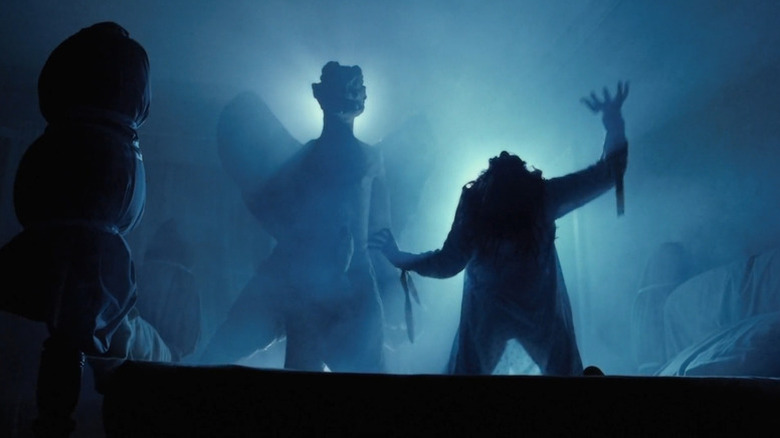
Before this current wave of prestige, or elevated, horror movies that we're enjoying, "The Exorcist" cleared as a massive critical and commercial success. Released in 1973, the movie has Catholic priests Lankester Merrin (Max von Sydow) and Damien Karras (Jason Miller) try to save a girl from demonic possession. This becomes more harrowing as it becomes clear that the hellish Pazuzu is more cunning than the two priests anticipated. This ordeal turns into a crisis of faith, particularly for Karras, who had his own misgivings about his vocation prior to learning about the case.
Over 50 years later, "The Exorcist" is the most respected horror movie of all time, without compromising its frightening power. There is a steady escalation in the early portions of the film, with the audience getting to know Regan (Linda Blair) and her family before all hell breaks loose. That gives way to truly shocking scares punctuated by vulnerable soulful acting from von Sydow and Miller. The template for all possession movies, including with Warner Bros.' subsequent "Conjuring" series, "The Exorcist" stands as the studio's greatest horror film.
2. 2001: A Space Odyssey
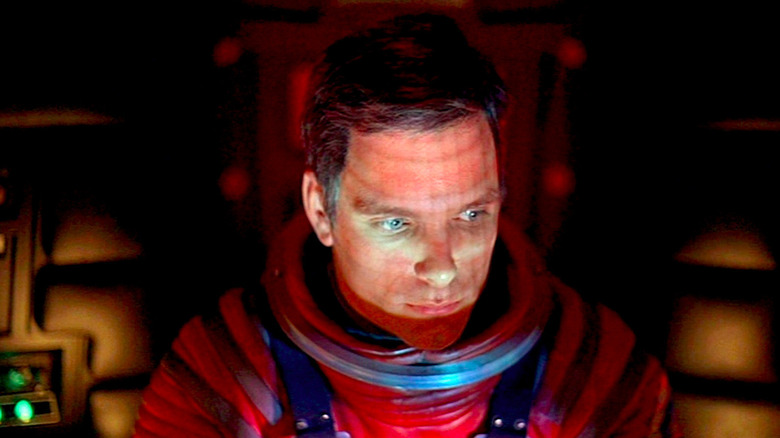
"2001: A Space Odyssey" is admittedly an interesting inclusion on this list but certainly not because of any question about its singular quality. Originally produced and released by MGM in 1968, the movie was officially acquired by Warner Bros. in 1996. This was done to bolster the studio's library of timeless movies to add to the programming line up of its cable channel Turner Classic Movies. That means "2001" has legally been a Warner Bros. movie for 30 years, with the studio handling all subsequent licensing, restorations, and re-releases, both theatrically and on home video.
But that's enough justification of how a movie originally produced by MGM makes this list, because "2001: A Space Odyssey" is celebrated filmmaker Stanley Kubrick's best movie. The movie posits that humanity's evolution into an eventual spacefaring species is linked to a strange monolith that appeared on Earth during its prehistory. From there, Kubrick delivers an absolute technical marvel as a spaceship's crew finds themselves at the mercy of their malevolent artificial intelligence. The bar against which all outer space-bound sci-fi stories will be judged, "2001: A Space Odyssey" stands as Kubrick's existential magnum opus.
1. Casablanca
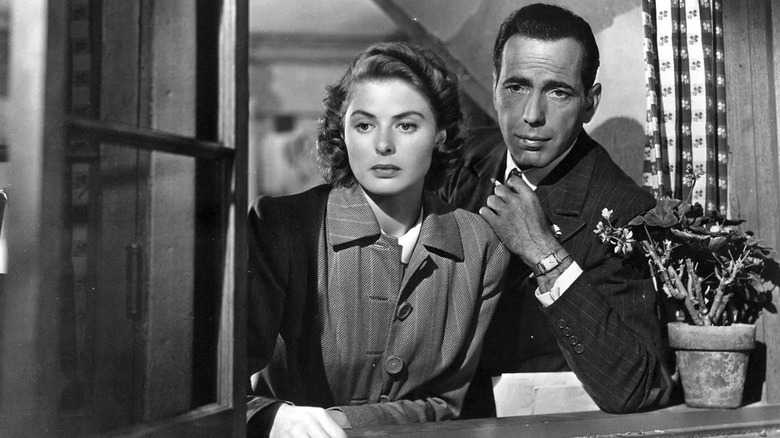
If there's one thing clear about this list, it's that Humphrey Bogart dominated Warner Bros.' biggest movies during Hollywood's golden age. The best Humphrey Bogart movie is the 1942 World War II film "Casablanca," with Bogart starring as nightclub owner Rick Blaine. Initially trying to remain uninvolved from the war tearing the globe apart, Rick is drawn out of his apathy by the return of his former lover Ilsa Lund (Ingrid Bergman). This culminates in one of the most iconic closing scenes in cinematic history as Rick has to decide what he has to personally sacrifice to do the right thing.
"Casablanca" boasts a near-perfect score on Rotten Tomatoes, and this distinction is still well-warranted over 80 years after its release. Bogart is at his sardonic best as Rick Blaine while the movie's bittersweet tale of ill-fated romance eschews the usual expectations for a happy ending. Backing Bogart and Bergman up is a perfectly assembled supporting cast, including Claude Rains, Sydney Greenstreet, and Peter Lorre. A masterpiece that continues to epitomize Hollywood's golden age, "Casablanca" is a timeless classic that lives up to its iconography.