

10 Worst Decisions In The Boys Season 5
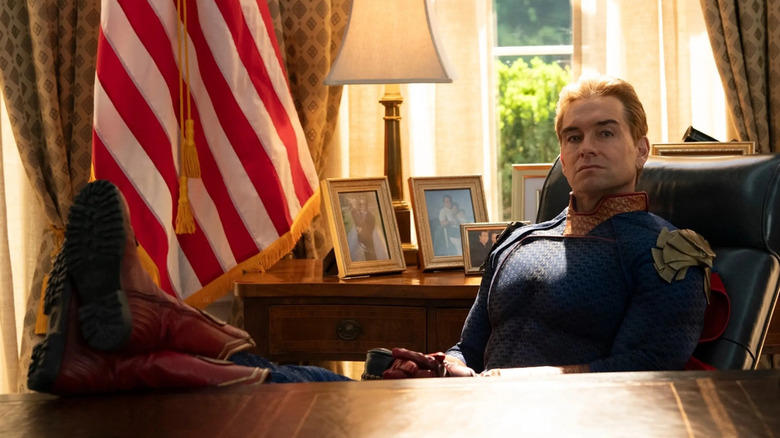
Look, maintaining a high level of quality across multiple seasons for any show is a Herculean feat, let alone for a series as popular and widely praised as "The Boys." The Prime Video superhero brought its subversive action to a close with its fifth and final season, and while we think it went out on top, fans were divided overall. In fairness, even when enjoying the season itself on a broader level, there are several glaring flaws. Some of these issues are linked to behind-the-scenes developments, while others are creative decisions that just fell flat.
The bottom line is that we like "The Boys" Season 5, but there are some issues that are impossible to ignore. Many "The Boys" fans shared similar thoughts about Season 5's pacing and execution, and, frankly, they're not wrong. That said, we've identified even more specific problems that held the final season back from standing at the same level as its predecessors. These are the 10 worst decisions in "The Boys" Season 5, bringing the Prime Video series to an uneven end.
Homelander's big secret was inconsequential
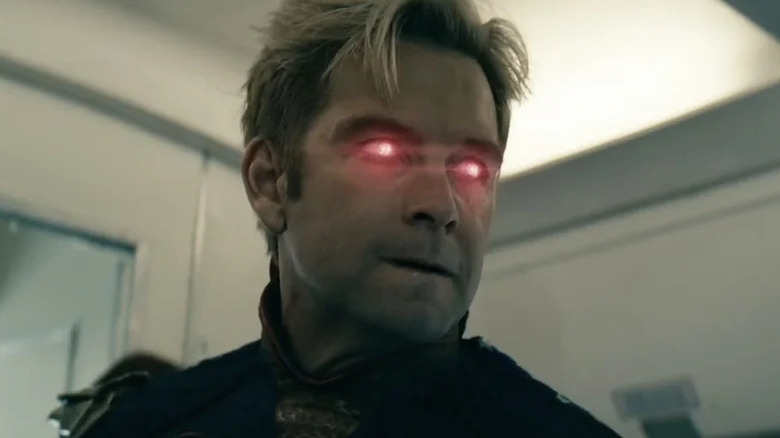
Arguably, the defining moment of "The Boys" was Homelander (Antony Starr) botching the rescue of a hijacked airliner, resulting in a crash that killed everyone on board. The sequence unveiled just how vile the presumed superhero truly was and hung over the show, even informing the plot of its spin-off, "Gen V." One of the few things keeping Homelander in check in early seasons was the threat that video footage from this plane crash would leak and expose him to the world. Homelander's worst secret finally comes out in "The Boys" Season 5 premiere ... and it doesn't really matter in the grand scheme.
With so much of Homelander's influence tied to corporate backing from Vought International, former teammate Annie January (Erin Moriarty) leaks the crash footage during the shareholder meeting. Though this does shake confidence in Homelander's heroic image, his associates largely keep the PR crisis damage under control, and it has little visible consequence on his plans. Homelander had literally been getting away with murder in the public eye before, but this long-awaited leak does feel anticlimactic. Nobody really expected a leaked video to topple Homelander, but after seasons of build-up, it does feel particularly inconsequential.
Homelander's god complex
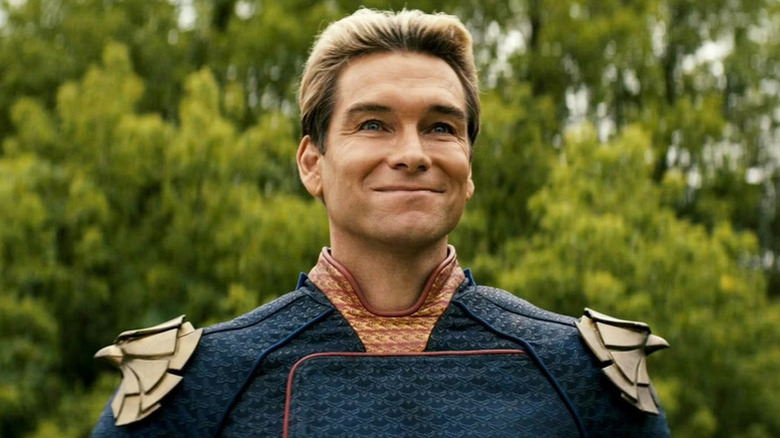
Speaking of Homelander, he gets one of the strangest arcs in Season 5 when his final plan is revealed. Not satisfied with effectively running Vought International and the United States through his puppet President, Homelander is convinced that he should become a literal god. This direction is spurred by Homelander receiving a seemingly holy hallucination of his former lover, Madelyn Stillwell (Elisabeth Shue), convincing him that he should become as beloved as Jesus Christ. Homelander convinces his reluctant teammates to support this public campaign to have him recognized as a divine savior, murdering Firecracker (Valorie Curry) when he learns that she doubts him.
The Homelander of "The Boys" Season 1 is very different from the supervillain he became, and while character evolution is natural, it took a weird turn in Season 5. Homelander was once a calculating and cunning villain, as manipulative as he was physically deadly in his quest to maintain and accumulate power and adoration. In Season 5, he comes off as a delusional madman who literally believes he is ascending to godhood and that everyone else should get in line behind him. That surprisingly earnest belief from Homelander for this feels off, and there could've been a more logical way for him to seek out the adulation he craves.
Bringing back Homelander's milk obsession
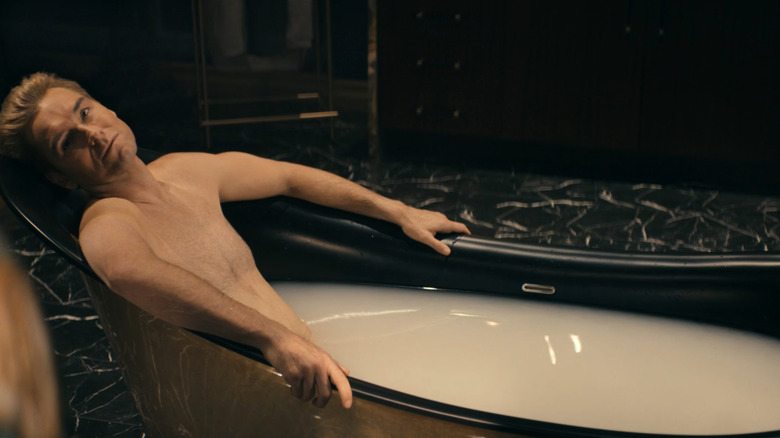
If there is one running joke in "The Boys" that long overstayed its welcome, it's Homelander's unhealthy obsession with milk. This character trait stems from the character's deep-seated mommy issues and was introduced in the series' second episode when he furtively drank a bottle of breast milk. Reportedly, Antony Starr is responsible for the bizarre milk motif becoming a recurring gag throughout the series for Homelander. After appearing for much of the show, the trope resurfaces in the fifth episode, with Homelander seen bathing in a tub full of milk.
After five seasons of television, we get it: Homelander has a pathological fixation on milk extending to pure fetishism. A few offhand references to it throughout Season 5 are fine, like Homelander learning Mother's Milk's name, because they feel more organic. The sight of Homelander casually sitting naked in a tub full of milk is a clear reminder that the joke has been done to death. What was initially a twistedly funny character moment for the supervillain is definitely something we won't miss now that the show is done.
Completely revising Kimiko's character
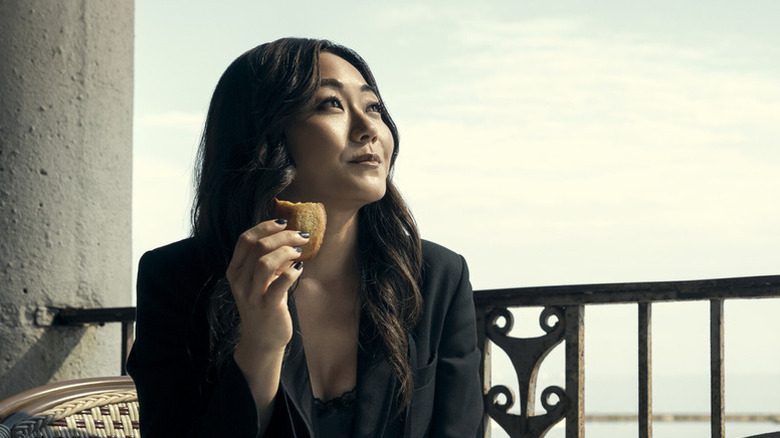
"The Boys" Season 5 premiere made a big change for Kimiko by restoring her ability to speak, something that was teased in the Season 4 finale. More than just regaining her voice, Kimiko appears even more chipper than usual, speaking often and cheerfully in contrast to others. This reflects the character entering a full-fledged romantic relationship with Frenchie (Tomer Capone) after seasons of the two growing close. But while Kimiko has always maintained an innocence about her, this talkative iteration present in Season 5 feels like a completely different character and not a better one.
To be abundantly clear, this is not a critique of Karen Fukuhara's performance as Kimiko, who has consistently been a scene-stealer throughout the series. But with the material that she's given in Season 5, it feels like the show doesn't know how to write for a character who can now talk. That feels like a fundamental misunderstanding of the character from a writing standpoint rather than an extension of the Kimiko we followed for the past four seasons. Kimiko was always a character who retained her agency and assertiveness, but her restored voice takes those sensibilities in a noticeably different direction.
Season 5 barely utilizes its smartest character
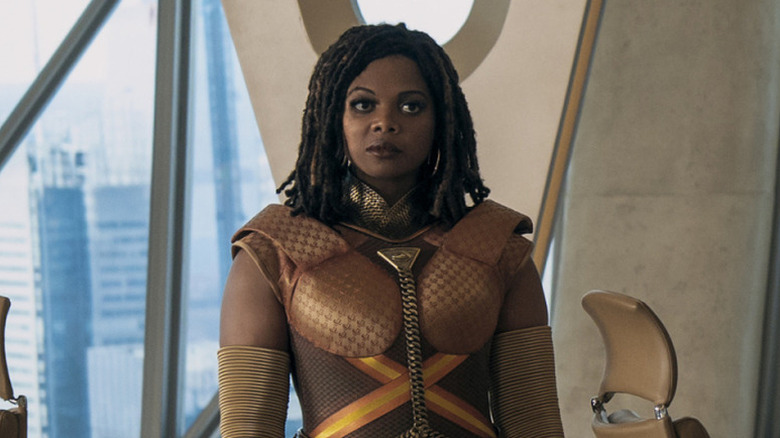
In addition to Kimiko, "The Boys" Season 5 is also quite different for Sister Sage (Susan Heyward). The smartest person in the world, Sage uses Homelander and the Seven to develop her plans for society. As Homelander becomes increasingly unbalanced and his feud with the Boys escalates, Sage appears even more dispassionate about the proceedings than usual, despite the heightened stakes. "The Boys" Season 5 reveals Sister Sage's true goal is for humanity and the Supes to wipe each other out so she can finally live alone in peace.
While this halfhearted motive explains why Sage plays a relatively minimal role in the season, it feels weird that she just trusts that this intended trajectory will unfold. Even as Sage's predictions prove wrong and members of the Seven begin to die, Sage does little to intervene and keep her clandestine goal on track. It was a cinch that Sage wouldn't be directly involved in the final battle, but the pronounced laissez-faire approach almost makes the character's presence superfluous. Sister Sage doesn't feel like a different character in Season 5, but she doesn't particularly add anything in how she's used in the narrative.
The futility of V1
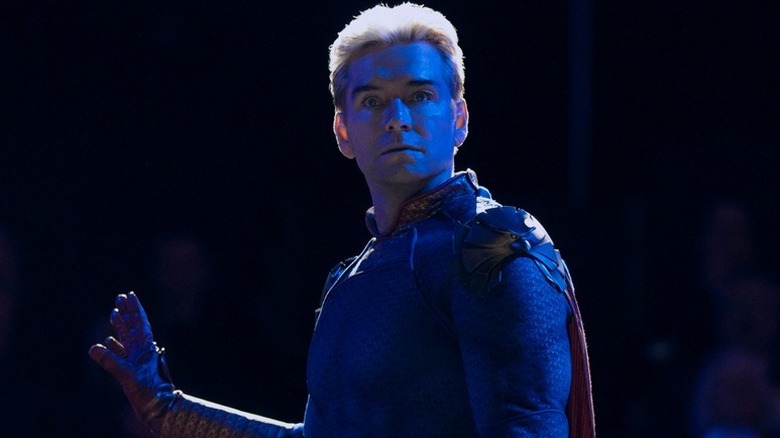
So much of "The Boys" Season 5 revolves around V1, an experimental serum teased throughout the second and final season of "Gen V." This compound is the original formula that gave the first generation of Supes, like Soldier Boy (Jensen Ackles), their powers. Season 5 reveals the serum also makes users immune to the Supe-killing virus and ageless, explaining why Soldier Boy and Stormfront (Aya Cash) are in their physical prime decades later. With Homelander aware that Billy Butcher (Karl Urban) has the virus and concerned about his visible aging, obtaining V1 becomes a priority, with Butcher trying to find it first.
V1 effectively serves as a Macguffin to keep Homelander and the Boys occupied for much of the final season as they chase leads on where the serum can be. Homelander ultimately does get and dose himself with V1, rendering the virus subplot to take him down fruitless. Instead, the Boys resort to having Kimiko replicate Soldier Boy's power-nullifying ability to make Homelander vulnerable long enough to kill him. This is not only a strategy that could've been employed all along, but it also makes the importance of V1 feel considerably more empty in retrospect.
Sidelining the Gen V characters
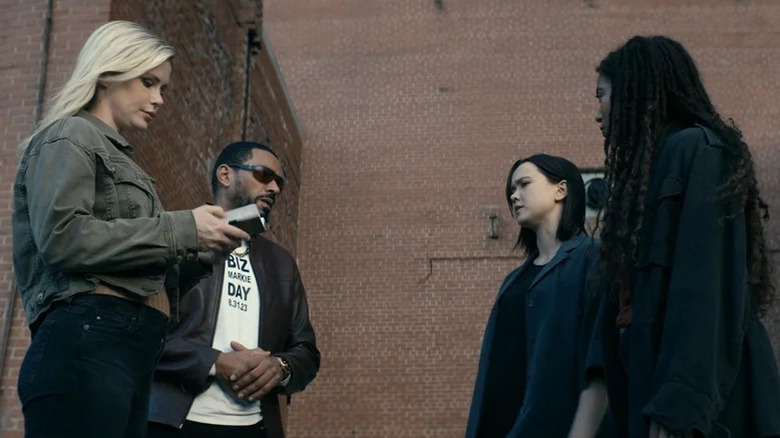
The penultimate episode of "The Boys" Season 5 features a crossover with "Gen V," the young adult spin-off that began in 2023. "Gen V" main characters Marie Moreau (Jaz Sinclair) and Jordan Li (London Thor) briefly appear to give Annie intel on the activities of Homelander's televangelist ally, Oh Father (Daveed Diggs). However, when they offer to help in the upcoming fight, Annie firmly rebuffs both young heroes, to their vocal frustration. In the series finale, Marie and Jordan are joined by classmate Emma Meyer (Lizze Broadway), who is seen escorting refugees fleeing Homelander's oppression to Canada.
For as much as "Gen V" teased a rematch between Marie and Homelander, given her increasing mastery over her powers, the two characters never met again. Series creator Eric Kripke teased that "Gen V" Season 3 would've been about Marie further honing her superpowers before the spin-off was canceled. There really isn't much in "The Boys" Season 5 that sets up that arc or anything particularly interesting for the "Gen V" characters other than a road trip to Canada. As such, the characters' appearances feel like glorified cameos and a bittersweet reminder of the spin-off's untimely end.
Too much setup for Vought Rising
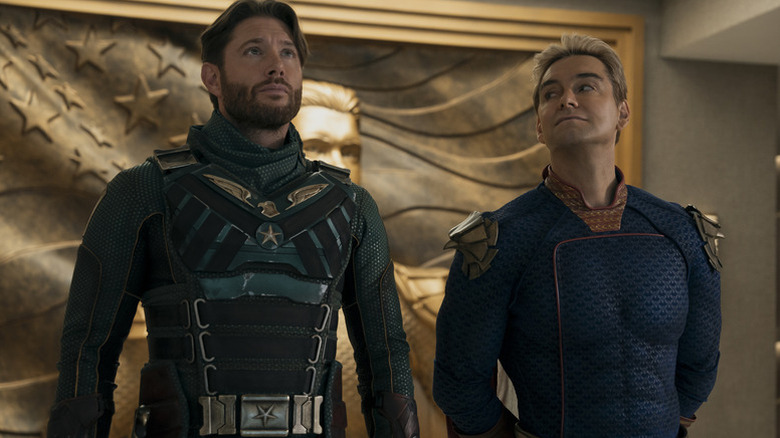
We might not be getting "Gen V" Season 3, but we are getting a prequel spin-off in "Vought Rising" sometime in 2027. There is a lot of setup throughout "The Boys" Season 5 to cue up the main series' latest spin-off, arguably too much. The entire V1 subplot feels more like a way to tee up plot threads and major questions for exploration in "Vought Rising." This includes the tragic romance between Soldier Boy and Stormfront, a mutated character named Quinn (Kris Hagen), and the heroic Bombsight (Mason Dye).
With all the fan complaints regarding filler episodes in "The Boys" Season 5, the "Vought Rising" teases distract too much from the main story. The fourth and sixth episodes in the season are particularly heavy in their setup for the prequel, something that the brief allusions sprinkled elsewhere would've served just as well. Moreover, this underscores the idea that there just isn't a lot for the Boys and Homelander to do other than run around for V1 and that unfulfilling subplot. Some setup for another spin-off is expected, but at the cost of giving "The Boys" Season 5 a more satisfying, organic arc.
A promotional campaign that didn't deliver on its hype
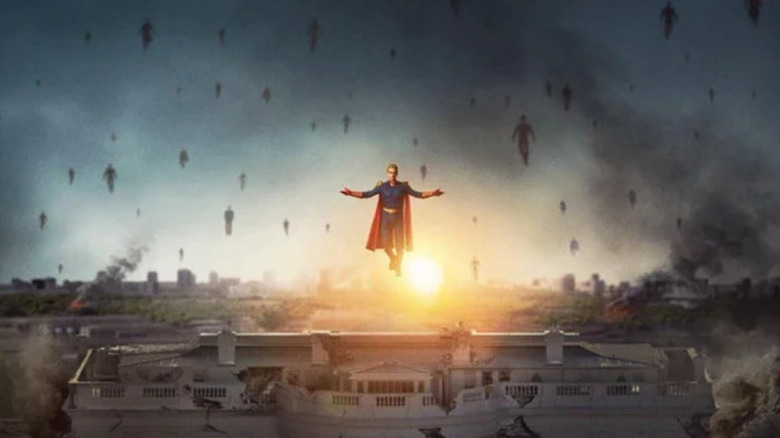
The final battle against Homelander takes place in the White House Oval Office, with Billy Butcher and his team battling through waves of Homelander loyalists before confronting the villain himself. One of the posters for Season 5 depicts Billy walking towards the White House as Homelander hovers above it, with the skies behind him filled with other Supes. Instead, Billy and his allies take a convenient secret underground passage into the White House and make short work of normal armed guards.
Of course, we understand that promotional campaigns and marketing are meant to drum up hype surrounding an upcoming release. We also get that this poster evokes a comic book page straight from the source material by Garth Ennis and Darick Robertson. But talk about a disparity between expectations and execution in the actual White House infiltration and how it was set up. At the very least, the Oval Office showdown is arguably the best sequence in the entire season.
Rushing Butcher's heel turn
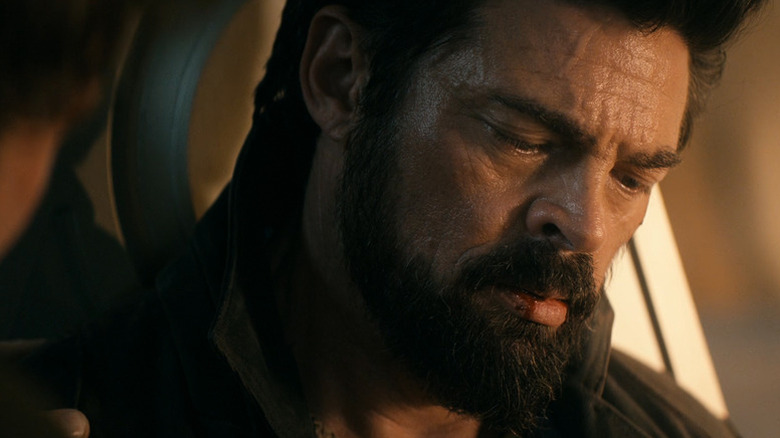
Even with V1, the virus subplot isn't entirely discarded; it instead provides the motive for the final showdown between Butcher and Hughie Campbell (Jack Quaid). After finally killing Homelander in the Oval Office, Butcher becomes quietly despondent after he's rejected by his son, with the death of his beloved dog putting him over the edge. With no white whale left to hunt, Butcher tries to unleash the Supe virus around the world, which would kill untold innocents who have been dosed by Compound V. Hughie opposes this, in no small part because of his relationship with Annie, resulting in him killing Butcher to stop the virus from being released.
In the comic book, where Butcher is a much more psychotically unpleasant character, he rolls right into his Supe-killing agenda after triumphing over Homelander. In the television adaptation, Butcher gets an attempt at humanization, making his heel turn feel all the more forced and rushed. In that sense, the comic book ending is way better than the show in selling Butcher's genocidal break and why Hughie needs to put him down. The show not quite fully committing to Butcher being a villain until the end is what undoes it in setting up Butcher's downfall.