

The Boys' Comic Book Ending Did One Thing Way Better Than The Show
Spoilers for the series finale of "The Boys," "Blood and Bone," ahead.
"The Boys" Season 5 has pacing problems. Yes, series creator Eric Kripke has fired back at fans complaining about "filler," pointing about big story or action beats mean nothing without character development. True enough, but the last act of "Blood and Bone," which tries to condense Billy Butcher's (Karl Urban) long-foreshadowed dark turn into about 15 minutes, really shows Season 5 needed better time management.
The broad strokes of "Blood and Bone" are quite similar to how the "Boys" comics created by Garth Ennis and Darick Robertson ended. After Homelander dies, Butcher still tries to wipe out every supe on the planet with a bio-weapon, but he's confronted and lethally stopped by Hughie. In the comics, however, this happens over multiple issues, constituting the 12th and final volume of the original run, "The Bloody Doors Off."
Homelander dies in issue #65, Butcher begins his plan the next issue, Hughie kills Butcher in issue #71, and then issue #72 is the wrap-up. "Blood and Bone" tries to cover all that in one episode, giving the story and emotions no room to breathe. The "Boys" comics are often dinged for Ennis' edgy and mean-spirited writing, but he wasn't afraid to go all-in on the ending he wanted to tell. I'm not a die-hard fan of the "Boys" comics, but the ending is one part I will always defend.
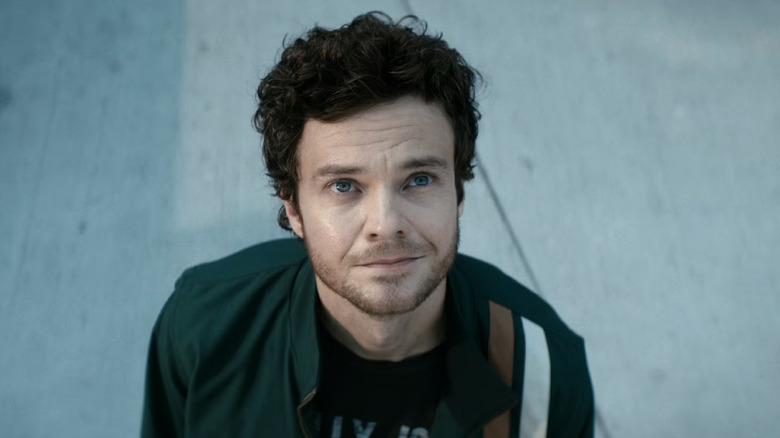
Kripke evidently knew Ennis' ending was the only proper one for "The Boys." Speaking with Deadline, he said Butcher and Hughie's (Jack Quaid) last confrontation was "just about the only thing we knew we were gonna do from the very, very beginning [of making the show]." If so, "The Boys" needed to build it up and let it play out for longer.
The Boys series finale rushes the comic's ending
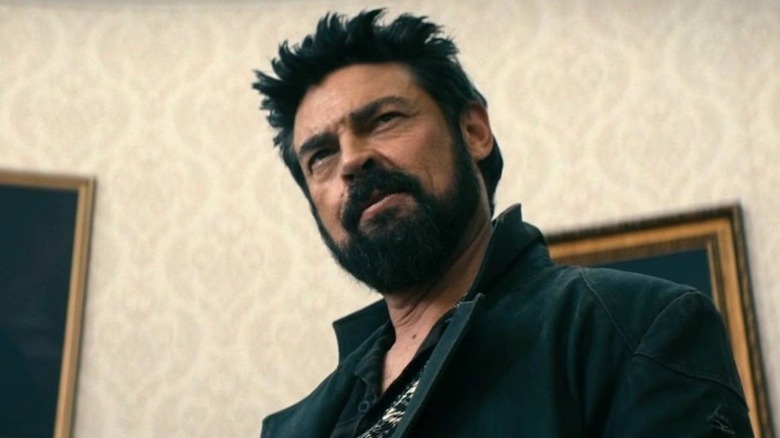
Remember how "The Boys" Season 4 ended with Butcher giving into his dark side, breaking from the rest of the group, and driving off down a literal dark path with the supe-killing virus on hand? To me, that read like a clear sign Season 5 was going all in on Butcher's villain arc. The final season did end like how I expected it to... but it walked backwards getting there. Season 5, Episode 1, "Fifteen Inches of Sheer Dynamite," has Butcher team back up with the Boys and, even though he's bullish on supe genocide by virus, they keep working together the rest of the season.
Now, there wasn't zero build-up for Hughie and Butcher's "last diabolical dance." Season 5, Episode 2, "Teenage Kix," contrasted Hughie forgiving the reformed supe A-Train (Jessie T. Usher) with Butcher holding onto bitterness and vengeance. Hughie says not all supes deserve to die (after all, he loves one of them), but Butcher dismissed that as "Jiminy Cricket, listen-to-your-heart bollocks."
But this wasn't in focus enough. Half of Season 5 (Episodes 3-6) pivoted to a MacGuffin hunt; Homelander wanted the V-One formula to become immortal and immune to the Boys' virus, the Boys wanted to keep it away from him. Since the Boys came up with a new way to kill Homelander quick enough, it all felt like stalling to save the final showdown for the finale.
At the risk of playing armchair coach, before Season 5 aired, I was expecting Homelander to die around Episode 4 or 6. That would leave time for the series to explore Butcher as the main villain in roughly proportion to the comic. Comparing the show ending and the comic ending, I still suspect this imagined structure would've worked better.
The Boys couldn't let Billy Butcher be a villain for long
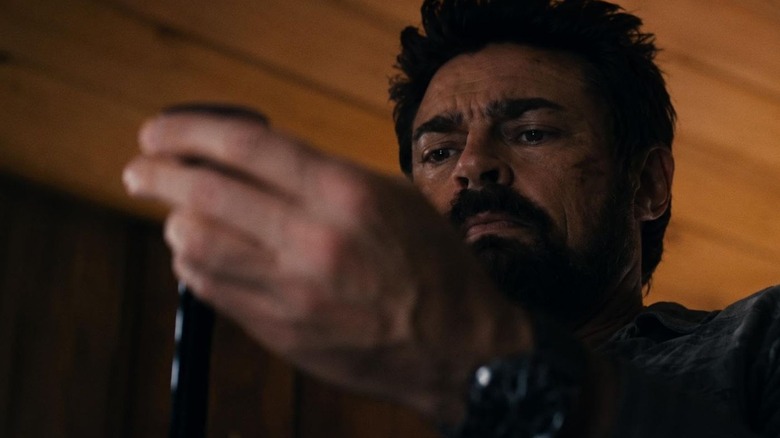
I suspect Antony Starr's incredible, show-defining performance as Homelander was a double-edged sword for "The Boys." Perhaps someone, whether Eric Kripke and his writers or Amazon bigwigs, felt they had to keep Homelander as the main villain until the very end, lest viewers lose interest without him. Or maybe Kripke just thought lingering on the comic ending would be too dour, even for a show like "The Boys."
One of the biggest differences between how the "Boys" comic and TV show end is that, in the former, Butcher kills most of his team: Mother's Milk, Frenchie, and the Female (Kimiko in the series) all die as he prepares his final solution. Only Hughie survives, whereas the show spares M.M. (Laz Alonso) and Kimiko (Karen Fukuhara) and has Homelander kill Frenchie (Tomer Capone) instead. Speaking to Polygon, Kripke explicitly said it was "unsatisfying" to see the Boys murdered in the comic ending, hence the show not pulling that trigger.
In the comics, part of the ending's power is that Butcher isn't making a last minute dark turn. No, rather, horror sets in as the reader and Hughie realize this is what he's been planning all along. The Boys' camaraderie in past issues feel a lot more sinister looking back with a full understanding of Butcher's true self.
This doesn't come through in "Blood and Bone," where Butcher's decision is presented as an impulsive one. He still feels empty with Homelander dead, Vought remains around to create more supes, his stepson Ryan (Cameron Crovetti) rejected him, and his beloved dog Terror passes in his sleep. The "Boys" TV series was afraid to let Billy Butcher be a monster right until the very end.
"The Boys" is streaming on Prime Video.