

15 Best '80s Sitcoms, Ranked
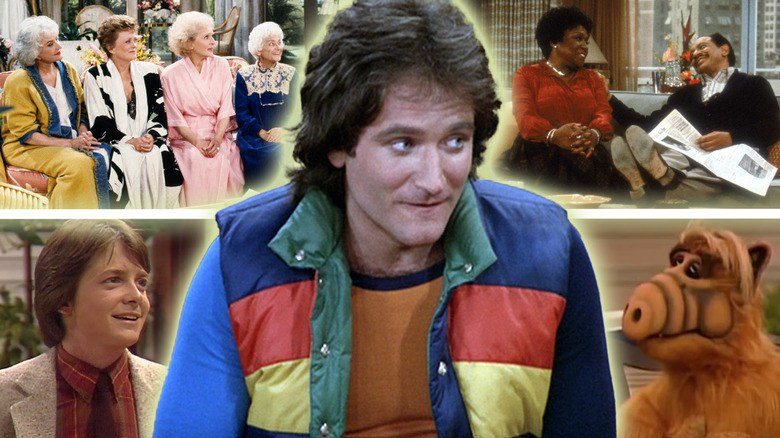
The 1980s are known for great technological advances, bold fashion choices, and tremendous population growth worldwide. The decade was also especially booming when it came to pop culture. The rise of hip-hop, gaming consoles, and iconic movies such as "Back to the Future," "Die Hard," or anything by John Hughes are just a few of the cultural contributions that emerged from this time period. But television was the main place where the revolution thrived.
First, MTV transformed the music industry by broadcasting music videos to the masses, finally connecting fans to their favorite artists "face to face" in "real time." Second, because people weren't just staying glued to music television, it was a golden age of TV. And in particular, the sitcom was thriving.
While the modern comedy landscape is looking scarce on network TV, every channel was bursting at the seams with quality sitcoms in the '80s. Although when it comes to the best of the best, these are the 15 best offerings from that era.
15. Night Court
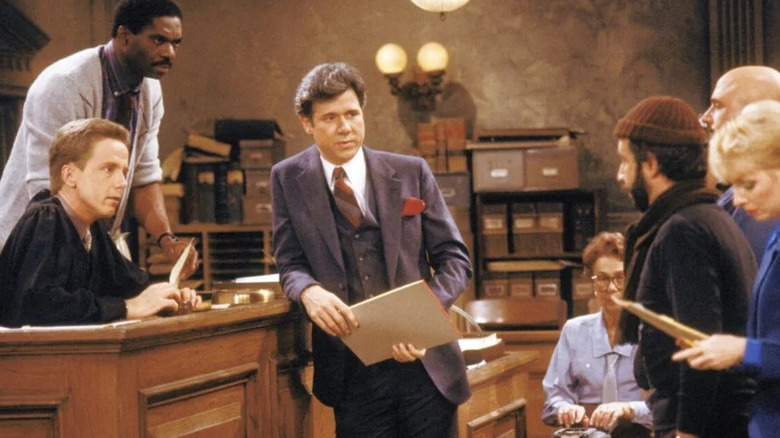
Things can be pretty serious in a courtroom. Judges often deal with fraud, theft, and even murder. Although in Judge Harry Stone's Manhattan municipal court on "Night Court," only the most ludicrous and off-the-wall crimes of the Big Apple appear before the bench.
The series created by "Barney Miller" and "M*A*S*H" writer Reinhold Weege premiered on NBC in January 1984 and lasted until May 1992. Charismatic actor/amateur magician Harry Anderson starred as the unorthodox judge, alongside a stellar ensemble including Richard Moll as the doltish bailiff, Nostradamus "Bull" Shannon; Markie Post as the noble yet naive public defender, Christine Sullivan; and John Larroquette as the scene-stealing assistant district attorney, Dan Fielding. It was the odd offenders that circulated through the court, though, that intensified the hijinks every week.
After a nine-year run, the network revived the series in 2023. This time, the show centered on Melissa Rauch as Judge Abby Stone, the daughter of Anderson's character. While fans enjoyed catching up with beloved characters and examining all-new cases, the revival only lasted for three seasons.
14. Perfect Strangers
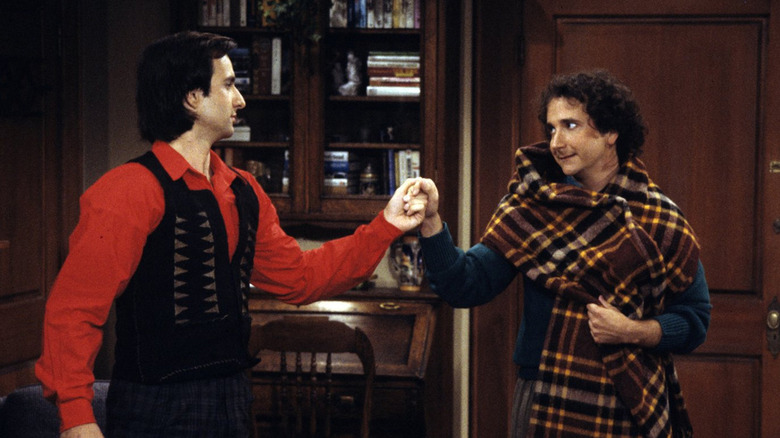
Just like many of the shows on this list, "Perfect Strangers" has a memorable theme song that goes way harder than it has to go. While that absolute banger by David Pomeranz sucks you in, it's Mark Linn-Baker and Bronson Pinchot's odd-couple dynamic that keeps the audience coming back for more.
In the ABC series, Larry Appleton of Linn-Baker moves from Wisconsin to Chicago to pursue his dream of becoming a photographer. He's excited to finally experience life on his own, but his distant Mediterranean cousin, Balki Bartokomous, arrives in America and hopes to live with Larry. Though reluctant at first, Larry allows Blake to move in, and their misadventures begin as the former's pragmatism often clashes with the latter's idealism and old-world ways.
The sitcom created by Dale McRaven debuted in 1986 on Tuesday nights. By the fall of that year, it had moved to a Wednesday prime time slot. But by 1988, the show found its stride as part of the Friday night lineup, which would eventually become the memorable TGIF block of programming.
13. The Facts of Life
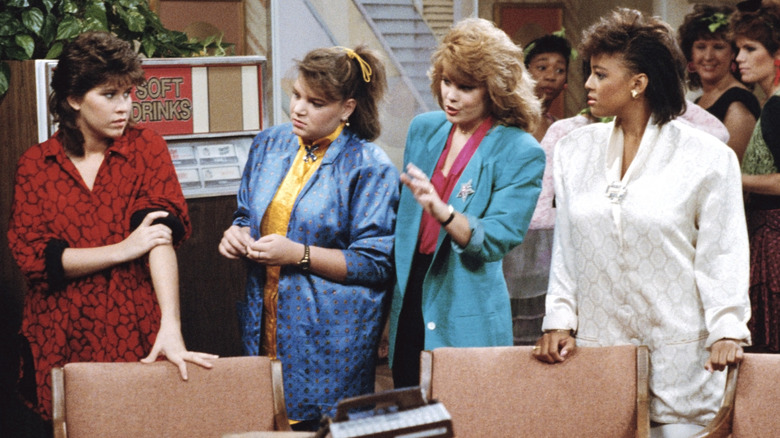
Spinoffs used to be much more common in television. "All In The Family," "Happy Days," and "The Mary Tyler Moore Show" each created several. But one of the most popular 1980s spinoffs was "The Facts of Life," which followed Charlotte Rae's Edna Garrett as she went from the Drummonds' housekeeper on "Diff'rent Strokes" to the housemother at an all-girls boarding school.
Initially, the series featured a large ensemble of students in its first season, including future Brat Pack superstar Molly Ringwald. However, by the second season, the show shifted its focus to four main characters: spoiled Blair Warner (Lisa Whelchel), gossipy Dorothy "Tootie" Ramsey (Kim Fields), spunky Natalie Green (Mindy Cohn), and rebellious Jo Polniaczek (Nancy McKeon).
The show managed to explore many social issues like drug use, peer pressure, and sexual assault while maintaining a certain innocence that later sitcoms wouldn't uphold. It also managed to stay as popular as ever on NBC as the girls graduated, the show moved time slots, and new cast members like George Clooney and Cloris Leachman were added throughout the run.
12. It's Gary Shandling's Show
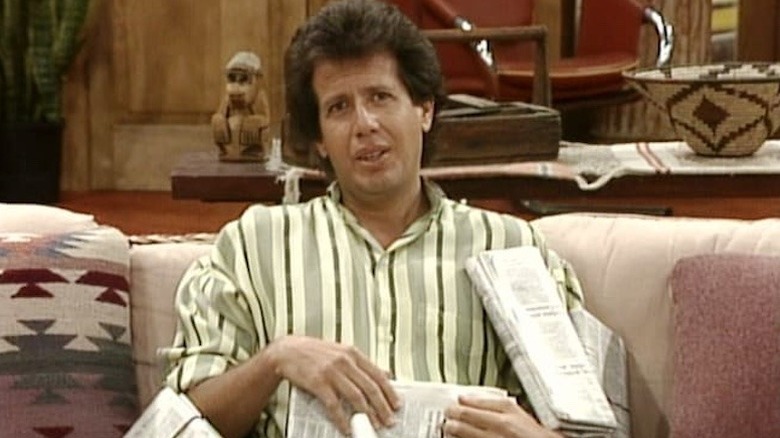
While he may be best known for his second sitcom, HBO's "The Larry Sanders Show," comedian and writer Garry Shandling found himself on an upper echelon of stardom thanks to his 1986 half-hour comedy on Showtime, "It's Garry Shandling's Show." It actually found success twice since Fox picked up the show in 1988 for reruns. Though it may not be remembered by the average TV watcher, it's certainly a foundational and inspirational work for many shows that came afterward, including "Arrested Development," "Curb Your Enthusiasm," and (the "Best Sitcom of All Time" according to Metacritic) "The Office."
Like most comedians who land sitcoms, Shandling plays a character based on himself: a cynical, neurotic stand-up comedian. However, the hook is that he and the rest of the characters know that they're in a sitcom. Garry (the character) would often address the studio audience directly and involve them in storylines. He would also manipulate events in the show to work out better for him in the end. Over the course of four seasons, this series takes surreal and meta comedy to new heights that really pushed the boundaries of the genre at the time.
11. Three's Company
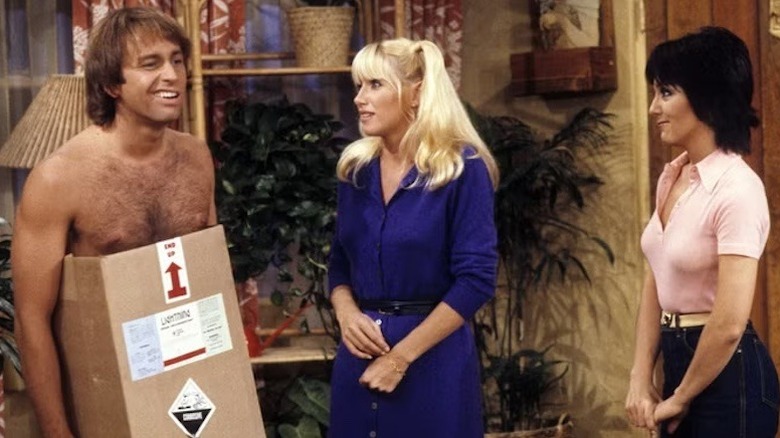
While mainstream audiences may not have been totally ready for a gay character on network television when the show debuted, "Three's Company" certainly prepared them for it. The ABC sitcom that ran from 1977 to 1984 revolved around Jack Tripper (John Ritter), Janet Wood (Joyce DeWitt), and Chrissy Snow (Suzanne Somers), Southern California roommates who circumvented their old-fashioned landlord's rule against unmarried men and women living together by claiming that Jack was gay.
By today's standards, the premise is problematic. At the same time, despite employing stereotypes, the sitcom was strangely progressive. It not only normalized LGBTQ+ representation on TV, but platonic co-ed friendships as well. And at the center of it all was Audra Lindley as Mrs. Roper, who knew Jack's secret and became an ally and advocate for the roommates in the face of her stuffy husband.
Of course, not all of the comedy came from "Jack's lifestyle." The series is a classic farce where innuendo, misunderstandings, and physical comedy reign supreme as the cast would constantly find themselves in hilarious dilemmas. The silly, slapstick antics of "Three's Company" are comedy gold.
10. Mork & Mindy
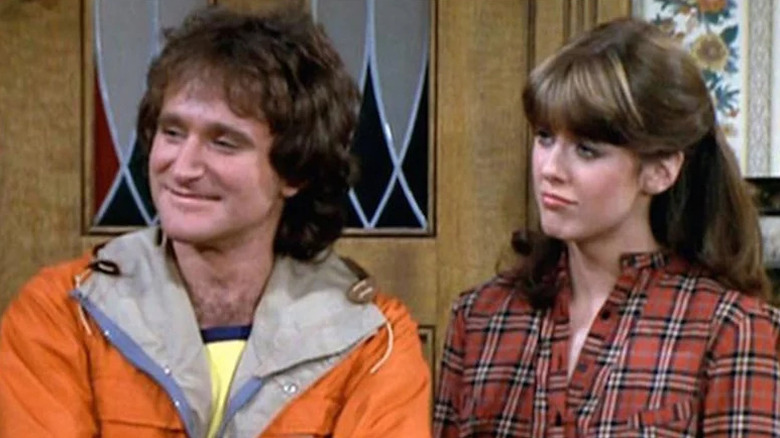
While "Happy Days" still aired in the 1980s, it had already jumped the shark (and coined the phrase) by then. At that point, the beloved sitcom set in the 1950s took some huge swings, like introducing the then-unknown Robin Williams as an alien named Mork. Fans quickly became enamored with the peculiar extraterrestrial, which led to the creation of the spinoff "Mork & Mindy."
Set in 1980s Colorado (aligning with what he told Richie Cunningham about being from the future), Mork continues his mission to observe human behavior. After landing his ship there, he meets Pam Dawber's Mindy McConnell while she is upset following an argument with her boyfriend. Mindy is drawn to Mork's willingness to listen as he takes note of her emotions, so she reciprocates by keeping his alien agenda secret and offering him a place to stay in her attic.
Throughout four seasons, Mork learns about Earth culture and the human experience. The titular leads even fall in love and have a baby, played by Jonathan Winters, which was weird, but Williams' unorthodox comedic stylings punched up every bit.
9. ALF
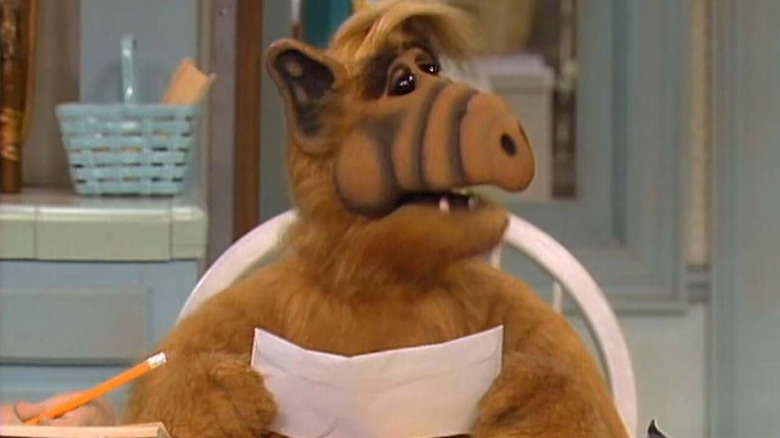
Another fan-favorite alien would arrive a few years after "Mork & Mindy." This time, taking up residence on NBC in 1986, Gordon Shumway would make his way from the planet Melmac to the Tanner family's backyard in a Los Angeles suburb. However, he's probably best known as the titular character of "ALF."
Standing for "Alien Life Form," ALF is taken in by the Tanners in order to keep him safe from the US military's Alien Task Force and the nosy neighbors who may turn them in. He quickly becomes a beloved member of the family (despite his attempts to eat the family cat, Lucky, several times) as he learns the ways of Earth while trying to repair his broken spaceship.
The sitcom starring one of the most iconic puppets in pop culture is a bizarre mix of "Perfect Strangers," "Growing Pains," and "The Muppet Show." It also wasn't afraid to dabble in darker territory as ALF learns about nuclear war plaguing Melmac and eventually gets captured by the government to be studied. But even if he was just obsessing over "Gilligan's Island," ALF was certainly out of this world.
8. Family Ties
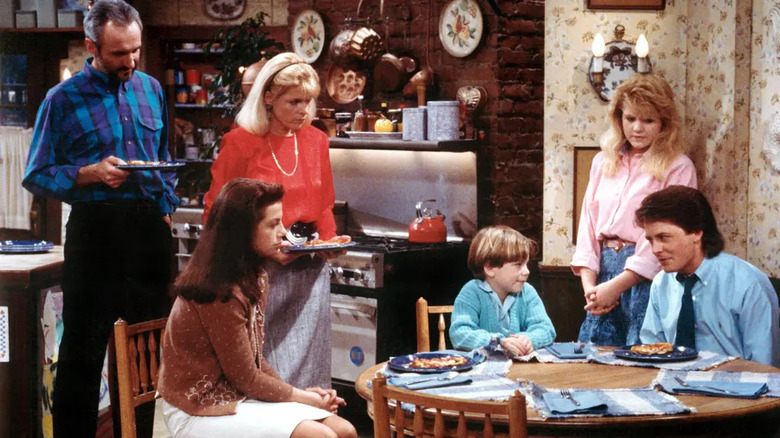
When you think about Michael J. Fox in the 1980s, most will immediately see Marty McFly from the "Back to the Future" trilogy. However, there was another massively popular project that kept the actor very busy while shooting Robert Zemeckis' iconic time travel film franchise. From 1982 to 1989, he starred in the hit NBC sitcom "Family Ties."
The series followed the typical generational divide trope between parents and their kids. However, this time the midwestern family featured liberal hippie parents with a Regan Republican son. While this could have easily been divisive and preachy, the Keatons were always compassionate and empathetic toward each other at the end of the day.
The comedy doesn't come from Fox's Alex P. Keaton being a conservative caricature. Instead, the laughs come from his get-rich-quick schemes and greedy misadventures. It also helps that the likable and charismatic character apologizes in some way by the end of the episode. Though it may be a harder sell in modern times, the show had the audience laughing no matter which side of the aisle they landed.
7. The Jeffersons
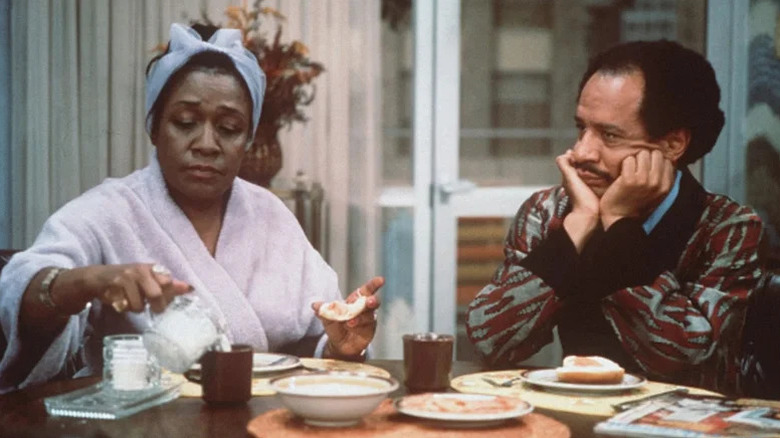
Considered by many to be one of the best television spinoffs of all time, "The Jeffersons" holds a very special place in sitcom history. George and Weezy went from being the Bunker's neighbors on "All in the Family" to moving to a deluxe apartment in the sky (aka the Upper East Side of Manhattan). Just like the show they were spun off from, the Jeffersons still openly dealt with societal issues of the time, including racism, alcoholism, interracial marriage, being transgender, and illiteracy, but in their own unique way.
The classic CBS sitcom was arguably Norman Lear's most successful show. While "All in the Family" lasted for nine seasons over eight years, "The Jeffersons" ran for 11 seasons over ten years between 1975 and 1985. Regardless of ratings and award tallies, the show starring Sherman Hemsley and Isabel Sanford was culturally significant since it was among the first sitcoms to present Black characters as successful, affluent people. Sanford also became the first African-American actress to win an Emmy for Outstanding Lead Actress in a Comedy Series. Not only were the Jeffersons moving on up with milestones like that, but people of color on TV were ascending with them (though there's still room for improvement).
6. Who's The Boss?
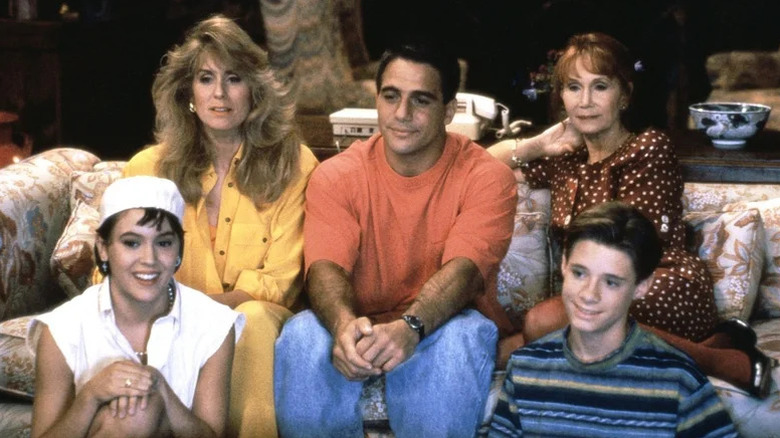
Another sitcom from the 1980s that played with established conventions is the classic ABC sitcom "Who's The Boss?" The show follows Tony Danza as retired pro baseball player Tony Micelli, who moves with his daughter from Brooklyn to Connecticut to become a housekeeper for Judith Light's successful advertising executive/single mom Angela Bower. Over the course of eight seasons from 1984 to 1992, the show found several ways to play with traditional gender norms that were refreshingly progressive for the time. Tony's character also goes against the stereotype that macho guys can't be sensitive and intelligent while being "manly."
After playing a smaller role in "Taxi" earlier in his career, Danza's work on this sitcom helped him break out as a star. The show also thrust Alyssa Milano into stardom after she played Samantha Micelli, a character who was a bit of a departure from the typical young girl on TV at the time. But no matter how different the Bower household was from other sitcom families on the air during this decade, this family is just as wholesome as any other family on this list.
5. Newhart
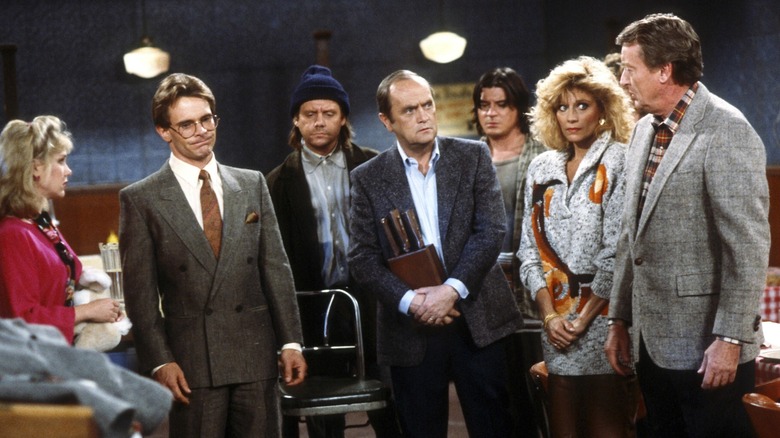
Who says that you can't teach an old dog new tricks? Well before he ventured up to the North Pole to play Buddy's father figure in "Elf," sitcoms were already old hat for TV legend Bob Newhart, who had starred in "Newhart." He found great success in the 1970s with another sitcom bearing his name. Before that, he was a fixture of the late-night and stand-up scenes, which meant that the master of deadpan was old school. So when this new show debuted on CBS in 1982, he proved that the previous generation could still hang with the young, up-and-coming names in the genre.
In "Newhart," the comedian plays author Dick Loudon. Along with his wife, Joanna (played by Mary Frann), he moves from New York City to rural Vermont to take over a 200-year-old inn. While this sounds like a relaxing existence, Dick is constantly kept on his toes by the cast of oddball characters that inhabit this small town. However, as great as the series is overall, the conclusion is one of the most memorable series finales of all time because it was the dream of his character from "The Bob Newhart Show."
4. The Cosby Show
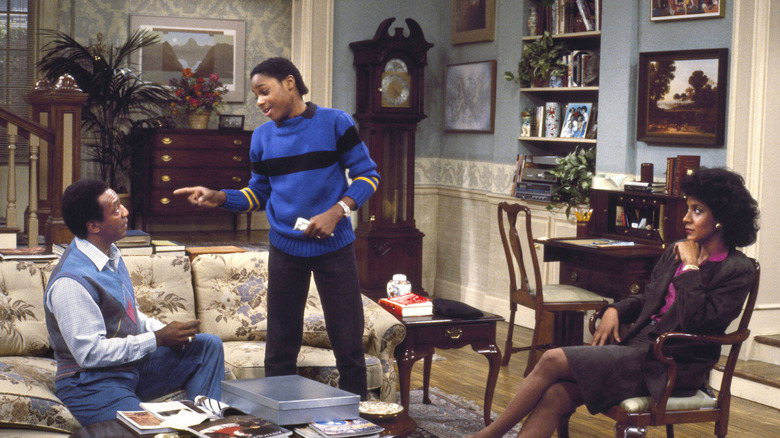
Following the fallout from the extensive allegations made against him, including sexual assault, rape, and child abuse (which are examined by the thorough documentary series "We Need To Talk About Cosby"), comedian Bill Cosby has basically disappeared from the pantheon of pop culture. However, it would be impossible to mention the best sitcoms of the 1980s without mentioning "The Cosby Show."
The NBC series, based on Cosby's stand-up routines about his own family, follows the Huxtables, an upper-middle-class Black family from Brooklyn who experience the same trials and tribulations of growing up as every family does. Audiences really connected with the series' universal nature. Despite racism and stereotypes still existing, the sitcom blazed a trail for Black stories on TV. Main character Cliff Huxtable was even dubbed the "Greatest Television Dad" for the way that he and his wife Clair handle things like Theo's dyslexia, teen pregnancy, and underage drinking.
Of course, this makes his fall from grace all the more devastating because even his highly influential contributions to entertainment have been largely erased.
3. Taxi
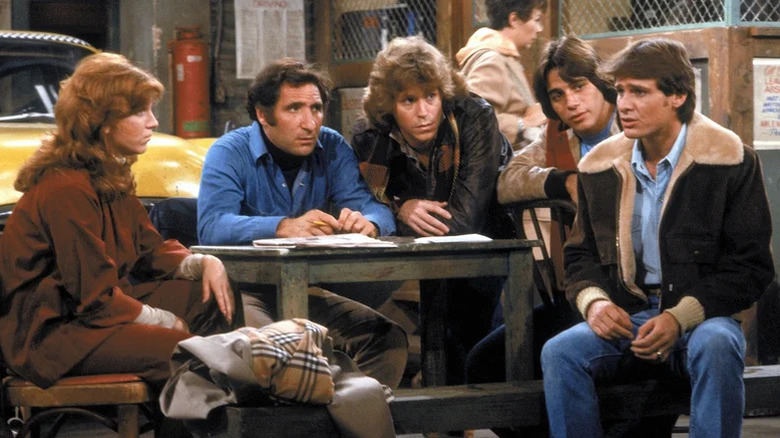
Just like his "Back to the Future" co-star Michael J. Fox, Christopher Lloyd appeared in a celebrated 1980s sitcom before jumping into the time-traveling DeLorean. But rather than being in a traditional TV family, the future Doc Brown would play the zonked out hippie cabbie Reverend Jim alongside a venerable ensemble in "Taxi."
Set in New York City's Sunshine Cab Company fleet garage during the night shift, the series also features Tony Danza, Danny DeVito, Carol Kane, and Judd Hirsch, among others. These cab drivers all have bigger aspirations beyond the yellow automobiles they drive around the Big Apple (except Hirsch's Alex Reiger, who is resigned to driving a cab as his primary profession).
The series also served as a platform for unconventional entertainer Andy Kaufman. He played Latka Gravas, an innocent Eastern European mechanic who is learning about America. Although his antics behind the scenes became just as legendary as his performances onscreen. For example, when "his friend" Tony Clifton guest-starred on the show, the cast and crew were baffled and even enraged by this prank/social experiment.
2. The Golden Girls
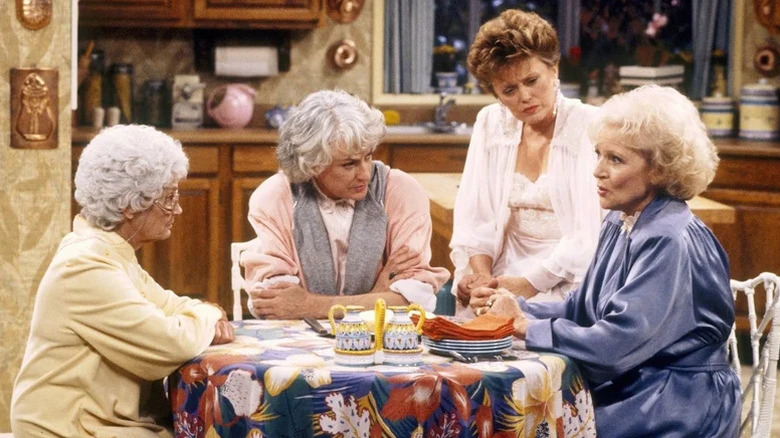
Similar to the approach with "Newhart," NBC's "The Golden Girls" put the spotlight on the elderly as a source of comedy. However, Estelle Getty, Bea Arthur, Rue McClanahan, and Betty White's Sophia Petrillo, Dorothy Zbornak, Blanche Devereaux, and Rose Nylund prove that age is only a number and you're as young as you feel.
The sitcom created by Susan Harris follows four single women who share a house in Miami as they live out their golden years. Though initially brought together as roommates (except Sophia and Dorothy, who are mother and daughter), they grow closer than sisters and become family as they navigate the challenges of getting older together.
The show ran from 1985 to 1992 and produced so many incredible episodes. However, these characters and their stories have endured for decades because everyone from 19 to 91 can relate to the misadventures of these four women. Considering how much love and laughs fill this iconic house, this is proof that your life isn't over once you reach a certain age.
1. Cheers
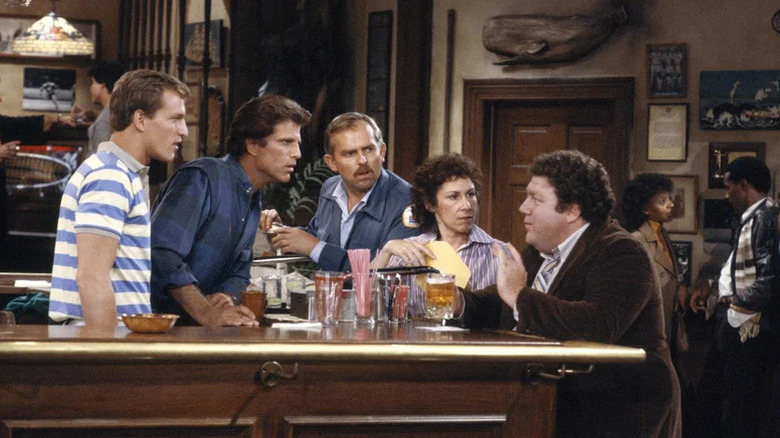
Making your way in the world today takes everything you've got. But taking a break from all your worries sure would help a lot. If that means diving into a classic 1980s sitcom for a while, then look no further than the little Boston bar where everyone knows your name.
Created by Glen Charles, Les Charles, and James Burrows, who all previously worked on "Taxi" together, "Cheers" follows the patrons and employees of a bar owned by womanizing ex-baseball player Sam Malone (played by Ted Danson). Their world is turned upside down when a fussy grad student named Diane Chambers (Shelley Long) starts working at the bar. From that moment on, the will-they/wo n't-they of one of the most iconic couples in TV history begins.
The show hung on and lasted for 11 seasons on NBC from 1982 to 1993. It also spawned three (technically four) spinoffs. With nearly 750 episodes of the Cheers-verse across the whole franchise, there are plenty of laughs to be had as you dive into the lives of Sam, Diane, verbose mailman Cliff, cynical waitress Carla, esteemed Dr. Frasier Crane, living bar fixture Norm, lovable dimwit Woody, unlucky in love Rebecca, and the rest of the gang. For a good place to start, here's our list of the ten best "Cheers" episodes.