

10 Best Anime Shows Of All Time, According To IMDb
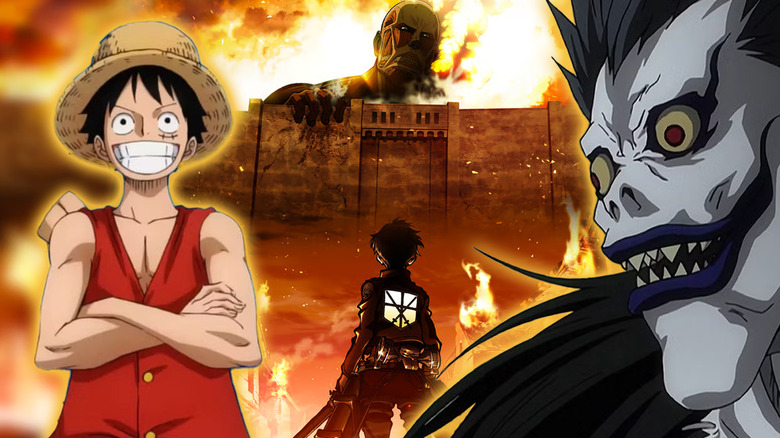
If you spend as much time studying the IMDb raw ranking engine as we have, you'll notice the site's users tend to favor two kinds of TV shows in particular: popular prestige dramas from the 2010s and anime. The reasons for this apparent, consistent bias are up for debate, likely coming down to unique factors like the online popularity of the latter medium and its notoriously passionate and quasi-evangelic fanbase.
Whatever the cause, it's clear to us that IMDb users care about anime more than the average forum community. As such, we were deeply curious which series they hold above all others. What you'll find below is a collection of shows coming from a range of eras, genres, and origins that feels surprisingly comprehensive in its portrait of peak anime. Though you may be shocked at certain A-list exclusions, it's hard to deny these aren't the best anime shows of all time.
10. Steins;Gate
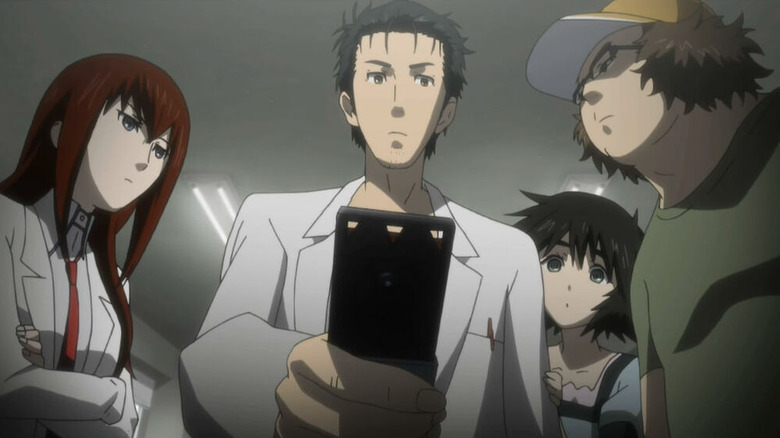
"Code Geass." "Berserk." "Naruto." "Dragon Ball Z." These shows aren't just some of the most beloved anime series ever made — they're some of the most popular pieces of media ever produced. The influence of each is hard to overstate. But what all four shows have in common is that one single, stranger, and far more obscure series kept them out of the top 10 on IMDb. That show is "Steins;Gate."
"Steins;Gate" isn't just unique because casual observers of the anime medium have likely never heard of it. While almost every other entry on this list owes its existence to a manga series, "Steins;Gate" was adapted from a video game. Animation studio White Fox then translated a 2009 visual novel with multiple endings into a single definitive narrative experience and wound up creating one of the best anime series of the 2010s.
Though we'll refrain from spoiling this under-seen anime, we'll emphatically state that this is a slow burn you deserve to experience. The series follows a slacker scientist who styles himself as an inventor and unintentionally creates a device that allows him to send text messages to the past. What starts as a thrilling fantasy of chronal manipulation turns into an unsettling exploration of fate, consequence, and the desperation to reverse one's mistakes.
9. Vinland Saga
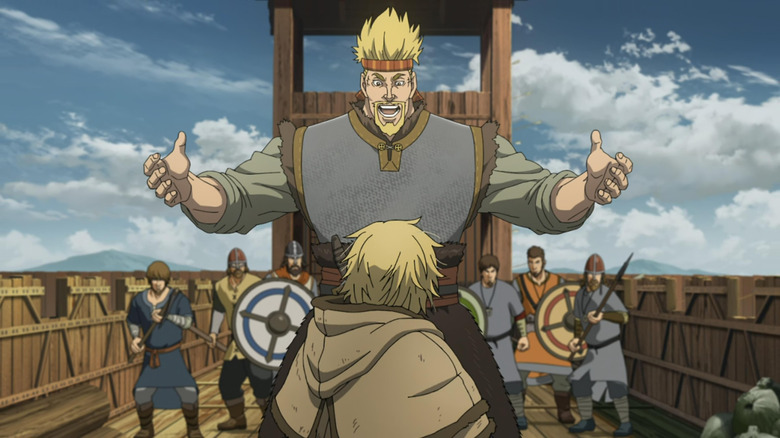
Few fantasy shows operate with as much clarity as "Vinland Saga." WIT Studio ("Attack on Titan" Seasons 1-3, "Spy x Family") began adapting Makoto Yukimura's morally challenging historical Viking epic in 2019, taking anime fans to the unexplored world of 11th-century Vinland. "Vinland Saga" uses this time, when great Norse warriors were attempting to colonize parts of North America, to explore how cycles of violence shape societies and people.
In the first season, Thorfinn (Yūto Uemura) is just an aspiring Viking who — despite the attempts of his retired-warrior father to impart a philosophy of pacifism — is eager to take up the sword in battle just as his father once had. He is tragically granted his wish when his father is murdered by the mercenary Askeladd (Naoya Uchida). While this sounds like the perfect setup for a classic revenge tale, the brilliance of "Vinland Saga" is its direct subversion of its vengeful premise.
The Season 1 finale, "End of Prologue," is easily one of the best episodes of the series. In fact, on IMDb, it's rated as one of the greatest single episodes of television ever made, ranked above the series finale of "Breaking Bad" and the "Game of Thrones" episode "The Rains of Castamere." It's an impressive feat, considering "End of Prologue" rejects the kind of resolution fans might've hoped for from Thorfinn's quest. It instead sets up a massive tonal shift for the anime moving forward, after which WIT passed the baton to MAPPA for a jarringly pensive second season. The decision to rob the audience of violent catharsis was controversial, yet it's structurally aligned with the unique ambitions of "Vinland Saga," so much so that it feels entirely justified.
8. Cowboy Bebop
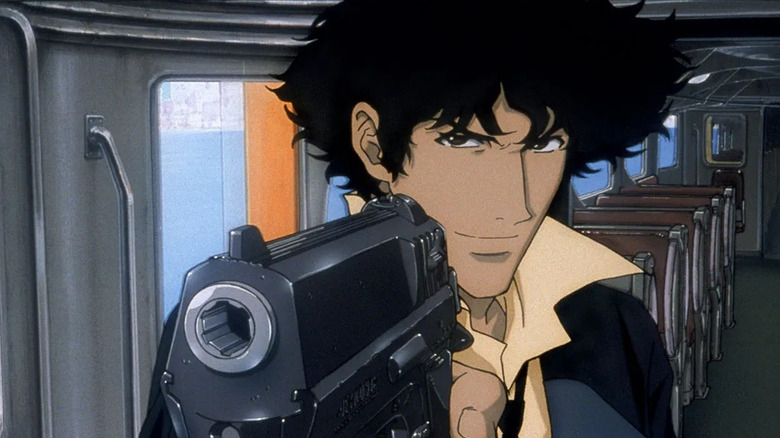
With "Code Geass" and "Neon Genesis Evangelion" somehow not making this list (even despite the former's series finale being one of the best-reviewed episodes of TV on IMDb), "Cowboy Bebop" earns the unique distinction of being the best original anime series according to IMDb.
Shinichirō Watanabe created this story with Sunrise Studios in 1998 specifically for this medium, drawing on a wide array of pop culture influences that were as eclectic as the series itself. Echoes of filmmakers like Sergio Leone and Akira Kurosawa, stylistic movements ranging from the French New Wave and Hong Kong martial arts cinema, all come together for a dazzlingly jazzy space spectacle that works better than it has any right to. (That's especially true given that the original plan for "Cowboy Bebop" was nothing more than a cynical cash-grab.)
In the decades since its release, the series has hardly aged a day. In the space-faring near-future of 2071, interplanetary bounty hunters Spike Spiegel (Koichi Yamadera), Jet Black (Unshō Ishizuka), Faye Valentine (Megumi Hayashibara), and Ed (Aoi Tada) jet through the stars chasing fortune and outrunning their pasts. It's a significantly leaner anime than most, coming in at just 26 episodes total. However, given how many of those episodes are genuinely exceptional, the series makes a compelling argument for such formal restraint.
"Cowboy Bebop" has a legacy as one of the most culturally impactful anime ever. Its cultural pedigree is so strong that Netflix went to great lengths to recreate its success in live-action. The English dub of the series is arguably the best of its kind, and it's undoubtedly responsible for introducing countless U.S. viewers to anime.
7. Death Note
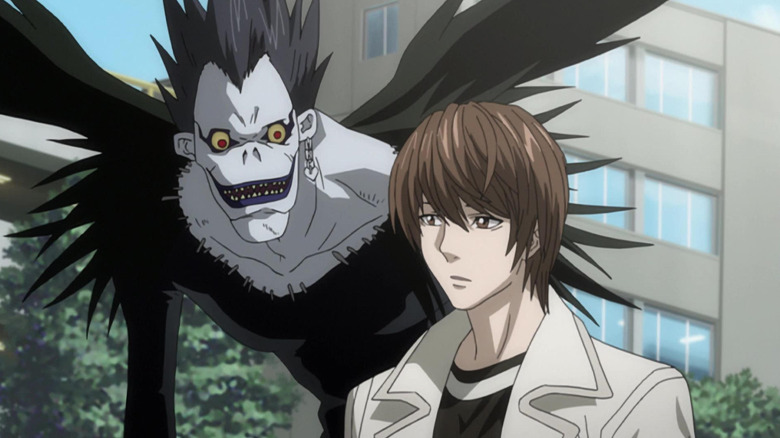
From Showtime's enduring "Dexter" franchise to the first seasons of the CW's "Arrow," American television has indulged an... uncomfortable, if not outright revealing, fascination with the trope of the "vigilante serial killer." It's a trope as ubiquitous as it is insidiously consequential in the U.S. — and yet, no American creator has interrogated it half as thoroughly as Tsugumi Ohba through "Death Note."
Ohba's early-aughts manga series was adapted by Madhouse into an anime in 2006 (the same year "Dexter" debuted, coincidentally). The majority of the series follows the conflict between two brilliant yet ideologically and morally opposed justice-seekers: Light Yagami (Mamoru Miyano), a high school student who uses a demonic notebook to clandestinely take the lives of those he deems to be evil, and the enigmatic "L" (Kappei Yamaguchi), a detective who attempts to use his masterful deductive skills to end Light's killing spree.
The real-life controversy surrounding "Death Note" is proof of the power such vigilante stories have on the human imagination, even outside the U.S. But "Death Note" is necessary nonetheless, as it challenges the assumptions of moral clarity Light (and the audience) often take for granted in media. There's admittedly a critical divide worth noting, especially as it's obvious in the IMDb rankings — following Episode 25, "Silence" (the highest-rated episode on IMDb and, in our opinion, one of the series' best episodes), there's an immediate, steep decline in quality. Even so, "Death Note" still pulls off a haunting and satisfying resolution worth sticking around for.
6. Frieren: Beyond Journey's End
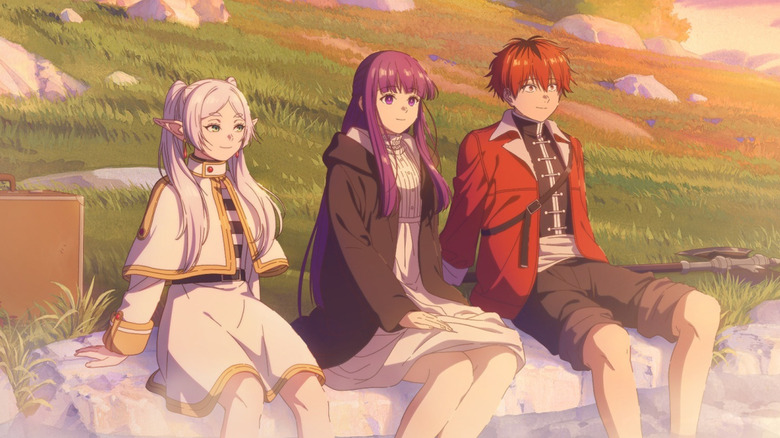
Even with the heavy asterisk that it only has two very new seasons out as of writing, it doesn't feel that wild to see "Frieren: Beyond Journey's End" on a list of the best anime of all time. Indeed, it was incredibly difficult for us not to rank just half of the first season as the best anime of 2024 back when it first aired.
In a piece /Film published that same year hailing "Frieren" as the perfect anime for "Lord of the Rings" fans, writer Rafael Motamayor aptly compared the series to its sister Madhouse series "One Punch Man," with regard to how it explores tropes of extraordinary powers and their subtle, psychological impact on the people who wield them. The titular character (voiced by Atsumi Tanezaki) is an elf of the classical fantasy tradition, most notably in her multi-thousand-year lifespan. The series begins, true to its title, right after a plot point that would serve as the end of most fantasy stories: Frieren and her party have just vanquished a great evil in the realm, a quest which took a decade of their lives. For her companions, it was the longest and single most consequential period in their relatively short lives — for Frieren, it may as well have been a few weeks' effort.
But as members of her party begin to drift away due to old age, she is struck by a sudden, existential urge to better understand ephemeral parts of herself and the world. Action and adventure are merely the background for a surprising elegiac tale. Bittersweet and beautiful, "Frieren" is meditative rather than didactic, even as it provokes one to think about those summer-camp friends or one-week coworkers who leave faint fingerprints on your life without a firm goodbye.
5. Bleach: Thousand-Year Blood War
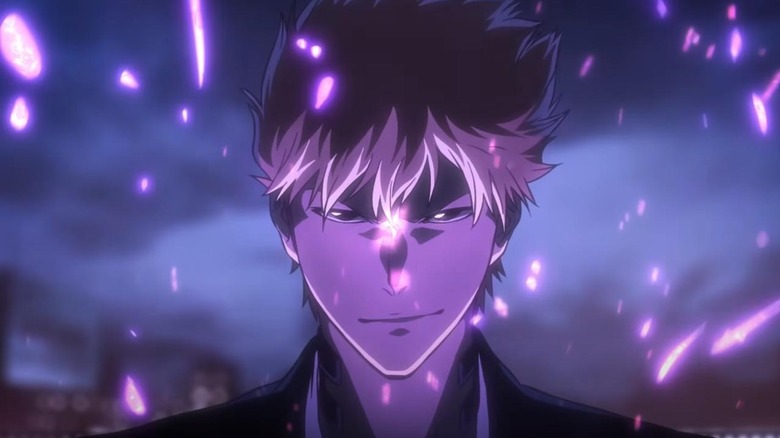
When "Bleach" was canceled in 2012, fans were as exhausted as they were disappointed. Studio Pierrot had spent nearly a decade adapting Tite Kubo's then-ongoing manga into over 360 episodes and several movies. Their relentless output was ultimately the series' undoing, as it began to outpace Kubo's work on the manga despite his three-year head start. To avoid producing further filler arcs simply to capitalize on the dwindling fan base's attention, Pierrot finished out the final complete arc of Kubo's manga and closed the book. Then, another decade passed.
Flash-forward to 2022. Six years after Kubo completed his final storyline for the manga, Studio Pierrot reunited the cast and crew to finally give the "Bleach" anime the ending it deserved. The result was more than worth the wait. Subtitled "Thousand-Year Blood War," this finale is every bit as unwieldy, ambitious, and rewarding to long-time fans of the series as Kubo intended it to be. Honestly, despite technically being a new show, it's practically unintelligible if you haven't seen the original "Bleach" — but that's exactly how it should be.
This is not a reboot or a legacy sequel. "Thousand-Year Blood War" is the conclusion of a genre-defining piece of art, regarded as one of the three "Big Three" Shonen anime alongside "Naruto" and the #3 show on this very list. It draws upon foundational lore that stretches back to the series' inception, utilizes the vast ensemble of the "Bleach" characters in a satisfyingly fluent and familiar manner, and pays off innumerable character beats from the original series. It's a fantasy epic of the highest caliber in terms of narrative scope and spectacle, and it's not surprising that IMDb users (who tend to favor series finales broadly) have reacted to it so passionately.
4. Hunter x Hunter
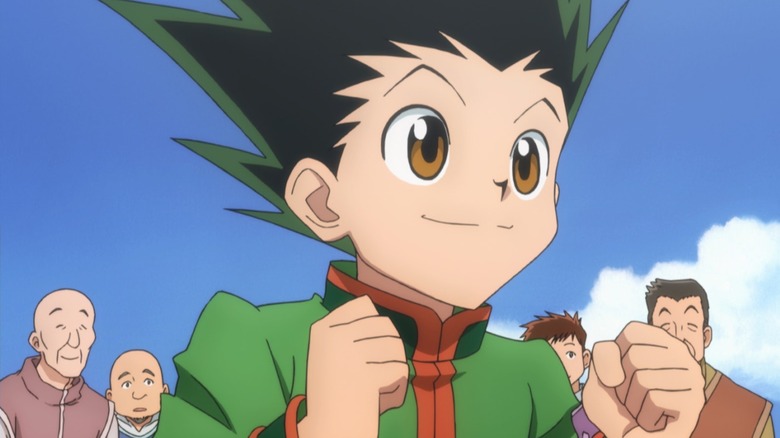
Where "Bleach" and shows of its kind perfected the Shonen anime style, "Hunter x Hunter" twists it in exciting new ways. It's remarkable even compared to the broader canon of international youth-oriented animated programming. Few children's stories dare attempt to grow up with their target audience, and almost none but "Hunter x Hunter" use that growth as part of a central subversion of the form at large.
When you first start to watch "Hunter x Hunter," it feels exactly like a typical Shonen anime. Madhouse brings the vibrant first arcs of Yoshihiro Togashi's series to life with all the color, levity, and nostalgically juvenile energy you'd expect from a show about a young boy embarking on a fantastical adventure. Gon Freecss (Megumi Han) just wants to become a skilled hunter like his father, Ging (Rikiya Koyama), and is willing to do whatever it takes to accomplish that mission.
Like "Death Note," "Hunter x Hunter" interrogates tropes that audiences would readily take for granted in such a well-produced story. In another show, for example, a single-minded young hero chasing the dream of a parent who disappeared for some greater purpose might be portrayed as exciting or even aspirational. "Hunter x Hunter," however, is interested in the actual psychological cost of a lifelong quest for personal strength — that and a guardian abandoning their responsibilities for their own ambitions.
Despite being the second adaptation of "Hunter x Hunter" (the 1999 version is perfectly fine and potentially worth watching for diehard fans), the series is technically incomplete. Ongoing delays to the completion of Togashi's manga have left even the possibility of a finale uncertain. But what Madhouse has produced is truly exceptional, with the Chimera Ant arc standing out as one of the best anime arcs of all time.
3. One Piece
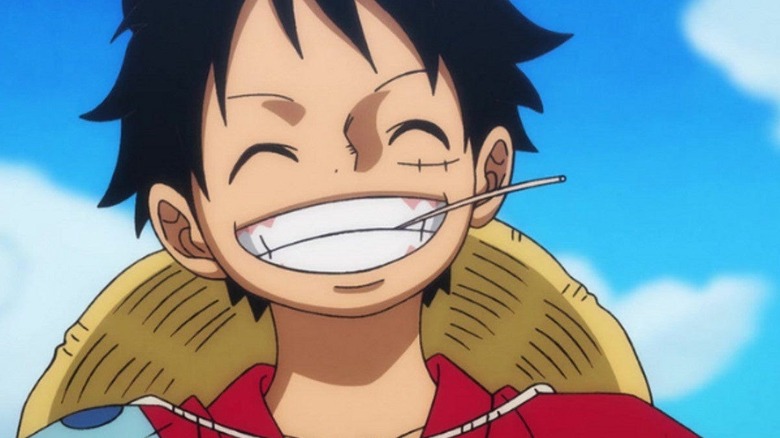
There's an argument to be made that "One Piece" is the most popular TV show of the 21st century, globally. The manga it's based on is itself the most popular ongoing series and the most popular series ever printed — in March of 2026, it even tied with "Superman" for the best-selling comic book series of all time. To emphasize the context of that achievement, writer-artist Eiichiro Oda is on track to outsell the combined, franchised legacy of "Superman"-related comics released since 1938 ... and he's only been at this since 1997.
Suffice it to say, there's a reason why "One Piece" is regarded as one of the Big Three Shonen anime series. For over 25 years, Toei Animation has produced epic, sprawling adventure sagas worthy of the manga's legendary reputation. Stretchy treasure-hunter Monkey D. Luffy (Mayumi Tanaka) leads a lean band of scrappy pirates across the glorious Grand Line in search of treasure and glory. Newcomers will be rewarded for their patience with the series' early animation quirks and pacing (both of which are honed to the point of being the show's greatest strengths) and should only be slightly afraid of the massive episode count.
Aside from its distinct animation style and tone, "One Piece" is ultimately a feat of sheer volume of quality. Of its 1,100+ episodes, only 50 to 100 could be considered truly skippable — and even then, part of the show's charm is how effortlessly and coherently it wields its own baffling narrative scale. It does things emotionally, through callbacks, revivals, transformations, and evolving relationships, that a shorter series simply can't accomplish, at least not with the same density or gravity. Readers looking to understand the phenomenon at the most accessible level will likely be best served by Netflix's surprisingly decent live-action adaptation.
2. Fullmetal Alchemist: Brotherhood
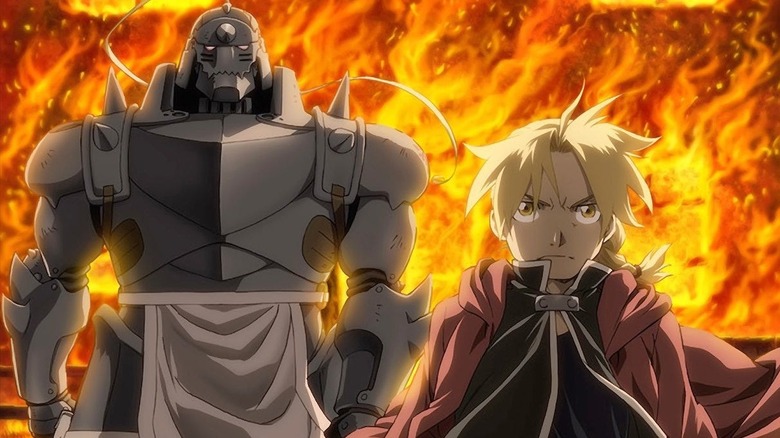
Hiromu Arakawa's "Fullmetal Alchemist" was such a popular, ready-for-primetime manga that its television adaptation was an immediate inevitability. Just two years after it began, Studio Bones had premiered an anime of the same name and wound up catching up to Arakawa's story pretty quickly. Rather than end prematurely like "Hunter x Hunter" or pause for a definitive ending like "Bleach," Studio Bones deviated from the source material (with Arakawa's encouragement) and pursued a darker, finite ending. It's actually pretty great, and worth watching for most anime fans.
But while the 2003 adaptation has its disciples to this day, the second one from Bones, "Fullmetal Alchemist: Brotherhood," is widely considered to be the superior version by fans of the manga, not least of all because it stays truer to Arakawa's work. Premiering in 2009, "Brotherhood" is an exhilarating, character-driven historical fantasy epic with a surprisingly cutting message about resisting fascism, colonialism, and oppression in all its forms. Brothers Edward and Alphonse Elric (Romi Park and Rie Kugimiya) are two young alchemists who have essentially lost flesh, blood, and body by violating their craft to resurrect their mother. As they attempt to restore their humanity, their idealistic understanding of their nation and its history is shattered, forcing them to confront a shocking political conspiracy with quasi-apocalyptic implications.
/Film has had its critiques of "Brotherhood" in the past, but we agree with IMDb that the penultimate episode "Tobira no Mukougawa" ("The Other Side of the Gate") is the best episode of either series. For a period of time around 2024, it was ranked as the best anime on the site — it is still ranked as such on their official, internally managed and weighted Top 250 list. On IMDb's raw site rankings, however, one series surpasses it.
1. Attack on Titan
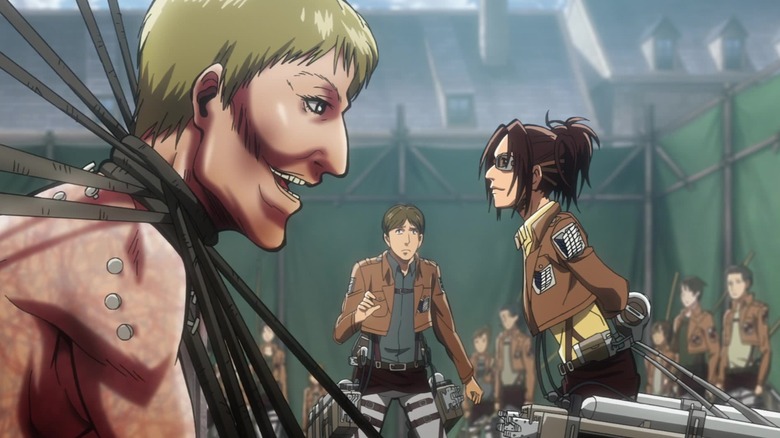
Outside the Big Three Shonen series of the 2000s, "Attack on Titan" is probably the most popular modern anime series. Produced by WIT Studio and MAPPA, this dizzying adaptation of Hajime Isayama's post-apocalyptic dark fantasy series released episodes from 2013-2023. During that time, it successfully built a broad audience consisting not only of diehard anime and manga fans, eager to see its horrific imagery and action translated from page to screen, but also newcomers to the medium.
This is due in large part because, like other gateway anime, it has an instantly engaging, legible, and unique premise that can hook potential viewers. In a future where humanity is hunted and consumed by giant monstrosities called "titans," and is thus forced to live in fear in walled survival communities, an angry young man (Yuki Kaji's Eren Yeager) joins an elite military squad that uses advanced tactics and technology to take them down. Streaming broadly lowered the barrier of entry for international media, with Crunchyroll meeting the moment to make anime more accessible during the streaming era. But even putting that aside, this show sparks your imagination when a friend excitedly explains it to you while adding it to your streaming queue.
More than its accessibility, though, "Attack on Titan" has been praised for its narrative and thematic depth. Its mythology and world-building are remarkably rich, carefully constructed to upset the viewer's understanding of an evolving story. The first three seasons are universally acclaimed, while the brilliantly polarizing final season challenges and subverts the viewer's expectations so brutally that it almost becomes a different show. Regardless of your feelings about its ending, it managed to surprise anime fans across the globe — a rare feat clearly honored by the most vocal folks on IMDb.