

10 Best Fourth Movies In A Franchise, Ranked
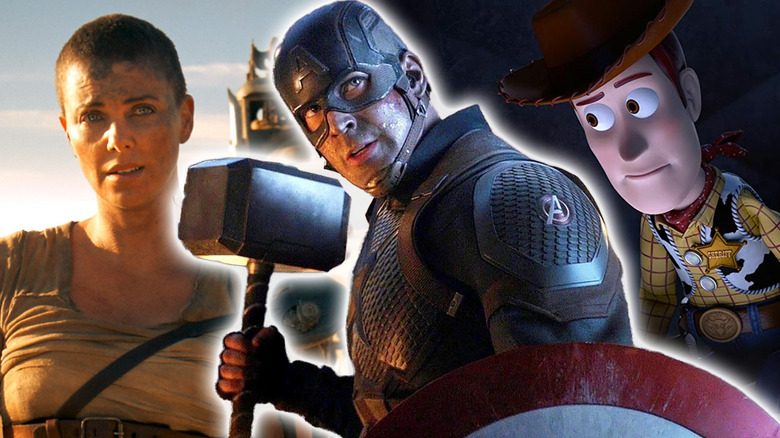
Fourth films are a risky proposition for a franchise's legacy. By the time such a film becomes viable, the franchise has more than likely already reached its peak, if not its natural finale, through the end of the initial trilogy. "Kingdom of the Crystal Skull" only served to prove that "Indiana Jones" hit its ceiling with "The Last Crusade" (even though som think it's actually good), and while the "Star Wars" prequels have enjoyed a critical reevaluation and a blunted negative impact thanks to the sea of content that followed, "The Phantom Menace" was hardly a beloved resurrection of the franchise when it was first released. In fact, George Lucas was warned that the prequels could ruin "Star Wars."
Even with the best foundations and the absence of franchise fatigue, the most likely outcome for a fourth film is its failure to meet unrealistic expectations — so why should studios even bother? Well, money, of course, but it goes a little deeper than that.
A fourth film can be an opportunity for reinvention. It's a point when solid trilogies can prove themselves as decade-spanning, culturally ubiquitous franchises. It can also be where dormant franchises that stumbled in their final outing get a shot at redemption.
As seen in the 10 best examples of the fourth films in a franchise listed below, these movies have the potential to yield rewards that far outweigh the risks involved.
10. Rocky IV
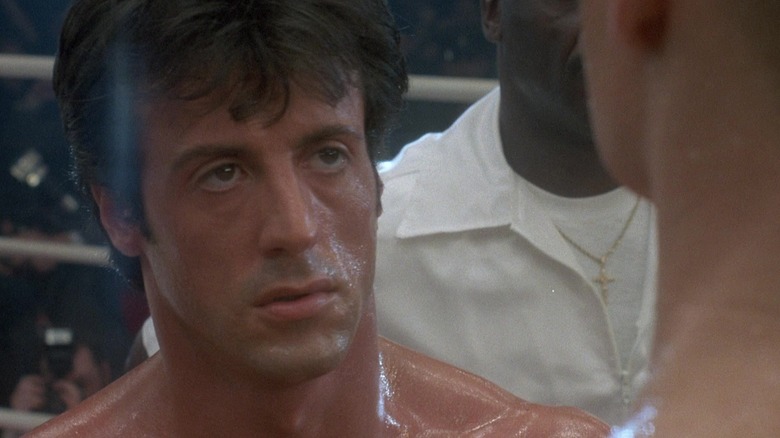
In 2023, /Film ranked every single "Rocky" movie, including "Creed III." Michael B. Jordan's directorial debut came in at #2, ahead of the original "Creed" but behind the original "Rocky." "Rocky IV" came in dead last.
We're not here to argue that "Rocky IV" is the best of the franchise. What we will argue, however, is that "Rocky IV" is the most successful, iconic, and memorable "Rocky" film outside of the original, in spite of its flaws. It's also the most fourth movie movie ever made.
By the time "Rocky III" hit theaters in 1982, the property had completed an uneven but respected trilogy defined by Rocky's (Sylvester Stallone) rivalry with Carl Weathers' Apollo Creed. Does that make "Rocky IV" unnecessary? Maybe. But Stallone's instinct to take it in such a wild new direction is what keeps it from feeling forgettable like other "Rocky" sequels. The original trilogy was a deeply personal saga about an underdog overcoming his limits to better himself, unintentionally transforming into a champion of the people in the process. "Rocky IV" upsets this dynamic by forcing Rocky Balboa to defend that title in the most grand, spectacular, and consequential arena possible.
Putting the film's weird robot aside (as well as the movie being an extended music video for American individualism), that mighty swing from Stallone is what makes "Rocky IV" feel powerful. At a budget of $28 million, it made $300 million in theaters or nearly $1 billion adjusting for inflation. That doesn't simply happen, and it's worth considering if the rest of the "Rocky" or "Creed" movies would even exist without "Rocky IV."
9. Jurassic World
In considering a wide range of fourth films, we came upon several that we almost wanted to include simply because they made later, better installments in their respective properties possible. Where "Rocky IV" is iconic in and of itself, for example, 2009's "Fast and Furious" remains one of the more forgettable chapters in the "Fast & Furious" saga despite having given that franchise an astounding second wind.
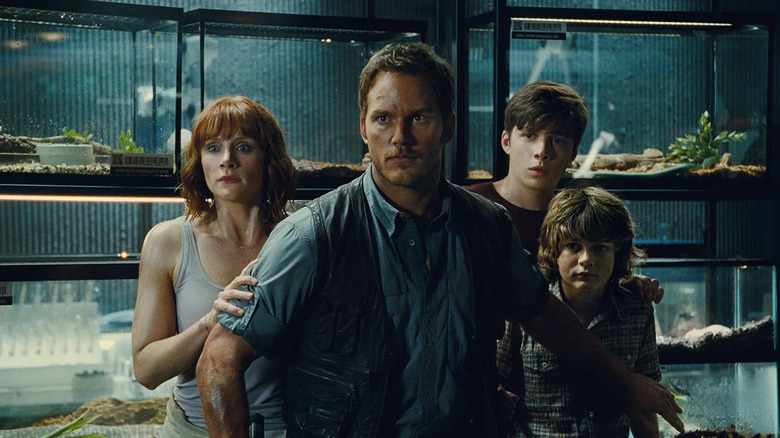
The opposite, however, is true for "Jurassic World." In fact, we'd argue the unimpressive reputation of the "Jurassic World" films overall has unjustly harmed that of their flagship movie.
At the dawn of the legacy sequel era, as studios were rooting through their intellectual property for beloved franchises that could have contemporary cultural staying power, "Jurassic Park" was relatively unassuming compared to "Star Wars," "Rocky," or even "Independence Day." Yet, 14 years after 2001's "Jurassic Park III" left the sci-fi franchise temporarily extinct, "Jurassic World" turned the brand into a global cultural phenomenon like it had never been before. Carried by Chris Pratt's untouchable post-"Guardians of the Galaxy" star power, it embraced the "movies as amusement parks" mentality while leveraging unrestrained nostalgia and dino-mayhem to entertaining results.
When /Film ranked every "Jurassic Park" movie in 2022 (before the 2025 release of "Jurassic World Rebirth"), "Jurassic World" came in at #3, between "The Lost World: Jurassic Park" and "Jurassic Park III." Broadly, the film is considered one of the franchise's better entries outside the original "Jurassic Park," as evidenced by its 72% critical score on Rotten Tomatoes (making it the second-best reviewed film in the property). And with a global box office take over $1.67 billion on a $150 million budget, it's currently the 11th-highest-grossing movie of all time.
8. Toy Story 4
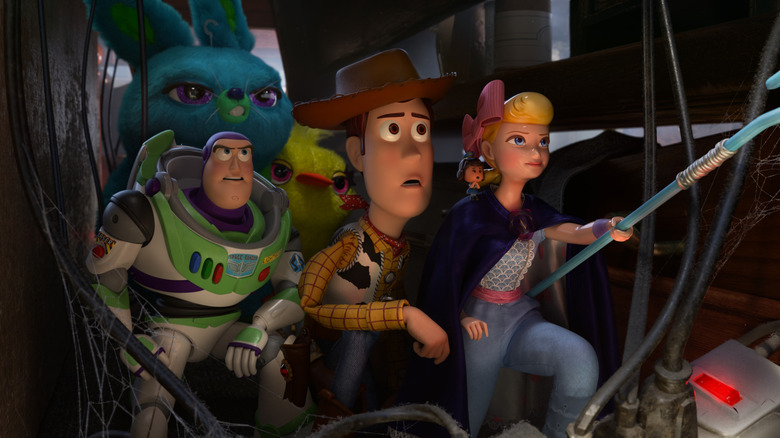
Nobody wanted "Toy Story 4." It's an undeniable sentiment the "Toy Story" movies' writers were well aware of going in. It's also understandable, as the original "Toy Story" trilogy is probably a contender for the greatest cinematic trilogy of all time, rivaling the likes of the "Dark Knight" trilogy and the original "Lord of the Rings" films. But whether or not you feel like continuing the story of Andy's living toy collection violates the perfect ending to "Toy Story 3," "Toy Story 4" is nonetheless a worthy movie in its own right.
The most impressive thing about "Toy Story 4" is how imaginatively it reckons with the deceptive finality of "Toy Story 3." Sending the toys to a new owner after Andy goes to college is the perfect way to provide a bittersweet but comfortable closure for these characters. (Sunnyside Daycare almost feels like a cinematic afterlife in that context.) The fourth film delves into those quietly existential waters, justifying its existence by taking the "Toy Story" brand places it simply couldn't have gone prior to the third movie.
By every possible objective metric, "Toy Story 4" is the rare trilogy-extender that proves it belongs despite initial audience pushback. Audiences flooded theaters to see the film, sending it to a box office haul well north of $1 billion and making it the highest-grossing entry in the franchise yet. Critics similarly loved it as much as, if not more than, "Toy Story 3," with the film ranking as the second-best reviewed "Toy Story" movie on Rotten Tomatoes. It even cleaned up at the 2020 Oscars ceremony, taking home the prize for Best Animated Feature. As for /Film, we ranked it the second-best "Toy Story" movie overall.
7. Harry Potter and the Goblet of Fire
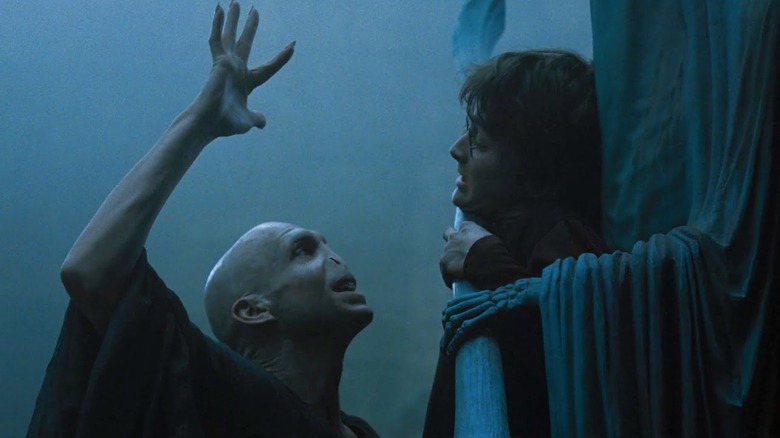
In its early stages, the stylistic maturation of the "Harry Potter" films was as awkward as growing up. The franchise couldn't live in the childlike wonder of director Chris Columbus' first two movies forever, and while "Prisoner of Azkaban" is indeed an exceptional film, it was too light on blockbuster spectacle for where the books were headed. The "Harry Potter" movie property needed to assert itself as a true fantasy epic, and "Harry Potter and the Goblet of Fire" began to do just that.
"Goblet of Fire" elegantly and organically shifts the narrative focus of the "Harry Potter" films away from world-building and totally self-contained adventures, patiently building up the franchise's core overarching storyline. As a result, these movies stopped being about Harry (Daniel Radcliffe) and his friends merely defeating the remnants of Voldemort (Ralph Fiennes), along with his loyal supporters, and started focusing instead on the urgent, active war against the resurrected Dark Lord himself. Fiennes' debut as the villain in the third act of "Goblet of Fire" is likewise one of the most powerful moments in modern blockbuster cinema. The film even introduced audiences to Robert Pattinson, his supporting role as the tragic Cedric Diggory paving the way for his A-list career trajectory.
That "Goblet of Fire" is not even one of the highest-grossing "Harry Potter" movies really only speaks to how wild the property's overall box office run was. (No wonder Warner Bros. is in such a hurry to reboot this thing.) It remains the third-best reviewed "Harry Potter" film on Rotten Tomatoes to date, and it fittingly placed third in /FIlm's own "Harry Potter" movie ranking.
6. 28 Years Later: The Bone Temple
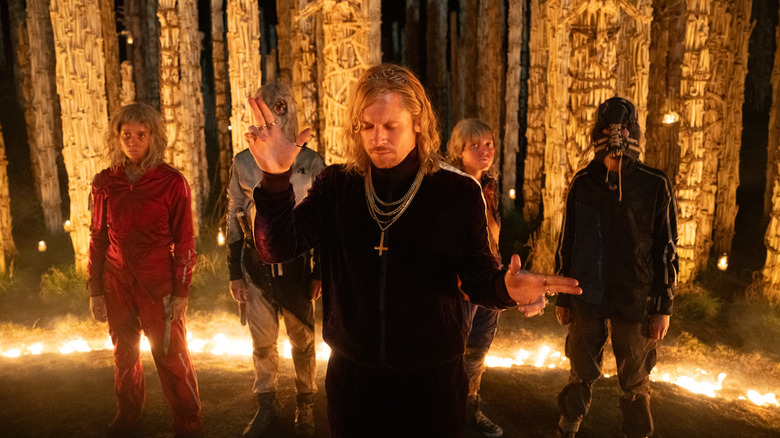
The horror genre has more memorable fourth installments than most others. "Friday the 13th: The Final Chapter," "A Nightmare on Elm Street 4: The Dream Master," and 2013's "Evil Dead" were all viable contenders for a slot on this list. But "28 Years Later: The Bone Temple" is an anomaly among horror sequels in that it revitalizes the franchise like never before. That's high praise, considering "28 Days Later" is regarded as one of the best zombie movies ever made.
Danny Boyle, Alex Garland, and Nia DaCosta brought the property back with tremendous confidence after a nearly 20-year hiatus, delivering back-to-back sequels following 2007's uninspiring "28 Weeks Later." DaCosta directed "The Bone Temple," a movie that could've easily been the rushed, awkward middle child of the desired "28 Years" sequel trilogy. Instead, "The Bone Temple" runs fearlessly into the dread-inducing depravity of the franchise's post-apocalyptic setting. It's a sequel on the level of "The Empire Strikes Back" and "The Dark Knight," taking advantage of the foundation offered by the previous entries to affect audiences more than any standalone movie could.
"28 Years Later: The Bone Temple" is also unique to most other entries on this list because it wasn't a box office smash. It wasn't even a modest hit. Against a defensible budget of $63 million, it made just $58 million in theaters. There are several reasons why "The Bone Temple" flopped, perhaps the most notable being that it was released just seven months after "28 Years Later." It also didn't help that its predecessor had a divisive ending. "The Bone Temple," on the other hand, received virtually unanimous praise and is currently the best reviewed "28" movie on Rotten Tomatoes.
5. Mission: Impossible - Ghost Protocol
Of all the franchise-resurrecting fourth films out there, none are as totally triumphant as "Mission: Impossible — Ghost Protocol." It was released five years after the J.J. Abrams-directed "Mission: Impossible III," which was itself something of a brand reset for the property following the first two financially successful yet critically fragile entries. Abrams' film fared only slightly better among critics at the time, though, and it remains the lowest-grossing film in the franchise domestically.
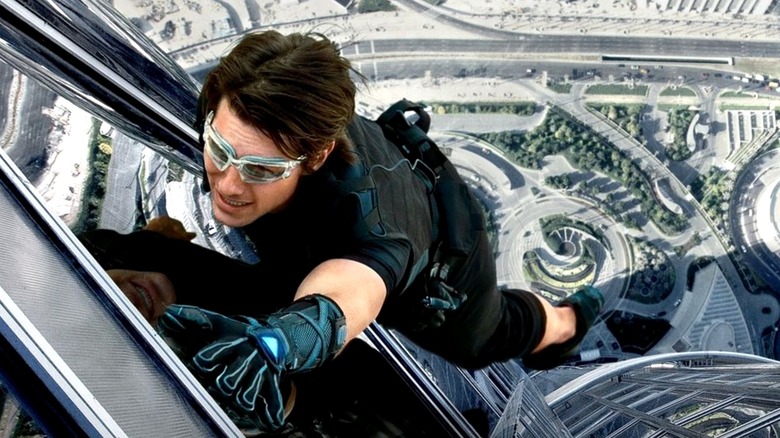
Paramount, still hopeful that the "Mission: Impossible" movies could be more than a mid-tier action property, made the inspired choice of bringing Brad Bird on as director. Despite having never helmed a live-action film before that, Bird's kinetic, propulsive direction is as vibrant in "Ghost Protocol" as it is in "The Incredibles" or "The Iron Giant." The film's marketing also played a major role in highlighting the stunt work by Tom Cruise, who was in a bit of a rut himself at the time. Cruise's scaling of the Burj Khalifa is marvelous in the movie, and his death-defying hijinks thereafter became synonymous with the franchise.
Overall, the film revived the "Mission: Impossible" brand, giving Cruise's career new life and earning him a reputation for being a true champion of blockbuster filmmaking (as well as one of Hollywood's last great movie stars). "Ghost Protocol" itself made over $694 million in theaters on a $145 million budget, a peak for the franchise at the time. It remains the property's fourth-best reviewed entry on Rotten Tomatoes, and it even placed third in /Film's own ranking of the "Mission: Impossible" films.
4. Star Trek IV: The Voyage Home
On paper, "Star Trek IV: The Voyage Home" sounds like a movie that should've never been made. The first three "Star Trek" films are straightforward science fiction adventures that almost veer into space opera territory, especially with the darker, emotionally-driven one-two punch of "The Wrath of Khan" and "The Search for Spock." The latter movie even left the USS Enterprise's crew in a position where they faced expulsion from Starfleet, a plot thread that the fourth film would be unable to avoid.
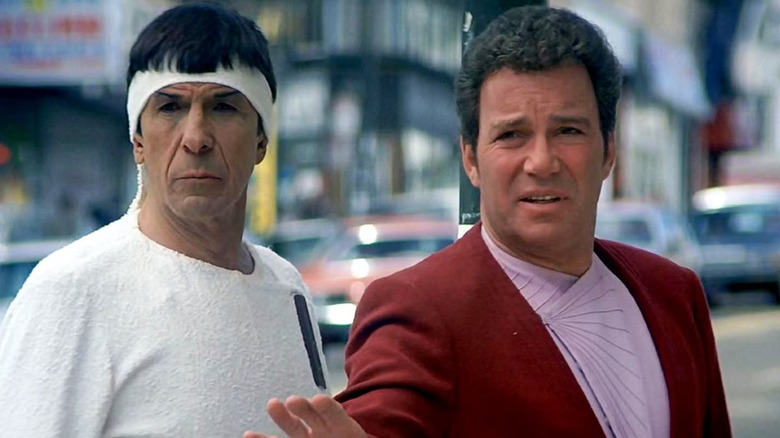
In spite of all this, Leonard Nimoy boldly took "The Voyage Home" in a decidedly comedic direction ... and the film rules because of it. He also intentionally stripped away the action that had defined the prior two entries, reminding viewers that "Star Trek" adventures were not contests of strength but exchanges of grand ideas. "The Enterprise's crew engage in silly, exclusively terrestrial hijinks while searching for whales on 1980s Earth" sounds like the kind of abandoned logline you'd expect to hear the film's creatives mention at a Comic-Con panel while discussing the movie's actual plot. Instead, that was the seed of what became one of the top-grossing "Star Trek" films of the 20th century, with "The Voyage Home" even placing second on /Film's "Star Trek" movie ranking.
3. Avengers: Endgame
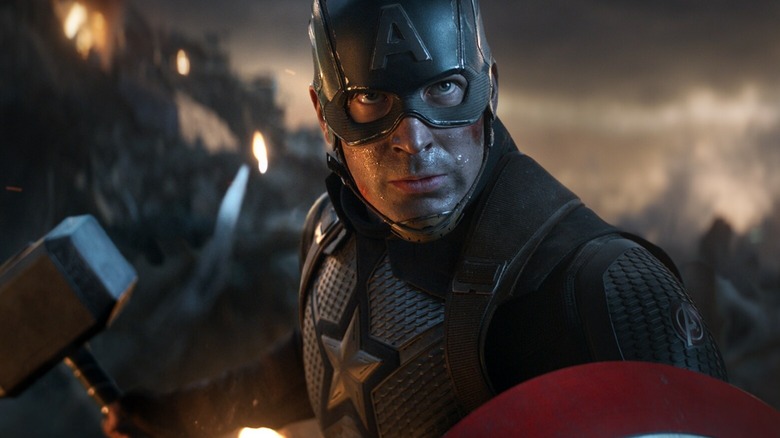
By the simple fact that franchises don't get a fourth film unless they've achieved an increasingly rare, near-ubiquitous level of cultural relevance, no single movie on this list is necessarily special for being a hit. That being said, "Avengers: Endgame" really was a genuine cultural phenomenon in and of itself.
Yes, it certainly had a bit of a leg up compared to other fourth movies, as plenty of readers will argue that this is actually the 22nd Marvel Cinematic Universe film and not the fourth "Avengers" movie. But just as its connection to the MCU helps account for its popularity, framing it the latter way allows one to appreciate its qualities beyond that. To be sure, "Endgame" perfectly caps off the arcs for the core Avengers, so much so that even the less-celebrated "Avengers: Age of Ultron" feels more meaningful in retrospect.
While most fourth films are either legacy sequels, middle entries in franchises with extraordinarily long runs, or a means of starting a new era after a successful trilogy, "Avengers: Endgame" serves as the climax of a saga so expansive it legitimately needed three hours to stick the landing. Directors Anthony and Joe Russo don't waste a single second, either, using every scene to satisfyingly tie up dangling story threads and provide fan service that feels earned and unique for an event movie as unprecedented in its build-up as this.
"Endgame" went on to become the highest-grossing box office hit ever for a time, and it's currently the second-best review MCU film on Rotten Tomatoes. As for /Film, we put it in the #2 spot on our "Avengers" movie ranking.
2. John Wick: Chapter 4
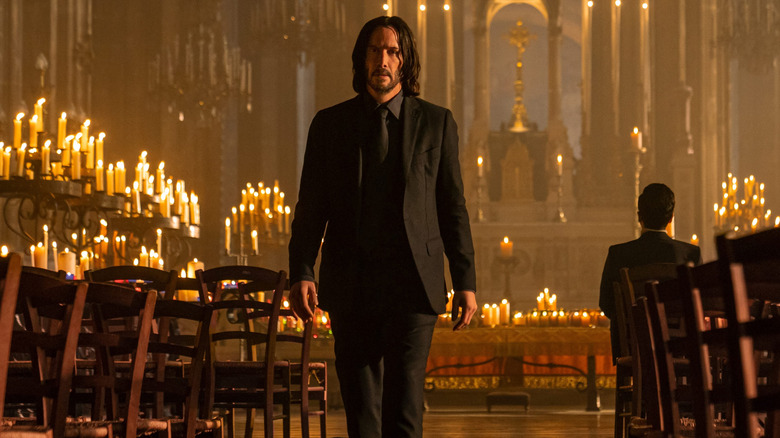
When the first "John Wick" premiered in 2014, some were slow to recognize what it was trying to do for the action genre. Two sequels later, and the franchise was still the kind of mid-to-high-tier action property that hardcore fans would champion but wasn't necessarily seen as revolutionary by general audiences, even as its visual and narrative elements began taking over the genre at large. But it was "John Wick: Chapter 4" that cemented what should've already been obvious: that franchise director Chad Stahelski and star Keanu Reeves had created the greatest original action movie series of the 21st century
"Chapter 4" combines everything the "John Wick" movies had done well up to that point and delivers each aspect to the extreme. Transported by the gorgeous globetrotting of "Chapter 3"? Reeves' Wick kills people on three different continents during this film's first act. Missing the video game-like gun-fu of the first movie? Stahelski literally reimagines this quintessential shootout set piece as a top-down shoot-em-up. The characters in "John Wick: Chapter 4" are striking all around, with every single one of the actors understanding exactly what kind of movie they're in. This sense of self-awareness is perfectly pitched in "Chapter 4," as best exemplified by the movie's 30-minute-plus Paris finale, which is both brutal and strangely comedic all at once. It just works.
No surprise, "John Wick: Chapter 4" was a financial hit, grossing north of $447 million. Critically, it's also the franchise's best reviewed movie on Rotten Tomatoes and in /Film's "John Wick" movie ranking alike.
1. Mad Max: Fury Road
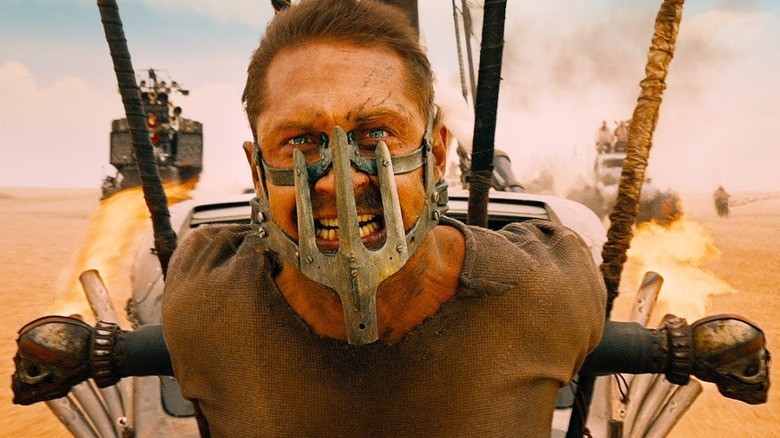
There's a lot of debate over what, exactly, "Mad Max: Fury Road" functions as within its franchise. Soft reboot? Legacy sequel? A canonically coherent extension of its titular character's myth? Whatever it is, there's no debating that "Fury Road" is the greatest fourth film ever made.
Director George Miller spent over a decade developing this movie, having pressed pause on the "Mad Max" franchise post-"Beyond Thunderdome" in 1985 and spent the intervening years working on films like "Happy Feet" and "Babe." When production finally began, he was largely concerned with making sure nobody got killed making "Fury Road" ... and, probably, making sure stars Tom Hardy and Charlize Theron didn't kill each other. (Kidding — mostly.) Nevertheless, he refused to compromise on the film's storytelling or spectacle, and the result was an action epic that feels unlike anything else that came before it. During a non-stop, blood-soaked race over a literal scorched Earth, "Fury Road" ambitiously explores what hope humanity has in the face of rapacious barbarism. It's uncomfortably prescient, to say the least.
Though it was far from a box office dud, "Mad Max: Fury Road" was no runaway hit, either. Grossing $380 million in theaters on a budget north of $150 million, some analysts have concluded that it likely lost money. It was, and is, however, one of the most critically acclaimed action movies ever made. At the 88th Academy Awards in 2016, "Fury Road" won six awards — the most of any film that evening — and earned a spot in the Best Picture race. You'll just have to read /Film's ranking of the "Mad Max" movies to see where we placed it.