

15 Best Movies Like Road House
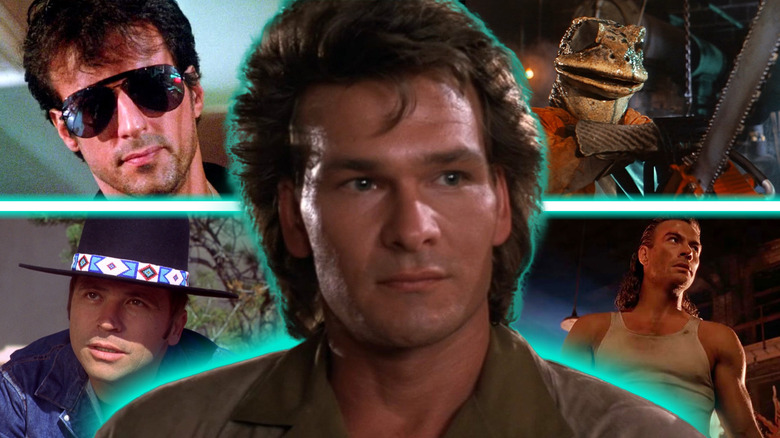
When it comes to swaggering tough guys on film, it's hard to compare to the original "Road House" or its 2024 remake. Whether it's Patrick Swayze's perfectly coiffed James Dalton in the 1989 classic or immaculately sculpted Elwood Dalton (Jake Gyllenhaal) in the remake, audiences have been entertained by the hard-hitting bouncer. Of course, cinematic machismo isn't limited to various iterations of "Road House" and their depictions of fighters cleaning up small towns. In a sense, "Road House" is a modern retread of a Western, with a stoic, no-nonsense protagonist coming in to save a community from a cruel overlord.
With that distinction in mind, there is no shortage of hyper-masculine heroes that evoke either of the Daltons in their own quests for justice, including plenty of protagonists who are just as effective at solving their problems with their fists (or other weapons in their arsenal) as their words. Here are the 15 best movies like "Road House" to watch and keep those testosterone-fueled thrills coming.
Billy Jack
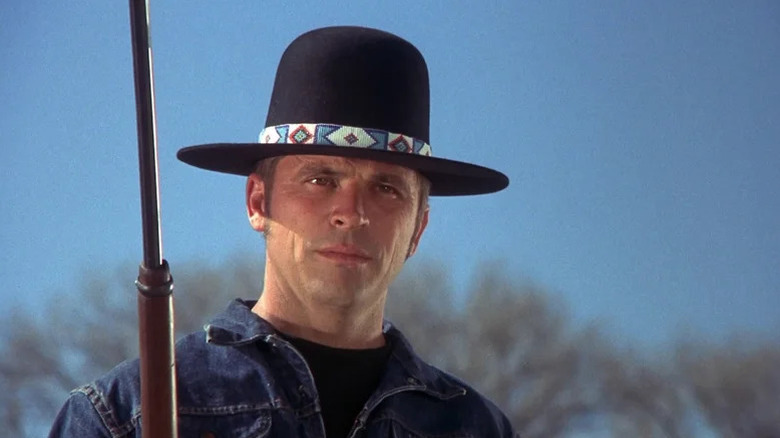
The late '60s and early '70s saw the erosion of the typical patriarchal hero archetype that dominated cinemas for decades. In its place rose protagonists that were more morally complex, actively stood against traditional authority figures, and were walking and talking paradigms of new Hollywood cool. An early example of this heroic archetype was Billy Jack (Tom Laughlin) who, after appearing in 1967's "The Born Losers," headlined his own eponymous sequel in 1971. Billy Jack is a mixed-race Navajo Vietnam War veteran who defends the marginalized youth of a small town, even after it puts him in trouble with the law.
Both Brad Pitt and Quentin Tarantino were influenced by "Billy Jack" when developing the character of Cliff Booth for "Once Upon a Time in Hollywood." That inspiration can be seen in the 1971 film, a counter-culture hero who feels like a man out of time. The movie, and its sequels, were labors of love for Laughlin, who directed, produced, and co-wrote them, in addition to starring as the titular hero. If you're looking for the cinematic archetype that helped inform Swayze's Dalton, Billy Jack is where to start.
Fist of Fury
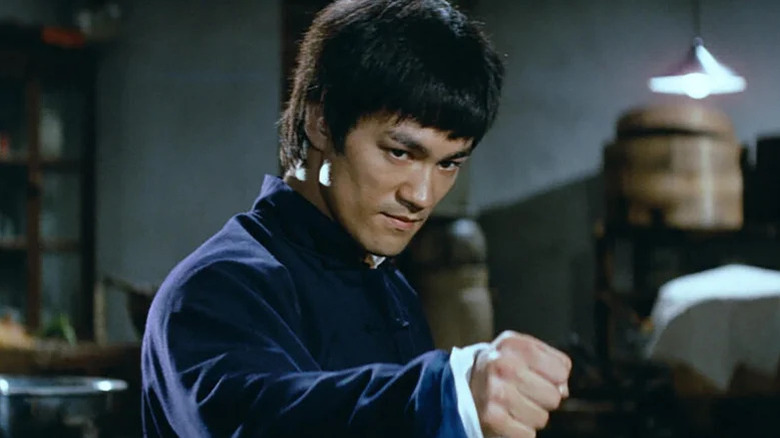
Originally released in certain territories outside of Hong Kong as "The Chinese Connection," 1972's "Fist of Fury" is where Bruce Lee's on-screen persona fully takes shape. Lee plays Chen Zhen, a young martial artist who arrives in Shanghai in 1908 only to find his fellow kung fu students ostracized by a local karate dojo. As Chen experiences other discrimination targeted towards the Chinese, the feud with the Japanese-run dojo and the Western authorities escalates. This culminates in Chen launching a one-man crusade against the dojo after his school is massacred.
Though Lee brought plenty of martial arts talent to the preceding year's "The Big Boss," it's "Fist of Fury" where he really forms his self-assured hero persona. The movie has some of the best action set pieces in Lee's entire career and it's always a thrill seeing him become a one-man wrecking crew. Lee would have bigger international success to follow, but as a vengeful Chen Zhen, he definitely embodies the movie's furious title to memorable effect. At the time of this writing, the Bruce Lee masterpiece is streaming for free on Pluto, giving you no excuse to catch "Fist of Fury" if you've never seen it.
Walking Tall (1973)
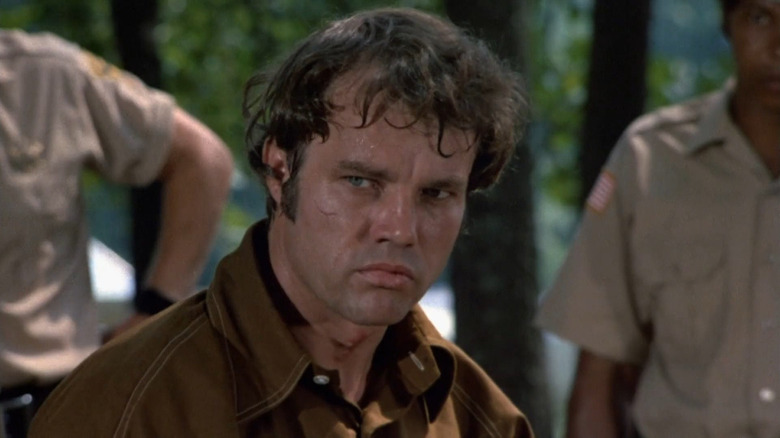
Before its 2004 remake became one of Dwayne Johnson's best performances of all time, "Walking Tall" was a 1973 action thriller. The movie was based on the life of Tennessee sheriff Buford Pusser, with Joe Don Baker playing the rural lawman. After discovering his town is being controlled by crooks running local gambling dens and moonshine distilleries, Pusser is elected sheriff. He takes a more hands-on approach to combating crime than his predecessor, willing to break some laws to take down the crooks around town, even as it takes a toll on his family.
While recent cold-case developments cast a new light on the real Pusser's story, "Walking Tall" is still a solid small-town action flick. Baker plays his role with the requisite necessary gruffness but also a subtle vulnerability when it comes to the character's family. The action scenes themselves are as straightforward as the large wooden clubs Pusser uses as his go-to weapons, and are relatively grounded in their violence. "Walking Tall" set a standard for low-budget vigilante crime movies and still stands as Baker's best performance.
High Plains Drifter
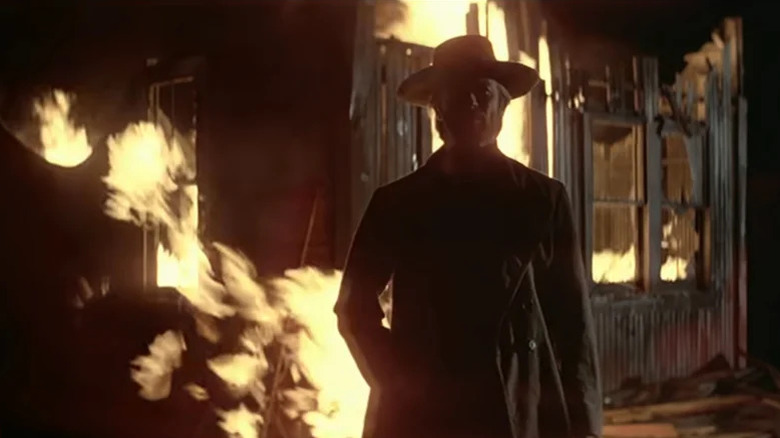
After making his directorial debut with 1971's "Play Misty for Me," Clint Eastwood's sophomore directing gig was 1973's "High Plains Drifter." Eastwood plays a gunslinger known simply as the Stranger, who rides into a remote mining town and kills three gunmen hired to protect the community when they harass him. Agreeing to defend the town from a gang of outlaws, the Stranger takes advantage of the perks offered to him while dreaming of a murdered marshal linked to the community. This leads the town to conspire to murder the Stranger themselves, though the stoic gunfighter remains one step ahead of them.
Simply put, you're not a Western fan if you haven't seen "High Plains Drifter," providing Eastwood's violent revisionist take on the genre that made him a star. The movie's depiction of frontier townsfolk rubbed Western traditionalists the wrong way, with John Wayne writing Eastwood an angry letter about the film. But the movie sets the mold for strangers drifting into town and imposing their own rule of law, even if it stirs backlash from the community itself. And for a second directorial feature, Eastwood absolutely crushes it both in front of and behind the camera in "High Plains Drifter."
Rolling Thunder
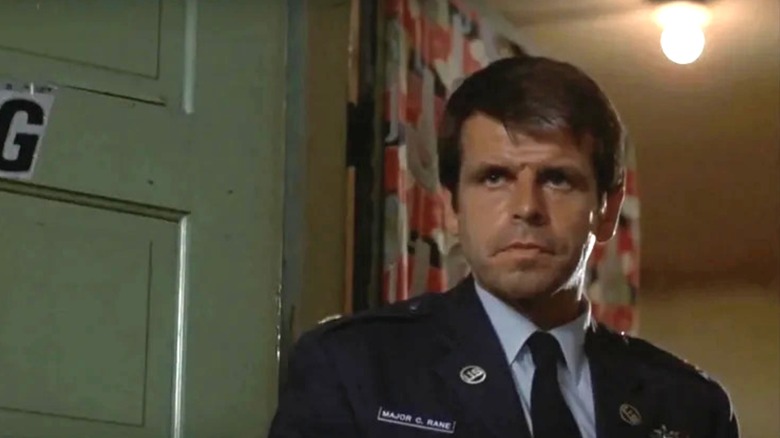
One of the early films that explored the aftermath of the Vietnam War was 1977's "Rolling Thunder." The movie follows U.S. Air Force officer Charles Rane (William Devane) returning home to Texas after a lengthy imprisonment in Hanoi. Finding his home life has completely moved on without him, Rane is targeted by crooks trying to steal a large cash payout he received for suffering through being a prisoner of war. After his family is murdered in the ensuing scuffle, Rane systemically targets them for his revenge, joined by his old comrades-in-arms.
"Rolling Thunder" is an unflinchingly brutal and tightly focused thriller, a solid cut above most of its contemporary revenge flicks. Devane and a young Tommy Lee Jones bring a grim energy, with their characters not relishing in the vengeance but settling back into the violence that define them now. The movie also uses its Texas setting well, capturing the feelings of desolation that mount as the characters are drawn deeper into the vendetta. A standout from Roger Corman's AIP studio, "Rolling Thunder" is shockingly merciless, leaving a firm impression on the audience.
Lone Wolf McQuade
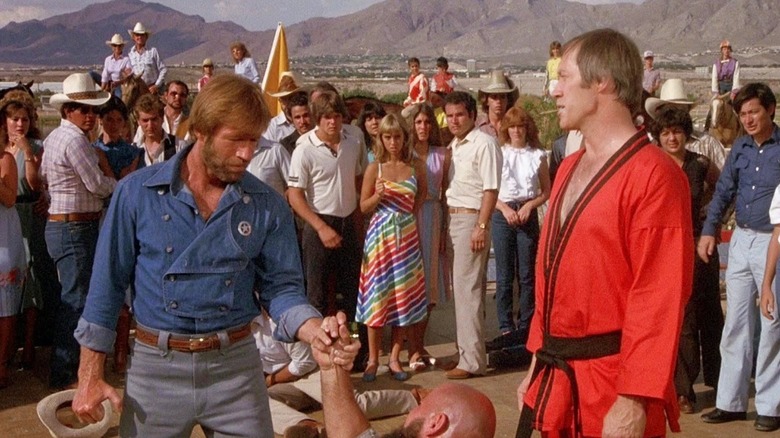
More than just being the face of a running joke about comically excessive machismo, Chuck Norris starred in a string of low-budget action movies for years. One of the highlights is 1983's "Lone Wolf McQuade," with Norris playing Texas Ranger Jim McQuade, who prefers to work alone in spite of his superiors' requests otherwise. When McQuade's family becomes involved by a group of gunrunners led by the villainous Rawley Wilkes (David Carradine), the surly Ranger kicks things into high gear. This fuels McQuade to launch a daring assault on Wilkes' hideout, culminating in a martial arts showdown between the two men.
One of Chuck Norris' best movies, "Lone Wolf McQuade" showcases him at his swaggering best. From packing a huge magnum revolver to driving a secretly supercharged Dodge Ramcharger, McQuade is presented as a modern cowboy. The real highlight is the martial arts duel between Norris and Carradine, giving the former the worthy cinematic nemesis Norris' films often lack. As unapologetic as its protagonist, "Lone Wolf McQuade" is a stripped-down and straightforward action vehicle for its star.
Mad Max 2: The Road Warrior
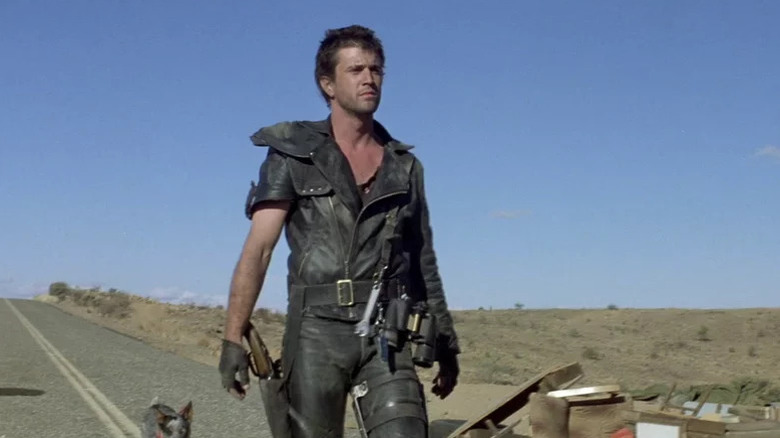
Better known in the United States as "The Road Warrior," 1981's "Mad Max 2" turns filmmaker George Miller's vengeful cop story into a post-apocalyptic epic. An unseen nuclear war reduces the planet into a wasteland, with oil and gasoline becoming especially precious commodities. Hardened survivor Max Rockatansky (Mel Gibson) helps a besieged community make their way to a wrecked tanker full of oil before they migrate to a fabled paradise. Pursuing the group of travelers is a high-octane barbaric gang led by the masked Lord Humungus (Kjell Nilsson).
While not the first movie in the franchise, it was "Mad Max 2" that set its thematic and narrative template moving forward. Gibson communicates so much, often without saying a single word, as the ultimate post-apocalyptic hero. This is elevated by some truly spectacular action set pieces, including some truly dangerous stunts as Max leads his allies through Humungus' opposition. One of those rare sequels that completely surpasses the original, "Mad Max 2" brings fiery thrills at the end of the world.
Cobra (1986)
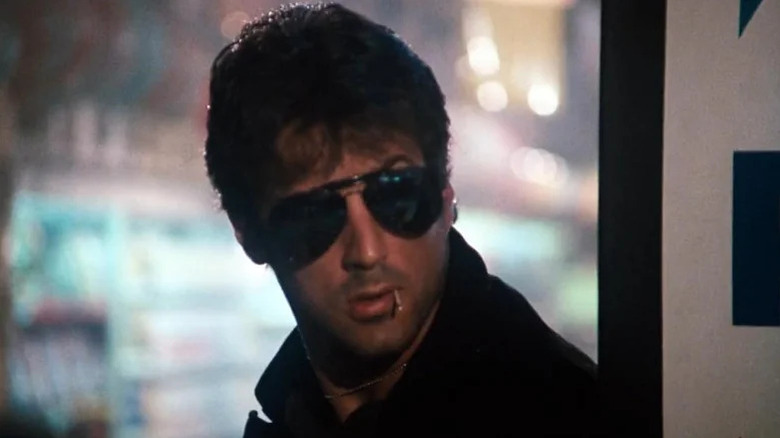
As cop movies gained a resurgence in the '80s, action star Sylvester Stallone introduced his own defiant police detective hero in 1986's "Cobra." In addition to writing the script, Stallone plays Marion "Cobra" Cobretti, a rule-breaking Los Angeles cop who gets the job done. The city is terrorized by a Darwinist cult known as New World, who launch a killing spree led by the sinister Night Slasher (Brian Thompson). After supermodel Ingrid Knudsen (Brigitte Nielsen) witnesses the cult and its lethal leader in action, Cobra must protect her from becoming their next target.
The origins of "Cobra" lie in the initial vision for "Beverly Hills Cop" as a dark drama starring Stallone. Instead, Stallone took his rewritten version of the proposed Los Angeles police story and added a more palpable romance and slasher movie thrills with the film's antagonist. These more serious elements work well, along with Cobretti's too-cool-for-school swagger and propensity for eating pizza with scissors. Years later, Sylvester Stallone voiced his regrets about "Cobra", but the movie is good, trashy '80s fun.
Big Trouble in Little China
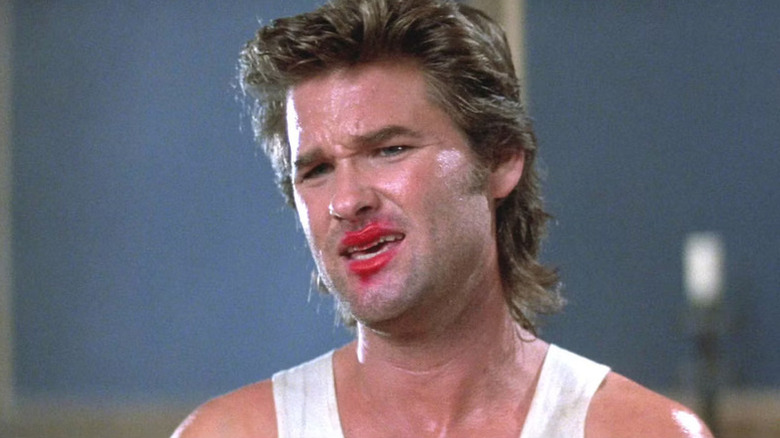
At a time when muscular action heroes dominated the cinema, John Carpenter and Kurt Russell subverted the archetype with 1986's "Big Trouble in Little China." Russell plays truck driver Jack Burton, whose big rig is stolen in San Francisco's Chinatown by an occult gang led by the enigmatic Lo Pan (James Hong). In trying to recover his truck, Jack is joined by his friend Wang Chi (Dennis Dun), whose fiancee was kidnapped by Lo Pan's men. The two delve into a world of Chinese mysticism and monsters as they try to topple the magical crime lord and recover what's been taken from them.
Kurt Russell channeled John Wayne in his performance as Jack Burton, bringing a self-assured bravado to the movie. What he and Carpenter do wonderfully is constantly deflate Jack's vaunted ego, fueling much of the film's comedy and subversion of expectations. Jack is very much not a white savior archetype, making this tour through Chinese cultural elements all the more fun and unpredictable. A cult classic in every sense of the word, "Big Trouble in Little China" is a highlight among Russell and Carpenter's collaborative efforts.
Hell Comes to Frogtown
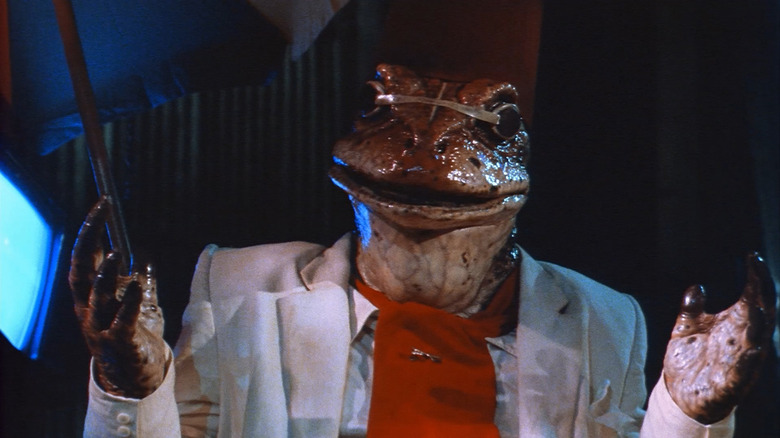
The post-apocalyptic action genre gets a wonderfully campy twist with 1988's "Hell Comes to Frogtown." The movie is set in a world where men have largely become sterile after a devastating nuclear war, with the few fertile men becoming increasingly valuable. When a city of mutated anthropomorphic amphibians take a group of fertile women hostage, Sam Hell (Roddy Piper) is recruited to rescue them. Hell is one of the last fertile men on the planet, with his genitals protected by an advanced codpiece, and takes on Frogtown's commander to free the women.
"Hell Comes to Frogtown" is one of those movies that has to be seen to be believed. Drawing from his professional wrestling background, Piper brings an easygoing machismo and self-aware humor to his role. And there's no way to see Hell's amphibian enemies lose their cool without at least eliciting a small laugh every time. Admittedly the strangest movie on this list, "Hell Comes to Frogtown" is a grindhouse-level under-appreciated gem.
Bloodsport
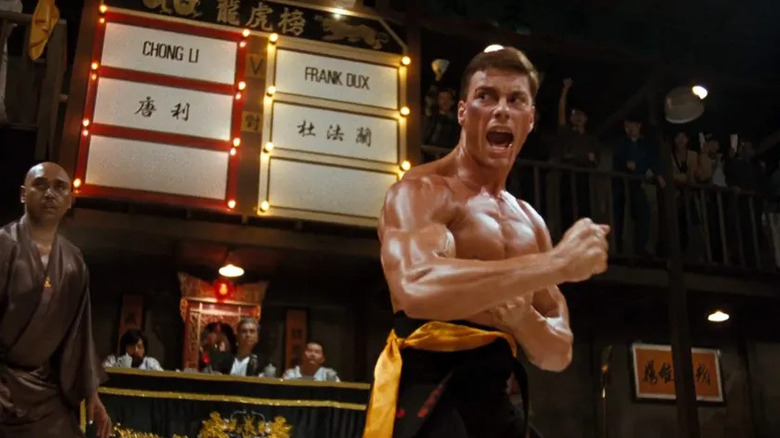
The reputed life and times of martial artist Frank Dux forms the basis for 1988's "Bloodsport." Jean-Claude Van Damme, in his first major starring role, plays Dux, who temporarily deserts the U.S. Army to compete in an underground fighting tournament in Hong Kong. Dux is tailed by two government agents looking to remand him back to the United States, and he befriends fellow competitor Ray Jackson (Donald Gibb). Battling through waves of skilled opponents, Dux makes it to the final match where he faces the infamously lethal Chong Li (Bolo Yeung).
"Bloodsport" went on to launch a franchise, but the only movie in the series worth watching is the first one. More than just cementing Van Damme as an action-packed lead actor, the 1988 flick stands as a foundational martial arts movie. The fight sequences are exciting and set to an unabashedly cheesy '80s soundtrack, while the montage sequences provide breezy, goofy fun. Greater things would come for Van Damme in the subsequent years, but "Bloodsport" gave him a strong start.
Point Break (1991)
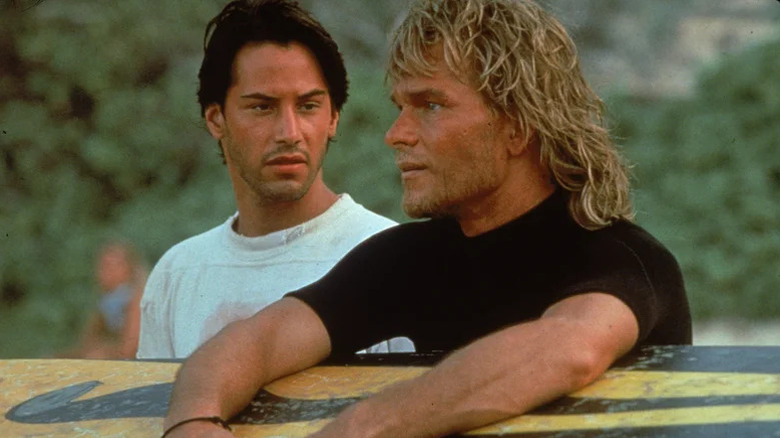
Patrick Swayze had done a number of action movies in the wake of "Road House," but none popped as hard as 1991's "Point Break." The film stars Keanu Reeves as rookie FBI agent Johnny Utah, who goes undercover with a group of surfers suspected of conducting a string of bank robberies. Leading the ensemble is Bodhi (Swayze), an enigmatic adrenaline junkie who forms a genuine friendship with Utah. The agent's growing inner turmoil is exacerbated when Bodhi and his group learn that their new buddy is a member of the FBI.
Secretly written by James Cameron, as per the blockbuster filmmaker's claims, "Point Break" positioned Reeves to be the action star he'd later come to embody. Director Kathryn Bigelow delivers several taut sequences, not just with the bank heists and shootouts, but also with its extreme sports scenes. These help form the rapport between Reeves and Swayze, which carries much of the movie. An early '90s hit and an informal torch hand-off from Swayze to Reeves, "Point Break" is a high-octane ride.
Showdown in Little Tokyo
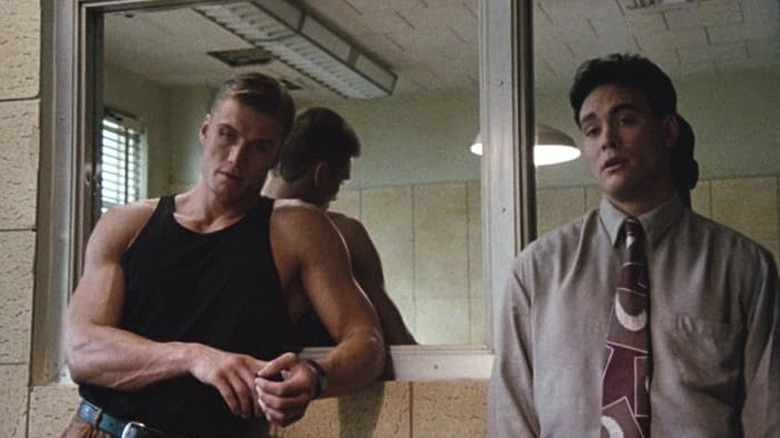
One early '90s buddy cop movie with martial arts action that could give "Road House" a run for its money is 1991's "Showdown in Little Tokyo." The film stars Dolph Lundgren and Brandon Lee as Los Angeles police detectives Chris Kenner and Johnny Murata, respectively. Assigned to keep the peace in Little Tokyo, the duo discover a yakuza syndicate is peddling a deadly street drug. This leads to several harrowing confrontations, with Kenner taking on the yakuza leader Yoshida (Cary-Hiroyuki Tagawa), the man who coincidentally murdered his parents.
"Showdown in Little Tokyo" is unapologetically trashy fun, with all the gratuitous sex and violence genre fans have come to expect. Lundgren holds his own as the movie's star, but the real standout is Brandon Lee, in one of his few major roles before his untimely death in 1993. The duo strike up an enjoyable enough dynamic, with Lee's jokes and action landing markedly better than his co-star's. The kind of movie you'd rent at a video store when looking for some comfort action, "Showdown in Little Tokyo" is an unassuming blast.
Rapid Fire (1992)
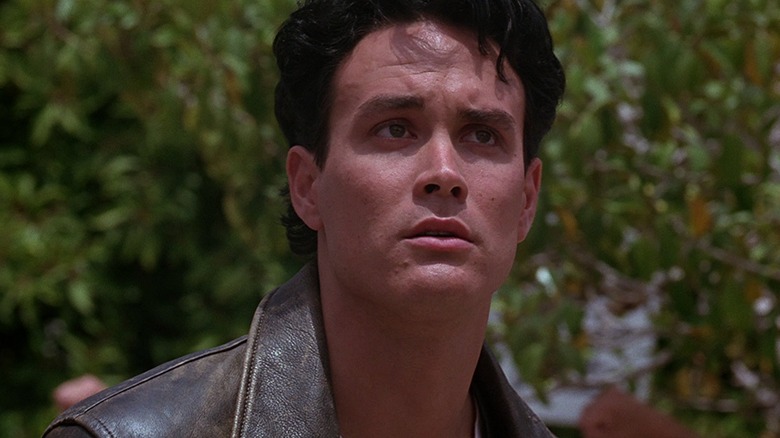
Another Brandon Lee cult favorite crime thriller, 1992's "Rapid Fire" places the martial arts action star front and center. Lee plays Jake Lo, an art student who gets caught up in a drug trafficking scheme in Los Angeles. Discovering the FBI has ties to the crime syndicate, Jake works with local police detectives Mace Ryan (Powers Boothe) and Karla Withers (Kate Hodge) to dismantle the organization. This culminates in a showdown with drug kingpin Kinman Tau (Tzi Ma), while Jake strikes up a romance with Karla.
"Rapid Fire" really showcases what Lee was capable of as a lead actor, without the tragic legacy associated with "The Crow." The movie lets him play the requisite action hero but also a romantic interest with as much nuance as a low-budget action flick can muster. The action scenes are nicely staged, particularly its opening skirmish at an art gallery and climactic battle at a laundry factory. Another glimpse at the raw potential Brandon Lee brought to the screen, "Rapid Fire" is a fun early '90s action showcase.
Hard Target
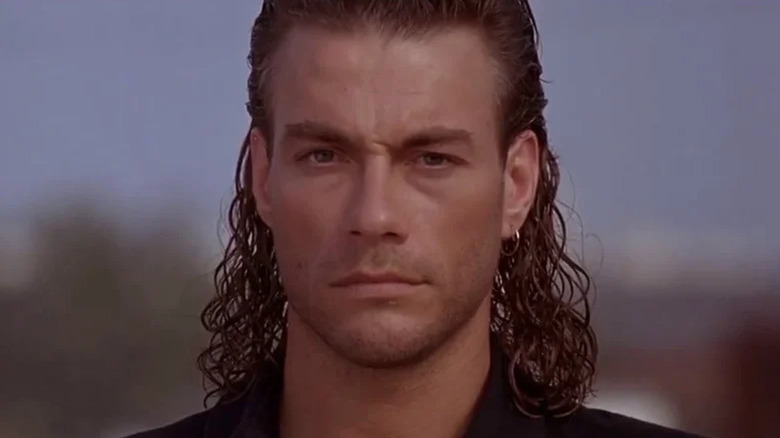
John Woo's first major Hollywood directorial feature was 1993's "Hard Target," teaming him with Jean-Claude Van Damme. Set in and around New Orleans, Van Damme plays drifter and former Force Recon Marine Chance Boudreaux, who saves a young woman, Natasha Binder (Yancy Butler), searching for her father. Chance and Natasha discover a local operation hunting and killing vagrants, with Natasha's father among those murdered. Chance moves to dismantle the operation, which is led by sinister businessman Emil Fouchon (Lance Henriksen) and his army of mercenaries.
"Hard Target" is one of Jean-Claude Van Damme's best movies, leaning heavily on Woo's signature style. From the ridiculous stunts to Van Damme using his martial arts against a snake, the film is great lightweight fun. Stealing the show is the reliably good Henriksen, chewing the scenery as much as his co-star Arnold Vosloo. A strong Hollywood debut for John Woo, "Hard Target" sees the Hong Kong filmmaker highlighting his creative strengths in America.