

15 Best Hard Sci-Fi Movies Of All Time, Ranked
We may receive a commission on purchases made from links.
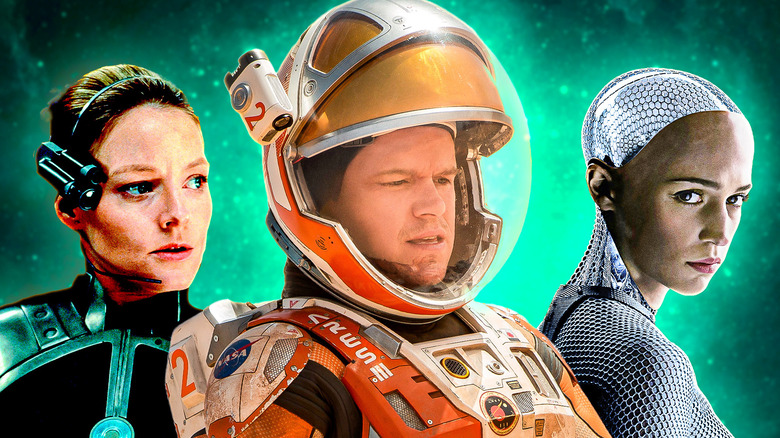
While science fiction includes everything from space opera to cyberpunk, one sub-genre that we have a special place for is hard sci-fi. These movies place a stronger emphasis on scientific accuracy and a more grounded premise than their more fantastical counterparts. Many of the best sci-fi movies ever are set within the realm of hard sci-fi, heightening the sense of realism to their stories. We're taking a closer look at this fan-favorite sub-genre and our personal favorite movies within it.
While there are varying opinions about what qualifies as hard sci-fi, each of the movies we're including here certainly have a strong scientific grounding. Even some of the best sci-fi movies of 2026 are clear hard sci-fi projects, breathing new life into the sub-genre. With those qualities in mind, these are the best 15 hard sci-fi movies of all time ranked, each offering their own cinematic verisimilitude to the genre.
15. Marooned (1969)
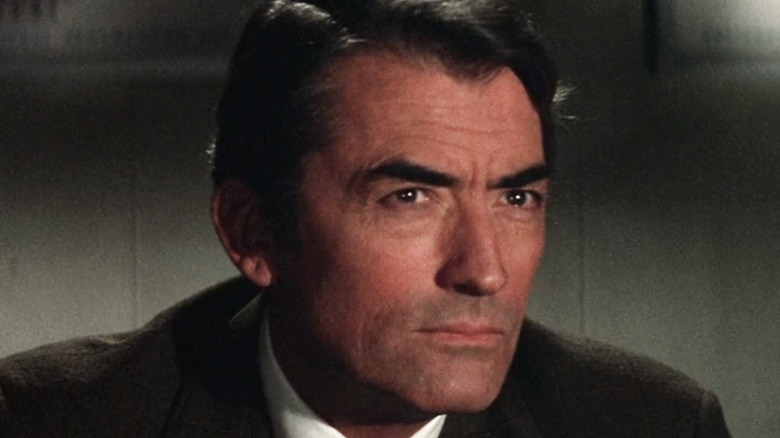
After "2001: A Space Odyssey," there was "Marooned," with Gregory Peck's space thriller based on the novel of the same name by Martin Caidin. Peck stars as NASA Director Charles Keith who finds himself working on a desperate rescue mission to save three astronauts stranded in orbit. As the incident becomes more public, Keith is forced to use an experimental spacecraft for the rescue, despite it being untested. Meanwhile, the stranded astronauts grow desperate as they begin to run out of oxygen before help arrives.
"Marooned" was released before the Apollo 13 incident, which similarly saw American astronauts seemingly stranded in space. While things like the movie's experimental spacecraft take it to sci-fi territory, the whole thing feels scientifically plausible. At the same time, the movie also keeps a tight focus on the human stakes, including the response back home and the families affected by the incident. Overlooked by audiences today, nearly 60 years later, "Marooned" sets the template for so many subsequent space disaster movies on this list.
14. Primer

A big factor in a lot of hard sci-fi movies is its production budget, because it's far cheaper to make a grounded sci-fi movie than an outlandishly audacious one. That certainly informs the 2004 indie movie "Primer," written, directed, produced, edited, and starring Shane Carruth, who also composed the score. Carruth plays Aaron, an engineer whose colleague Abe (David Sullivan) develops an amateur time machine in their garage. As the duo explore the possibilities of their invention, they progressively experience the dire consequences of time travel.
While "Primer" may look and feel like a lofi time travel movie at first glance, it refreshingly explores its conflict from a well-thought approach. Things like the process' physical toll on the body from its wider ripple effects are smartly explored throughout the story. The production's DIY nature actually suits the narrative well, given the amateur nature of the movie's central plot device. If you haven't seen "Primer" before, the movie is a must-watch for sci-fi movie fans and a tightly constructed one at that.
13. Gattaca
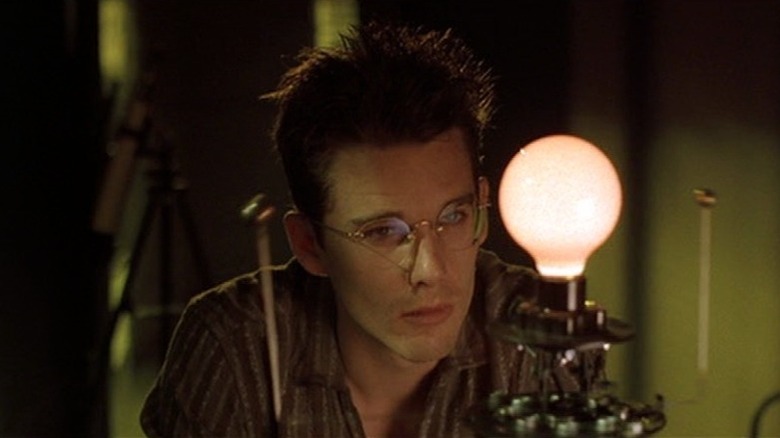
1997's "Gattaca" is another sci-fi flick that feels eerily plausible for modern society to follow within the next several years. The story is set in a world where eugenics has become widespread to avoid the birth of babies with debilitating genetic conditions. This leads to society discriminating against those who carry genetic defects, including protagonist Vincent Freeman (Ethan Hawke). Posing as a genetically engineered individual, Vincent's ruse comes under scrutiny in the wake of a corporate executive's murder.
Admittedly, "Gattaca" is the most visually stylish movie on this list, but its concept and the level of technology depicted hold a real world weight to them. The science behind the story's genetic engineering and eugenics feels particularly well-developed as the cornerstone of this dystopian society. The movie goes into meticulous detail how Vincent is able to maintain his deception and how this genetic technology has impacted civilization. A dystopian noir look at the perils of artificial perfection, "Gattaca" is a moody flick that makes the most of its premise.
12. The Abyss
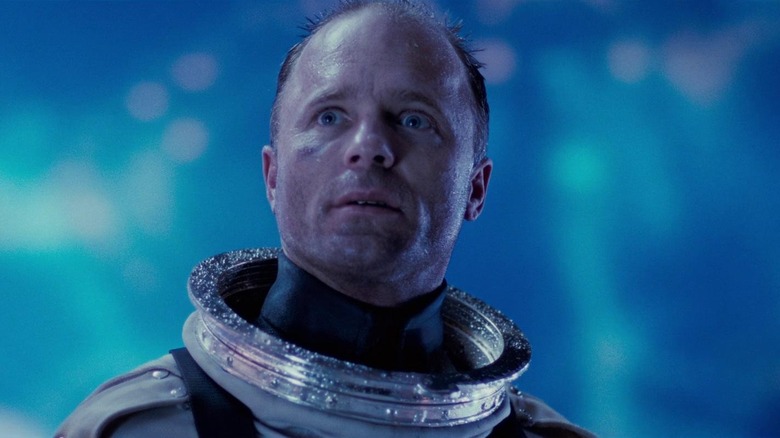
Filmmaker James Cameron's most underrated movie is the 1989 underwater thriller "The Abyss," with its core themes carried over into "Avatar: The Way of Water." The movie has American and Soviet teams racing to salvage a sunken American submarine from the bottom of the ocean. Leading the American expedition is an oil drilling crew headed by Bud Brigman (Ed Harris), only to find otherworldly entities are involved. As the full scope of this mission becomes apparent, Bud tries to stop hostilities from escalating between humanity and this underwater species.
More than just standing as another Cameron project that heavily involves the water, "The Abyss" also showcases his sharp attention to detail. Cameron takes care to demonstrate the real-world dangers of deep-sea exploration, including the high pressure and chilling temperatures of the watery depths. These elements fuel the tension as much as the strange creatures that Bud encounters, along with Cameron's recurring message that unchecked human aggression is the true enemy. Claustrophobically staged and under-appreciated for years, "The Abyss" is Cameron's unsung classic and as grounded his sci-fi work gets.
11. The Andromeda Strain
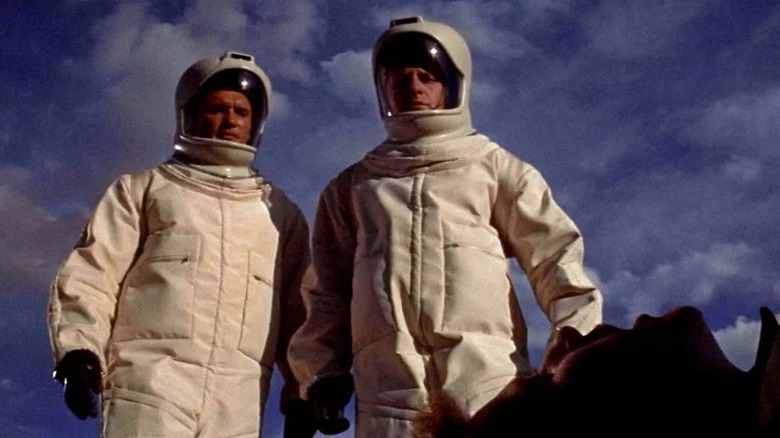
The first novel that author Michael Crichton published under his own name was 1969's "The Andromeda Strain," which was adapted for the silver screen in 1971. More intelligently assembled than the standard disaster movie fare of its time, the movie opens with a satellite crashing near a small town in New Mexico. After most of the community dies suddenly under mysterious causes, it's discovered that the satellite brought back a highly lethal extraterrestrial microorganism. The movie follows a team of scientists trying to contain the situation before it can wipe out all life on the planet.
Crichton's work tends to succeed the more firmly that they're rooted in reality before expanding into the fantastical. "The Andromeda Strain" is a prime example of this, still packing a punch over 50 years since its debut. That strong scientific approach to the premise underscores the gravity that this threat is terrifyingly plausible. Still one of the best Michael Crichton movie adaptations, "The Andromeda Strain" offers a grounded sci-fi approach to annihilation by contagion.
10. Solaris (2002)
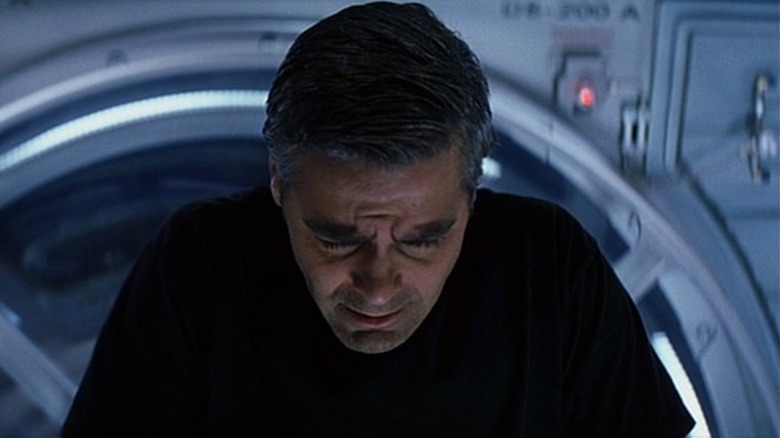
While the 1972 adaptation of "Solaris" by Soviet filmmaker Andrei Tarkovsky is one of the best space horror movies ever made, it does veer tonally away from Stanisław Lem's novel. By contrast, Steven Soderbergh's 2002 adaptation is more of a drama and an isolated character study, though some existential thriller elements remain. The movie's protagonist is Chris Kelvin (George Clooney), a clinical psychologist who visits a remote space station only to find most of its crew is dead. As Kelvin investigates the situation, he is shocked to be reunited with his late wife Rheya (Natascha McElhone). who is seemingly alive and well.
While it's a close call, Soderbergh's "Solaris" is a sci-fi remake that's better than the original, mostly because of change in tone and Clooney's vulnerable performance. This elevates the movie's ambiguous existential contemplation, while Soderbergh wisely keeps the sci-fi elements relatively stripped down. At its core, the story is a meditation on grief and guilt while Soderbergh builds his story in a relatively grounded outer space setting. Soderbergh's "Solaris" is both his most understated and boldest project, using the mysteries of the cosmos to explore its emotional themes.
9. Moon (2009)
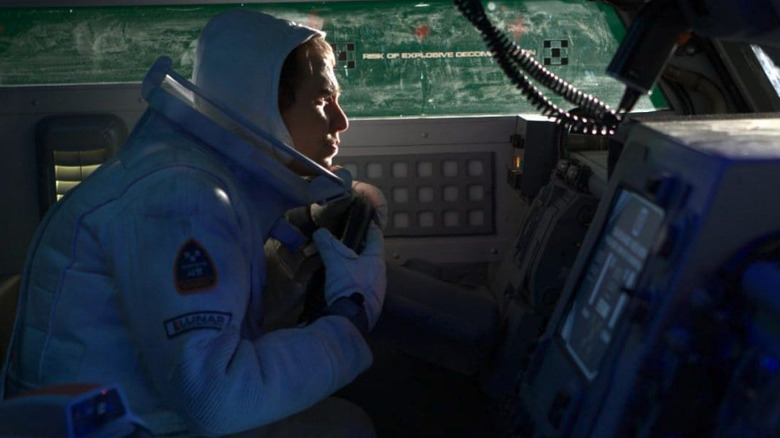
The debut feature directorial project by British filmmaker Duncan Jones is the 2009 indie flick "Moon." The movie is largely a one-man show for Sam Rockwell, who plays Samuel Bell, a technician working alone in a lunar mining facility. As Bell nears the end of his three-year assignment, he begins to hallucinate, while his health steadily worsens. This culminates in Bell coming face-to-face with a doppelganger of himself, as he realizes the disturbing truth about his existence.
With its pragmatically minimalist art design and Rockwell being the only actor on-screen for the majority of the movie, "Moon" keeps its storytelling simple but effective. The idea that the Moon could be mined heavily for helium-3 is rooted in fact, while the technology is never particularly outlandish. Like Soderbergh's "Solaris," Jones keeps its narrative focus tightly on his protagonist which is where its real strength lies. An intimately scaled sci-fi thriller, "Moon" remains Duncan's best work to date, using its grounded backdrop to atmospheric effect.
8. Silent Running
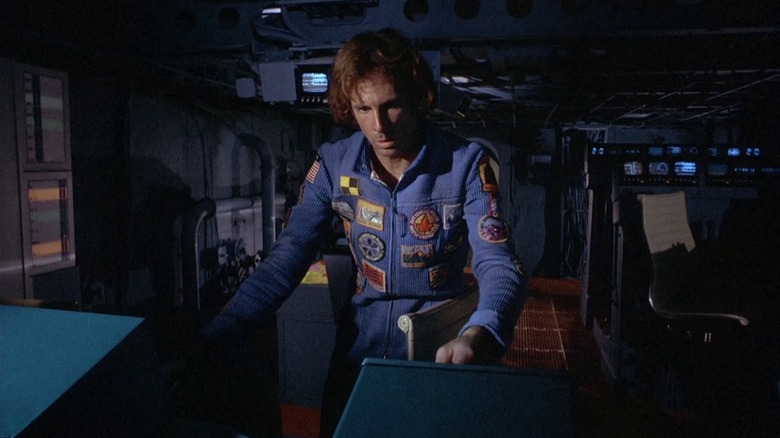
Among the sci-fi movies that nobody talks about anymore is "Silent Running," which was released in 1972. The movie takes place in a future where Earth is no longer capable of supporting trees, forcing humanity to take its forestry off-world. The story is set in a spaceship serving as a large biome for trees, tended to meticulously by botanist Freeman Lowell (Bruce Dern). When the crew is ordered to destroy the biomes by their corporate overseers, Lowell goes through murderous lengths to defend his carefully curated forests.
Of all the movies on this list, "Silent Running" is the one with the most pointed sociopolitical commentary. From its takedown of corporate greed to its eco-friendly themes, the movie feels like both a product of its time and as prescient as ever. Dern is rarely better than in his performance as Lowell, with his character standing as a portrait of single-minded obsession and carrying much of the movie. Unabashedly direct in its messaging, "Silent Running" deserves wider recognition than it receives from the public these days.
7. Her (2013)

Not every hard sci-fi movie needs to unfold in outer space or revolve around high concept narratives. The 2013 romantic drama "Her" is perfectly set within a more intimate scope, given its premise. Taking place in a near-future Los Angeles, loner Theodore Twombly (Joaquin Phoenix) struggles at forming a meaningful romantic connection with others. Instead, Theodore grows closer to his digital assistant Samantha (Scarlett Johansson) as she gains sentience, with a loving relationship growing between them.
"Her" is the perfect love story for the Information Age, underscoring that technological advances don't necessarily separate us from connecting with others. The movie's premise feels entirely plausible while also being prescient in the decade prior to the widespread proliferation of artificial intelligence. The tightened focus works well, with filmmaker Spike Jonze keeping the "Her" set intimate for Joaquin Phoenix, as he stays awkwardly vulnerable for much of the story. Understated in its tone and scope but still packing an emotional wallop, "Her" is Jonze's humanist masterpiece in an increasingly digital era.
6. Contact (1997)
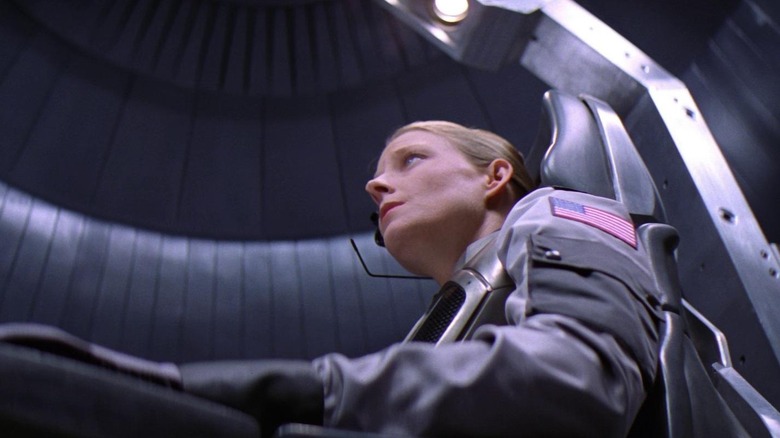
Among the most celebrated hard sci-fi authors of the 20th century was astronomer and science educator Carl Sagan. The 1997 movie "Contact" adapted Sagan's 1985 novel of the same name, detailing humanity's first contact with extraterrestrial life. After astronomer Ellie Arroway (Jodie Foster) detects signs of intelligent otherworldly life, the world is galvanized by the discovery. Though Arroway wants to make contact with these mysterious figures through an experimental device, complications quickly arise.
While there is certainly extraterrestrial interaction to be had, "Contact" is more about the reaction and fallout to confirmation of otherworldly life. Jodie Foster brings that thoroughly human response to the subject matter, while her character guides audiences through the story. "Contact" could've been a much stranger movie, treating Sagan and partner Ann Druyan's tale with tone-deaf disregard for scientific accuracy and characterization, but cooler heads won out. One of the best sci-fi movies of the '90s, hard with its science or not, "Contact" is an understated genre gem.
5. Project Hail Mary
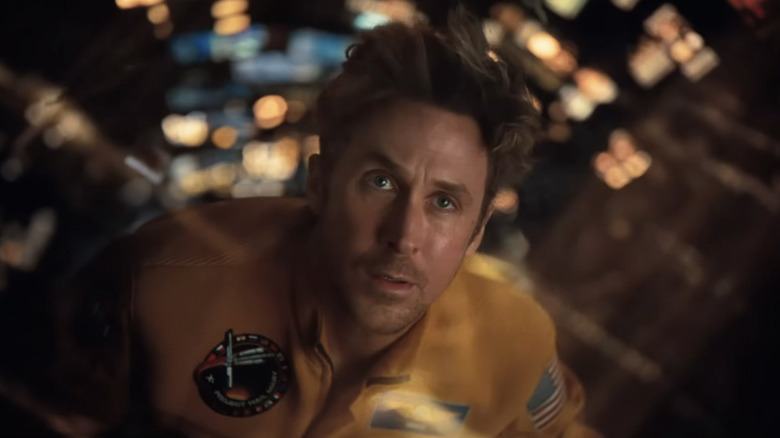
Upon its debut in 2026, "Project Hail Mary" was quickly crowned as one of the best sci-fi movies ever and deservedly so. Based on the best-selling novel by Andy Weir, the movie has our sun plagued by a strange substance threatening to dim it to catastrophic levels within decades. Molecular biologist Ryland Grace (Ryan Gosling) is forced to join an interstellar expedition searching for a way to restore the sun's output. This leads Grace to team up with a rock-based extraterrestrial on his own mission to save his planet from the threat of the same substance.
"Project Hail Mary" improves upon Andy Weir's book in key ways, streamlining the story and quietly discarding its more superfluous sci-fi elements. But even with its interstellar partnership, the adaptation retains the source material's penchant for scientifically informed storytelling. That grounds the more cosmic elements as Grace finally enacts his last-ditch effort to save his world from chilly annihilation. Keeping hard sci-fi alive and well into the 2020s, "Project Hail Mary" is a bonafide crowd-pleaser.
4. Interstellar
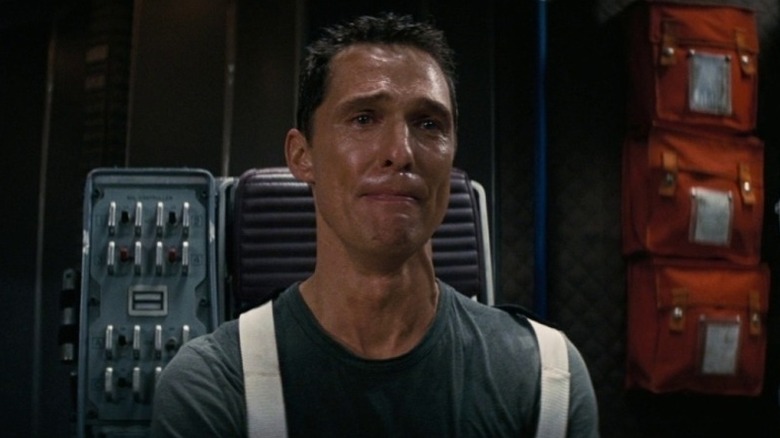
Still one of Christopher Nolan's most ambitious movies over a decade after its release, "Interstellar" is the filmmaker's most high-flying tale to date. Like "Project Hail Mary" after it, the movie revolves around humanity at the brink of extinction, forced to undertake a desperate mission for its salvation. In the case of Nolan's story, Earth is rocked by severe dust storms affecting its agriculture, with astronaut Coop (Matthew McConaughey) leading an expedition for a habitable planet. This is juxtaposed by Coop's adult daughter Murph (Jessica Chastain) trying to find a way to create a spacecraft capable of launching into deep space through Earth's gravity.
While there are, of course, creative liberties taken through its premise, "Interstellar" boasts a high level of scientific accuracy. This includes the astrophysics propelling the story like the singularity that serves as the key to its spacefaring scope. Everything from planets undergoing significant time dilation to the gravity equation back on Earth all feel feasible, even with all the cinematic splendor. Christopher Nolan always offers a well-thought approach to even the most fantastical subject matter, and "Interstellar" captures those qualities beautifully.
3. Ex Machina
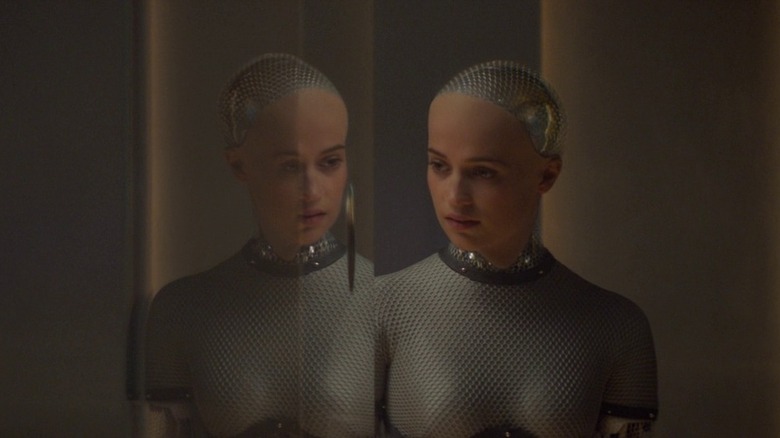
Another British filmmaker who's excelled at smart sci-fi storytelling in the 21st century is Alex Garland. Arguably the hardest sci-fi story Garland has told thus far, and certainly one of the most effective, is the psychological thriller "Ex Machina." The story follows programmer Caleb Smith (Domhnall Gleeson) who stays at the remote home of eccentric tech CEO Nathan Bateman (Oscar Isaac). Caleb is tasked with checking the sentience of Bateman's latest creation, a self-aware android known as Ava (Alicia Vikander) only for things to violently go off the rails.
There is an underlying paranoia with existential overtones that permeate throughout "Ex Machina," carrying its narrative forward. Compared to more overtly cyberpunk stories like "Blade Runner," Garland's 2014 flick takes a much more grounded view on androids and the proliferation of artificial intelligence. This is underscored by its special effects, with the "Ex Machina" VFX avoiding green screen use, preferring practical effects and sets for its execution. A cautionary tale about billionaire vanity projects taking on a hostile life of their own, "Ex Machina" is Garland's most prescient work.
2. The Martian
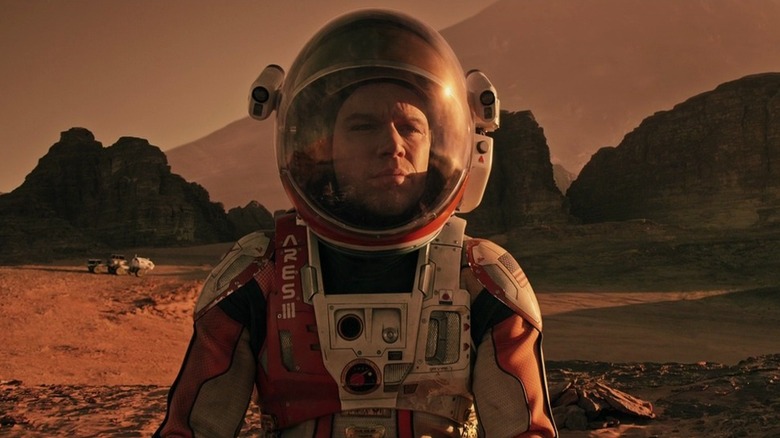
Another adaptation of an Andy Weir novel to mention here is 2015's "The Martian," directed and produced by Ridley Scott. The movie is set in a near-future where humanity has established a research station on Mars as part of an international coalition. After the station's team evacuates from the planet during a severe dust storm, astronaut Mark Watney (Matt Damon) is accidentally left behind. Until a rescue mission can be carried out, Watney has to rely on the tools that he has available and his own wits to survive alone on Mars.
Andy Weir gave the 2015 adaptation of "The Martian" his seal of approval, and we do too. The movie is Scott's most buoyantly light, yet it doesn't compromise the scientific know-how behind Watney's prolonged ordeal. Matt Damon has to perform much the movie alone, expertly conveying his character's intellectual reasoning without coming off as overly dry or talking down to the audience. One of the smartest sci-fi blockbusters of the 2010s, "The Martian" treats its premise well while celebrating intelligence to save the day.
1. 2001: A Space Odyssey
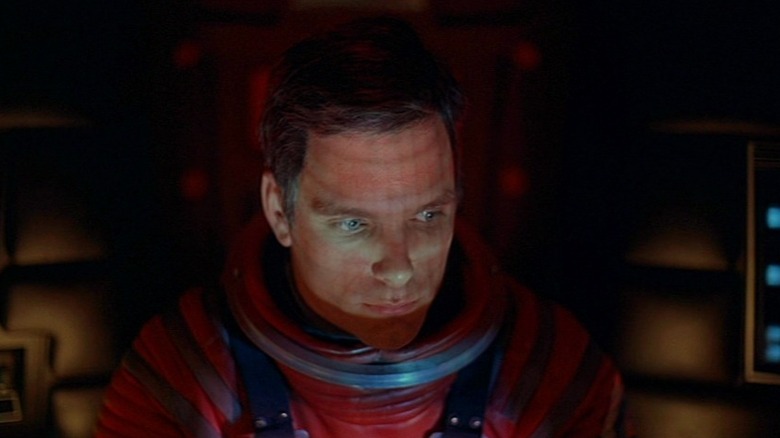
One of the most prolific hard sci-fi authors was Arthur C. Clarke, who teamed up with filmmaker Stanley Kubrick for "2001: A Space Odyssey." The 1968 movie traces humanity's evolution through a strange extraterrestrial monolith that first appeared on Earth during prehistoric times. When a monolith found on the Moon transits a signal to Jupiter, an expedition is mounted to investigate further. This voyage is nearly derailed by the malevolent artificial intelligence HAL 9000 (Douglas Rain) running the team's spaceship.
Given Kubrick's exhaustive attention to detail and Clarke's scientific acumen, "2001: A Space Odyssey" is as hard as the genre gets on film. For as many confusing moments that the movie has, it keeps the audience riveted with its solid grounding. What makes the movie work is its juxtaposition of realistic sci-fi and existential pondering, balancing hard science with cosmic introspection. The best Stanley Kubrick movie, "2001: A Space Odyssey" brings out the best in its filmmaker and co-writer to bring this spacefaring tale to life.