

10 Best Sci-Fi Movies Nobody Talks About Anymore
Given the sheer breadth of the science fiction genre throughout the history of cinema, there are plenty of movies that get lost in the mix. From classic films that lost recognition through the passage of time to movies that always skirted under wider appreciation, there is no shortage of sci-fi movies that need more love. In some cases, great sci-fi movies get low critical reviews, condemning them to relative obscurity right out of the gate. Whatever the cause, there are loads of sci-fi movies that are worth being better appreciated and part of the genre discourse.
We're gathering up our favorite sci-fi movies whose legacy hasn't held up over the years and sharing them all here. These are movies that flew under the wire or just didn't quite maintain the pop culture longevity as their more recognized counterparts. Whether it's a spacefaring thriller or cyberpunk noir, there is an obscure science fiction flick for everybody out there.
These are the 10 best sci-fi movies nobody talks about anymore, but each is deserving of being more than a cult classic.
Silent Running
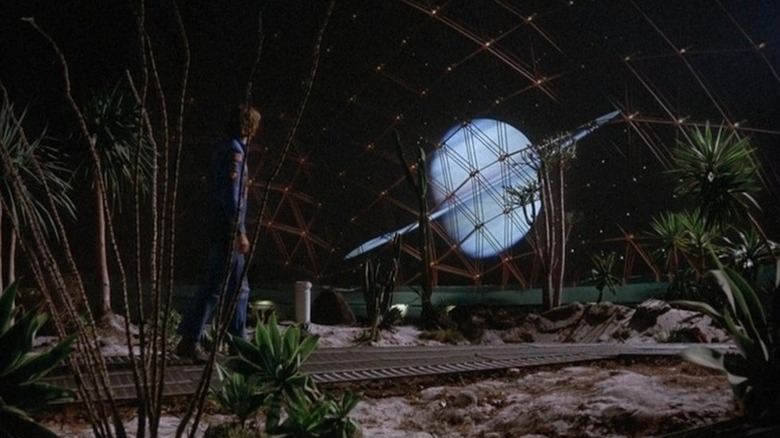
The 1972 movie "Silent Running" is a sci-fi story with an early and prominent ecological message about the importance of protecting the environment. The movie takes place in a future where Earth can no longer support trees, forcing humanity to preserve them in biodomes throughout the solar system. Protagonist Freeman Lowell (Bruce Dern) is a botanist tending to the biodomes linked to a spaceship orbiting Saturn, planning to reforest Earth. However, when the ship is ordered to destroy the biodomes so it can be repurposed for commercial use, Lowell takes drastic measures to ensure that the ecosystems remain protected.
There is an ominous mood that hangs over "Silent Running," showcasing how far one will go to safeguard their obsession — in this case, the environment. Even once the more violent aspects of the story are settled, this melancholy pervades throughout the movie as Lowell isolates himself. So many of these qualities come from Dern's largely solitary performance as he gets lost in his work, with his character doing whatever he can to defend it. In between these themes, "Silent Running" presents a richly detailed sci-fi environment, anchoring its ecological tale in an authentically grounded setting.
Outland
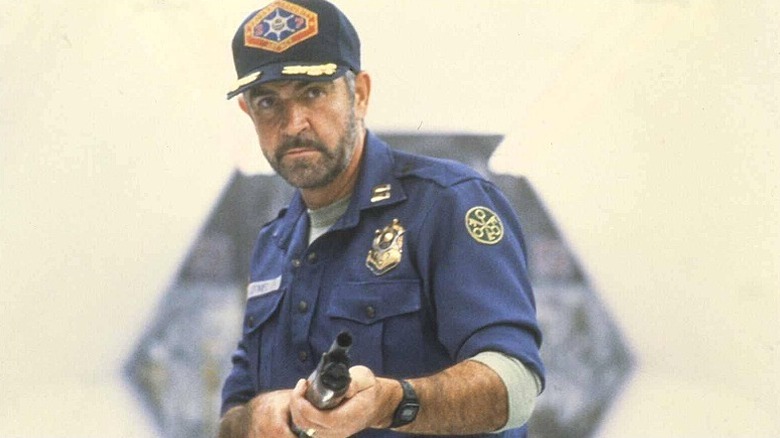
Sean Connery starred in the 1981 sci-fi Western "Outland," one of the genre's best in the 1980s, transposing the familiar gunslinger tropes to a futuristic off-world locale. Connery plays William O'Niel, a marshal who is tasked with keeping the peace at a mining facility on the Jovian moon of Io. While mining productivity has ramped up significantly, the miners begin exhibiting increasingly disturbing behavior, including psychotic breaks and lethal self-harm. As O'Niel investigates the growing number of incidents, he uncovers a conspiracy involving those corporate figures running the mine.
With its tale of a lone lawman against a cruel overseer in a remote community, "Outland" channels a myriad of iconic Western movies, most notably "High Noon." The sci-fi elements are incorporated well, creating a moody backdrop as the narrative's mystery escalates into a full-blown showdown. Connery is as magnetic as always, bringing a grizzled determination to his no-nonsense protagonist and appears more at home than his other sci-fi flick, "Zardoz." A no-frills sci-fi action movie, "Outland" solidly delivers on its premise with hard-hitting and gunslinging aplomb.
2010: The Year We Make Contact
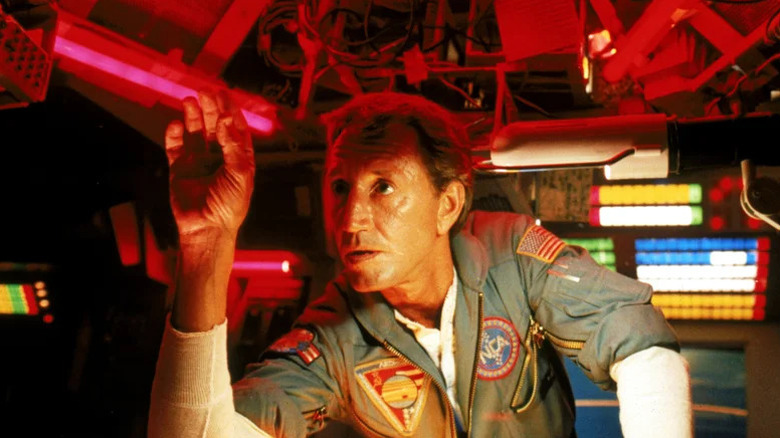
While it may seem sacrilegious to make a sequel to "2001: A Space Odyssey," one was indeed made, and it's actually quite good. Adapting Arthur C. Clarke's "2010: Odyssey Two," the 1984 film "2010: The Year We Make Contact" explores the fallout from the preceding movie. It follows a joint American-Soviet mission to the Jovian moons investigating what caused HAL 9000 to malevolently malfunction and turn on the Discovery's crew. This leads to the ominous black monoliths resurfacing as Cold War tensions reignite back on Earth, affecting the mission.
While filmmaker Stanley Kubrick crafted a singular masterpiece with "2001: A Space Odyssey," its 1984 follow-up certainly doesn't tarnish its legacy. "2010: The Year We Make Contact" is more accessible and less coldly clinical than its predecessor, answering some of the 1968 movie's major questions. The movie also capitalizes on resurgent Cold War tensions, adding a level of intrigue to the usual sci-fi spectacle. A sequel to a box office hit most people didn't know existed, "2010: The Year We Make Contact" offers a solid continuation of Kubrick's classic.
Strange Days
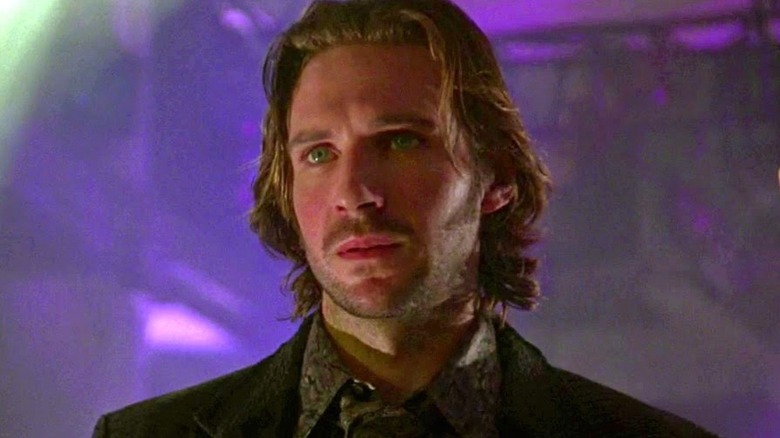
Filmmaker James Cameron came up with the idea for "Strange Days" nearly a decade before it was made by his ex-wife Kathryn Bigelow, with Cameron producing and co-writing the project. The movie is set in the near-future of 1999, with Los Angeles rife with crime and corruption as the new millennium approaches. Society has begun entertaining themselves with illegal devices that allow them to live out recorded memories, right down to their physical sensations, including a market for violent memories. Former cop Lenny Nero (Ralph Fiennes) has turned to selling memories, before stumbling on a major conspiracy linked to several particularly disturbing murders.
"Strange Days" is nearly impossible to watch on streaming, informing its relative obscurity over 30 years since its release. The movie stands as the '90s best cyberpunk film, blending neo-noir with a wide range of social commentary about media and technological addiction and the rampant abuse of power. Bigelow weaves in a voyeuristic quality to the narrative, with first-person sequences evoking the recorded memories depicted in the movie, placing viewers in the thick of their lurid content. A prescient movie in its messaging about the dangers of the types of media that we consume, "Strange Days" is Bigelow's underrated genre masterpiece.
Solaris (2002)
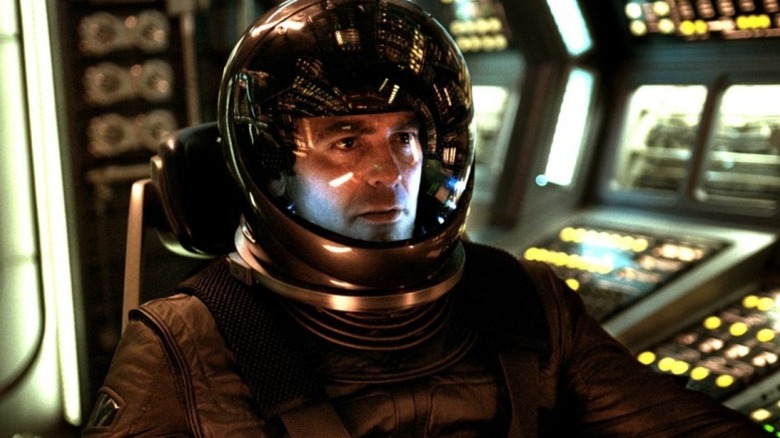
The 1961 Polish novel "Solaris" by Stanisław Lem was adapted twice in the Soviet Union, including by acclaimed Russian filmmaker Andrei Takovsky in 1972. But 30 years later, American filmmaker Stephen Soderbergh offered his own adaptation, with the George Clooney-starring sci-fi film produced by James Cameron. Clooney plays Chris Kelvin, a clinical psychologist sent to investigate what happened to the crew of a space station orbiting the planet Solaris. Upon arriving at the station, Kelvin finds many of the crew dead or missing while replicas of loved ones, including Kelvin's late wife Rheya (Natascha McElhone), mysteriously appear.
In addition to directing and writing the 2002 movie, Soderbergh also worked as the cinematographer and editor on "Solaris," albeit under pseudonyms. A passion project for the filmmaker, the movie is Soderbergh at his most cerebral and ambiguous, offering philosophical questions without clearly provided answers. The movie also depicts Clooney in what is arguably his most vulnerable performance as his character overcomes his guilt and grief when confronted with the mysteries of the titular planet. The type of sci-fi movie that sticks with viewers and leaves them thinking about its implications, "Solaris" is Soderbergh's most overlooked film to date.
Equilibrium
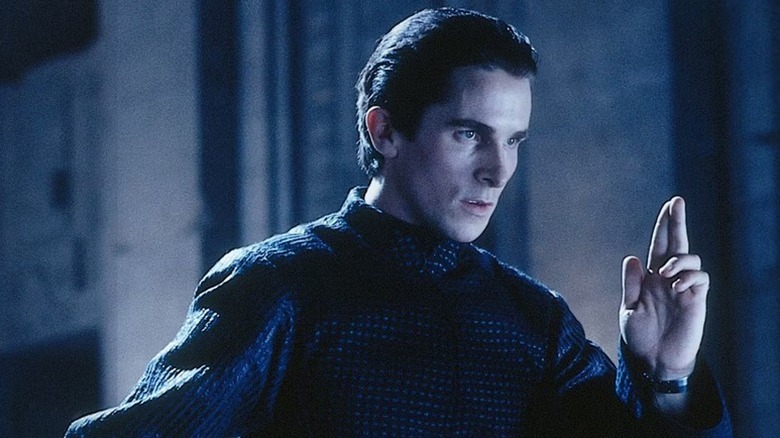
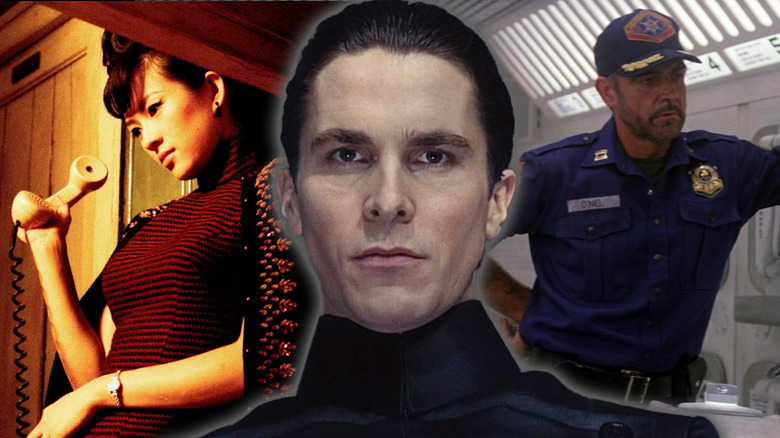
Before he was Batman, Christian Bale starred in the overlooked dystopian sci-fi movie "Equilibrium," a stylish action thriller released in 2002. Bale plays John Preston, a government agent tasked with eliminating people openly experiencing or expressing emotion in a tightly repressed totalitarian society. However, after accidentally skipping his emotion-suppressing government-mandated medication, Preston gradually embraces his emergent feelings and memories as he reconnects with himself. This leads Preston to join a resistance movement against the government, placing him in conflict with his old colleagues and superiors.
A pastiche of classic sci-fi stories like "Nineteen Eighty-Four" and "Brave New World," "Equilibrium" brings a slick edge to the familiar premise. This includes the movie's standout action sequences, with tightly choreographed gunfights and a martial arts style built around precise gunplay. Bale is as intense as ever and that perfectly suits his tightly closed-off character, bringing in more nuance as he undergoes his redemption. Unfairly regarded as a "Matrix" knock-off, "Equilibrium" provides its own haunting near-future dystopia packed with memorable action set pieces.
2046
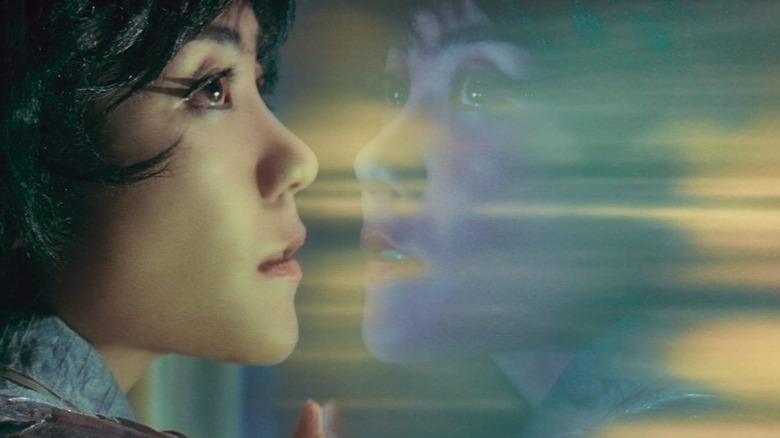
Wong Kar-wai is one of the greatest filmmakers to come out of Hong Kong, with humanist films like "Happy Together" and "Chungking Express" among his best work. The 2004 movie "2046" is a loose sequel to "Days of Being Wild" and "In the Mood for Love," with protagonist Chow Mow-wan (Tony Leung) returning to Hong Kong. Struggling to make ends meet, Chow turns into a science fiction writer, with his tales interspersed with sequences in the real world. In between his work, Chow leads a complicated love life, still shaken by a lost love in Singapore while striking up a turbulent romance with Bai Ling (Zhang Ziyi).
"2046" is science fiction by proxy, with the genre elements featured vicariously through stories written by Chow throughout the narrative. These futuristic vignettes provide audiences with sweeping, neon-soaked cyberpunk landscapes and the most awe-inspiring visuals in Wong's filmography. These dreamscapes serve as interludes between the main story which unfolds in a nonlinear fashion, adding to the ephemeral qualities of the movie. Another haunting tale about love and loneliness from Wong Kar-wai, "2046" features the Hong Kong filmmaker still very much at the top of his game.
A Scanner Darkly
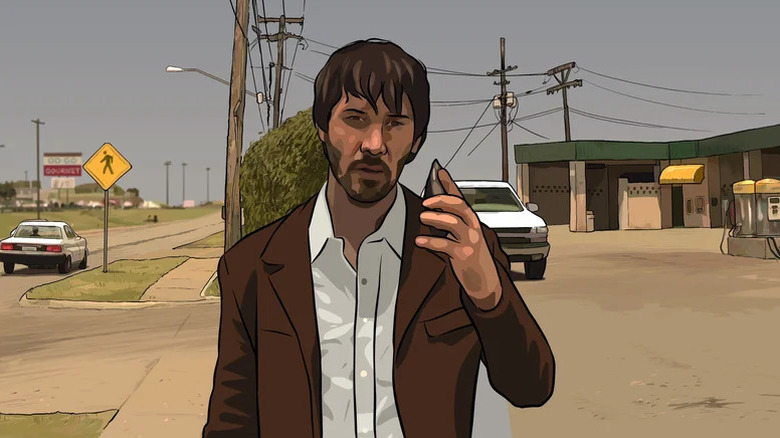
Filmmaker Richard Linklater adapted Philip K. Dick's 1977 novel "A Scanner Darkly" into a murky neo-noir story in the near-future. The movie opens with a significant portion of the United States addicted to an outlawed powerful hallucinogenic known as Substance D. As the country descends into a government-controlled surveillance state, narcotics agent Bob Arctor (Keanu Reeves) goes undercover to trace the popular drug's source. As Arctor begins using D to maintain his cover, his double lives and sense of reality become increasingly blurred.
"A Scanner Darkly" envisioned a different future for animation, using rotoscope animation over its all-star cast that was shot in live-action. This makes the movie one of the most visually striking of its genre in the 2000s and helps underscore the story's surrealist premise. Like several movies on this list, there is a somber prescience to the story, specifically when it comes to government surveillance and unchecked drug epidemics. This has helped "A Scanner Darkly" feel more relevant than ever, and it deserves a wider reappraisal 20 years since its debut.
Moon (2009)
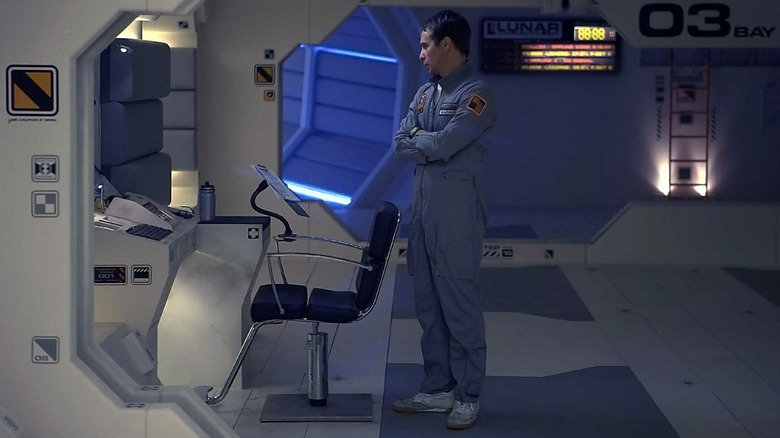
The 2009 indie movie "Moon" evokes the grounded and stripped-down science fiction stories popularized in the '70s. Directed by Duncan Jones, the movie takes place in a future where humanity has begun mining helium-3 from the moon as a growing fuel source. Sam Bell (Sam Rockwell) mans a mining facility on his own, nearing the end of his three-year solitary assignment and planning to return home to his family. After beginning to experience vivid hallucinations, Bell investigates a crashed rover only to discover a living doppelganger of himself inside.
"Moon" revolves around an existentialist sci-fi mystery, claustrophobically confined to a small futuristic facility with dark secrets inside its walls. Given the premise, Rockwell has to do much of the movie's heavy lifting, which he does admirably as the dual protagonists suffer the ultimate identity crisis. At the end of the day, the only thing better than a single Sam Rockwell is having two Sam Rockwells on-screen together, though you will have to deal with a robot sidekick voiced by Kevin Spacey. Still Duncan Jones' best movie to date, "Moon" is a sci-fi chamber play driven by an unsettling sense of mystery at the narrative's core.
Okja

South Korean filmmaker Bong Joon Ho has crafted several sci-fi projects, such as "The Host," "Snowpiercer," and "Mickey 17." One of Bong's often overlooked genre films is the 2017 Netflix movie "Okja," a project that he co-wrote and produced in addition to directing. The story is set in a world that has developed genetically engineered super pigs, organized by the ominous Mirando Corporation. When Mija (Ahn Seo-hyun) is invited to Mirando's New York headquarters to showcase Okja, the super pig she raised in Korea, she discovers the extent of the company's animal cruelty.
A great sci-fi movie that shouldn't have skipped theaters, "Okja" is Bong at his most heartwarming and sentimental, given the story's young protagonist. That said, the movie also prominently features Bong's penchant for social commentary — in this case, factory farming and animal cruelty in the agriculture industry. This creates a juxtaposition of whimsical fantasy with a scathing and graphic slaughterhouse critique; a tonal mish-mash that Bong uses to intentionally keep viewers off-balance and shocked. Bong Joon Ho's modern fairy tale and a takedown of corporate exploitation and two-faced practices, "Okja" is a must-watch for fans of the award-winning filmmaker.