

14 Best Sci-Fi Movies Of 2026 (So Far)
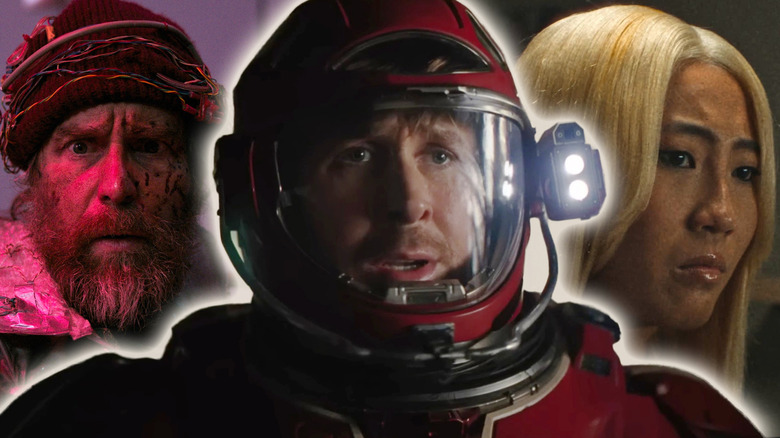
Look, obviously, "Project Hail Mary" made the cut here. In fact, we can virtually guarantee it's going to be on most best-of-the-year lists at the end of 2026 as well, science fiction-themed or otherwise. But as gladly as we'll take any excuse to yell "Amaze amaze amaze!" at everyone that we know, this year has already given us a whole lot more in the way of sci-fi goodness than the adventures of Ryan Gosling and his alien rock buddy (as much as we all love them).
Indeed, 2026 has also delivered thought-provoking sci-fi works that find exciting and compelling ways of talking about humanity's continuing impact on Earth's environment, the existential threat posed by AI, and the fact that we land-dwelling mammals would be really, really scared if we encountered a friggin' monster at the bottom of the ocean (to use the scientific terminology). That's on top of movies that cleverly use sci-fi concepts like the multiverse to explore more relatable, human matters.
Let's get to it, then: Here are the best sci-fi films of 2026 so far.
Backrooms
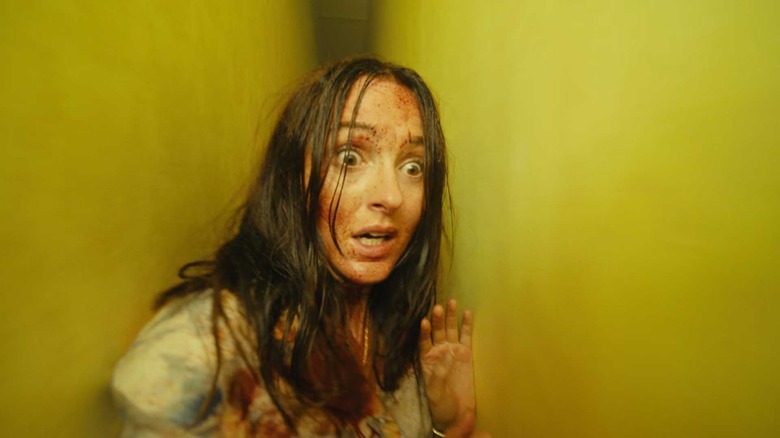
"Backrooms" is many things. It's by far A24's biggest movie of all time at the box office. It's the feature directorial debut of Kane Parsons, who is merely 21-years-old, based on the viral internet creepypasta. And it's primarily thought of as a horror movie. However, it happens to be one hell of a sci-fi film as well. I would go so far as to say it's a better science fiction movie than it is anything else.
Very basically, the movie takes place after a portal is discovered in the basement of a furniture store. The owner, Clark (Chiwetel Ejiofor), then becomes fascinated with it, exploring the seemingly endless yellow halls and creepy mysteries hidden within.
The sheer idea of the Backrooms is one of the better sci-fi concepts to come around in some time. This world within our world that feels familiar, yet there's something off about it, is very rich. Parsons did an incredible job with the world-building aspect. As scary and unsettling as the movie is, the sci-fi elements are the engine that makes this film work as well as it does. Even the horror thrives the way it does because the science fiction elements are in place.
The best sci-fi cinematic storytelling is about building worlds that are removed from our reality. "Backrooms" does that remarkably well, leaving viewers wanting more. It's truly a concept with endless possibilities — possibilities Parsons ensures we'd like to see more of by the time the credits roll. (Ryan Scott)
Disclosure Day
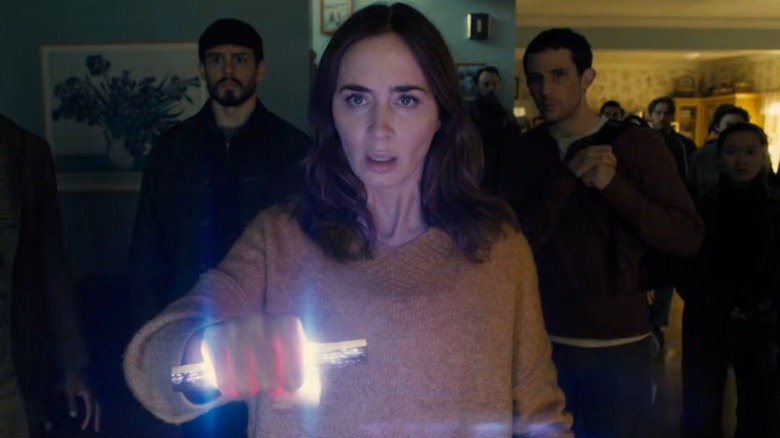
Steven Spielberg has made 10 science fiction films throughout his career (if you include "Firelight," which he directed at the age of 17). "Disclosure Day" stands out as his most narratively complex and urgent. It's an ensemble movie led by two protagonists, Emily Blunt's weatherwoman Margaret Fairchild and Josh O'Connor's Dr. Daniel Kellner, who've been imbued with heightened perception via visitors from another world. Daniel knows extraterrestrials have visited our planet and is morally motivated to reveal their existence after viewing footage of their mistreatment at the hands of a nefarious government contractor. Meanwhile, Margaret's extra-sensory powers have just been triggered (much to the dismay/confusion of her boyfriend played by Wyatt Russell).
Spielberg's responding to the contentiousness and cruelty of our time, but, along with screenwriter David Koepp, he knows preaching will get him nowhere. So, he's tapped into his crowd-pleasing action instincts to get the medicine down. The sci-fi is heavily speculative here (being that it's based on alien technology), yet, this time out, the Elliott-E.T. telepathy element has less to do with personal connection than full-scale human unity. Spielberg's sci-fi adventure is a plea for empathy. Consider the plight of beings who are different from you, live thousands of miles or several lightyears away, and seek to understand them. That he sets his story against a looming nuclear war is Spielberg ringing an alarm. When Hollywood's most beautiful dreamer sees our present day as a nightmare, we all need to listen. (Jeremy Smith)
The End of Oak Street
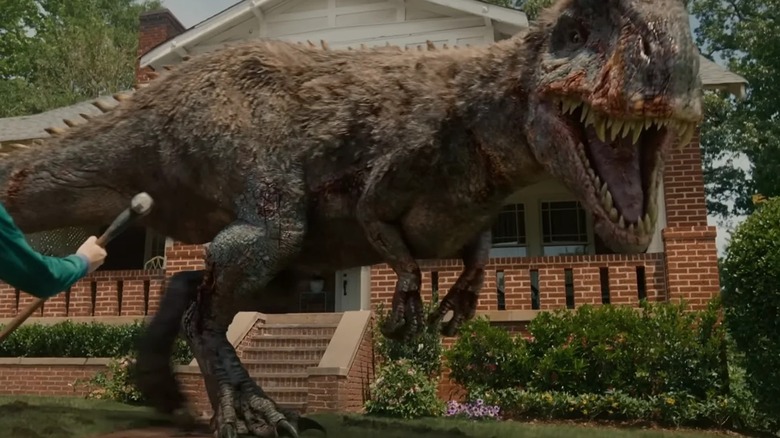
Dinosaurs are outstanding fuel for sci-fi storytelling. Yet, for whatever reason, the "Jurassic Park" franchise has pretty much dominated that field for more than three decades now. However, this year's "The End of Oak Street" proves once again that Hollywood should absolutely be doing more with dinosaurs. A wild, fast-paced, surprisingly dark, and always fun time travel-focused, prehistoric romp, this is a wonderful modern science fiction flick with 1980s DNA.
Written and directed by David Robert Mitchell ("It Follows"), the movie follows the Platt family as they band together to navigate their new surroundings after a cosmic event transports their suburban neighborhood to someplace unknown — namely, millions of years ago when dinosaurs ruled the Earth. Chaos ensues.
I've called 2025's "Primitive War" the greatest non-"Jurassic Park" dinosaur movie ever made. My personal sensibilities won't allow me to remove that distinction, but what I can say is that "The End of Oak Street" is probably, for most people, a "better" movie. Stars Anne Hathaway and Ewan McGregor give it their all. It's genuinely shocking at times. The dinosaurs look absolutely fantastic. And, most important of all, it's just straight-up fun. It's frankly pretty amazing that this was made by a major studio with a sizable budget.
Audiences didn't turn up for this one in theaters, but hear me, dear reader; don't sleep on it. This is well worth the time. It gets in, gets out, and separates itself completely from everything "Jurassic" has ever done. (Ryan Scott)
Forgotten Island
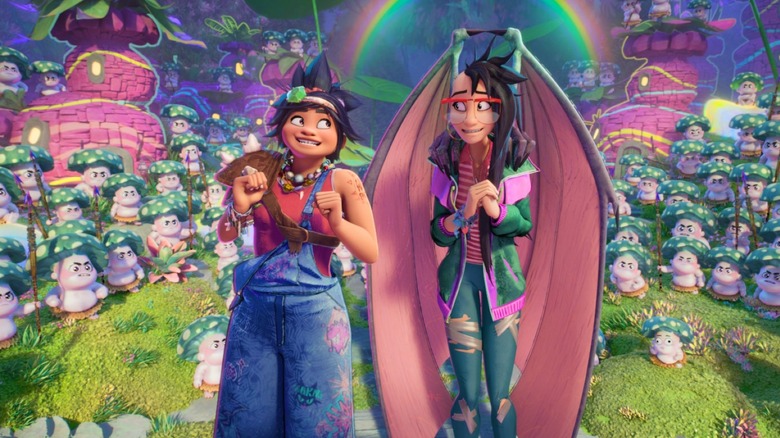
Is there a better match made in heaven than science fiction and animation? Both the genre and the medium typically flourish when pushing the boundaries of what moving pictures are capable of ... and then continuing to push far beyond that point. And if ever there were a single title that accomplished this with a deceptive ease, a vibrant sense of style, and storytelling craft that hits like an emotional sledgehammer? It would be the high-concept zaniness of "Forgotten Island."
A film about Philippine mythology and a coming-of-age friendship between two lifelong besties (voiced by H.E.R. and Liza Soberano) didn't necessarily need to unfold the way "Forgotten Island" does, taking a maximalist approach that blends colors, animation styles, and sci-fi silliness into a melting pot of creativity. But just look at all the imagination on display: a mystical realm where memory is the most precious commodity, heightened characters bursting with personality, and an emotionally-charged conclusion that defies anything even remotely approaching realism. This is what cinema was invented for, and it's why sci-fi and animation ought never be taken for granted.
Directors Joel Crawford and Januel Mercado are clearly lifting a page out of the "Coco," "Encanto," and "Moana" playbook, all while still maintaining their own unique identity. For a movie all about blending science with the spiritual, the ultimate conclusion drawn by "Forgotten Island" is as elegant and poignant as it gets. And it's plenty powerful enough to land this among our best sci-fi movies of 2026. (Jeremy Mathai)
Good Luck, Have Fun, Don't Die
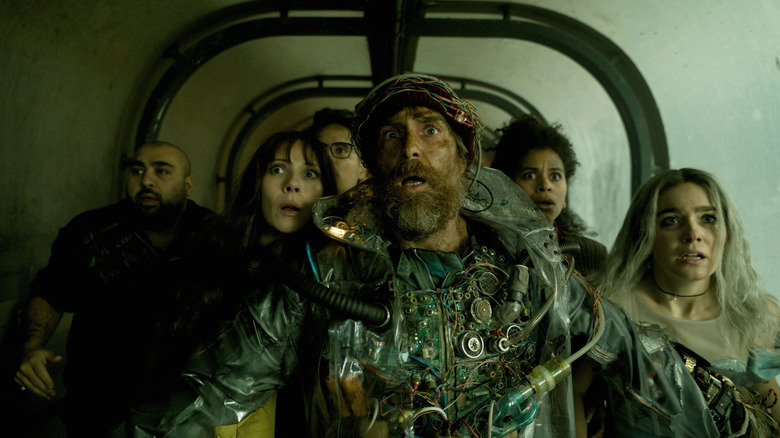
I, for one, do not welcome our AI overlords ... and, on behalf of all reasonable human beings, thank goodness Gore Verbinski clearly agrees. In no way, shape, or form did the "A Cure for Wellness" and "Pirates of the Caribbean" filmmaker deserve to languish in director's jail for as long as he did. But, as Verbinski's first feature in almost a decade, "Good Luck, Have Fun, Don't Die" sure feels like the kind of big swing you'd expect from someone who's had plenty of time to look at the general state of the world and craft his appropriately apocalyptic response. The final result is an oddball assortment of sci-fi themes and sub-genres, cobbled together from an overactive imagination that can't help but raise the question of whether we, as a species, have collectively fallen asleep at the wheel.
"Good Luck, Have Fun, Don't Die" is as unconventional as its title, somehow leveling criticisms towards every possible topic under the sun (sci-fi or otherwise), from time travel to gun violence, tropes about disaffected Gen Z kids, and, yes, the scourge of handing over our art, entertainment, and well being to AI. With an all-star cast led by Sam Rockwell, a sizable budget that he somehow squirreled away from Briarcliff Entertainment when every other major Hollywood studio passed on this original script, and a seemingly never-ending conveyor belt of "How the HECK did he get away with this?" concepts, this is easily the most sci-fi film of 2026. (Jeremy Mathai)
Hope
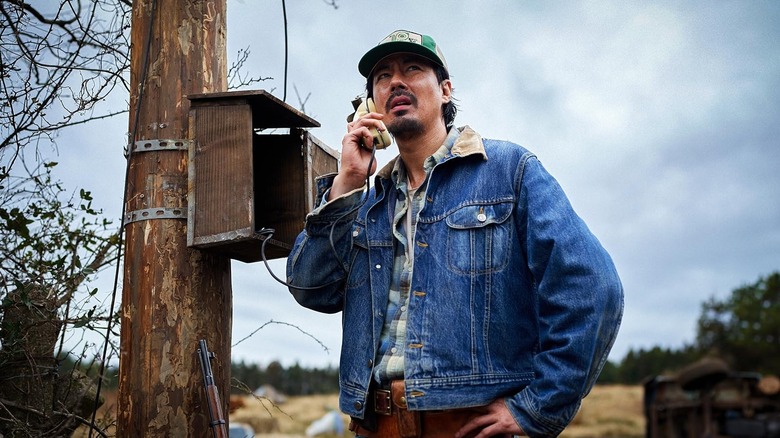
For about half of its 156-minute runtime, "Hope" functions like one of the greatest monster movies ever made. Eventually, however, we and the denizens of Hope Harbor in the Korean Demilitarized Zone discover that all is not as it initially seemed. This is also where the sci-fi element of the story really comes to the forefront, as the film's leads realize there are numerous other alien life forms lurking in the woods near their home. Yes, it turns out that Hope Harbor has become the unwitting battleground for what appears to be an intergalactic war.
By the end, "Hope" ends up taking one of the biggest cinematic risks of 2026, not least of all for a movie already chock full of idiosyncrasies and surprises. Yet, the more one watches "Hope," the more one appreciates writer/director Na Hong-jin's clever approach to the film's construction. Turning a one-sided good versus evil conflict into a multi-faceted, nuanced struggle not only places the film firmly in the realm of science fiction, it also accomplishes what other similar genre blockbusters like "The Matrix" and "Avatar" took several movies to do.
"Hope" isn't merely a spectacle. The film is a parable about how easy it is to attack the unknown out of fear. And while this may often lead to doom, it doesn't have to. We'll see what "true fate" becomes of the aliens and the humans in a sequel, hopefully. (Bill Bria)
Hoppers
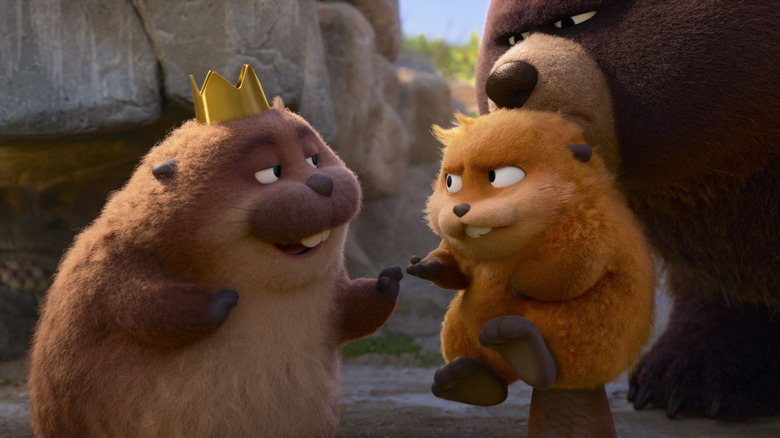
How do you make an original animated film that pleases your big studio bosses yet still addresses environmental issues in a considerate manner? That's quite a difficult needle to thread in 2026, yet director Daniel Chong and his creative team do so with finesse on "Hoppers." But as much as you can attribute the Pixar comedy's artistic success to its delicate blend of frenetic humor and tranquil drama (including the moments that are bound to get your tear ducts going because, again, this is a Pixar flick), it's the movie's sci-fi aspects that really make its disparate pieces come together.
"Hoppers" may center on "Avatar"-esque technology that allows people to transfer their minds into animal robots (something even the movie's characters are aware of), yet it does very different things with that conceit than James Cameron's mega-blockbuster. Here, the "Hoppers" tech allows its users to not just understand what real critters are saying but to also read their emotions in a way that's not possible in their regular human form. It's a terrific sci-fi metaphor for the idea that true empathy means relating with someone on their own terms. "Hoppers" then extends this into a larger message about activism and the problem with trying to "save" a group that you don't belong to, rather than being an ally.
Not everyone will receive that message in good faith, as "Hoppers" itself acknowledges. But those who are actually willing to listen to it should. (Sandy Schaefer)
Iron Lung
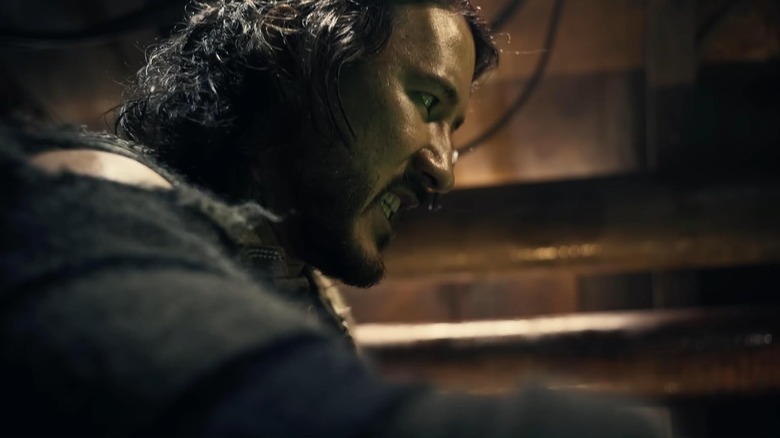
YouTube sensation Markiplier directs his ambitious sci-fi horror film "Iron Lung" with commendable restraint. It's tempting for any beloved online personality to veer into artistic self-indulgence, but "Iron Lung" is as taut as a grisly indie survival flick could be.
Based on David Szymanski's video game of the same name, "Iron Lung" is impressively claustrophobic and frightening. The film centers on Simon (Markiplier), a convict who's trapped in a rusty submarine and forced to explore the ocean in exchange for his freedom. Using its oppressive single setting, the movie slowly amps up the horror considerably, compelling use to share Simon's growing dread. Once the plot throws in a Lovecraftian threat, however, we're left with the awful inkling that Simon might not make it out alive.
"Iron Lung" works because of the liberties it takes to avoid being a faithful yet hollow replica of the game that inspired it. Szymanski's "Iron Lung" relies on diegetic sound design to scare players, which Markiplier replaces with foreboding close-ups and grounded realism. The results might not appeal to everybody, but this is a must-see for those who love media like "Subnautica," i.e. underwater sci-fi horror titles that tap into our fear of the unknown. The mind-blowing final act of the film ties every disparate element together, leaning into a more visceral survival-at-any-cost sentiment that ends on an appropriately bleak note. (Debopriyaa Dutta)
The Mandalorian and Grogu
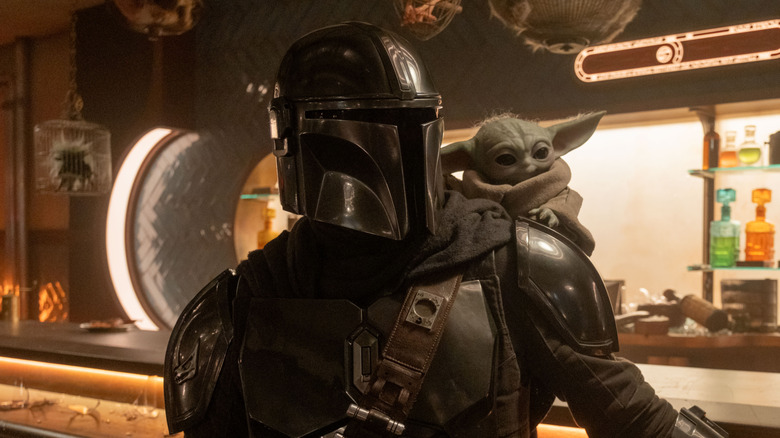
Up until very recently, the "Star Wars" franchise had been away from the silver screen for nearly seven years dating back to "The Rise of Skywalker." Now, director Jon Favreau has revived a galaxy far, far away in movie form with "The Mandalorian and Grogu." And while it too proved to be divisive, taken on its own terms, it's the most fun "Star Wars" has been in a very long time.
The film takes place after the evil Empire has fallen, with Imperial warlords scattered throughout the galaxy. As the fledgling New Republic works to protect what the Rebellion fought for, they enlist the help of Mandalorian bounty hunter Din Djarin (Pedro Pascal) and his young apprentice Grogu.
On Disney+, the first two seasons of "The Mandalorian" were about the most roundly-beloved "Star Wars" project of the Disney era. To my eye, Favreau's film is the best version of the show, just with a bigger budget in movie form. The stakes are relatively low, but that's kind of the point. It's a very fun journey with characters we love unencumbered by the weight of an entire saga. It's merely a good time full of remarkable special effects and pulse-pounding action scenes.
I believe a lot of "Star Wars" fans missed the point of "The Mandalorian and Grogu." I also think it's a different but welcome flavor of "Star Wars." And when "Star Wars" is good, that means it's good sci-fi. It's as straight-forward as that. (Ryan Scott)
Onslaught
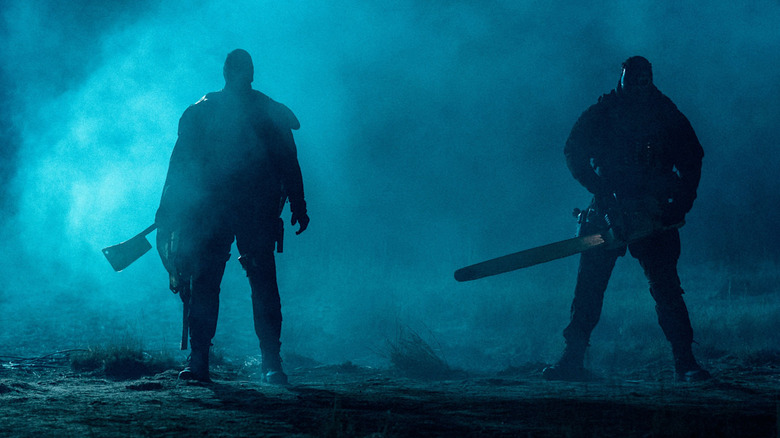
Adam Wingard has been making damn fine sci-fi movies for a long time now, dating back to "The Guest." He spent the better part of the last decade directing not one but two giant monster movies in the form of "Godzilla vs. Kong" and "Godzilla x Kong: The New Empire." But Wingard left the "Godzilla" franchise to make "Onslaught," which proved to be a good decision. Why? Because it's one of the best, and most wonderfully ridiculous, original science fiction movies you're going to see this year.
"Onslaught" takes place after a rogue squad of genetically engineered super soldiers break loose from a desert-based secret facility. In response, a badass former Army sniper (Adria Arjona) must unleash hell on these seemingly unstoppable killing machines at a nearby trailer park in order to protect her young daughter.
Wingard is, very proudly, tapping into early John Carpenter and James Cameron with his latest effort. It's like "Assault on Precinct 13" had a baby with "The Terminator." Throw a little kinky weirdness into the mix, and you've got a bloody, utterly wild blast that makes the most of its super soldier-driven sci-fi concept. From old Nazis to very memorable fight scenes, it delivers the goods.
Wingard also gets in and gets out in 90 minutes, delivering a satisfying romp along the way. "Onslaught" doesn't reinvent the wheel, but it has a lot of fun rolling that wheel as lots of bullets, blades, and buckets of blood fly. (Ryan Scott)
Project Hail Mary
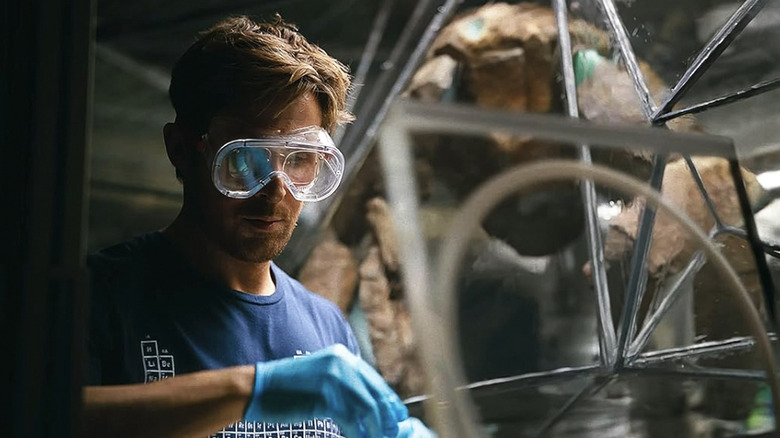
This one's pretty self-explanatory, folks. Upon its release earlier this year, "Project Hail Mary" instantly vaulted into the pantheon of science fiction cinema. Directors Phil Lord and Chris Miller, who have a spectacular reputation among cinephiles (for good reason), shook off their negative experience working on "Solo: A Star Wars Story" and delivered an A+ piece of blockbuster entertainment that's harrowing, emotional, intellectually stimulating, and very, very funny.
Ryan Gosling plays Dr. Ryland Grace, a schoolteacher who's launched into space to save Earth from a race of microscopic organisms called astrophage, which are dimming the sun at an alarming rate. Gosling has received high praise for his work, and that will continue here: He's terrific as a scientist who's smart enough to work through complex problems, yet also human enough to be overwhelmed or annoyed or excited if the situation calls for it. This role falls right in the sweet spot for Gosling as a performer, but the sneaky MVP of the movie might be James Ortiz, who puppeteered Grace's alien pal Rocky and lent his voice to that character, imbuing a faceless alien with a lovable, buoyant personality. The way the two of them play off each other is perfect. Meanwhile, Drew Goddard's excellent script captures the spirit of Andy Weir's dense novel without watering it down — an impressive feat, given the amount of science at the forefront of this science fiction story. (Ben Pearson)
Redux Redux
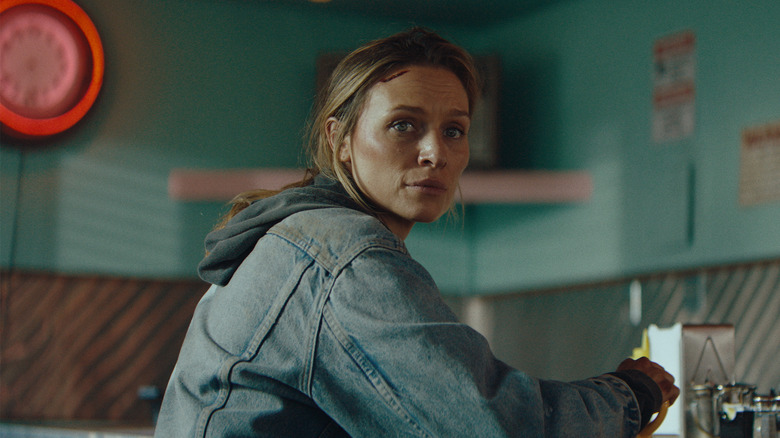
In Kevin and Matthew McManus' "Redux Redux," Irene Kelly (Michaela McManus) uses a mysterious machine to travel between parallel universes in search of a single possibility: a timeline where her murdered daughter is still alive. While multiverse stories often lean into spectacle and wildly altered realities, "Redux Redux" embraces lo-fi sci-fi. Each universe is almost identical to the last, allowing Irene to memorize routines, stash getaway supplies, rent the same vacant hotel rooms, and repeatedly track down Neville (Jeremy Holm), the man responsible for her daughter's death.
The small variations between timelines become meaningful obstacles. In some worlds, Neville misses his usual day off, forcing Irene to confront him publicly at the diner where he works. Yet, these disruptions pale beside the emotional burden she carries as a mother trapped in an endless cycle of grief and revenge.
The mechanics of universe-hopping require some suspension of disbelief, but the film is far more concerned with why Irene continues than with how she does it. That emotional focus is reflected in her encounter with a would-be victim named Mia (played by Stella Marcus in a fantastic debut). "Redux Redux" beautifully dissects the corrosive nature of vengeance and is a must-watch for sci-fi fans. (BJ Colangelo)
Slanted
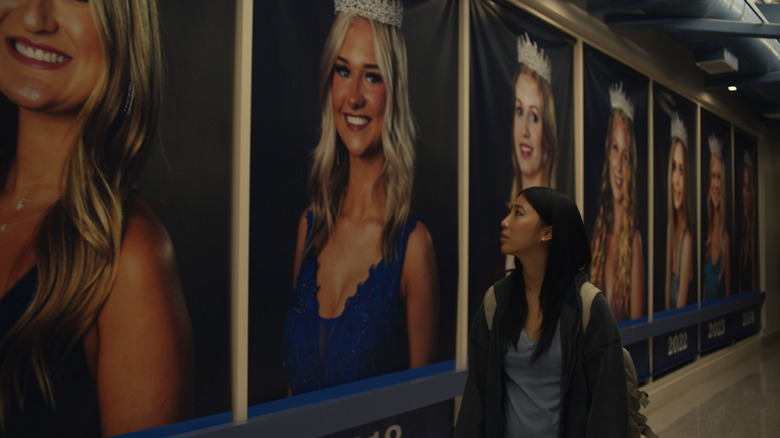
Movie marketing is a tricky beast, and it's easy to understand why most ads rely on selling a film via how much they can compare it to something recent and successful. When "Slanted" dropped its initial trailer, for example, it seemed like little more than a racially-themed version of "The Substance," in which a Chinese-American teenager, Joan (Shirley Chen), undergoes a mysterious new process which transforms her into a white girl, Jo (Mckenna Grace). Yet, save a few moments here and there, "Slanted" is not strictly a body horror film, and is, in fact, much more than its marketing promised. Writer/director Amy Wang takes that premise and uses it to craft a full-on sci-fi social commentary parable that would probably have made Rod Serling smile.
What makes "Slanted" great sci-fi is in its commitment to following its premise beyond a surface level. Chen and Grace playing ostensibly the same character isn't just a gimmick; instead, it's the heart of the movie's themes and satire. Wang doesn't wave away the process of transforming into another race as some fantasy magic; she treats it the way it's presented, as a voluntary medical procedure that has dozens of consequences, not all of them physical. Despite the film's localized setting, it also features some clever world-building involving the process, too, which only deepens its premise. Hopefully more folks will look beneath the surface of the movie's concept and discover its richness soon. (Bill Bria)
Spider-Man: Brand New Day
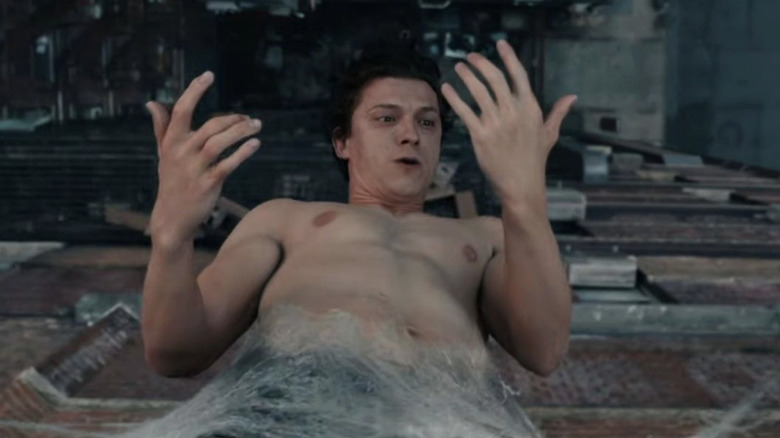
When film franchises reach their fourth entry, they tend to start running out of steam, never quite reaching the greatness of their previous installments. But leave it to your friendly neighborhood wallcrawler to be the exception to the rule (and the supposed rise of superhero fatigue) by swinging in with Tom Holland's best webhead adventure yet: "Spider-Man: Brand New Day."
Holland's Peter Parker is maybe the lowest he's ever been here. The brilliant superhero lost his Aunt May (Marisa Tomei) in "Spider-Man: No Way Home," and his girlfriend MJ (Zendaya) and best friend Ned (Jacob Batalon) have forgotten he exists thanks to a magical spell designed to keep them safe from Spidey's enemies. That's just the emotional core that makes the film soar, but "Brand New Day" also packs a hefty sci-fi punch.
Engrossed in his life as Spider-Man, Peter sees a rise in his arachnid DNA presence, making him lose control of his power and, with it, the responsibility that May told him to take great care with. Oh, and he also sprouts organic web shooters in his wrists that he can't control very well.
"Brand New Day" takes on touches of "The Fly" and similar sci-fi stories as Peter attempts to suppress his darker tendencies. Combined with the re-emergence of the scary, uncontrollable version of Hulk (Mark Ruffalo), the result is a satisfying blend of sci-fi elements and superhero spectacle, making for one hell of a blockbuster movie. (Ethan Anderton)