

15 Best Movies Of The '70s, According To Rotten Tomatoes
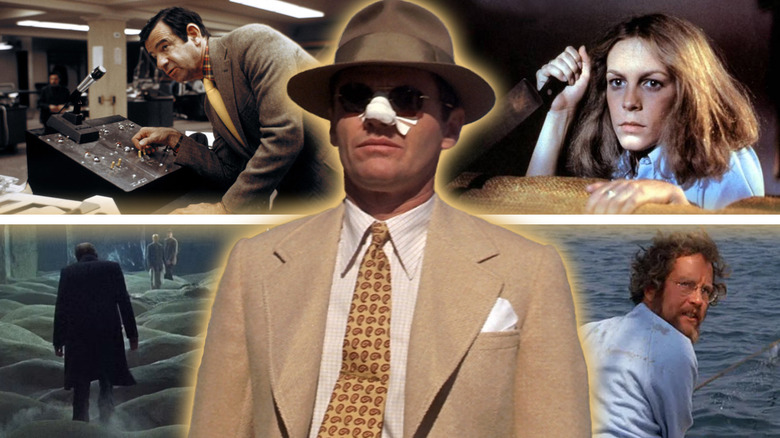
The 1970s was an enormously pivotal decade for cinema, with the raw maturity of the medium elevated significantly. This is a decade that we've covered and revisited extensively, including recommending '70s movies that everyone should watch at least once. That said, there are a handful of films that the vast majority of professional critics have lauded as the best from the decade. These range from foreign flick and arthouse projects to major Hollywood blockbusters that rethought was possible from a big studio movie.
We're highlighting the '70s movies that have the highest professional critic scores on Rotten Tomatoes, also taking into consideration the number of critics that have given them favorable ratings. This really showcases how singularly noteworthy the decade was in delivering some enduring cinematic classics. If you don't agree with the list, don't blame us; the movies here are the top-rated from the decade based on a professional critics' review aggregate score.
With that in mind, these are 15 best movies of the '70s, according to Rotten Tomatoes.
15. Badlands
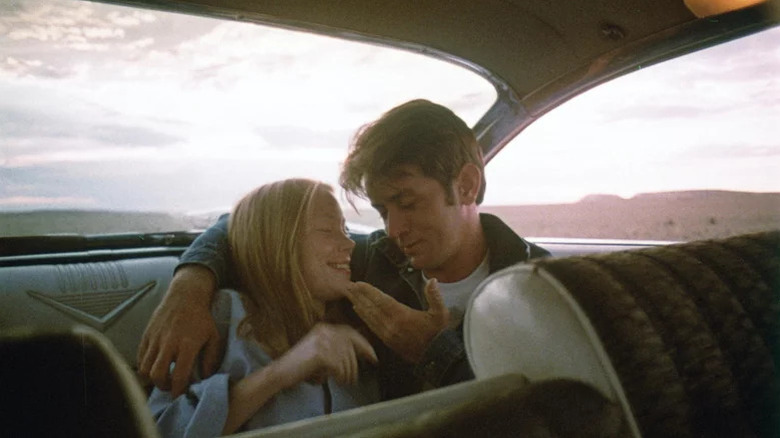
Filmmaker Terence Malick's debut feature "Badlands" is also one of his most accessible, especially for those not familiar with his more esoteric storytelling style. Loosely based on multiple murderer Charles Starkweather, the 1973 movie stars Martin Sheen as Kit Carruthers who goes on a cross-country killing spree. Carruthers is joined by his girlfriend Holly Sargis (Sissy Spacek) as they go on the run from the law. This proto "Natural Born Killers" tale proved to be a hit with critics, with "Badlands" holding a 97% score on Rotten Tomatoes based on 61 reviews.
Terrence Malick might've saved his career by casting Martin Sheen in "Badlands," with critics taking notice as well. The London Evening Standard called Sheen and Spacek's performances "as memorable Malick's vision," comparing the movie to a more thoughtful mediation on crime couples popularized by "Bonnie & Clyde." That vision includes sweeping shots that let the landscapes do much of the talking in the movie's quieter moments. A strong debut from Malick and the movie that put Sheen and Spacek on the map, "Badlands" is the story of a rebellious couple with quite the body count.
14. Halloween (1978)
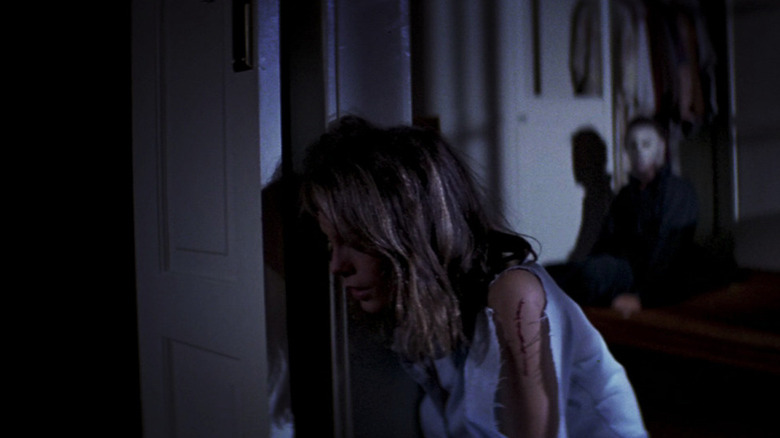
While slasher movies certainly existed before "Halloween," John Carpenter and Debra Hill brought the horror sub-genre irrevocably into the mainstream with their 1978 film. The movie introduces masked serial killer Michael Myers (Nick Castle) to the silver screen as he stalks the streets of Haddonfield, Illinois on Halloween night. In a halcyon time before Laurie Strode was Michael Myers' sister, the movie presents Jamie Lee Curtis' protagonist as a random high schooler targeted by the murderer. This leads to absolute mayhem when the sun goes down and Myers finally strikes Laurie and her unsuspecting friends.
The original "Halloween" holds a Rotten Tomatoes critics' score of 97% based on 92 published reviews. In its retrospective review of the movie, Parade magazine refers to it as "the quintessential popcorn horror film," elevated by its pacing, performances, and Carpenter's musical score. Curtis delivers a star-making performance as Laurie, the ultimate final girl, while Michael Myers remains a chilling cinematic presence, even over 40 years later. Still highly ranked among the "Halloween" movies, the 1978 classic sets the mold for cinematic slashers.
13. The French Connection
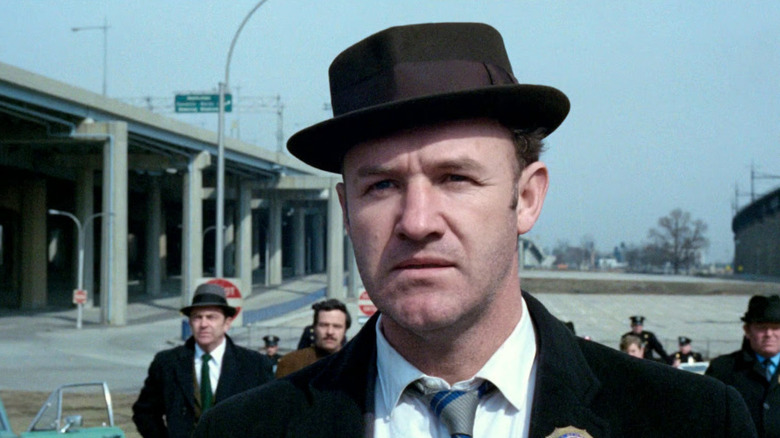
After 1968's "Bullitt" revolutionized the crime genre with its cool cop who doesn't play by the rules, cinemas became full of other reckless lawmen who got results. Predating "Dirty Harry" by two months was "The French Connection," directed by maverick filmmaker William Friedkin and starring Gene Hackman as New York City police detective Popeye Doyle. The movie centers on Doyle trying to bust a drug trafficking ring headed by French mastermind Alan Charnier (Fernando Rey). With Charnier brutally dealing with anyone who gets in his way, Doyle finds himself targeted, culminating in a high-octane sequence that defined the modern movie car chase.
A critical success upon its debut, "The French Connection" became the first R-rated film to win Best Picture at the Academy Awards. The movie has a 97% critics' score on Rotten Tomatoes based on 93 reviews, with a contemporary review from the Boston Globe calling it "the best thing" Hackman had ever done. Beyond Hackman's magnetic performance, the movie brings a real grit to the genre, punctuating its action with plenty of collateral damage reminding audiences of the stakes. That authenticity and cynicism in handling its subject matter makes "The French Connection" a standout and a highlight in both Friedkin and Hackman's respective careers.
12. Annie Hall
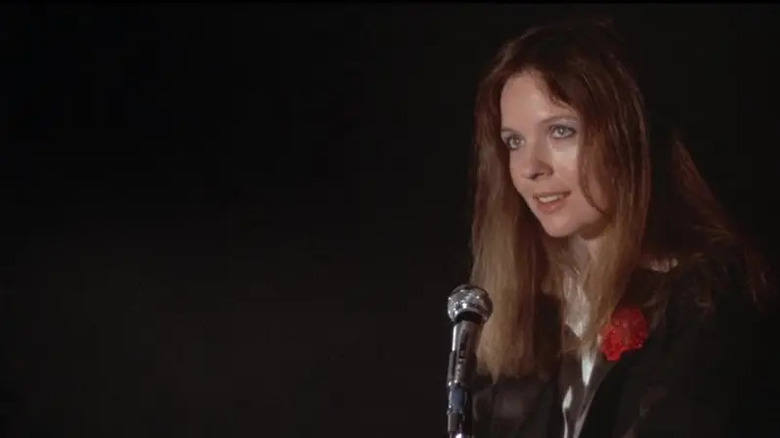
While certainly not their first on-screen pairing, filmmaker Woody Allen and star Diane Keaton were never better than in 1977's "Annie Hall." The late, great Keaton, in an Academy Award-winning performance, plays the title character, with protagonist Alvy Singer (Allen) wondering why their romance failed. A year after their break-up, Singer revisits and dissects the major moments of their relationship to see where it all went wrong after a promising start. Regarded by the WGA as the funniest screenplay ever, "Annie Hall" was a critical darling, winning four Academy Awards.
Here's the obligatory disclaimer that, yes, Woody Allen is an incredibly problematic figure, but the legacy of "Annie Hall" endures despite this. The movie's critical reception hasn't been affected either, with it holding a 97% score based on 130 reviews. A contemporary review in the Los Angeles Times labeled the movie as Allen's best while commenting that it was "the most directly and obviously autobiographical" of his work. Still incredibly funny, depending on how much individual viewers tolerate Allen and his on-screen presence, "Annie Hall" remains the pinnacle of his filmography.
11. The Godfather
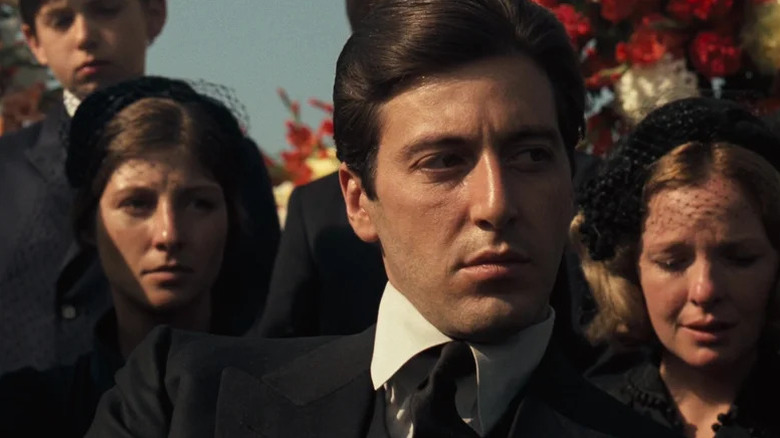
From "The Conversation" to "Apocalypse Now," filmmaker Francis Ford Coppola was in his element throughout the '70s. Perhaps unsurprisingly, Coppola's highest-rated movie ever on Rotten Tomatoes is "The Godfather," with the 1972 movie boasting a 97% score based on 155 reviews. An adaptation of Mario Puzo's 1969 crime epic, with the screenplay written by Coppola and Puzo himself, the movie charts the rise of mobster Michael Corleone (Al Pacino). A landmark film for its era, the movie spawned a direct sequel in 1974 which was just edged out of this list.
Ironically, Francis Ford Coppola didn't want to make "The Godfather," initially feeling that it didn't reflect his storytelling sensibilities at the time. The movie has since come to define his entire career and continues to receive critical accolades over 50 years later. In a retrospective piece, Richard Roeper referred to the film as the "most revered and most entertaining American movie ever made." A true crime epic that brought a heightened mainstream maturity to the medium, "The Godfather" is as seminal as its reputation suggests.
10. Jaws
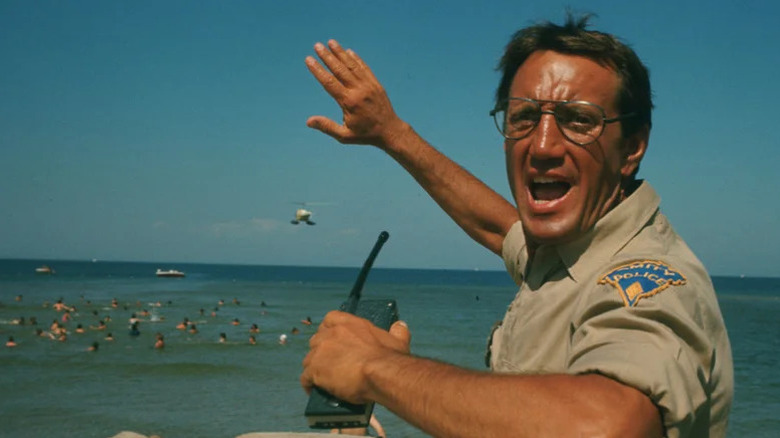
Filmmaker Steven Spielberg made such a huge splash with 1975's "Jaws" that it reshaped the box office forever. The movie is at once a sun-soaked horror movie and modernized monster movie as it depicts a great white shark terrorizing a coastal New England community. After setting its gory premise into motion, the movie follows police chief Martin Brody (Roy Scheider) leading an expedition to hunt the bloodthirsty creature out in the open ocean. Spielberg deftly peppers his movie with sanguine thrills, not just scaring audiences but teaching them how to watch films, with its quietly groundbreaking camera work to grounded main characters.
"Jaws" has a critics' score of 97% from 178 reviews, with The Saturday Evening Post naming it "among the most seamlessly structured, exquisitely paced, superbly acted films of all time." Spielberg expertly balances aquatic suspense with slice-of-life domesticity, led by a world-weary Scheider in his most celebrated role. Given all the hardships behind-the-scenes in getting the movie made, the final product is so well-constructed that it feels like kismet that everything fell so perfectly into place. With "Jaws," Spielberg's career blasted off to new heights and the summer blockbuster was born, all from an oceanic creature feature.
9. Day for Night
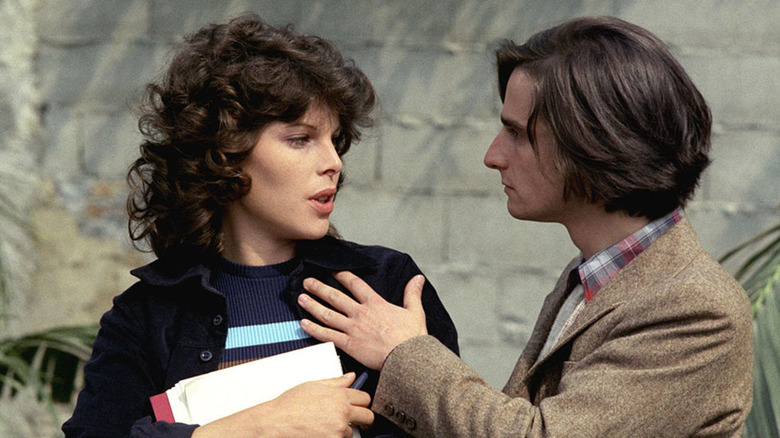
Two leading voices in French filmmaking in the mid 20th century were Jean-Luc Godard and François Truffaut. Among the latter's finest work is the 1973 dramedy "Day for Night," which was originally in France as "La Nuit Americaine," translated as "The American Night." The movie depicts a film-within-a-film narrative, chronicling the production of a melodrama, with Truffaut himself playing the movie's director. Amidst the chaotic production, the cast and crew engage in their own messy relationships behind-the-scenes while struggling to complete the work.
Truffaut perhaps doesn't get as much credit for the humor that he places in his films compared to more serious work like "The Bride Wore Black" or "The Green Room." While maintaining its romantically fueled interpersonal drama, "Day for Night" features its fair share of metatextual comedy derived from its premise. The movie maintains an impressive 98% Rotten Tomatoes score from 40 reviews, with Roger Ebert declaring it was "the best movie ever made about the movies". Well worth checking out if you're curious about Truffaut's work, "Day for Night" maintains his penchant for observational storytelling with a self-aware twist.
8. The Taking of Pelham One Two Three (1974)
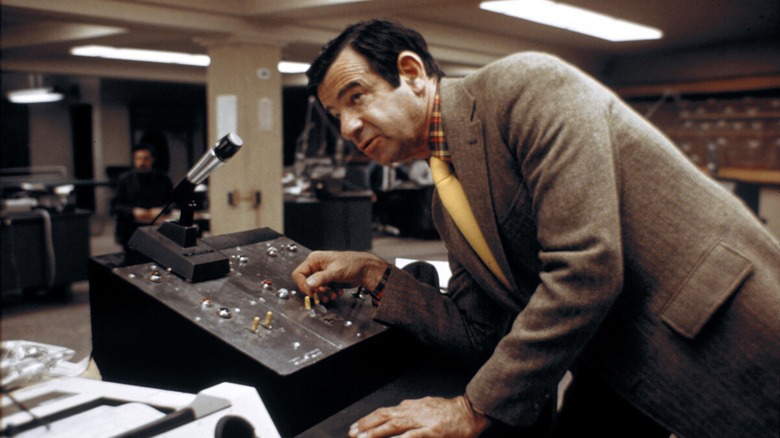
The 1974 movie "The Taking of Pelham One Two Three" makes an action movie hero out of Walter Matthau while retaining his penchant for wry comedy. Matthau stars as New York City transit police officer Zachary Garber who learns that a subway car has been hijacked by gunmen. The leader of this outfit, known as Mr. Blue (Robert Shaw), demands $1 million or he and his associates will execute a hostage for every minute that payment is late. While trying to keep the situation from spiraling out of control and claiming more lives, Garber tries to outwit his well-armed opponents.
"The Taking of Pelham One Two Three" is one of the greatest heist movies ever made, and it has the critical acclaim to back up that claim. The movie boasts a 98% Rotten Tomatoes score from 45 reviews, with a contemporary review from The Hollywood Reporter noting that Matthau's "wonderfully weary sense of irony is perfect." This is matched by an expectedly intense performance from Shaw, yet formidable in a much different way than his salty "Jaws" character. Remade two additional times with none of the impact of the original, "The Taking of Pelham One Two Three" is a tautly placed crime classic.
7. The Conformist (1970)
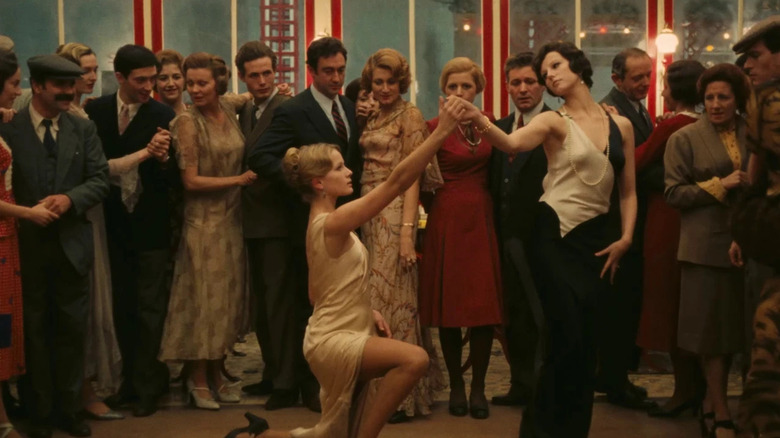
Before raising eyebrows with 1972's "Last Tango in Paris," Italian filmmaker Bernardo Bertolucci turned heads with "The Conformist." Set during the fascists' control of Italy in the '30s, the story centers on government operative Marcello Clerici (Jean-Louis Trintignant) whose life is steered by a traumatic childhood incident. Clerici's latest assignment is to assassinate outspoken anti-fascist professor Luca Quadri (Enzo Tarascio), who lives in France with his wife Anna (Dominique Sanda). This job is complicated by Clerici entering an affair with Anna while still haunted by the events from his past.
Working with cinematographer Vittorio Storaro, Bertolucci really provides an atmospheric meditation on the motives behind complicity with "The Conformist." The movie holds a 98% Rotten Tomatoes score based on 59 reviews, with the Independent referring to it as "a beautifully imagined portrait of moral and political cowardice." Like many Bertolucci movies, the film has a dream-like surrealism to its presentation while offering the audience no easy answers about its characters' actions. The greatest film that Bertolucci ever made, "The Conformist" is a visual stunner with a complex message.
6. The Discreet Charm of the Bourgeoisie
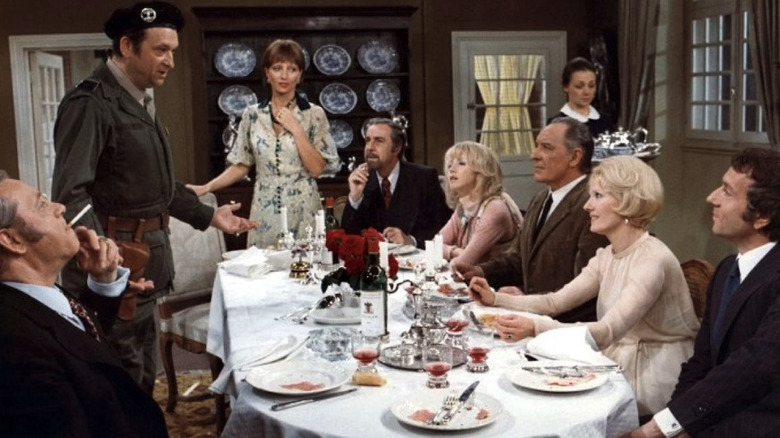
Another widely well-regarded French film from the '70s is "The Discreet Charm of the Bourgeoisie," directed and co-written by Luis Buñuel. The movie follows French high society couple François (Paul Frankeur) and Simone Thévenot (Delphine Seyrig) in a fictional South American country experiencing widespread unrest. The pair are part of a group trying to meet for a dinner party only for a series of mishaps to derail their intended gatherings. In the middle of these surreal disruptions, the group's messily interconnected personal lives stand revealed.
Darkly funny in its takedown of the disaffected rich, "The Discreet Charm of the Bourgeoisie" covers everything from marital unrest to midlife malaise. The movie holds a 98% Rotten Tomatoes score from 59 reviews, complimenting its deadpan satire as only Buñuel could tell it. A retrospective review in the Guardian referred to the movie as "an exotic and brilliant hothouse flower of a film," praising its subversive qualities. The type of movie that demands the viewers full attention, "The Discreet Charm of the Bourgeoisie" is Buñuel's dreamy taunt of 1% before it was cool.
5. Killer of Sheep
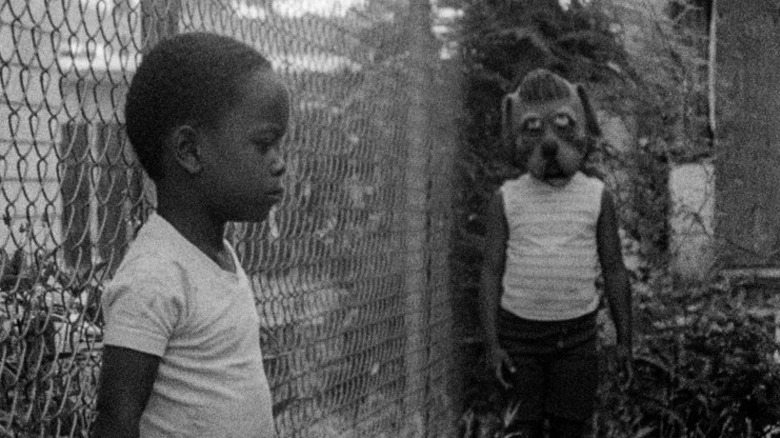
Filmmaker Charles Burnett made the 1978 movie "Killer of Sheep" to serve as his master's thesis while attending film school at UCLA. A set of vignettes set in and around the impoverished Watts neighborhood in Los Angeles, the movie centers on slaughterhouse worker Stan (Henry G. Sanders). As Stan deals with the hardships and toll of his low-paying, sanguine profession, his family tries to get by. This is interspersed with wider glimpses of life in the hardscrabble community and the visible urban decay in abandoned buildings throughout the neighborhood.
Despite not getting an official wide release on home video until 2007, "Killer of Sheep" made waves in its own quiet way. The movie earned a 98% Rotten Tomatoes score based on 85 reviews, praising its moody presentation and evocative performances. Giving the movie a perfect score, Roger Ebert remarked that it depicts poverty as "the quiet nobility of lives lived with values but without opportunities." More of a haunting experience than a conventional narrative, "Killer of Sheep" gives a voice to the overlooked and downtrodden of Los Angeles.
4. The Last Picture Show
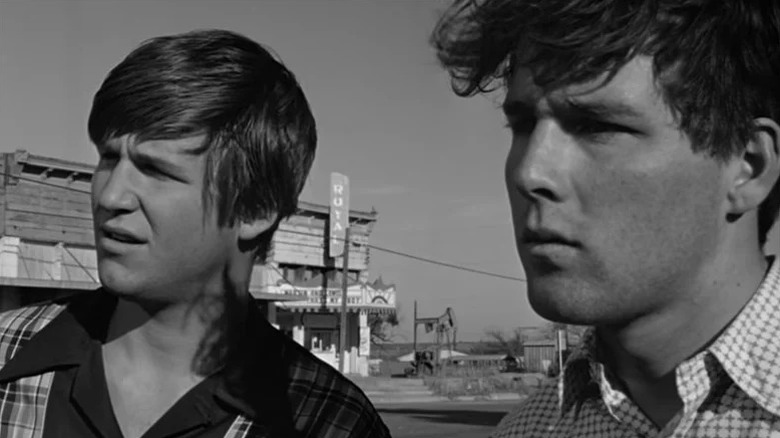
Life in small-town Texas in the early '50s is the subject of "The Last Picture Show," an adaptation of Larry McMurtry's semiautographical novel. The 1971 movie centers on teenagers Duane Jackson (Jeff Bridges), Sonny Crawford (Timothy Bottoms), and Jacy Farrow (Cybill Shepherd) as they prepare to finish high school. This dynamic is complicated by Sonny's feelings for Jacy, who is dating Duane, while he becomes involved with a local married woman. As the trio make their clumsy steps into adulthood, their future is juxtaposed with the decaying prospects of their dusty community.
Deeply melancholy, underscored by its black-and-white cinematography, "The Last Picture Show" is an essential movie about high school. The movie boasts a 98% Rotten Tomatoes score based on 115 reviews, with critics praising for its bittersweet coming-of-age story in a moodily dying town. In a contemporary review, Newsweek succinctly described the movie as "a masterpiece" and lauded filmmaker Peter Bogdanovich's work. A small-town revelation and turning point in the way that Hollywood approached slice-of-life stories, "The Last Picture Show" is fueled by uninhibited emotional complexity.
3. Chinatown (1974)
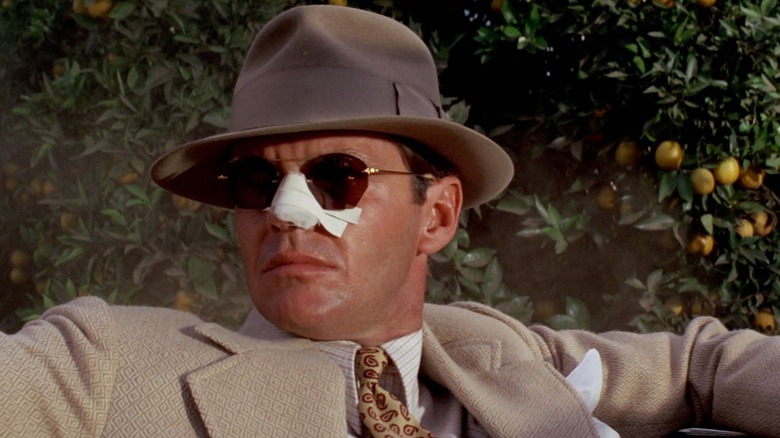
Roman Polanski is another controversial filmmaker who was prolific in the '70s, though his cinematic work endures. Polanski's standout movie from the decade is the neo-noir thriller "Chinatown," starring Jack Nicholson as private investigator Jake Gittes. Set in 1930s Los Angeles, the movie has Gittes stumble across a conspiracy involving the city's water supply orchestrated by the rich and powerful. As Gittes delves deeper into the mystery, he discovers disturbing details about his client (Faye Dunaway) and her connection to the case.
"Chinatown" is one of four Jack Nicholson movies that dominate IMDb's top 250 list and rightfully so. The movie has a 98% Rotten Tomatoes score based on 143 reviews, praising its dark twists and understatedly stylish presentation. A contemporary review in The New Yorker labeled the movie as being "is wickedly skillful, funny, and socially alert." Easily one of the best neo-noir movies of all time, "Chinatown" mixes bleak storytelling with masterfully charismatic performance from Nicholson.
2. Ali: Fear Eats the Soul
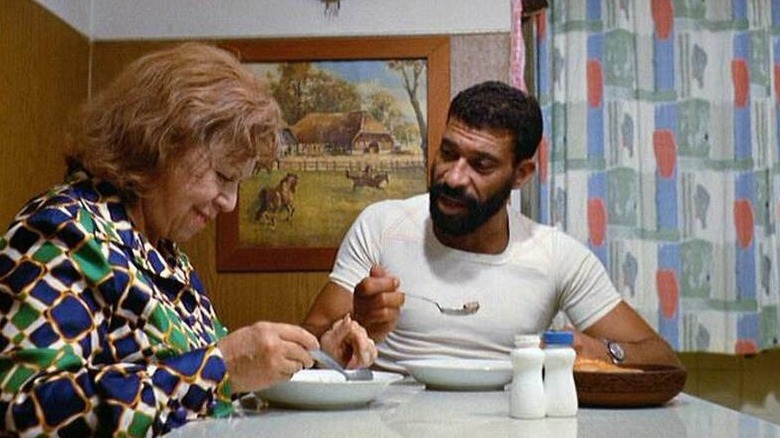
The first of the two movies to carry a perfect Rotten Tomatoes score on this list, from 42 reviews, is the 1974 West German film "Ali: Fear Eats the Soul." The movie follows an older widow, Emmi Kurowski (Brigitte Mira), who enters a relationship with a younger Moroccan man, Ali ((El Hedi ben Salem). As the couple's dynamic grows, leading to them marrying, their relationship gains the unwanted consternation of their neighbors and Emmi's family. The constant prejudice and ostracization leads the couple to reevaluate their coupling in their own way.
Written, directed, and produced by visionary German filmmaker Rainer Werner Fassbinder, "Ali: Fear Eats the Soul" is an intimate melodrama. The movie is a tale of love in the face of omnipresent adversity, powered by Fassbinder's clear commitment to emotional honesty. Emmi and Ali make mistakes in how they protect themselves individually in their relationship, but these are missteps that are utterly relatable. Sight & Sound refers to "Ali: Fear Eats the Soul" as "a remarkable balance between stylization and realism," and that observation only touches on its nobler qualities.
1. Stalker (1979)
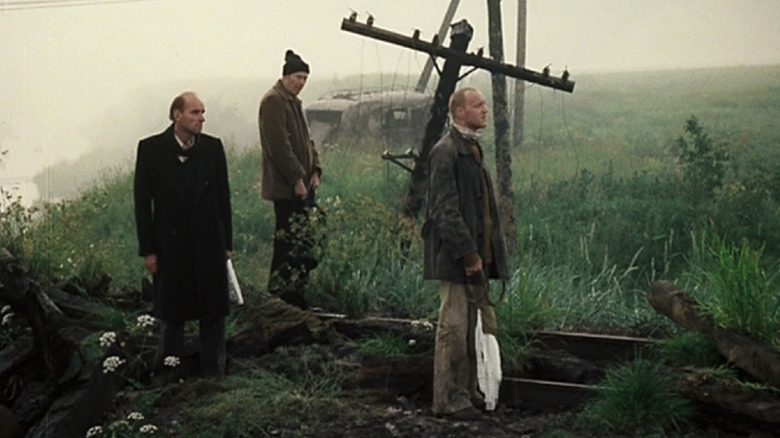
Soviet filmmaker Andrei Tarkovsky bookended his work in the '70s with stellar sci-fi movies, specifically with "Solaris" in 1972 and "Stalker" in 1979. The latter carries a perfect Rotten Tomatoes score based on 47 reviews, praising its philosophical messaging and dreamy staging. The movie features a protagonist (Alexander Kaidanovsky), simply known as a stalker, who guides clients through a forbidden zone full of otherworldly threats. Leading two clients into the Zone, the trio seek out a chamber known as the Room, which reputedly grants the wish of those who enter it.
A retrospective Los Angeles Times review declared "Stalker" had "a hypnotic pull, drawing the viewer deeper and deeper into its enigmatic adventure by crafting a world all its own." That observation touches on how surreally presented the movie is, providing a journey through a heart of darkness. Spanning nearly three hours, the movie keeps its stakes intimate and introspective while retaining its audience's attention, even as it veers into abstraction. "Stalker" stands as one of the best sci-fi movies ever, an existential masterpiece that transcends genre.