

10 Worst TV Show Revivals Of All Time, Ranked
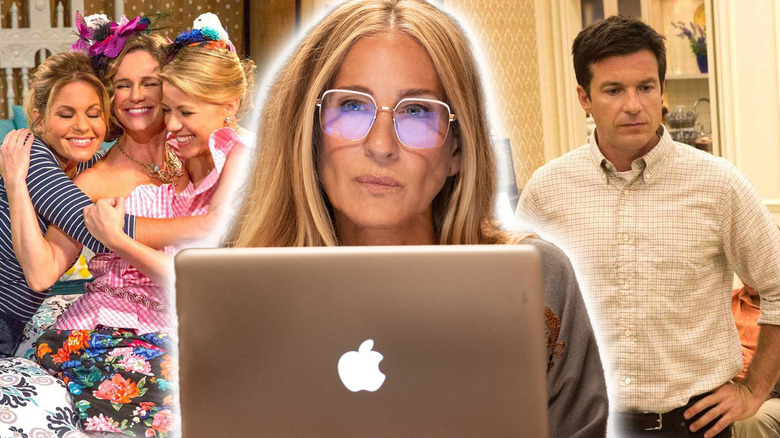
For better and for (mostly) worse, 21st-century storytelling has been defined by the idea of the revival. Since the late 2000s, when studios were able to garner widespread acclaim and launch profitable franchises off the backs of "Casino Royale" and "Batman Begins," Hollywood executives have been plundering their intellectual property catalogs for gold.
Now, at what is (or at least should be) the tail end of this rush, those producing pirates have come for the small screen. Yes, TV has long been plagued by needless revivals of beloved shows (some of them admittedly better than others), but a perfect storm of unifying factors — the age of streaming, the rise of nostalgia-bait as a bankable entertainment genre — have made these television projects more pernicious than ever.
While it's no coincidence that the majority of the entries below come from the 2020s, we considered the broader TV canon in our ranking of the worst TV revivals of all time. If there's one positive takeaway to consider after reading, it's that these declining efforts to bring back old programming seem to indicate a waning interest in them from studios and viewers alike.
These are the worst TV revivals of all time, ranked.
10. Frasier (2023)
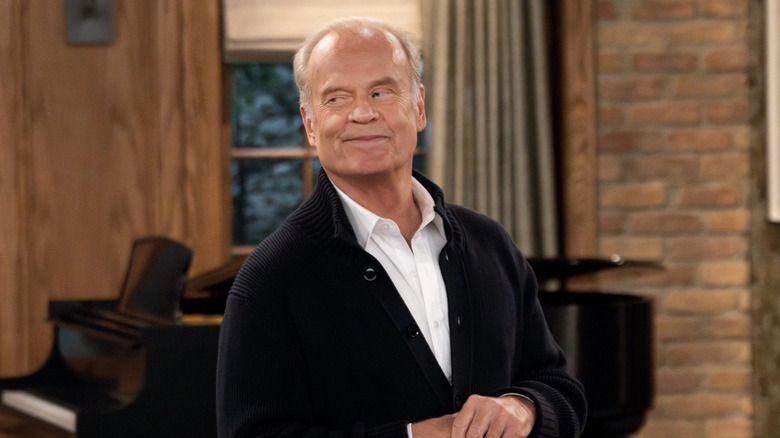
It's unsurprising to us that, of all the groanworthy TV revivals out there, "Frasier" is still the best of the worst. Then again, given that it was based off of one of the best TV shows of the '90s, it should have been a whole lot better.
Premiering on Paramount+ nearly 20 years after the original series finished its 11-season run on NBC, "Frasier" brings Kelsey Grammer's Frasier Crane to Boston at a transitional stage of his life. Mourning the death of his father (the premiere was dedicated to the memory of the late Martin Crane actor, John Mahoney), his separation from his longtime partner, Charlotte (Laura Linney was, curiously, not contacted about returning to the show), and the end of his career as a broadcast personality, he charts a new course as a lecturer at Harvard. The first season largely focuses on the title character's strained relationship with his adult son, Freddy (Jack Cutmore-Scott).
While the first season of the new "Frasier" wasn't outright panned, the reception was far cooler and less enthusiastic than anyone hoped. /Film published two reviews at the time, neither of them glowing – Joe Roberts argued the series should've been a one-off special and described the first season as feeling similar to "fanfiction," while Josh Spiegel wrote that it was "neither remarkable nor disappointing." The new setting and lack of returning cast members (most notably David Hyde Pierce) robbed it of any kind of familiarity that might've justified the revival's existence for older fans, and simply lacked the wit or cultural relevance to attract new viewers.
"Frasier" was cancelled after just two seasons, much to the chagrin of Grammer. The actor publicly complained that Paramount+ (in his view) neglected to promote it effectively and chalked up its demise to studio politics. In 2025, he expressed his desire to continue the series at another studio.
9. And Just Like That...
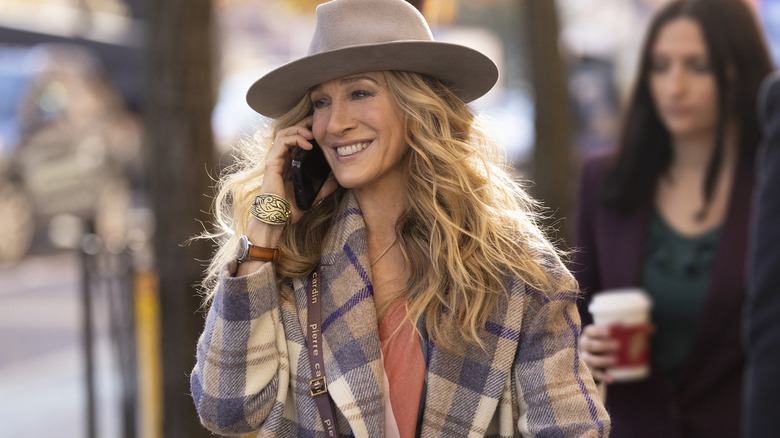
There's no denying that "Sex and the City" was one of the most important series of the early 2000s — even if it aged poorly relative to its contemporary popularity (and especially when compared to other hit HBO programming from the era). Its cultural endurance is so strong that a prequel was produced by The CW in the 2010s.
Off the strength of that collective cultural memory, "And Just Like That..." at the very least succeeded in feeling like more of an event than, say, Paramount+'s "Frasier" revival. There was actual energy behind the reunion of Carrie (Sarah Jessica Parker), Miranda (Cynthia Nixon), Charlotte (Kristin Davis), and Samantha (though Kim Cattrall would ultimately only make a cameo in the second season). But in the sequel series' attempts to recapture the original series' vibe while self-consciously interrogating its missteps, that energy is disrupted by a chaotic lack of vision. /Film's Nina Starner was more blunt, describing it as "the worst show on television."
Despite a spate of similarly negative reviews, "And Just Like That..." ran for three seasons and ended on its own terms in 2025. Parker told the New York Times shortly after the fact that the creative team (herself included) felt there was certainly plenty of runway for them to keep producing seasons, but that doing so risked veering into "exploitative" territory. For all its faults, "And Just Like That..." didn't feel like a cynical cash grab — its failures are earnest in a way that would be endearing if they weren't so awkward to witness.
8. Melrose Place (2009)
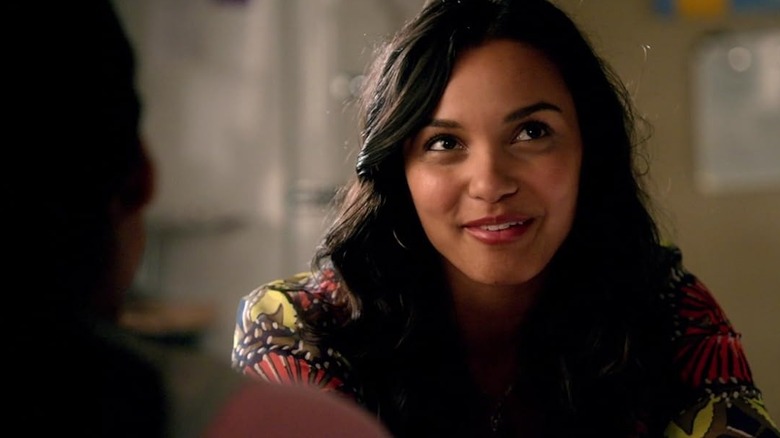
We didn't intentionally place two revivals of Darren Star dramas back-to-back. If anything, it just shows that the work of the producer can't be easily replicated. Despite some erroneous reporting to the contrary, Star was (very pointedly, it seems) not involved with any revivals of his work — and while he has been charitable in his deliberately distanced, vague assessments of "And Just Like That...," he all but dismissed the 2009 "Melrose Place" revival as a symptom of Hollywood's "terrible" fixation with reboots (per an interview with Vulture).
Star created "Melrose Place" in 1992, building off the success of his all-time-great soap opera "Beverly Hills, 90210" (which itself has been targeted by Hollywood reboot culture). "Smallville" showrunners Todd Slavkin and Darren Swimmer spearheaded the reboot for the CW. To their credit, they were largely successful in tapping into the original soap's sensational, scandalous melodrama — maybe even a little too successful. In the wake of other modern soaps including Fox's "The O.C." and the CW's own "Gossip Girl," which managed to update the tropes of the genre with more contemporary primetime narrative sensibilities, "Melrose Place" felt like an instant relic. Scandal for its own sake is no longer a substitute for the genuine texture being offered by the genre's recent products.
Whether or not one considers it a failure largely comes down to how obsessed they were with the original series. If you're captivated by the '90s program today, the CW's "Melrose Place" is probably worth watching. Otherwise, you'd be far better served by the subsequent, superior teen dramas that were influenced by Star's work.
7. Fantasy Island (2021)
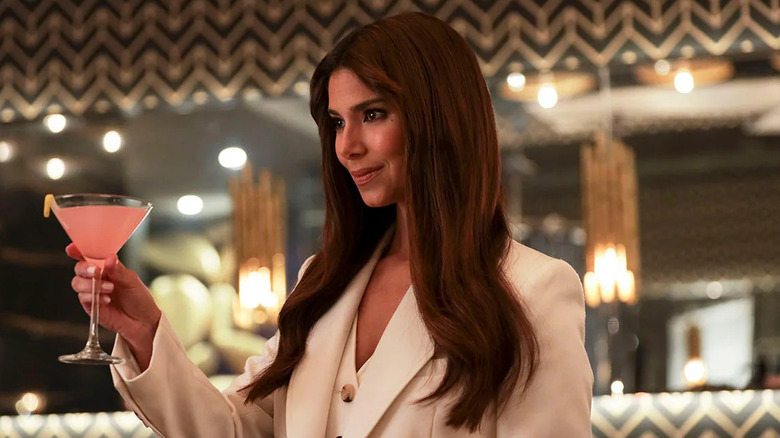
Speaking of Hollywood's cannibalistic obsession with rebooting decisively dead franchises, few have been subjected to as many failed attempts as "Fantasy Island." The original '70s-'80s series on ABC starred "Star Trek" actor Ricardo Montalbán and built seven seasons around the simple premise of an island that magically granted visitors their most revealing desires (which, of course, would ultimately exact unexpected tolls). ABC rebooted the series in 1998 (with Malcolm McDowell in the leading role), but abandoned it after a single season. In 2020, Sony and Blumhouse produced a poorly reviewed feature film that positioned itself as a soft prequel to the original series, but it too was unsuccessful. For whatever reason, Fox was undeterred by the damage the movie had done to the already faded cultural footprint of "Fantasy Island" and decided to move forward with a canonical revival of the original series.
Starring Roselyn Sánchez as Mr. Roarke's grand niece, Elena (as tenuous a connection as one could imagine, the fittingness of which will become quickly apparent), the new "Fantasy Island" maintains only its predecessor's premise and setting. The eerie "Twilight Zone" vibe is left behind entirely in exchange for transparently moralistic stories. That could've been a defensible creative choice, if that lightness didn't translate to weightless stories with little impact comedically or dramatically. Where the original offered uncomfortable tales that subverted the short-sighted pleasures the audience themselves might have dreamed of, Fox's series wanted to be amusing, escapist entertainment. The absence of danger or darker irony in many episodes makes them vulnerable to the predictably didactic destination such wishing fantasies often end up in.
"Fantasy Island" was cancelled after two seasons, despite reportedly being produced at a cost-effective price point — something that numerous reviewers were essentially able to identify long before such reporting was made public due to the noticeably limited production value.
6. Arrested Development
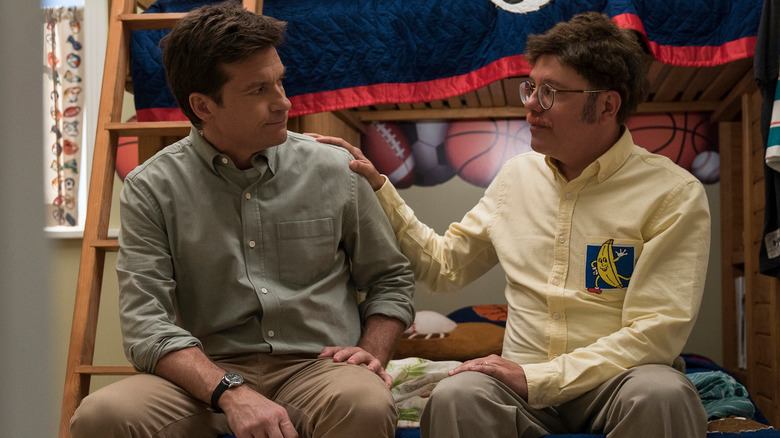
If we were judging these revivals purely by how far they dragged their respective original series down, we could make a solid argument for putting "Arrested Development" at the top. The original three-season run of Mitch Hurwitz's brilliant Fox satire was genuinely ahead of its time, and it maintains a legacy as one of the best shows of the 2000s and one of the greatest sitcoms overall, even in spite of its unimaginably horrific revival on Netflix.
Throughout the decade after it was cancelled by Fox, "Arrested Development" garnered a cult audience, many of whom had never watched the series while it was airing, yet were retroactively enraged by its cancellation. Thus, at the dawn of the streaming age, Netflix made what was then an uncontroversial, celebrated decision to attempt to reunite the cast and crew for a fourth season. When audiences saw the first episode of Season 4, it was clear the revival was a huge mistake.
The most cited and glaring problem of Season 4 in particular was the awkward episodic structuring, isolated storylines, and dreadful use of green screens, all of which was necessitated by the show struggling to wrangle its now-famous cast for a traditional season of production. (The structuring issue was so distracting that the episodes were later re-edited and released in a more streamlined, linear format.) However, Season 5 proved that reuniting the cast apparently wasn't enough to restore their chemistry or the show's unique, masterfully chaotic energy.
In our 2018 review of Season 5, /Film advised "Arrested Development" fans against watching the new episodes and openly questioned if Seasons 4 and 5 had tarnished the series' legacy overall. More than any show on this list, it stands as a cautionary tale for anyone hoping their favorite cancelled series will one day get a "better" ending on streaming.
5. Punky Brewster (2021)
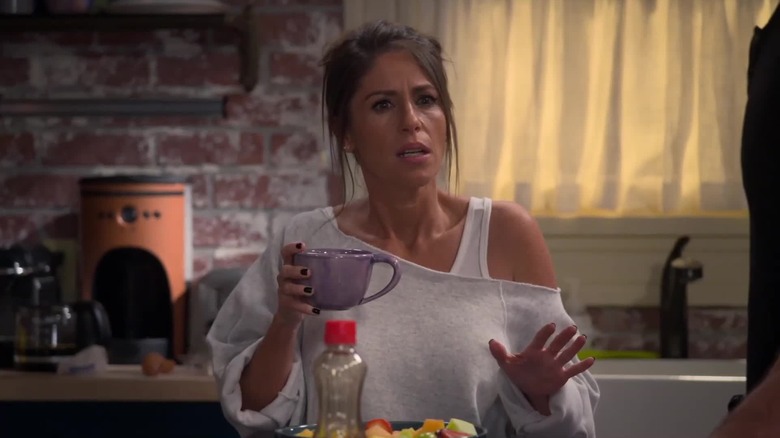
Perhaps the saddest outcome of a series revival is that you can do everything in your power to capture the original series' heart, only to learn that the audience at large has grown beyond it. When NBC revived "Punky Brewster" in 2021, it did so with a competent respect for continuity. Soleil Moon Frye returned as the titular character, once a rambunctious, abandoned child taken in by a lonesome widower (the late George Gaynes' Henry Warnimont). Now, the middle-aged Punky lives in her adoptive father's old apartment, has taken up the art of photography, and is attempting to raise not one but four children (three of whom are adopted).
This adherence to the formula of the preceding series (albeit with the parental dynamics inverted) succeeds in making the new "Punky Brewster" feel like the original, though it seems no one on the creative team stopped to ask whether or not modern audiences would actually enjoy the original series if it were made today. The revival certainly relies too heavily on the kind of nostalgia that winds up infantilizing the characters and story as a whole. But that really just feels like a symptom of a series that fails to recognize what made "Punky Brewster" special in the first place, and thus had no hope of translating that spunk for the 2020s. Though everyone involved was reportedly eager to take another swing at the series, Peacock cancelled "Punky Brewster" after a single season.
4. Quantum Leap (2022)
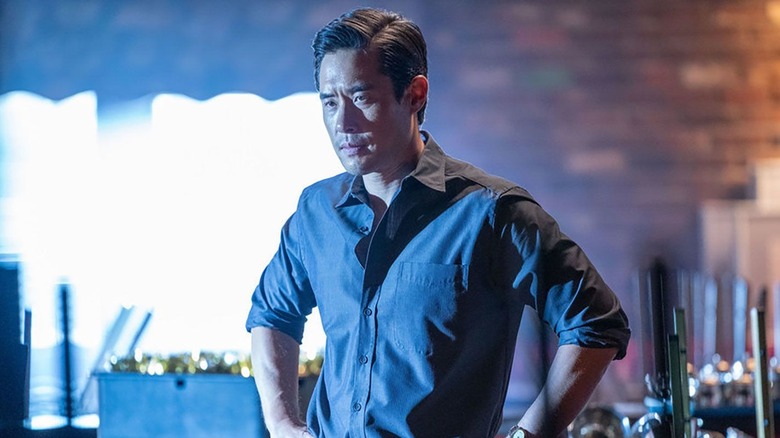
To the casual observer, it was easy to see the revival of "Quantum Leap" as almost perfunctory action undertaken by studios determined to strip mine every piece of intellectual property they had access to. And, yeah, it probably was still exactly that, at least to some degree. But what those who missed the original "Quantum Leap" likely didn't know is that it had a better justification for a modern-day return than most other series, due to the fact that it ended with an infamously polarizing series finale.
The final episode, "Mirror Image," is such a defining part of the meta-mythology of "Quantum Leap" that revival showrunner Martin Gero was already thinking of his own series finale before the first season had even ended. What he wasn't able to do was actually confront the original series finale himself. Scott Bakula declined to return for the revival after being sent the pilot script — which, according to him, featured his character Sam Beckett 30 years after a title card declared that he never returned home.
Maybe it was the right call for the series to leave Sam in the past. It would be an easier position to defend if the new series was able to replace the drama surrounding his character with something half as compelling. Instead, an undeniably charismatic Raymond Lee can do little to stop NBC from turning "Quantum Leap" into one of the many forgettable sci-fi series the network has tossed out over the past few decades. Audiences were expectedly disinterested, and the revival ended after two seasons on a cliffhanger.
3. Fuller House
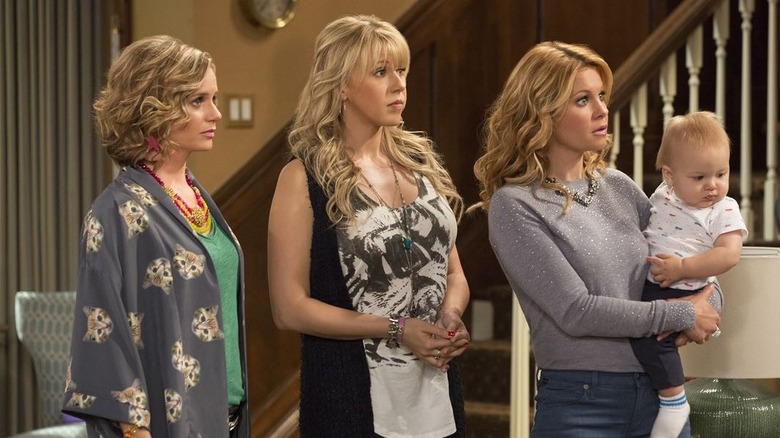
Many revivals, including "Punky Brewster" and "Frasier," use the stock narrative trope of turning a child character from the original series into the new central parental figure. "Fuller House" does the exact same thing but with a more noticeable lack of creativity.
Candace Cameron Bure's D.J. Tanner-Fuller is not only now a parent herself but the single parent of three boys. She has a life so eerily identical to her father's (Bob Saget's Danny Tanner, from the original "Full House") that one would expect the series to be about a paranormal investigation uncovering some dark, purgatorial curse that has apparently trapped the Tanner bloodline in an endlessly repeating cycle of tragedy. D.J. is even forced to move back into her childhood home from the original series (which was presumably built on a graveyard) with two friends who help her raise the children.
Kidding aside, the revival's performance of the original, basic components of "Full House" exemplifies the regurgitative terminus "Fuller House" raced toward by the end of its very first episode. Netflix offered nothing in the way of novelty, delivering the same kind of depressingly empty, emotionally corrosive nostalgia that the streamer's own "BoJack Horseman" was satirizing at the time. Critics panned "Fuller House" for being unfunny and lacking in originality, but even so, the revival ran for five seasons.
2. Murphy Brown (2018)
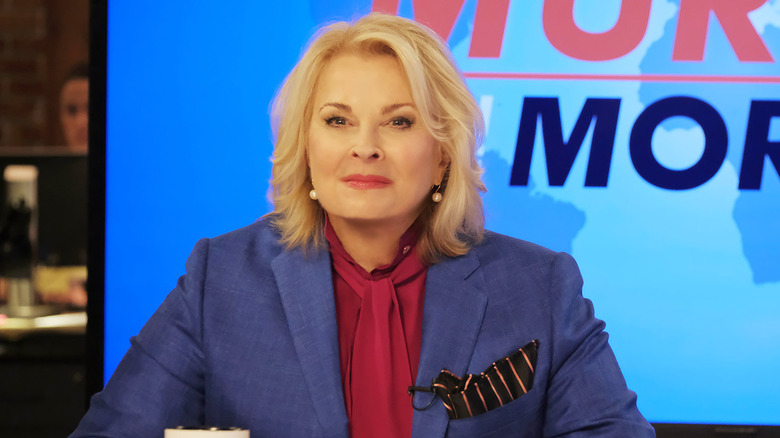
The 2018 CBS revival of "Murphy Brown" is a reminder that even a revival with the best of intentions can fall far short of what it needs to accomplish. The original series has arguably become one of the more underrated '90s sitcoms as the decades have passed, rarely acknowledged anymore for its ambitious, forward-thinking premise. Then again, looking at the revival, it seems not even the show's creative team fully understood what would make the series compelling to modern audiences.
In her original iteration, Candice Bergen's Murphy Brown was indeed a sharp journalist who fought for the truth — that much remains true in the revival series, which explicitly took place during the first administration of President Donald Trump. At a time when journalism as an institution felt under attack, Murphy Brown was brought back as a kind of mythological defender to inspire courage in American broadcasters (trailers for the revival featured almost no footage from the actual, new series, and instead featured behind-the-scenes talking heads where the cast praised the original show's cultural impact).
But this new Murphy has none of the flaws or edge that once made her not only relatable and genuinely inspiring, but funny. The revival is far more interested in getting you to clap for the character's righteous crusade than it is in giving her space to make you laugh, which one imagines is still the purpose of a sitcom, even (if not especially) during the bleak Trump years. Murphy's polish ultimately undercuts the defiant, messy moral clarity that once made her striking.
Most disappointing of all was the revival's fundamental misunderstanding of the moment. It asked audiences to re-invest themselves in corporate media rather than question its apparent inability to prevent the regime the series protested — a fatal flaw, underscored by what CBS became during Trump's second administration.
1. Heroes Reborn
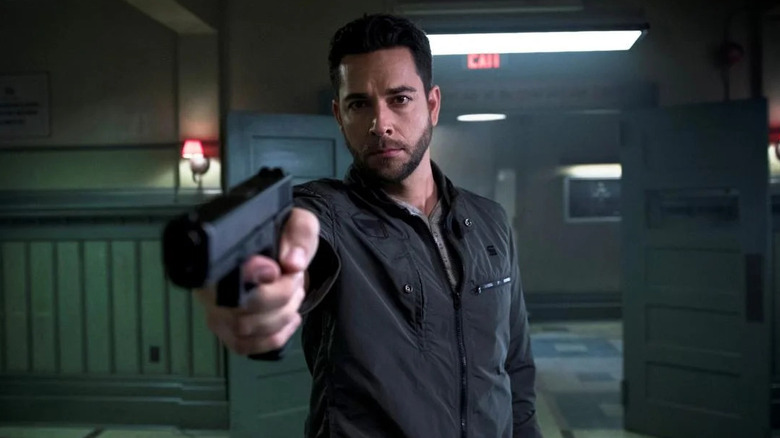
As infamously bad as "And Just Like That...," "Arrested Development," and "Fuller House" might be, at least they were efforts (albeit misguided in their execution) to revive shows justified by the strength of their predecessors. The same excuse cannot be made for NBC's decision to bring back late-2000s superhero drama "Heroes" with the 2015 miniseries "Heroes Reborn."
The former series' fall-off over the course of its four-season run was, to put it bluntly, generational. In 2006, the first season was released to surprising critical acclaim (for a network sci-fi series, at least), and it eventually went on to earn multiple major Emmy nominations, including Outstanding Drama Series. It spent the following three seasons hemorrhaging viewers and goodwill (mostly through convoluted, self-serious plotlines that undercut what fans loved about the first season), took a massive swing by building Season 4 toward a cliffhanger finale in spite of its clear decline, then got cancelled by NBC anyway. The only reason to bring the show back would've been to tie up loose ends — "Heroes Reborn" doesn't do that.
Instead, "Reborn" revives the worst version of "Heroes" described above, but several years into the show's future and without much of its main cast. It mostly bypasses the Season 4 finale and establishes a new, cliched jumping-off point in which the newly-outed superpowered community is implicated in a terrorist attack. Without characters like Zachary Quinto's Sylar or Hayden Panettiere's Claire Bennet, the attempt to claw back the Season 1 prestige feels even more desperate and unearned, ironically only succeeding in coasting off its legacy — which was basically the unifying sin of "Heroes" upon its initial cancellation.
To add insult to injury, "Reborn" ends with another unresolved cliffhanger, despite ostensibly being conceived of as a miniseries. Creator-showrunner Tim Kring remains apparently undeterred, and he's reportedly developing a second revival.