

10 Best Horror TV Shows, According To IMDb
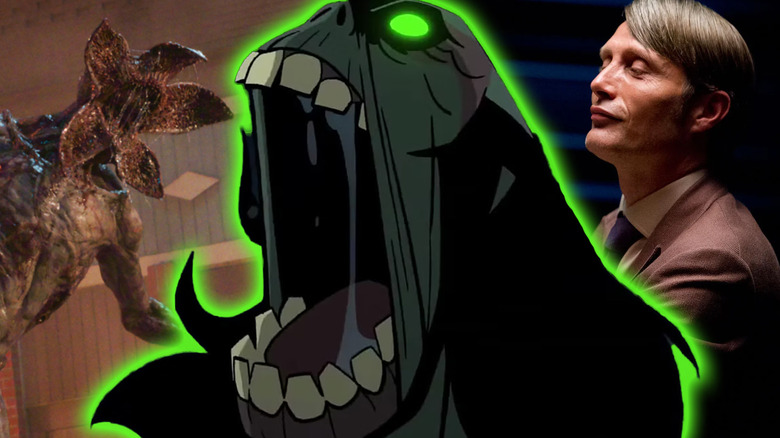
Of the many genres that transcend film and television, the impact of horror on the latter medium is often under-appreciated. Series like Ryan Murphy's "American Horror Story" proved that disturbing imagery and intense gore could have a place on the small screen, but it arguably wasn't until the streaming era that horror TV achieved the same freedom as its peers.
Even so, terrifying television has been a part of popular programming at least since the 1950s — and if the users of IMDb are to be trusted, some of the genre's earliest efforts stand above modern hits.
We've gathered the 10 horror TV shows with the highest ratings on the site, excluding those that step too far into another genre to be considered genuinely scary (i.e. the horror-comedy "What We Do in the Shadows" or the animated series "Over the Garden Wall"). In doing so, we've found a surprising collection of series that have had the most impact on this online community.
10. The Alfred Hitchcock Hour
IMDb Rating: 8.5/10 | Number of Votes: 5.8K
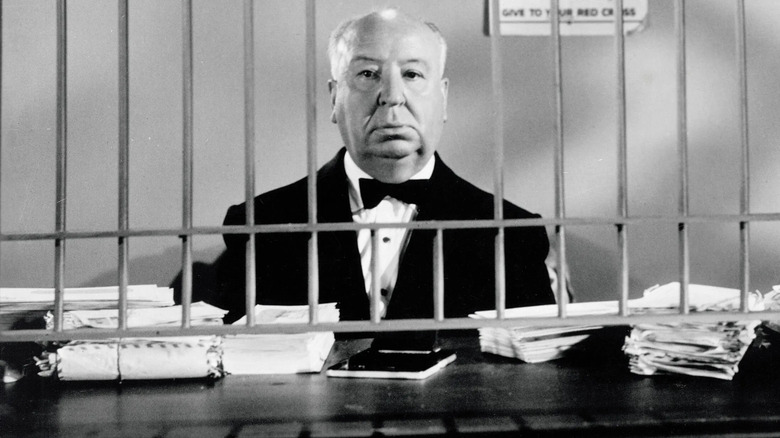
Also known as "Alfred Hitchcock Presents...", "The Alfred Hitchcock Hour" was a 1960s horror anthology series that asked a very simple questionL Can the all-time master of thrills beat Rod Serling in his own zone? Maybe, if all Hitchcock needed to do was sign his name and film a few presentational openers.
"The Alfred Hitchcock Hour" is by no means a bad show, but it's way more of a group project than its name suggests. That fact is apparent in both the quality and tone episode-to-episode. When this series is uneven, the difference in quality is far more stark than the many dips seen on Serling's series. That said, the diversity of creative vision was one of the series' unique strengths when it worked well. Hitchcock was able to assemble directors like Arthur Hiller, Norman Lloyd, Robert Altman, and William Friedkin, who would go on to become some of the most successful directors in Hollywood.
Overall, the best episodes of "The Alfred Hitchcock Hour" are worth watching for any horror fan. While it never overtook "The Twilight Zone" in terms of cultural prominence or peak quality, it still deserves to be remembered alongside the latter series as one of the best anthology programs ever produced.
9. The Haunting of Hill House
IMDb Rating: 8.5/10 | Number of Votes: 328K
Mike Flanagan has maintained a reputation throughout the 2020s as being the most prolific and reliable master of contemporary horror. It's an impressive living legacy, built on the foundation of modest films like the 2013 supernatural horror flick "Oculus," the inventive 2016 home-invasion thriller "Hush," and the standout 2017 Stephen King adaptation "Gerald's Game" (the first of many for the filmmaker). However, it wasn't until "The Haunting of Hill House" that broader audiences recognized how great Flanagan is.
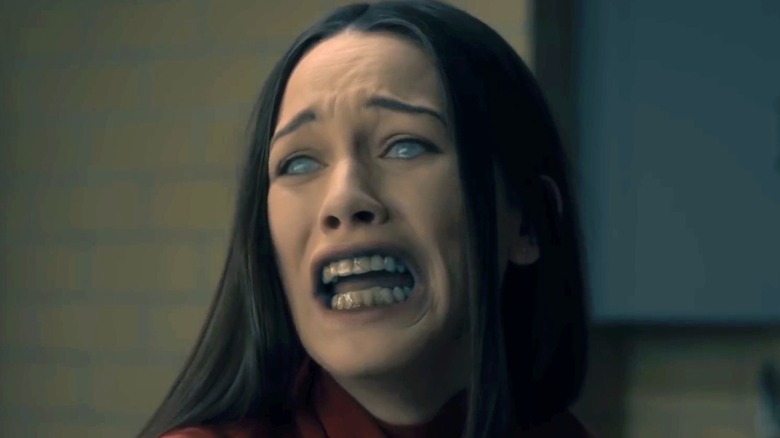
The 2018 Netflix miniseries is a showcase of Flanagan's strongest talent, which is his exceptional ability to subtly blend supernatural horror and psychological drama in a way that feels earned without drowning the audience in self-consciously transparent symbolism. That talent is what ultimately allowed him to successfully adapt Shirley Jackson's classic novel, despite the relatively thin content of the source material (by 10-hour-TV standards) and a previous, definitive adaptation from Robert Wise. In addition to making the implied supernatural elements of the book overt (so much so that the cast themselves were terrified on set), Flanagan's "Hill House" reverently expands Jackson's narrative framework to explore the lasting effects of childhood trauma. A stacked ensemble cast portrays the Crain family across two interwoven timelines, one depicting the aftermath of a chilling tragedy, and the other slowly revealing the horrifying root causes of their present struggles.
The most exacting fans of Jackson's novel might raise their eyebrows at this kind of adaptation, but the series more than justifies its changes. If you aren't completely overcome by the mind-bending twist revealed in Episode 5, "The Bent-Neck Lady" (the highest-rated episode of the series on IMDb), Flanagan defies you to resist his efforts in the technically astounding Episode 6, "Two Storms."
8. Hannibal
IMDb Rating: 8.5/10 | Number of Votes: 308K
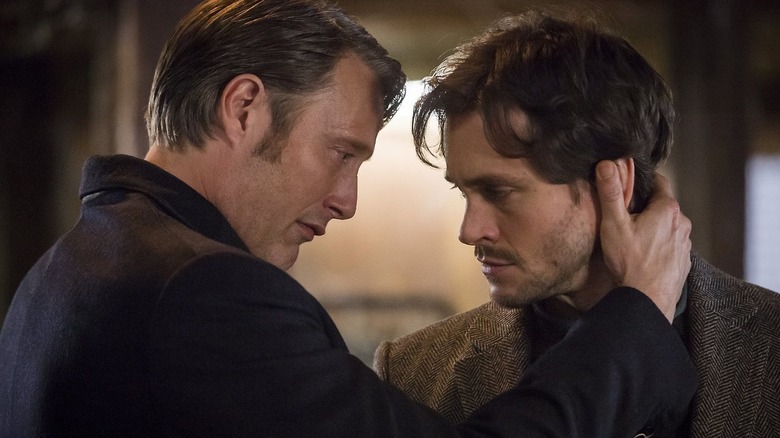
Though it's been over a decade since NBC canceled "Hannibal" prematurely, we aren't surprised to find that it's managed to hold a presence in online communities. The series premiered in 2013, at first appearing to be yet another adaptation of Thomas Harris' novels by way of a police procedural. It certainly maintained certain elements of the latter subgenre, as Hugh Dancy's Will Graham (a brilliant FBI profiler overwhelmed by an uncanny, self-destructive ability to vividly empathize with serial killers) is the kind of stock antisocial-genius-protagonist character that carried many popular police dramas at the time. Its prestige is earned by Mads Mikkelsen's chilling characterization of serial killer-psychologist Hannibal Lecter. His relationship with Graham teases out a uniquely unsettling spiral into insanity for both characters, as empathy is twisted into a weapon that's wielded against the audience as much as the characters themselves.
As it was ignored by most mainstream institutions — including the Emmy Awards (it was nominated just once for Outstanding Visual Effects for Season 3) — and was canceled due to low viewership, "Hannibal" is remembered as one of the most underrated television series of the 2010s. Its remarkable season-to-season consistency is evident in its IMDb episode ratings, the top 10 being evenly composed of standout episodes from across all three seasons. The Season 1 finale "Savoreaux" and the Season 3 finale "The Wrath of the Lamb" both rank in the top 5, while the Season 2 finale "Mizumono" is ranked as the best episode of the series.
Series creator Bryan Fuller still holds on to an idea for a sequel miniseries. Given the apparent lack of interest from networks, however, you're better off moving on to other series for the time being.
7. The Last of Us
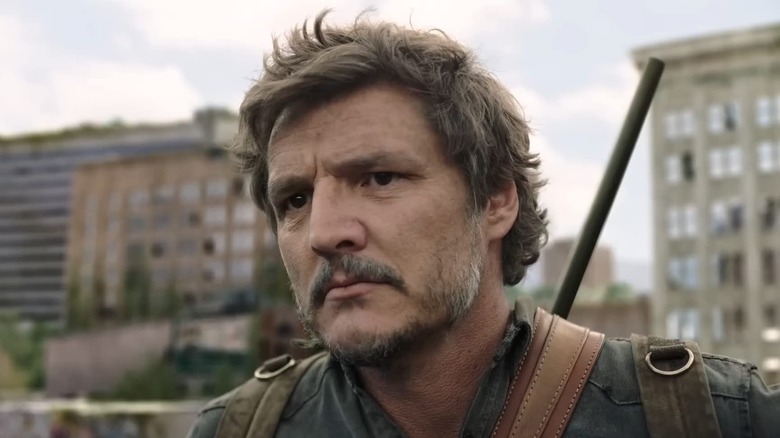
IMDb Rating: 8.5/10 | Number of Votes: 734K
Of all the series on this list, we're most skeptical of the placement of "The Last of Us." This isn't because the series is necessarily bad or otherwise doesn't deserve to be this high, but rather that — as an ongoing drama as of writing — it has the most potential to fall out of the top 10 entirely with the release of subsequent seasons. This is especially true if it continues to polarize fans of the original video game series.
When the first season of "The Last of Us" was released in 2023, it was lauded as potentially being the greatest video game adaptation ever made. Stars Pedro Pascal and Bella Ramsey were praised for their performances as Joel and Ellie, two post-apocalyptic survivors who form an unlikely, complicated bond while embarking on a mission that promises to save humanity from a zombie-like pandemic. Co-creators Craig Mazin and Neil Druckmann (also the creator of the original game) took an almost episodic approach to the events of the first game, which led to darkly complex expansions of memorable plot points (Season 1, Episode 5, "Endure and Survive," the highest-rated episode of the series on IMDb) and entirely revised storylines (the Emmy-nominated Episode 3, "Long, Long Time").
However, even as it racked up several Emmy nominations, including for Outstanding Drama Series, fans were apprehensive about how the series would approach the divisive sequel. It was, ultimately, mostly successful, though it began to strain the narrative strategy of bluntly translating all of the games' subtext into text. Season 2 drew harsher reviews overall on IMDb. If the pattern holds, it'll struggle to maintain this position in the long run.
6. Primal
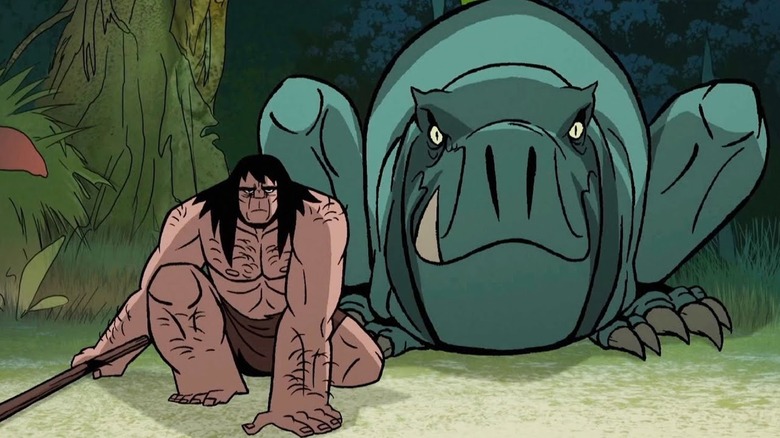
IMDb Rating: 8.6/10 | Number of Votes: 29K
Many of us grew up on the animations of Genndy Tartakovsky. From his original creations "Dexter's Laboratory" and "Samurai Jack" to his franchise collaborations with "Powerpuff Girls" and the first "Star Wars: Clone Wars" shorts, his visual style was every bit as distinct as his narrative style. After all, it wasn't merely the stylish hand-drawn 2D animation and lack of dialogue that made him notable, but his inclination toward telling mature stories with almost cartoonish visuals.
That inclination presumably helped to spark the initial idea for "Primal," before Tartakovsky decided to fully commit to the brutality of his premise. In an alternate reality where Neanderthals and dinosaurs exist alongside civilized humans, such as Vikings, the series follows an early human and a tyrannosaurus rex as they work together to survive their cruel natural environment. After its two-part first season aired on Adult Swim, it won five Emmy Awards, including Outstanding Animated Program.
"Primal" has only gotten better with age, as each new season has successfully grown beyond what came before it. Season 2 expanded the scope of the series' story world to explore the conflict between prehistoric carnage and the evolved cruelty of more advanced civilizations; Season 3 brought the fantastical elements of the series to the foreground through a risky twist that Tartakovsky pulls off by holding on to the emotional center of his story.
Though "Jurassic Park" and its imitators proved that dinosaurs can terrify in spite of their extinction, "Primal" is a one-of-a-kind experience in that it actually takes viewers to a distinctly horror-infused version of their natural chronological habitat. It isn't just a hit on IMDb, either – as of writing, it's one of the highest-rated series on Metacritic.
5. Stranger Things
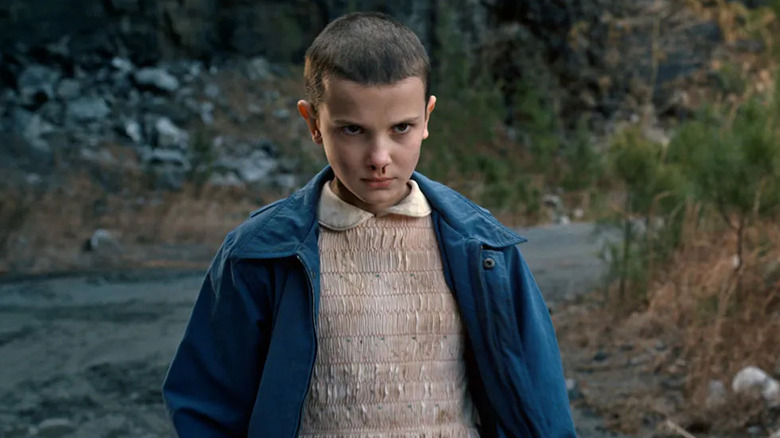
IMDb Rating: 8.6/10 | Number of Votes: 1.7M
It's a shame that "Stranger Things" has suffered as much as it has from the poor reputation of its series finale. The cultural reevaluation in the aftermath has been jarring to say the least, making it almost impossible to remember how much of a popular sensation it was when it first premiered in 2016.
At that time, the show's greatest strength was how contained and unknown it was. Season 1 focused on the sudden disappearance of Will Byers (Noah Schnapp), the discovery of Eleven (Millie Bobby Brown), and the attempts of a group of children to save their friend from dark supernatural forces surrounding their small town. Questions regarding certain characters' pasts, the origins of the Hawkins military lab, and the nature of the alternate dimension known as the "Upside Down" were present and intriguing, but their answers were largely irrelevant to the quality of the show. In fact, it's worth considering which mysteries were more compelling before they were solved.
Suffice it to say, the first season of "Stranger Things" becoming as big as it was ultimately necessitated that the Duffer Brothers expand the scope of storytelling to match. To that end, they were largely successful. For better or worse, the world-building remained the most reliably compelling part of the series through to its finale, and the escalations of danger through Jamie Campbell Bower's Henry Creel and the Mind Flayer were well-received. IMDb users in particular show an affinity toward later episodes like the third-highest-rated episode "Sorcerer" (Season 5, Episode 3) and "The Massacre at Hawkins Lab" (Season 4, Episode 7). Whatever one's opinion of the series overall might be, there's no denying "Stranger Things" is one of, if not the most popular horror series ever made.
4. Don't Hug Me I'm Scared
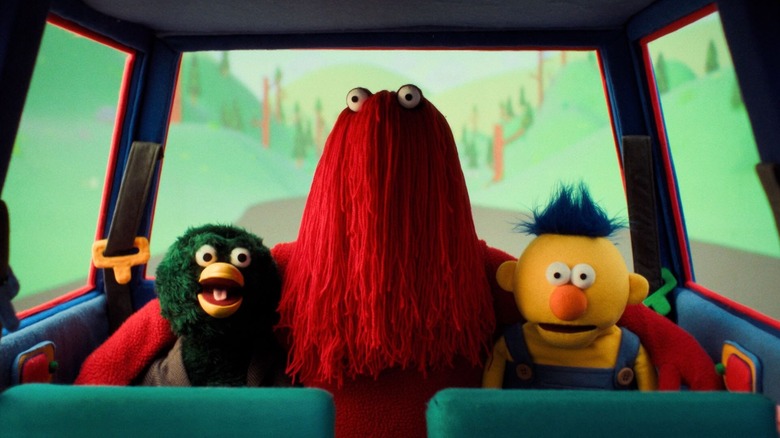
IMDb Rating: 8.7/10 | Number of Votes: 7K
A few horror comedies nearly made the cut for this list, including "What We Do in the Shadows" and "Garth Marenghi's 'Darkplace.'" "Don't Hug Me I'm Scared" was the only series that succeeded in being genuinely funny and terrifying at the same time.
For five years, Becky Sloan, Joe Pelling, and Baker Terry dedicated much of their time to creating a series of no-budget, experimental horror shorts that were published for free on YouTube. Those films not only became some of the most viral independent art ever produced, but eventually led to a full six-episode season order from Channel 4 in the U.K.
Admittedly, it's impossible to know if IMDb users at large were awarding stars based strictly on the 2022 series or the original 2010s-era shorts. Each short has its own page, but it's far from unimaginable, if not outright likely that many users would assume "Don't Hug Me I'm Scared" has one page for both series of the same name. It doesn't matter too much for our purposes, as its placement is easily explainable regardless of what episodes you consider.
Across both iterations of the series, "Don't Hug Me I'm Scared" presents a disturbing parody of children's television. Brightly colored puppets singing upbeat songs teach lessons on everything from creativity and careers to love and death. The ingenious twist is that every teacher imparts their lessons in a specifically "wrong" way that, while outrageously funny and horrific at the same time, still manages to pinpoint real anxieties about harmful social programming. The absurd horror of "Don't Hug Me I'm Scared" isn't sinister clocks or maniacal notepads, but the idea that you can spend so much of your life listening to the wrong voices without realizing it.
3. Berserk
IMDb Rating: 8.7/10 | Number of Votes: 78K
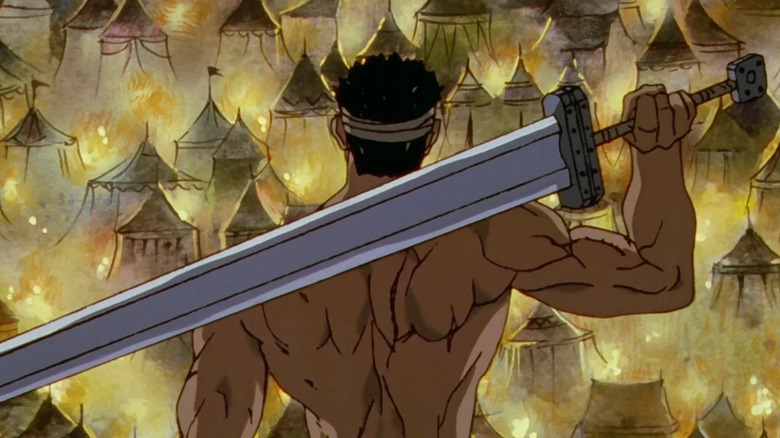
Even if you've never read "Berserk," you've probably seen something that was directly inspired by it. From other manga like "Attack on Titan" to moments in "Avengers: Infinity War" and the video game "Dark Souls," it has a hard-earned legacy as one of the most influential pieces of media from the 20th century. That sets an incredibly high bar for any animation studio attempting to adapt it into an anime series — despite multiple attempts, only one so far has come close to the manga's greatness.
Comprised of just 25 episodes and released in 1997, the first "Berserk" anime adaptation remains the best. It adapts about a fourth of the series, cutting some significant characters and storylines to keep the emotional focus on Guts, a roguish medieval mercenary who forms a brotherly bond with the charismatic warrior Griffith. It's a bleak and brutal fantasy epic that combines the sword-and-sorcery of "Game of Thrones" with the hellish nightmare fuel of Clive Barker — at the same time, those who appreciate the moral descent of the "Star Wars" prequels will find the arc of "Berserk" even more satisfying.
That said, aside from the aged animation (beautiful but limited by the technical constraints of the time), the one major drawback of "Berserk" '97 is that it takes the viewer to an unbelievably dark place only to abandon them there. Episode 25 (the highest-rated episode of the series on IMDb) ends with the kind of imaginatively gory spectacle the series is best known for (that will also understandably turn off many viewers due to the amount of deeply upsetting, graphic violence on display).
2. Twin Peaks
IMDb Rating: 8.7/10 | Number of Votes: 246K
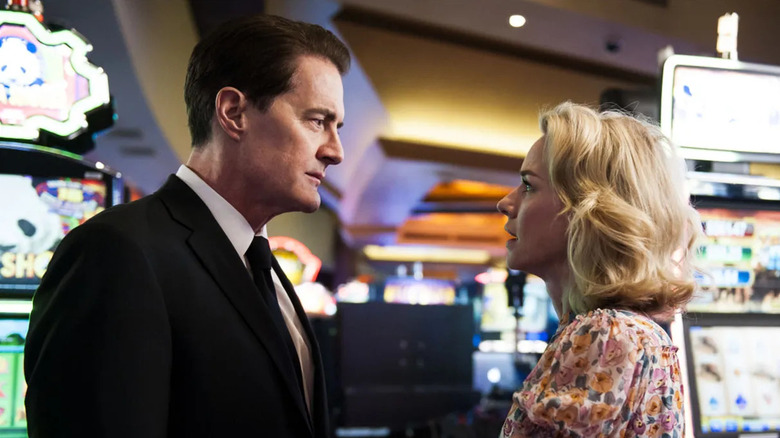
As would likely make David Lynch quite proud, "Twin Peaks" was the most complicated series to place on this list. The third and final season — produced after a 15-year gap and subtitled "The Return" — has its own dedicated page with an 8.5/10 rating that would've earned it a spot within the top 10 regardless. The original two-season run, however, holds an 8.7/10 but is not technically categorized as a horror series by IMDb. We've decided to rank it by the latter rating.
This bifurcated legacy is fitting for the series, as it was judged in separate parts long before Showtime revived it in 2017. The first season by Lynch and Mark Frost is commonly regarded as one of the most ambitious seasons of TV ever made, subverting the form in a way that underscored the uncanny vibe of its setting and story. During the development of Season 2, the network forced the original creators to compromise the narrative language they were trying (successfully) to build with the audience, asking them to forego considerations of tone and pacing to prematurely reveal the mystery behind the series' central investigation. It so betrayed his vision for the series that Lynch and Frost greatly reduced their involvement – Season 2 is considered by some (including Lynch) to be almost unwatchable as a result. They returned for Season 3, which many felt gave the series the ending it deserved.
Interestingly enough, IMDb users seem to be more forgiving of the second season. The three highest-rated episodes are all from Season 2, though two of them were directed by Lynch.
1. The Twilight Zone
IMDb Rating: 9.0/10 | Number of Votes: 108K
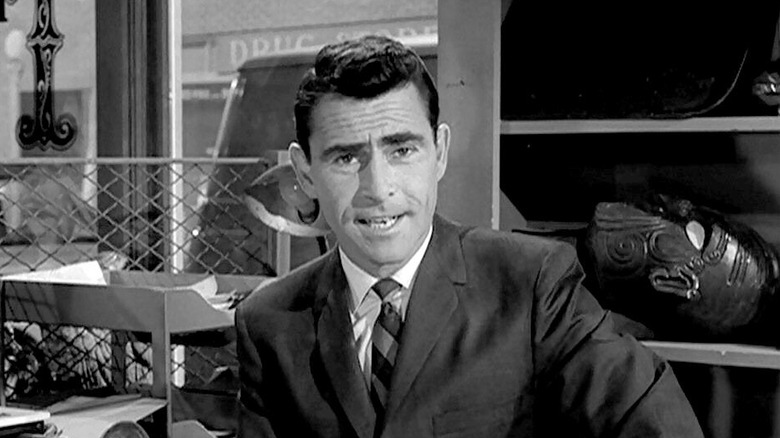
Of all the entries on this list, the quality of "The Twilight Zone" is by far the least consistent. There is not a single fan, even among the most devoted, who could earnestly argue that every single episode of the anthology series is defensible, redeemable, or even worth watching. Many of those same fans might even argue that the show was mostly just good or fine, and only occasionally truly brilliant. This score is almost certainly not meant to imply consistent greatness, but rather that — even while acknowledging its shortcomings — the indelible cultural impact of "The Twilight Zone" is unlike any other series in television history.
For over 150 episodes released across just five years, Rod Serling endeavored to challenge what audiences expected to see on their TV sets, telling stories meant to inspire discomfort and skepticism at a time when television was finding its footing as an escape from the anxieties of the real world. The great magic trick of "The Twilight Zone" is that what at first seems fantastical ultimately bears a chilling resemblance to the real world. Many of its most essential episodes have political or social commentary laid within — "The Eye of the Beholder" and "The Monsters Are Due on Maple Street" are prime examples of this, and both are ranked within the top five episodes of the series on IMDb. Both were written by Serling, who penned over half of the entire series himself.
The legacy of "The Twilight Zone" franchise has endured through films, television revivals, and subsequent series directly inspired by Serling's work. Many of the series on this very list would likely not exist without "The Twilight Zone" paving the way for such small-screen horrors.