

20 Best Cop Movies Of All Time, Ranked
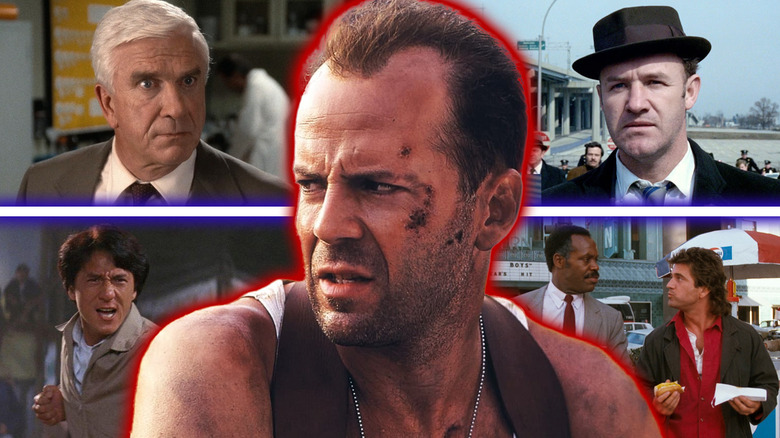
Among all the different sub-genres within crime movies, there's just something about cop movies that have their own enduring appeal. Like the overarching genre, there is a malleability to stories prominently featuring characters working in law enforcement that keeps them fresh. Cop movies can feature everything from grounded tales of officers putting their lives on the line in the name of duty or badge-carrying action heroes that stand as virtual one-man armies. Cop movies can also revolve around corruption within the police as a stark reminder that such institutional power can be misused.
To clarify, just because a movie includes the appearance of the police doesn't necessarily make it a cop movie. This also doesn't extend to characters that are members of federal law enforcement and intelligence agencies, so we're focusing on state and municipal law enforcement in action. These are movies that showcase police officers and detectives on duty with all the moral complexity that comes with the job.
With all that said, here are the 20 best cop movies of all time, ranked.
Training Day
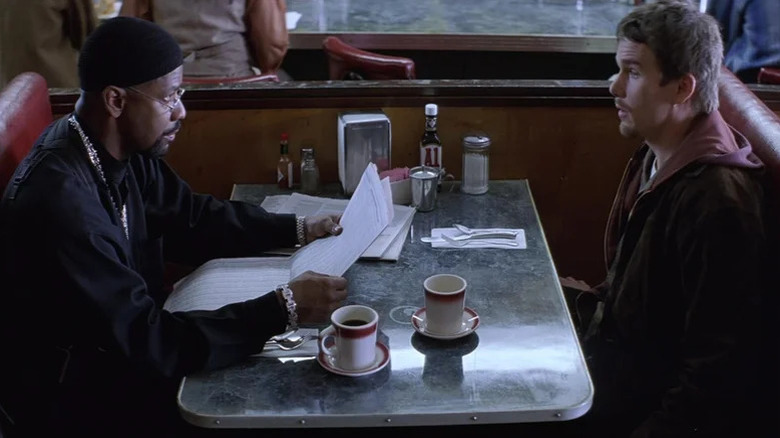
One of Denzel Washington's frequent collaborators is filmmaker Antoine Fuqua, with Fuqua first directing Washington in 2001's "Training Day." Washington plays Los Angeles police narcotics officer Alonzo Harris, who takes young officer Jake Hoyt (Ethan Hawke) to see if he can handle working in his department. Right off the bat, Hoyt is subjected to Harris' heavy-handed and violent methods, including being forced to smoke marijuana laced with PCP. It becomes clear to Hoyt that Harris is using the narcotics squad as his own corrupt team, putting him directly at odds with them.
Looking back, there's a lot of shared thematic DNA between "Training Day" and "The Shield," the latter of which premiering the following year. Both stories feature Los Angeles cops using questionable methods to presumably keep the peace, even if it deliberately endangers other officers. "Training Day," more specifically, features a tour-de-force performance from Washington, winning him the Academy Award, with Ethan Hawke holding his own opposite him. A searing look at police corruption in the City of Angels, "Training Day" displays Washington at his most intensely villainous.
The Naked Gun (1988)
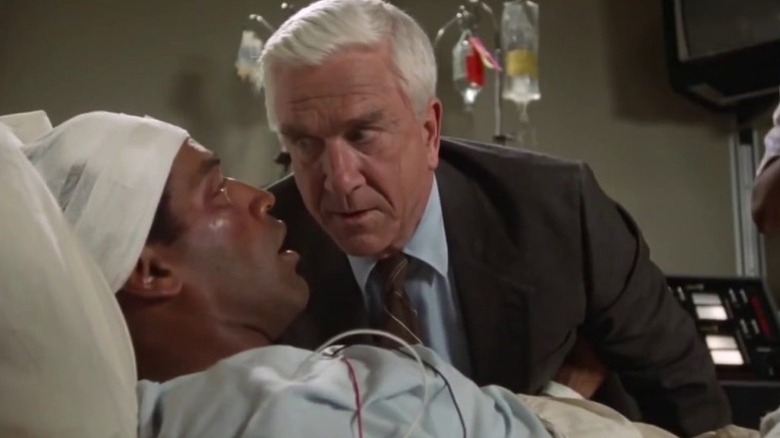
Leslie Nielsen reprises his TV role of inept Los Angeles police detective Frank Drebin in "The Naked Gun: From the Files of Police Squad!" from 1988. After Drebin's colleague Nordberg (O.J. Simpson) is grievously wounded while raiding the drug-running operations of local businessman Vincent Ludwig (Ricardo Montalbán), Drebin takes the case. Drebin learns that Ludwig is planning to assassinate the Queen of England during her visit to the city, but he finds the cunning villain always one step ahead of him.
Cop comedies certainly existed before "The Naked Gun" but none with the same level of success. Like the short-lived show that it spawned from, the movie was a theater of the absurd, often veering into the outright nonsensical. What makes the humor work is that the characters play their scenes completely deadpan, no matter how silly things get and they get silly frequently. Whether you're watching the original "The Naked Gun" for the first time or however many rewatches later, this is an '80s comedy that still holds up.
Hard Boiled
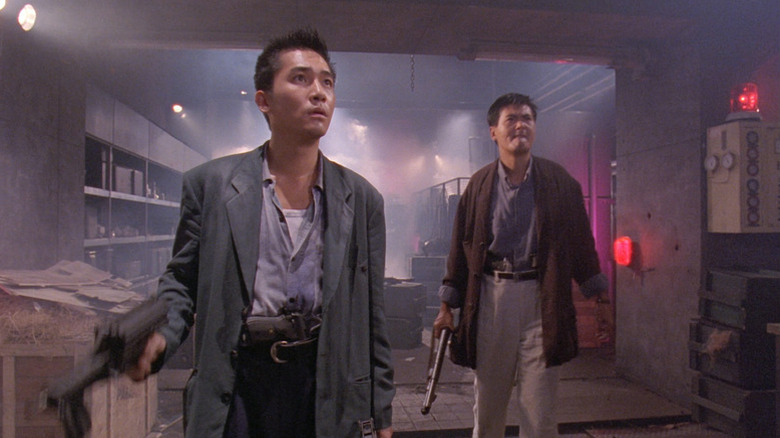
Virtuoso Hong Kong action filmmaker John Woo made international waves with his 1992 crime thriller "Hard Boiled." The movie centers on two Hong Kong police detectives, Tequila Yuen (Chow Yun-fat) and undercover officer Alan (Tony Leung). Both officers carry significant inner turmoil, Tequila for accidentally killing a different undercover cop and Alan for the murderous things he has to do to maintain his cover. Working together, the two cops take on a powerful crime syndicate that threatens to turn Hong Kong into a warzone.
The amount of gunplay in "Hard Boiled" is fittingly ludicrous, culminating in a spectacular warehouse raid scene followed by an extended gunfight in a hospital. But for all the frenetic carnage, Woo never loses sight of his two main characters and they endure to deliver justice. In the moments when the characters catch their breath, that vulnerability can be seen before the adrenaline kicks back in to finish the fight. A genre-defining crime action movie, "Hard Boiled" is John Woo's bullet-ridden masterpiece that only stops to reload.
Die Hard with a Vengeance
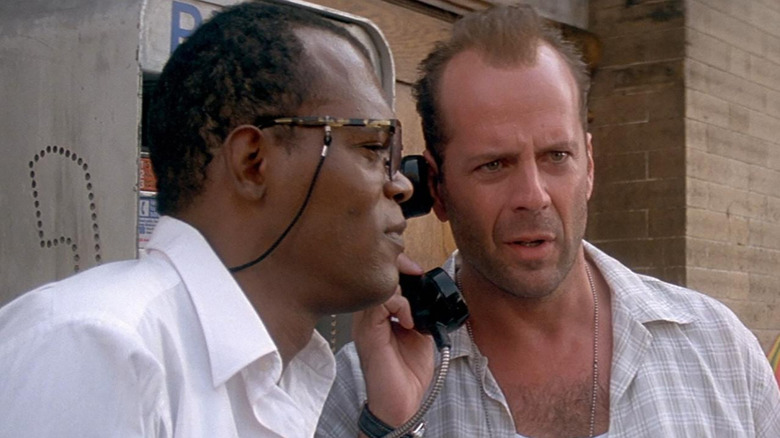
While the iconic action hero John McClane (Bruce Willis) has always been a cop, he isn't technically on duty until "Die Hard with a Vengeance." The 1995 sequel sees McClane on home turf in New York City, having hit rock bottom. McClane is targeted by terrorist Simon Gruber (Jeremy Irons), brother of the late Hans Gruber, who presents him and the NYPD with riddles to solve around the city, bombing public areas if he fails. After McClane is helped by a local bystander Zeus Carver (Samuel L. Jackson), Gruber forces him to join McClane in his explosive game.
After two movies that had McClane just happen to be around terrorist attacks, it's nice to see him working alongside officers that know him. These elements help make "Die Hard with a Vengeance" the best of the franchise's sequels by a long shot, putting McClane in his jurisdiction. By also reimagining McClane as a burnt-out cop consumed by his personal demons, the series moved into an interesting direction it never fully capitalized on again.
Supercop
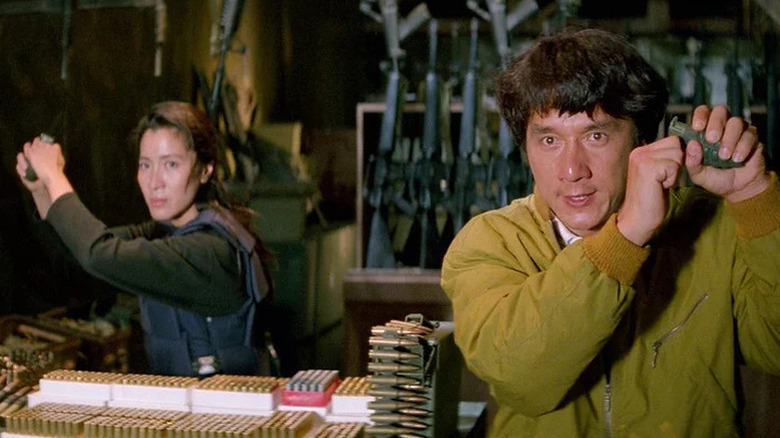
The third installment of Jackie Chan's enormously successful "Police Story" series, 1992's "Supercop" has him reprise his role as Hong Kong police detective Chan Ka-Kui. Chan teams up with mainland Chinese Interpol director Jessica Yang (Michelle Yeoh) to infiltrate a deadly drug ring based out of Hong Kong. Posing as siblings, the duo gets into the inner circle of ring leader Khun Saibat (Kenneth Tsung) by breaking his associate Panther (Yuen Wah) out of prison. This places them in increasingly dangerous territory when Chaibat kills all his competitors smuggling drugs from Thailand, leading to a showdown in Kuala Lumpur, Malaysia.
No matter the correct order to watch Jackie Chan's "Police Story" franchise, "Supercop" stands perfectly fine on its own. The story is relatively standalone and accessible, and Chan is in fine action hero form as usual. This time around, he's matched by Michelle Yeoh, who immediately proves herself as every inch the action icon that he is. A rollicking crime adventure with an international scope, "Supercop" is the pinnacle of the "Police Story" series.
Hot Fuzz
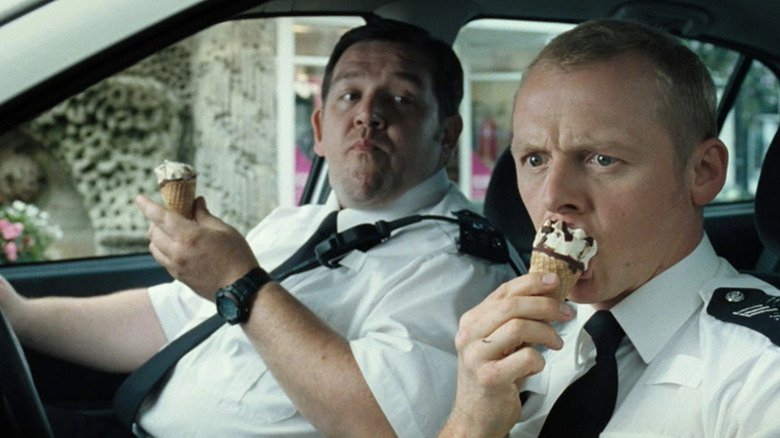
After thoroughly spoofing and celebrating zombie movies with 2004's "Shaun of the Dead," British filmmaker Edgar Wright set his sights on cop movies with "Hot Fuzz." The 2007 comedy reunites Simon Pegg and Nick Frost, this time playing police officers Nicholas Angel and Danny Butterman, respectively. Angel is assigned to the sleepy town Sanford after frustrating his superiors in London, teaming up with the bumbling but good-natured Butterman. However, Angel grows suspicious of the lethally grisly accidents killing off people around town, leading him to uncover a sinister conspiracy.
Wright maintains his penchant for stuffing a deluge of gags and references into "Hot Fuzz" without compromising the original story that he's telling. Many of the allusions are clearly telegraphed but operate beautifully within the overarching structure of the movie. This includes the deliriously over-the-top violence throughout the film and gags that appeal to viewers who aren't familiar with the genre. Some consider "Hot Fuzz" the best of Edgar Wright's informal Cornetto trilogy and, seeing how deeply Wright delved into the cop genre, that claim isn't without merit.
Zootopia

Some on both sides of the aisle would probably bristle at "Zootopia" being referred to as a cop movie, but just look at the plot. The animated movie follows Judy Hopps (Ginnifer Goodwin), the first rabbit police officer in the sprawling metropolis of Zootopia. Underestimated by her superiors, Judy runs into Nick Wilde (Jason Bateman), a fox con artist and is forced to work with him in a missing predators case. The unlikely duo uncover a mystery that could sharply alter the harmony between predator and prey species living together in the city.
At its core, the original 2016 "Zootopia" is a mystery where its protagonist is a police officer, making it a cop movie, no matter how family-friendly it is. Judy Hopps' entire arc is proving herself as a capable law enforcement professional, something she firmly establishes by the movie's end. At the same time, the message in "Zootopia" comes from story and character instead of politics, which is part of its wide appeal.
The Departed
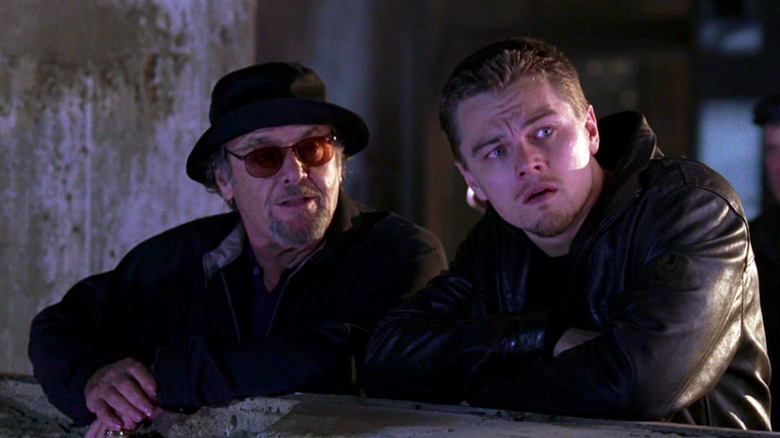
A loose remake of the 2002 Hong Kong crime thriller "Internal Affairs," 2006's "The Departed" relocated the cop movie intrigue to Boston. The movie has mob boss Frank Costello (Jack Nicholson) groom Colin Sullivan (Matt Damon) to become his mole in the upper echelons of the Boston Police Department. Meanwhile, rookie cop Billy Costigan (Leonardo DiCaprio) is selected to infiltrate Costello's organization undercover after serving a prison sentence to help build his presumed backstory. Aware that there's an informant in his organization, Costello and Sullivan try to identify them while the police search for the mole in their own ranks.
Filmmaker Martin Scorsese really makes the source material his own with "The Departed," making the movie a game of cops-and-robbers writ large. The movie assembles a particularly impressive ensemble cast, even compared to other Scorsese projects, with everyone pulling their weight. When this longstanding game of deception and paranoia finally pays off, it's a cathartic bloodbath with plenty of surprise fatalities. Expertly crafted, "The Departed" is one of the best crime movies of the 21st century.
Beverly Hills Cop
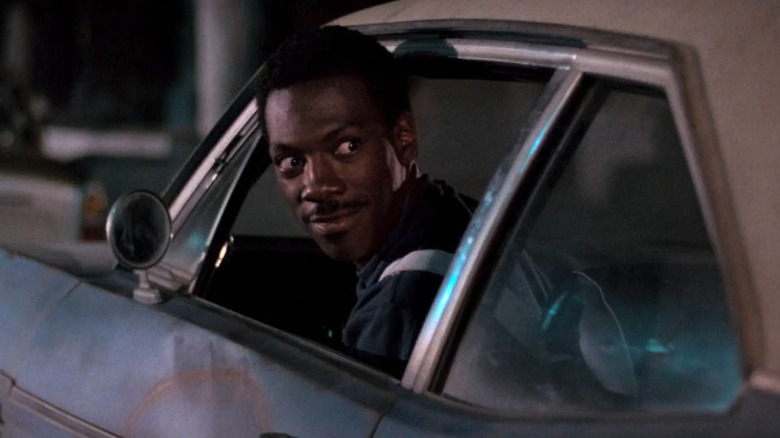
After establishing himself as a movie star with 1982's "48 Hrs.," Eddie Murphy took center stage with his other cop movie series "Beverly Hills Cop." Premiering in 1984, Murphy plays Detroit police detective Axel Foley who travels to Los Angeles to investigate the murder of his friend. Axel finds that the Los Angeles police treat him like a nuisance, especially after contending with powerful businessman Victor Maitland (Steven Berkoff). As Axel collaborates with the detectives shadowing him, they expose Maitland as the murderous crime lord that Axel has been looking for.
While "48 Hrs." hasn't aged particularly well with its widespread usage of slurs and other problematic elements, "Beverly Hills Cop" has aged like fine wine. The movie perfectly strikes that delicate balance between Axel being an effective and serious cop and the wild card frustrating the LAPD. That balance is something that the movie's sequels never quite recaptured again, focusing either too much on serious action or goofy gags. Ranked among the best Eddie Murphy movies, "Beverly Hills Cop" effectively showcased his range.
Serpico
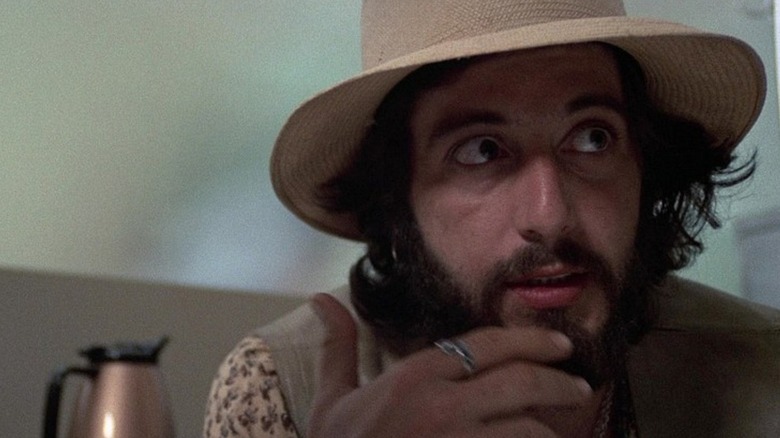
Real-life New York City police detective Frank Serpico and his exposure of deep corruption within the NYPD is recounted in the 1973 crime thriller "Serpico." Played by Al Pacino, Serpico is shocked by how widespread and entrenched corruption is within the police after joining the force. Serpico's attempts to report the corruption is rebuffed by his complicit superiors and political pressure on officials outside of the police department. Meanwhile, Serpico is ostracized and threatened by the crooked cops, putting his life in harm's way.
While the movie lacks the nuance and objectivity of Peter Maas' book which it was based on, "Serpico" is a searing look at dangers of unchecked corruption. Carrying much of the film is a particularly intense performance from Pacino, with his performance veering from horrified to angered by the injustice that his character faces. Pacino prepared diligently for "Serpico," spending time with the actual Frank Serpico to get a feel for his personality and motivations. That preparation paid off well, with "Serpico" standing as one of Pacino's most enduring and emotionally charged projects.
RoboCop (1987)
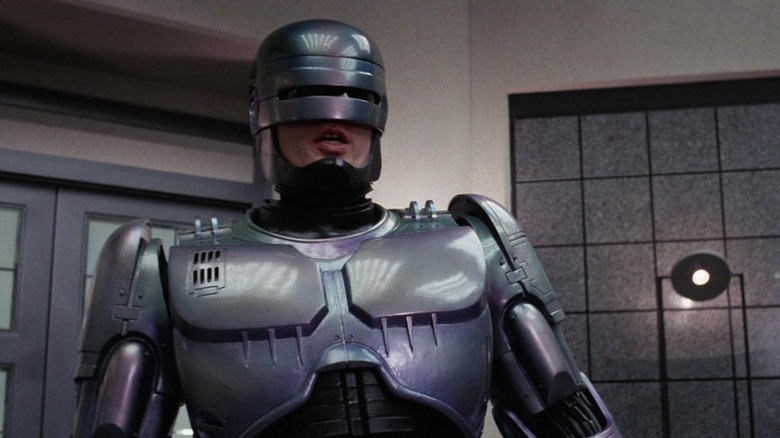
At once a rousing sci-fi action movie and a darkly funny satire on modern America, "RoboCop" gave audiences the future of law enforcement. The movie follows police officer Alex Murphy (Peter Weller), a recent transfer into the beleaguered Detroit Police Department who is horrifically gunned down by a street gang. A megacorporation that effectively runs Detroit rebuilds Murphy as a cybernetically enhanced officer, dubbing him RoboCop. This is complicated when Murphy uncovers the connection between the street gang who killed his human form and the corporation that subsequently resurrected him.
As the "RoboCop" tagline proudly proclaimed, the law enforcement cyborg was part man, part machine, and all cop. That slogan sets the knowingly jingoistic tone informing the movie's core ethos, presaging director Paul Verhoeven's later satirical sci-fi action movie "Starship Troopers." But even before Murphy is transformed into the cybernetic RoboCop, the movie depicts an overworked and underpaid police force setting the stage for its futuristic hero. Full of proto-cyberpunk action and gleefully over-the-top violence, "RoboCop" maintains its working-class underdog bonafides.
21 Jump Street
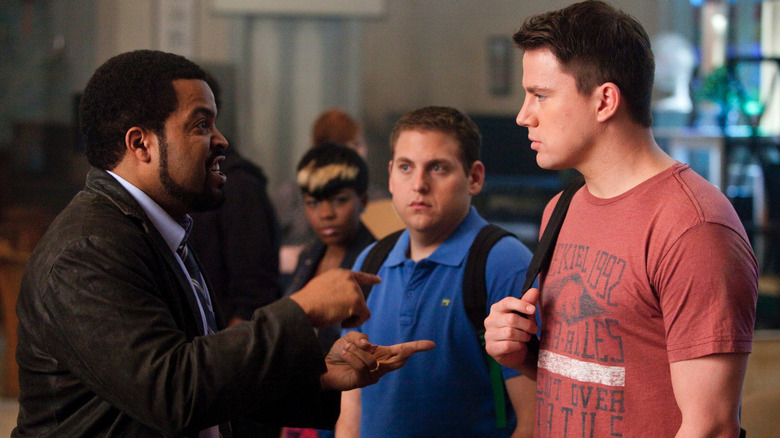
The 1987 cop show "21 Jump Street" was turned into a full-on spoof movie with the 2012 film of the same name. After a new street drug is traced to a high school, undercover police officers Morton Schmidt (Jonah Hill) and Greg Jenko (Channing Tatum) pose as students to infiltrate the school. The duo befriend the school's major drug dealer, Eric Molson (Dave Franco) as they continue their investigation to learn where the drugs are coming from. This leads them to uncover a wider operation involving a notorious motorcycle gang that Schmidt and Jenko previously dealt with.
At once a send-up of the original television series and subversion of teen comedies, "21 Jump Street" is one of the best crime comedies ever made. Hill and Tatum make a great comedic team, joined and elevated by a strong supporting cast. The ensemble, along with directors Phil Lord and Christopher Miller, beautifully realize Michael Bacall's sharply funny script. Followed by a solid sequel in 2014, "21 Jump Street" lovingly pokes fun at the genre while successfully delivering laughs. Now if we could just get "23 Jump Street" off the ground.
Cop Land
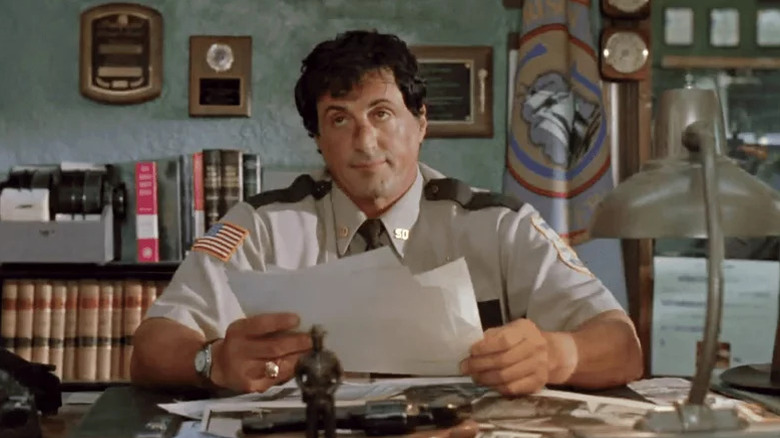
Filmmaker James Mangold's sophomore directorial feature, "Cop Land," assembled an all-star ensemble cast to bring it to life. The movie focuses on a group of corrupt NYPD cops living in a small New Jersey town, protecting them from an internal affairs investigation. The town's sheriff, Freddy Heflin (Sylvester Stallone), initially turns a blind eye from the group's illicit activities until he discovers its full scope. Deciding to take matters into his own hands, Heflin confronts the corrupt cadre who had previously underestimated him.
Sylvester Stallone recalls that "Cop Land" nearly ended his Hollywood career, which is ironic given how astonishingly good he is in the movie. Seeing Stallone more than holding his own opposite Robert De Niro, Harvey Keitel, and Ray Liotta is a genuine treat, catching viewers off-guard just like their characters. Mangold virtually stages the movie's climax like a neo-Western, albeit one set in New Jersey, punctuating the tension and interpersonal drama he weaves in its earlier acts. Decades later, it's good to see that the 1997 crime thriller has finally found its audience as an overlooked gem.
Bullitt
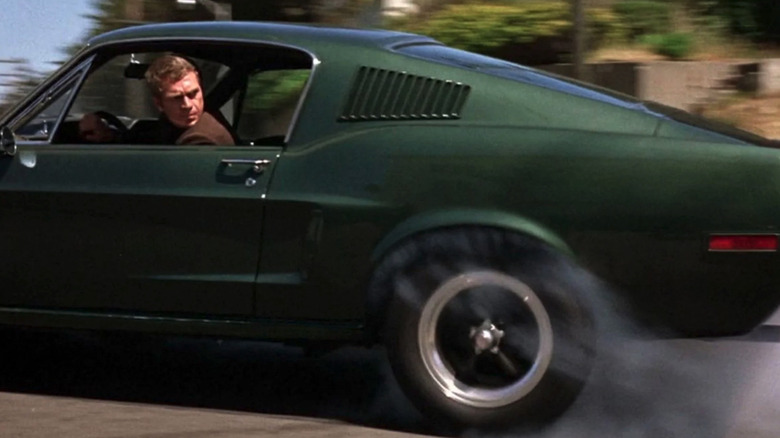
An early example of a daring police detective who doesn't always play by his superiors' rules is the 1968 crime movie classic "Bullitt." Steve McQueen plays San Francisco police detective Frank Bullitt, who is assigned to protect a presumed mob informant by ambitious Senator Walter Chalmers (Robert Vaughn). When the informant is murdered, Bullitt senses something off about the whole matter and investigates further, despite Chalmers' fierce opposition. This leads him to discover that Chalmers is being played while Bullitt is targeted by hitmen working for the mob.
"Bullitt" is one of those cop movies where the full intricacy of the plot feels completely second-hand compared to the action and stylish staging. Though the complexities of what Bullitt has gotten himself into offer some neo-noir twists, the real attraction here is McQueen's performance. This includes the movie's centerpiece car chase through the streets of San Francisco, with McQueen behind the wheel of his iconic green Ford Mustang. One of the best Steve McQueen movies of all time, "Bullitt" captures the self-assured cool that made McQueen a star.
The Asphalt Jungle
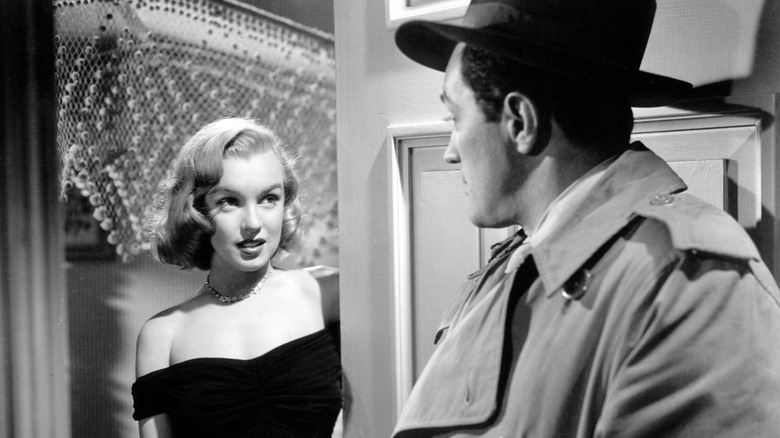
One of the definitive noir movies of the '50s is "The Asphalt Jungle," based on the novel by W.R. Burnett. The movie has criminal mastermind Doc Riedenschneider (Sam Jaffe) assemble a crew to pull off a massive jewelry heist. Though the group makes off with the gems, the theft experiences its own complications, including betrayal within the crew's ranks. Police Commissioner Hardy (John McIntire) leads the manhunt for the crooks, despite corruption within his own department.
Primarily told from the perspective of the thieves, "The Asphalt Jungle" develops the police side of the story in the latter half of the movie. Compared to other contemporary crime movies, law enforcement isn't made up of nameless opposition but a commissioner facing his own challenges. The crime genre had been dominated by private investigators and mobsters for many preceding projects, while "The Asphalt Jungle" marked the transition to law enforcement figures. One of the best heist movies ever, complete with a role for Marilyn Monroe, "The Asphalt Jungle" exemplifies the crime genre at its best as it moved into the '50s.
L.A. Confidential
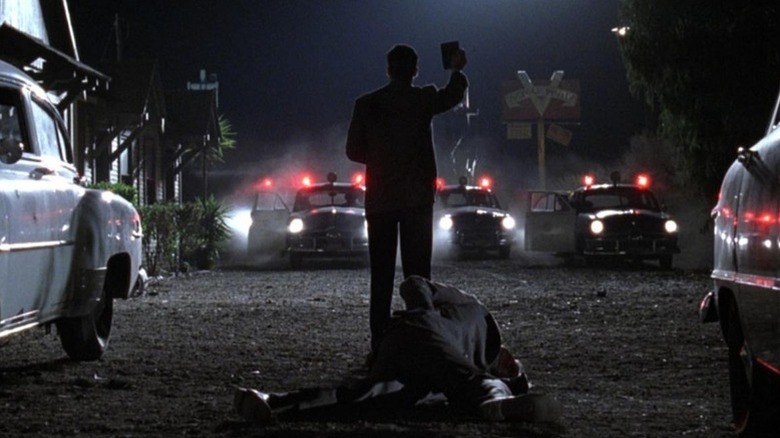
James Ellroy's 1990 neo-noir novel "L.A. Confidential" received a lush cinematic adaptation of the same name in 1997. Set in 1953 Los Angeles, the movie has several police detectives try to clean up the LAPD and its public image after years of corruption. Amidst these efforts, the police try to stop criminals from filling the void left by recently convicted mobster Mickey Cohen (Paul Guilfoyle). This culminates in the detectives discovering a murderous conspiracy leading all the way to the top of the LAPD.
With its evocative depiction of a bygone era for Los Angeles, "L.A. Confidential" is a superbly crafted neo-noir flick. The movie is led by an all-star cast, with Russell Crowe and Guy Pearce both in particularly fine form. This ensemble provides a densely plotted narrative that converges magnificently as its central mystery reaches its crescendo. One of the best '90s movies of all time, "L.A. Confidential" deftly epitomizes the neo-noir genre's key appeal.
The French Connection
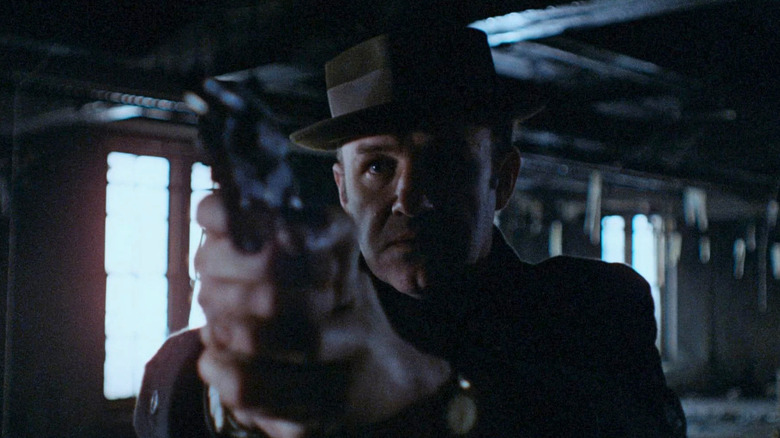
One of the late, great Gene Hackman's most iconic roles is arguably as New York City police detective Popeye Doyle, debuting in "The French Connection." The movie has Doyle investigating a heroin-smuggling syndicate trafficking drugs into the city from Marseille. When Doyle identifies Alain Charnier (Fernando Rey) as the drug lord behind the ring, he is targeted by Charnier's enforcer Pierre Nicoli (Marcel Bozzuffi). Undeterred, Charnier plans to complete his smuggling operation, even as Doyle and his associates close in.
After years of appearing in memorable supporting roles, Gene Hackman cemented his status as a lead actor as Popeye Doyle. A gruff figure whose impulsive actions yield real consequences, Doyle is a more morally complex character than the genre had seen before. "The French Connection" is also another cop movie with a standout car chase sequence, albeit one filmed in an extremely reckless way compared to its counterparts. The movie that marked when the cop thriller genre grew up and got real, "The French Connection" is a taut and cynical film that continues to influence the genre.
Heat (1995)
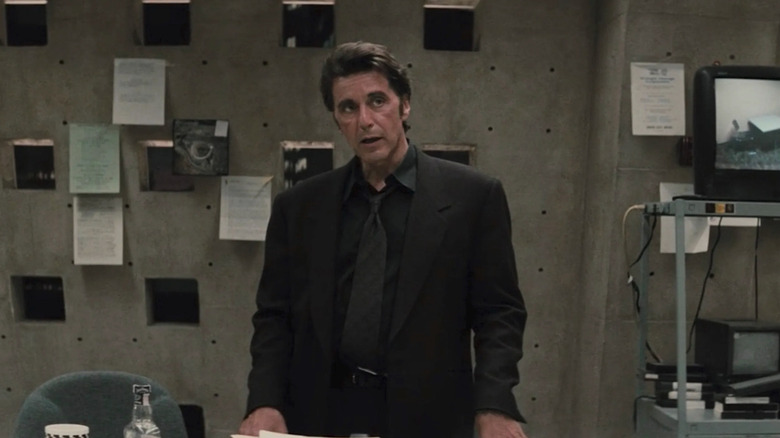
Michael Mann's crime classic, 1995's "Heat" centers on a cat-and-mouse game throughout Los Angeles between professional thief Neil McCauley (Robert De Niro) and police detective Vincent Hanna (Al Pacino). Hanna begins hunting McCauley and his crew after they steal bearer bonds from an armored car, having killed the guards in the process. As McCauley plans to kill the robber that unnecessarily murdered the guards, he and his crew plan one last bank heist before retiring. This is juxtaposed with Hanna trying to salvage his deteriorating personal life while anticipating one last score from McCauley.
Michael Mann made "Heat" with two ambitious goals in mind, which was to really emphasize the human drama between all the cops-and-robbers spectacle. In that sense, he succeeds, contrasted in the differences between McCauley and Hanna's personal relationships. But for all its focus on dramatics, Mann really does pull out all the stops for the movie's action, most notably in its bank heist sequence. One of the best crime movies ever made, "Heat" features Pacino and De Niro as opposing forces of nature.
Dirty Harry
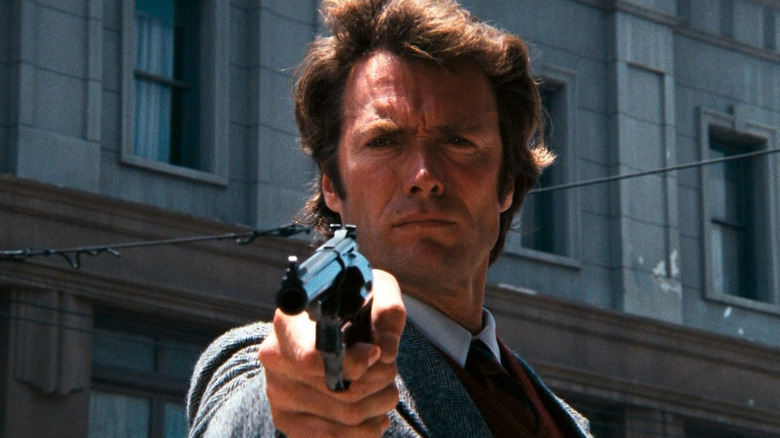
Another loose cannon police detective is Clint Eastwood's iconic cop character Harry Callahan, introduced in 1971's "Dirty Harry." The movie opens with San Francisco terrorized by a killer gunman (Andrew Robinson), known simply as Scorpio. Callahan leads the investigation to identify Scorpio and bring him in before he claims any more victims, but bureaucratic policy leaves Scorpio on the loose. This leads Callahan to confront Scorpio when he takes a busload of school children hostage, with the detective ready to stop the killer for good.
Even upon its initial theatrical release, "Dirty Harry" garnered controversy for its perceived glamorization of police actively and regularly employing excessive force. While the movie's 1973 sequel "Magnum Force" tried to ameliorate and address that perception directly, the distinction is a key part of Callahan's character. Callahan isn't meant to be a morally unambiguous good guy, even in Eastwood's more playful moments as the character. "Dirty Harry" brought moral shades of gray into the cop movies, a trend that was heightened in the '70s and remains in place today.
Lethal Weapon
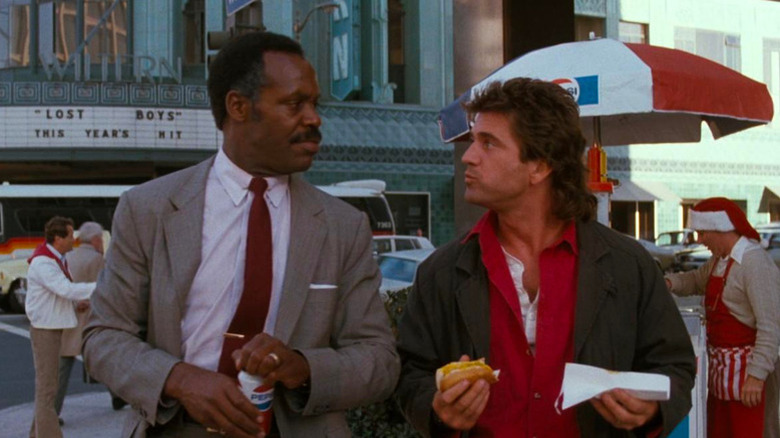
The quintessential buddy-cop franchise, "Lethal Weapon" revolves around the partnership between Los Angeles police detectives Roger Murtaugh (Danny Glover) and Martin Riggs (Mel Gibson). The 1987 original movie pairs the two together, with Riggs absolutely volatile and reckless in the wake of his wife's death. The blossoming friendship between Murtaugh and Riggs helps restore stability in the grieving detective's life as the duo investigates a deadly drug ring. The two discover that a paramilitary group headed by a retired general (Mitchell Ryan) has begun smuggling drugs, making both detectives targets.
Buddy-cop movies had existed before and after "Lethal Weapon," but no other film defines the genre anywhere near as well. What elevates the 1987 original film above all other cop movies is the fantastically staged action, the sharp script written by Shane Black, Richard Donner's steady direction, and Glover and Gibson. The strong friendship formed between Glover and Gibson's characters is the emotional bedrock of the entire franchise and seeing it coalesce here is endlessly entertaining. Followed by a set of sequels, the first "Lethal Weapon" still ranks as the best in the series and is the bar against which all other cop movies are judged.