

15 Best Sci-Fi Movie Endings Of All Time, Ranked
If a movie can't stick the landing, the whole thing falls apart, erasing any goodwill it may have earned from the audience. This especially rings true for the science fiction genre, with a bad movie ending derailing an entire premise if handled particularly. Fortunately, some of the best movie endings of all time happen to be from sci-fi flicks, each memorable in their own way.
We're looking at the greatest sci-fi cinematic endings, whether it's tautly staged conclusions or iconic moments that have cemented their place in Hollywood history. A good movie ending could be a thought-provoking twist or turn of events that'll put the whole story in a new perspective. In other cases, it's a somber moment or effusive celebration that feels appropriately triumphant. Whatever the narrative and tonal beat, we're looking at the sci-fi endings that loom large in cinematic history.
Continuing to leave an impression on audiences all these years later, these are the 15 best sci-fi movie endings of all time, ranked.
15. The Matrix
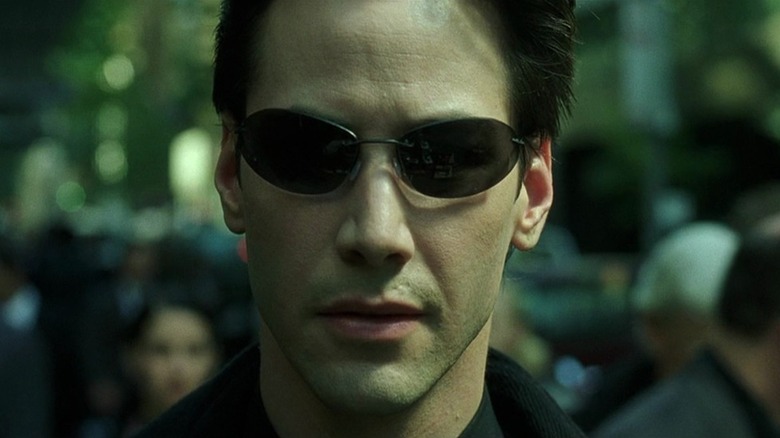
"The Matrix" is a must-watch movie that defines the genre, heralding the Information Age with groundbreaking visual effects and plenty of stylized combat. At its core, the film is an origin story for a 21st century superhero as Neo (Keanu Reeves) seizes his reality-bending destiny. This arc is cemented by the movie's climax as Neo rises from the dead and awakens his full potential, easily defeating the malevolent computer program Agent Smith (Hugo Weaving). In the movie's epilogue, Neo warns the machines that humanity is facing a new beginning before taking flight.
"The Matrix" both weaves a tale about humanity's limitless possibilities and reclaiming one's agency and future in the face of total control. With Neo triumphantly defeating Smith, even after being apparently shot to death, the movie keeps things unpredictable through to its ending. While the sequels muddle this messaging with their own existential questions and the cyclical nature of humanity's relationship with the machines, the 1999 movie's ending still holds up. "The Matrix" redefined what was possible for modern movie-making and its idea of delving into new frontiers is illustrated beautifully in its closing scenes.
14. Total Recall (1990)
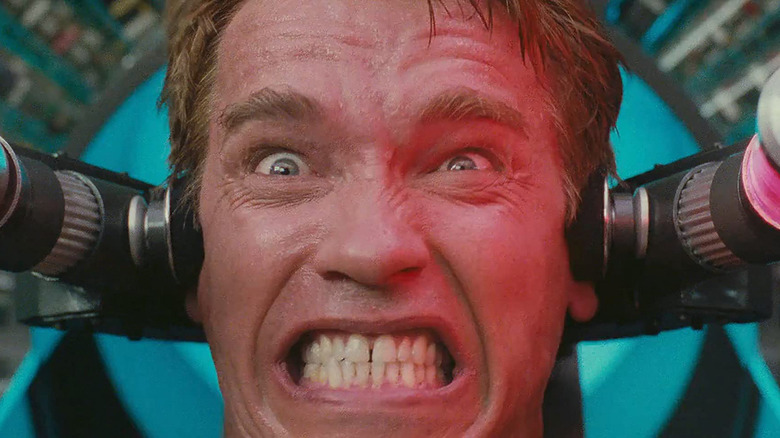
The most mind-bending movie ever made starring Arnold Schwarzenegger is the original 1990 version of "Total Recall." Schwarzenegger plays unfulfilled construction worker Doug Quaid, who tries to implant a fabricated memory that he's actually a secret agent on an adventure on Mars. This triggers a whole apparent conspiracy that Quaid actually is a covert operative with a memory cap creating his current domestic situation, with Quaid fleeing to Mars. The movie ends with Quaid battling a small army led by the Martian administrator Vilos Cohaagen (Ronny Cox) before triggering an ancient relic creating breathable air on the planet.
The finale to "Total Recall" contains all the requisite guns-blazing action that fans have come to expect from the best Arnold Schwarzenegger films, one-liners and all. After a brief segue with the grotesque puppets depicting Cohaagen and Quaid exposed to the harsh Martian environment, the movie reminds audiences that this may all be in Quaid's head. This gives way to a flash white symbolizing that claims about Quaid's memory implant procedure going disastrously may have been true. That continued ambiguity feels rare for a studio action movie, and "Total Recall," thankfully, never answers that question, earning it a place here.
13. Close Encounters of the Third Kind
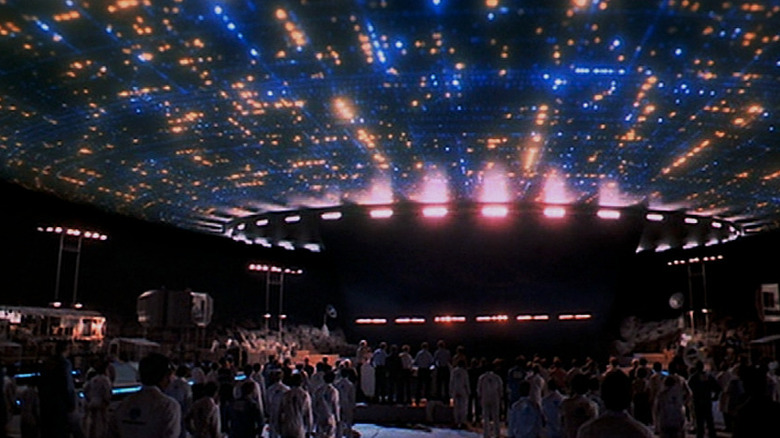
The first sci-fi movie directed by Steven Spielberg is also still among the celebrated filmmaker's best. "Close Encounters of the Third Kind" is a movie all about singular obsession as extraterrestrials make appearances worldwide. Among those affected is Roy Neary (Richard Dreyfus), a Midwestern everyman who abandons his family after witnessing a UFO flyby his truck and becoming fixated on a mound-like object. This is revealed to be linked to Devils Tower in Wyoming, with humanity communicating with the otherworldly visitors through music before Roy is invited to join them.
There are actually multiple director's cuts of "Close Encounters of the Third Kind," with one of the more notable differences being how they handle the ending. Both the original version and its 1998 reedit end on a more ambiguous note, ending before Roy can be seen in the alien mothership, in contrast to its 1980 reissue. These are the versions that we're citing here, leaving that closing air of mystery as Roy dives headfirst into the unknown. "Close Encounters of the Third Kind" works best whenever it doesn't spell out things explicitly, and its harmonious conclusion brings a sense of undeniable awe to extraterrestrial stories.
12. 2001: A Space Odyssey
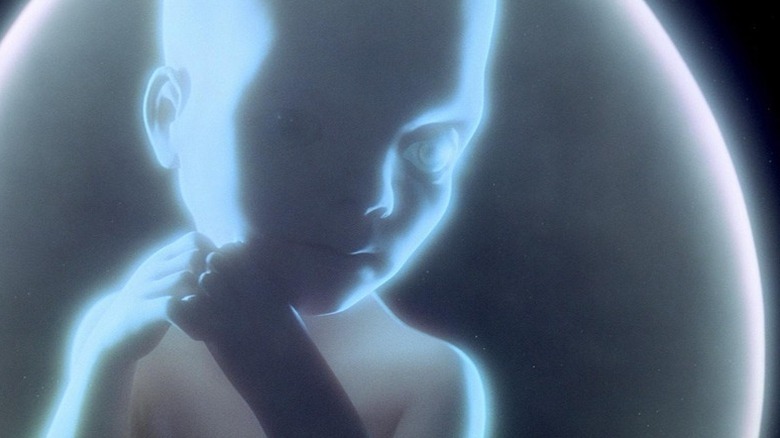
1968's "2001: A Space Odyssey" starts out as a relatively cold and clinical sci-fi story until it veers into the surreal. The movie follows an ill-fated voyage to Jupiter derailed by the malevolent spaceship program HAL 9000 (Douglas Rain). After deactivating HAL as the ship's sole survivor, astronaut Dave Bowman (Keir Dullea), investigates a strange monolith transporting him through a cosmic passageway. After witnessing different iterations of himself through time, Bowman is seemingly transformed into a cosmic fetus returning to Earth.
There are a lot of confusing moments in Stanley Kubrick's "2001: A Space Odyssey," especially during its psychedelic ending. The monolith is tied to humanity's evolution from savage apes in prehistory to a spacefaring species with the movie accelerating this trajectory. Stanley Kubrick himself explained the "2001: A Space Odyssey" ending years after the movie's release, but we personally like it to be a bit more ambiguous. This surrealist take on humanity's fate among the stars ends the movie on an open-ended note, elevated by its esoteric imagery.
11. The Mist
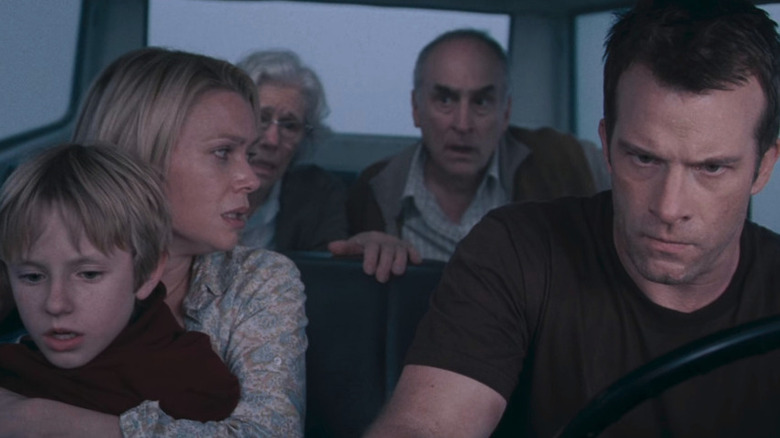
The last Stephen King adaptation directed by filmmaker Frank Darabont was a 2007 take on King's sci-fi horror story "The Mist." After a military experiment accidentally unleashes extradimensional monsters through a thick mist enveloping a small town in Maine, inhabitants take shelter in a local supermarket. After contending with religious fanatic Mrs. Carmody (Marcia Gay Harden) driving the group into a murderous fervor, David Drayton (Thomas Jane) escapes with other survivors, including his young son. This leads to a legendarily dark ending, as David executes the ensemble to spare them from the otherworldly creatures, only to realize he acted too prematurely.
Reportedly, Stephen King was a little envious of "The Mist" movie ending and how mercilessly grim it was compared to his own original story. What Darabont does with the material does feel like something that could organically happen in a King tale, steeped in ironic cruelty. Jane perfectly depicts the utter despair appropriate for the scene, with his guttural scream at the realization of what's occurred seared into viewers long after the end credits roll. Easily the bleakest ending on this list, "The Mist" definitely sticks with audiences through its cruel coda to King's story.
10. Invasion of the Body Snatchers (1978)
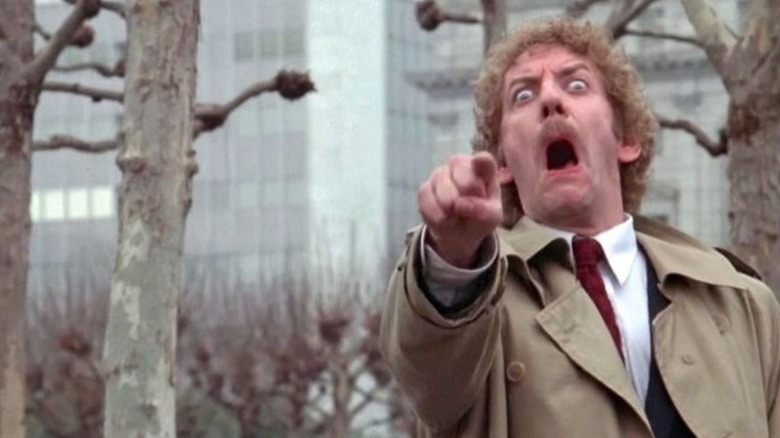
Following Don Siegel's classic 1956 B-movie, Philip Kaufman brought a bleaker edge to "Invasion of the Body Snatchers" in 1978. The movie retains the core concept of extraterrestrial invaders creating duplicates of humans as part of a sweeping plot to dominate Earth, though with much more disturbing implications and methodology. The haunting final scene has Nancy Bellicec (Veronica Cartwright) approach her friend Matthew Bennell (Donald Sutherland), whom she believes is blending in with the duplicates around San Francisco. To her horror, Matthew reacts by emitting a high-pitched shriek, confirming that he has been replaced by a duplicate himself.
The 1978 "Invasion of the Body Snatchers" is a sci-fi remake that's better than the original, really heightening the hopelessness of what its characters are enduring. The movie's meme-friendly shot of Sutherland screeching isn't funny in its original context, instead underscoring the story's nihilistic themes. All iterations of this story are about common people facing an otherworldly threat beyond their means, but the 1978 movie's ending makes it clear that resistance is truly futile. Easily one of the best alien invasion movies ever, "Invasion of the Body Snatchers" takes no prisoners with its grim finale.
9. Arrival
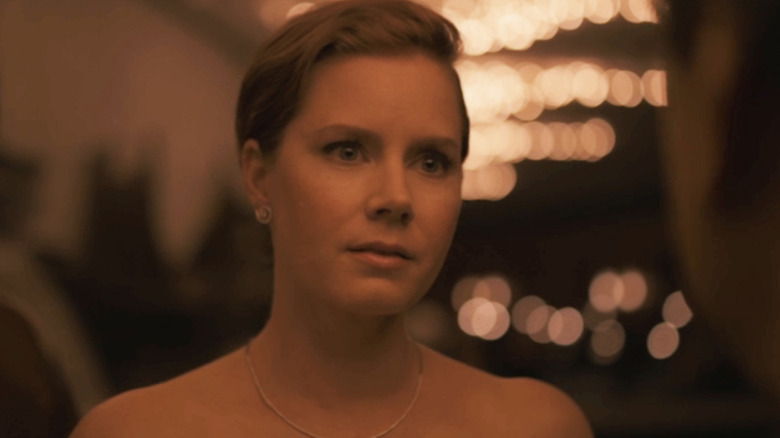
The 2016 movie "Arrival" is all about our relationship with time and how that impacts our perception and, ultimately, our destiny. The movie begins with a montage of linguist Louise Banks (Amy Adams) losing her young daughter to a terminal disease. While we as the audience think that this is part of Banks' backstory, the movie's ending reveals that what we were seeing has not yet occurred. Through her interactions with visiting extraterrestrials, which write using circular text called logograms and observe time nonlinearly, she comes to see the universe from their unique perspective.
The end of "Arrival" essentially connects with the movie's beginning, forming a narrative loop like the logograms the extraterrestrials use to communicate. While the "Arrival" ending changes the source material, it does so in a way that feels organic and logical while keeping the spirit of Ted Chiang's novella. It also showcases filmmaker Denis Villeneuve's penchant for smartly constructed cinematic sci-fi storytelling, something that he carries over to his work in "Blade Runner 2049" and "Dune." But in building a narrative with an ending that evokes the circular themes within "Arrival," Villeneuve's ending for the 2016 movie stands out.
8. Alien
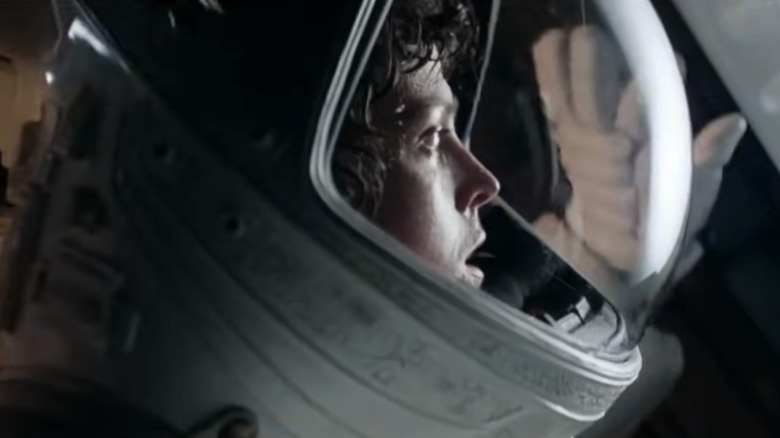
The original "Alien" movie is paced out like a slasher movie in outer space, complete with its own final girl in Ellen Ripley (Sigourney Weaver). This includes a fake-out ending, with Ripley thinking she successfully trapped the monstrous xenomorph on her ship, the Nostromo, before escaping as it self-destructs. Of course, things aren't that simple and the xenomorph has snuck aboard her shuttle, forcing Ripley to lure it into an escape hatch and blast it out into space. The movie then closes with an exhausted Ripley recording one final log as the last survivor of the Nostromo before entering stasis with her cat.
"Alien" truly earns its place among the pantheon of the best sci-fi horror movies, with its perfect pacing and iconic monster. The sight of the xenomorph resurfacing on Ripley's shuttle is a great final jump scare and the way that she triumphs over the beast is gruelingly satisfying. We're right there with Ripley as she records that last log, having just endured that thrill ride alongside her. A satisfying capper to the movie that launched a franchise, "Alien" brings its spacefaring horror show to an expert close.
7. The Thing (1982)
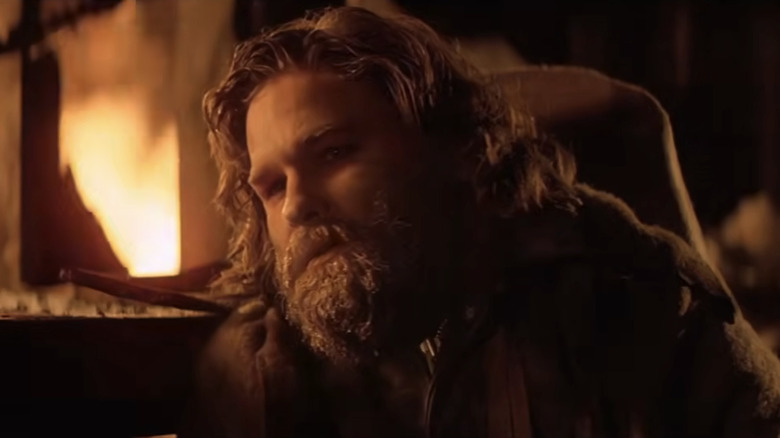
Far and away one of the best "John Carpenter" movies, "The Thing" is fueled by body horror and a mounting sense of paranoia. The 1982 movie has a team at a research station in Antarctica investigate a disturbance at a neighboring Norwegian station. After being preyed upon by a shape-shifting extraterrestrial that can absorb and mimic organic life, the climax involves the survivors blowing up their base to prevent the monster from spreading. RJ McCready (Kurt Russell) and Childs (Keith David), unsure if the other is the creature, spend the last moments together as the camp burns, dooming them to a freeze.
"The Thing" ending is another conclusion that remains deliberately open-ended, with fans debating if either character is actually the titular monster. The bleakness of the scene is an understated one, creating a nice contrast to all of the grotesque creature effects that just came before it. This helps convey a sense of world-weariness and resignation that Russell and David play magnificently, accepting their frigid fate. Another one of the greatest sci-fi horror movies ever made, "The Thing" tightens its focus in its final frames without compromising its omnipresent paranoia.
6. Star Wars
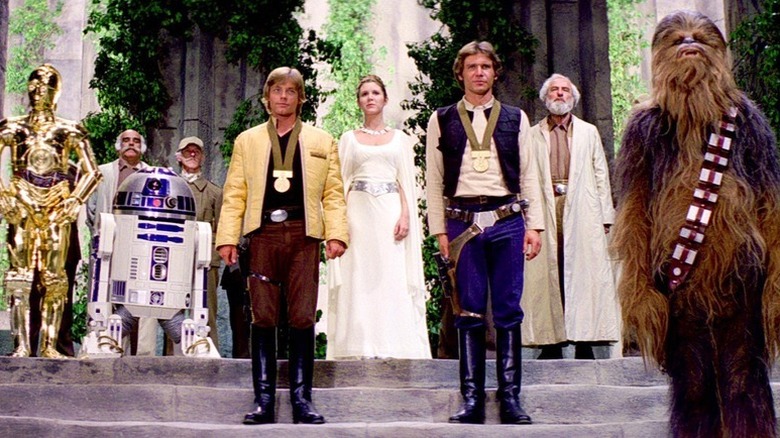
Across its entire film series, "Star Wars" has kept a predominantly solid track record when it comes to its endings, even in its weaker entries. This trend dates back to the original 1977 movie, with Luke Skywalker (Mark Hamill) leading a desperate attack against the Death Star. Learning to trust his instincts through the Force, Luke is saved by Han Solo (Harrison Ford) just in time to destroy the seemingly unstoppable battle station. This is followed by a jubilant award ceremony as Luke and his friends are recognized as the heroes of the Rebel Alliance.
Even though "The Empire Strikes Back" offers a massive plot twist in its climactic showdown, the movie's ending itself feels abrupt and incomplete. By comparison, "Star Wars" concludes on a self-contained note while offering enough of a small cliffhanger regarding the fate of Darth Vader to keep audiences on the hook. The attack on the Death Star itself is also among the most rousing climaxes in the franchise, even knowing how the scene is going to play out. The movie that spawned one of the biggest pop culture franchises ever, "Star Wars" hits its curtain call on a perfect note.
5. Blade Runner
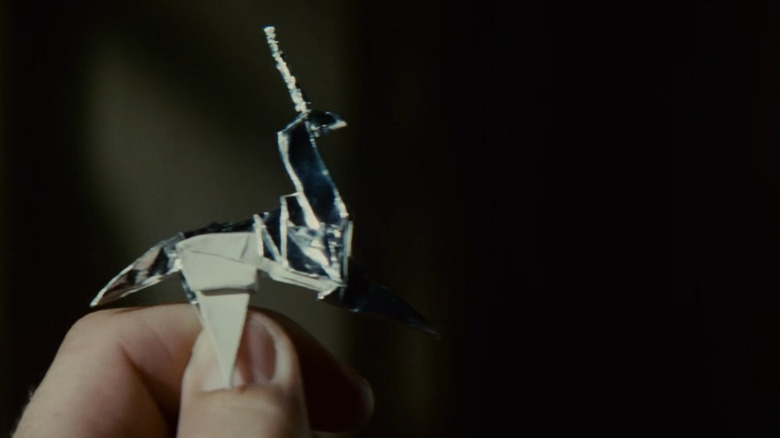
With this entry, we are more specifically talking about the endings included in the director's and final cuts, not the theatrical version. There are multiple endings to "Blade Runner" and those two alternate cuts are really what bring together Ridley Scott's vision for the story. After a rain-soaked showdown with rogue replicant Roy Batty (Rutger Hauer), blade runner Rick Deckard (Harrison Ford) reunites with his replicant lover Rachael (Sean Young). As the couple presumably leave Los Angeles, Deckard finds an origami unicorn like the vision in his dreams, strongly hinting that he may be a replicant himself.
Between its cyberpunk neo-noir trappings, "Blade Runner" is full of existential questions about the nature of humanity and self-actualization. That extends to its protagonist steadily wondering about the true nature of his own existence, with the big unanswered question kept from Harrison Ford, leaving his performance ambiguous. The ending in the director's and final cuts brings those questions and Deckard's place in them sharply into focus but our world-weary hero is more interested in escape. Deckard can worry if he's a replicant another day, instead focusing on living to fight another day with his paramour, as close to a happy ending as he'll get.
4. Terminator 2: Judgment Day
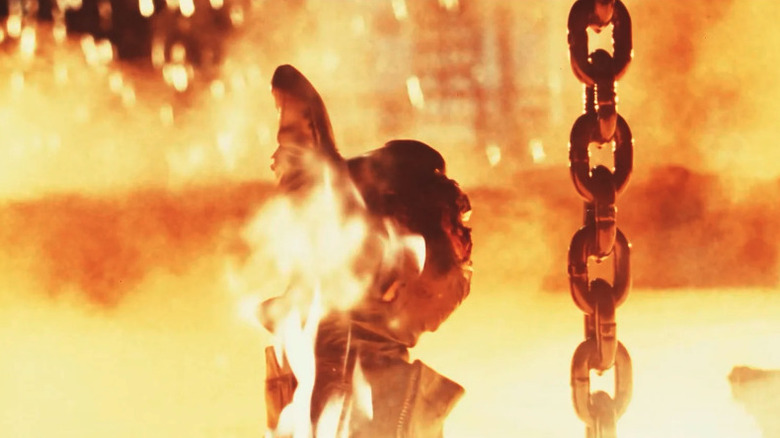
The original 1984 movie "The Terminator" ended with Sarah Connor (Linda Hamilton) preparing to face her destiny, recording a message for her unborn son. By the start of "Terminator 2: Judgement Day," Sarah had grown into a paranoid figure looking to avert the machines' devastating attack on humanity. Over the course of the movie, observing the relationship between a T-800 (Arnold Schwarzenegger) and her son John (Edward Furlong), Sarah is struck by how much a machine had evolved. Musing that the future is now uncertain, Sarah finds her hope reignited that machines can learn to appreciate life, something humanity can rediscover themselves.
Sarah's closing interior monologue mirrors the first movie, offering its own hopeful message with the titular judgement day seemingly averted. This isn't even counting the movie's fiery finale in a steel mill, also paralleling the industrial factory conclusion of its predecessor. Like much of the sequel, this sequence is brightly lit in contrast to the first movie, ending with a machine finally understanding human emotion before sacrificing itself. This sequence of events makes "Terminator 2" all about the rediscovery of hope and both tonally and visually lighter than the dark, nihilistic thrills from the first flick.
3. Back to the Future
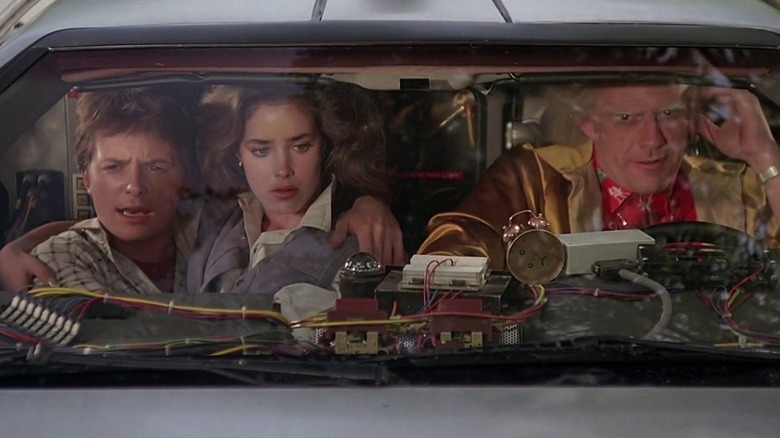
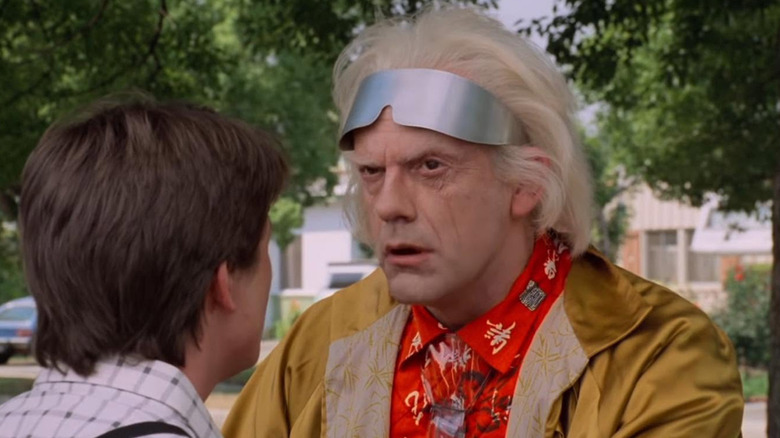
Is there a more triumphant sci-fi movie ending than the one wrapping up the first "Back to the Future?" The movie wraps with a set of memorable sequences starting with Marty McFly (Michael J. Fox) using his modified DeLorean supercharged with perfectly timed lightning to travel back to 1985. This is followed by Marty realizing that he's changed history, improving his family's status, based on his actions in 1955. The movie ends with Marty back in action, joining Doc Brown (Christopher Lloyd) as they travel into the future to save Marty's kids.
Through its ending and incredible box office success, "Back to the Future" cemented an everlasting cinematic legacy. The whole thing really coalesces with the last act, starting with Marty and his parents arriving at the school dance and just building from there. This is all buoyed by one of the most rousing scores ever composed by Alan Silvestri and Huey Lewis and the News' memorable music. One of the most rewatchable movies of all time, "Back to the Future" still has our full attention whenever its finale begins.
2. Star Trek II: The Wrath of Khan
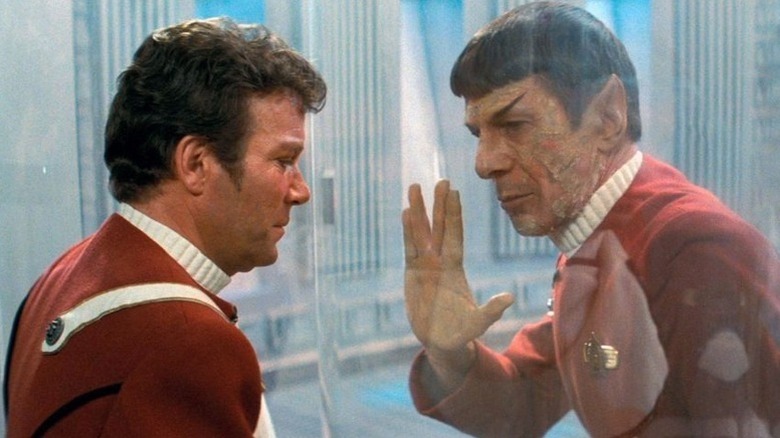
"Star Trek II: The Wrath of Khan" is one of the best sequels ever made, and that all comes together in the movie's last 20 minutes. Luring the genetically enhanced villain Khan Noonien Singh (Ricardo Montalbán) into a nebula that wrecks his sensors, the Enterprise finds its warp drive failing as Khan activates his doomsday weapon. Spock (Leonard Nimoy) saves the ship at the expense of his life, living long enough to bid farewell to his best friend Jim Kirk (William Shatner). After the funeral, Kirk comes to terms with his midlife crisis, while Spock's resurrection is heavily hinted at in its closing shot.
Even knowing what's coming, "Star Trek II" and its most emotional scene leaves everyone weeping on repeat viewings. That's a testament to the longstanding friendship between Kirk and Spock and the lengths they'll each go to save the other. While heartbreaking, there is a silver lining to the movie's subsequent scenes, even beyond the clear sequel setup. There are several "Star Trek" movies that stick the landing but none at the same level as "The Wrath of Khan."
1. Planet of the Apes (1968)
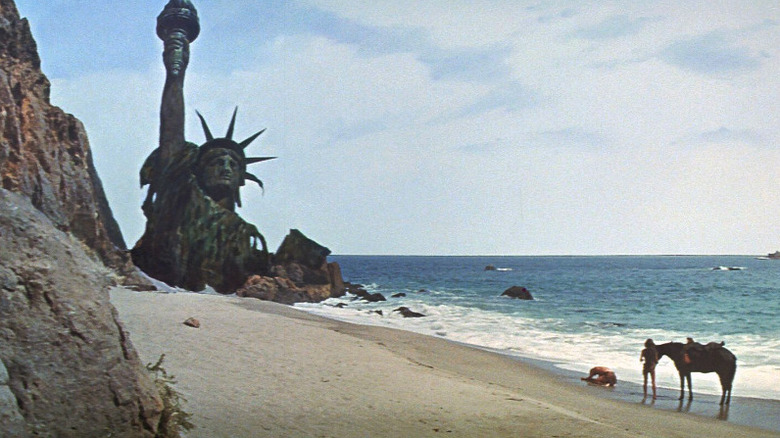
Count on Rod Serling, creator of "The Twilight Zone," to completely knock things out of the park when writing "Planet of the Apes." For most of the original 1968 movie, time-displaced astronaut George Taylor (Charlton Heston) thinks he's on a separate planet in the future run by intelligent apes. In the movie's iconic twist ending, Taylor discovers the wreckage of the Statue of Liberty, realizing that he's on Earth after it's been devastated by nuclear war. Rocked by this revelation, Taylor can only scream in frustrated shock at humanity's self-destruction as he falls to his knees.
Even after a line of "Planet of the Apes" sequels and reboots, that original movie's ending still packs a punch. It really is a testament to how effective the big twist is that it can survive all that, not to mention a direct spoof in "Spaceballs." Heston sells the big reveal magnificently, with the normally gruff figure finally breaking down at the unwelcome familiar sight. "Planet of the Apes" follow-ups have been trying to chase that big finale ever since but none can ever match it.