

10 Must-Watch Sci-Fi Movies That Define The Genre
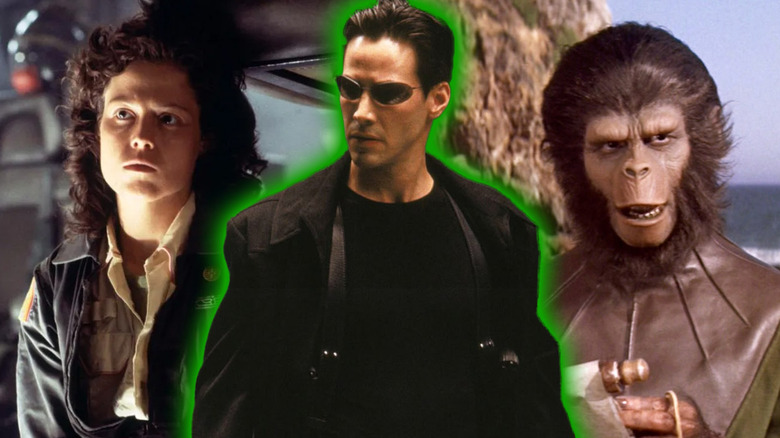
There are a lot of great sci-fi movies. We have at least 104 on deck to recommend to you, and even then, the genre stretches further. It can encompass everything from adult-minded philosophical drama that uses scientific advancement as a means of studying our own humanity to animated family flicks about robots cleaning up the trash world that humanity leaves in its wake hundreds of years into the future, while paying tribute to the physicality and artistry of silent film. That second one is "WALL-E," by the way.
And still, there are sci-fi movies that transcend the idea of needing to be a sci-fi fan to enjoy them — films that are foundational to the genre and to the medium of cinema itself. These are the ones that have influenced all other films in their wake; the films that other science-fiction filmmakers look toward in an often vain attempt to live up to them. With novel concepts, advances in the art of filmmaking, and lasting marks on the cultural consciousness, these movies are the ones you can't miss because of how truly essential they are.
Here are 10 must-watch sci-fi movies that define the genre.
Metropolis
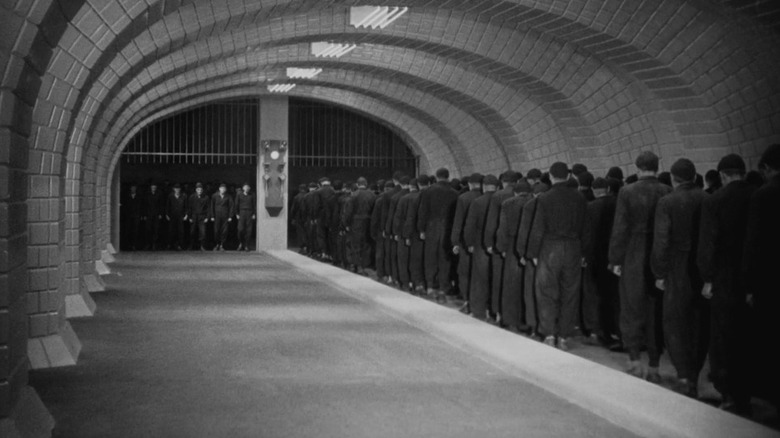
Fritz Lang's "Metropolis" is the rare film whose behind-the-scenes numbers are almost as legendary as anything on screen: reportedly the most expensive silent film ever made at the time, a production so bloated it nearly bankrupted Germany's UFA studio, employing tens of thousands of extras across a shoot that ran well over a year. It flopped on release, got savaged by critics (H.G. Wells, of all people, wrote a scathing takedown calling it fundamentally silly), and was hacked down for international distribution until barely half the original cut survived for decades — until a battered print turned up in a Buenos Aires archive in 2008, restoring most of what had been lost.
None of that could diminish how good the film actually looks. The vertical city of soaring skyscrapers and underground worker-hives, the robot double of Maria, the Expressionist lighting drenched in shadow — all of it got absorbed wholesale by decades of sci-fi that followed, from the "Blade Runner" skyline to C-3PO's droid design in "Star Wars," which George Lucas has acknowledged came directly from Lang's robot.
The Marxist-tinged plot, about workers literally powering the city from beneath while the ruling class lounges above, resolves with an idealistic message that could read as naive. But as a piece of pure imagination, decades ahead of the technology available to realize it, it's still the blueprint most futuristic city designs are quietly working from, whether they know it or not.
2001: A Space Odyssey
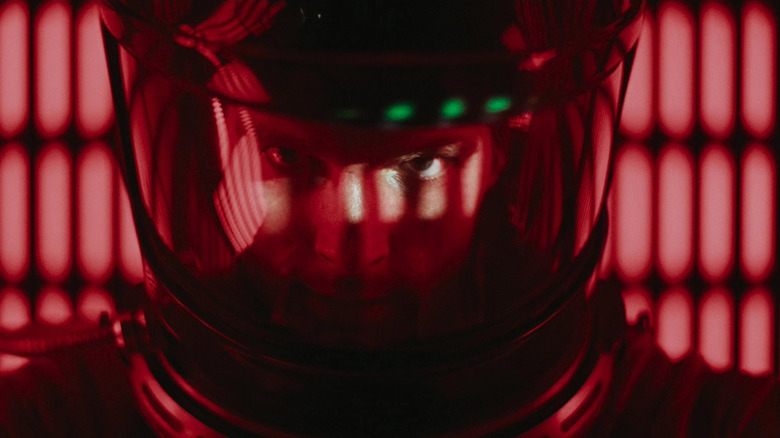
Stanley Kubrick and Arthur C. Clarke set out to make what Kubrick reportedly called "the proverbial good science fiction movie," and in the process produced something so insulated and unhurried that MGM executives weren't sure how to sell it to audiences. And, true, "2001: A Space Odyssey" drew brutal reactions at its premiere. The film saw walkouts, and initial reviews were polarized between astonishment at the technical achievement and perplexity at the metaphysical journey Kubrick had devised.
But MGM found an in: They pivoted the marketing to speak to the free-spirited, pot-smoking, counterculture-driven youth of the late '60s. They started billing the film as "the ultimate trip," and college-age audiences turned it into an event for their own generation. It's a fitting origin story for a movie whose real power was always sensory rather than expository: the balletic docking sequences set to Strauss, the abrupt jump cut from bone to satellite that remains the greatest match cut ever committed to film, HAL 9000's flat, reasonable voice turning menacing without actually rising in pitch.
What remains remarkable about "2001" isn't just how well the intricate model work that makes up the VFX has aged, but how steadfastly Kubrick commits to not explaining himself to the audience. The Star Gate sequence and ambiguous final rebirth don't offer tidy answers, instead offering closure through awe-inspiring spectacle that speaks on a more abstract level. To this day, every serious, philosophically minded science fiction film is chasing "2001."
Planet of the Apes
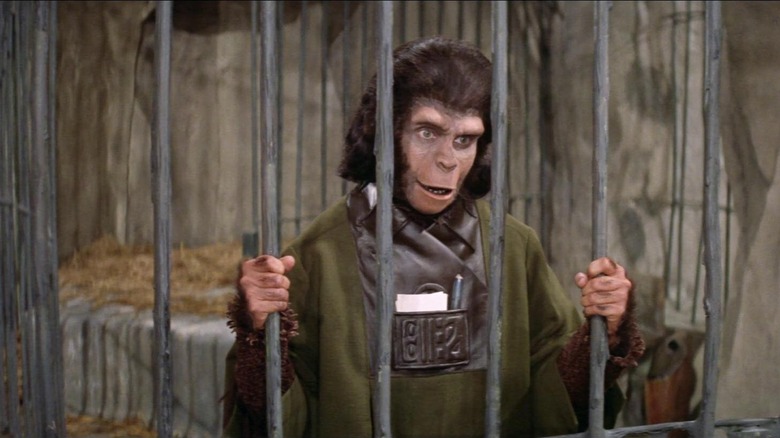
"Planet of the Apes" is now a franchise that has endured for nearly 60 years, making it the longest-running science fiction film series, with critically acclaimed entries still being released to this day, thanks to the reboot series starring the science experiment-turned-super-ape revolutionary Caesar (Andy Serkis). We've ranked every film in the franchise from worst to best, but it's probably not hard to guess what sits at number one.
That's because the original "Planet of the Apes" plays with just as much thrill as it did in 1968. Franklin J. Schaffner's Planet of the Apes takes a premise that could've played as pure, silly pulp — Charlton Heston crash-lands on a world run by talking apes who've enslaved mute humans — and threads it, mostly successfully, into Cold War-era anxiety about nuclear annihilation and species hubris. It's an adult-minded philosophical drama wrapped up in speculative sci-fi with a premise of pop novelty.
So much of "Planet of the Apes" has held up remarkably well, from John Chambers' ape makeup, which was groundbreaking enough that the Academy handed him an honorary Oscar before there was even a category for it, to the film's final image, which remains one of the great gut-punch twists in the genre, as screenwriters Michael Wilson and Rod Serling let the shock play with true conviction. "Planet of the Apes" set a bar that the genre spent decades trying to clear again.
Close Encounters of the Third Kind
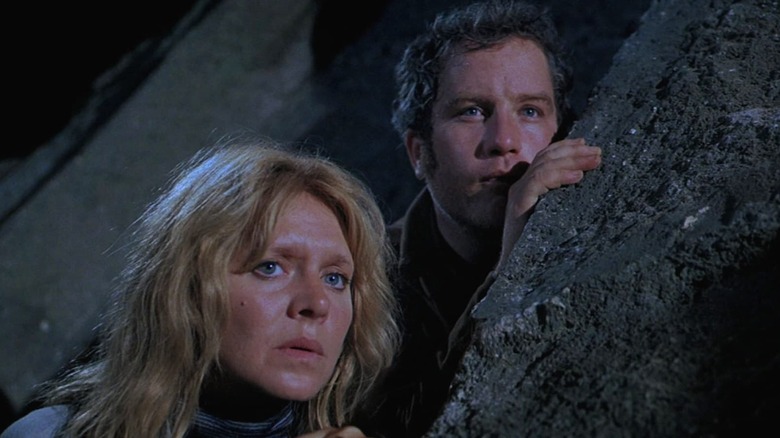
Steven Spielberg's first outing with aliens stands in contrast to his breakout hit: "Close Encounters of the Third Kind" was his victory lap after "Jaws," but instead of the toothy, unknowable menace lurking in the depths of the sea, he visualizes visitors from the unknown expanse of outer space as curious and benevolent, communicating in musical tones in a climactic sequence centered on communication and awe.
Richard Dreyfuss plays Roy Neary, an electrical lineman whose encounter with a UFO unravels into an obsession that alienates his family and job alike. He becomes wholly consumed by visions of the mountain Devil's Tower in Wyoming, drawing him away from his life to make contact with beings that have taken over his every waking thought. At its heart, though ostensibly a film about aliens, this is a film about the fracturing of a family — indeed, a famous interview shows Spielberg surprised to learn that he unknowingly but perhaps instinctively injected the likes of his own parents into this film, and it's a movie that plays differently once you become a parent yourself.
It's a film that changes as you age as well, with its slightly more downbeat yet simultaneously funny and tragic rendition of a sci-fi narrative, not quite the movie in your head when you hear "Steven Spielberg alien movie." But it's one of his many masterpieces: a poignant domestic drama that meets blockbuster spectacle, transmuting the inner turmoil of its themes into visual and sensorial poetry of wonderment.
Star Wars: Episode IV - A New Hope
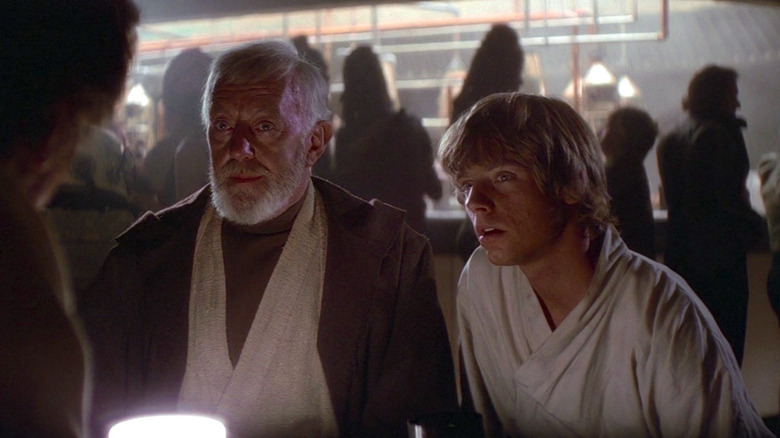
Roughly half-century after the initial film's premiere, as the franchise has become oversaturated and in desperate need of someone to save its trajectory, it's easy to forget what it was like to have no knowledge of the franchise and just head to the theater to see a movie called "Star Wars." George Lucas spent 1976 convinced he'd made an expensive flop. Fox executives reportedly agreed, greenlighting it mostly on the strength of Lucas' "American Graffiti" but bracing for the worst. History — and an entire media franchise of films, books, video games, merchandise, and a permanent spot in the pantheon of American popular culture — speaks for itself.
Lucas built the movie from spare parts of things he loved: Kurosawa's "The Hidden Fortress," "Flash Gordon" serials, and WWII dogfight footage he studied frame by frame for the trench-run finale. The seams don't show because of how boldly he commits to pulp sincerity, trading in the works of his childhood loves and ongoing fascinations with such openness that transforms "Star Wars" into a classic work of genre fiction, born of pure passion.
Out of all the films in the franchise, this is the one that most closely captures the spirit of the '50s sci-fi serials that so heavily inspired George Lucas, and that spirit is accentuated by the film's occasionally shambly special effects. They look remarkable nonetheless and serve as further illustrative details, propelling Lucas's vision of the pulpy B-movies that defined his childhood. Lucas has, of course, made numerous modernizing updates to the film since its release. However, you can still feel that plucky initiative coursing through its DNA, kickstarting a legacy of archetypal reference by telling a story that should have been outdated on release. "A New Hope" remains a preeminent sci-fi adventure.
Alien
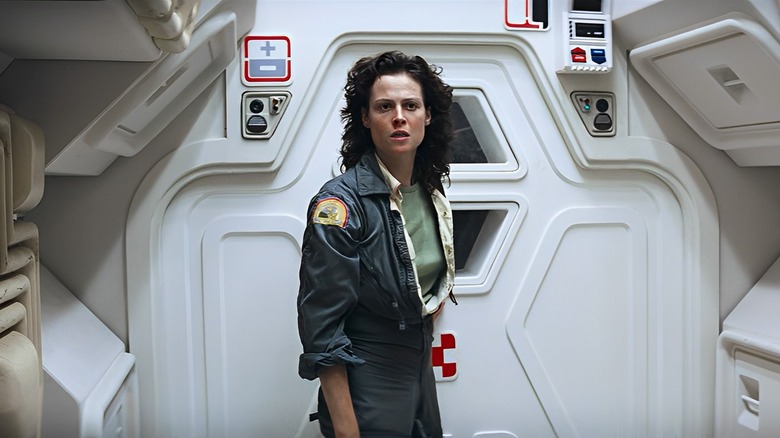
Ridley Scott's influence looms large over 20th-century science fiction in cinema, and thus he earns two spots on this list, starting with his journey into interstellar alien terror and corporate malfeasance. While Dan O'Bannon's script began as a straightforward B-movie pitch, Scott approaches it with genre-defining prestige, making the film one of the most important box-office hits in history.
The film follows the crew of the space-bound commercial towing ship Nostromo, out on a routine job, when they are suddenly awakened from cryosleep by a distress signal from a nearby moon. There, they discover everything you would hope not to find: a crashed alien ship, a hive of unhatched eggs, and a parasitic creature that attaches itself to one of their crew, implants an organism that later bursts from his body, and stalks the remaining crew around the ship.
"Alien" has spawned an extensive media franchise of sequels, spin-offs, a television series, video games, and more, but Scott's film remains the definitive masterpiece of the franchise. His careful tonal control of tension and terror, aided by H.R. Giger's biomechanical creature and set design, as well as Sigourney Weaver's trailblazing performance as Ellen Ripley, ensures that the terror of "Alien" still holds up all these years later and has forever altered the face of sci-fi horror. From the film's own sequels to the many forms of speculative terror it inspired, nothing has yet matched what was achieved here: dread as physical space, with a trust in the audience to let their imagination do the worst work for them.
Blade Runner
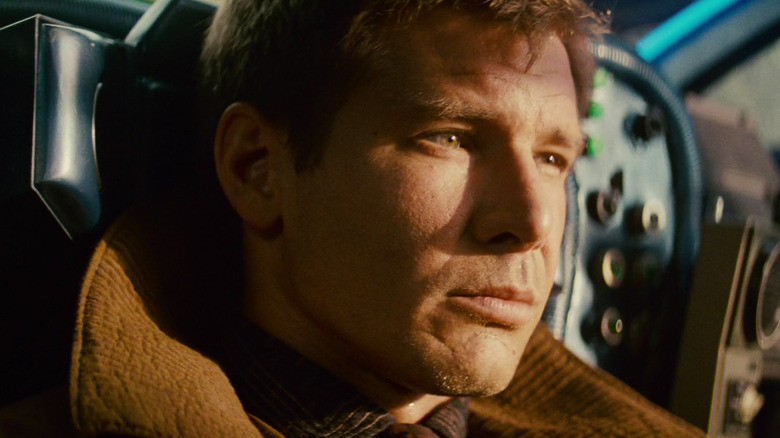
In 1982, Ridley Scott's "Blade Runner" was buried by another sci-fi classic: "E.T. the Extra-Terrestrial." Scott's follow-up to "Alien" was DOA for general audiences who had come to expect more action-packed energy, adventure, and emotion from the new sci-fi blockbuster boom. As a dark, slow-paced, deeply philosophical and existential study of its characters, owing more to the cynical moodiness of '40s noir films than to pulp excitement, "Blade Runner" was incongruous with the contemporary theatrical landscape.
Nevertheless, "Blade Runner" would go on to shape the entire idea of the genre. Loosely adapted from Philip K. Dick's "Do Androids Dream of Electric Sheep?", it may have been savaged for being cold and impenetrable, but time has been kind in a way box office receipts weren't. The five-plus cuts of the film that have circulated since all reflect a tug-of-war between Scott's ambiguous, melancholic vision and a studio nervous about handing audiences a movie so reserved. It's now the source of countless iconic images — the film is beautifully shot in all its neon- and rain-soaked glory by Jordan Cronenweth — of Harrison Ford and Rutger Hauer navigating an emotionally desolate future, suffused with cluttered production design.
It may have taken the culture two decades to catch up, but every dystopian cityscape stacked with holographic ads and acid rain owes it a debt, from "Ghost in the Shell" to the introspective, critically acclaimed sci-fi pictures it would pave the way for — including its own 35-years-later, Denis Villeneuve-directed sequel "Blade Runner 2049."
The Terminator
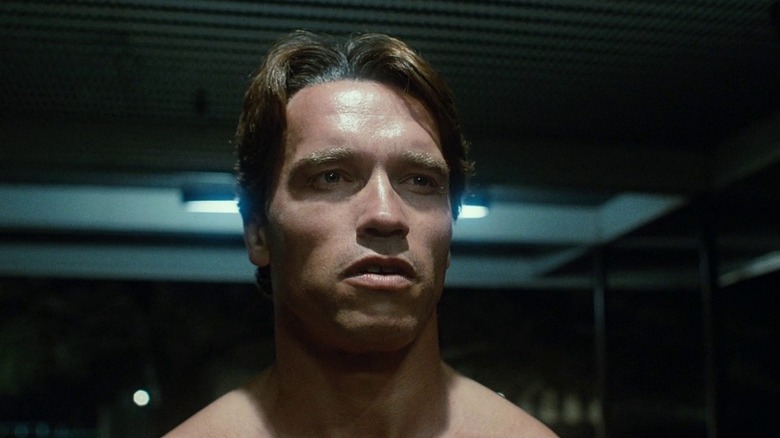
James Cameron may have had to acknowledge the failure of recent Terminator sequels like "Terminator: Dark Fate," but the legacy of his original sci-fi classic speaks for itself. He's told the film's origin story so often that it's practically become canon: a notebook, a fever dream in Rome about a chrome skeleton dragging itself out of the fire, and a script sold to producer Gale Anne Hurd for a dollar on the condition that Cameron be allowed to direct. The final film would be made for a shade over six million dollars, cast Arnold Schwarzenegger as an unstoppable, almost silent killing machine, and would live on as one of the leanest B-movies to ever become a cultural institution.
The time-travel plot of "The Terminator" has become its own sustained reference point within the genre: Schwarzenegger's unforgiving, imposing android is sent back from the year 2029 to 1984 to assassinate Sarah Connor (Linda Hamilton) in order to prevent her yet-to-be-born son from eliminating the evil artificial intelligence program Skynet in the future, while Kyle Reese (Michael Biehn) is sent back from the future resistance to protect Sarah from his wrath.
Written by Cameron and Hurd, the film's chase-movie momentum never slows and is accentuated by Stan Winston's truly marvelous practical effects, which feel more tactile than the CGI that would replace them in sequels. The culture at large would go on to deem the delayed sequel, "Terminator 2: Judgment Day," the pinnacle of the franchise for its forward-thinking digital effects and innovative action, but "The Terminator" continues to stand tall as a high point of '80s sci-fi.
Back to the Future
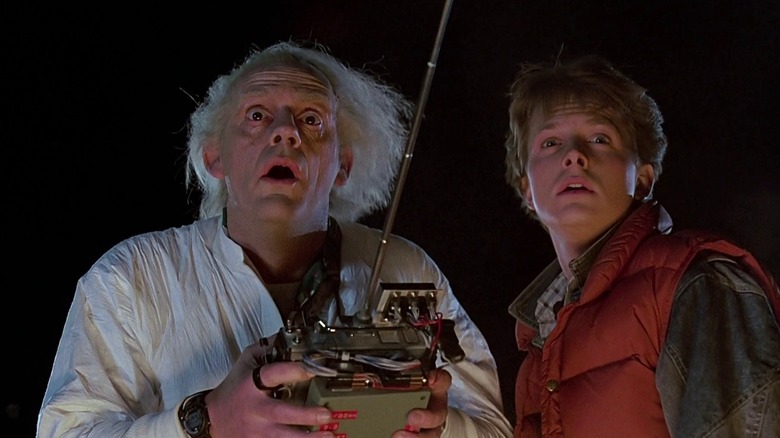
The influence of "Back to the Future" has reverberated throughout the decades — it's one of the most recognizable and influential pieces of popular culture ever to hit theater screens. It's often cited as having a scientifically perfect screenplay, and its performances and iconography live on in the public consciousness. In fact, one of this year's best comedies is even a lighthearted spoof and quasi-remake of the film. And this is despite its troubled production: Disney passed on the script for being too risqué, and five weeks into production, Universal, unhappy with the tonal fit, fired the original lead, Eric Stoltz, and reshot everything with Michael J. Fox.
None of that matters with Robert Zemeckis' assured, populist and tech-forward hand at the wheel of the script he co-wrote with Bob Gale. "Back to the Future" still plays perfectly all these years later, with immaculately crafted set pieces in an engaging and emotional time-travel story led by the wondrous chemistry between Fox and Christopher Lloyd as Dr. Emmett Brown. The script remains a marvel: nearly every joke and piece of character development sets up a later payoff with the sort of rigor that screenwriting professors point to as a paragon of the form.
It's not without its dated corners — the 1955 stretches lean on a breezy, uncomplicated period nostalgia that glosses over exactly whose 1955 that was — but the central mechanics of the plot, the way cause and effect ripple forward and correct themselves, remain electrifying. It's rare to see a movie that gets this close to pure structural flawlessness.
The Matrix
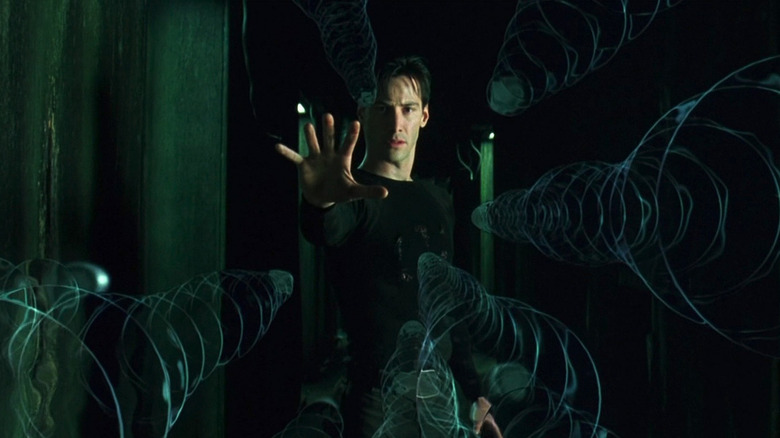
Forget sci-fi; nothing in cinema overall was ever the same after "The Matrix." The forward-thinking, revolutionary blockbuster from Lana and Lilly Wachowski offered a glimpse of the future on the precipice of Y2K — released in 1999, "The Matrix" would close one century and usher in a new one, inspiring a wave of genre movies that drew on the speculative spectacle that imbued this exhilarating tech thriller.
Its story is both tied to the social malaise of the '90s and a layered investigation of tech, humanity, and transformation, the likes of which have long defined sci-fi stories. Keanu Reeves leads the film as Thomas Anderson, the hollowed-out corporate drone stuck in a body, world, and identity that leaves him alienated from himself. A conspiracy-driven hacker who goes by Neo online, he eventually discovers Trinity (Carrie-Anne Moss) and Morpheus (Lawrence Fishburne), who uncover the truth: The year is 2199, and the world has collapsed at the hands of rampant artificial intelligence, which harvests humans for power.
In depicting Neo's quest for humanity's salvation, the Wachowskis inject a healthy dose of Eastern artistry and style that proved revelatory for general Western audiences. Drawing on Japanese anime and Hong Kong action cinema, they forge a singular style of their own that would be copied and parodied in films for decades to come, most notably the novel "Bullet Time" ultra-slow-mo sequences, which forced the effects team to pioneer a brand-new VFX style.