

10 Most Forgettable Movies Of 2026 (So Far)
Halfway through the year, 2026 has been exciting and surprising for the world of movies, with breakout hits from reliable studio stalwarts and up-and-coming indie filmmakers alike. The likes of the sci-fi blockbuster "Project Hail Mary," the spiky A24 character piece "The Drama," and the two-hander of young, indie, online-driven horror auteurs behind "The Backrooms" and "Obsession." Plenty of those movies can be found on our list of the 16 best films of 2026 so far.
That's great and all, but there are some movies out this year that don't inspire much in the way of memorability one way or the other. You know the ones: the films that you'll come across later on in the year and think, "Wait, that came out this year?" These are some of the 2026 movies that are notable for not being very notable at all — generic, unexceptional, and generally hard to care about one way or the other. In the grand scheme of 2026, these movies fall by the wayside.
Here are the most forgettable movies of 2026 so far.
Animal Farm
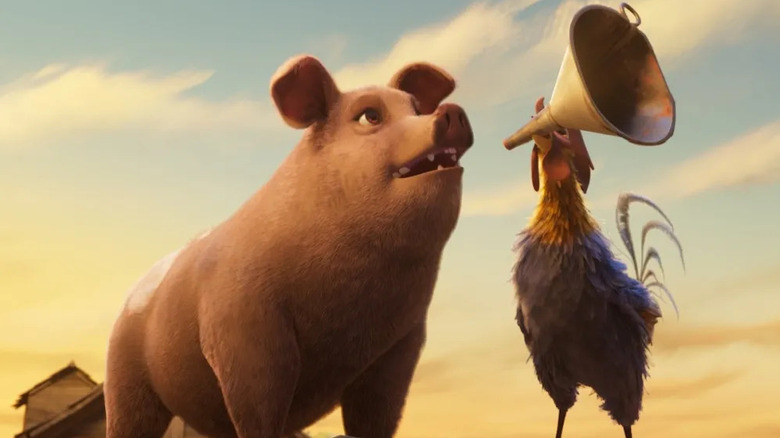
Andy Serkis' second directorial swing in as many years lands with a whimper in "Animal Farm," an Angel Studios-produced animated adaptation of George Orwell's novella that softens the searing edges that made the book worth banning in actual dictatorships. Nicholas Stoller's script surrounds a starry voice cast, including Seth Rogen, Woody Harrelson, Kieran Culkin, Jim Parsons, and Steve Buscemi, and it's built around slapstick barnyard business that feels bolted onto a story about the machinations of totalitarianism. If you wanted an "Animal Farm" with fart jokes, here's your movie.
Fitting for this production company, the film is framed as a cautionary tale about communism, which narrows Orwell's target so deliberately and aggressively that the movie ends up saying nothing coherent about the nature of government power. There's some craft in the character design, though the animation is far from impressive, and the performers are left adrift amid the film's indecision about which audience it's meant to appeal to.
Serkis has floated the idea of a sequel picking up where this leaves off, but given the film's box-office flop against its $35 million budget, it seems unlikely we'll be seeing any further animal political allegories from Serkis. But he'll be no less bereft of real ideas to chase, because he's directing "The Lord of the Rings: The Hunt for Gollum," set to release next year, though he's already courting some controversy.
Balls Up
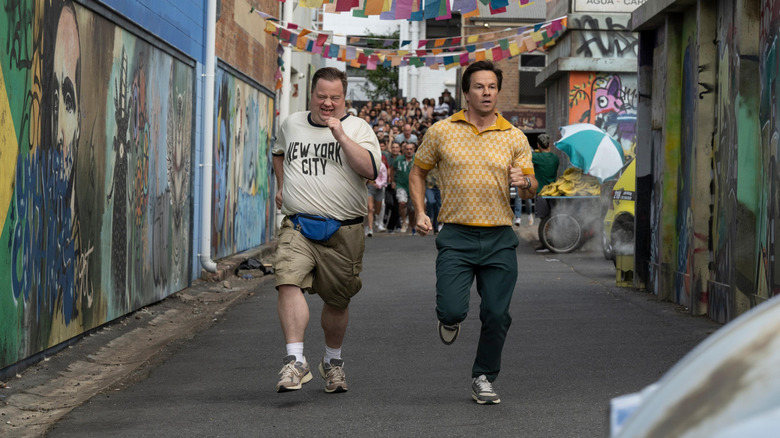
Peter Farrelly once co-directed some of the '90s' most purely, stupidly enjoyable comedies, and "Balls Up" makes the absence of his brother Bobby — or any other discerning presence able to say "no" — achingly obvious. Written by Rhett Reese and Paul Wernick, who have a catalog of sharper, funnier work elsewhere, the premise has the bones of a workable farce: Two marketing executives pitch a novelty condom as the official World Cup sponsor, then have to flee Brazil after their drunken celebration sparks an international incident.
Farrelly turns that into a shapeless chase movie, padded with crude gags that land with the hollowest of thuds, content to coast on the mere presence of the word "testicle." Mark Wahlberg, reliable as he is in action fare, awards-adjacent drama, and even the occasional comedy, sleepwalks through the proceedings in a role that doesn't demand much of him, while Paul Walter Hauser's manic energy is deadened by the screenplay's circumstances.
It's the exact type of low-effort nonsense meant to fill the dregs of a streamer's original movie library to prove they're still attracting recognizable talent for their bad movies. This is the kind of premise that used to be handed to comedians several rungs down the ladder — that it went to Wahlberg instead says plenty about the current math of the streaming economy.
The Breadwinner
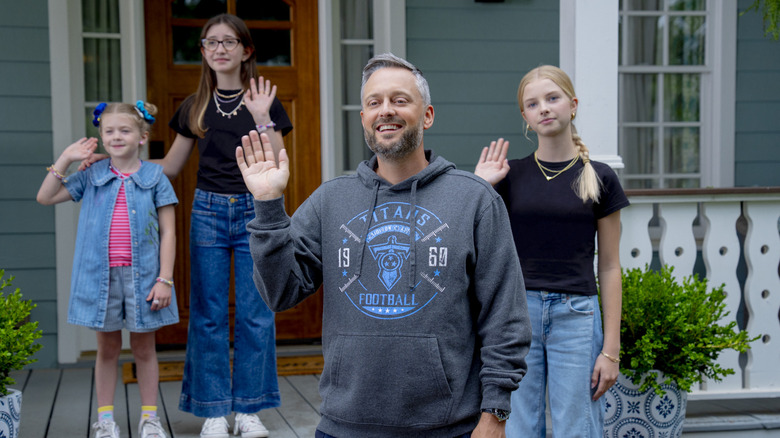
Nate Bargatze built a comedy career on being the calm, apolitical, deadpan guy in the room, so it's an odd choice for his feature debut to cast him at the center of "The Breadwinner," a broad, over-plotted role-reversal sitcom that gives him essentially nothing to do with that persona. Bargatze, who co-wrote the script with Dan Lagana, plays a lifelong provider thrust into stay-at-home-dad duty when his wife (Mandy Moore) lands a splashy Shark Tank deal (including the reality business-pitch television show in the film was apparently not an easy feat) and hits the road for weeks at a stretch. Dear reader, chaos ensues.
Director Eric Appel, who showed some formal wit with "Weird: The Al Yankovic Story," can't do much with the material here. The film settles for the most predictable version of every scene the premise offers, right down to the inevitable montage of domestic mishaps. A supporting cast that includes Colin Jost, Kumail Nanjiani, and Will Forte gets scattered, forgettable beats in an effort to make this feel at least a little bit more like a real movie, but it mostly reminds you of how theatrical comedies used to have real craft and perception behind them.
Bargatze fans may find a few clean, mild laughs here, most of them recycled from his stand-up cadences rather than specifically written for the film. Otherwise, "The Breadwinner" mostly proves that being a decent stand-up doesn't automatically translate into making a funny movie.
How To Make A Killing
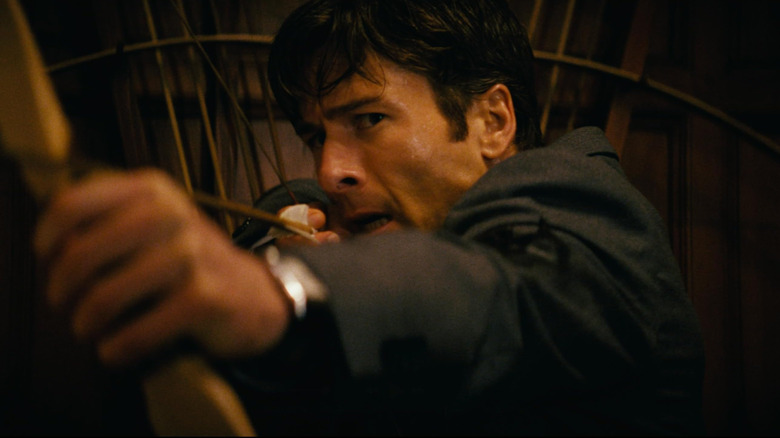
The Glen Powell experiment continues to deliver woefully diminishing returns. "How To Make A Killing" was primed to be something of a surprise hit, with an up-and-coming major star taking a spiky genre turn as a morally compromised cast-off ostensible heir to the fortune of his elite extended family. Moreover, writer and director John Patton Ford had proven himself capable of incisive and kinetic thrillers themed around the woes of capitalism with the Aubrey Plaza-starring "Emily the Criminal."
Alas, "How To Make A Killing" is stiff and unconvincing across all departments. Ford's script shows only a cursory interest in the breadth of its themes, more focused on the "pick 'em' off" structure and stylings of his conceit. That's fine, and there are small moments of dark humor and excitement to be found, but it is more often sluggish and contrived, with a concept that takes a very generous heaping of suspension of disbelief to buy into, especially in the hammy femme fatale Margaret Qualley subplot.
Then there's the Powell of it all, whose Golden Retriever disposition, theoretically, could be manipulated to expose a hidden, dark psychosis. That's not accomplished here, and he instead comes across as simply miscast, the character begging for a performer with a more sinister temper lurking behind their eyes. Powell just has himself hiding back there. "How To Make A Killing" has apparently found a strong audience on HBO Max, though their time may be better spent watching "Kind Hearts and Coronets," the 1949 film that inspired this one.
Lee Cronin's The Mummy
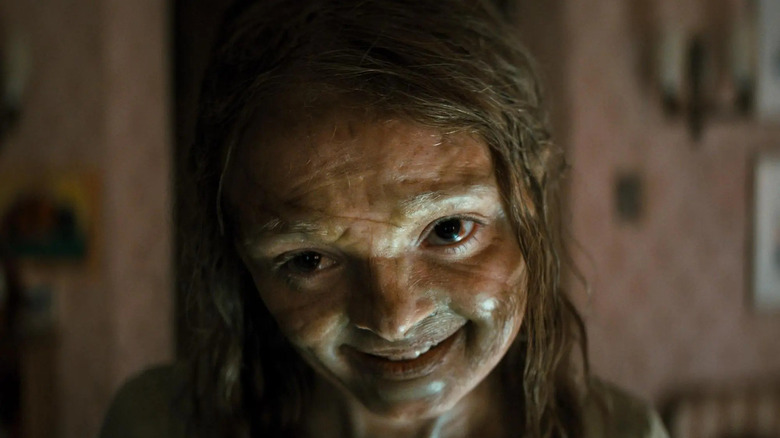
Lee Cronin has spent his still-young career building a reputation as one of horror's more promising formal stylists, first with the moody creature-feature "The Holy in the Ground," then with "Evil Dead Rise," a sign he was trusted as a capable enough hand to drive a legacy franchise. New Line apparently agreed, teaming him with genre heavyweights Blumhouse and Atomic Monster for "The Mummy" — or rather, "Lee Cronin's The Mummy," the possessive billing of which will follow Cronin around like a storm cloud the rest of his career.
It's also indicative of a studio's uncertainty about how to differentiate the franchise, having tacked on Cronin's name to the front of the title to avoid confusing people with another entry in Universal's failed "Dark Universe" or the more widely popular Brendan Fraser "Mummy" movies, of which there is currently a fourth film in production. Cronin's mode for the franchise is, well, basically his "Evil Dead" movie again, as the movie commits to body-horror and gross-out spectacle instincts that recall the Deadite mayhem.
That's fine in theory but far from particularly memorable, as "Lee Cronin's The Mummy" situates itself inconspicuously among dozens of other demonic blood-and-guts horror films. Reception was split down the middle — a middling 45% Tomatometer against a much friendlier 72% from audiences — and it performed well enough at the box office to be considered a success. It's good enough in horror math if producers wanted to justify another go, that is, if anyone could locate exactly what a "Lee Cronin's Mummy" franchise is supposed to be about.
Passenger
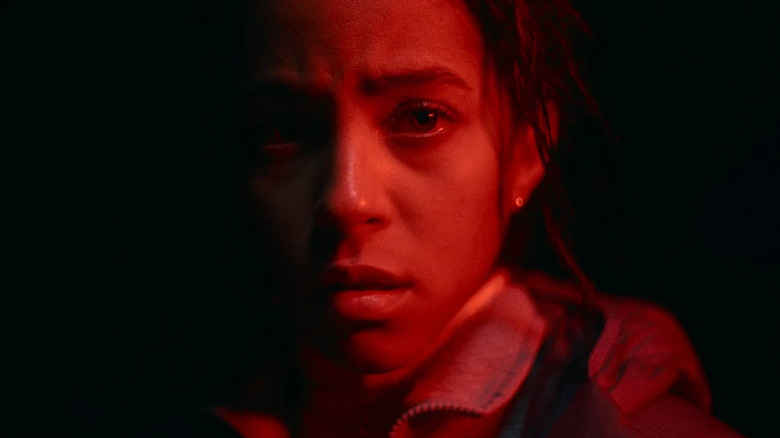
No one makes workaday horror movies like genre journeyman André Øvredal, and "Passenger" is another in a string of films that have squandered the goodwill he earned early on with films like "Troll Hunter" and "The Autopsy of Jane Doe." Though good for the occasional clever set-piece, Øvredal continues to languish in the abyss of forgettable studio horror dreck, affording a light stylistic polish to scripts that instead need major refurbs.
The conceit is silly but not worthless: it's basically a haunted house movie for the crunchy-granola van-life crowd. It's about a haunted van, but not in the "Christine" way of a car coming to life — this is the residence of a young couple who have recently committed to life on the open road and come to find that their roving home is haunted. Setting a haunted house movie on America's highways is novel, but the script's overly familiar horror-movie narrative trajectory and eventual CGI demon battle are not.
Øvredal does what he can to spruce things up a bit. There's a neat set-piece involving a projector showing "Roman Holiday" in the woods as the only light source to reveal the creature. Another sees the film engage in a long, rotating single shot as the lead, Maddie (Lou Llobell), is seemingly stalked through an inconspicuous yet ominous parking lot while the van keeps getting farther and farther away. These are fleeting bright spots in a movie that otherwise is filled with generic jump scares and unwavering cliché. Øvredal says there's potential for a sequel, but it seems like they barely had anything to do with the concept the first time around.
Pressure
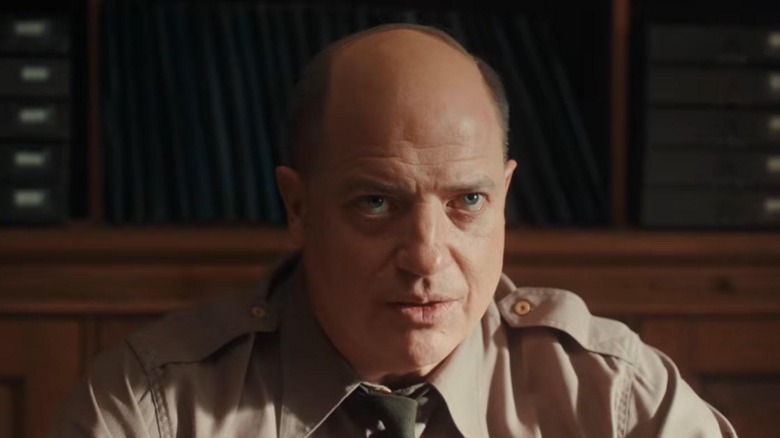
Anthony Maras' debut, "Hotel Mumbai," proved he could wring palpable, handsome tension from real-world catastrophe, so handing him "Pressure" — his adaptation of David Haig's own stage play about the 72 hours before D-Day — should have been an easy win. Instead of storming beaches, the drama here belongs to two meteorologists: Captain James Stagg (Andrew Scott), the dour Scot advising Eisenhower (Brendan Fraser) to delay the invasion because of an incoming storm, and Irving Krick (Chris Messina), the brash American forecaster pushing to go. It's essentially a data-driven office thriller dressed up as a war movie, a pitch that's more novel than how it plays out.
Scott is predictably excellent, wound tight enough for dramatic barometric readings to carry the weight of life or death, and Fraser brings a weary gravitas to Eisenhower that helps paper over the thinness of his actual role. But Maras and Haig can't decide whether they're making a nervy procedural or a hokey domestic melodrama, padding out Stagg's professional crisis with a maudlin subplot about his estranged wife that repeatedly saps momentum. And when you have a D-Day movie, you've got enormous, erm, pressure to deliver on execution to distract people from the fact that they know how this story ultimately ends.
Fans of these types of men-in-rooms style movies, where professionals and officers play word tennis with each other as they deliver heavy-handed, dramatic dialogue, will find something to enjoy in "Pressure." But it's far from the best of those films, settling anonymously into an endless lineage of World War II movies.
Return to Silent Hill
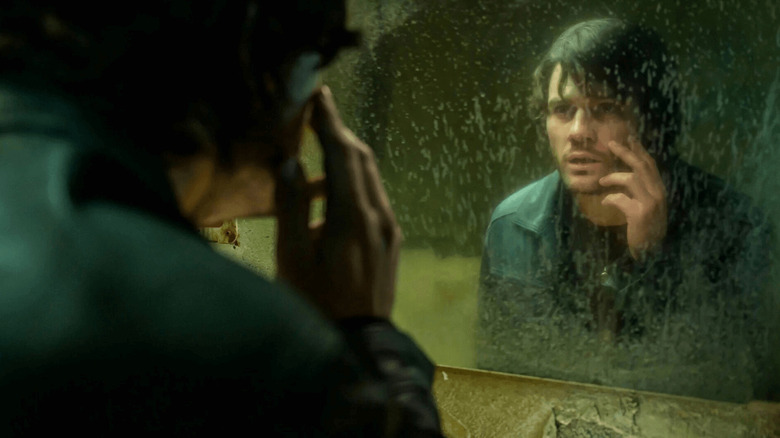
French director and "Silent Hill" super-fan Christophe Gans didn't realize he had made a cult classic horror film when his adaptation of Konami's iconic and terrifying survival horror video game series was released in 2006 — it was met with terrible reviews from critics and disparagement from incensed game fans who didn't appreciate the liberties taken. "Silent Hill" is now seen as one of the better video game-to-film adaptations because of how Gans transmuted the overall feeling of the franchise into a gnarly studio horror blockbuster. Gans' 20-year-later follow-up, "Return to Silent Hill," is unlikely to enjoy the same favorability.
"Return to Silent Hill" may marginally improve on the other sequels that followed in the wake of the 2006 film, but the final product too clearly indicates a rushed, botched production for this film to have long-term appeal. Working against it, in particular, is its source material, the beloved "Silent Hill 2," the suffocating experience of which is neutered here as Gans attempts to fit the plot and the depth of the oppressive atmosphere into 106 minutes.
Simply put, nothing is believable or all that unsettling in this visually uninspired and cheap-looking version of the story, and the screenplay's adjustments are ill-advised. Gans' attempts at tactility are appreciated — he ensures that every monster in the film is a performer in prosthetics and makeup. But the film's garish post-production sheen will have you believing it was all digitally rendered anyway, so artificial is the film's visual style. With the film's poor box office performance, it looks like any plans for further "Silent Hill" movies are likely axed for the time being.
Thrash
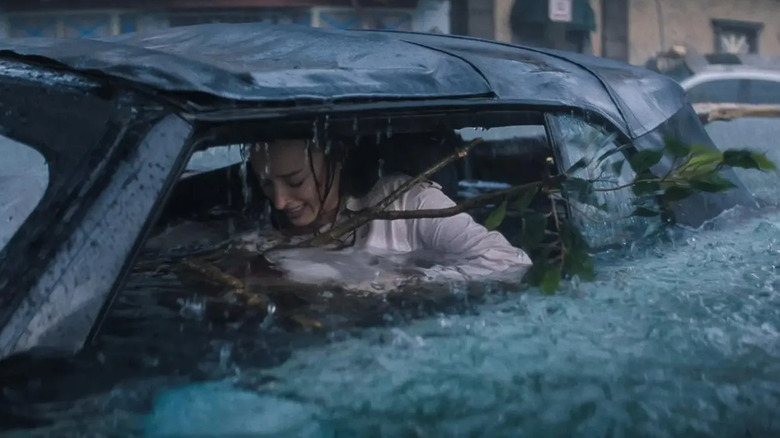
Poor "Thrash" couldn't even settle on what to call itself before anyone saw it. First, it went by "Beneath the Storm," then "Shiver," before landing on the woefully generic title that ended up on Netflix. That indecision extends to the movie itself, a Category 5-hurricane-meets-hungry-sharks disaster hybrid from Tommy Wirkola, the Norwegian genre journeyman behind "Dead Snow" and "Hansel & Gretel: Witch Hunters," whose occasional penchant for indulging in splattery, tongue-in-cheek carnage finds no real purchase here.
The premise has some pulp promise: A storm floods the fictional town of Annieville, South Carolina, turning flooded streets, submerged cars, and a single unlucky house into a shark-infested obstacle course for a pregnant woman (Phoebe Dynevor), her troubled foster sister (Whitney Peak), and Djimon Hounsou's world-weary neighbor. Wirkola clearly has "Jaws" on the brain, and there's a scrappy competence to how he stages the flooding, with real sets and a noted sense of peril.
It's everything around the sharks that sinks this thing. Paper-thin characters deliver exposition about dead mothers and bad foster parents in the film's clumsy opening minutes, while the back half is so eager to escalate into gonzo mayhem that it, in a way, refutes the time it spends trying to meagerly develop any of these people. It pays some fitting homage to other horror filmmakers, like a kill indebted to Sam Raimi, but it never turns into anything worthwhile on its own.
Whistle
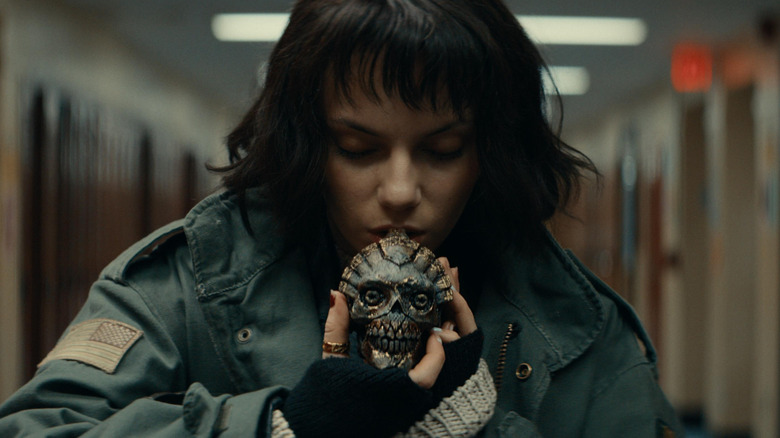
What if there was a scary whistle? This totally abandoned spooky programmer from director Corin Hardy was already starting on the back foot with that premise, adapting a short story by Owne Egerton about an ancient Aztec relic that, once blown, summons the exact death each listener was fated to die. That hook owes far too much to "Final Destination" to be significant in its own right.
This is Hardy's return to original horror after being swallowed up by the Conjuring machine to make "The Nun," though it fails to make an impact. It has some assured camerawork, and there's admirable craft in a couple of set-pieces, such as a wall-crawling geriatric apparition at a harvest festival. But Egerton's script is so marinated in horror-movie self-awareness that it substitutes allusions for wit: A teacher literally named Mr. Craven (Nick Frost) exists solely to deliver clunky exposition, and the film seems more interested in nodding at "Scream" and "A Nightmare On Elm Street" than in earning an identity of its own.
Audiences seemed to know what they'd be getting with this one — the film premiered at Fantastic Fest to modest buzz before IFC and Shudder scooped up U.S. rights, leading to an underwhelming theatrical haul of $5 million that confirmed it would have been better off as a straight-to-streaming proposition. To its credit, it does have a great horror movie death.