

40 Best Movies Of 2026 (So Far)
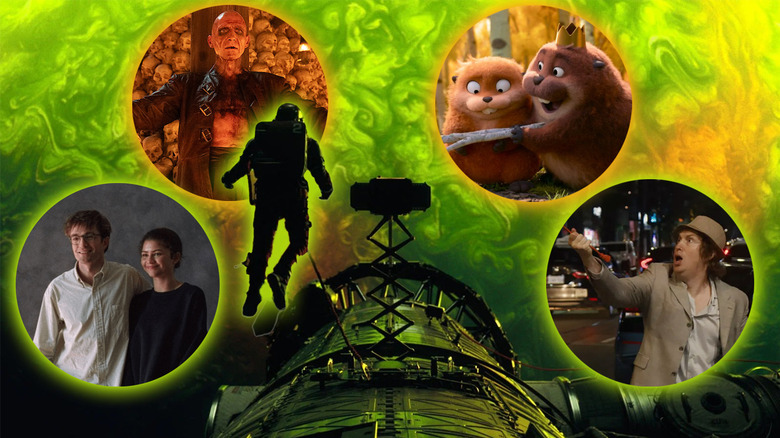
Believe it or not, we're halfway through 2026! Time sure does fly when the entire world is on fire, huh? Since we've reached this midpoint in the year, we decided it was time to start looking back at the films that have been released so far. Some folks will frequently complain that certain years lack good movies, but I maintain that every year is a good movie year if you know where to look. So allow us to round up what we consider to be the best movies of 2026 (so far).
28 Years Later: The Bone Temple
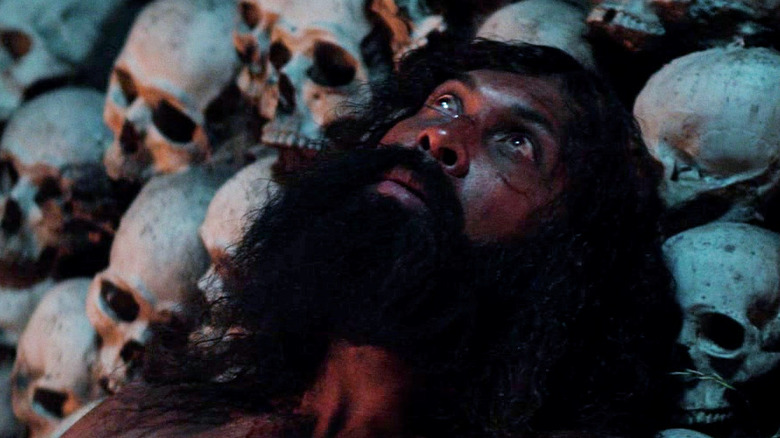
Post-apocalyptic horror never seems to go out of style. Maybe it's our collective modern yearning for a simpler life, where the drudgery of going to work and paying bills is gone and we can wander through empty, overgrown cities scavenging for useful tools and leftover tins of food. Or maybe it's just fun to watch zombies chase people and rip off their heads. Who can say.
Somewhere around the year 2020, though, a sense of post-apocalypse fatigue did start to set in. Fortunately, Danny Boyle's "28 Years Later" managed to pivot in the perfect way: The film proved to be a surprisingly tender and thoughtful meditation on death and how we deal with it. Nia DaCosta's "The Bone Temple" seamlessly picks up that baton and continues to race down the path of subverting expectations. Yes, there's a maniacal cult leader who dresses like Jimmy Savile and likes to skin people alive. But the heart of the story is the beautiful friendship that blossoms between a gentle-hearted local doctor and the big hairy zombie that he does drugs with.
The real world can often seem like it's stuck in a doom spiral that we are helpless to stop. "28 Years Later: The Bone Temple" proposes that, as the world becomes a crueler and more frightening place, it's all the more important for us to stay kind — and to hold on to our humanity. (Hannah Shaw-Williams)
Backrooms
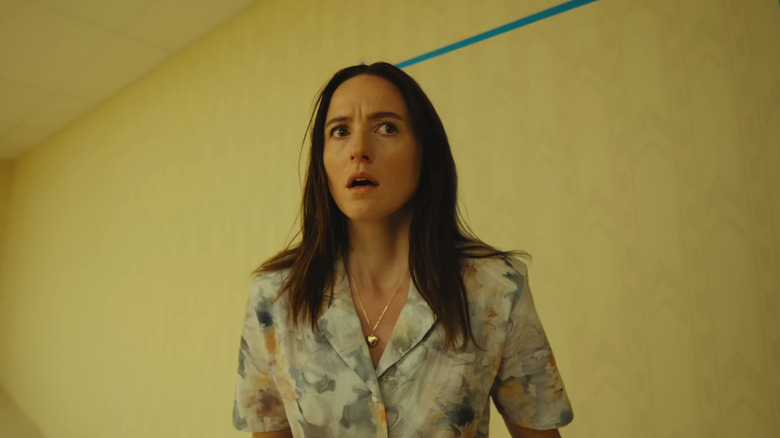
Ever since 2023's "Skinamarink" we've seen a new cinematic frontier emerge. Filmmakers raised online are grappling with their adolescence via movies and "Backrooms" is and most culturally significant example. Kane Parsons' (aka Kane Pixels) original "Backrooms" web series became the quintessential example of the liminal horror online trend. The movie could have easily just coasted on the popularity of that original series, re-imagining the Backrooms as a creepy, big screen version of The Upside-Down and delivering some decent scares. But Parsons' film goes far beyond that, presenting the titular hellscape as a physical representation of our collective subconscious, populated by decaying memories that are far more horrifying than any slasher villain or movie monster.
Parsons also uses the movie to interrogate some fascinating ideas. The entire thing can be read as a refutation of psychoanalysis. It calls to mind Werner Herzog's diatribe against therapy, in which the director said, "When you inhabit a house and you illuminate every last corner of the house with strong lights, the house becomes uninhabitable. And human beings illuminated to the very last corner of their darkest soul become inhuman and uninhabitable." In "Backrooms," we take a journey through a psyche where every corner is illuminated by stark fluorescent lights, revealing misremembered, deformed grotesques. By the time Renate Reinsve's therapist Dr. Mary Kline admits she can't help Chiwetel Ejiofor's Clark, it becomes clear that Parsons' movie is much more bold than its origins as an online meme might suggest. (Joe Roberts)
Blue Heron
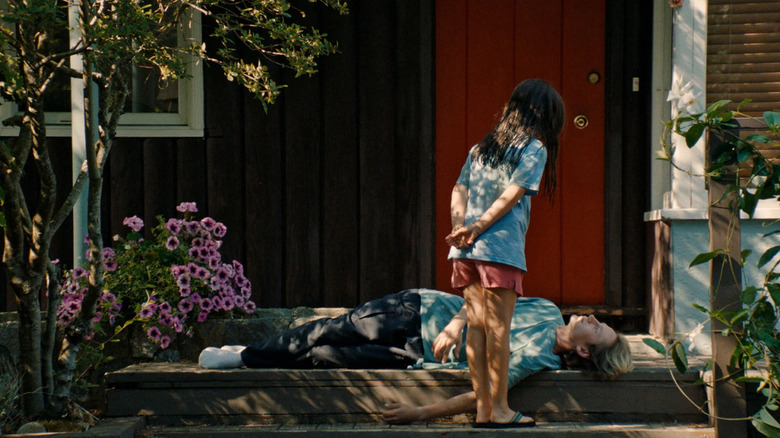
Sophy Romvari's devastating and deeply personal "Blue Heron" feels like what it is: a series of memories. Starting in the 1990s, the film follows a Hungarian immigrant family moving into a new home on Vancouver Island. The events are seen through the eyes of young Sasha (Eylul Guven), who watches her parents (Iringó Réti and Ádám Tompa) struggle to deal with their oldest child, Jeremy (Edik Beddoes). Jeremy is clearly suffering from some sort of psychological disorder that threatens to grow dangerous. Romvari captures all of this with the dreamy haze of a memory recalled in a dream, drifting through one sunny afternoon after another as the threat of disaster looms.
This section of the film is strong, but it's the second half of the narrative that solidifies "Blue Heron" as one of the year's best films. The story suddenly jumps ahead to present-day, where the now-adult Sasha (Amy Zimmer) is attempting to make a film about what happened all those years ago. This leads to a heartbreaking meta-esque sequence that I don't want to spoil, but I will say it left me an emotional wreck in a way that only the power of movies can. I'll be thinking about "Blue Heron" for a long time. (Chris Evangelista)
Boorman and the Devil
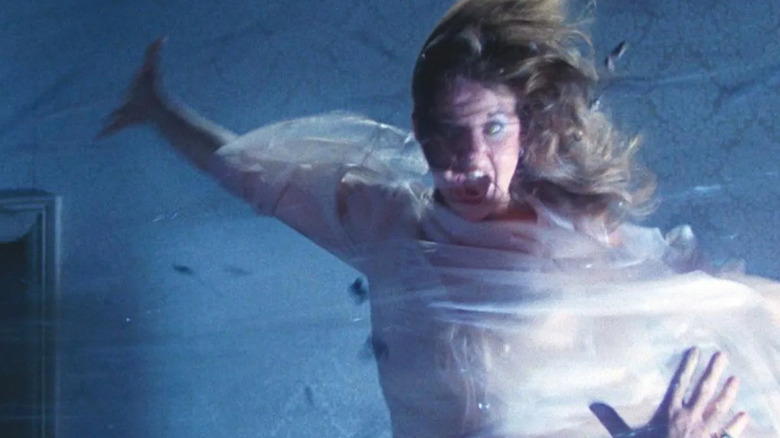
After "The Exorcist" became a blockbuster, a sequel seemed inevitable. Enter John Boorman, the British filmmaker who had recently found success with his thriller "Deliverance." Boorman set out to make something very, very different than the original "Exorcist," and the end result was "Exorcist II: The Heretic," a film considered by many to be an absolute disaster (although it's a disaster with one hell of a cool trailer).
David Kittredge's surprisingly emotional documentary "Boorman and the Devil" delves into how this happened and what went wrong along the way. It's a must-watch for movie fans who loved to learn all the intricacies that go into creating a film — even a film that isn't very good. More than that, though, "Boorman and the Devil" also plays as a worthy tribute to Boorman himself, who is on hand for droll, charming interviews in which he looks back on both "Exorcist II" and his career as a whole. Even if you know the basic story behind the making of "Exorcist II," "Boorman and the Devil" still feels insightful and essential. It's one of the best documentaries about making movies I've seen in a long time. (Chris Evangelista)
The Bride!
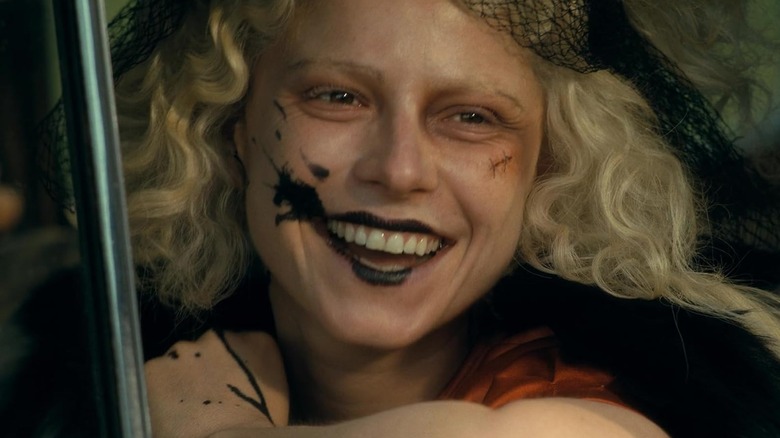
We love to talk about how filmmakers should be granted carte blanche to realize their wildest visions, but we're never truly ready when they are. So it is with actor turned writer/director Maggie Gyllenhaal's "The Bride!" (exclamation mark and all), a movie as far removed from her feature helming debut on the restrained, deeply psychological "The Lost Daughter" as one can get.
To be sure, everything about Gyllenhaal's "Bride of Frankenstein" re-imagining is ratched up to 11, starting with the leading turns from Oscar-winners Jessie Buckley and Christian Bale (who more or less play to the nosebleed section). It's also really two films in one: a lovers-on-the-run crime/romance period drama and a gonzo, stylized metatextual horror musical rumpus designed to allow Mary Shelley to reclaim her legacy as the creator of all things "Frankenstein" (in a very literal manner). These elements are then chucked into a figurative blender with the lid left off, splashing its contents all about. That's another way of saying "The Bride!" is a twisted and messy delight where being "too much" is absolutely the point.
Your guess is as good as mine as to how history will ultimately remember Gyllenhaal's pricey box office flop, including whether it evolves from a cult oddity into a full-fledged classic. But just as "Lisa Frankenstein" was already a great time before becoming a cult horror hit two years ago, "The Bride!" deserves to be celebrated here and now. (Sandy Schaefer)
Buddy
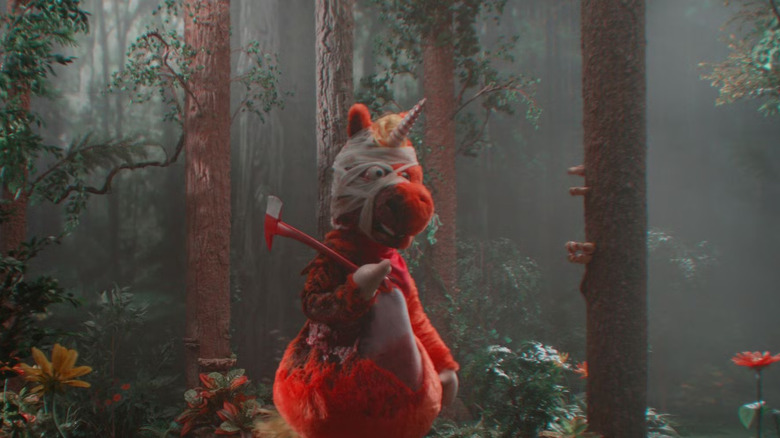
A "The Night of the Hunter"-esque slasher dressed up like "Barney & Friends." Does that sound like too bizarre or discordant a combination to work? Then let me introduce you to director Casper Kelly's "Buddy," which has already broken through into mainstream.
The titular character in "Buddy" is a magical, murderous unicorn who abducts children through TV screens and then "casts" them in the show starring himself. It's a multi-pronged metaphor for the dangers children face today, from abusive authority figures to predators hiding behind screens to (for child actors at least) exploitative work environments. "Buddy" spares no detail in making its setting feel like a real pre-school show. The candy-and-pastel colored sets, filled with google-eyed talking objects, all look authentically like something you could see on Nick Jr. There's even a full "Buddy" theme song featured, which sounds like a believably cutesy, and off-key tune sung by and for little kids.
Of course, the horror (and sick delights) of "Buddy" is seeing this world burst out with real violence and vulgarity. The authenticity of the production and costume design is so vital because the movie has to start as a convincing replica of the real thing. Speaking of, Keegan-Michael Key sounds genuinely unrecognizable as Buddy, affecting a cutesy kids' show host voice that doesn't totally disappear even when Buddy shows his true colors. The year isn't over yet, but Buddy is definitely going down as one of 2026's best movie villains. (Devin Meenan)
Carolina Caroline
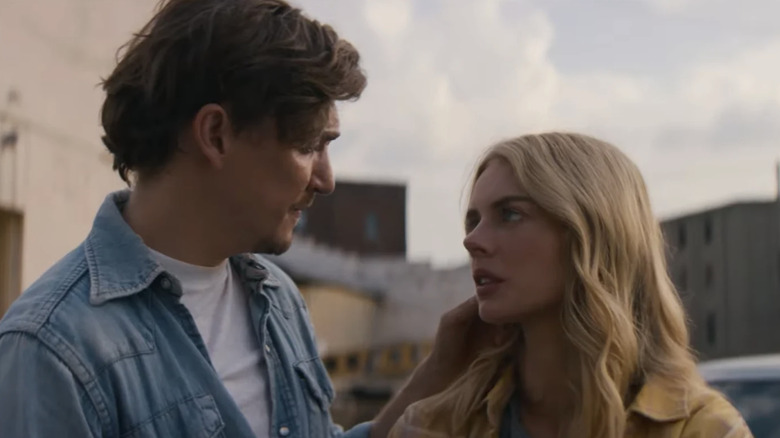
The "lovers on the run" movie is one of the most popular subgenres of the crime film. From "Bonnie and Clyde" to "True Romance," the combination of swooning romance and gritty run-ins with the law is as attractive as rock n' roll. Or perhaps I should say a country ballad, which feels closer to director Adam Carter Rehmeier's take on the subgenre with this year's "Carolina Caroline." Rehmeier and writer William Thomas Dean IV play the hits of the crime romance genre with the tale of Caroline Daniels (Samara Weaving), a rural Texas gas station employee who catches the eye of a drifter con artist, Oliver (Kyle Gallner). Caroline is as hungry for adventure as Oliver is lonely, and the two strike up a relationship which buzzes with electric chemistry, which Weaving and Gallner ably provide. (Between this and "Eenie Meanie," Weaving is 2/3rds of the way toward a lovers on the run trilogy!)
For as steeped in genre as it is, Rehmeier keeps "Carolina Caroline" primarily anchored in Americana, doing one better than Quentin Tarantino and Tony Scott in making Caroline and Oliver a modern yet timeless "Jack and Diane"-esque stand-in for the country's heart. There may be few surprises in the movie, especially if you've seen this type of film before. Yet as with Rehmeier's previous films "Dinner in America" and "Snack Shack," he makes the central love story remarkably truthful and resonant. The biggest heist in "Carolina Caroline" is how much it steals your heart. (Bill Bria)
Coyote vs. Acme
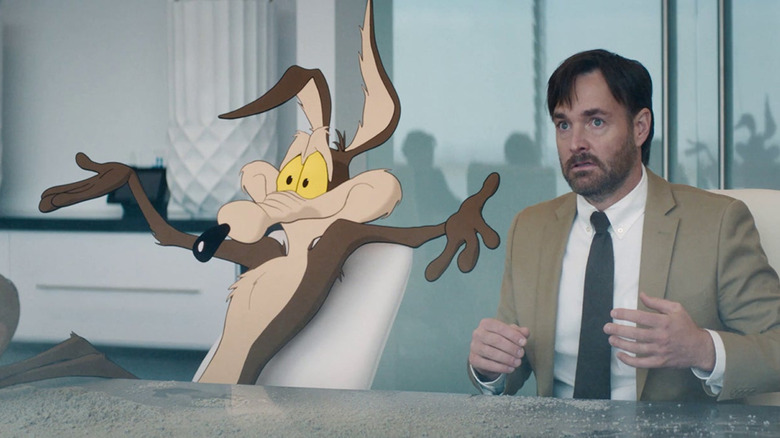
After being dealt a disrespectful hand by Warner Bros., it's nice to see the Looney Tunes movie "Coyote vs ACME" as one of the best of the year. This hybrid of live-action and animation proves that there's still plenty of juice left in the classic cartoon characters.
"Coyote vs ACME" delivers plenty of the reliably laughs you've come to expect from Wile E. Coyote and his longtime feud with the Road Runner. But this time, it's mixed with the bones of a courtroom drama, making for an ambitious blend of genres, not unlike the simultaneous noir and cartoon sensibilities of "Who Framed Roger Rabbit." When Wile E. Coyote gets sick of ACME products backfiring on him, he takes his case all the way to court by hiring a small-time lawyer Kevin Avery (Will Forte) to take on ACME, led by a villainous version of Foghorn Leghorn, with some help from John Cena as a corporate suit.
The movie is more than just cartoons interacting with real people for laughs. If anything, that aspect is downplayed much more than "Roger Rabbit" or even "Space Jam." Instead, the focus is on the legal battle, and there's a big beating heart at the center of the movie, as Wile makes a new friend in his lawyer, and he realizes that there's more to his dynamic with the Road Runner than simply getting a meal (though that's still an important). The Looney Tunes may be old, but they can still pull off new tricks, and this is one of their best. (Ethan Anderton)
The Death of Robin Hood
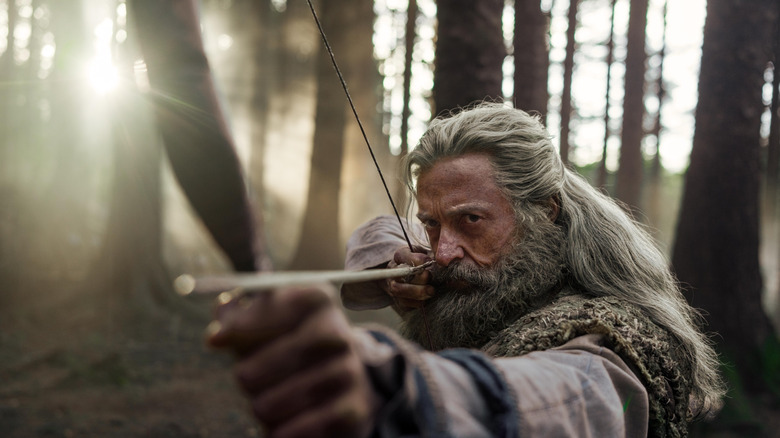
I can't say I expected this from the guy who burst onto the scene in 2021 with the Nicolas Cage-starring "Pig" and followed it up with the absolutely brilliant franchise prequel "A Quiet Place: Day One." Michael Sarnoski has quickly proven himself to be a name to watch when it comes to quiet, emotionally-charged dramas set amid the ruins of a fallen icon — whether it be the nondescript life of Cage's former chef-turned-truffle-hunter, the literal end of the world following an alien invasion, or an actual fallen figure taken straight out of legend and myth. But it's not terribly surprising, either, that his latest film would feel like the purest distillation of all Sanoski's interests yet.
"The Death of Robin Hood" isn't a subtle film, nor even an innovative one from the outside looking in. It seems to rely on time-worn tropes, a revisionist approach we've seen applied to countless genre films, and even somewhat obvious casting in Hugh Jackman. The brilliance of Sarnoski's script, however, comes from how it embraces, upends, and subsequently strips away all these surface-level concerns.
This regretful, murderous, and unrighteous scoundrel might not be your father's Robin Hood, but he never set out to be that anyway. Instead, this is a portrait of what comes later in life, after folklore clouds history and removes the person at its center. Sarnoski's greatest storytelling talent has been recovering that sense of humanity, and he does so again with one of 2026's best movies yet. (Jeremy Mathai)
Decorado
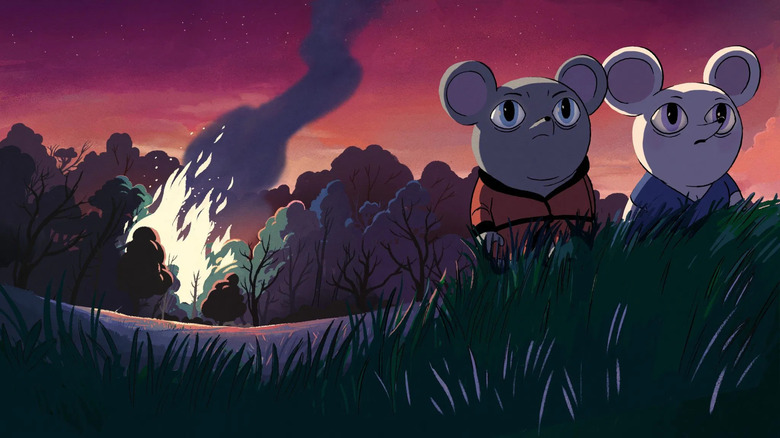
Alberto Vázquez's animated dystopian film "Decorado" will tear you apart. On its surface, the style of "Decorado" is innocent and sweet, its character all big-eyed, round-headed anthropomorphic animals out of a picture book. The world they live in, however, is incredibly bleak. A pharmaceutical company called ALMA has taken over the city, and everyone takes their raft of prescription drugs. Arnold Mouse has been unemployed for years, and it's putting a depressive strain on his marriage to Maria. Arnold has begun to suspect that the entire world is a simulation, an elaborate stage production with him and his friends unwittingly at the center. It's all decoration. Decorado.
Maria, meanwhile, will become so depressed that she will receive visits, "Big Mouth" style, from the Depression Fairy. Everyone's favorite cartoon star from decades earlier, Roni Duck, has become a homeless drug addict. Arnold might have found a way to escape the city, which will prove difficult as the town's outer exit seems to be protected by a vicious owl. When one character dies, he remains in the drama, his sad-sack ghost continuing to follow around our main characters.
Although set in a cartoon world of talking animals, "Decorado" is one of the most vivid and accurate depictions of despair that you might encounter. When you're in a depressive state of mind, the world can seem like a false, absurd prison, and "Decorado" isn't afraid to shy away from the hard feelings. It's a hard sit, but an exhilarating experience. (Witney Seibold)
The Drama
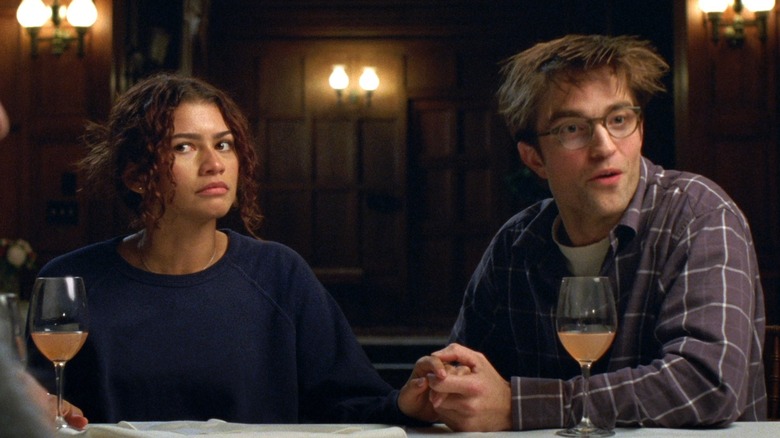
The shock confession at the center of Kristoffer Borgli's "The Drama" isn't just an off-handed twist. It is the source of the uncomfortable nightmare engulfing the lives of Emma (Zendaya) and Charlie (Robert Pattinson), who are days away from tying the knot. Borgli's knack for stewing provocative stories in absurdist back comedy can be traced back to "Sick of Myself" and "Dream Scenario," and his latest offering is similarly messy in the best of ways. Although the gradual disintegration of Emma and Charlie's relationship is centered around a sensitive issue, "The Drama" is more occupied with the concept of emotional transparency with a loved one. Do we truly know the people we love? And can one disturbing revelation put a seemingly perfect relationship under scrutiny?
"The Drama" doesn't offer any straightforward answers. Instead, it relishes in Zendaya and Pattinson's intense chemistry, which lends to the squirm-inducing anxiety that keeps on building. While Emma's transgressions raise questions about change and accountability, Charlie's paranoia-fueled spiral lays bare the ugliness inherent within us. We're all capable of giving in to our worst impulses while being embroiled in our dramas, which are always connected to moral quandaries. At times, you'll be torn between silent shock and nervous laughter, which goes to show that "The Drama" wields its edginess with remarkable skill. Few movies have the gall to do what Borgli's film does. (Debopriyaa Dutta)
Disclosure Day
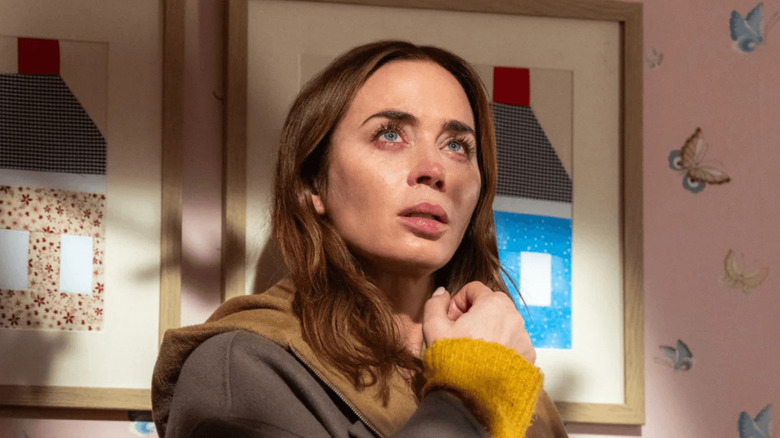
Steven Spielberg returns to aliens with "Disclosure Day," a thrilling chase film that proves he's still got the goods. Spielberg's latest faced some pushback from cynical viewers who felt that the film's somewhat hopeful message was misguided, especially in this day and age. And while I agree that "Disclosure Day" has some script problems, I also think it's unfair and unwise to judge the film against the real world.
Because at the end of the day, "Disclosure Day" isn't set in the real world. It's a movie. And it's very much a movie where Spielberg is trying to deliver a vision of what the world could be if everyone was united in a search for the truth about extraterrestrial life. But if even if you don't vibe with the film's messaging, you should be willing to agree that from a filmmaking standpoint, "Disclosure Day" is a total blast. Right from the jump, Spielberg kicks the film into overdrive, unleashing one thrilling set piece after another, anchored by one hell of a lead performance from Emily Blunt. I firmly believe "Disclosure Day" is the type of movie people revisit in a few years and say, "Oh damn, we took this one for granted." (Chris Evangelista)
Forbidden Fruits
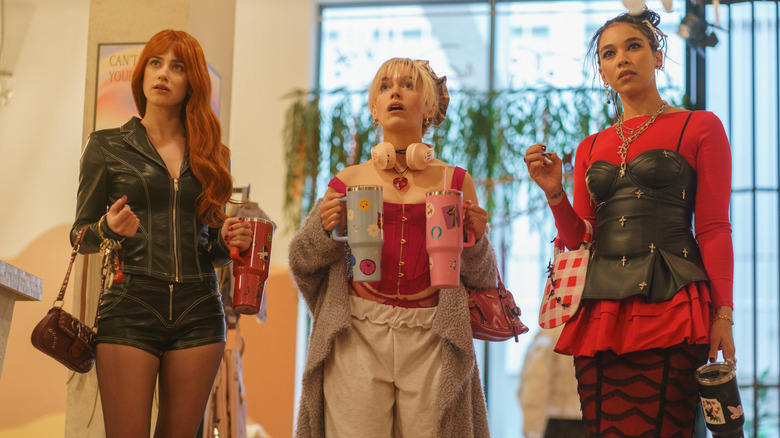
"Forbidden Fruits" is destined to be a cult classic, but we want it on the record now that we were here at the very beginning. Meredith Alloway transforms a fluorescent mall nightmare into something deliriously funny, yet vicious enough to ensure audiences never doubt the capacity for cruelty even in the prettiest packages. Set inside a hyper-curated boutique staffed by image-obsessed young women, the film spikes the exhausting choreography of performative female friendship. Wannabe affirmations, covert competitions, and the desperate hunger to appear effortlessly cool to stay a part of the "in-group" are rightfully skewered.
With killer performances from Lili Reinhart, Victoria Pedretti, Alexandra Shipp, Lola Tung, and Emma Chamberlain, and costume designs to die for, "Forbidden Fruits" is a candy-colored, maniacal satire with a healthy sprinkle of witchcraft for good measure. Yet beneath the razor-wire jokes and hyperfeminine occult imagery, there's a genuine affection for these characters and the impossible standards they've put upon themselves, attempting to swallow them whole. Once the movie surrenders to full-tilt chaos, "Forbidden Fruits" ascends to its rightful place as one of the best films of the year. (BJ Colangelo)
Forgotten Island
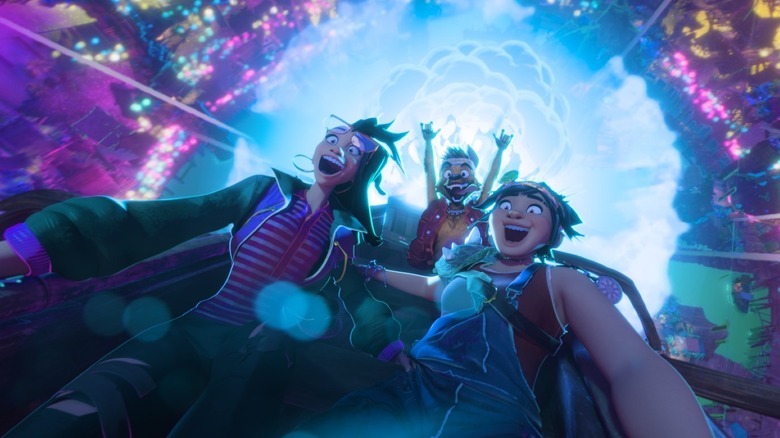
The experience of watching "Forgotten Island" is less about waiting to see whether or not it lives up to expectations, but figuring out how early on it wins you over. Is it as soon as the opening "Up"-style montage sequence that fully establishes who our two main protagonists are in Jo (H.E.R.) and Raissa (Liza Soberano) and the strength of their childhood bond? Is it when they're actually transported to the magical realm of Nakali, which seems like a paradise but may end up costing them their memories of everything they hold dear? Or maybe the realization comes in the midst of their manic, frenetically edited journey that puts their friendship to the ultimate test at their most vulnerable moment?
Whatever the case may be, directors Joel Crawford and Januel Mercado have cooked up something unforgettable with "Forgotten Island." The unique animation style and its outside-the-box creativity have taken much of the spotlight throughout the marketing campaign, and rightfully so. So, too, has the Filipino mythology and attention to cultural detail layered throughout the story. This is an innovative film in every sense of the word, and the technical accomplishments reflect that perfectly. But it's the story itself, the three dimensional characters (including Dave Franco as the voice of frat-bro third wheel Raww), and the themes involving memory as magic that make this truly sing.
If animation is dead-set on pushing the envelope of what the medium is capable of, "Forgotten Island" feels like its most spectacular culmination. (Jeremy Mathai)
The Furious
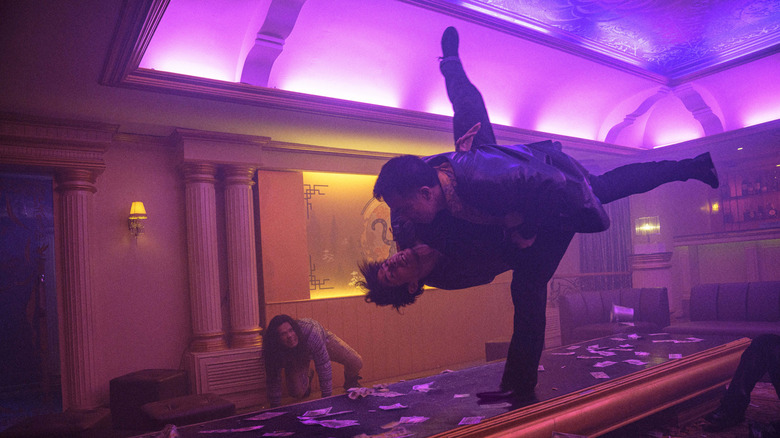
A non-stop fight-fest, Kenji Tanigaki's "The Furious" is already generating plenty of hype via the festival circuit. I'm pleased to say the hype is warranted — this is one of the best action movies I've ever seen, one that takes the form and genre to dizzy levels. It builds, and builds, and builds, with each fight sequence more intense than the last. This is the type of international action pic that puts Hollywood action movies to shame.
After his daughter is kidnapped by human traffickers, mute ass-kicker Wang (Mo Tse) embarks on a bloody journey to rescue her. Along the way, he teams up with Navin (Joe Taslim), a cop whose wife vanished while she was investigating the same human traffickers that snatched Wang's daughter. The duo move from one location to the next, engaging in blood-drenched fights that will have you bouncing in your seat like a kid on a sugar high. "The Furious" is the type of bone-crunching experience that reminds you of the power of movies, especially when they're full of scenes of dudes beating the hell out of each other. (Chris Evangelista)
Hokum
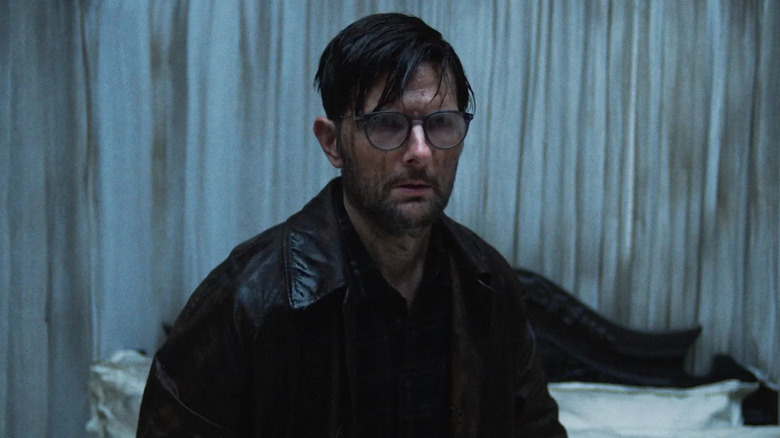
Damian McCarthy's utterly terrifying horror movie "Hokum" feels like the best possible adaptation of a long-lost tale of terror published in 1873. That's not to say it's a throwback or old-fashioned, but rather that it feels warped into our reality from a different age. For a movie so deliberately about feeling isolated and alone with something primal that means you harm, it's perfect. This is folk horror that smells like a campfire on a cold night.
Adam Scott, increasingly one of the MVPs of modern genre cinema, does that always impressive magic trick of playing a character so stupendously awful that you're as surprised as anyone when you end up rooting for him in the end. His journey to a haunted hotel in the Irish wilderness, first for more personal reasons and then for a more sinister mission, is the perfect kind of slow burn, the same kind of pacing that made McCarthy's previous film, "Oddity," such a creepy pleasure. Things are normal until they're not, and the supernatural terror serves as more of a setting than the driving point of it all. Rarely has a haunted hotel functioned so well, and it works wonders here not as the focus of the plot, but as the setting for a very different kind of story.
Rich in atmosphere and filled with scares that land like lightning strikes, "Hokum" proves McCarthy deserves to be mentioned in the same breath as Jordan Peele and Zach Cregger when it comes to modern horror masters. (Jacob Hall)
Hope
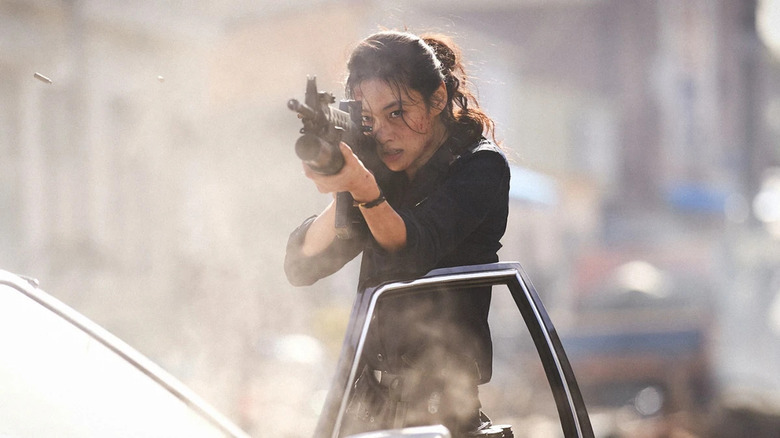
Na Hong-jin's "Hope" is the thrill ride of the year, one that'll slam you full of at least a gallon of adrenaline. In "Hope," the small South Korean village of Hope Harbor comes under attack by a humanoid giant, which is really an alien whose ship crashed in the nearby forest. What's more, the alien didn't come alone. "Hope" holds off showing the monster for as long as possible; the movie at first follows Police Chief Ko Bum-seok (Hwang Jung-min) following the destruction through town. Once the suspense threatens to let up from dragging out, that's when the alien finally appears.
Cue the most relentless, exhilarating chase sequence I've seen in a movie this year. I must highlight one particular stretch of this sequence; police officer Im Sung-ae (Jung Ho-yeon) arrives on the scene, parks her car, and unloads assault rifle rounds (and eventually) grenades in the direction of the charging alien. The advancing danger of the alien feels all too real as even heavy weaponry seems to barely impede it.
The CG rendering of the aliens is hardly flawless, but the designs are striking. They're human-shaped, with some soulful eyes, but are overgrown and have (to our eyes) monstrous features, shapeshifting powers, and speed. "Hope" only explores the aliens' POV at the very end, keeping them as only relentless monsters in our eyes and the characters' too. That withholding of context is one reason that "Hope" has the most baffling yet ballsiest cliffhanger of the year. (Devin Meenan)
Hoppers
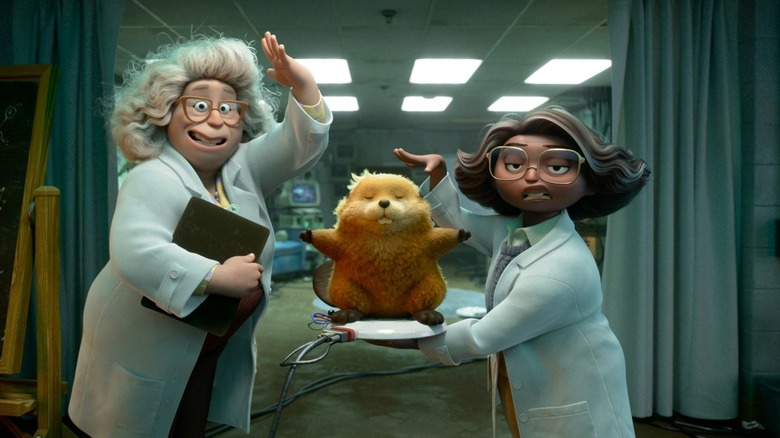
What if you take the basic premise of James Cameron's "Avatar," as well as its environmental message, but wrap it in the most unhinged animated slapstick comedy movie of the last decade? You'd get Pixar's "Hoppers," one of the best movies of 2026 and the best thing the studio has done in years. This is a movie where an actual murder is played for laughs (because it's hilarious), openly jokes about how similar it is to "Avatar," and seems to confirm the wild unified Pixar theory.
A big reason why "Hoppers" works is due to the creative genius behind it — Daniel Chong. Best known for creating "We Bare Bears," a similarly chaotic and hilarious cartoon, Chong lets his wildest ideas take life in "Hoppers." This includes some truly messed up body horror sure to traumatize kids — the way every proper animated movie should. Most importantly, however, Chong mixes outrageously funny slapstick comedy with a rather nuanced and emotional tale of fighting for what you believe in, and managing some serious anger issues. This is an unapologetically angry movie, but not one devoid of hope. Some adults may scoff at the overly hopeful tone of the film's ending, but Chong is a sentimental at heart, and he makes sure "Hoppers" strikes the right balance of reminding us of the horrors and cruelties of our reality without fully bumming the audience out. The result will make you laugh, cry, scream in anger, then cry laughing again. (Rafael Motamayor)
The Incomer
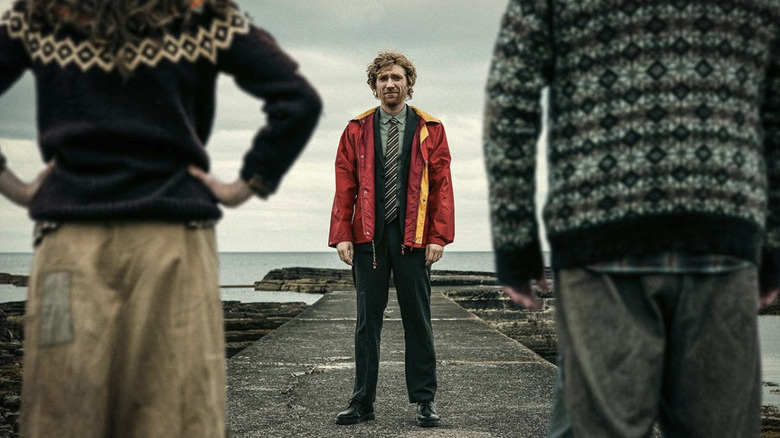
If you like Domhnall Gleeson — and I've yet to meet a person who doesn't — you'll probably like "The Incomer," a super charming indie in which the winning Irish actor plays Daniel, a low-level employee in the Scottish government who must travel to a remote island to relocate its two residents. But he gets more than he bargained for when he arrives and finds that the residents, a brother and sister named Sandy (Grant O'Rourke) and Isla (Gayle Rankin), have spent the past few decades there completely alone, unconnected from the modern world, taught to be self sufficient, and trained to attack "incomers" in order to protect their homeland. As Daniel slowly begins to form a friendship with the duo, there are clear messages about the joys that can come from getting out of your comfort zone and extending grace to those you don't understand. But thankfully, the movie never feels like a polemic — it leads with comedy and often feels like an early Taika Waititi joint, back when he was, ya know, good.
First time feature filmmaker Louis Paxton cleverly juxtaposes Isla and Sandy's folklore with the stories that Daniel grew up reading and watching, resulting in some of my favorite scenes of any movie this year. With its delightful sense of humor, "The Incomer" will easily put a smile on your face. In a world that frequently seems like it's teetering on the edge of full-blown oblivion, it feels good to watch a pure crowd-pleaser again. (Ben Pearson)
The Invite
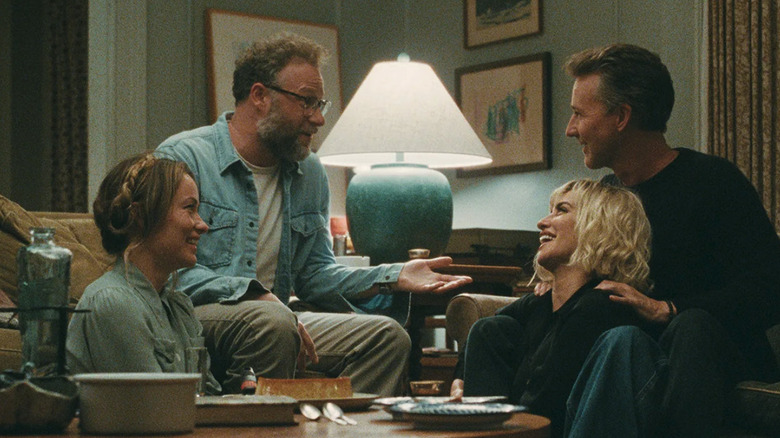
Putting Olivia Wilde, Seth Rogen, Edward Norton, and Penélope Cruz in a movie together sounds like a game of Hollywood Mad Libs, but this quartet has delivered not only one of the funniest and best movies of 2026 but also four of the best performances of the year.
"The Invite" follows bickering San Francisco couple Joe (Rogen) and Angela (Wilde, who also directs) as they prepare to host a dinner with their neighbors Hawk (Norton) and Pina (Cruz). While Angela is keen to impress, Joe has been frustrated with the, shall we say, nighttime sounds of immense pleasure penetrating their walls each week from Hawk and Pina's upstairs apartment. Angela sees Hawk and Pina as the epitome of cool, but Joe doesn't even want to have the dinner at all, and he's planning on using this opportunity to finally complain about the noise.
The movie unfolds like a stage play with just these four characters interacting throughout, with a script by Rashida Jones & Will McCormack and Cesc Gay that packs every scene with overlapping dialogue that vacillates between being downright hilarious to blisteringly awkward and even painful. In fact, sometimes that all happens within just the span of a few minutes.
The actors are all operating at the top of their game, navigating a social situation that ebbs and flows with relationship woes, marital barbs, and just plain funny repartee. It's riotously hilarious, perfectly acted, meticulously written, and you couldn't ask for a better comedy. (Ethan Anderton)
Is God Is
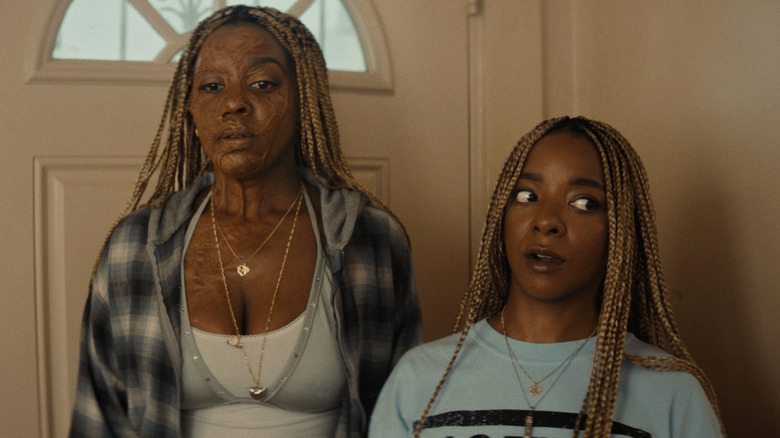
Aleshea Harris' "Is God Is" was released the same week as Curry Barker's horror hit "Obsession," so many audiences overlooked it. This is a pity because it's one of the best and perhaps most important films of the year. In the 2020s, when those in positions of power are proud to be cruel, abusive bullies, "Is God Is" is a righteous blast of vengeful fresh air. Kara Young and Mallori Johnson play Racine and Anaia, twin sisters with a horrid past. When they were toddlers, their sadistic father (Sterling K. Brown) attempted to burn their mother (Vivica A. Fox) to death in a bathtub. The incident left them both scarred, Anaia more than Racine.
Out of the blue, their mother, whom they thought was dead, calls for them and requests that they find and kill their father. Make him real dead. Racine is all about it. Anaia is somewhat hesitant. What follows is a 1970s-inflected road trip that borrows from exploitation flicks and revenge movies as much as it relies on real-world righteous anger. The film is slam poetry and Greek tragedy, a film with a gun in its hand and nothing to lose. It's bleak and direct and amazing, and both Young and Johnson are amazing.
Eventually, the girls will have to confront their wicked father, but not before meeting several other of Daddy's victims that he left along his path. "Is God Is" demystifies charismatic abusers, letting us see their cruelty beyond their silver-tongued allure. (Witney Seibold)
Masters of the Universe
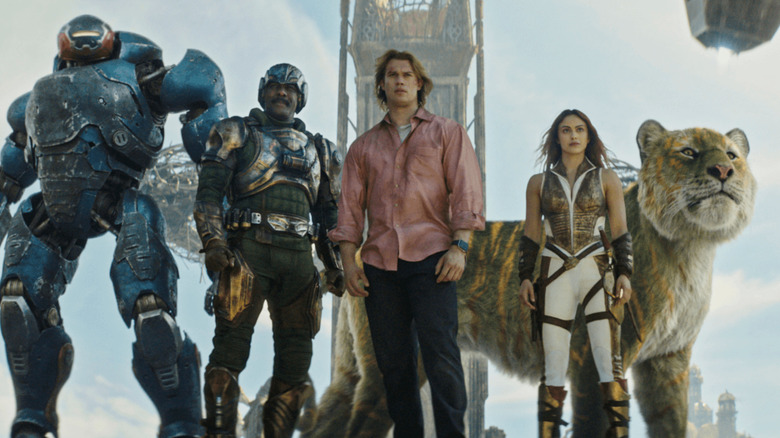
In the year 2026, plenty of people expected "Masters of the Universe" to be nothing more than another nostalgic cash grab from a studio hoping to make some easy bucks coasting on the love of the classic He-Man cartoon still felt by children of the 1980s. So we were certainly surprised when director Travis Knight ("Bumblebee," "Kubo and the Two Strings") basically gave us "Barbie" for boys, even if it wasn't quite as sharp or insightful.
Of course, since this is intended to be a blockbuster movie, despite flopping at the box office, there are some outstanding fantasy action sequences. In fact, the climactic fight between Skeletor and He-Man (aka Adam) might initially look like it's been created entirely in computer generated slow-motion, but these sequences were shot practically, and they're worth a second look if you initially cringed at them. But that's not all.
So much more than a lazy fantasy franchise revival, "Masters of the Universe" is a spectacularly entertaining examination of toxic masculinity through the eyes of Prince Adam, a boy (Artie Wilkinson-Hunt) torn from his home world of Eternia as a child and suddenly forced as a grown man (Nicholas Galitzine) to save his people by reckoning with the theatrically evil Skeletor (Jared Leto, who manages to not only avoid being terrible but somehow succeeds with flying colors, especially purple). Sprinkled in are some hilarious gags calling back to the mythology of the He-Man cartoon, but in a way that's more clever than the usual winks and nods. It's actually a great flick! (Ethan Anderton)
Mother Mary
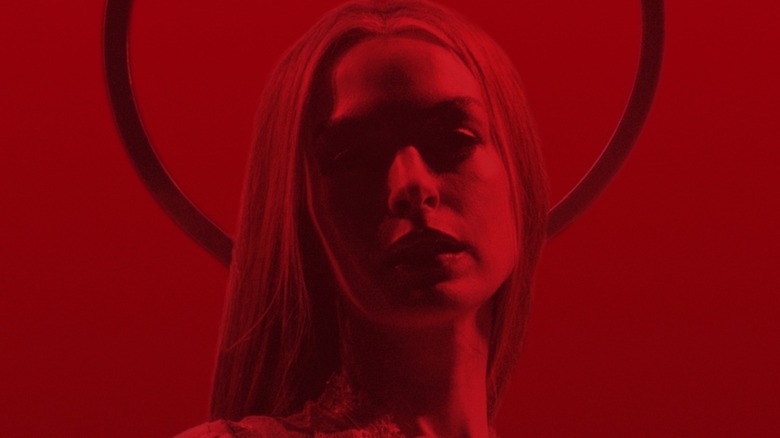
David Lowery makes movies that feel like they're casting a spell on the audience, and his pop star opus, "Mother Mary," might be the most effective yet. The script, partially inspired by gothic literature, is full of sharp observations about friendship, betrayal, and sacrifice. It dips into the metaphysical, but in a way that keeps the viewer engaged and curious about the symbolism on display; you can read this movie a million different ways, and that purposeful ambiguity is one of its greatest assets.
"Mother Mary" is a small-scale production with a large-scale ambition that doesn't feel stymied by its limited budget. It seems like Lowery and his team found the most impressive way to stretch every dollar they had, especially when it comes to creating Mother Mary's stadium concert performances. One of the most creative workarounds in the film comes during a montage in which we see a silhouetted Mary ascending a set of stairs to the stage, and then immediately descending another set with an implied concert having taken place in the moments in between. But most scenes take place in a big, mostly empty barn, featuring only Anne Hathaway and Michaela Cole's characters talking to each other, and their spectacular performances are as responsible for maintaining the film's trance as its shadowy, eerie setting. (Ben Pearson)
The Musical
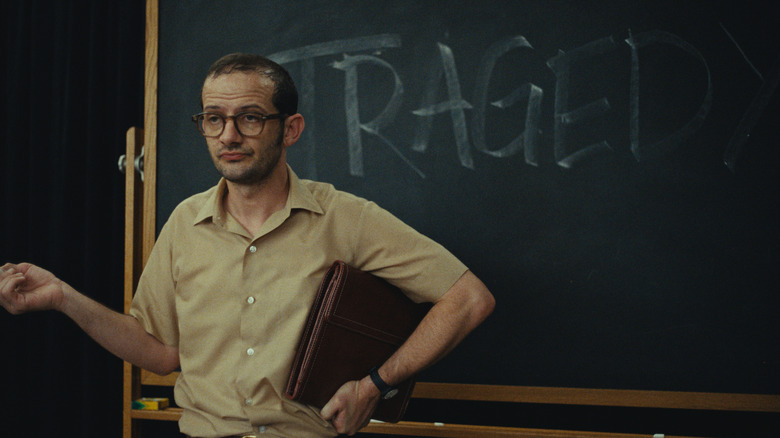
"The Musical," directed by Giselle Bonilla and written by Alexander Heller, concerns a man taking a wild gamble that may fall apart if he fails, and might ruin his own life and the lives of those around him if he succeeds. These stakes are reflected with the film itself: it's an original comedy in which a middle school theater teacher, Doug (a pitch-perfect Will Brill), after being frustrated at his crushed career dreams and jilted by his ex Abigail (Gillian Jacobs) in favor of the obnoxiously image-conscious Principal Brady (Rob Lowe), decides to have his students perform an original musical. That musical has to be outrageous and offensive without toppling the film's delicate tone, which is part "Apocalypse Now," part "School of Rock," and all wrapped up in a pastiche that's so steeped in Hitchcockian tropes it'd make Brian De Palma blush.
In other words, "The Musical" could've been a spectacular failure, so the fact that it's just as spectacular a triumph makes it that much sweeter. Bonilla, Heller, and Brill have concocted a character study of pure spite in Doug, one that is strong enough to feel like a release valve for so many of us frustrated by The Machine against which we rage daily. As a satire, it reaches heights and depths previously achieved by high school genre-bending classics "Heathers" and "Brick." All that, plus glorious wish fulfillment for anyone who's ever wanted to raise a middle finger while quitting their job. "The Musical" sings. (Bill Bria)
Nirvanna the Band the Show the Movie
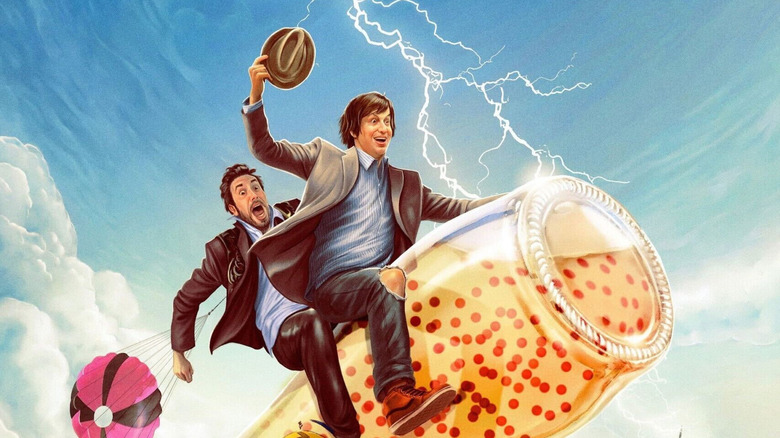
It's high praise when a movie spinning out of a TV series can still keep source material virgins hooked. The best case of that this year is Matt Johnson's "Nirvanna The Band the Show the Movie," the latest chapter of two Canadian musicians' (Johnson and his friend Jay McCarrol playing themselves) absurd schemes to try and book a gig at Toronto's Rivoli club. How absurd? In this movie, they accidentally invent time travel — and one of the best "Back to the Future" parodies you'll ever see.
I have never seen the original "Nirvanna the Band the Show," and my only past experience with Johnson was his (much) more realistic biopic "Blackberry." But "Nirvanna" will win you over with its madcap energy just like the way the movie's Matt keeps convincing Jay to partake in his crazy plans. One of those plans? Skydiving off of Toronto's CN Tower. The Mayor of Toronto herself, Olivia Chow, is on record as loving "Nirvanna The Band the Show the Movie" so much she can overlook any and all city bylaws Johnson's guerilla filmmaking crew may have broken.
For all the singular parts of "Nirvanna," it's still a buddy movie with a familiar emotional center: Two friends whose hard times only make them see how much they need each other. Even if this is your first time meeting Matt and Jay, they'll play your heartstrings. (Devin Meenan)
Obsession
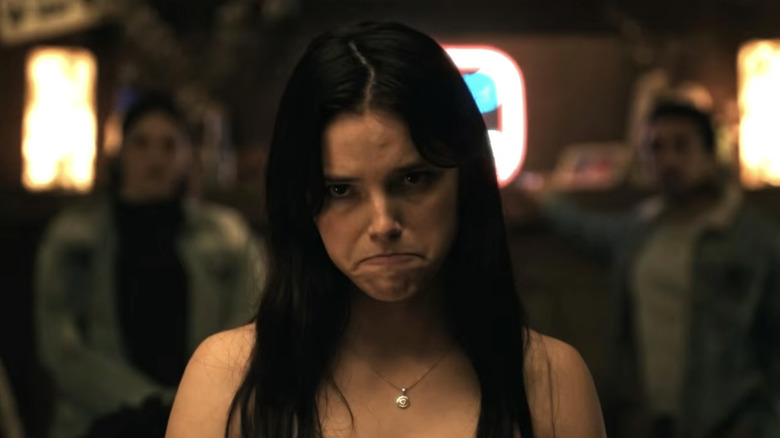
"Obsession" is the latest horror film from a filmmaker best known for their comedic fare, and it's an unsettling, gnarly nightmare of a movie that feels like a twisted, adult "Goosebumps" book.
Curry Barker, of sketch comedy duo That's a Bad Idea, tells a deceptively simple story about hopeless romantic sad boy Bear (Michael Johnston), who has a secret crush on his beautiful, lovely co-worker Nikki (Inde Navarrette). Unable to bring himself to actually tell Nikki about his feelings, he instead makes a hasty decision to put his romantic prospects in the hands of a "One Wish Willow," a novelty gift that supposedly grants just one wish.
Surprisingly, Bear immediately gets his wish, but as countless tales like this have illustrated before, Bear should have been careful what he wished for. Asking for Nikki to love him more than anyone in the world, that's exactly what the "One Wish Willow" grants in the most extreme way.
Very quickly it becomes clear that whatever has driven Nikki to suddenly fall in love with Bear is not natural. Nikki's love becomes downright scary, and Navarrette delivers a stunning, terrifying performance unleashing unsettling outbursts of anger and pain and unnerving stares of longing and affection. Johnston also makes for the perfect loser, one who you never feel sorry for either, which is a very important distinction in this cautionary tale.
"Obsession" isn't just one of the best horror movies of 2026, it's one of the best movies of the year. (Ethan Anderton)
The Odyssey
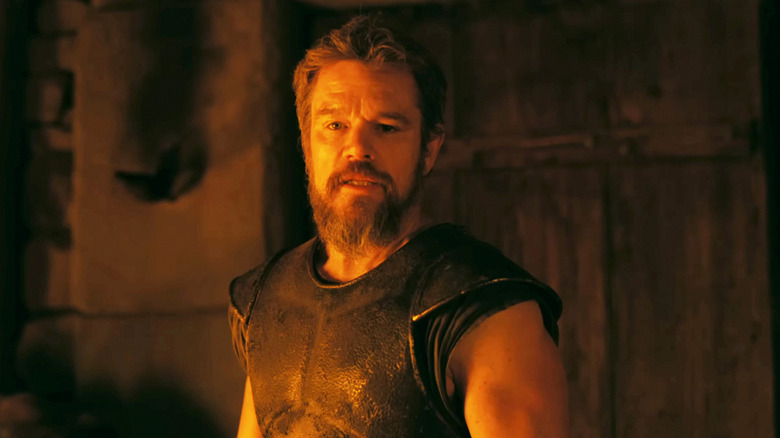
Christopher Nolan's "The Odyssey" is an almost overwhelmingly massive epic, one that serves as a great companion piece to 2023's "Oppenheimer" in how it explores great men who carry the weight of bringing untold horrors and destruction to the world. Visually, this is as big as a modern blockbuster gets, a genuinely awe-inspiring epic journey that feels too big for even the biggest screen to properly capture. Nolan's commitment to practical effects results in some stunning filmmaker being on display, like a giant cyclops puppet (combined with a real actor), or a truly astonishing and terrifying sequence involving pigs that shows Nolan needs to make a horror movie next.
But the film's biggest achievement is how it manages to have a relatively fresh take on "The Odyssey" that's more than just a retelling of Homer's epic poem. Nolan uses the film as a figurative Trojan Horse, using the story's familiarity in order to deliver a message about the end of the Bronze Age and about the end of civility and civilization that's poignant in 2026. Featuring Matt Damon's best acting in years, a haunting score by Ludwig Göransson, and also an incredibly goofy and entertaining performance from Robert Pattinson, the third act of "The Odyssey" is some of Nolan's best work, a powerful, action packed-finale that paints the entire story up to that point in a new light and speaks not only to the ancient world, but today. Cinema in 2026 doesn't get much bigger than this. (Rafael Motamayor)
Over Your Dead Body
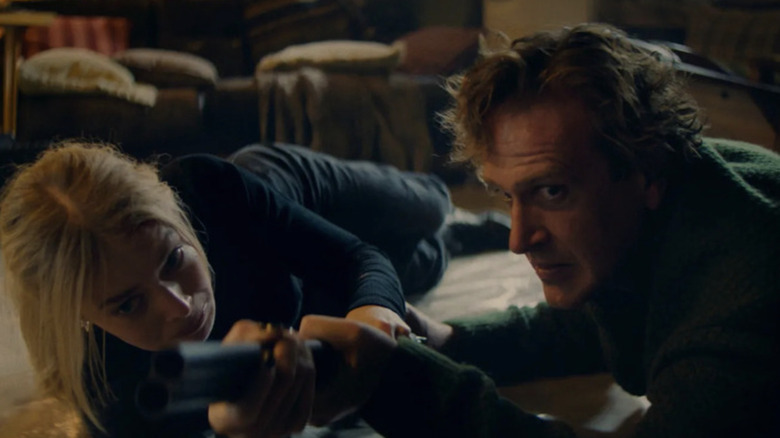
Movies in which a couple's affection turns to violent, even murderous anger have been made before; quite recently, in fact. What's so special about "Over Your Dead Body" isn't its "battle of the sexes" premise of a married couple planning each other's murder. Nor is it the twist on that premise, in which Dan (Jason Segel) and Lisa (Samara Weaving) must unexpectedly contend with a trio of home invading escaped convicts, thereby forcing the embittered duo to rely on each other for survival. It's the sharp satiric edge of director Jorma Taccone (yes, of The Lonely Island fame) and writers Nick Kocher and Brian McElhaney who, along with the fabulous cast, bring such unique, hilarious, violent, subversive life to such material.
There's a surprising amount of nuance in "Over Your Dead Body," as it's not every movie that can deftly keep the tension high while throwing in some extremely dark (or even extremely goofy) humor. It helps that amongst all the gore gags (and just plain gags) there's a lot of tangible honesty in the film, right down to Segel roasting Weaving's real-life accent. Taccone's remake of "The Trip" ultimately functions as a Trojan horse of a movie, as it's perversely one of the most genuinely romantic films to come along this year. Its unfolding from relationship drama to home invasion horror to sly media satire proves that films, like people, can keep surprising you. (Bill Bria)
Primetime
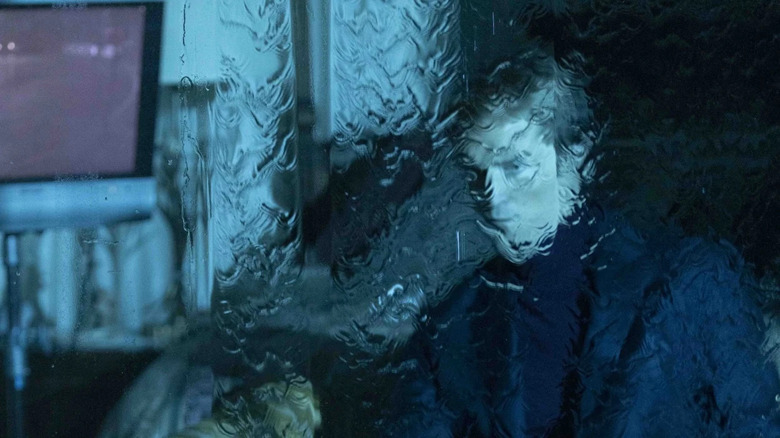
Robert Pattinson turns in yet another iconic performance in "Primetime," Lance Oppenheim's darkly funny, highly disturbing look at the phenomenon that was "To Catch a Predator." As "Predator" host Chris Hansen, Pattinson is scary and strange, playing the newsman as a ratings-chasing blank space who seems to operate purely on instinct, consequences be damned.
Despite what some media illiterate viewers might think, "Primetime" isn't defending or even sympathizing with the suspected pedophiles Hansen and his show exposed. Instead, it's examining how such disturbing subject matter became pop culture entertainment, and how such an approach in the name of "justice" ends up being hollow and corrosive. Pattinson is the draw here but he's backed up by a great supporting cast, including the always-wonderful Merritt Wever as the show's producer, who is even more morally bankrupt than Hansen, and Skyler Gisondo, who turns in his best performance to date as an actor hired to be a decoy on the show. (Chris Evangelista)
Project Hail Mary
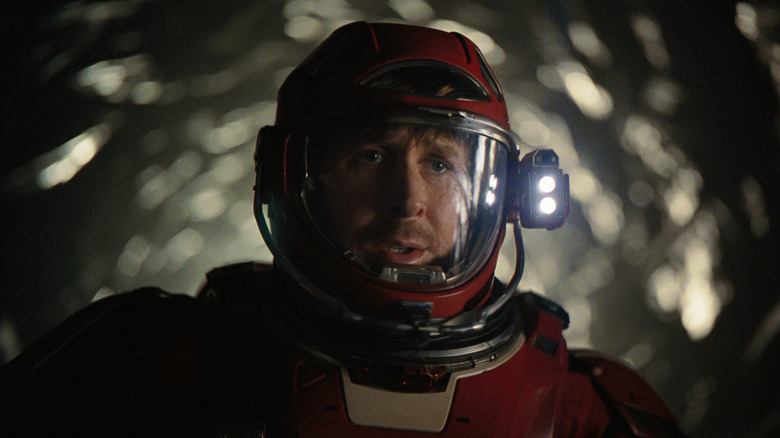
It's easy to be hyperbolic when describing a good movie. That said, "Project Hail Mary" is the rare movie that truly earns every bit of praise that it has garnered. It's about as good as cinematic science fiction gets. Ambitious, touching, thrilling, and visually stunning, it's one of those movies that reminds us just how f*****g great movies can truly be. Yes, it's that good.
Based on author Andy Weir's beloved novel of the same name, it centers on a science teacher named Ryland Grace (Ryan Gosling) who wakes up alone on a spaceship with no memory of how he got there, light years from home. As his memory returns, he realizes he's on a mission to stop a mysterious substance killing the Earth's sun.
Phil Lord and Chris Miller may not have had any idea how to make a movie when they made "Cloudy with a Chance of Meatballs." Rest assured, they sure as hell know how to make one now. This movie is nothing shy of a miracle. From the sky-high stakes that pull the viewer in almost immediately to making one of the most lovable aliens in the history of aliens on screen (Rocky forever!), they nailed it.
Ryan Gosling delivers arguably a career-best performance. Lord and Miller have outdone themselves. Rewatchable and deeply satisfying, it's going to go down as one of the best movies of the year. (Ryan Scott)
Resident Evil
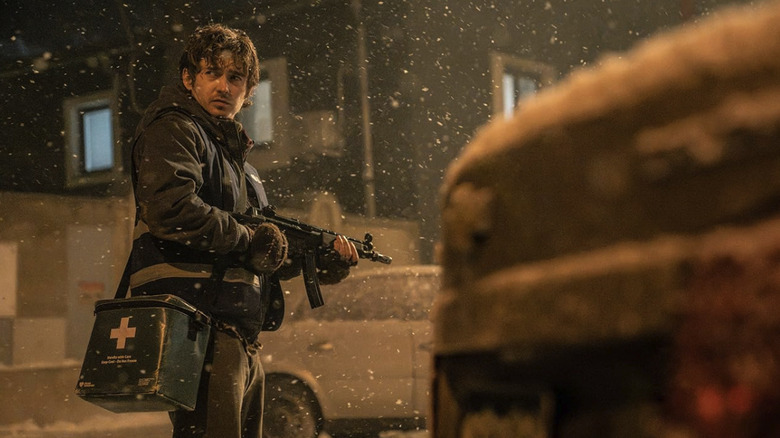
After "Barbarian" and "Weapons," Zach Cregger's hot streak continues with "Resident Evil," a video game adaptation that takes a refreshing approach to tackling intellectual property. The film follows Bryan (winningly played by Austin Abrams), a character invented specifically for this story, and thrusts him into the larger than life world established in the games. Thankfully, you need not know anything about this universe or its lore to enjoy the movie; we're with Bryan the whole time, following this regular guy through a horrific night in which a zombie apocalypse breaks out.
The movie is darkly funny, with Bryan constantly muttering and swearing to himself about his situation, and there's a through line about fatherhood and responsibility that gives the film a bit of dramatic heft. But primarily, this is a gory and gross descent into hell, with plenty of terrific set pieces. (There's a jump scare in a farm house that is among the best scares in the 21st century so far.) Cregger has catapulted himself into the upper echelon of horror filmmakers in a very short time, and it's thrilling to see him shift from the comparatively highbrow realm of "Weapons" to the no-holds-barred blast of "Resident Evil." Wherever he goes, we're eager to follow. (Ben Pearson)
The Samurai and the Prisoner
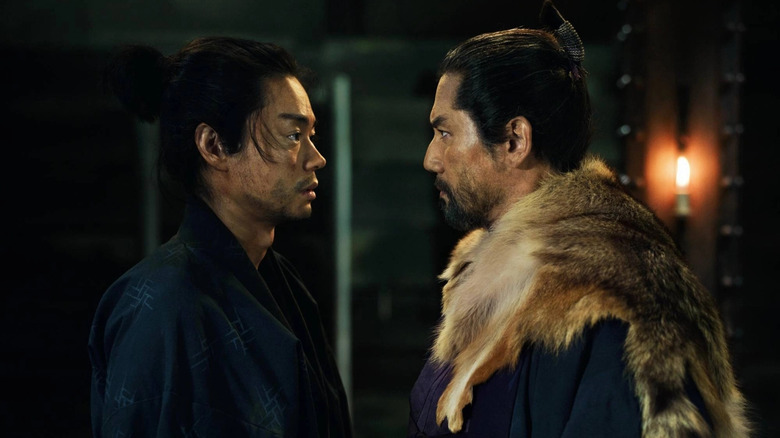
Kiyoshi Kurosawa is one of Japan's most acclaimed filmmakers. He's best known internationally for his turn of the millennium J-horror classics: 1997's "Cure," a seriously creepy serial killer mystery, and 2001's "Pulse," one of the most unnerving ghost stories you'll ever see. But Kurosawa does not rest on those laurels. In 2025, he released "Cloud," a digital-age thriller. For his latest project, he followed up something so modern by heading in the exact opposite direction: his first period piece, "The Samurai and the Prisoner."
Based on a novel by Honobu Yonezawa, "The Samurai and the Prisoner" is set in 16th century Japan and is a fictionalized story about Araki Murashige (Masahiro Motoki). A feudal lord, Murashige holds a castle strong against the forces of the infamous samurai Oda Nobunaga. But, unusually for a samurai and their brutal honor code of bushido, Murashige also tries to treat his enemies with mercy. The titular prisoner is Kuroda Kanbei (Masaki Suda), a messenger from Nobunaga who Murashige merely imprisons instead of executing.
"The Samurai and the Prisoner" has been billed as a murder mystery set in feudal Japan, but that simplifies the film. Divided into chapters corresponding to seasons, the film sees Murashige investigating repeated mysteries in succession, rather than only one. It's a structure that captures the paranoia of being a leader during a siege, where you're locked inside a fortress with people who might see hope only in betraying you to save themselves. (Devin Meenan)
Send Help
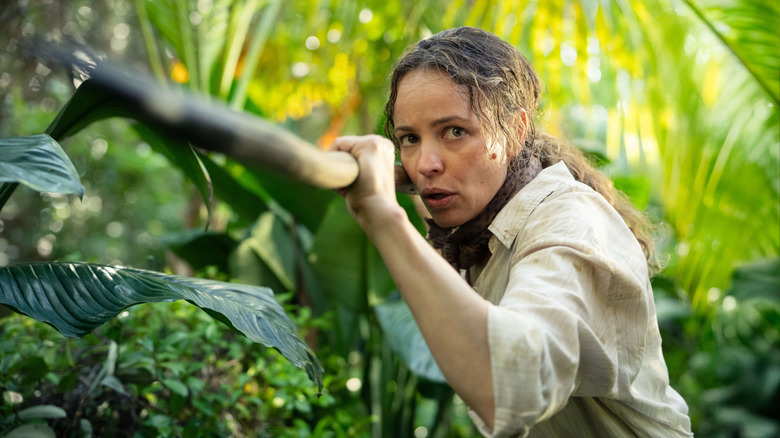
If you're going to be stranded on a deserted island with a boss you can't stand, may you be lucky enough to have director Sam Raimi guiding your every step. "Doctor Strange in the Multiverse of Madness" reminded blockbuster audiences that the "Spider-Man" filmmaker still has the juice to make superheroes bold and imaginative again, but "Send Help" is emphatic proof that the man behind "Evil Dead" and "Drag Me to Hell" still can take us back to school. His latest effort has a little bit of everything: cornball humor (which some may mistake as "corny"), abrupt jump scares, and a disturbing amount of psychological mind games to keep us on our toes, to boot.
All this adds up to one of the year's most unique and unforgettable moviegoing experiences. "Send Help" is nothing short of a late-summer thrill ride masquerading as a January movie — one that allows the uber-talented Rachel McAdams to turn in a genuinely unhinged performance (complimentary), provides room for moments of subtle poignancy and heart, and even adds a much-needed twist on the typical "Eat the rich" storytelling mode currently dominating our entertainment. Oh, and we'd be remiss if we didn't mention that the visceral plane crash early on includes a nasty sight gag for the ages.
In lesser hands, this could've been little more than a "Lord of the Flies" or "Castaway" knockoff. Instead, nobody but Sam Raimi could've made a movie as gnarly as this. Thank goodness he did. (Jeremy Mathai)
The Sheep Detectives
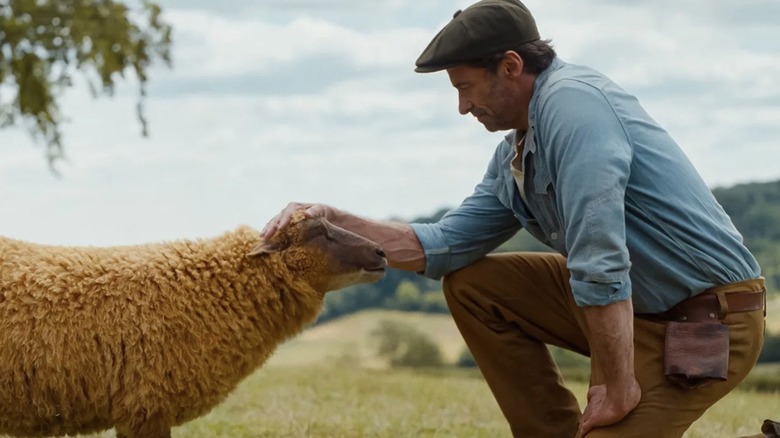
Based on Leonie Swann's international bestseller "Three Bags Full," "The Sheep Detectives" is an uncommonly smart and witty family film that works splendidly for all ages. The live-action directorial debut of Kyle Balda ("Minions," "Minions 2: The Rise of Gru"), it hooks younger viewers with its colorful assortment of barnyard animals before turning into an absorbing murder mystery in which a flock of sheep must solve the killing of their beloved shepherd (Hugh Jackman). Craig Mazin's screenplay is a gem that lays out a compelling whodunnit, while also giving us the most endearing group of talking animals since the "Babe" duology.
The sheep are more than up to the task thanks to Jackman's habit of reading mysteries to them in the evening. He doesn't think they can process anything he's saying, but, oh, how wrong he is. In fact, Lily, one of his favorite sheep voiced by Julia Louis-Dreyfus, is a regular Jessica Fletcher, and it's a joy to watch her put the pieces together. The humans are a hoot, too, with Emma Thompson, Molly Gordon, Nicholas Braun, Hong Chau and Tosin Cole being particular standouts. But what makes "The Sheep Detectives" truly special is how the mystery leads the sheep on a journey toward the acceptance of death. That's weighty stuff, but it's handled sensitively and intelligently, and it may just leave you shedding a tear or twenty. (Jeremy Smith)
Spider-Man: Brand New Day
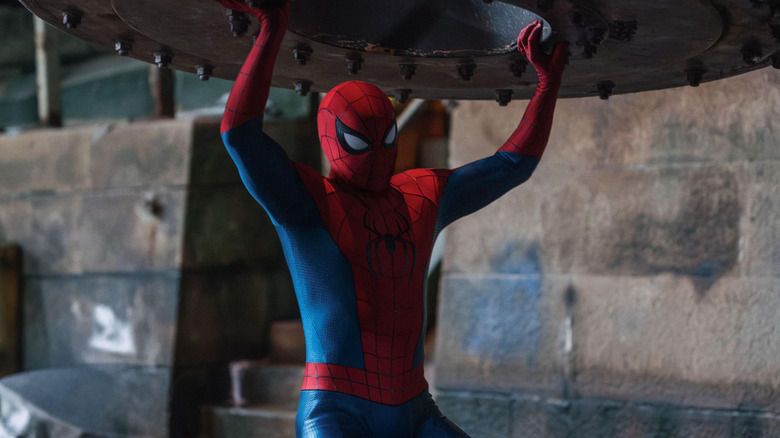
It's not shocking to say that a new "Spider-Man" movie is good. Many of them have been, even transcending the superhero genre to become something truly great. What is shocking is that, against all odds, "Spider-Man: Brand New Day" is genuinely one of the best movies of 2026. Despite having to live up to 2021's massive spectacle that was "Spider-Man: No Way Home," director Destin Daniel Cretton ("Shang-Chi and the Legend of the Ten Rings") and Marvel Studios pulled it off.
The movie sees Tom Holland's Peter Parker fighting crime full-time as Spidey in a world that doesn't remember him. Seeing his old friends move on without him sparks a change in Peter he can't control. Meanwhile, a shocking new threat to the city emerges in the form of a powerful villain.
Whereas "No Way Home" was a welcome multiversal epic, "Brand New Day" has the restraint to be a far more ground-level movie focused on Peter. It's a more human movie, albeit one that isn't light on thrilling spectacle. Even the Marvel cameos in "Brand New Day" have something in common; they're not frivolous. It's very fun seeing Spidey interact with the Hulk, but there's a good reason for that as well.
It's a reminder that when the Marvel Cinematic Universe is firing on all cylinders, it's about as good as mainstream entertainment gets. This movie lives up to that golden era MCU standard. (Ryan Scott)
Time and Water
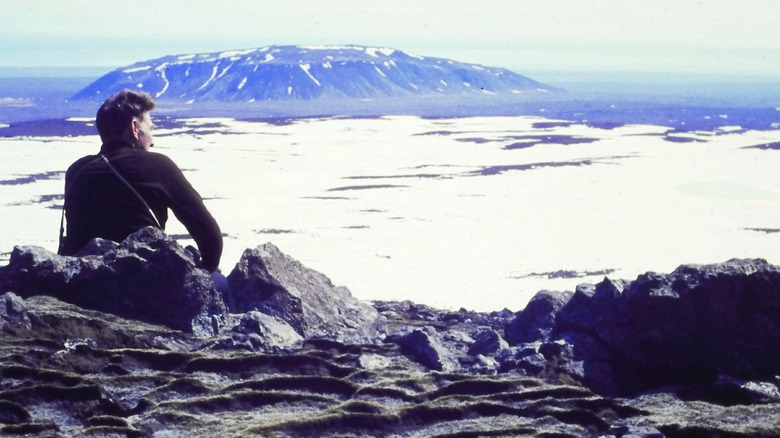
If you saw Sara Dosa's previous documentary, the 2022 volcano love story "Fire of Love," you know she can work wonders when it comes to telling real-life stories that juxtapose humanity with the magnificence of nature. With this year's "Time and Water," she moves from lava to glaciers with an excellent documentary about an Icelandic writer who was chosen to do something no one else had ever done: write an official eulogy for the first glacier of the modern era to be wiped out because of climate change. While that event does indeed take place here, the narrative — like "Fire of Love" before it — is as much about the human spirit as it is the wondrous shots of nature. The cinematography is as dazzling as something like "Planet Earth," but without the heart at its center, "Time and Water" would be equivalent to a slick screensaver.
Thankfully, it has plenty of heart. It's presented as a time capsule for future generations, showcasing not only the immense power of the glacier and the devastating sadness tied to its loss, but the formation of the writer's own family. His grandparents, some of the first people to explore Iceland's glaciers, met and fell in love on the ice, but with age, their memories are fading almost as quickly as the ice itself. Poignant, personal, and profound, "Time and Water" is an exceptional piece of filmmaking and a wake-up call to anyone whose head is still buried in the sand. (Ben Pearson)
Tony
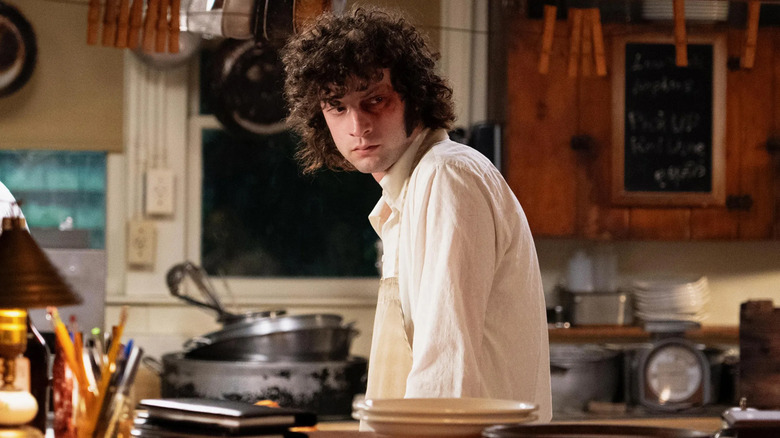
A biopic about Anthony Bourdain probably shouldn't have worked. Bourdain was a titanic figure in not only the food world, but pop culture in general; the world-class chef became a celebrated author and parlayed that success into being the face of multiple TV shows before his tragic death in 2018. But Matt Johnson, the director of this year's bonkers "Nirvanna The Band The Show The Movie," is in a completely different mode with "Tony," which wisely only explores one crucial summer in the young Anthony Bourdain's life. The film hits familiar beats that you've seen in other coming-of-age stories, but in a way that makes the movie feel classic instead of reheated leftovers. It also manages to strike an exceptional balance between the specificity of Bourdain's experience (or at least a condensed, cinematic version of it) and the universality of what it can feel like to suddenly find your passion when you're young and aimless.
Dominic Sessa, who held his own against Paul Giamatti in "The Holdovers" a few years ago, is tremendous as Bourdain, avoiding the easy route of doing an impression and instead lending a naturalism that allows for a more fascinating read of the film. There's a meta quality to watching Sessa, an up-and-coming actor who is finding his way in the industry, play Bourdain doing a similar thing in a similar period of his life, and the fact that Johnson embraces that connection lends the film an extra frisson that it wouldn't otherwise have. (Ben Pearson)
Toy Story 5
The main characters of the "Toy Story" films often come face to face with the reality that old toys get thrown away. But over 30 years since the original "Toy Story" hit theaters, audiences haven't tired of Woody (Tom Hanks), Buzz (Tim Allen), and co. yet.
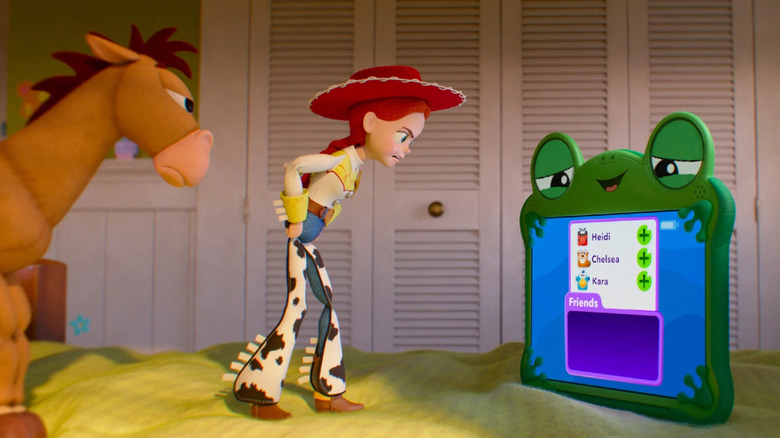
The primary theme of "Toy Story 5" is technology. To be frank, lots of kids don't play with traditional toys like action figures or dolls anymore, but instead rely on screens and the television, video games, and/or social media on said screens to stay entertained. "Toy Story 5" tackles this by pitting the toys against the newest addition to Bonnie's (Scarlett Spears) room: Lilypad (Greta Lee), a frog-themed learning tablet. Next to Lily, are Bonnie's other toys obsolete? Toys' replaceability is something past "Toy Story" films have all explored, but "Toy Story 5" doesn't merely rehash these themes, it finds a new, cutting edge way to explore them.
At the end of "Toy Story 4," Woody left Jessie (Joan Cusack) in charge of Bonnie's toys as the new sheriff while he went off into the world with Bo Peep. "Toy Story 5" pays that off and finally puts Jessie in the lead role. "Toy Story 5" pays off crucial beats for Jessie's character, from her relationship with Buzz to her tearjerker backstory from "Toy Story 2," which reemerges here in a way that manages to elevate "Toy Story 2" instead of diminishing it. (Devin Meenan)
Union County
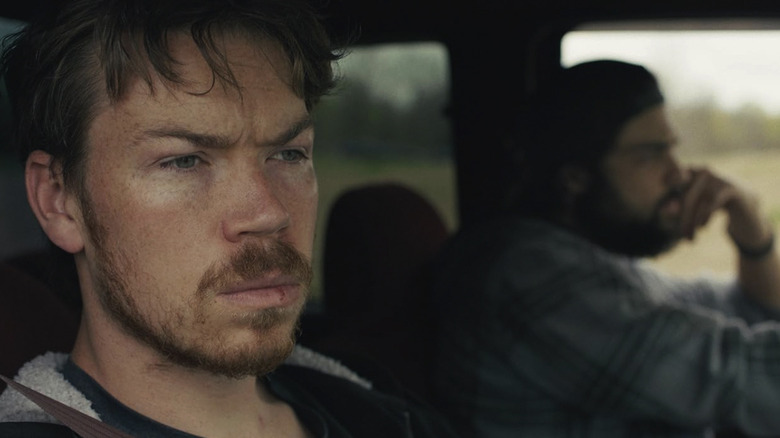
If you watch Will Poulter across "The Revenant," "Midsommar," "Guardians of the Galaxy Vol. 3," "I Love Boosters," and "The Bear," you'll see an actor in wildly different modes. "Union County," writer/director Adam Meeks' low-key indie drama about opioid addiction, gives Poulter yet another chance to spread his wings and show us what he's capable of as a performer. He plays Cody Parsons, a young man who's been assigned to a county-mandated drug court program — and he stars in the film opposite a bunch of actual participants in that real-life program, all playing themselves. We've seen addiction dramas before, but too often, they devolve into histrionics or abject misery as a way for an actor to show off. Rarely do you see one that's this authentic, and it's clear that Meeks, Poulter, and Noah Centineo, who's tremendous as Cody's charismatic but self-destructive brother, felt as if they needed to do right by the community they're representing here — so much so that they surrounded themselves with non-professional actors to help create the verisimilitude they were trying to achieve.
The result is a quiet film about the hard work of recovery, showing viewers that programs like this can work, and that prison shouldn't be the go-to "solution" to a problem that's wreaked untold amounts of havoc across this country. Poulter and his "Warfare" co-star Centineo are the only recognizable faces, but there's something much more important that audiences will recognize while watching this: truth. (Ben Pearson)
Wuthering Heights
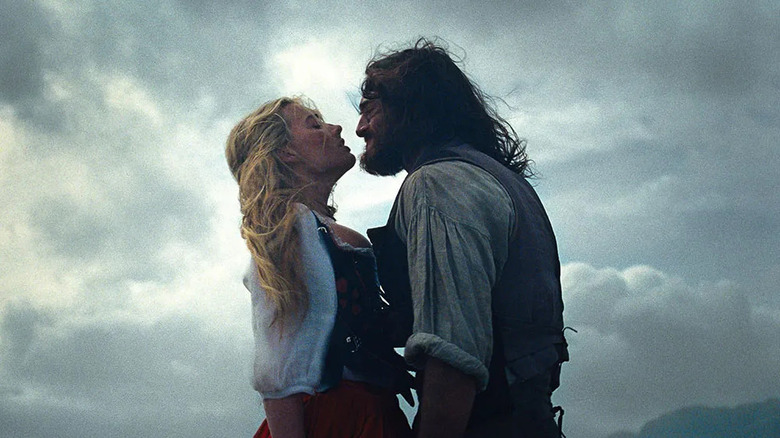
Writer/director Emerald Fennell is one of the few mainstream provocateurs operating in Hollywood these days, and even though an argument could be made that her version of "Wuthering Heights" wasn't provocative enough, I'm still glad she's out there doing her thing. Much was made about this movie's accuracy (or lack thereof) to the Emily Bronte novel on which it's based, but Fennell's approach — to recreate the version of this story she remembers from reading as a teenager instead of making a slavish adaptation of the text — resulted in one of 2026's most visually beautiful films, and I wish more filmmakers would be similarly fast and loose with their adaptations.
The costumes, cinematography, and production design are all colorful, lush, and dazzling (remember that fireplace that has so many sculpted hands pouring out of it that it almost appears to be in motion?), and of course it doesn't hurt that two of the most attractive people in the world, Margot Robbie and Jacob Elordi, are heaving their way across the movie and frequently pawing at each other. Despite being marketed as an epic romance, I don't think the film is actually all that romantic (Catherine and Heathcliff are awful to each other), but it's certainly memorable, and audiences ate it up either way. (Ben Pearson)