

10 Best Superhero TV Shows Nobody Talks About Anymore
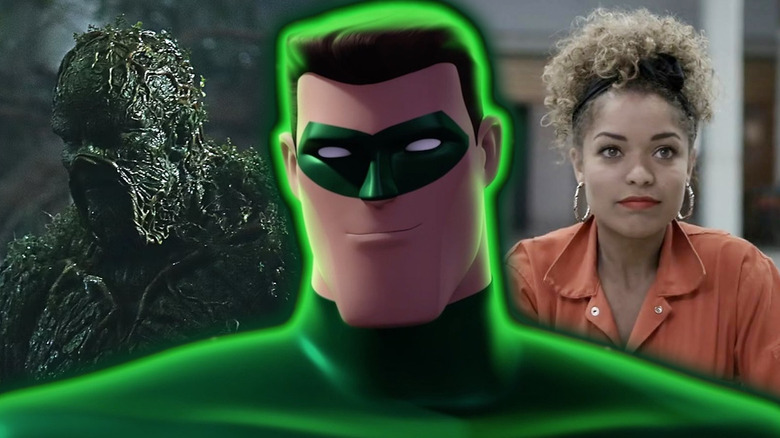
If one thing killed the superhero genre (or at the very least stalled its once seemingly unstoppable momentum) it was, ironically, abundance. The sheer scale of output in the years leading up to and directly after the release of "Avengers: Endgame" — the genre's peak in terms of cultural ubiquity and positive reputation — made it impossible for audiences to keep up with all the narrative components of a single franchise, much less the genre as a whole. All too often, the loudest, most expensive and conventional projects swallowed attention, while more experimental works (that correctly saw the genre as bloated and in need of a reboot) starved on the margins.
In considering the best superhero TV shows lost to the mountains of content piling up on various streaming services over the past decade, we unearthed a wide variety of beloved series that never got their day in the sun. From all-ages animated programs that were cancelled too soon to multi-season adult dramas that were all but ignored by MCU audiences, these series offered an alternate look at what superhero television might've become.
Here are the best superhero TV shows that nobody talks about anymore.
Sym-Biotic Titan
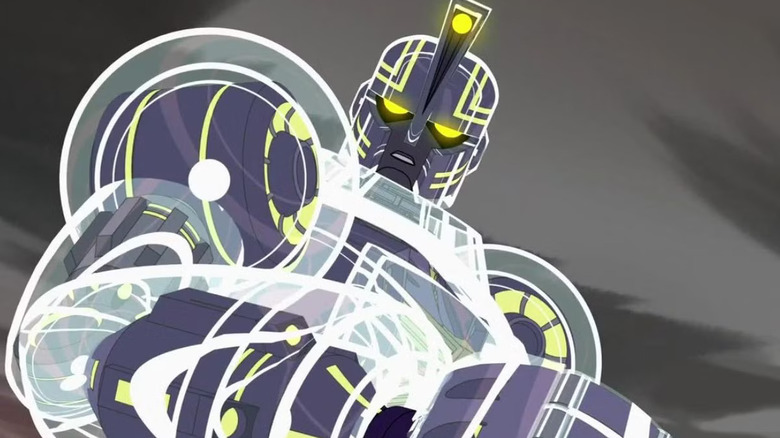
Though Genndy Tartakovsky's work on "Powerpuff Girls" is undoubtedly his most popular contribution to the superhero subgenre, readers may be unaware that he actually created his own story within it in "Sym-Bionic Titan." Wholly original and elevated by Tartakovsky's singular, intricately bombastic animation style, it follows three aliens who flee to Earth in order to escape conquerors taking over their homeworld. Though they spend most of their time attempting to blend in, they use their ability to transform into a giant bio-robotic titan and defend their new home.
"Sym-Bionic Titan" was cancelled after just one 20-episode season in 2011. Given how little anyone talks about it now compared to other Cartoon Network superhero shows or even the rest of Tartakovsky's work, it would be easy to assume that it simply wasn't popular enough at the time, but that reportedly wasn't the case. Sources allegedly from within CN were quoted saying "Titan" was actually competing solidly with other animated action programs, but it was in merchandising potential that the series was apparently failing. (Fan sites have circulated a quote attributed to Tartakovsky speaking at a convention explicitly confirming toy sales were the deciding factor for the series' cancellation, but the original quote cannot be found.)
In 2023, Tartakovsky said in an interview that he was still interested in reviving "Sym-Bionic Titan," saying that it was the only past project he would want to revisit. Even so, he doesn't expect it to happen. Back in 2012, he noted in a Reddit AMA that the series' syndication on Adult Swim had the potential to reignite interest in the series. Sadly, Adult Swim President Michael Ouweleen all but doused the idea of a continuation in 2023, citing Tartakovsky's busy schedule with "Primal" and the series' younger target audience.
Beware the Batman
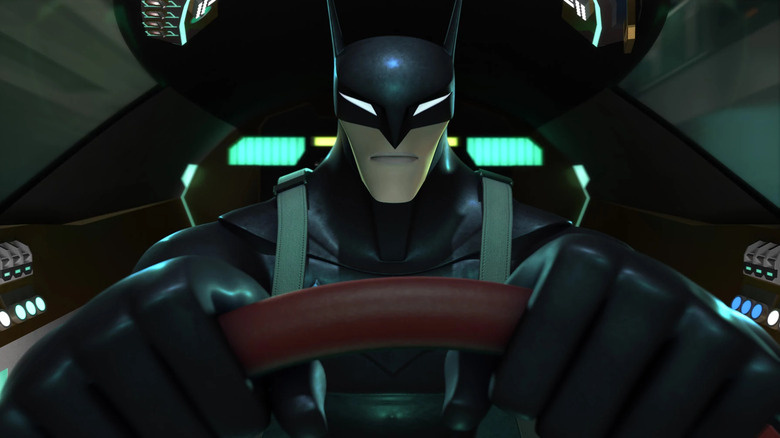
It's genuinely difficult to recommend a "Batman" animated series when many fans still have yet to see "Batman: The Animated Series." The Dark Knight has actually had several successful and worthwhile efforts in this realm, including the kid-centric yet amusingly silly "Brave and the Bold" and the more adult "Caped Crusader." But even among such an impressive legacy of storytelling, "Beware the Batman" stands out for its distinct and underrated take on the character.
Airing on Cartoon Network from 2013 to 2014, "Beware the Batman" was a 3D CGI-animated program that was designed to feel different from what audiences had seen before. Instead of teaming Bruce Wayne (Anthony Ruivivar) up with a Robin or Batgirl, he partnered with the vigilante Katana (the goddaughter of Alfred Pennyworth in this universe, voiced by Sumalee Montano). The series emphasizes the "World's Greatest Detective" aspect of the character, showcasing how he has to rely on his wits and gadgets to hold his own against otherwise overpowering supernatural threats — longtime fans will notice how vulnerable he appears in most fights, giving his war on crime a layer of tension related to his survival that's surprisingly believable, even for a children's show. The creative team also dug much deeper than most "Batman" series to put together his initial rogues gallery, propping up the likes of Professor Pyg and Anarky as major antagonists.
"Beware the Batman" was cancelled in the middle of its run, shuffled off to a Toonami slot for the remaining episodes, and unceremoniously pulled from syndication (along with "Sym-Bionic Titan") as part of a tax write-off maneuver. The series was reportedly a financial failure.
Green Lantern: The Animated Series
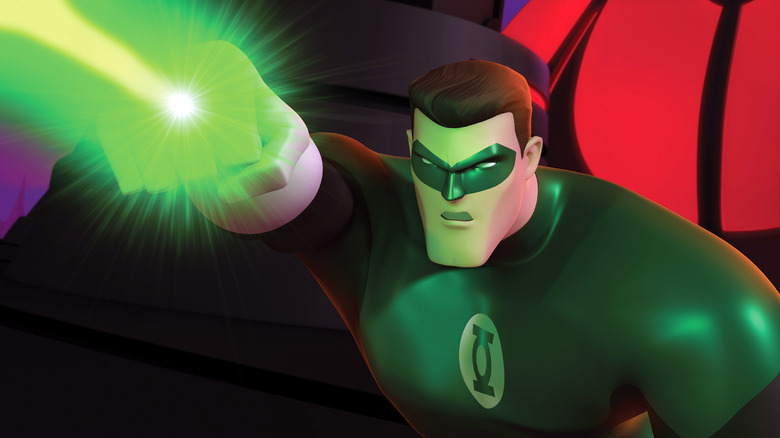
Just before Cartoon Network decided to give "Batman" the full CGI treatment, they finally gave a beloved Justice Leaguer his first (and, until 2026, only) headline television program. Co-created by prolific DC Animated Universe founding father Bruce Timm (with Giancarlo Volpe and Jim Krieg), "Green Lantern: The Animated Series" is to the Emerald Guardian what "Batman: The Animated Series" and "Superman: The Animated Series" are to their respective characters (even if this series takes place in a different continuity).
"Spectacular Spider-Man" lead Josh Keaton voices Hal Jordan, an experienced Green Lantern who travels with his corps-mate Kilowog (the iconic Kevin Michael Richardson) out into the far reaches of space to rescue stranded Lanterns from the wrath of their rageful red counterparts. The Red Lantern Razer (Jason Spisak) is a lesser-known but nonetheless remarkable original character, whose redemption arc is central to the series' broader exploration of the Green Lantern mythos. In general, no other program has ever immersed audiences as completely or deeply in the oft-neglected cosmic side of the DC Universe.
Like "Sym-Bionic Titan," "Green Lantern: The Animated Series" was ultimately undone by its lack of merchandising potential. It was tragically developed in parallel to the ill-fated "Green Lantern" film, which starred Ryan Reynolds and was released in 2011 to dismal reviews and box office returns. The show premiered in early 2012, by which time Cartoon Network was becoming aware that toys from the "Green Lantern" movie were piling up on shelves, decisively neglected by consumers, to whom retailers were then struggling to imagine selling products based on the animated series. Everyone involved collectively surmised that "Green Lantern" toys were dead for the time being. The series was thus shelved after one season in 2013, its only lingering legacy being the return of Razer in "Young Justice" in 2022.
Powerless
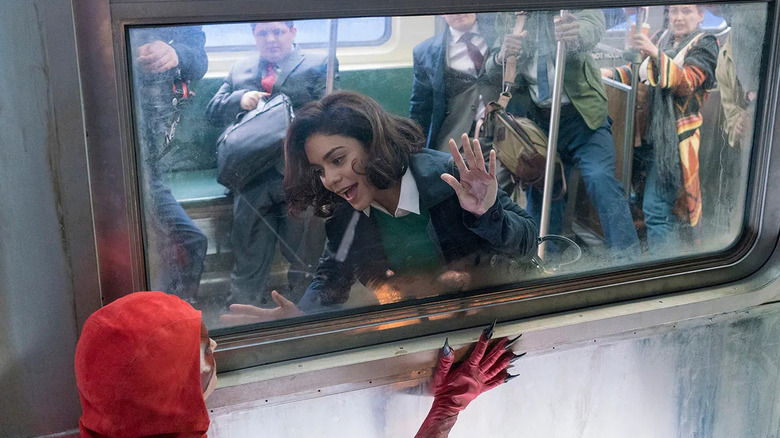
Regardless of your opinions about its execution, there's no denying that "Powerless" was one of the most inventive and audacious television series to be granted the DC stamp of approval. The series was created by Ben Queen for NBC, essentially sold as "The Office" meets the DC Universe — and, for the most part, the series delivered on that premise. The only question through the first (and only) season was whether or not said premise was genius or dead on arrival.
We'd argue that, with time to grow, "Powerless" would have found its footing closer to the former. The series took place within a branch of Wayne Enterprises established in "Charm City," an original locale home to Bruce Wayne's eccentric and erratic cousin Van (played by a reliably chuckle-inducing Alan Tudyk). Vanessa Hudgens stars as the new R&D director for Van's Wayne Security, who is tasked with leading a team of dysfunctional and adorkable scientists to invent extraordinary gadgets that would be necessary everyday protective equipment for anyone living in a world of superheroes.
The ensemble including Tudyk, Hudgens, Danny Pudi, and Ron Funches is admittedly the only consistently great aspect of "Powerless." Meanwhile, a creative tug-of-war behind the scenes ultimately led to a massive creative overhaul during the production of Season 1 and the departure of Queen as showrunner. He was replaced by Justin Halpern and Patrick Schumacker, though the show was cancelled and dropped from the schedule mid-season. The series finale, "Win, Luthor, Draw," was aired online, and it became the final live-action performance of Adam West.
Still, there were more than flashes of irreverent brilliance throughout the short life of "Powerless," particularly when it was able to skewer DC lore. Halpern, Schumacker, and writer-producer Dean Lorey arguably proved the series' potential in that regard when they reunited to create HBO's successful "Harley Quinn" animated series.
The Tick
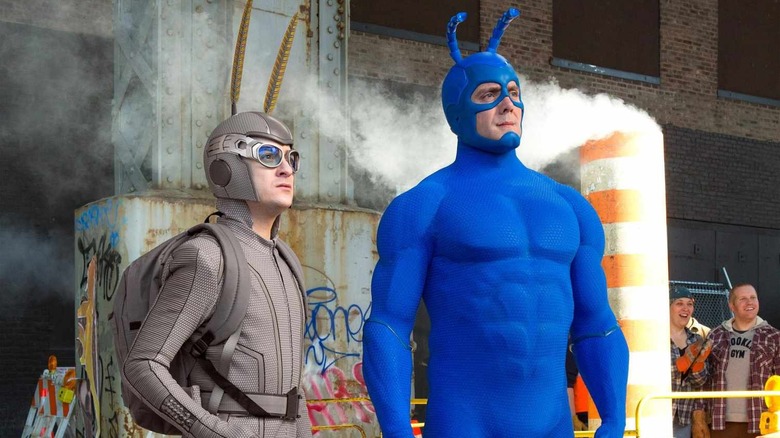
To describe "The Tick" as a struggling piece of intellectual property would be an understatement. Though he's undoubtedly one of the most well-known and beloved comic book superheroes not to come from Marvel or DC, the powers that be have never been able to expand his fan base beyond a cult following. The closest they got was the Amazon Prime Video series that ran for two seasons from 2016 to 2019.
The third adaptation from original comic book creator Ben Edlund, this iteration of "The Tick" was produced at the perfect time. As the Marvel Cinematic Universe was approaching its apex, general audiences were as primed as they'd ever be for a deconstructionist take on the superhero genre. Edlund and co. capitalized on this cultural foundation to make this adaptation more unconventional and overtly satirical than ever. One would hardly imagine Peter Serafinowicz as the perfect choice for a comically over-muscled crime-fighter — yet, because of the endearingly silly tone of the series, his committed, comedy-first performance (bordering on slapstick throughout) is what makes the series soar.
Like Edlund's two previous adaptations, "The Tick" was beloved by the modest crowd that saw it. Even so, Amazon gave it the axe in 2019. It wasn't like they were getting out of the niche superhero business — the same year it was cancelled, the streamer took a flyer on "The Boys" and went on to launch their largest franchise yet. Presumably, "The Tick" simply wasn't attracting the same level of viewership, despite a stronger critical reception. Edlund had a clear vision of what he wanted the third season to be (a time jump was involved) and was immediately committed to finding the series a new home on another streamer. He ultimately admitted defeat in July of 2019, finding no network interested.
Misfits
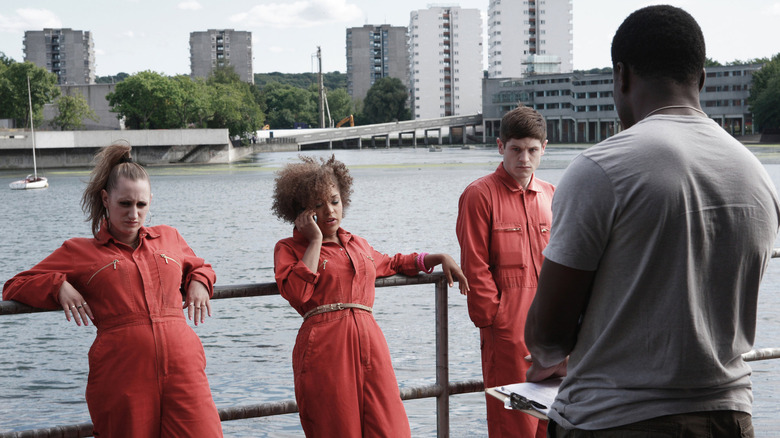
The series so far on this list have largely fallen into obscurity because they weren't terribly popular when they were airing and have developed little in the way of cult followings after their cancellation. Not so for "Misfits."
Airing on the United Kingdom network E4 from 2009 to 2013, this British superhero drama was created by Howard Overman (who had previously been in the writers' room for the fan-favorite BBC fantasy series "Merlin"). While Americans were effectively shrugging at explicitly adult superhero movies like "Watchmen," Overman brought the UK a genre riff that combined the tropes of a teen superhero coming-of-age story like "X-Men" with drugs, offensive comedy, and gore.
Political content aside (and speaking only of the television medium), it was "The Boys" before "The Boys" was even a thought over at Amazon. The series follows a group of juvenile delinquents who gain superpowers while in custody due to a natural phenomenon. Among the cast were future TV stars Joseph Gilgun (of "Preacher" fame), Robert Sheehan ("The Umbrella Academy"), Antonia Thomas ("The Good Doctor"), and Iwan Rheon ("Game of Thrones" and Marvel's "Inhumans").
Overman brought "Misfits" to an end mostly on his own terms, despite much of the cast leaving before the final season. The first season earned acclaim in the UK, but failed to cross the pond in terms of popularity. Praise for subsequent seasons was less vocal — its progressively bleak tone was as challenging as it was rewarding for those who loved its oppositional approach to the genre. An American adaptation was attempted in the late 2010s. It never materialized. Overman has since gone on to help create series like "Future Man" and "Paris Has Fallen."
Krypton
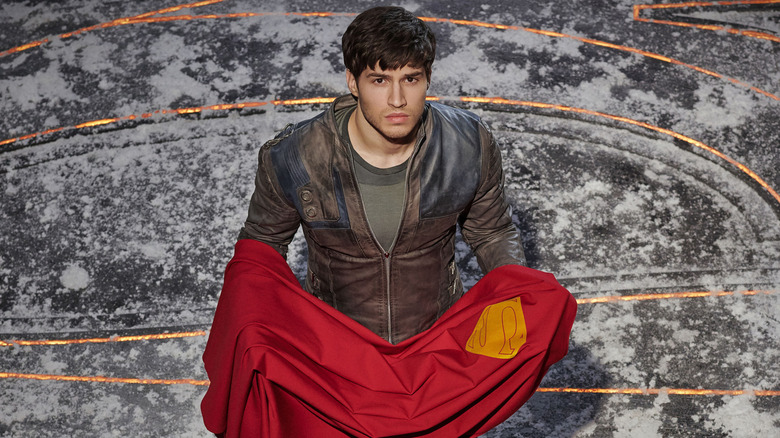
Ask 10 hardcore DC fans what ranks as the most slept-on "Superman" series of the past decade, and nine of them will tell you "Superman and Lois" without blinking. Just one of them would tell you "Krypton" — the rest probably didn't bother watching it.
In fairness, the premise of "Krypton" is somehow even less engaging on paper than that of Fox's "Gotham" — the only thing more dramatically opaque than a "Batman" show without Batman is a "Superman" show that takes place on a planet practically ignored by every piece of popular media, and centered on *checks notes* Clark Kent's grandfather? But that extraordinary distance from everything recognizable about the Man of Steel (at least at first glance) allowed the series to do something entirely novel by combining established, popular comic book lore with the grand royal intrigue and fantasy of "Game of Thrones" and hard science fiction of "Battlestar Galactica." (It also helped launch the career of a future DC Universe star.)
Suffice it to say, "Krypton" was at the very least a compelling sci-fi drama/space opera that had the potential to grow into something far more special, if only for its connection to the "Superman" mythos. At the same time, that very connection is what cost the series its future. Turns out, it's expensive to make a "Superman" show, at least if you're not owned by Warner Bros., and a massive ratings dip in Season 2 was just enough to scare Syfy into hitting eject on a third outing. Much like the titular planet, "Krypton" is but a distant memory now, the echoes of which are felt only in future "Superman" adventures by the few who experienced it during its life.
Swamp Thing
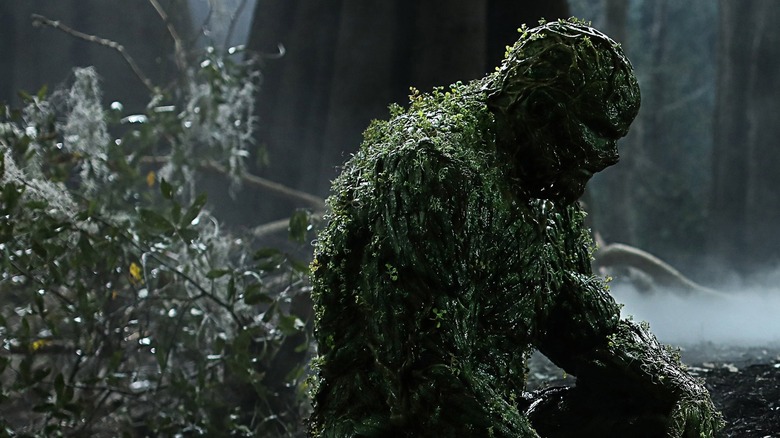
James Gunn's DC Universe seems eager to court horror fans, first through the upcoming "Clayface" feature film. It's a savvy strategy, creatively and financially, but the long-overlooked "Swamp Thing" series from 2019 went there first. The first season of Gary Dauberman and Mark Verheiden's decidedly horrific superhero series was produced in part by James Wan, and was on pace to become the greatest direct adaptation of an Alan Moore comic. The practical body horror elements were genuinely effective and technically impressive, and worked in service of a story that dove into the visual style and existential themes of Moore's seminal '80s run.
Of all the series Warner Bros. produced for DC Universe, "Swamp Thing" was by far the most promising – so why the heck was it cancelled six days after its first episode? Everyone outside the WB executive offices was shocked by the news, Wan included. He publicly expressed his confusion after the announcement. As easy as it would be to chalk it up to the obviously limited lifespan of the DC Universe streaming platform as the culprit, both "Titans" and "Doom Patrol" survived the inevitable merger with HBO Max.
As of writing, James Gunn is still planning on producing a "Swamp Thing" movie for his rebooted DC Universe. If he does, a major blockbuster film will have to live up to a series that barely survived a single season.
Luke Cage
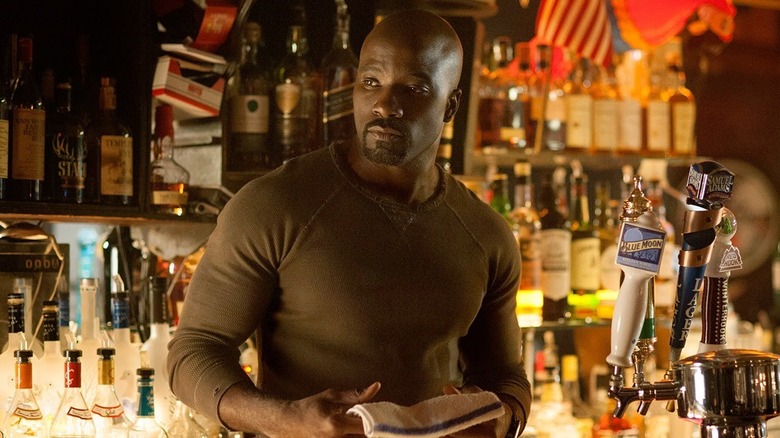
Few would argue that, overall, "Daredevil" was the greatest outcome of the Marvel-Netflix collaborative period. One could also reasonably argue that, in certain aspects, it was superseded only by Cheo Hodari Coker's "Luke Cage." Like David Tennant's Kilgrave from "Jessica Jones," the villains of the 2016-2018 series matched and occasionally surpassed the standard set by Vincent D'Onofrio's Kingpin. Mahershala Ali, Alfre Woodard, and Mustafa Shakir give three of the strongest villain performances in the entire MCU — each equally heartbreaking and terrifying in their own right. Coker's story also had a stronger sense of purpose, using Mike Colter's bulletproof hero to explore the oft-ignored vulnerabilities of Black communities in New York.
"Luke Cage" was the second Marvel-Netflix production to be cancelled, its end announced just a week after "Iron Fist" was confirmed to have met a similar end. Though history has flattened this moment to be part of a transition toward a newer, better Marvel TV division more closely related to the MCU proper, the story at the time was complicated. Coker had actually gotten as far as assembling a writing team for Season 3, had written multiple episodes, and planned a 13-episode story he later described as prescient.
Contemporary reporting alleged creative differences between Coker and higher-ups at the studio and the streamer. He shrugged this characterization off in later interviews, regarding the cancellation as surprising and more likely to have been caused by disagreements between Marvel and Netflix than anything he was doing. Regardless, even though Colter is returning to the role via "Daredevil: Born Again," it's a shame Coker's series never got to bring such an intentional, emotionally layered, and morally nuanced story to a natural conclusion.
Legion
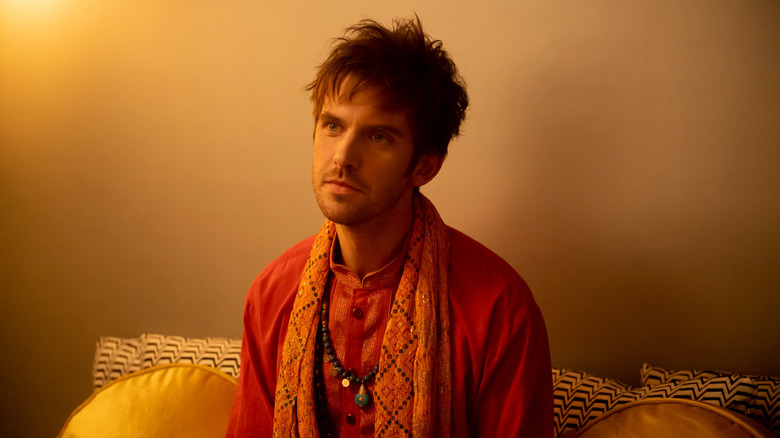
Noah Hawley is easily one of the most lauded television creators working right now. Whether looking at "Fargo" or "Alien: Earth," it's clear he has a comprehensive command of the medium that is as electrifying to witness as it is rare (we had once hoped he'd get the chance to tackle a "Doctor Doom" project for Marvel). Of his career so far, "Legion" is perhaps his best work — it is without question his strangest.
"Legion" isn't just an exceptional superhero series — it's the kind of television show that inspires the viewer to question what makes the medium special in the first place. Based on an obscure "X-Men" character known only to the most astute fans of the comic book franchise (played by our favorite freaky little weirdo Dan Stevens), it capitalized on the episodic structure built in to the format to evoke the varied, unpredictable, and unbalanced psychological experience of its titular character. Hawley's presentation is intensely subjective, as though the goal were to force the audience inside the uncomfortable mind of a man who ironically has near-unlimited access to the minds of others.
Despite consistent critical acclaim, "Legion" steadily declined in viewership throughout its run. Hawley was thankfully able to bring it to a close triumphantly in 2019. As Marvel Studios looks to shift their focus toward the "X-Men" world while revamping interest in their output, it would be foolish for them not to look to "Legion" as a forgotten example of how these stories can manifest as truly extraordinary.