

10 Most Influential Sci-Fi Movies Of All Time, Ranked
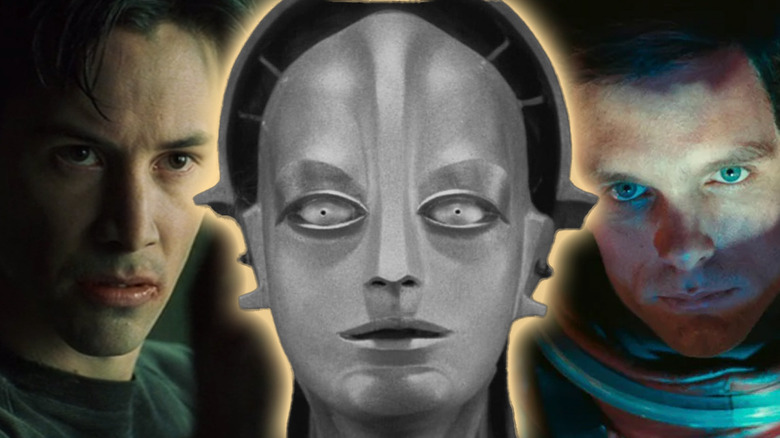
For decades, the science fiction genre has highlighted just how advanced filmmaking techniques have become in regard to technical presentation. Whether it's cutting edge visual effects or ambitious tales pushing the boundaries of conventional storytelling, sci-fi makes us rethink what's possible with the cinematic medium. That said, there are movies released that have inspired the entire genre and filmmakers overall, many with their impact still felt acutely today. These films turned the genre on its head, with numerous subsequent movies that can be traced to these seminal releases.
Whether it;s special effects showcases or movies serving as clear templates for various sub-genres, there are loads of sci-fi movies that hold a particularly influential position. From popularizing space operas to creating enduring cinematic archetypes, select movies cast a long legacy. We've assembled a list of the sci-fi movies that have spawned the most visible and pervasive influence on the medium across the genre's extensive history on the silver screen. These are the 10 most influential sci-fi movies of all time ranked in descending order to the most influential of them all.
10. Alien

Though sci-fi and horror cinema had certainly crossed streams before 1979's "Alien," the genre blend was never the same after it. Directed by Ridley Scott, the movie follows an unassuming space freighter as its crew investigates a distress signal on a remote planet. This results in one of their own becoming infected by a parasite xenomorph, which quickly matures to adulthood when it hatches. As the remaining crew try to track the creature, they are hunted down one-by-one while the sinister true nature of their mission comes to light.
Easily one of the best sci-fi horror movies ever made, "Alien" showed the world just how scary the genre could be. The movie took the idea of a sci-fi creature feature and turned it on its head through a memorable grotesque monster design by H.R. Giger and the taut pacing of a slasher flick. The film also brought a more grounded and industrially claustrophobic look to spacefaring stories, rather than the cleaner depictions of spaceships and their crews. The impact of Sigourney Weaver creating a female heroic archetype in the normally male-dominated sci-fi genre can't be understated either through her star-making performance as Ellen Ripley.
Blending monster mash thrills with an always relatable tale of corporate malfeasance, "Alien" made Hollywood names out of Scott and Weaver.
9. The Terminator
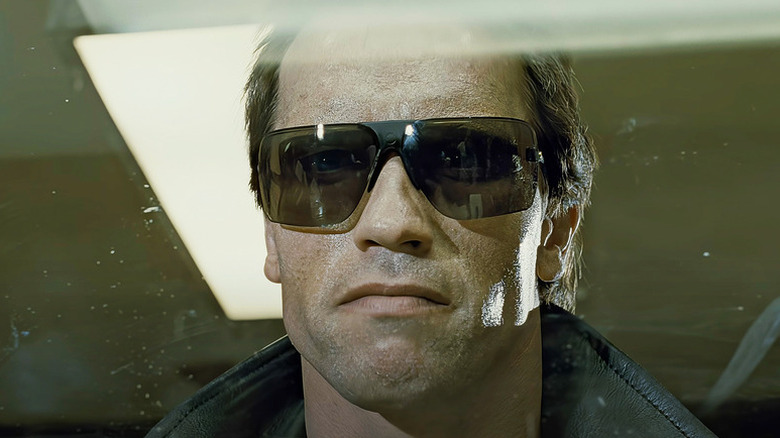
Filmmaker James Cameron's second directorial feature was the 1984 sci-fi action movie "The Terminator," which he directed and co-wrote with producer Gale Anne Hurd. A killer android, a Terminator (Arnold Schwarzenegger), disguised as a human travels back to 1984 from 2029 to assassinate Sarah Connor (Linda Hamilton). Sarah's son will eventually lead the human resistance against the machines, and future soldier Kyle Reese (Michael Biehn) has also traveled back in time to defend Sarah. As the two fall in love, they find themselves hunted relentlessly by the Terminator to prevent humanity's future victory.
To date, "The Terminator" is one of only two perfect sci-fi movies according to Rotten Tomatoes, a distinction that's well-earned. The movie plays out like a slasher movie, with its unstoppable stalker steadily claiming fresh victims as the story progresses. In terms of influence, the movie rethought how time travel sci-fi stories could be told while depicting a then-unique post-apocalyptic scenario, with humanity conquered by its own technology. Propelling Cameron to the forefront of sci-fi filmmaking, "The Terminator" was just as impactful behind-the-scenes for the industry as it was narratively.
8. Mad Max 2
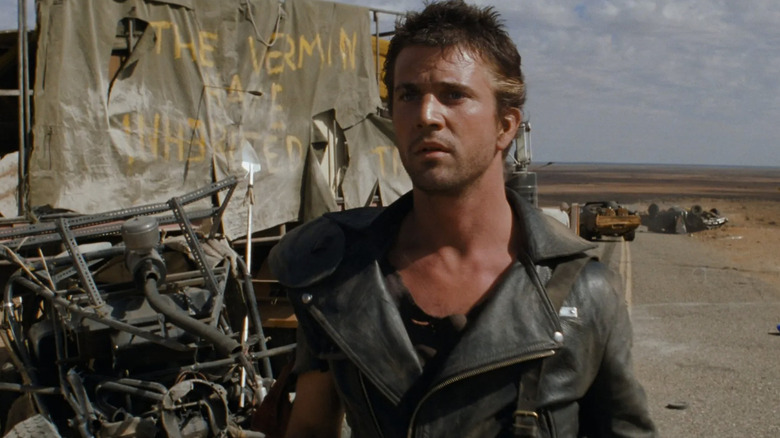
The original 1979 "Mad Max" introduced vengeful lawman Max Rockatansky, played by Mel Gibson, with filmmaker George Miller at the helm. The movie's 1981 sequel "Mad Max 2," originally released in North America as "The Road Warrior," catapults the narrative into a post-apocalyptic tale. Following a devastating nuclear war that has reduced Australia into a harsh wasteland, Rockatansky wanders the ruins of the old world in his car, contending with roving marauders. Rockatansky comes to the aid of a community besieged by a particularly bloodthirsty gang, agreeing to help them relocate with a precious cargo of fuel.
In making "Mad Max 2," George Miller sought to overcome all the mistakes of "Mad Max," going on a grander scale with significantly more bombastic action set pieces. The movie's sweeping post-apocalyptic setting set the template for similar sci-fi environments, like "Fallout" or "The Terminator" franchise's own post-nuclear armageddon future. The villainous roving bands and penchant for bone-breaking stunts also became a hallmark for post-apocalyptic sci-fi with stories like "Fist of the North Star" and "Waterworld." Forming the archetype of a drifter wandering a post-apocalyptic landscape, "Mad Max 2" is where Miller's sci-fi story began to find itself.
7. Blade Runner
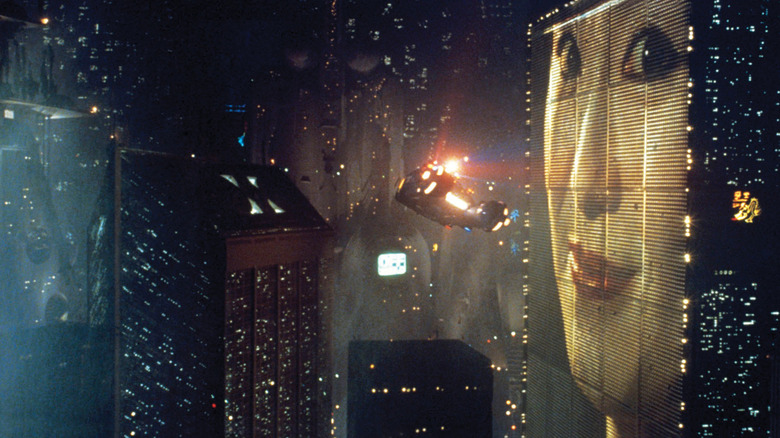
At the risk of hyperbole, Ridley Scott is such a visionary filmmaker when it comes to sci-fi that he landed two separate spots on this list. Adapting Philip K. Dick's novel "Do Androids Dream of Electric Sheep?," Scott's follow-up to "Alien" was the 1982 neo-noir cyberpunk flick "Blade Runner." The movie takes place in a near-future where megacorporations run the world and advanced androids fill various roles in society, with police specialists, known as blade runners, hunting rogue replicants. Rick Deckard (Harrison Ford) is a blade runner hunting a group of replicants on the loose in Los Angeles while undergoing his own existential crisis.
While cyberpunk movies existed before "Blade Runner," the 1982 movie came to most saliently define the sub-genre, even beyond the silver screen. Subsequent movies like "Akira" and "Alita: Battle Angel" to shows like "Altered Carbon" and games like "Cyberpunk 2077" are visually inspired by Scott's film. The movie also presented existentialist themes within the sci-fi genre in a thought-provoking way that still has audiences debating about Deckard's true nature decades later. One of the best cyberpunk movies ever made, "Blade Runner" is Scott's masterpiece, exemplifying a sub-genre and its longstanding thematic concepts.
6. The Matrix
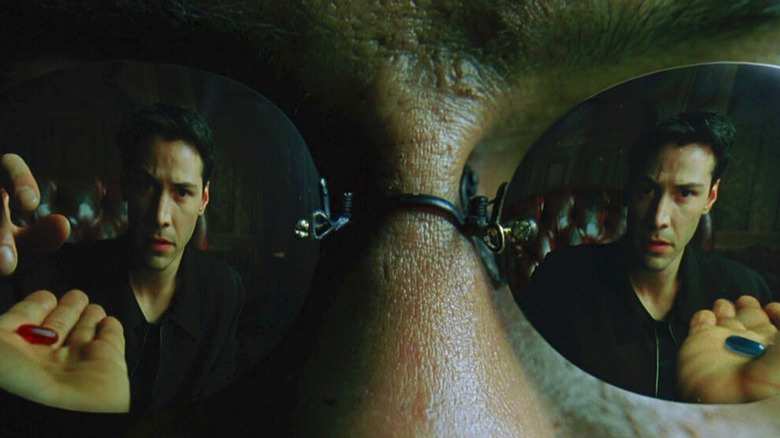
With its techno-fueled approach to the cyberpunk sub-genre, "The Matrix" is a movie that reinvented the genre and modern visual effects as a whole. The movie has hacker Thomas Anderson (Keanu Reeves) discover that the world around him is an elaborate simulation run by machines that have conquered the planet in the future. Liberated by a group of human freedom fighters, Anderson embraces his identity as Neo as he learns about his destiny in this dystopian war. Venturing back into the simulation, Neo uses his newly awakened abilities to take on programs within the system and fight for his friends.
Upon its release in 1999, "The Matrix" broke the box office and cinema was never the same, with its visual sensibilities still felt today. Among the innovations that the movie brought to the screen was its stylish use of slow-motion cinematography, particularly in action scenes, and its refined implementation of CG animation and effects. The movie's art design also had a striking impact on the genre, with its heavily digitized elements, authoritarian adversaries, and characters wearing lots and lots of form-fitting black. Redefining sci-fi cool, "The Matrix" and its impact may feel mitigated following lesser sequels but the original turned the industry on its head.
5. Forbidden Planet
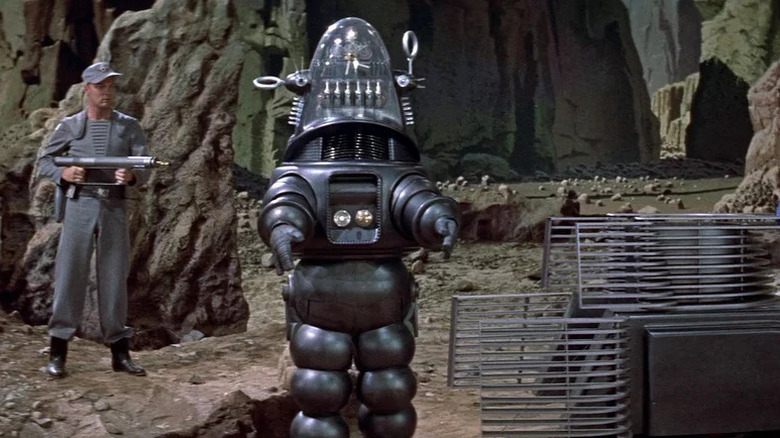
With the release of classics like "Earth vs. the Flying Saucers" and the North American version of "Godzilla," 1956 was a great year for cinematic sci-fi. But predating both by a matter of months was "Forbidden Planet," released in March of that year in the glorious CinemaScope widescreen format. The movie follows an interstellar expedition to a faraway planet to investigate what happened to scientist Edward Morbius (Walter Pidgeon). Arriving on the planet, the crew, led by Commander John J. Adams (Leslie Nielsen), not only finds Morbius and his daughter but all sorts of otherworldly wonders and terrors.
Inspired by William Shakespeare's underrated play "The Tempest," "Forbidden Planet" is a technical marvel for its time as well as an entertaining one. The elaborate set design, the surprisingly mobile Robby the Robot, and the sight of the movie's invisible monster breaching a force field are all groundbreaking sights. Predating "Star Trek" by a decade, "Forbidden Planet" presents the idea of outer space explorers working for an interplanetary alliance to tackle metaphysical themes. Before Gene Roddenberry's genre-defining franchise, "Forbidden Planet" told a story with similar stakes and scope with then-revolutionary special effects.
4. Star Wars
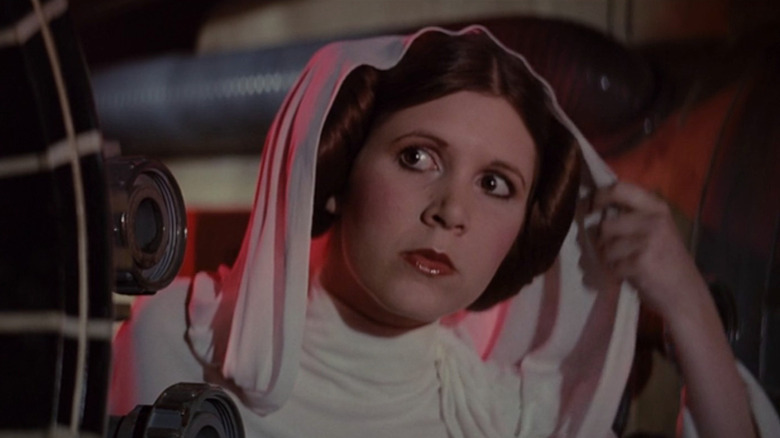
The original 1977 "Star Wars," which subsequently gained the subtitle "Episode IV: A New Hope," became one of the most unexpected box office hits in history. Despite few behind-the-scenes having faith in the project, audiences worldwide were enthralled by the space opera spectacle unfolding on the big screen. Right from the opening scene, with the full breadth of a Star Destroyer displayed as it pursues a fleeing Rebel Alliance cruiser, viewers were hooked. This opening set piece was followed up by stirring blaster gunfights, an alien-filled cantina, the very first lightsaber duel, and a climactic battle against the planet-annihilating Death Star.
For all the fan complaints George Lucas has ignored about his "Star Wars" changes, the legacy of the first movie in the franchise still holds up. The space battles remain some of the most exciting and technically proficient ever captured on the silver screen while the story isn't bogged down by its own mythology. In the wake of its success, "Star Wars" not only spawned a vast multimedia empire but inspired countless pastiches, homages, and overt ripoffs over the years. Beyond its own franchise, everything from "Battlestar Galactica" to "TRON" can be traced back to what "Star Wars" inspired in 1977 onwards.
3. 2001: A Space Odyssey
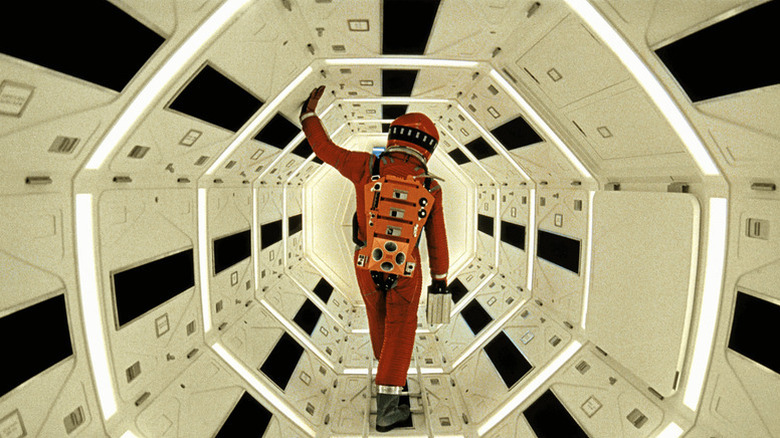
Visionary filmmaker Stanley Kubrick's sole completed sci-fi film is 1968's "2001: A Space Odyssey," which Kubrick also co-wrote with influential author Arthur C. Clarke. After a prologue depicts humanity's evolution linked to an ominous extraterrestrial monolith on a prehistoric Earth, the story advances to the species' spacefaring future. A small expedition is mounted to investigate the monoliths' presence near Jupiter, which is derailed by the spaceship's artificial intelligence HAL 9000 becoming malevolently self-aware. As pilot David Bowman (Keir Dullea) tries to survive HAL's wrath, he embarks on a surreal cosmic experience defying space and time.
"2001: A Space Odyssey" is one of the best movies of all time, according to Roger Ebert, and wouldn't you know, the late film critic has good taste. Just as "Forbidden Planet" redefined sci-fi special effects a decade prior, Kubrick's bold epic delivered absolutely dazzling visual effects and set designs. The movie is also cinematic sci-fi at its most delightfully esoteric, deliberately not offering easy answers about its philosophical questions, ranging from human existence to the sinister implications of technology. Kubrick's ethereally existential sci-fi tale, "2001: A Space Odyssey" opened the door for more heady genre movies while setting a new visual standard.
2. The Day the Earth Stood Still (1951)
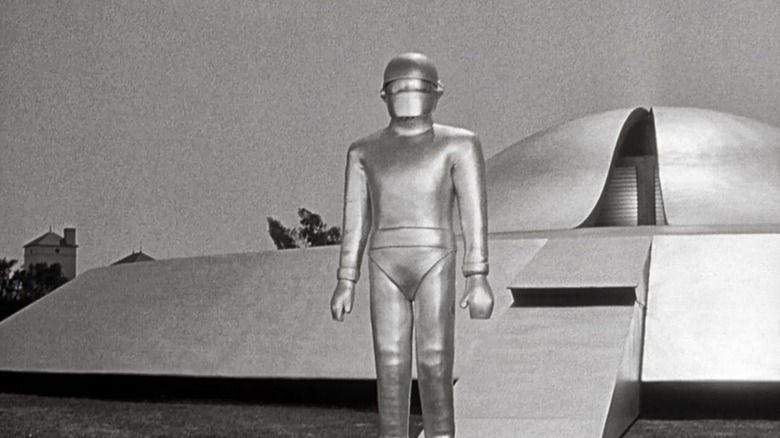
As the world endured the grip of the Cold War and nuclear weapons proliferation, the 1951 movie "The Day the Earth Stood Still" spoke to those cultural anxieties. The movie opens with a large flying saucer landing on the National Mall in Washington, D.C., with the military quickly surrounding it in response. The ship's humanoid occupant, Klaatu (Michael Rennie), emerges bearing a message of warning to the planet's leaders. Speaking for his faraway civilization, Klaatu observes that humanity is on a path of self-destruction, imploring them to foment harmony or face obliteration.
With "The Day the Earth Stood Still," sci-fi cinema was infused with clear social commentary, making its stakes feel all the more timely. This is articulated by an intelligent human figure possessing technology far outmatching anything available on Earth at the time. Beyond its thematic messaging, the movie features one of the earliest flying saucers in cinema along with a memorably unstoppable robot in the imposing Gort (Lock Martin). Marking an increased sophistication in sci-fi storytelling, "The Day the Earth Stood Still" understood that the genre works best when it sharply reflects the collective sentiments of the real world.
1. Metropolis (1927)
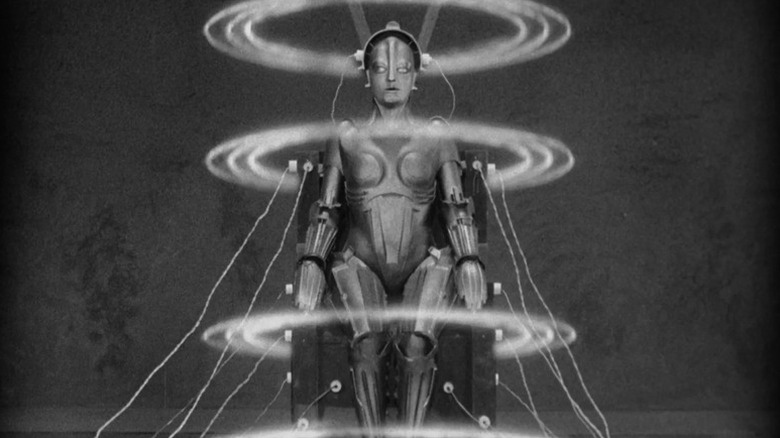
Among the titans of German cinema is Fritz Lang, who helped epitomize Expressionist filmmaking with his movies' imaginative set design and evocative cinematography. Lang's masterpiece and arguably still the greatest sci-fi film to come out of Germany is 1927's "Metropolis," based on the novel by German author Thea von Harbou. The movie is set in a future where the ultra-rich live in towering skyscrapers while the lower classes work underground to keep the opulent society running. As a class war looms, the affluent Freder (Gustav Fröhlich) and a working-class woman named Maria (Brigitte Helm) try to avert the conflict.
It's almost unfair putting one of the first feature-length science fiction movies in the top-ranked spot but the legacy of "Metropolis" still looms large. The movie's central themes about rapidly widening wealth divide and malicious artificial intelligence feel as timely as ever while the film is still a visual marvel. The movie has since become a cornerstone in sci-fi stories, not just in cinema but multimedia overall, especially when it comes to wealth-divided societies and androids. A classic sci-fi movie that counted David Bowie among its most public fans, "Metropolis" remains a visible foundation for the wider science fiction genre.