

10 Best Movies Of All Time, According To Roger Ebert
We may receive a commission on purchases made from links.
Roger Ebert gained popularity as a film critic not just from his sensational film review program "Siskel & Ebert," in which Ebert and co-host Richard Siskel talked about new movies and occasionally seemed ready to rip out each other's throats. But it was also his utilitarian, accessible style of writing and talking about movies that won him over with the general public — here was suddenly a film critic that audiences could identify with.
Ebert has gone down in history as one of our most essential voices in film criticism, but if you asked him for a top 10, what would it be? Well, he's doled out multiple over the years, and this collection is from his last selections for the roster before his death in 2013. Specifically, these are pulled from his selections for the Sight & Sound publication's 2012 edition of their decennial list, "The Greatest Films of All Time." The majority of these are consistent with the list he submitted in 2002, so there's a congruity with the films that Ebert held close to his heart over the years. On the contrary, if you want some movies Ebert hated that you should actually see, we have a list for that as well.
For now, here are the best movies of all time, according to Roger Ebert.
Aguirre, The Wrath of God
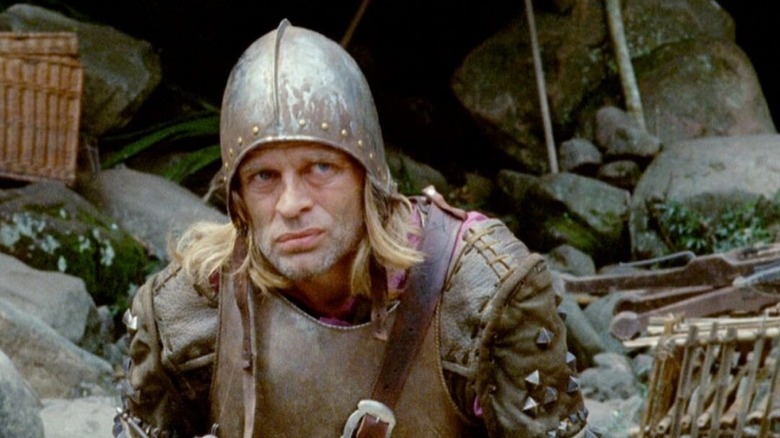
In his retrospective review of "Aguirre, the Wrath of God," Ebert references two other films that also appear on this list, saying, "Only a handful of modern films share the audacity of [Werner Herzog's] vision; I think of '2001: A Space Odyssey' and 'Apocalypse Now.'" That all three made it onto his final Sight & Sound ballot suggests an affinity for movies that conjure grandiose, sensory visions and evoke an intense sense of feeling and atmosphere not found in other films.
It also suggests an appreciation for films that went through hell to get made, as in the legendary production history behind Herzog's dreamy, uncanny adventure movie about Spanish conquistadors going mad while searching for the mythical El Dorado in the Amazon rainforest. "Aguirre" was shot on location in the jungles of South America, where the cast and crew faced tribulations not entirely unlike the dangerous struggles depicted on screen.
That's all on top of the inherent risk of casting Klaus Kinski as the titular historical figure (the film is based on real events, but takes a largely fictional bent). Herzog and Kinski endured heated disagreements about how to play the character, and Kinski regularly made his discontent known through on-set tantrums. Herzog having to wrangle his star into character contributes to the film's guerrilla energy — "Aguirre" is a film about the madness of conquest, but it's also about the madness of filmmaking.
Apocalypse Now
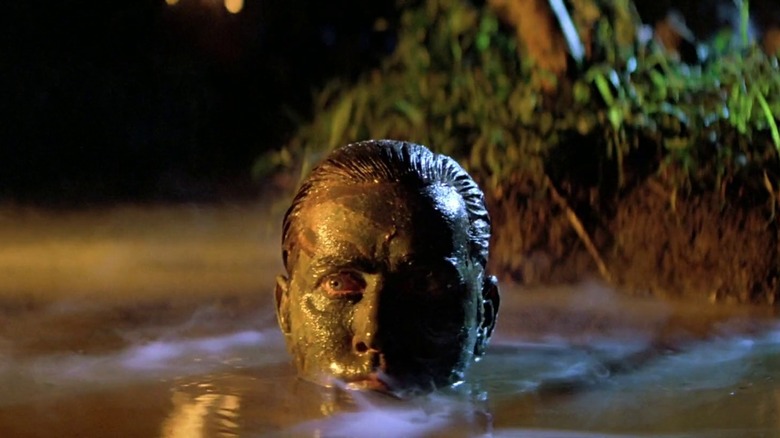
Ebert maintained a strong fandom for Francis Ford Coppola's existential Vietnam War drama since its initial release, but it was a 1999 retrospective review where he called it "more clearly than ever one of the key films of the century." Its placement on anyone's top 10 of all time would come as no surprise: "Apocalypse Now" is simply one of the most powerful films ever made, bleak and terrifying in its descent into the profound madness of war.
First-hand witness to it all is Captain Benjamin Willard (Martin Sheen), who is tasked with a clandestine mission to ride deep into the jungles of Cambodia to dispatch of rogue Colonel Walter Kurtz (Marlon Brando), who has lost his grip to insanity and is governing a fanatical army on his own terms. The journey Willard takes to find Kurtz is a now-legendary, surreal fever dream, one that probes the darkness within our human capacity.
That's fitting given the direct inspiration for "Apocalypse Now" — Joseph Conrad's "Heart of Darkness." This title would be lifted for the legendary documentary about the making of the film, "Hearts of Darkness," which delves into the infamous production troubles that hounded Coppola during the making of the film. Of everything most impressive about "Apocalypse Now," the greatest might be that it's a masterpiece, despite being primed to be a massive, career-ending boondoggle, making it even more fitting that Ebert would include it in his greatest films list.
Citizen Kane
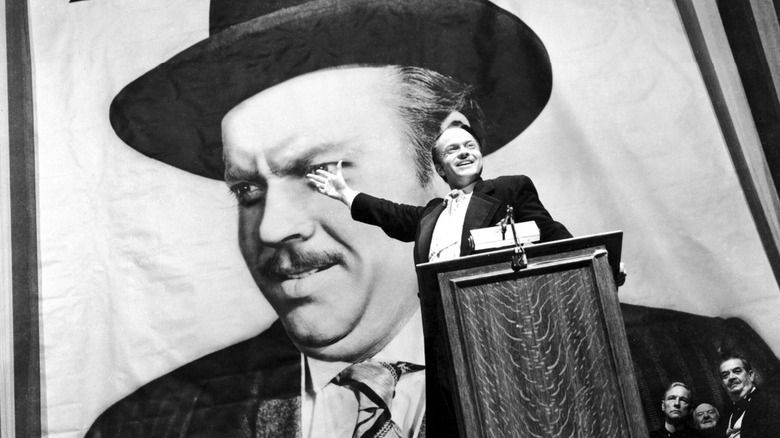
Ebert was always impressed by films with an interesting visual language, so "Citizen Kane" is an easy slot for him to fill on his list, on top of it being, you know, "Citizen Kane." Throw a stone at any "greatest films" collection and you'd more than likely hit one that has Orson Welles' masterpiece on it, deservedly so, as it firmly established him as a titanic filmmaking talent and directly influenced the history of cinema with its power.
That's true even if "Citizen Kane" wasn't always seen as a cinematic classic. Yes, while it was ultimately a commercial flop when it was released in 1941, strong critical reception kept its reputation afloat until its re-release in the 1950s, when the film finally found a true audience. Of course, it didn't help that media tycoon William Randolph Hearst tried to have the film buried because of the public knowledge that Welles based the isolated, miserable character of Charles Foster Kane (Welles) on Hearst's own career, but the power of the filmmaking kept the film alive.
And what power it is: To watch "Citizen Kane" today is to see cinematic techniques in a light that feels like you're seeing them for the first time again. With Welles' and cinematographer Gregg Toland's innovative development of deep-focus shooting, which incorporated wide-angle lensing and stark, harsh lighting, "Citizen Kane' invented new modes of cinematic language. That's on top of its stirring story about a life wasted in pursuit of capitalist excess. It's no wonder "Citizen Kane" still plays so well all these years later.
La Dolce Vita
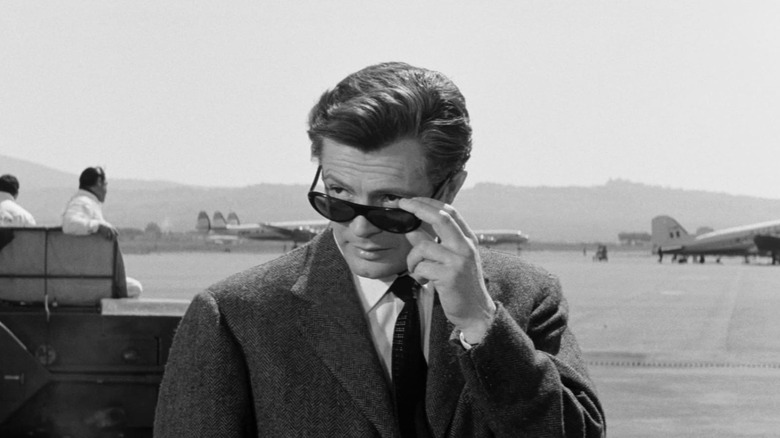
Ebert had a long history with Federico Fellini's 1960 film, which broke ground for Italian cinema and propelled the country's work onto the national stage in a new way. Ebert speaks of revisiting the film in ten-year stages, during which he reckoned with its mysteries and the actions of the main character, Marcello Rubini (Marcello Mastroianni), in different modes: desire, identification, and, eventually, pity. Out of this list, this is the one Ebert referred to as his favorite of all time.
That Ebert felt so close to the world of "La Dolce Vita" tracks: Marcello is a tabloid journalist who yearns to succeed as a serious writer. Nevertheless, across seven episodic incidents that make up the film's structure, he finds himself torn between his desire for intellectual and artistic purpose and the luxurious but numbing, emotionally detached high life of his peers and colleagues.
"La Dolce Vita" almost plays like a stream-of-consciousness ramble, but if it ever feels purposeless, that's merely to reflect the emotional hole boring through the center of our lead character. In many ways, Marcello is likely a relatable man for many young, educated professionals with buzzy or white-collar jobs, drifting through a life mingling and rubbing elbows, as the prospect of a more emotionally meaningful life sits like a rock in the back of their minds. Fellini captures both the glamour and the emotional squalor with a sharp sense of how they fit together, and he does so through his unhurried, lived-in pacing over nearly 3 hours.
The General
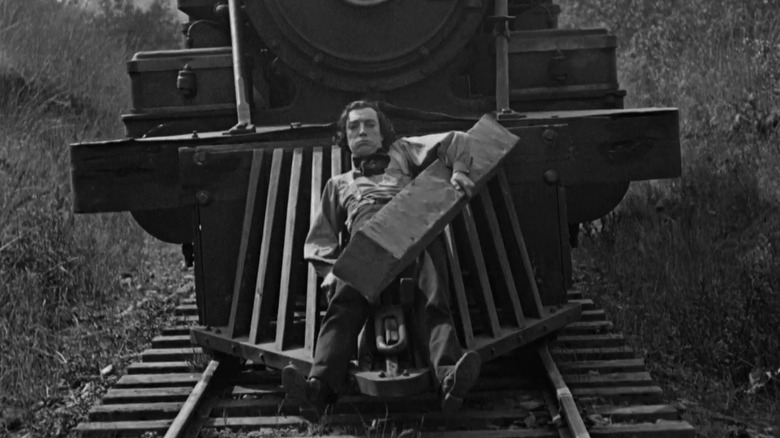
Yeah, why wouldn't Ebert want to include an entry from silent cinema's icons of reckless filmmaking temerity? Buster Keaton constantly put both his own life and those of his crew on the line for his expressive slapstick comedies of bravura physical stuntwork, and "The General" has some of the most ludicrous antics of any of his films. Ebert didn't call the film a masterpiece for nothing.
The film is based on the 1889 memoir "The Great Locomotive Chase" by William Pittenger, about a Georgia-set Civil War military raid in which the Union army sought to cause as much destruction as possible to the railways carrying supplies to the South, while being pursued by Confederate forces in a train. Keaton switches the perspective to the Confederacy, playing a timid, clumsy engineer called Johnnie Gray, whose denied entry into the service, but nonetheless finds himself in the middle of the action when a Union assault sees his love interest Annabelle Lee (Marion Mack) abducted.
Despite the film's clear sympathies toward the Confederacy — an aspect that can influence how much of its story viewers accept — it's impossible to ignore Keaton's reckless, daredevil spirit, which is responsible for some of the most impressive practical stunts in film history. Just watch as Keaton jumps across moving train cars trying to load a live cannon in the film's extended locomotive chase sequence, and you'll realize how visceral the reality of accomplishing events exclusively in-camera really is.
Raging Bull
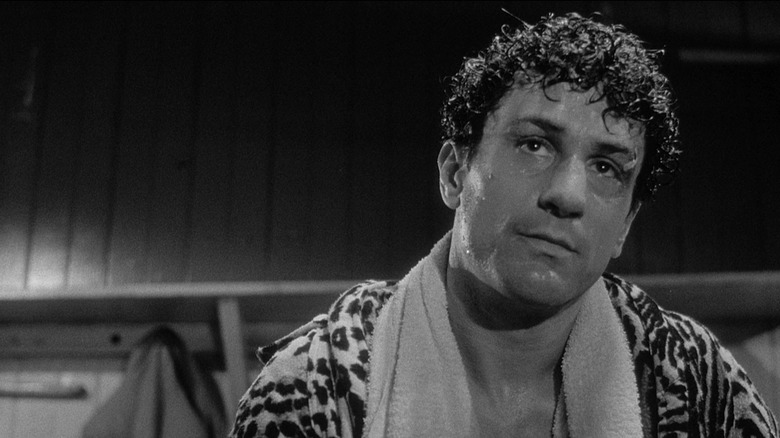
In a 1998 retrospective review of "Raging Bull," Ebert describes the film as "the most painful and heartrending portrait of jealousy in the cinema — an "Othello" for our times." That sense of melodramatic grandeur and acidity, as mapped onto a gritty boxing drama, is why Martin Scorsese's film stands tall in the field of sports movies after all these years. As Ebert says in his own review, the film may be set around boxing, but the story's emotional compass concerns something much larger, more deeply felt, and uncomfortable to reckon with.
That's because "Raging Bull" is a bit like the anti-"Rocky." Whereas the latter engages in the Hollywood dream factory version of a benevolent underdog working to overcome the odds, "Raging Bull" gives viewers a front-row seat to the turbulent personal and professional life of real-life boxer Jake LaMotta (Robert DeNiro in the film), whose intensity in the ring was dwarfed only by the turmoil of his out-of-the-ring relationships, which included seven total marriages, skirt-chasing teenage girls, and a regular temperament of anger and abuse.
This is all recounted in his autobiography "Raging Bull: My Story," which Scorsese adapts with the expressiveness and intensity the story deserves. Scorsese and De Niro's close handling of LaMotta's destructive corrosiveness is harrowing and unforgiving, with Michael Chapman's stark black-and-white cinematography emphasizing the existential, tragic nature of our protagonist's violent impulses. It's one of the best sports movies because of its uncompromising perspective of the dark heart of what it takes to be a master at inflicting violence.
2001: A Space Odyssey
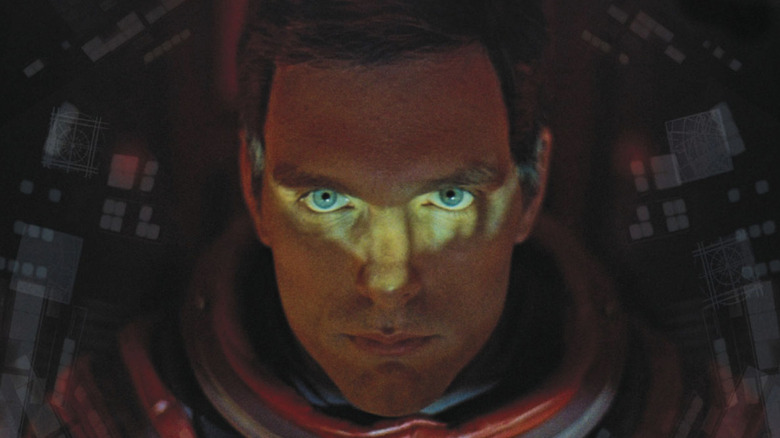
In his retrospective review, Ebert speaks of the 1968 premiere of "2001: A Space Odyssey," noting a sense of confusion among the audience, who thought Stanley Kubrick had finally reached a level of untenable indulgence, resulting in several walkouts from the Pantages Theater. Such is the reality of how the work of genius typically comes down to works marinating and being reappraised as time moves on — "2001: A Space Odyssey" rejects notions of easy diversions and encourages you to mull over and return to its grandiose imagery and surrealistic plotting.
Indeed, "2001: A Space Odyssey" drew some brutal audience reactions at first. Viewers balked at the film's calculated pace; the seemingly disparate phases in which it doles out its events; and its phantasmagorical final moments. But watching the film with the hindsight of Kubrick's entire career and decades of additional film history proves its superlative nature as a symphony of opulent, philosophical spectacle. It's the ultimate sensory experience you want when visiting the cinema.
Even then, Kubrick was never so stuffy as to lack a sense of humor. His exploration of man's myopic folly in venturing further into space is depicted as an endless series of bureaucratic stodginess, a contrast against the film's visual grandeur. Nor can he be accused of ignoring more traditionally engaging elements of conflict. HAL 9000, the onboard artificial intelligence program gone rogue, is one of the most unsettling antagonists in cinema history (though he just missed our own best villains list). "2001: A Space Odyssey" beautifully molds its ambitious aspirations around diverse modes of filmmaking.
Tokyo Story
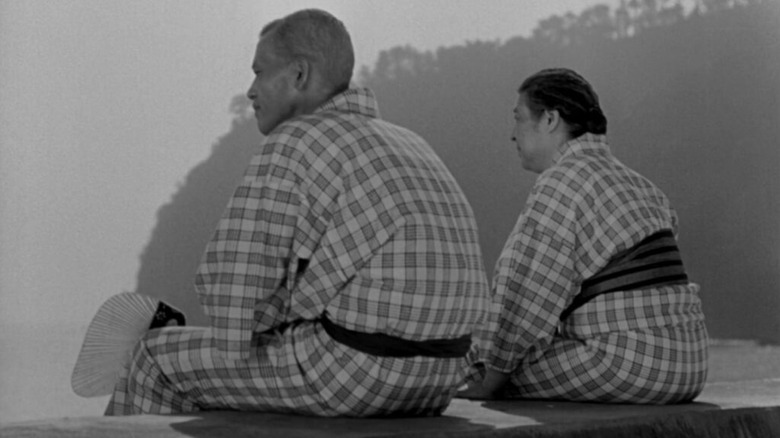
Though Ebert features plenty of examples of his appreciation for spectacle and splendor on this list, he also appreciates quieter, observational, character-driven drama. When speaking about a Yasujirō Ozu film, that also means a story that's relatively sparse in style. Ebert himself says that, with the scarce components of "Tokyo Story," Ozu crafts "one of the greatest films of all time."
That's because the power of an Ozu film always comes from how much he can evoke deep, profound emotion through a seemingly humble sense of craft. But that's his magic: no matter how straightforward his style, you will be hard-pressed to find another director who uses it to convey the meaning that Ozu does. "Tokyo Story" is simply a story about the disappointment of a set of parents who venture to the city to visit their busy children, but that conceit is imbued with heartrending emotional truths.
It's something that Ozu makes feel specific and universal: he may be commenting on the disintegration of traditional family structures in post-war Japan, but viewers can see themselves throughout this movie, whether they're the bustling younger generation faced with work and day-to-day hustle and bustle, or the older parents who have years of memories of a different world and are disenchanted by the current one, even if they can't vocalize it. "Tokyo Story" is a family story, but it's also about a bigger story of changing times.
The Tree of Life
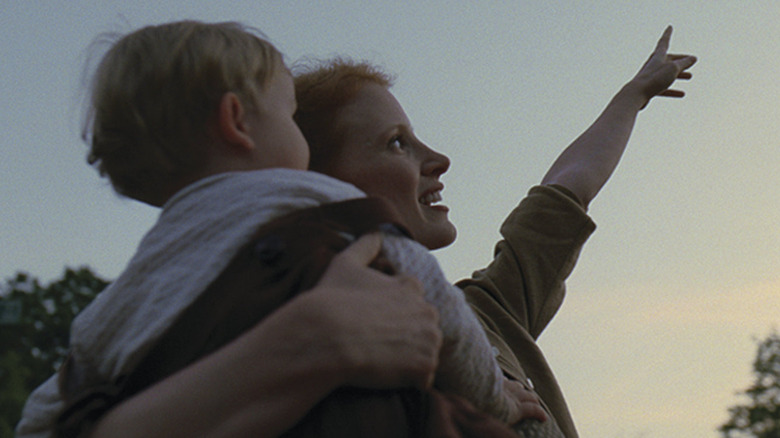
This is the one new title Ebert added to his 2002 Sight & Sound List, largely because of updated rules governing how the publication's voting would operate. He had previously included Krzysztof Kieślowski's "Dekalog," which would no longer work, because it would now be counted as 10 separate films. He found himself torn between substituting it with "Synedoche, New York" and "The Tree of Life."
His reasoning for choosing the latter was simple: he chose it because it was "more affirmative and hopeful." Ebert may be revealing his own sentimentality with that reason, but it's just as well that "The Tree of Life" is one of the greatest films of the 21st century, director Terrence Malick's true magnum opus, and an ode to the importance of every person. It's also telling that such a movie would be Ebert's pick during his final months, as he submitted this list shortly before succumbing to the metastatic cancer he had been battling for over a decade.
In that context, "The Tree of Life" is a beautiful pick. It's a movie that illustrates the creation of the universe, the healing and catharsis of the afterlife, and tells a universal story of human connection, conflict, and love as mapped onto one Texas family during the 1960s. Through his elliptical sense of emotive impressionism, Malick details the importance of each person's humanity in the context of a finite existence on Earth. "The Tree of Life" serves as a reminder of what it means to truly value that existence.
Vertigo
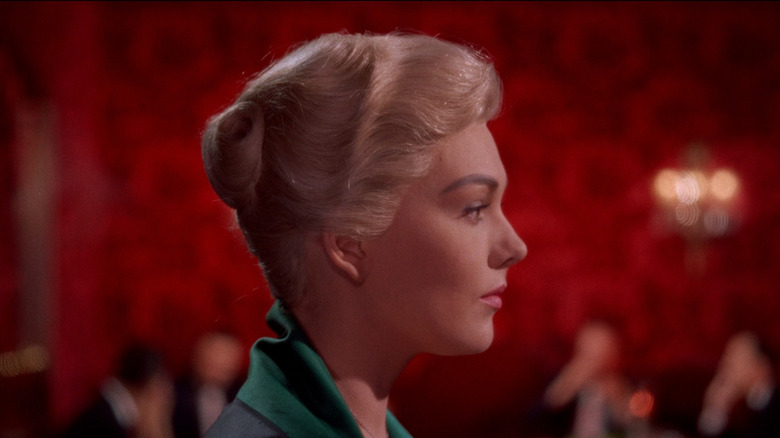
It's fitting that Alfred Hitchcock's "Vertigo" would be on Ebert's 2012 list, as that year the film overtook "Citizen Kane" for the number-one spot, ending the 50-year streak of Welles' film. This highlights the ongoing modern reevaluation of "Vertigo" as Hitchcock's most vital work, one that most openly and relentlessly explores the obsessions of both the lead character, Scottie (James Stewart), and Hitchcock himself.
In fact, "Vertigo" is so closely tied to its creator that, when watching Hitchcock's films, you should probably save it for last. Ebert speaks to this in his own review of the film, saying that, of Hitchcock's films, "Vertigo" was "the most confessional, dealing directly with the themes that controlled his art," and that it is specifically about "how Hitchcock used, feared and tried to control women." Stewart, as a stand-in for Hitchcock, is uncomfortably consumed by his obsessive need to dominate and shape the woman he desires: Kim Novak as a deceased beauty, and then what is potentially her ghost, embodying the rigid, detached blonde Hitchcock favored to manipulate.
This is also to say that "Vertigo" is not a traditional thriller, and the slippery, meta-textual nature of the ideas it seeks to convey can make it both opaque and hostile to an average viewer looking for the comforts of a pulp thriller. "Vertigo" is something much more personal and elusive on the surface, but as a mirror of its creator, it's one of the all-time great cinematic confessionals.