

5 Best Sci-Fi Sitcoms That Take Place On Earth
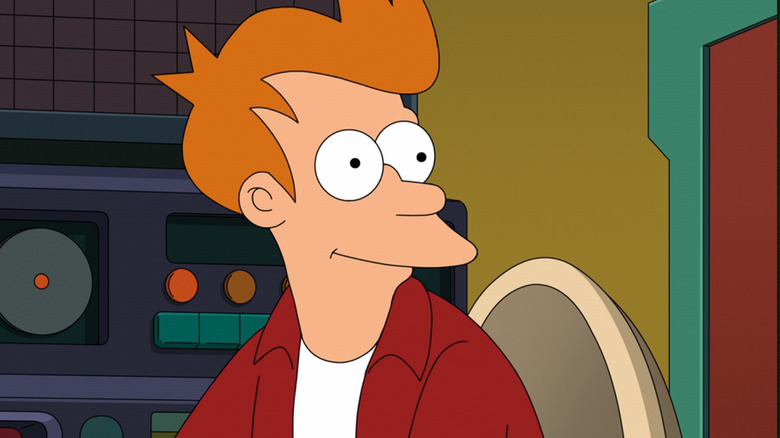
The word "sitcom" usually conjures images of family dynamics or hangouts with friends. But in the mid-20th century, networks decided that the format needed some extra juice. So began the age of the fantasy sitcom, or "magi-com" — shows that blended the wholesome comedy of traditional sitcoms with fantastical elements to produce series as bizarre as Sally Field's "The Flying Nun" and the show for which Jerry Van Dyke turned down "Gilligan's Island," "My Mother the Car."
As unlikely as it was, these sitcoms with outlandish fanciful premises and characters actually proved popular (not so much in the case of "My Mother the Car"). Suddenly audiences were tuning in to see the exploits of a 400-year-old suburban sorceress in "Bewitched" and a 2,000-year-old genie in "I Dream of Jeannie." Both of these beloved series derived much of their comedy from the clash between their Earthly setting and fantastical characters — a formula that remained popular for decades thereafter.
Today, there exists a grand tradition of fantasy sitcoms set entirely on Earth, all of which have succeeded by exploiting the same juxtaposition that made "Bewitched" and its ilk so popular back in the 1960s. Along the way, more sub-genres have emerged. Beneath the fantasy sitcom umbrella, for instance, sits the sci-fi sitcom, and if you want to get even more granular, there's the sci-fi sitcom that takes place entirely on our home planet. That may seem like an oddly abstruse category, but a cursory look back at TV history reveals this to be a wildly popular sitcom form. Here are five of the best examples.
My Favorite Martian
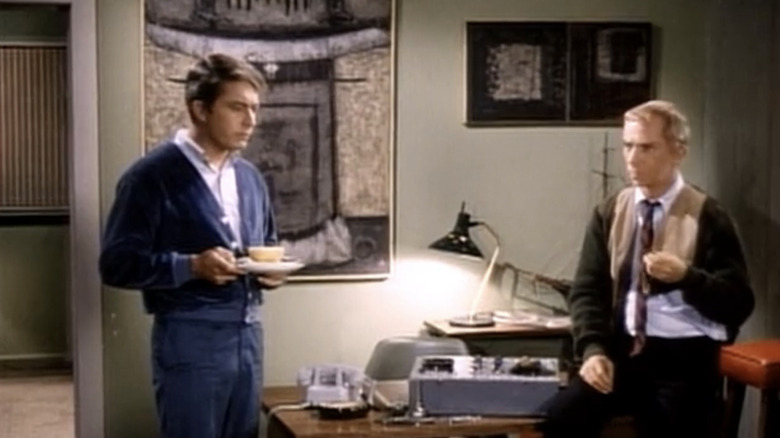
The very first fantasy sci-fi sitcom (unless you count "Mister Ed"), "My Favorite Martian" established a blueprint that dozens of sci-fi sitcoms followed in subsequent decades. In hindsight, the concept of a 450-year-old Martian who moves into an apartment with a young newspaper reporter might seem trite. But that's only because we've seen this same formula re-used countless times since Ray Walston and Bill Bixby shacked up together back in 1963.
"My Favorite Martian" saw Walston play "Uncle" Martin, an alien from Mars who crash lands on Earth, where he's discovered by Bixby's Los Angeles Sun reporter Tim O'Hara. Martin then moves into O'Hara's garage apartment and the pair agree to keep his Martian origins a secret. Thereafter, the alien becomes known as Uncle Martin, with O'Hara agreeing to keep his true origin under wraps while he tries to fix his ship. Throughout the show Uncle Martin showcases his special powers, which include the ability to move objects telepathically simply by moving his index finger.
"My Favorite Martian" combined fish-out-of-water comedy with an odd couple dynamic to create something truly novel for 1963. It predated more well-known fantasy sitcoms including the aforementioned "Bewitched" and "I Dream of Jeannie," and also welcomed some esteemed sitcom royalty in its time, including Alan Hale Jr. of "Gilligan' Island" fame, who guested on "My Favorite Martian" in 1964 — the same year he and the castaways set out on their ill-fated voyage on the S.S. Minnow.
3rd Rock From The Sun
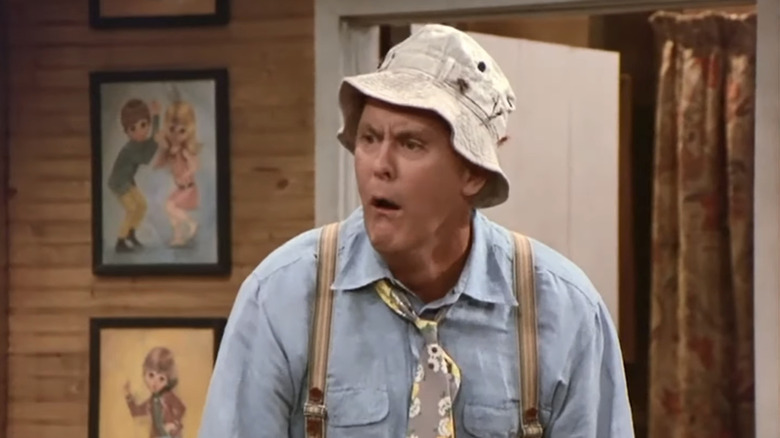
Who'd have thought that more than 30 years after "My Favorite Martian" the whole "aliens attempt to assimilate to Earthly customs" thing would still be funny? More than that, it would still be a strong enough basis on which to build one of the most popular shows of the 1990s.
"3rd Rock from the Sun" introduced a generation to John Lithgow. Today he's the otherwise esteemed star who's in danger of squandering all his goodwill by playing Dumbledore the in "Harry Potter" reboot. But Lithgow was already well-established in the '90s, having earned two Oscar nominations and an Emmy win for his guest role on "Amazing Stories" in 1986. You might think that his career had taken a turn by 1997. Why else would an accomplished actor agree to star in a sitcom about aliens? But while Lithgow broke his no-episodic-TV rule to star in NBC's "3rd Rock from the Sun," he was otherwise working steadily. Thankfully, the show was yet another major success.
Lithgow stars as Dick Solomon, an alien who visits Earth as part of a research project. He's joined by security officer Sally Solomon (Kristen Johnston), lovable idiot Harry Solomon (French Stewart), and Tommy Solomon (Joseph Gordon-Levitt), an information officer and the oldest member of the alien team, who ends up stuck in the body of a human teenager. The gang disguise themselves as a regular human family who live together in a loft apartment and, as you might expect, most of the humor derives from their unfamiliarity with the customs of 1990s America. Though it sounds like a well-worn formula, "3rd Rock" was one of the best sci-fi shows of the 1990s.
Futurama
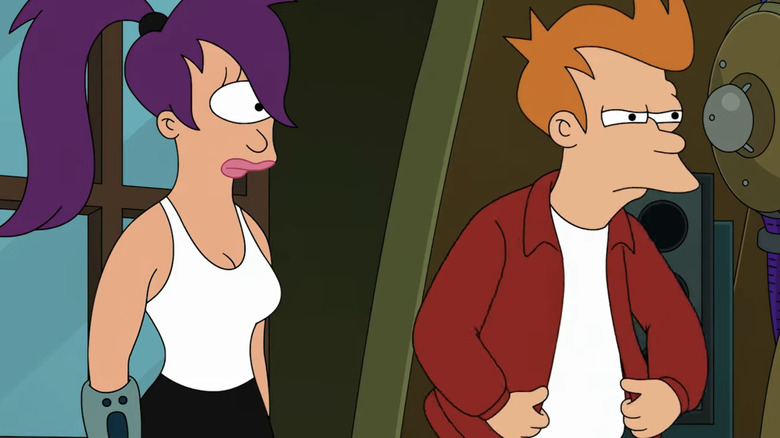
Is it fair to call "Futurama" a sitcom? Yes, it has the requisite "situation" from which the comedy arises — i.e. a dude freezes himself and wakes up 1,000 years in the future on an Earth he no longer recognizes. But like with Matt Groening's best-known work, "The Simpsons," it almost feels reductionist to call "Futurama" a sitcom.
I remember watching Groening tell the BBC back in 2000 that "Futurama" was about "taking the idea of the future and science fiction and doing to science fiction what needs to be done to science fiction" (he also said he had an idea for a show that would "demolish rock n' roll," for which we're all still waiting). What needed to be done to science fiction? Well, just like "The Simpsons" provided a hilariously irreverent, subversive, yet still heartfelt take on the American family, Groening seemed to think that science fiction needed to be taken down a peg or two. Not by undermining the concept of speculative fiction as a whole, but by reminding us all that our ideas about how the future might look — as captured in numerous books, films, and TV shows throughout the 20th Century — were almost certainly wrong.
Decades of sci-fi creators had used the genre to deliver moralistic sermons, crafting grand visions of the future solely as a way to deliver solemn warnings to audiences about the present day. "Futurama," however, with its wild, unpredictable, and fully irreverent depiction of Earth in 2099 was different. It took jabs at the sci-fi genre while also clearly fostering a deep love for it. "Futurama" was also just undeniably hilarious and, like "The Simpsons," maintained its sense of heart throughout.
ALF
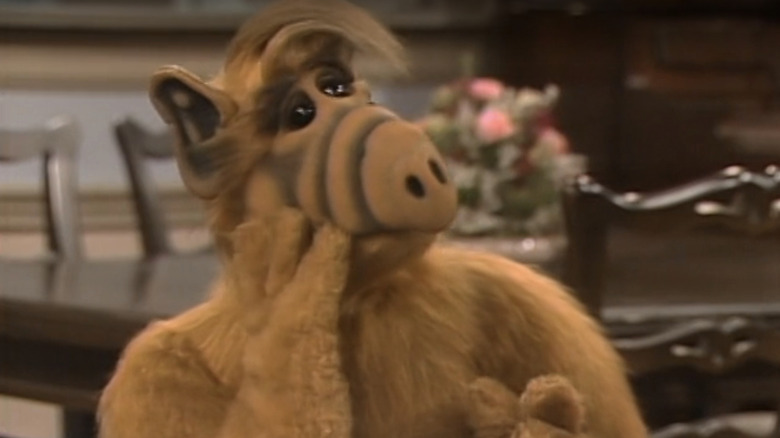
Even if you didn't grow up with "ALF" you're almost certainly aware of this sci-fi sitcom, which was everywhere in the 1980s. Like "My Favorite Martian" the show revolved around an extraterrestrial who moves in with the Tanners, a suburban family in California. But the show didn't simply rely on the same fish-out-of-water dynamic of numerous lesser sitcoms. ALF (an acronym for Alien Life Form), whose real name was Gordon Shumway (puppeted by Paul Fusco and portrayed in full-body scenes by Michu Meszaros), was an irreverent wisecracking little dude with a heart of gold and an insatiable appetite for his foster family's pet cat. He captured the attention of an entire generation of kids who would soon become enamored with another cheeky sitcom icon, Bart Simpson.
But ALF's personality was only part of the reason his show worked so well. If you take the alien out of the equation, "ALF" was a fairly standard family sitcom which helped to balance its outrageous high concept approach with characters and situations that were surprisingly grounded. In that sense, the show was both relatable and fantastical, which proved to be a winning formula.
Throughout the show's four seasons, ALF spends almost the entirety of his time at the Tanners' home — though he did venture out sometimes, ultimately leading to the surprisingly dark ending to this beloved 80s sci-fi sitcom, wherein the titular alien is captured by the U.S. military. But that wasn't actually the end of ALF's story, as not only did he return for the 1996 TV movie "Project: ALF," he remained part of the pop culture wallpaper for a surprisingly long time after the show came to an end in 1990.
Mork & Mindy
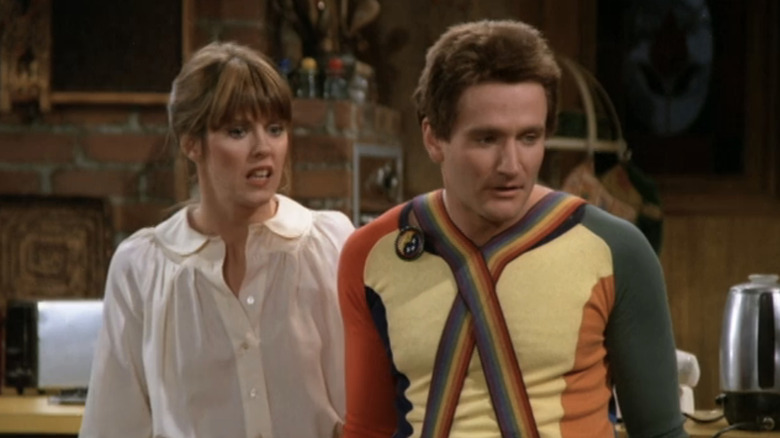
"Happy Days" spawned several spin-offs and "Mork & Mindy" was one of the best. This was the show that gave Robin Williams his big break, with the now legendary comedian playing an alien named Mork who hailed from the planet Ork. Mork's mission is to observe humanity and report back to his superiors. But he ends up becoming a fully fledged citizen of Earth in what remains perhaps the greatest sci-fi sitcom based on our home planet.
In "Mork & Mindy," Mork lands in Colorado where he moves in with Mindy McConnell (Pam Dawber). The two ultimately fall in love and the show follows their lives together as they try to keep Mork's identity a secret even while Williams' alien is constantly flummoxed by humankind and its customs. Unlike many similar sci-fi sitcoms, however, "Mork & Mindy" had a truly generational comedic talent at its core, and the show reveled in showcasing Williams' abilities throughout. It worked. "Mork & Mindy" remains one of the best '80s sitcoms, combining the best of past sci-fi comedy shows and influencing future sitcoms in the process.
It was fitting, for instance, that Mork first debuted in the "Happy Days" episode "My Favorite Orkan," a parody of "My Favorite Martian." Williams' spin-off would ultimately prove to be the 1980s version of that very show, while also providing a blueprint for "3rd Rock from the Sun" with its alien-on-an-observation-mission premise. Add a talent like Williams to the mix and you have the formula for a timeless sci-fi sitcom based entirely on Earth.