

10 Best Sci-Fi TV Shows Of The '90s, Ranked
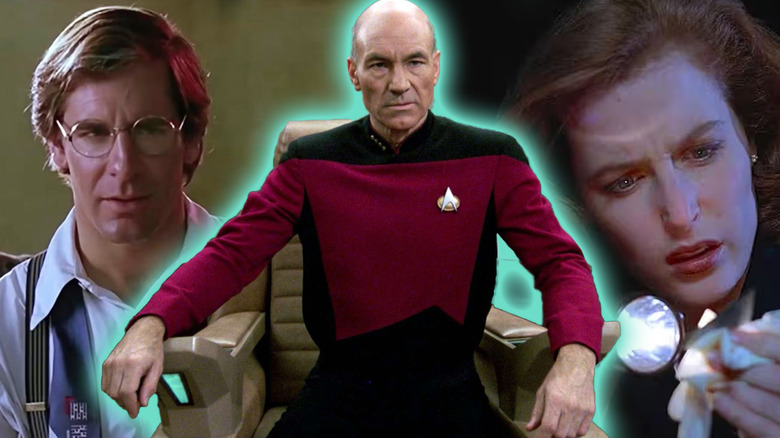
Just as there were plenty of excellent '90s sci-fi movies, the science fiction genre was also alive and well on television throughout the decade. Whether exploring the vastness of outer space or the infinite possibilities of alternate dimensions, there are plenty of '90s shows with a flair for the cosmic. The decade also saw more and more series good-naturedly poke fun at the genre, skewering its tropes in both live-action and animated sitcoms. There was something for sci-fi fans of all ages on television across the '90s, and we're highlighting the best genre shows from the decade.
From continuations of established franchises to bold, fresh takes on the genre, there was an impressive breadth of sci-fi television to choose from in putting together this list. We're also focusing on shows that were notably hitting their stride in the '90s, either retaining momentum from an '80s debut or put out a significant number of episodes during the '90s. That means, as much as we love "Futurama" and "Farscape," neither of those shows, unfortunately, were prominent enough in the '90s alone to make this list.
These are the 10 best sci-fi shows of the '90s ranked, each doing exciting things with the genre in their own way.
10. 3rd Rock from the Sun
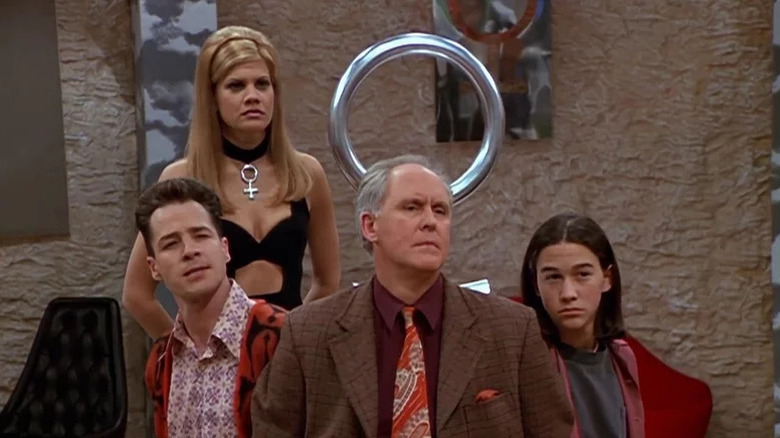
One of the better sitcoms from the second half of the '90s that doesn't get enough recognition today is "3rd Rock from the Sun." The show has an extraterrestrial expedition from a distant galaxy embed themselves in suburban Ohio under the guise of a human family. The group of otherworldly visitors is led by Dick Solomon (John Lithgow), doing their best to blend in with humanity as they observe it. As the expedition grows closer to the society that they're studying, Dick strikes up a romance with his human colleague Mary Albright (Jane Curtin).
Thanks to a strong ensemble cast, including French Stewart and Kristen Johnston, "3rd Rock from the Sun" entertained audiences for six seasons until 2001. But a lot of the show's appeal comes from John Lithgow dodging a common sitcom problem, keeping things unpredictable each episode rather than constantly falling into familiar rhythms. At the same time, the series isn't inane for inanity's sake, with "3rd Rock from the Sun" keeping its stories believable, at least relatively speaking. Avoiding the common pitfalls of the sitcom formula, "3rd Rock from the Sun" leans into its cast's strengths to subvert sci-fi tropes in its own hilarious way.
9. Stargate SG-1
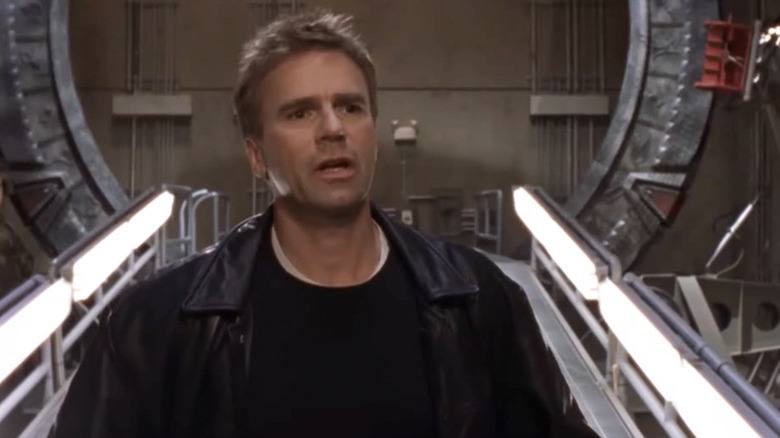
While the 1994 film "Stargate" was considered by Roger Ebert to be one of the worst sci-fi movies of all time, it was successful enough to receive a television spin-off. Serving as a continuation of the movie, Colonel Jack O'Neill (Richard Dean Anderson) emerges from retirement to supervise the military using a Stargate to explore the cosmos. This reunites him with expert Egyptologist Daniel Jackson (Michael Shanks), whose wife is kidnapped in the series premiere, prompting his return to service. As O'Neill's team explores different worlds through its cosmic portal, they face antagonistic empires and new otherworldly threats.
Running for over 200 episodes and two direct-to-video movies, "Stargate SG-1" is a much more ambitious television continuation of the sci-fi story than a simple spin-off. It was through "SG-1" that the property grew into a bonafide franchise, launching its own line of "Stargate" spin-off series in addition to its own impressive run. That doesn't come without the core show being such an enjoyable ride, with a lot of that charm present ever since its 1997 debut. A military action show with cosmic stakes, "Stargate SG-1," provided basic cable with its own expansive sci-fi franchise.
8. Batman Beyond
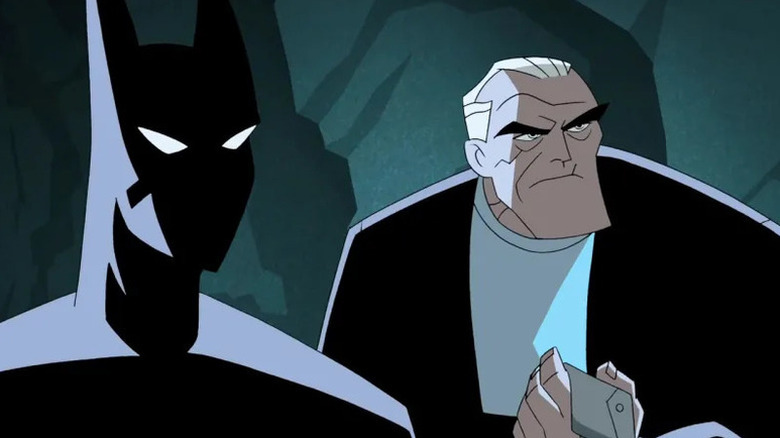
After crafting the classic "Batman: The Animated Series," Bruce Timm, Paul Dini, and Alan Burnett created "Batman Beyond" in a fit of desperation to appeal to younger audiences. A futuristic sequel series to their previous work, the 1999 show takes place in Neo Gotham City decades after Bruce Wayne (Kevin Conroy) has retired from fighting crime as Batman. With crime and corruption overtaking the city once again, teenager Terry McGinnis (Will Friedle) becomes Wayne's protege, becoming the new Batman through a high-tech suit. This duo retakes Gotham against new supervillains and the occasional familiar foe reinvented for this cyberpunk dystopian vision of the DC Animated Universe's future.
Nearly 30 years after its debut, "Batman Beyond" stands as among the best DC Comics shows ever made. Though it was created with younger audiences in mind, the show often went into thematically darker and more action-packed areas than its preceding series. Freed of trying to reflect classic DC continuity, complete with a new protagonist, the series was able to go bolder with its superhero storytelling, leaning more visibly into sci-fi. An ambitious reimagining of what Batman can be within cyberpunk sci-fi, "Batman Beyond" is arguably the last DCAU masterpiece.
7. Sliders
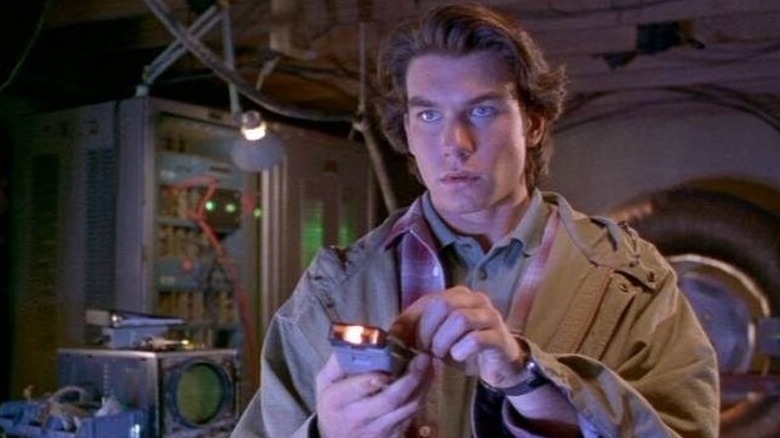
Multiversal exploration serves as the core premise behind the 1995 series "Sliders," with the sci-fi show bringing in occasional fantasy flourishes. The show primarily follows scientist Quinn Mallory (Jerry O'Connell) and his mentor Maximillian Arturo (John Rhys-Davies), who invented a device allowing them to travel to parallel dimensions. Joined by Quinn's friend Wade Welles (Sabrina Lloyd) and random singer Rembrandt Brown (Cleavant Derricks), the group searches for a way to return to their native dimension. The amount of time that these sliders are stuck in a different reality depends on how long Quinn's device counts down to open a new portal.
"Sliders" carries a lot of quirky '90s charm, with much of it powered by the rapport between O'Connell and Rhys-Davies. There is an inherent campiness to the premise, which the show, to its credit, doesn't shy away from, as it comes up with new twists on its alternate reality formula. The series' first three seasons are its best, with the show never quite the same after Rhys-Davies and Lloyd's departures following that season. One of those series that could only exist in the '90s given its distinct vibes, "Sliders" is a low-stakes, campy good time.
6. Quantum Leap
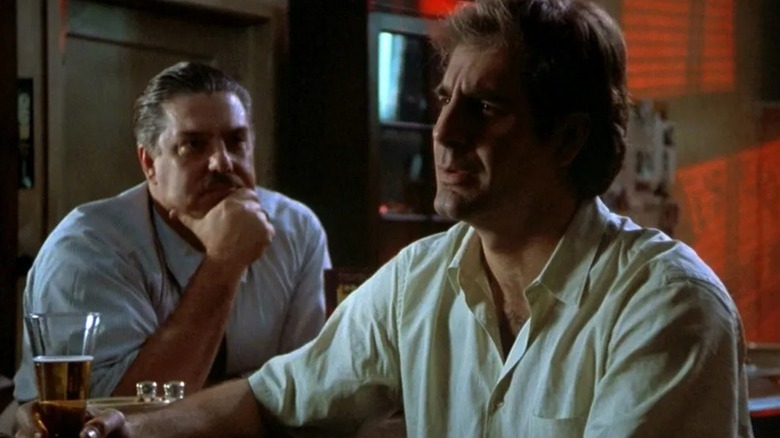
While it premiered in 1989, "Quantum Leap" broadcast the majority of its episodes in the '90s before coming to an end in 1993. The story revolves around physicist Sam Beckett (Scott Bakula) who, after an experiment gone wrong, temporarily possesses the bodies of different people throughout history. While trying to find a way to return to his own body and time, Beckett uses his host bodies to correct their respective destinies. Accompanying Beckett on his body-hopping odyssey is a hologram of his best friend Al Calavicci (Dean Stockwell), providing advice and context on Beckett's latest jump.
"Quantum Leap" made a star out of Scott Bakula while taking full creative advantage of its body-swapping premise. This allows the show to mix things up every episode, both in terms of setting and tone depending on where Beckett ends up with each leap. Bakula and Stockwell's easygoing camaraderie keeps the series on the tracks, playfully offering commentary and banter for each adventure. A bit of cozy sci-fi with likable leads at the helm, "Quantum Leap" is an enduring fan-favorite over 30 years after it went off the air.
5. Babylon 5
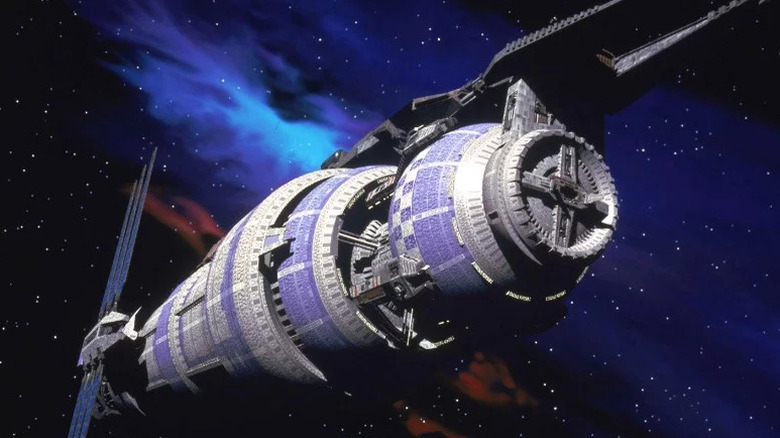
Upon its debut in 1993, "Babylon 5" received awful reviews, but it's actually worth watching, reevaluated over the ensuing years to be recognized as a sci-fi classic. Set in the 23rd century, the series presents humanity as living under a unified government on Earth and having developed faster-than-light space travel. As humanity becomes an increasingly important presence in galactic politics, the show centers on a tactically important space station. With interstellar tensions leading to open war, the space station becomes vital in determining the fate of the galaxy.
The broader premise of "Babylon 5" resembles the next entry on this list, not quite as prestigious in its storytelling but no less ambitious. The 1993 series builds a whole galactic mythos from the ground up, informing the interstellar intrigue that fuels the narrative. This is a long-form story that grows more rewarding as it progresses, seeing how its disparate threads inevitably collide. Delivering richly and maturely told sci-fi spectacle, "Babylon 5" is one of the more underrated genre shows of its decade.
4. Star Trek: Deep Space Nine
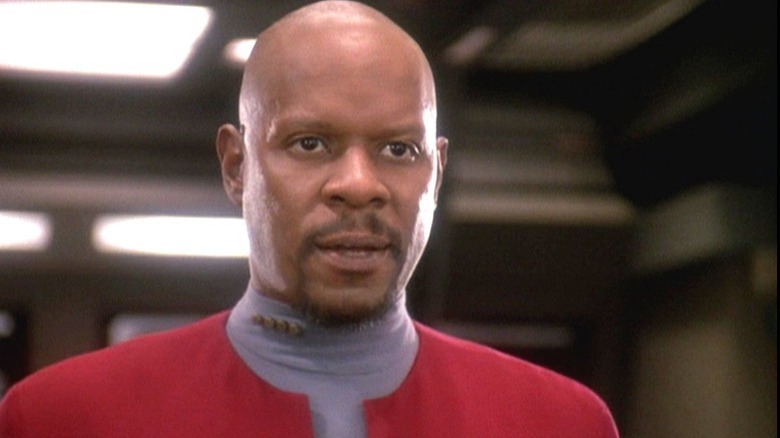
The first "Star Trek" series to premiere in the '90s was "Deep Space Nine," which debuted in 1993 as a spin-off to "The Next Generation." The show is set in a space station near a strategic wormhole in the galaxy, with the Starfleet personnel commanded by Benjamin Sisko (Avery Brooks). As tensions escalate, Starfleet and its allies find themselves at war with an interstellar coalition known as the Dominion. This causes Sisko and his associates to make increasingly morally ambiguous decisions to avoid being overwhelmed by the Dominion as the station becomes a centerpoint in the conflict.
There are some who would argue that "Deep Space Nine" is the greatest "Star Trek" of them all, though I wouldn't go quite that far. That said, once the series settles into its groove by its third season, the show brings some of the most ambitious storytelling the franchise has ever seen to date. This includes the show leaning into more serialized narratives than "Star Trek" was known for at the time as well as darker and more intense stories. Another major leap forward for "Star Trek" as a whole, "Deep Space Nine" brings the franchise into the realm of space opera.
3. The X-Files
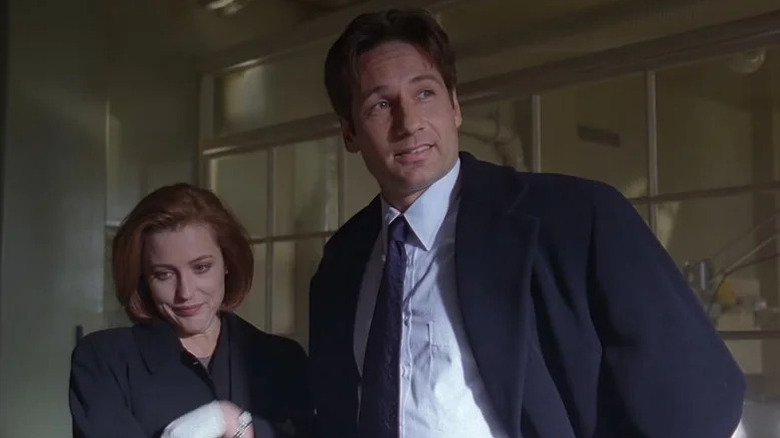
Among the shows that helped cement Fox as a major television network in the '90s was "The X-Files," which premiered in 1993. The series centers on an FBI office that focuses on investigating paranormal cases around the country, led by special agents Fox Mulder (David Duchovny) and Dana Scully (Gillian Anderson). In between the monster-of-the-week format, the duo face a wider government conspiracy involving a cover-up regarding extraterrestrial activity on Earth. But the real draw is the strong rapport between Mulder and Scully, the believer and the skeptic, respectively, as they face all sorts of strange cases.
"The X-Files" is one of the best sci-fi shows of all time, regardless of what decade it aired, blending conspiracy theory thrills with supernatural action. With its moody presentation, the series could veer into outright horror and suspensefully paranormal tales, but also had a sense of humor about itself. The best "X-Files" episodes recognize that malleability and the charm of its lead actors, leaning into both while maintaining the overarching shadowy atmosphere. A '90s staple that reinvented the monster-of-the-week pacing for modern audiences, "The X-Files" became an enduring property in the wider sci-fi genre.
2. Cowboy Bebop (1998)
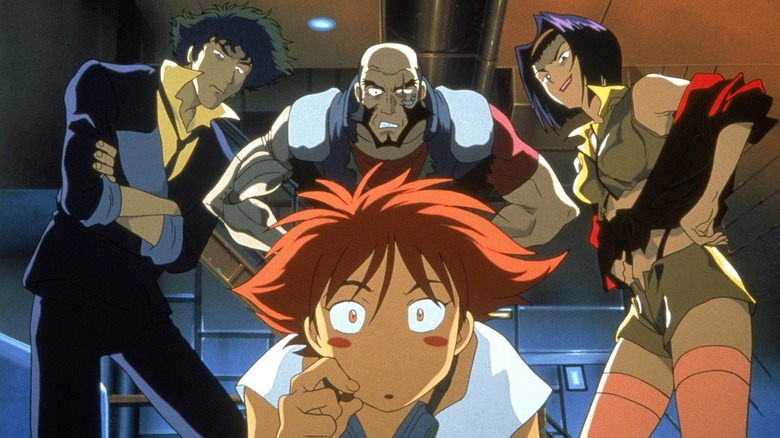
Beyond the sci-fi genre, "Cowboy Bebop" is one of those essential anime series that everyone should watch at least once. Set in a future where humanity has colonized much of the solar system, the fringe settlements are preyed upon by interplanetary outlaws. Protagonist Spike Spiegel and his friends are bounty hunters tasked with bringing in these dangerous figures around the cosmos. As Spike's adventures continue, tragic and unresolved details from his violent past reemerge to hunt him down in a bloody collision course.
Overall, "Cowboy Bebop" is moody sci-fi neo-noir, with its atmosphere fueled by a jazzy score composed by Yoko Kanno. But the tone and genre trappings change up across each episode while maintaining the emotional investment and underlying sense of cool that the show is known for. That means "Cowboy Bebop" has every episode feeling unique, veering from psychedelic comedy to pulse-pounding horror as it charts the interplanetary antics of Spike and his companions. There are plenty of memorable anime that aired in the '90s but there's something about "Cowboy Bebop" that continues to stand out from the rest of the decade's genre shows.
1. Star Trek: The Next Generation
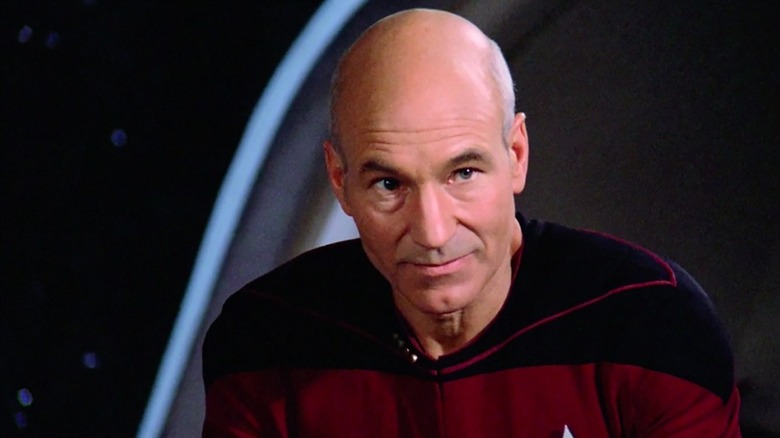
Though "Star Trek: The Next Generation" debuted in 1987, the series really didn't start hitting its stride until 1990. Overcoming the turmoil and bad blood from its early seasons, the show began to tell truly stellar stories with the crew of the Enterprise-D as it explored the galaxy. This includes Captain Jean-Luc Picard (Patrick Stewart) enduring his traumatic encounter with the Borg Collective and the introduction of the Cardassian Union. This isn't to say that the first two seasons didn't have its own standout episodes but, by the end of Season 3, "The Next Generation had raised its game considerably.
In short, the clear majority of the essential "Star Trek: The Next Generation" episodes aired in the '90s. The show not only found its creative voice but revamped what the franchise could be, particularly on television. Many of the iconic hallmarks of the wider "Star Trek" franchise were established during this period, carrying over to subsequent series and movies. One of the defining genre shows of the '80s and '90s, "Star Trek: The Next Generation" elevated sci-fi storytelling on television to new heights.