

10 Best Movies Of The '70s, According To IMDb
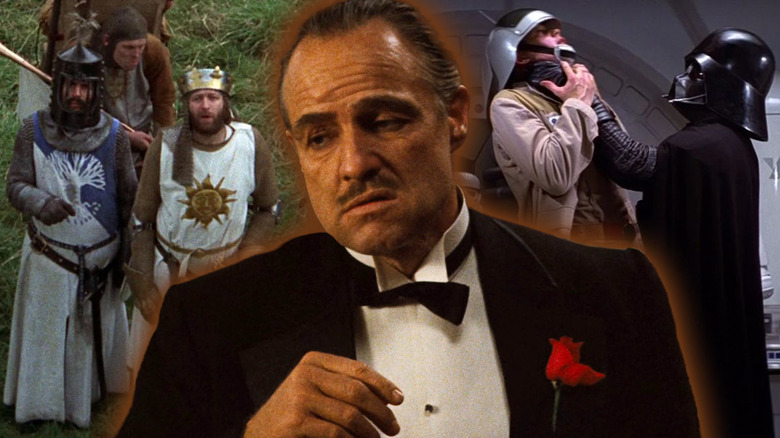
As of writing, only 17 films released between 1970 and 1979 appear on IMDb's official current ranking of its Top 250 films. That makes up just under 7% of the entire list. At the same time, the '70s make up two-fifths of its Top 5, and is the only decade to be represented in that space more than once.
This is likely because, even in the recency-biased world of online film communities, the '70s still register as arguably the greatest decade of American filmmaking. The site's rankings aside, this shouldn't be controversial — the '70s were the decade of Kubrick, Spielberg, Lucas, Scorsese, and Coppola, filmmakers who defined the industry as we know it. The ten films that follow stand out as some of their most culturally enduring and influential works — the films that have survived several iterations of Hollywood, resisted becoming museum pieces, and still feel as revelatory as they did 50-or-so years in the past.
10. Monty Python and the Holy Grail (1975)
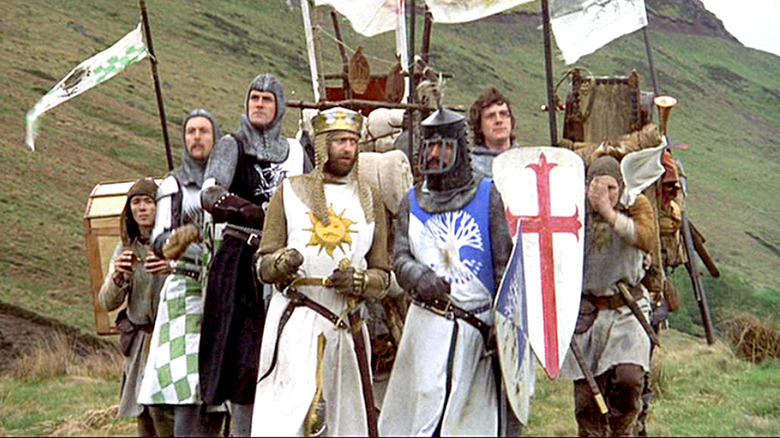
IMDb Rating: 8.1/10 | Number of Votes: 604K | Official Top 250 Ranking: No. 165
From "National Lampoon's Animal House" to Mel Brooks classics like "Young Frankenstein" and "Blazing Saddles," the 1970s were filled with influential comedies that prove filmmaking's fastest-aging genre can still have a shelf life. At the same time, however, only one of these films is currently on IMDb's Official Top 250 list: "Monty Python and the Holy Grail."
Written and directed by various members of the "Monty Python's Flying Circus" ensemble, "Monty Python and the Holy Grail" was not the sort of film anyone involved expected to be a major success. It struggled to get funding at the outset, and the team had to rely on the kindness of rock stars looking for creative tax breaks to get it made. Fortunately, "The Holy Grail" had a bit of unplanned brand synergy on their side as well — around the same time as the film's 1975 release, PBS had just begun to air episodes of "Flying Circus," creating an American audience that hadn't existed in any serious capacity until that point. It wound up making over $1.8 million during its original theatrical run (against a budget of just $400,000).
While it didn't receive the institutional recognition that every other film on this list has benefited from in terms of cultural longevity, "Monty Python and the Holy Grail" nonetheless has proved itself one of the most enduring comedies ever made. This is due in large part to its inherently anachronistic, absurd sense of humor, which not only defies '70s standards, but serendipitously fits in with the eclectic tastes of a generation raised on YouTube. That online-native audience is precisely who leaves ratings on IMDb, thus it's no surprise "The Holy Grail" is the comedy the site champions.
9. Taxi Driver (1976)
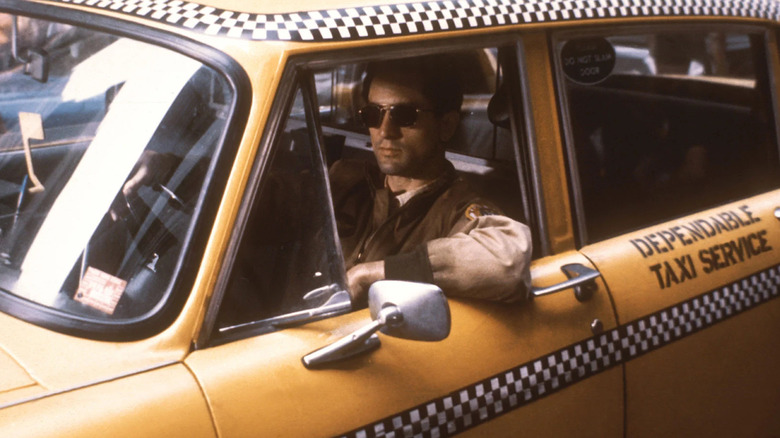
IMDb Rating: 8.2/10 | Number of Votes: 1M | Official Top 250 Ranking: No. 140
Speaking of classic films that got off to rather inauspicious starts, Martin Scorsese's "Taxi Driver" was at one point so controversial it's hard to imagine the director pictured it surviving a release window, much less five decades near the top of many "best of" lists. He took on a paltry $1.9 million budget for the ambitious flick to assuage studio concerns about content, but when the graphic finale was first screened for audiences at Cannes Film Festival in 1976, the cast and creative team were practically booed out of the theater. 12-year-old Jodie Foster had to do press alone while Scorsese and Co. raced back to their hotel rooms, panicking about the X-rated bomb they'd just produced.
Despite these concerns, the wide release of "Taxi Driver" was met with critical acclaim. Its enduring artistic relevance can be attributed to the work of Scorsese, writer Paul Schrader, and star Robert De Niro, who collectively captured the danger of the disillusioned loner. De Niro's Travis Bickle reflects a kind of social isolation and radicalization that feels urgently familiar in today's social and political climate. His iconic, improvised "You talkin' to me?" monologue is just one of several moments in the film that have been referenced throughout the decades countless times — we weren't even fazed when Gen Z was essentially given a spiritual remake in the form of Todd Phillips' "Joker" (which Scorsese and De Niro were both involved in).
When the latter film was released, it reignited the same fervor around on-screen violence that caused Scorsese to retreat from Cannes — the halls of that very festival were witness to a kind of passionate discourse IMDb would later be created to nurture. "Taxi Driver" was awarded Cannes' highest honor.
8. A Clockwork Orange (1971)
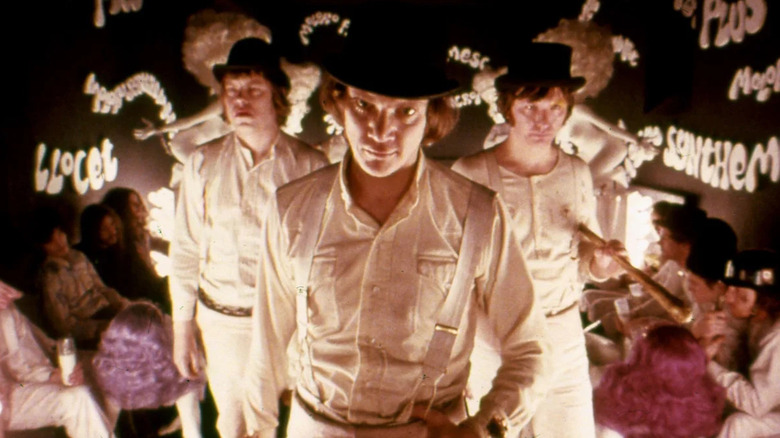
IMDb Rating: 8.2/10 | Number of Votes: 938K | Official Top 250 Ranking: No. 120
Stanley Kubrick is far and away one of the most influential filmmakers of all time. But — and this may be somewhat controversial to say – we'd argue he'd already done most of his best work by the 1970s. This is certainly up for debate, though it only stands to underscore how legendary his filmography is, especially since both of his '70s efforts cracked the IMDb Top 250. Ranking just outside the top 10 spot at number 12 (between "Chinatown" and "Jaws") is "Barry Lyndon." Above it, at number eight, is "A Clockwork Orange."
"A Clockwork Orange" shares a lot in common with "Taxi Driver" when it comes to assessing why it remains so striking. Both films were (and remain, in some circles) immensely controversial, their graphic depictions of violence questioned in the aftermath of real-world crimes. (Kubrick even had "Clockwork" banned in the U.K. for 25 years because he was personally troubled by its impact.) Travis Bickle and Malcolm McDowell's Alex DeLarge were not the first antiheroes on the screen, but they were among the first mainstream dramatic protagonists who were openly violent, antisocial, and (in the latter's case) psychopathic. These characters had once existed as literary outsiders — now they were the faces of Best Picture nominees.
It's worth noting that the America in the '70s, much like the 2020s, was defined by a sense of institutional mistrust that set the stage for these characters to engage audiences more directly. Again, there are obvious similarities to be drawn between the enduring popularity of "A Clockwork Orange" and the contemporary success of a movie like "Joker," which sits 31 spots ahead of "Clockwork" on the Top 250 rankings.
7. The Sting (1973)
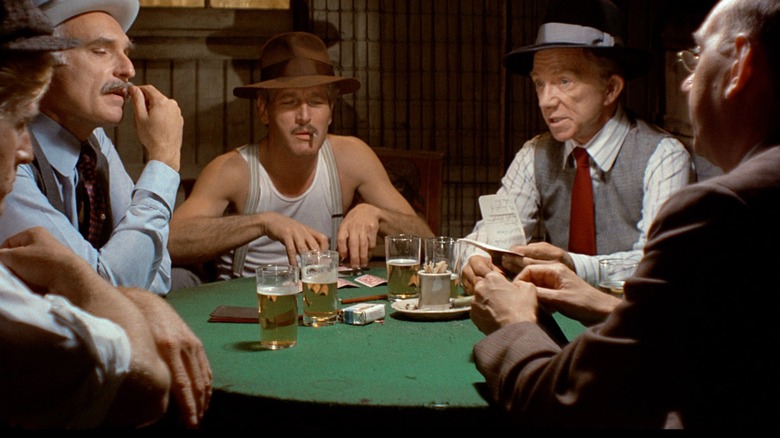
IMDb Rating: 8.2/10 | Number of Votes: 303K | Official Top 250 Ranking: No. 118
The vast majority of the list consists of exactly the kind of movies you'd expect to see on a "Best of the '70s" rundown. IMDb users are predictable and in line with the general consensus when it comes to selection, if not the precise ordering. The one outlier is "The Sting," a surprising but entirely welcome inclusion that beats out far more iconic '70s hits like "Rocky," "The Exorcist," and "Jaws."
While most readers have heard of "The Sting," it's the film on this list they're least likely to have seen. It has the third-fewest reviews of any '70s movie in the IMDb Top 250, only above "Barry Lyndon" and the Turkish comedy "Hababam Sınıfı Sınıfta Kaldı" ("The Chaos Class Failed the Class"). Fresh off the unavoidably overshadowing "Butch Cassidy and the Sundance Kid," director George Roy Hill reunited with stars Paul Newman and Robert Redford for a good ol'-fashioned caper about con men trying to pull one over on a dangerous crime boss (Robert Shaw). Ironically, despite being the least popular film featured here, it was one of the most successful in terms of awards; at the 46th Oscars, it won in seven of the 10 categories in which it was nominated.
But the fact that "The Sting" isn't as hugely popular as "Jaws" actually helps explain part of its success. The smaller number of people who have witnessed Hill's tight, meticulously twisty film have almost unanimously enjoyed it, pushing it toward the top 50% of a list that currently ignores such successors as "Ocean's Eleven" or even "Knives Out." The fewer people who have seen it, the more its reputation holds — fitting for a movie where nobody catches on until the last second.
6. Apocalypse Now (1979)
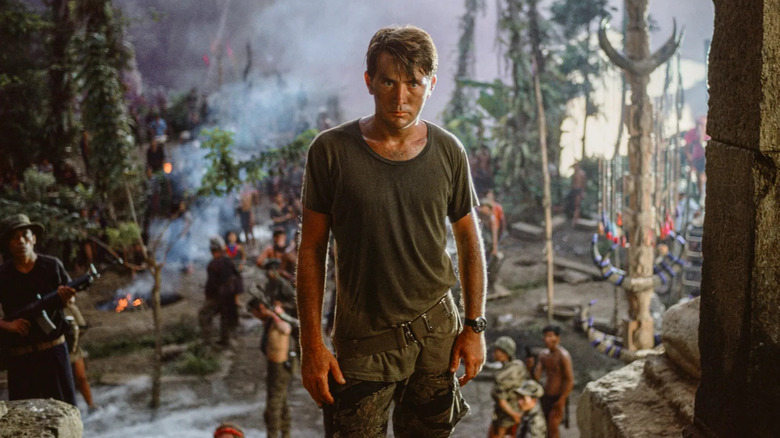
IMDb Rating: 8.4/10 | Number of Votes: 772K | Official Top 250 Ranking: No. 57
Francis Ford Coppola is the defining filmmaker of the 1970s. That's a claim we're comfortable users of IMDb would broadly back us up on, given how the rest of this list shakes out. Today, Coppola's legacy is marred by (among numerous controversies and professional missteps) the messy culmination of his decade-spanning passion project "Megalopolis." That 2024 feature, widely panned as a critical and commercial failure, at the very least reminded viewers of vintage Coppola — mostly because he had produced another film that would struggle to be as compelling as the unbelievable behind-the-scenes tale of how it got made.
That's not meant to denigrate "Apocalypse Now," an unmistakably magnificent and characteristically ambitious war epic that led to the equally riveting documentary "Hearts of Darkness: A Filmmaker's Apocalypse." The infamy of the film's brutal production process is absolutely one aspect of its current mystique among cinephiles – Coppola himself was nearly killed in a natural disaster that destroyed his sets; he pushed Martin Sheen past his own physical and psychological boundaries, which some have connected to the near-fatal heart attack the actor suffered while on location; and perhaps most disturbing of all is the real mutilation of a water buffalo, which was caught on camera and used in the final cut of the movie. The conversation around whether or not Coppola's inarguably dysfunctional set was necessary for the production of such a singular work of art remains one of the more spirited debates in filmmaking. (We'll throw our two cents in: No, you don't need to kill animals or Martin Sheen to make a good movie, unless you're making a "Spider-Man").
5. Alien (1979)
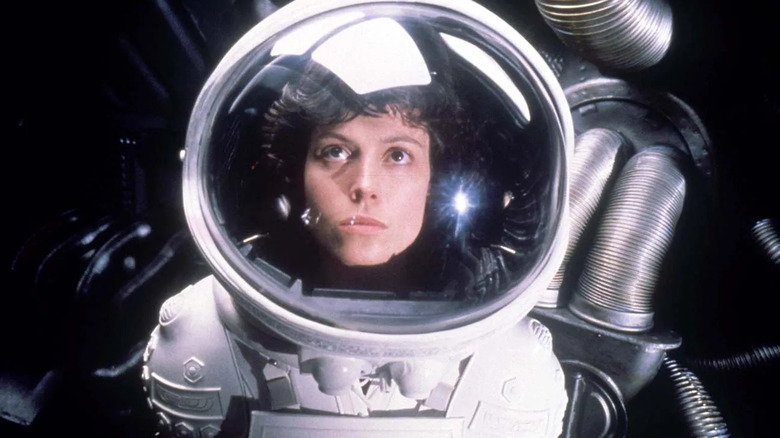
IMDb Rating: 8.4/10 | Number of Votes: 1.1M | Official Top 250 Ranking: No. 51
The next two entries on our list are the one-two punch that cemented science fiction as a serious blockbuster genre for the foreseeable future. Before we get too ahead of ourselves, however, we'll just go back to 1979, when Ridley Scott proved that space wasn't only the next great backdrop for adventure — it was also the final frontier for horror.
It's hard to overstate the impact "Alien" had on the sci-fi and horror genres, not least because it showed the two working together on a level that audiences had never seen. Scott mastered both the tangible, practical thrills of "Star Wars" and the all-consuming dread of "Jaws," then mashed them together in one gooey body horror feast. "Alien" is essentially a synthesis of the films that served as the decade's two biggest inflection points for blockbuster filmmaking. It's no wonder Scott went on to have one of the most diverse careers in Hollywood afterward. In the realm of sci-fi specifically, "Alien" gave us Sigourney Weaver's Ellen Ripley, one of the genre's defining protagonists who smashed the glass ceiling for decades of women-led genre movies to come.
The other side of the cultural longevity of "Alien" is, of course, the longevity of its sprawling, Disney-absorbed franchise (something else it shares with our next list entry). The James Cameron-directed "Aliens" is rightly regarded as an all-time great sequel, and has secured its own spot in the Top 250 at No. 70. 2020s efforts like "Alien: Romulus" and "Alien: Earth" prove the franchise still has its pull — and have no doubt infected new generations of "Alien" fans as well.
4. Star Wars: Episode IV -- A New Hope (1977)
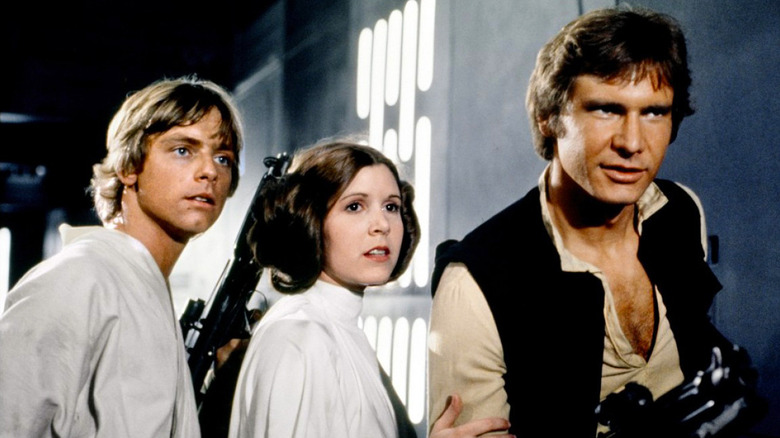
IMDb Rating: 8.6/10 | Number of Votes: 1.6M | Official Top 250 Ranking: No. 30
It's far from shocking to find the original "Star Wars" movie near the top of this list. Perhaps the only thing surprising about its inclusion is that it's the second-most highly rated '70s film in the Top 250 by a significant margin. After all, when George Lucas released his first space opera back in 1977, it launched what soon became the most popular and widely beloved franchise in cinema history.
The fact that a new "Star Wars" film was released just this year paints most of the picture here. Generations of moviegoers have flocked to the galaxy far, far away time and time again for the past 50 years, embracing it in various forms as it evolves to keep pace in the modern cinema landscape. That level of constant cultural resurfacing plays a major role in sending people back to revisit the original movie, either to understand where the franchise got its start or to remember a time when it felt truly exceptional. At the same time, it's instructive to emphasize how the broad premise, tone, and style of "Star Wars" has proved itself to be enchanting for audiences across five decades (so diverse in their makeup that they spend most of their time online arguing with one another).
That time-transcending community is arguably the strongest factor behind the continued celebration of "Star Wars." Modern franchises like the Marvel Cinematic Universe are, at least for now, ephemeral experiences you share with friends and occasionally revisit alone, on a streaming service, as half-reluctant homework viewing for the next thing. "Star Wars" is a tradition passed ever onward, uniquely discoverable both in academic environments and your parents' living room.
3. One Flew Over the Cuckoo's Nest (1975)
IMDb Rating: 8.6/10 | Number of Votes: 1.2M | Official Top 250 Ranking: No. 19
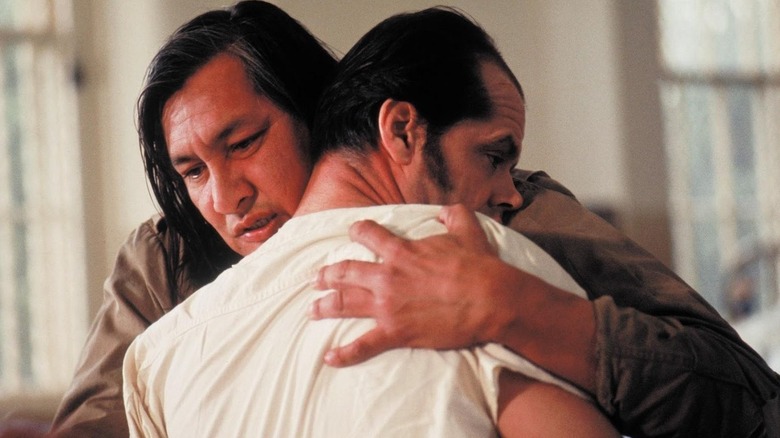
From the first moment Jack Nicholson appears on screen in "One Flew Over the Cuckoo's Nest," the film becomes entirely his own. In the role of R.P. McMurphy, he plays a recidivist criminal who is able to con the justice system to avoid a brutal sentence after he's convicted of a sickening crime. He's a complicated character, and one that modern audiences especially might have a hard time empathizing with on paper. As such, it demands an actor of Nicholson's caliber to be effective.
It's impossible to heap enough praise on the direction by Miloš Forman or the screenplay by Lawrence Hauben and Bo Goldman, but it's Nicholson's performance that makes "One Flew Over the Cuckoo's Nest" impossibly life-affirming. He's the heart of a battle between a startling kind of freedom and the cold, clinical authoritarian control of Nurse Ratched (a perfect foil made terrifyingly iconic by Louise Fletcher). There's a balance the movie structurally needs to accomplish in order to succeed that is almost single-handedly maintained by Nicholson's ability to get the audience on his side, whether he's entertaining his fellow inmates at a psychiatric ward or wrestling with the reality of potentially indefinite imprisonment in an insidiously degrading environment.
"One Flew Over the Cuckoo's Nest" is one of only three films to sweep all Big Five categories at the Oscars, and Nicholson's performance left an indelible mark in cinema history.
2. The Godfather Part II (1974)
IMDb Rating: 9.0/10 | Number of Votes: 1.5M | Official Top 250 Ranking: No. 4
By 1970s standards, a sequel stands in opposition to everything that a "serious" film should be. For over 50 years, "The Godfather Part II" has proved that sequel projects can not only be just as novel and surprising as original works, but can also be capable (at their best) of achieving more than a standalone film. IMDb is an arena that celebrates prestige and franchise filmmaking in the same breath — when users argue about what sequel reigns as the greatest of all time, "The Godfather Part II" comes in second by a single-point margin.
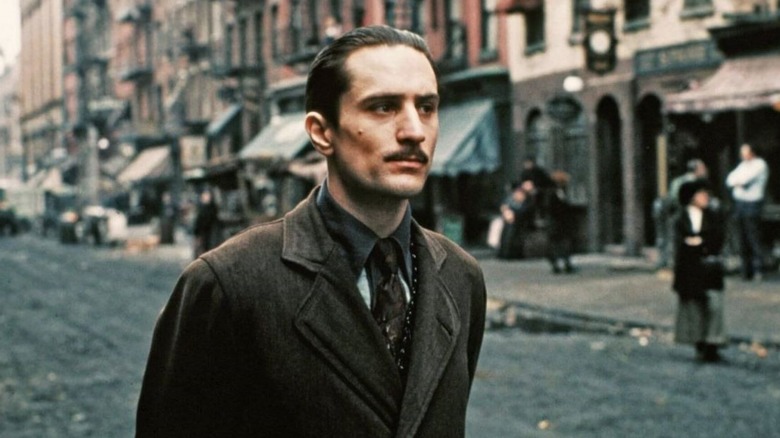
The most striking element of "Part II" is Francis Ford Coppola's structurally subversive decision to split the narrative. While one half of the film continues to follow Al Pacino's Michael Corleone, the other chronicles the origin story of Marlon Brando's Vito, now played by Robert De Niro. The overlap between the two stories takes place exclusively in the minds of the audience, finding meaning in contrasting stories of self-discovery and self-destruction. That creates a lasting psychological impact that forgettable movies attempt only by brute force. Not to mention, the performances of De Niro and Pacino are legendary, the latter's snubbing by the Academy still generating online fervor to this day.
1. The Godfather (1972)
IMDb Rating: 9.2/10 | Number of Votes: 2.2M | Official Top 250 Ranking: No. 2
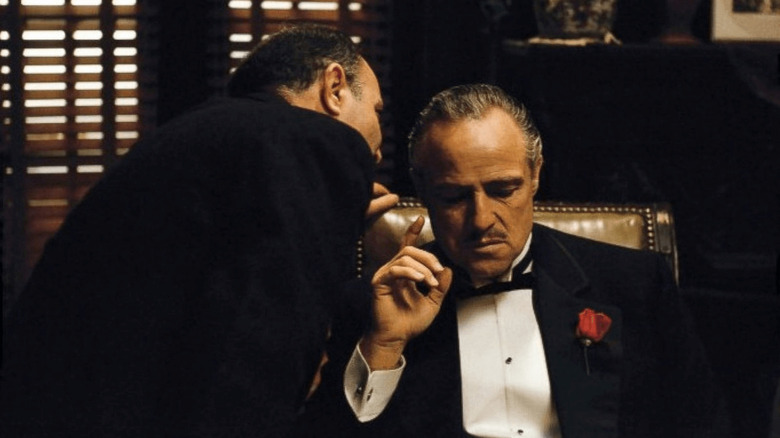
Pretty much anything we've said about any other film on this list — the lasting cultural impact, the awards legacy, the continuing online arguments, the generational cycle of rediscovery — can be applied twice over to "The Godfather." Before "Jaws" was released in 1975, Francis Ford Coppola's epic tragedy of crime and family was the highest-grossing movie ever made. Critics were just as enraptured as general audiences, with modern and contemporaneous reviews hailing it as a contender for the greatest film ever made. Few films in history — probably fewer than 10, including "The Godfather Part II" — represent that synergy of unparalleled commercial appeal, unanimous critical acclaim, institutional recognition, and timeless prestige.
Thus, it shouldn't surprise anyone to learn that, on IMDb specifically, "The Godfather" is regarded as a flawless masterpiece. Both terms are used liberally in most popular reviews of it on the platform. It's a film that audiences raised online continue to approach with reverent skepticism or discover as a kind of gateway, only to leave with a new understanding of what the medium can accomplish when every single element is operating at the level of perfection.
On the site's overall Top 250 ranking, "The Godfather" is only outranked by "The Shawshank Redemption." The gulf is decisive, consisting of an entire star point and a few million extra reviews. Even so, "The Godfather" is a film so definitive, so ingrained in our culture as peerless, that those numbers cause a kind of short-circuiting. For many, it's the movie that also proves IMDb rankings can't be the sole factor that determines a movie's worth.