

15 Western Movies Everyone Should Watch At Least Once
We may receive a commission on purchases made from links.
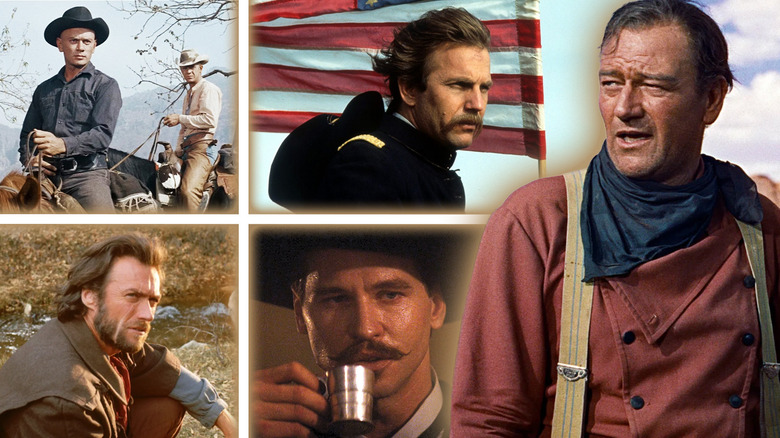
Given the sheer breadth of the Western genre across the entire history of cinema, it can be intimidating for the uninitiated to approach. Westerns are among the most popular genres in the medium, and many of its classics are still enduringly appealing today. This includes movies headlined by some of the biggest icons in Hollywood, including John Wayne, Clint Eastwood, and Kevin Costner. With that in mind, there are several films that tower above the rest as the clear must-watches for any self-respecting Western fan.
With this article, we're not necessarily talking about the greatest Westerns of all time, though many of them appear on this list. Instead, we're looking at the most representative of the genre in the hopes of creating an accessible primer for newcomers. These movies capture the most timeless stories and are led by the genre's most defining actors and filmmakers. Here are 15 Western movies everyone should watch at least once, showcasing the genre at its best.
High Noon
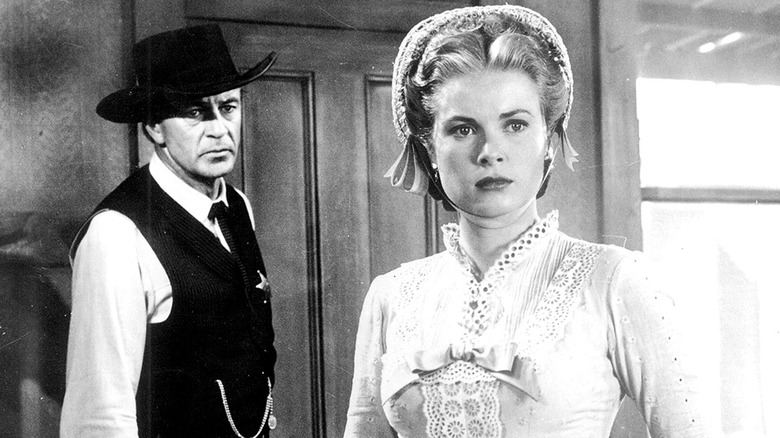
One of the best Gary Cooper movies is 1952's "High Noon," produced at the height of Hollywood blacklisting in the face of the Red Scare. Cooper plays retiring Marshal Will Kane, who prepares to leave his posting in the New Mexico Territory with his new wife Amy Fowler (Grace Kelly). Before Kane can leave, he learns notorious outlaw Frank Miller (Ian MacDonald) and his gang are headed to town on the noon train for revenge. Kane is compelled by his sense of duty to stay and fight, even as the rest of the townspeople leave him to stand alone.
An early revisionist Western that everyone should watch, "High Noon" features a more actively cynical vision of the frontier. Kane is a protagonist that doesn't uncompromisingly face the incoming showdown but asks for help while enduring an ongoing crisis of courage. These developments are underscored by somber black-and-white cinematography, adding to the overall ominous mood, while Cooper won an Academy Award for bringing considerable depth to his archetypal lawman character. Marking a more nuanced and morally conflicted vision of the Wild West, "High Noon" stands as Cooper's best work in the genre.
Shane
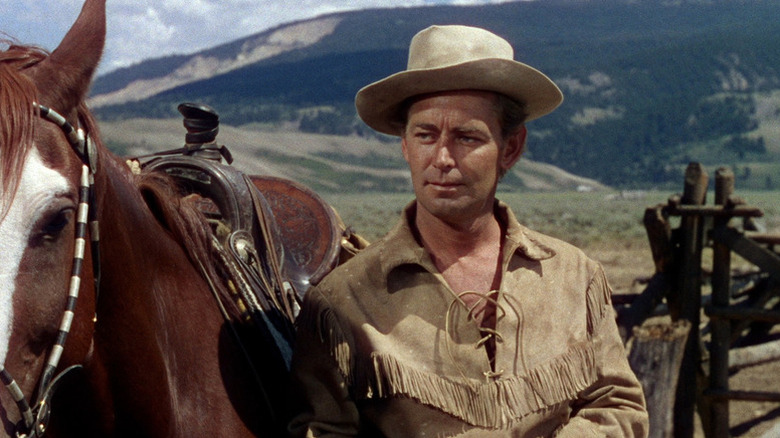
Author Jack Schaefer's 1947 novel "Shane" was adapted into a movie of the same name in 1953. The story is named for its stoic, mononymous protagonist, played by Alan Ladd, who rides into a small frontier community in Wyoming Territory in 1889. Shane finds the community being intimidated by cattle baron Rufus Ryker (Emile Meyer), who wants their land, with the quiet drifter standing up to Ryker's men. This escalates the conflict, with Ryker hiring merciless gunfighter Jack Wilson (Jack Palance) to back him up as things come to a bloody head.
Largely filmed on location in Wyoming, "Shane" takes advantage of the natural beauty of its setting. Ladd's almost withdrawn and guarded approach to his role lends itself well to the overall movie, making him something of a reluctant hero. That makes his reveal as an expert gunslinger all the more effective as well his rapport with the young boy Joey Starrett (Brandon deWilde) all the more earned. Bringing a more humanist perspective to the usual Wild West action, "Shane" is another genre standout from the '50s.
The Searchers
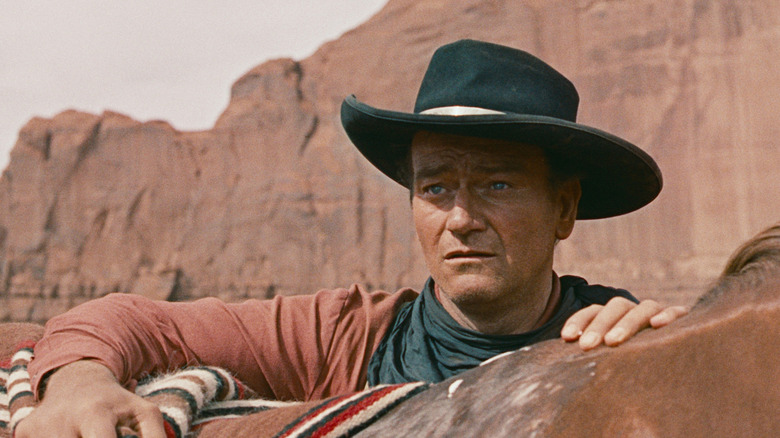
Among the best actor-director collaborations of all time, regardless of genre, was between John Wayne and John Ford. The duo made 14 movies together across their respective careers, with a notable high point being 1956's "The Searchers." Based on the 1954 novel by Alan Le May, Wayne stars as Ethan Edwards, an embittered Civil War veteran with a barely veiled hatred towards indigenous communities. After Ethan's niece Debbie (Natalie Wood) is kidnapped by the Comanche, Ethan embarks on a lengthy expedition to rescue her, joined by Debbie's brother Martin Pawley (Jeffrey Hunter).
Filmed in glorious Technicolor, Ford never directed any other movie with quite the same level of sweeping grandeur as "The Searchers." While the film's depiction of indigenous communities has not aged well in the 70 years since its release, it does offer a then-revolutionary look at xenophobia fueling conflict on the frontier. Bringing those themes together is Wayne in one of his most nuanced performances, imbuing Ethan with a barely contained rage in contrast to his usual nobler characters. Steven Spielberg's favorite John Wayne Western, "The Searchers" captures Monument Valley more beautifully than any other film, with a growing sophistication in genre storytelling.
Rio Bravo
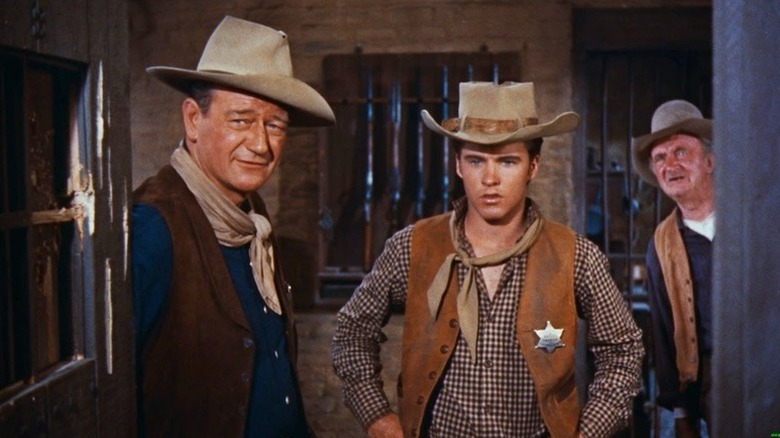
Speaking of noble John Wayne characters, after working together on 1948's "Red River," Wayne and filmmaker Howard Hawks reunited for 1959's "Rio Bravo." Wayne plays John T. Chance, the sheriff of the titular frontier town who arrests Joe Burdette (Claude Akins) for cold-blooded murder at the beginning of the movie. Joe's powerful older brother, local land baron Nathan (John Russell), hires a small army of gunslingers to free his imprisoned sibling. While Chance insists that he can handle the threat by himself, he gains several key allies that help him defeat Burdette's hired guns.
"Rio Bravo" is one of those essential John Wayne movies that towers above much of his extensive filmography. The movie boils the genre to its classic archetypes and has a lot of fun doing it, with even the conversational scenes between its main characters carrying a unique energy. The movie is also slickly done for its time, from a search for a bleeding killer in a saloon to the film's largely silent prologue. "Rio Bravo" launched an unofficial trilogy starring Wayne and helmed by Hawks, but that original 1959 movie is still its undeniable pinnacle.
The Magnificent Seven (1960)
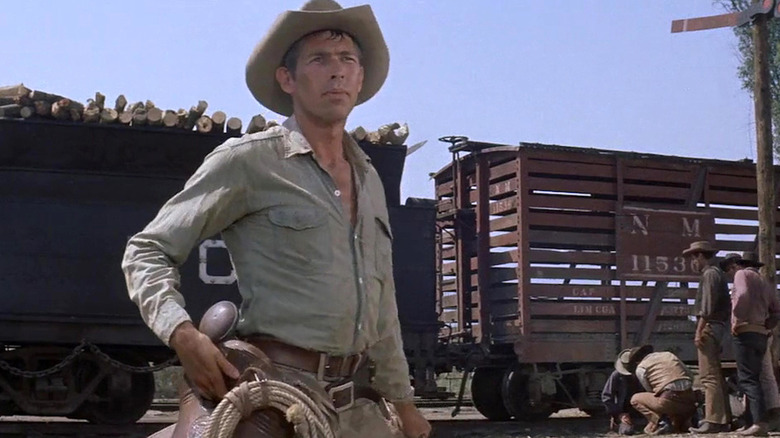
Yes, "The Magnificent Seven" is a remake of "Seven Samurai," but that certainly doesn't diminish the 1960 movie's legacy. Transposing the broad premise of Akira Kurosawa's feudal Japanese classic to the Wild West, the movie revolves around a Mexican village under siege by bandits. The desperate villagers hire gunfighter Chris Adams (Yul Brynner) who, despite the meager pay, recruits six additional gunslingers for help. Facing long odds, the seven make a stand against the army of bandits closing in on the village.
"The Magnificent Seven" became an important film for much of its cast, including Steve McQueen, James Coburn, and Charles Bronson. Each of the titular seven gets his own time to shine to varying degrees, with their collective efforts distinguishing the remake from its source material. It's all heightened by the movie's unforgettable score by Elmer Bernstein, cementing it as a quintessential genre picture. Doing Kurosawa's masterpiece justice while making the narrative its own with its new setting, "The Magnificent Seven" signals the genre's arrival in the '60s.
The Man Who Shot Liberty Valance
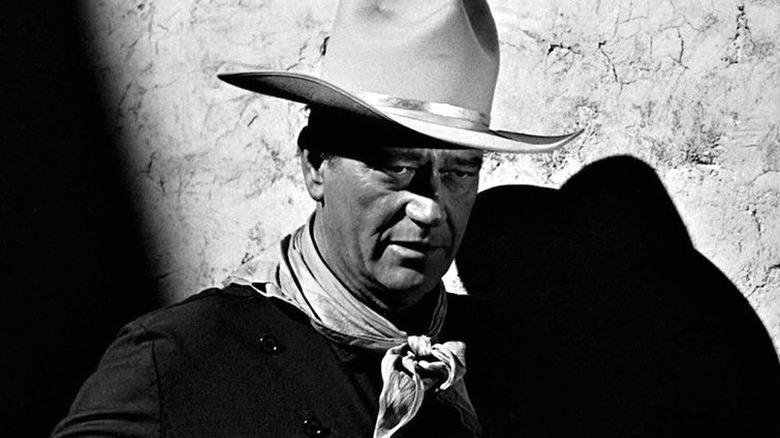
The last Western movie that John Wayne and John Ford worked on together was 1962's "The Man Who Shot Liberty Valance." Wayne plays rancher Tom Doniphon, who helps newly arrived frontier lawyer Ranse Stoddard (James Stewart) after he incurs the wrath of outlaw Liberty Valance (Lee Marvin). As Stoddard becomes a major figure advocating for the territory's statehood, his feud with Valance grows more dangerous. This leads Doniphon to intervene, even as his girlfriend Hallie (Vera Miles) becomes romantically interested in Stoddard.
"The Man Who Shot Liberty Valance" is Ford at his most cynical in the Western genre, signaling that the classic gunfighter archetype was of a bygone era. Wayne's Doniphon is a hero, but one who loses everything as the romanticized frontier gives way to civilization. This is emphasized by Ford employing black-and-white cinematography, filling his shots, including the climactic showdown, with oppressive shadows. John Wayne's best Western according to IMDb users, "The Man Who Shot Liberty Valance" brings a melancholic dimension to his usual work in the genre.
The Good, the Bad and the Ugly
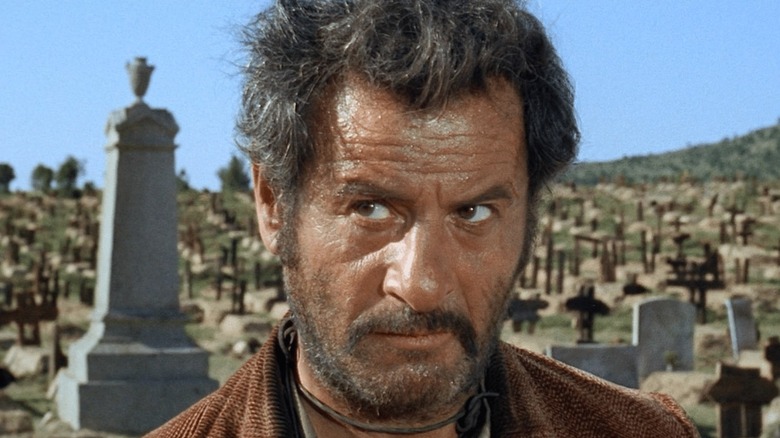
The last Western Clint Eastwood made with Sergio Leone, "The Good, the Bad and the Ugly" closes out an unofficial trilogy that began with "A Fistful of Dollars." The 1966 movie takes place during the American Civil War, with Eastwood playing a gunslinging drifter known as Blondie. After learning about the location of a gold stash in a cemetery, Blondie and the prolific outlaw Tuco (Eli Wallach) set out to recover it for themselves. This is complicated by the gold also being hunted by a sadistic mercenary nicknamed Angel Eyes (Lee Van Cleef) with his own group of gunmen.
Outside of John Ford, the director who casts the longest shadow across Western cinema is Sergio Leone. The Italian filmmaker legitimized spaghetti Westerns as undeniable art, and "The Good, the Bad and the Ugly" is the pinnacle of his work. Even nearing a three-hour runtime, the movie advances briskly along, powered by the dueling dynamic between its three main characters. Regarded by IMDb as the best Western movie of all time, "The Good, the Bad and the Ugly" features an ambitious scope, sharp performances, and Ennio Morricone's most iconic score.
Once Upon a Time in the West
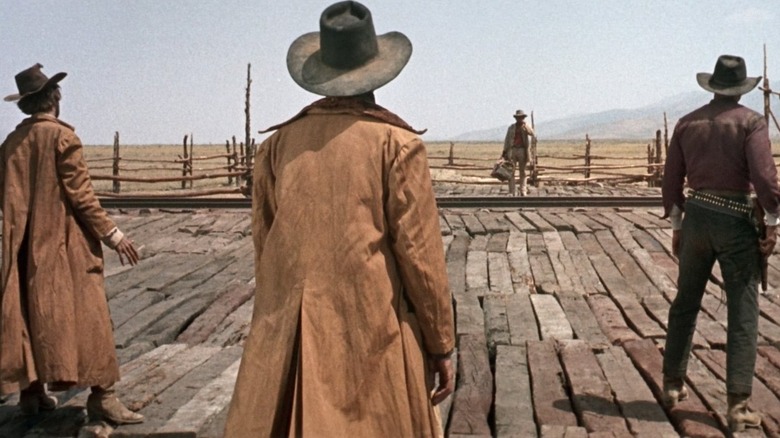
Sergio Leone's first project with a major Hollywood studio was 1968's "Once Upon a Time in the West," the most ambitious Western of his career. A conscious twist on the genre's greatest hits, the movie revolves around a valuable frontier property owned by recent widow Jill McBain (Claudia Cardinale). While the bloodthirsty outlaw Frank (Henry Fonda) tries to intimidate and murder anyone standing in the way of his acquisition, he's thwarted by gunfighters Harmonica (Charles Bronson) and Cheyenne (Jason Robards). As the struggle escalates, it becomes clear that Harmonica has a personal grudge against Frank dating back to their mysterious past.
There is an operatic grandeur, matched by a deliberate pace, to "Once Upon a Time in the West" that's clear from its opening scene. Leone patiently introduces each of his major players with the elegiac gravity of a requiem to the entire genre. Even the action has a somber pacing to it, with Leone more interested in the tension leading up to the violence than the carnage itself. Led by Henry Fonda in one of the best against-type performances in cinematic history, "Once Upon a Time in the West" is Leone's epitaph for Westerns.
True Grit (1969)
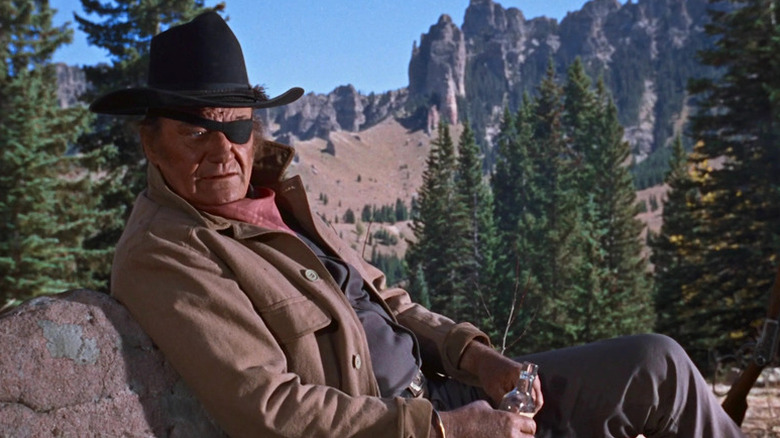
One of John Wayne's most iconic roles came to him relatively late in his career, in the 1969 film "True Grit." Wayne stars as U.S. Marshal Rooster Cogburn, a hard-drinking curmudgeon who is hired by teenager Mattie Ross (Kim Darby) to track down her father's killer. Joined by Texas Ranger La Boeuf (Glen Campbell), the trio trail the murderer, Tom Chaney (Jeff Corey), finding him with a gang led by the cunning Ned Pepper (Robert Duvall). This leads to a showdown bigger than Mattie's team could've imagined as the two groups violently collide.
Finally winning him an Academy Award, "True Grit" set the blueprint for the rest of John Wayne's career. No longer the safer, nobler figure he built his silver screen image on, Wayne relishes playing a much more flawed and socially repellant figure here. Rooster Cogburn towers over the subsequently nuanced lawman roles Wayne would take on, and the movie itself is a finely propulsive tale. The best Western that John Wayne made without John Ford or Howard Hawks, "True Grit" gives the venerable actor a role worthy of his talents.
The Wild Bunch
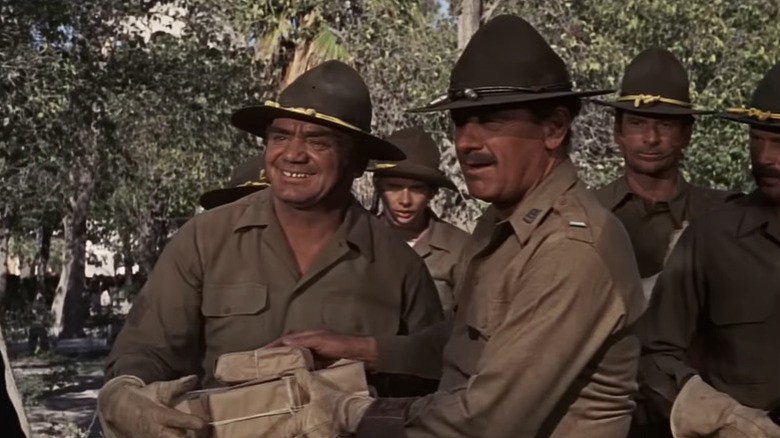
Filmmaker Sam Peckinpah worked best when helming projects in the Western genre, with the high point of his career being "The Wild Bunch." Directed and co-written by Peckinpah, the 1969 movie follows a group of aging outlaws in 1913 at the twilight of the Wild West. Led by Pike Bishop (William Holden), the ensemble flees to Mexico after a botched bank heist puts them in the crosshairs of sadistic bounty hunters. South of the border, the gang finds themselves caught up in the local revolution, leading to a truly harrowing climactic last stand.
"The Wild Bunch" really is Sam Peckinpah's masterpiece, a story about how the Wild West and its outlaws wouldn't go down quietly but with plenty of blood and fury. A world-weary Holden was never finer as Pike, a man looking for one last score to go out on and getting far more than he bargained for. The movie's violence, while slightly stylized, still packs a punch nearly 60 years later, as it's not cleanly executed, but full of the carnage that comes with action of this scale. A 1960s movie that still holds up today, "The Wild Bunch" captures the sanguine viciousness that Peckinpah staged so well.
Butch Cassidy and the Sundance Kid
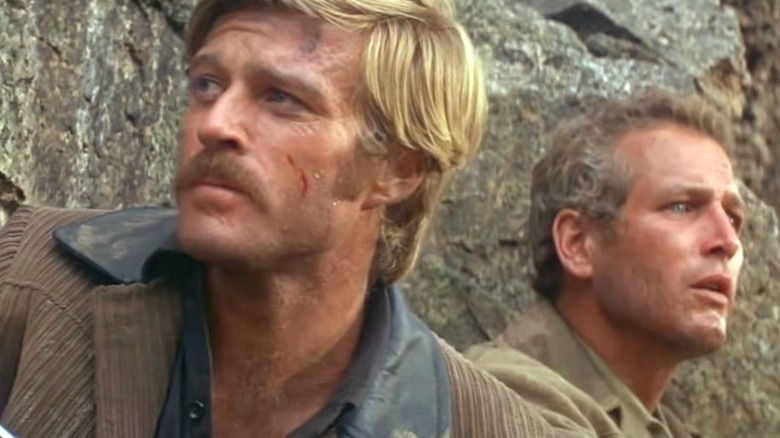
Another 1969 Western with a far different message about the Wild West, albeit with an eerily similar finale to "The Wild Bunch," is "Butch Cassidy and the Sundance Kid." Starring Paul Newman and Robert Redford, respectively, as the titular outlaws, the movie begins with their train-robbing exploits in 1899 Wyoming. The duo's reputation gets the better of them, forcing them to flee from a relentless posse to Bolivia. However, their attempts at trying to ditch their criminal ways prove disastrous, leading them to return to crime and go out in a blaze of glory.
"Butch Cassidy and the Sundance Kid" is neck-and-neck with a later entry on this list as one of the most overtly fun Westerns ever made. Newman and Redford just exude '60s cool, with Newman as the charismatically fast-talking Butch and Redford as the laconically hot-headed Sundance. The movie also has a strong driving pace, breezing through its 110-minute runtime, with its sense of urgency boosted by its protagonists constantly being on the run. With a star-making turn from Redford, and one of the greatest movies he and Newman ever did, together or separately, "Butch Cassidy and the Sundance Kid" is a rollickingly entertaining adventure.
The Outlaw Josey Wales
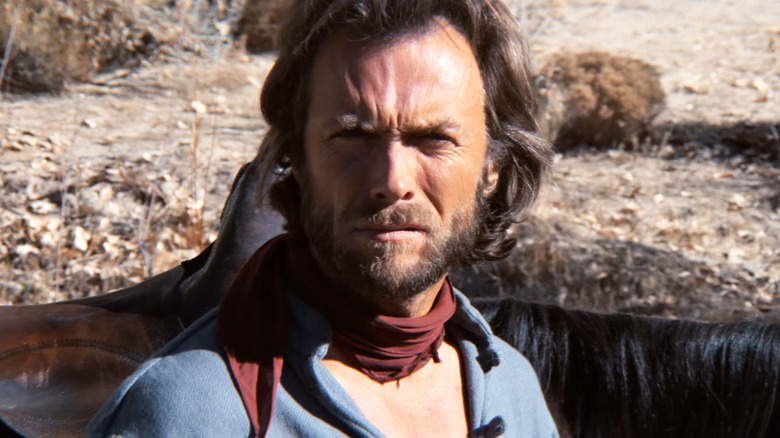
While "High Plains Drifter," the first Western that Clint Eastwood directed and starred in, is quite good, his genre follow-up, "The Outlaw Josey Wales," takes things to the next level. Eastwood stars as the eponymous outlaw in the 1976 movie, who swears revenge on Terrill (Bill McKinney), the Union redleg who murdered his family during the Civil War. Wales' vengeful bushwhacking during the war makes him a wanted man, prompting him to flee to Texas. Forming a community with other wayward figures and refugees, Wales faces Terrill for a brutal rematch.
Clint Eastwood felt making "The Outlaw Josey Wales" was a career high point, and looking at the film itself, it's easy to see why. The movie is one of the most emotionally raw projects of Eastwood's entire career, particularly in regard to the title character. Josey Wales is as richly realized and nuanced as any of Eastwood's roles, not just another riff on his supremely confident and enigmatic Man with No Name. This distinction fuels the action with personal stakes that get to the bottom of a country unhealed from its Civil War as its combatants bitterly address unfinished business.
Dances with Wolves
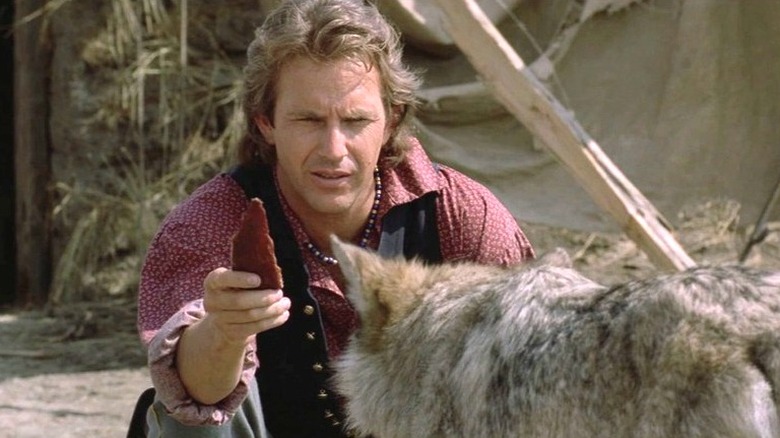
Another director/actor who's served Westerns well is Kevin Costner, whose feature directorial debut was 1990's "Dances with Wolves." Costner stars as disillusioned cavalry officer John Dunbar, who is assigned to a remote outpost in Colorado during the Civil War. Dunbar earns the trust and respect of the local Sioux tribes and begins to integrate himself into their culture. However, when the cavalry reclaims the outpost as settlers continue to colonizer the frontier, Dunbar steps in to protect the Sioux, with whom he feels a far greater kinship.
Easily one of the best Kevin Costner movies ever, "Dances with Wolves" is a tremendous first film for any filmmaker. There is a sweeping majesty to the way Costner captures the West and the Sioux's culture. Costner is effectively making a revisionist epic, one that properly reframes the indigenous people in the region while also celebrating the grandeur of the fading frontier. Costner has gone on to continue making Westerns, with some like "Open Range" being quite good, but never at the same level as "Dances with Wolves."
Unforgiven (1992)
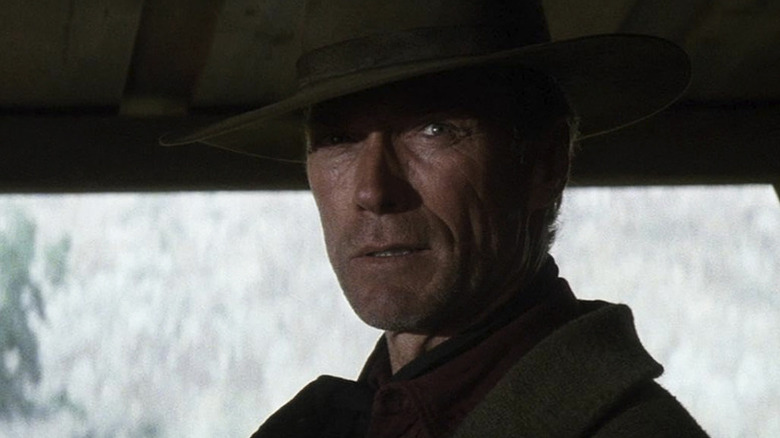
As one more Clint Eastwood movie to round things out, 1992's "Unforgiven" is a very different masterpiece from "The Outlaw Josey Wales." Eastwood plays Will Munny, a reformed outlaw that has become a struggling farmer and single father after the death of his wife. Munny reluctantly accepts a bounty-hunting job to track down and kill two cowboys that disfigured a sex worker in a frontier town. This places Munny and his allies on a collision course with the town's iron-fisted sheriff, Little Bill Daggett (Gene Hackman).
There is a quiet poetry to "Unforgiven," with the movie serving as Eastwood's elegy to the genre that made him an icon. In regard to his actual performance, Eastwood brings a clear world-weariness to the Will Munny role that the entire movie hinges on, making his violent turn all the more impactful. After a string of flops, "Unforgiven" rescued Eastwood's career, and that behind-the-scenes desperation and disenfranchisement also elevates his role significantly. Offering one last dance for the ultimate silver screen gunfighter, "Unforgiven" deconstructs the gunslinger archetype while celebrating it at the same time.
Tombstone
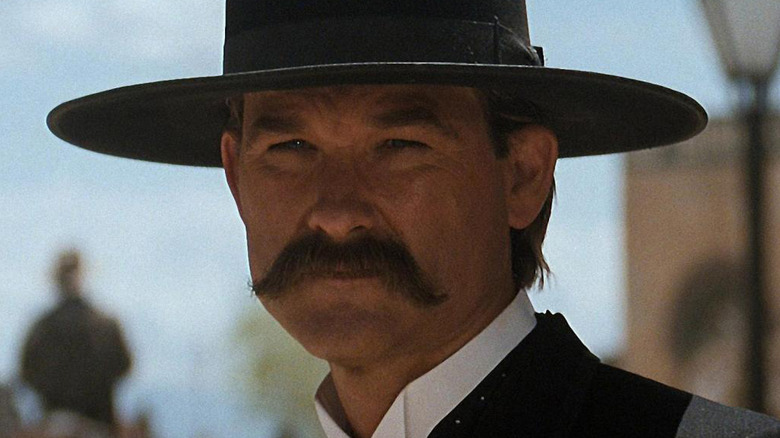
The '90s was an excellent decade for Westerns after the genre saw a general downturn throughout the '80s. One particular standout for the decade is "Tombstone," a Western based on the true story involving the Gunfight at the O.K. Corral — though significant creative license is taken. The movie follows Wyatt Earp (Kurt Russell), who leads his brothers to start a business in the titular Arizona frontier town. This enterprise and Wyatt's attempts to leave his law enforcement career behind are derailed by the vicious Cowboys gang, resulting in a bloody feud.
Right along with "Butch Cassidy and the Sundance Kid," "Tombstone" is one of the most freewheeling and fun Westerns ever made. Everyone in the ensemble cast is in top form, with Val Kilmer a well-deserved highlight as Wyatt's best friend, Doc Holliday. These performances are punctuated by plenty of gunslinging action, informing the stakes without getting heavy-handed about it. The type of Western that Hollywood just doesn't make anymore, "Tombstone" is one of the last greats of the genre.