

10 Classic 1960s Movies That Still Hold Up Today
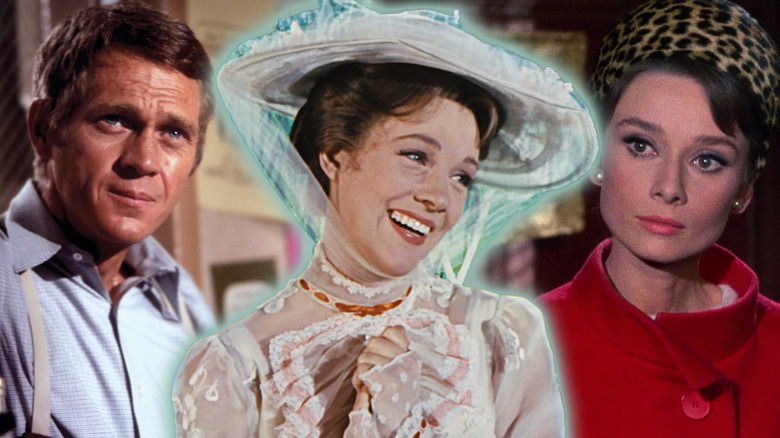
The 1960s was a tremendously pivotal decade for the arts and wider pop culture, especially in regard to cinema. With cultural revolution fully underway, movies reflected rapidly changing societal elements of a world in the midst of widespread transition. This was a decade when global cinema became more readily accessible and when restrictions on depictions of sex and violence began to visibly erode. But for as much as cinema changed over the course of the decade and the decades following, there are still plenty of '60s movies that continue to endure.
With that in mind, we're highlighting the timeless '60s movies that can still completely captivate an audience decades later. Offering some of the biggest icons and fan-favorite stories to grace the silver screen, these movies not only define the decade but click with modern viewers. This ranges from sprawling epics and lavishly staged musicals to groundbreaking sci-fi tales and tautly executed thrillers.
These are 10 classic 1960s movies that still hold up today, each showcasing the decade's cinematic output at its best.
Psycho (1960)
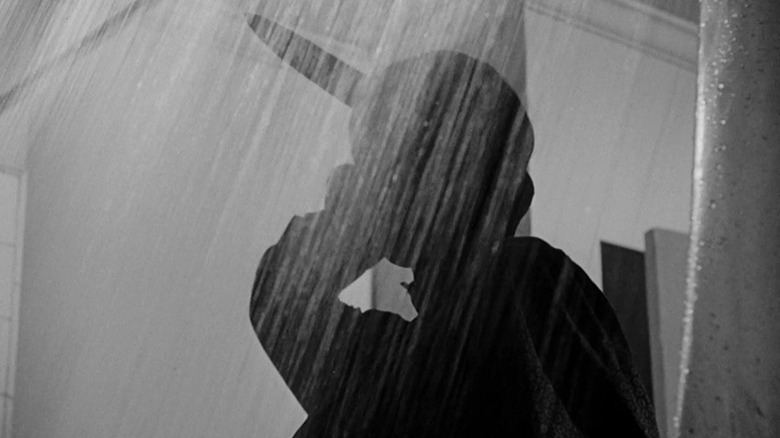
Nicknamed the master of suspense, filmmaker Alfred Hitchcock kicked off the '60s with a bloody bang by directing and producing 1960's "Psycho." The movie opens with Marion Crane (Janet Leigh) stealing a large sum of money from her employer and stopping at the Bates Motel while fleeing to California. The motel's sole proprietor Norman Bates (Anthony Perkins) welcomes Marion before she is brutally murdered while taking a shower. This prompts several figures linked to the theft and Marion's disappearance to come investigating around the motel, only for its sinister secret to be revealed.
Becoming something of a proto-slasher, "Psycho" was controversial for its time in terms of its handling of violence and sex. While both may seem tame by today's standards, Hitchcock's use of tension and stylish staging still hold the audience's rapt attention. Even knowing what's going to happen next, the movie manages to keep viewers off-balance as it draws them in, with its slightly off-kilter cinematography and Perkins' eerie performance. "Psycho" remains a treat for first-time viewers as well as Hitchcock aficionados, delivering the most unabashedly visceral film from his catalog.
Lawrence of Arabia
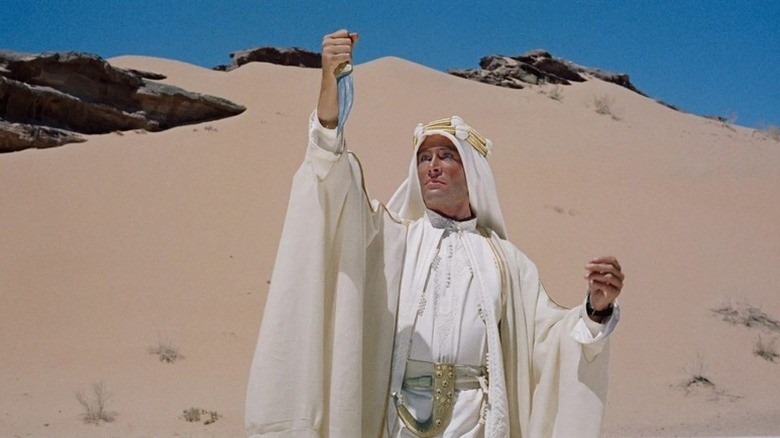
The exploits of British soldier T.E. Lawrence in leading the Arab communities against the Ottoman Empire during World War I are chronicled in "Lawrence of Arabia." The 1962 movie has Lawrence (Peter O'Toole) join a British envoy in the Arabian peninsula to convince the local kingdoms to rebel against the Turks. Lawrence exceeds the initial constraints of his orders and becomes actively involved in the war effort, including leading a coalition on the battlefield. However, Lawrence's arrogance and reckless behavior lends him to be humbled repeatedly, especially after realizing European interests in the region differ from his dream of sovereign Arabian state.
A sweeping war epic led by a star-making performance from O'Toole, "Lawrence of Arabia" more than earns its nearly 4.5-hour runtime. The movie is expertly paced, with its first half spent building up Lawrence as a visionary figure, while its second half systemically tears him back down to Earth. Between this rise-and-fall arc, the movie is punctuated by rousing battle scenes and complicated diplomatic intrigue deciding the fate of the region. Steven Spielberg's favorite movie of all time, "Lawrence of Arabia" is easily the best war film of the '60s.
Charade
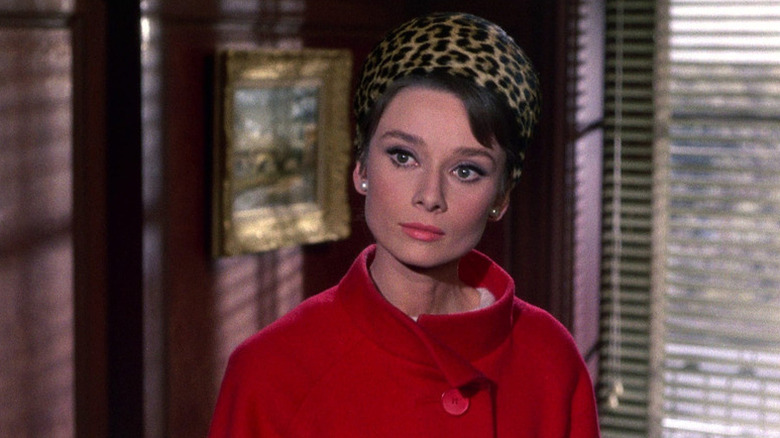
If anyone brought elegance to the silver screen in the '60s it was Audrey Hepburn and her most overtly fun film from the decade is "Charade." Hepburn stars as Reggie Lampert, whose unhappy marriage in Paris is upended when her husband is murdered, with three suspicious men attending the funeral. Reggie learns that her husband stole a small fortune in gold during World War II, with the shadowy figures tailing her trying to claim it for themselves. However, the interested parties are gruesomely picked off one-by-one as Reggie tries to learn what happened to the gold with the help of a mysterious American (Cary Grant).
With its taut pacing and murderous stakes, "Charade" is often compared to the work of Alfred Hitchcock, but it's a good deal more playful than his filmography. A lot of that comes down to the on-screen chemistry between Hepburn and Grant, maintaining their flirtatious dynamic even as the body count grows. The movie also takes advantage of its Parisian setting, using the French capital as a moody backdrop for its well-paced whodunit. A lethal little caper that veers into romantic comedy thanks to Hepburn and Grant's rapport, "Charade" is a fun flick in the two iconic actors' filmographies.
Mary Poppins
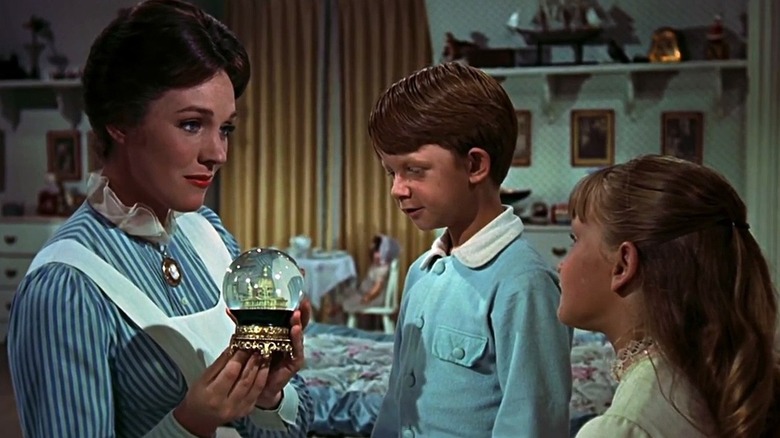
As the 2013 movie "Saving Mr. Banks" illustrated, adapting P.L. Travers' "Mary Poppins" to the big screen was no small feat, but its 1964 creative team pulled it off. Julie Andrews stars as the titular nanny, who arrives at the Banks household to watch over its two young children under the consternation of their father George (David Tomlinson). To the family's surprise, Poppins brings a healthy dose of magic to the normally stuffy London home, bringing the Banks closer together. Joining Poppins with her music and mirth is her jack-of-all-trades companion Bert (Dick Van Dyke) as they lead the children on fantastical adventures.
"Mary Poppins" is the quintessential Disney movie, celebrating the magic and wonder of youth undercutting the cynicism that comes so frequently with adulthood. A lot of that exuberance comes from a set of memorable songs written by the Sherman brothers, often set to tightly choreographed dance numbers. Andrews and Van Dyke spread the joy that their characters revive in the Banks family to the audience, with Andrews deservedly winning an Oscar for her first movie role. Practically perfect in every way, "Mary Poppins" stands as a highwater mark in Disney's live-action movie-making over 60 years later.
The Sound of Music
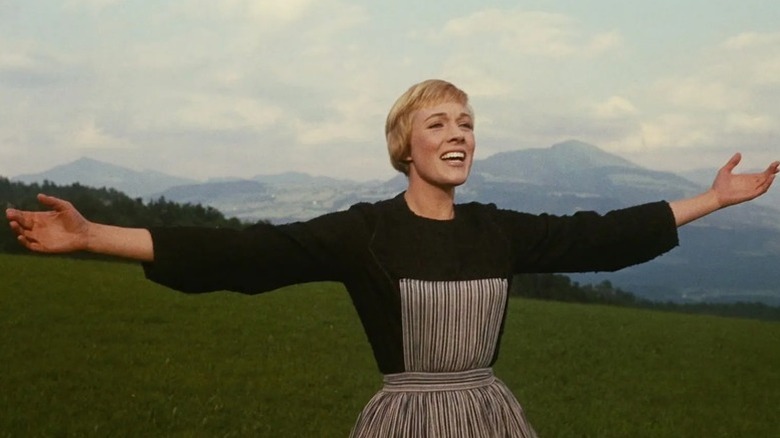
Julie Andrews absolutely dominated movie musicals in the '60s, following up "Mary Poppins" with her starring role in 1965's "The Sound of Music." Andrews plays Maria, a young woman studying to become a nun in Austria on the eve of World War II. Instead, Maria is hired to become the governess for the von Trapp family, quickly winning over the children with her love of music and everyday joys found in the world. However, shortly after Maria marries family patriarch Georg von Trapp (Christopher Plummer), Austria is annexed by Nazi Germany, prompting them to look for a way for the family to escape.
"The Sound of Music" started out as a stage musical in 1959 by Richard Rodgers and Oscar Hammerstein II before making the leap to the silver screen six years later. The movie takes full advantage of its gorgeous filming locations, right from its opening title track, iconically capturing Andrews singing across the Alps. From there, the hits keep coming and Andrews never lets up the charm, winning over the audience as she does surly Captain von Trapp. One of the best movie musicals of all time, "The Sound of the Music" is a lavish production elevated by its Andrews-led ensemble.
The Good, the Bad and the Ugly
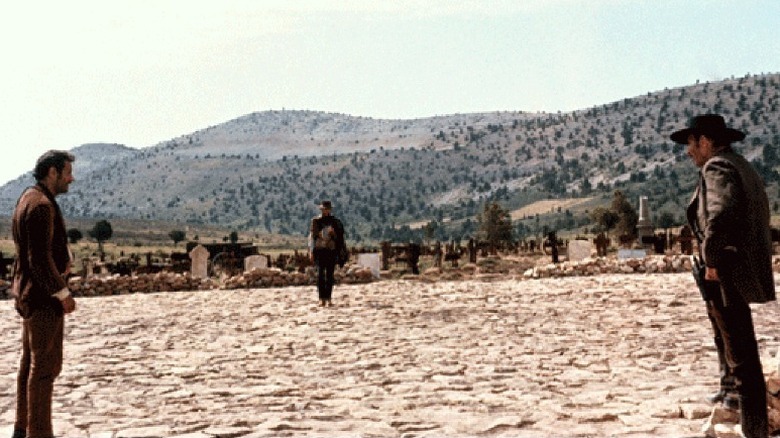
After starting their cinematic collaborations with "A Fistful of Dollars," Clint Eastwood and Sergio ended their Western work together with "The Good, the Bad and the Ugly." The 1966 spaghetti Western stars Eastwood as Blondie, a bounty hunter who starts a feud with notorious outlaw Tuco (Eli Wallach). The duo's conflict is tabled when Blondie learns about the location of a hidden cache of gold from a dying Civil War soldier. As the two set out to recover the gold, they are pursued by the cruel mercenary Angel Eyes (Lee Van Cleef) who wants the treasure for himself.
"The Good, the Bad and the Ugly" remains the best Western movie of all time according to IMDb users, and that distinction is well-earned. The movie is Leone's most ambitious, complete with a Civil War battle that kicks off the story's third act and a sweeping cemetery for the setting of its memorable climax. But beyond the scale, the movie features Eastwood, Wallach, and Van Cleef at their steely-eyed best, trading barbs as quickly as they can draw their six-shooters. The definitive spaghetti Western, "The Good, the Bad and the Ugly" is greater than the sum of its impressive parts.
Planet of the Apes
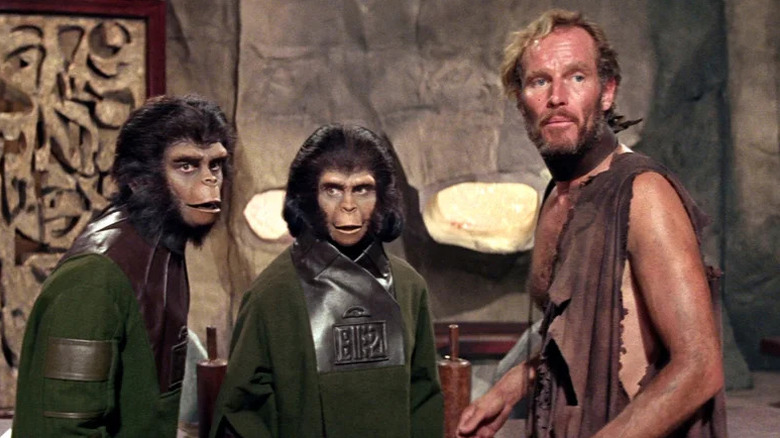
Pierre Boulle's 1963 novel "Planet of the Apes" was loosely adapted into a 1968 sci-fi film of the same name starring Charlton Heston. The movie is set in a distant future, with Heston playing time-displaced 20th century astronaut George Taylor, who crash lands on the planet. Discovering this world's society is brutally run by super-intelligent apes, who have subjugated humanity, Taylor is captured and subjected to cruel treatment by the sadistic simians. After escaping from captivity, Taylor learns this harsh planet is more connected to his own than he initially realized.
Even if you know the big twist to "Planet of the Apes," the movie still holds up as a rugged survivalist sci-fi story. Between all the oppressive ape thrills, the movie weaves in salient social commentary and thought-provoking themes as Taylor clashes against an unrelentingly cruel system. "Planet of the Apes" spawned a series of movies, including reboots and revivals, but the original movie still stands in a league of its own. A major leap forward for cinematic science fiction, the genre gained wider recognition for sophisticated storytelling for this and the next film on this list.
2001: A Space Odyssey
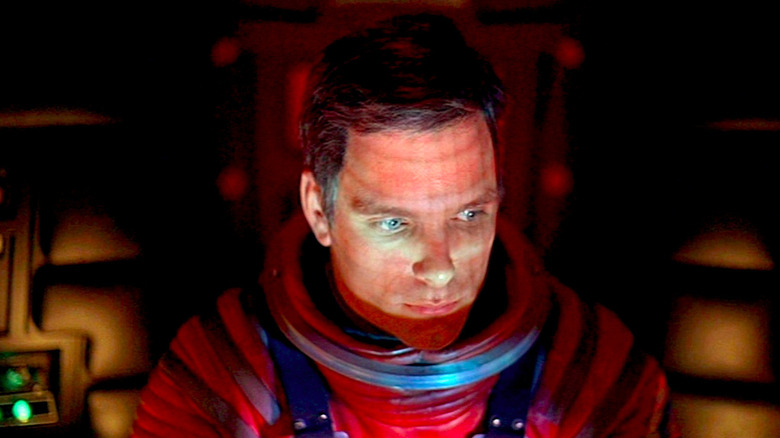
Filmmaker Stanley Kubrick's sole foray into overt science fiction was 1968's "2001: A Space Odyssey," which he directed, produced, and co-wrote with noted sci-fi author Arthur C. Clarke. The story centers around a mysterious extraterrestrial monolith secretly linked to human evolution, with a monolith discovered under the Moon's surface. After this discovery, an expedition is secretly sent to investigate the monolith sending a signal to Jupiter, however, this is derailed by the spaceship's computer turning hostile. Astronaut David Bowman (Keir Dullea) has to not only survive the murderous HAL 9000 (Douglas Rain) but face the mystery of another monolith orbiting Jupiter.
Even nearly 60 years later, "2001: A Space Odyssey" remains a complex technical marvel and an absolute landmark achievement for its time. The movie is a strong showcase for Kubrick's meticulously detailed filmmaking approach, something that elevates the verisimilitude to the overall experience. But beyond the immaculate design sensibilities, "2001" is also Kubrick at his most philosophical and esoteric, with open-ended questions about its story and mystery surrounding the monoliths. Arguably the definitive sci-fi movie of the '60s, "2001: A Space Odyssey" is Kubrick at his most meditatively detached and all the more haunting for it.
Bullitt
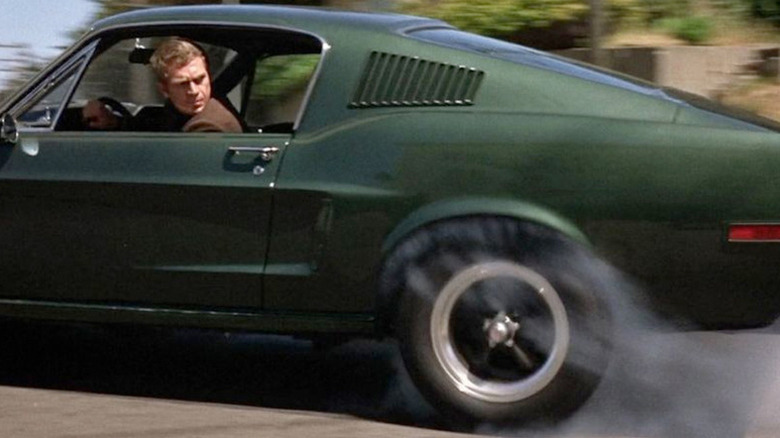
There certainly were police dramas before "Bullitt" but they were never the same after the 1968 crime thriller. The movie stars Steve McQueen as Frank Bullitt, a San Francisco police detective who is tasked with protecting a federal witness for a high-profile case targeting the mob. After the witness is murdered by a pair of hitmen, Bullitt investigates the killing, despite enduring pressure from federal prosecutor Walter Chalmers (Robert Vaughn). While being stalked by the assassins, Bullitt uncovers the shocking truth about Chalmers' case against the mob, turning the whole mystery on its head.
"Bullitt" is one of the best Steve McQueen movies, with the actor rarely cooler than in his well-dressed detective role. That commanding charisma extends to the movie's centerpiece car chase through the streets of San Francisco, engagingly filmed and an inspiration for countless car sequences to follow. Similarly, crime dramas that followed, like "Dirty Harry," featured their own takes on loose cannons cops that got results while defying authority, following McQueen's template. But influence aside, "Bullitt" is a stylishly slick late '60s crime flick and a clear demonstration why McQueen's silver screen legacy endures.
The Wild Bunch
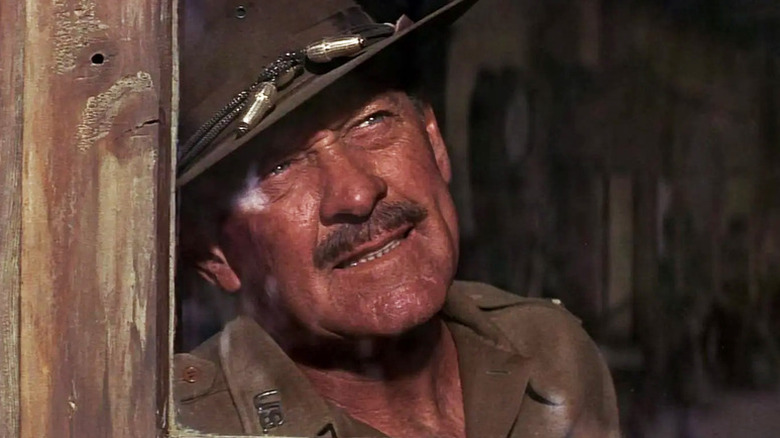
If "The Good, the Bad and the Ugly" stands as '60s Westerns at their most freewheeling fun, "The Wild Bunch" is a violent meditation on the genre's implications. Directed and co-written by filmmaker Sam Peckinpah, the 1969 movie is set in the twilight days of the Wild West, following an outlaw gang led by Pike Bishop (William Holden). After one last attempted heist goes disastrously wrong, Pike and his fellow aging gunslingers flee to Mexico where they become involved with the ongoing revolution. Through all the fiery mayhem, Pike's gang is pursued by a group of merciless bounty hunters led by former associate Deke Thornton (Robert Ryan).
Right from the botched heist opening the movie, "The Wild Bunch" makes it clear that it's tougher and meaner than any other American Western that came before it. This only picks up between the movie's gruesome finale, still standing as a stunningly vicious climax to watch and as cutthroat as the rest of the story's bleak stakes. But between carnage-filled set pieces, the movie is a reflection on living a life of violence in the face of a rapidly changing society. Peckinpah illustrates those themes beautifully and, true to form, does not pull his punches in displaying those implications, elevating "The Wild Bunch" considerably.