

23 Best Horror Movies Of 2026 (So Far)
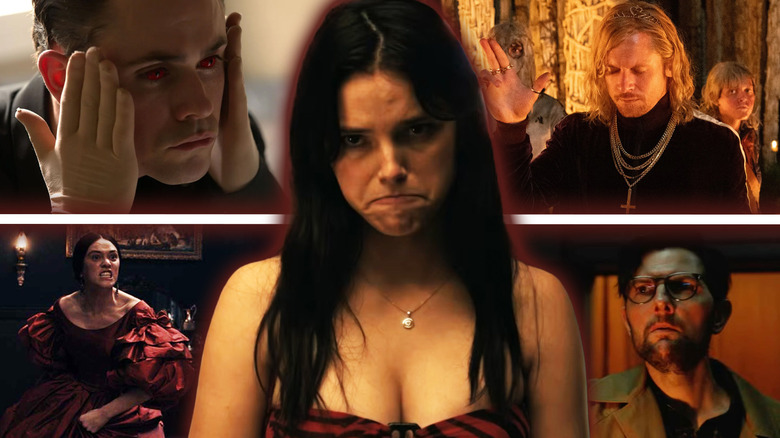
If 2025 proved anything, it's that horror is no longer confined to one dominant style. The genre spent much of the late 2010s and early 2020s obsessed with internal suffering, but 2025 signaled a major turning point, suggesting that horror in 2026 was headed in a broader, stranger, and significantly more playful direction. Sure enough, the genre's biggest hits have proved this hypothesis tenfold. Horror is evolving, less interested in fitting a single trendy mold and more committed to experimentation across tone, theme, and scale. Fortunately, studios are increasingly recognizing what horror fans have known for years: Scary movies have been, and will continue to be, one of the few reliable theatrical genres. And given the scope of storytelling potential, horror remains committed to creating space for original concepts alongside revitalized franchises and literary adaptations.
The result is a 2026 in which horror feels unpredictable again, delivering films that are socially incisive, grotesque, humorous, stirring, and wildly entertaining all at once. The months ahead will no doubt continue providing an embarrassment of riches, but as of publication, here is a look at the best horror films of the year (so far).
28 Years Later: The Bone Temple
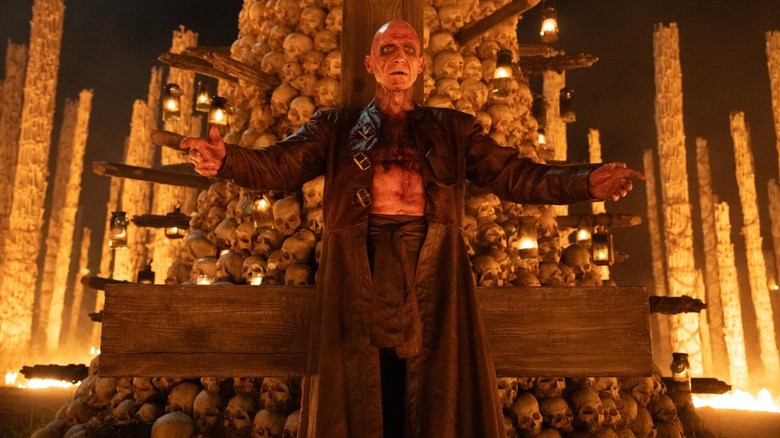
Due to some not-so-great box office returns, there's an assumption that "28 Years Later: The Bone Temple" is a failure. It's anything but. Following Danny Boyle's excellent legacy sequel "28 Years Later," "The Bone Temple" takes things further under the steady hand of director Nia DaCosta. What DaCosta is doing here isn't quite as flashy as what Boyle did in the previous film, but she finds the perfect balance between horror and heart.
While "28 Years Later" was pretty successful overall, the film's bizarre ending left a bad taste in my mouth. DaCosta fixes that almost immediately, spinning a story of death, survival, and potential hope in an apocalyptic wasteland. Ralph Fiennes remains the MVP of this new franchise, as his Dr. Ian Kelson is one of the last good individuals in a landscape overrun by monsters (both human and infected). And how can you not a love a movie that lets Fiennes dance around to Iron Maiden's "The Number of the Beast"? (Chris Evangelista)
Backrooms
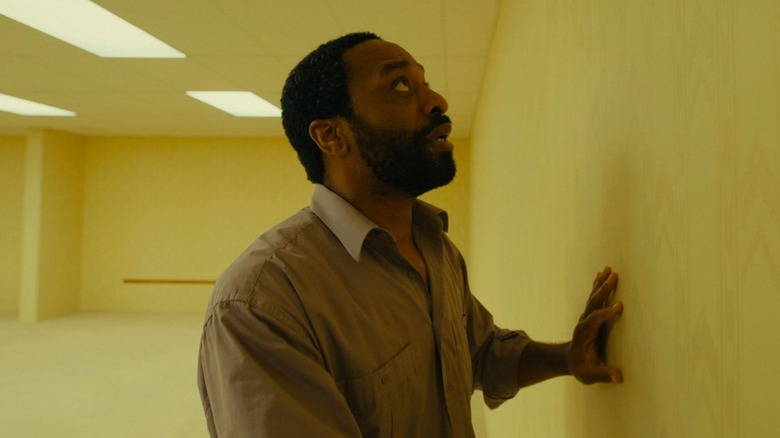
Kane Parsons is only 21-years-old. Yet, before he was even allowed to drink alcohol legally stateside, he managed to make one of the most inventive horror movies in recent memory. Released by A24 and based on the viral internet sensation, "Backrooms" is a truly unique, exceedingly creepy, and overall excellent horror flick. More than a real-life story about a kid getting the chance to make a Hollywood movie after being discovered on YouTuber, this film is the real f****g deal.
"Backrooms" follows Clark (Chiwetel Ejiofor), the owner of a furniture store in the 1990s, as he finds his way into a mysterious and seemingly endless space filled with unexplainable phenomena in his store's basement. The very concept of the "Backrooms" is that it's a liminal space that resembles the reality we know ... but not quite. That familiarity with something that feels off gives the whole thing a creepy vibe that one cannot easily shake, allowing Parsons to build tension and atmosphere like a filmmaker well beyond his years. And with regard to worldbuilding? His work here is downright staggering.
Indeed, between its horribly terrifying creatures, spaces nobody would ever want to get lost in, and shockingly great performances, this film is no mere gimmick. It's the goods.
"The Backrooms" has a strange origin and rich history online. There will and already have been other tales told based on this internet creepypasta, but it's safe to say that Parsons has put his definitive stamp on it. (Ryan Scott)
The Bride!
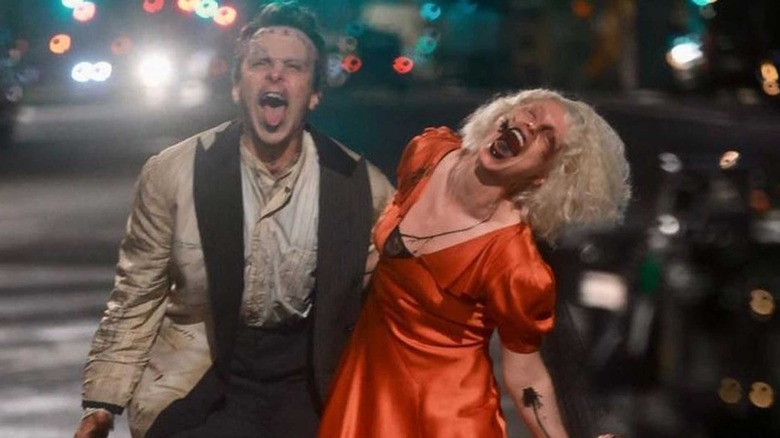
Maggie Gyllenhaal's "The Bride!" is not simply a retelling of Bride of Frankenstein, but an intoxicatingly ambitious fever dream that reimagines what The Bride's story might have become if it had continued evolving across an entire century of cinema. Maximalist in both style and emotion, the film embraces excess as a creative philosophy, constantly balancing contradictory impulses: beauty and decay, romance and horror, sincerity and camp, chaos and tenderness. Every frame feels overstuffed with intention, as though Gyllenhaal refuses to leave a single artistic instinct unexplored. Or, as /Film's Chris Evangelista aptly described it, this "beautiful, messy monster movie is an unhinged delight."
More than anything, "The Bride!" plays like a sprawling love letter to cinema itself — not only to the Frankenstein mythology that inspired it, but to generations of movies and television shaped by those stories. It celebrates the righteous fury of women, the catharsis of loneliness, and the strange intimacy found in places like dance club bathrooms at 2 a.m. The film revels in stylish excess for its own sake, pairing lavish production design with deliberately anachronistic music choices that make the entire experience feel untethered from time. Beneath the spectacle, however, lies a deeply human story about identity, reinvention, and the imperfect, often painful process of discovering who we are. (BJ Colangelo)
Buddy
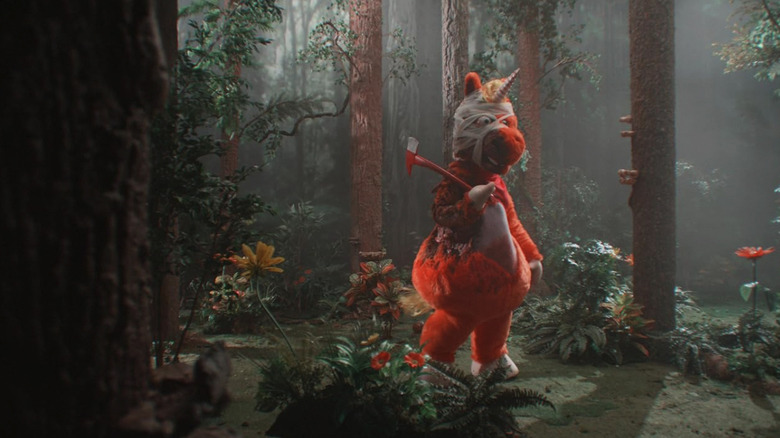
Casper Kelly blew our minds with the genre-melting "Too Many Cooks" and his Adult Swim "Yule Log" movies, but "Buddy," his first theatrical feature, might be his scariest project yet. There was always something a little too clean and unreal about shows like "Barney & Friends," and Kelly uses a very similar aesthetic as a way to explore the lurking danger of the entire children's television apparatus. Maybe you've heard the stories about what went on behind the scenes of some Nickelodeon shows, or read memoirs from former child stars about the messed up power structures in place in those working environments.
With "Buddy," Kelly takes aim at those things in an indirect way through a story about a Barney-esque mascot who snaps and begins murdering the children he's supposed to protect. It's a highly entertaining and occasionally very funny movie about deeply disturbing ideas, and the terrific production designs, excellent costumes, and surprisingly great kid performances help immerse the audience into the specific era of the film's central fictional TV show. The great Cristin Milioti plays a woman in the real world who's trying to solve a gnawing mystery, and her character serves as the emotional fulcrum of the film. After you see "Buddy," you'll never look at children's television the same way again. (Ben Pearson)
Cold Storage
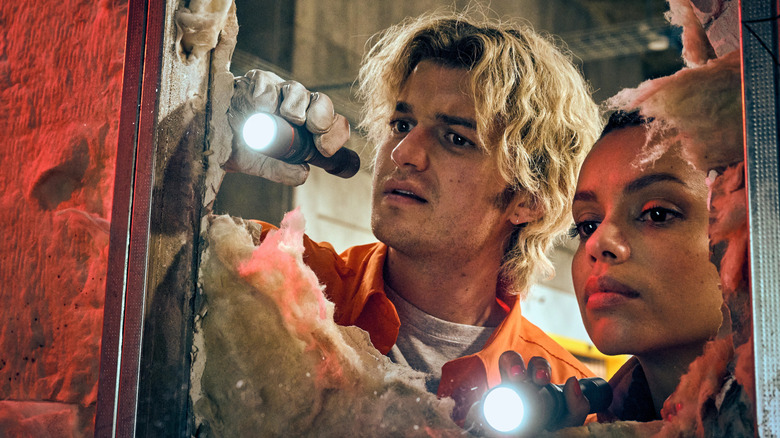
Horror fans often pine for the days when kooky, offbeat genre films could be made that weren't easily classifiable. Y'know, the types of movies that featured a genuine star or two yet still felt almost defiantly uncommercial. "Cold Storage" proves that such films can still get made in 2026, and while the movie didn't light the box office or social media on fire, it's gotten enough traction to spread into the hearts of genre fans, where perhaps it could blossom into a genuine cult classic over time. For a little indie movie directed by a relatively unknown British director, in Jonny Campbell, "Cold Storage" has a surprisingly deep roster behind and in front of the camera. Written by David Koepp and starring Georgina Campbell, Joe Keery, Liam Neeson, and Lesley Manville, it's the sort of film that would do well if late night cable television were still a thing.
As it is, I'll just have to try and sell you on seeing a movie starring the aforementioned cast in which a highly infectious, deadly, and shockingly violent space fungus is accidentally unleashed in what used to be a government holding facility turned self-storage company. Koepp's prowess as a writer keeps things just smart enough while Campbell gleefully throws in a bevy of gloriously icky practical effects. This is a movie in which acting legend Vanessa Redgrave blows away a fungus zombie with a gun. That should tell you if you're in or not. (Bill Bria)
The End of Oak Street
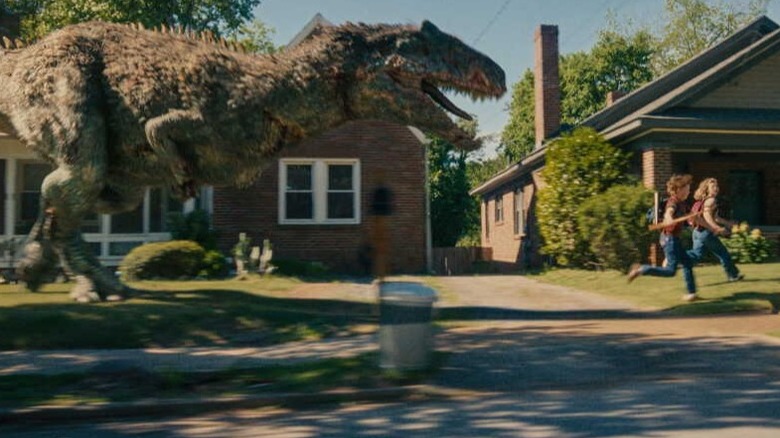
David Robert Mitchell's "The End of Oak Street" has been called a Steven Spielberg homage, from the 1980s suburbia setting to the dinosaurs. It earns the comparison, but Mitchell remembers Spielberg's mean streak and kicks it up from seasoning to the main course.
"The End of Oak Street" follows a suburban family who, thanks to a randomly-manifested wormhole, is transported back to the Jurassic era. Their whole neighborhood is soon overrun with dinosaurs, and their only hope of getting home is the chance another wormhole will come, but can they survive?
Going back to Spielberg, his "Jurassic Park" movies presented dinosaurs as terrifying and majestic. In "The End of Oak Street," they're just scary. A neighborhood dropped in the middle of a swamp is like a buffet to the dinosaurs, and the camera rarely looks away when the dinos land a killing bite or begin to chow down.
It's not just dinosaurs, either. Imagine a snake slithering through your house. Pretty unsettling right? Now imagine that snake is as big as the hallways! The horror escalates well throughout "The End of Oak Street" as the dinosaurs conquer more and more of the neighborhood. There's a real sense that nowhere is safe to hide by the third act. The film also wisely avoids focusing on the time travel mechanics beyond the absolute essentials. Its characters don't have time to think about anything but survival, and the dinosaurs are their biggest obstacles to that. (Devin Meenan)
Evil Dead Burn
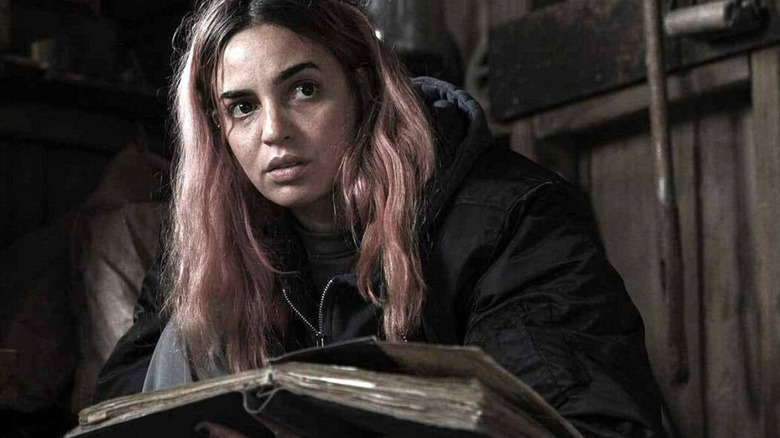
Welcome to the game, Sébastien Vaniček. Lee Cronin made brutal bloodsport out of sibling strife in "Evil Dead Rise," but Vaniček, directing his second feature after "Infested" (and his first studio film), came rampaging out of the corner with a brass-knuckle familial brawl in "Evil Dead Burn." It's a horror movie that draws its inspiration not from the usual genre masters (George A. Romero, Mario Bava, John Carpenter) but supercharged dramatists like Eugene O'Neill, Edward Albee, Sam Shepard, and Tracy Letts.
"Evil Dead Burn" has been knocked for being cruel, but if you've ever seen Albee's "A Delicate Balance" or Shepard's "Buried Child," the references are obvious. Family can be, like the spoken dread from the Necronimicon, a curse. Souheila Yacoub's character has been thrust into a family that mostly hates her, and their son/husband is eventually revealed to be abusive. It's nasty business, and family is not always a refuge. These people have retreated to a rotting family lake house, which is immediately contaminated by Erroll Shand's patriarch. The carnage starts quickly, and you may want to tap out early.
Vaniček could've played a more sophisticated game here, but he obeys the assignment. We get a doggie deadite, a gun-wielding deadite, and a gooey makeout session between a half-possessed wife and her blood-drooling husband. It's an ick-festival. You'd hope for a ball-spiking final scene à la "Buried Child," but you're grateful for a mean, thoughtful studio horror flick. (Jeremy Smith)
Exit 8
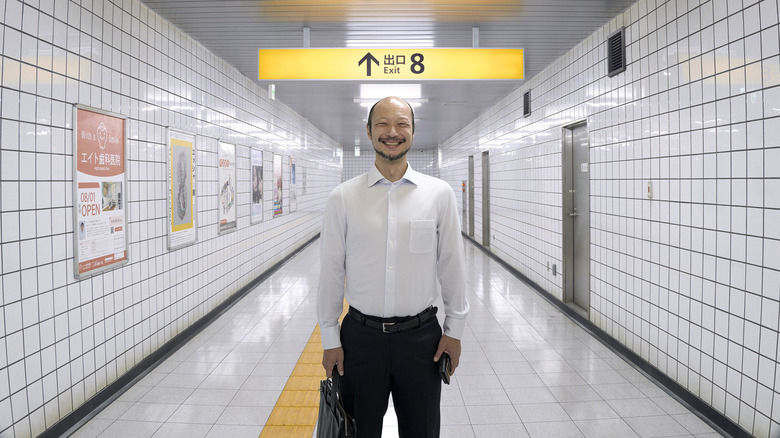
Have you ever walked through an eerie underground metro station late at night and kept looking over your shoulder, thinking there's something wrong, even if there isn't? What if there was a whole movie about that sensation? Genki Kawamura's "Exit 8" adapts the 2023 Japanese video game of the same name, about a man navigating the never-ending hallways of a near-empty metro station in Japan, while avoiding environmental anomalies to escape. It's an eerie film that adopts the feeling of playing a video game, the camera either staying in the point of view of the main character or just over his shoulder, but always following him, less like a spectator and more like an invisible handler.
The film is a great example of the liminal horror trend that's having a moment in 2026. "Exit 8" makes the most of its sparse single location, finding fear in the mix of familiarity and the unknown. Kawamura keeps you on your toes for most of the movie, trying to see (alongside the protagonist) what will be different this time and whether a bigger danger lurks just around the corner. "Exit 8" may feel small, but what it does with its resources yields a tense, compelling, visually inventive horror film. (Rafael Motamayor)
Faces of Death
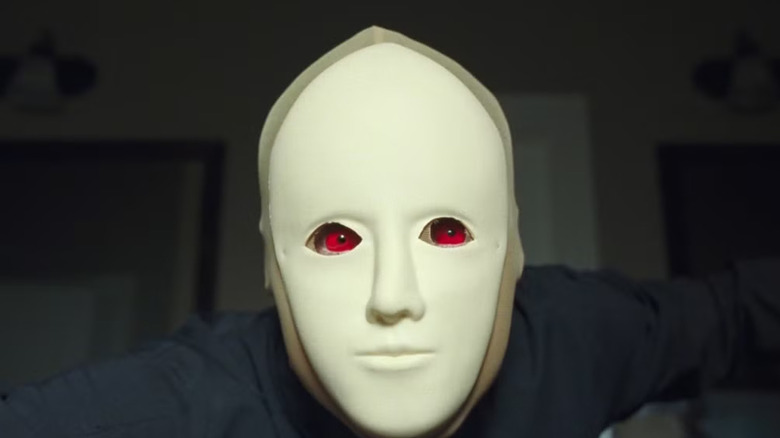
There were so many ways a "reboot" of notorious mondo movie "Faces of Death" could go wrong. But in the hands of "CAM" and "How to Blow Up a Pipeline" filmmakers Daniel Goldhaber and Isa Mazzei (who I interviewed here), the new "Faces of Death" is surprisingly sharp. "Faces of Death" 2026 faced a unique challenge: When the original film arrived in video stores, the concept of watching real deaths on screen seemed taboo and unheard of.
Now, we all carry around little computer-TVs that beam death and destruction into our eyeballs every single day. This new "Faces" tackles that head on, following a serial killer (a genuinely unnerving Dacre Montgomery) and the online content moderator (Barbie Ferreira) investigating his filmed crimes. Way better than it has any right to be, "Faces of Death" packs a punch and leaves you feeling queasy, and that's exactly what it should do. (Chris Evangelista)
Forbidden Fruits
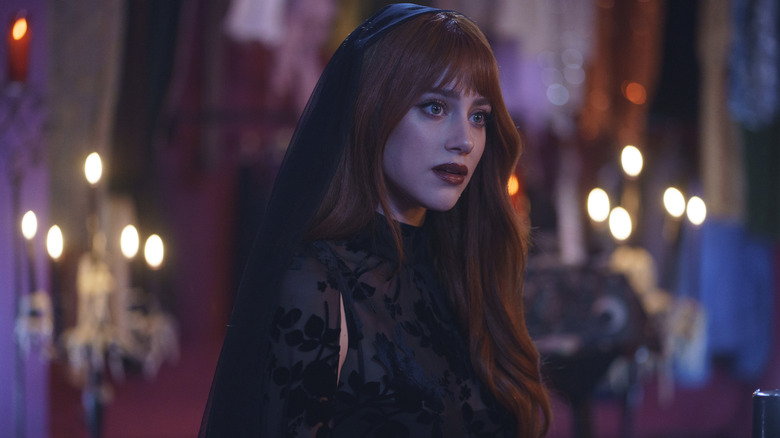
Adapted by Meredith Alloway and playwright Lily Houghton from Houghton's "Of The Women Came The Beginning Of Sin, And Through Her We All Die," Alloway's feature directorial debut, "Forbidden Fruits," is the rare horror comedy that willfully hand waves menacing vibes to the side whenever there's a sharper joke, meaner comeback, or hotter outfit to flaunt. The film's real magic belongs to its fashion-obsessed foursome (Lili Reinhart, Victoria Pedretti, Alexandra Shipp, and Lola Tung), who wield sex appeal and razor-edged sarcasm like weapons of mass destruction. Even their fruit-inspired names feel deliciously on the nose, as though these girls were blended together into one toxic, irresistible cocktail.
On the surface, "Forbidden Fruits" plays like a bratty shopping mall satire about zillennial women trapped in aggressively performative friendships, the kind of sleepover staple that would sit perfectly between "Mean Girls" and "Heathers" on a pink plastic DVD shelf. And to be fair, it absolutely delivers that candy-coated chaos. But imagine if those movies also dabbled in amateur witchcraft, summoned demonic energy between sips out of a Stanley cup, and weren't afraid to drench an unsuspecting food court in blood. Equal parts camp, carnage, and hyperfeminine glamor, "Forbidden Fruits" feels custom-built for midnight screenings, internet obsession, and eventual cult-classic immortality. Dripping with cattiness and enough fluorescent-drenched attitude to make even its nastiest moments feel fun rather than grim, horror this cheeky rarely tastes this good. (BJ Colangelo)
Hokum
Filmmaker Damian McCarthy cemented himself as a horror director to watch with 2024's patient but terrifying "Oddity," and he's now climbed to even greater heights with "Hokum." This picture remembers that horror movies should be scary, and delivers. As author Ohm Bauman (Adam Scott) visits a hotel with a witch locked inside, he gets a firsthand look at things that go bump in the night.
"Hokum" has gotten dinged by some for jump scares, but I'd counter that argument; like "Oddity," it's a reminder jump scares don't have to be lazy and can be truly scary. The film spends so much time building atmosphere, with Ohm locked in a hotel suite fruitlessly trying to escape, that the bursts of horror are well-earned.
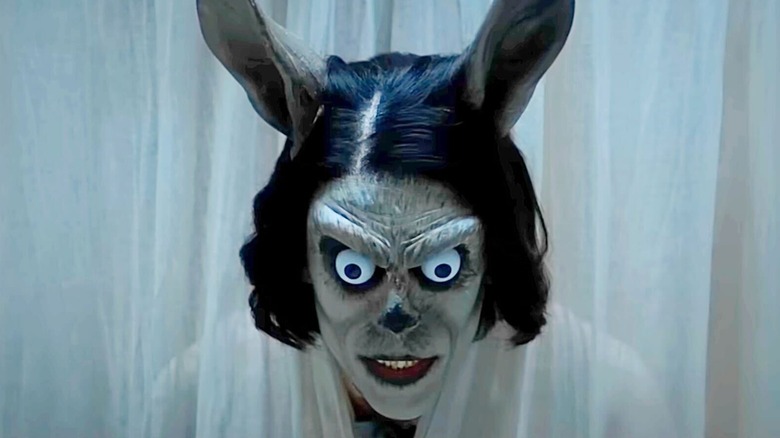
The scariest scene in the movie, though, is not one that centers on the witch. The "Hokum" trailer helped sell itself with a glimpse of a donkey-faced man; understandably, since it's a great monster design, mixing sinister face structure with big cartoon eyes. This creature, Jack the Jackass, just looks so wrong; when it speaks, it's even worse. Jack appears on a fuzzy, analogue TV broadcast, speaking like a children's TV host but with a Pennywise-esque cruelty, assuring Ohm that things are not going to be ok. (Devin Meenan)
Lee Cronin's The Mummy
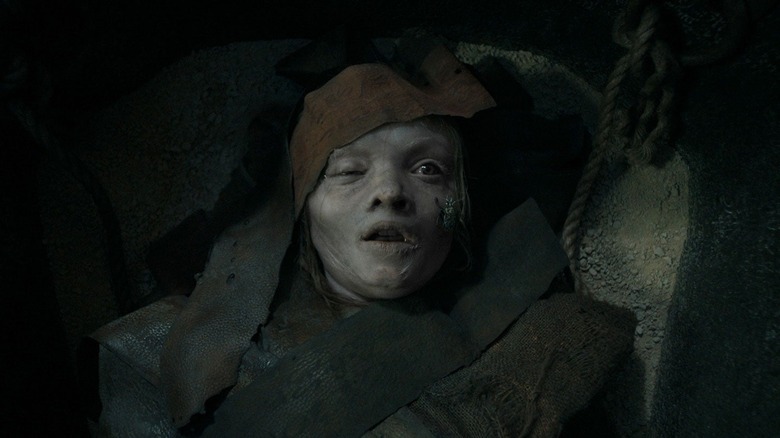
"Lee Cronin's The Mummy" feels like the very first horror movie specifically made so it could get an Arrow 4K release 15 years later and for everyone to go "Oh, yeah! That movie was actually really weird and good!" So let's just say it now: "Lee Cronin's The Mummy" is both weird and good, a horror movie that spans continents on a low budget and generally feels like "True Detective" by way of "The Evil Dead" without ever actually feeling like a mummy movie in the slightest.
Some may take issue with that, but I find it hard to dislike a movie this unapologetically gooey and nasty and unafraid to bat its cast around like they're Bruce Campbell in a Sam Raimi movie. It's also utterly merciless, upping the cruelty factor to such degrees that it surpasses unpleasantness and enters a special realm of absurdity. This shouldn't be titled "Lee Cronin's The Mummy" — this should be Lee Cronin's "The Manitou."
Although writer/director Lee Cronin's name being inserted into the film's title became something of a meme among genre enthusiasts, it's hard to deny that the movie has as specific, oddball personality that shines through even when the script is forced into particular trope-y corners. This is a movie oozing with personality and grim wit. It's clear Cronin is here to stay, and horror fans should be happy to have him. (Jacob Hall)
Leviticus
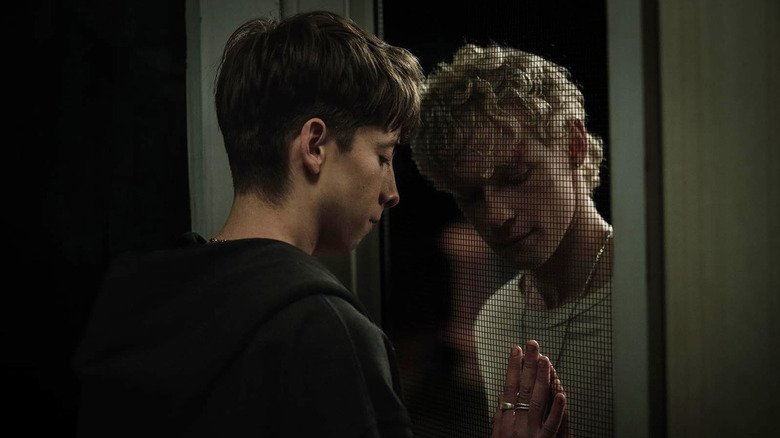
The title of Adrian Chiarella's fantastic horror movie "Leviticus" refers specifically to Leviticus 18:22, a brief passage in the Bible that bigots love to lean on as irrefutable proof that God forbids the practice of queer sex. Chiarella's movie doesn't unpack or analyze the Bible, but it does accurately depict the repressive, predatory, ultra-religious cloud that queer people constantly have to walk around under in the modern world.
In "Leviticus," two teenage boys (Joe Bird and Stacy Clausen), very much into each other, are handed over to a local homophobic religious cult and undergo a bizarre "pray away the gay" ritual. The ritual attracts a demonic entity like the one from "It Follows." This leads to the boys having visions of each other that are really the demon, which approaches and attacks them yet appears invisible to anyone else. As a result, it's not long before the boys start to fear one another, uncertain if the person they're talking to is their boyfriend or some secret malevolent force.
The creature in "Leviticus" clearly represents the fear that "conversation therapy camps" and other anti-queer church groups attempt to instill in LGBTQ+ people. In real life, such horrid institutions try to make young folks afraid of their own queerness. "Leviticus" turns that fear into a literal murderous monster. It's a clever, scary conceit in a sad, terrifying film. And it's going to feel familiar to too many people. (Witney Seibold)
Mārama
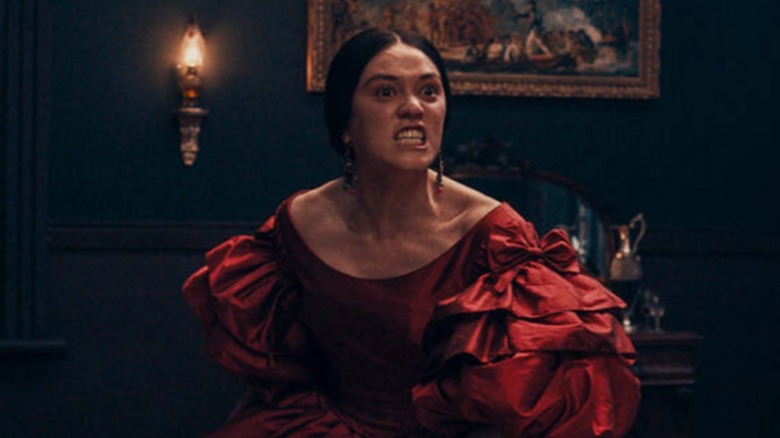
Taratoa Stappard's "Mārama" wears the garb of gloomy Gothic horror, but things get uncomfortably frightening in a way audiences are not prepared for. In 1859, an orphaned Māori woman named Mary (Ariāna Osborne) makes the grueling journey to Yorkshire, England, after receiving a mysterious letter from an unknown benefactor. Eager to learn more about her Māori heritage, Mary visits Nathaniel's (Toby Stephens) oppressive manor, which looks like a gaudy museum of stolen cultural artifacts. Nathaniel's keen interest in Mary takes an unsettling turn as she experiences traumatic visions, keeping her trapped in a setting designed to rob her autonomy and sanity.
Stappard's indie horror shines a light on Aotearoa's real-life colonial history, which is shaped by the exploitation of indigenous Māori tribes and the repulsive fetishization of their cultural heritage. Women like Mary also bore the brunt of misogynistic violence, which went hand-in-hand with rampant objectification. Things reach a fever pitch once Mary learns the truth behind the letter, along with the connection that her lineage has to the dreaded manor. Osborne delivers a star-making performance that's impossible to forget, channeling Mary's trauma and rage into every micro-expression. In essence, "Mārama" unmasks the horrors of colonialism and illustrates how low bigoted men can stoop when the oppressed decide to fight back. (Debopriyaa Dutta)
Obsession
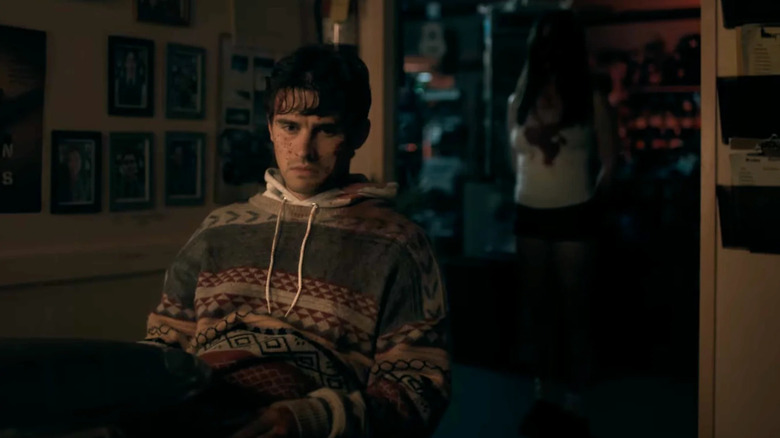
Curry Barker, one half of the comedy duo That's a Bad Idea and creator of the viral horror hit "Milk & Serial," proves with his first studio-backed feature, "Obsession," that his twisted instincts translate seamlessly to larger-scale horror. At first, Nikki's affection for Bear seems like the fulfillment of his deepest desires, but the dangerous "I wish she loved me more than anyone else in the world" condition quickly spirals into something terrifying. Bear's refusal to accept that Nikki simply is not interested transforms his desperation into everyone else's nightmare, sending the film hurtling toward violent chaos.
Bear is a pitiful man who earns every ounce of suffering that comes his way, and the film delights in punishing him for ignoring obvious warning signs. Once his wish is granted, Nikki's increasingly obsessive and unstable behavior becomes impossible to overlook, yet Bear remains blinded by selfish longing until it's too far gone. The film never asks the audience to pity him, which only heightens the anticipation of watching Nikki push him toward regret and ruin.
Inde Navarrette delivers a phenomenal performance, shifting effortlessly between quirky dream girl and terrifying nightmare. Her expressive physicality, vocal intensity, and total commitment to Barker's escalating horrors create a performance that feels destined for legendary status. There's plenty to love in Navarrette's unforgettable turn, and Barker proves he's got the goods. (BJ Colangelo)
Primate
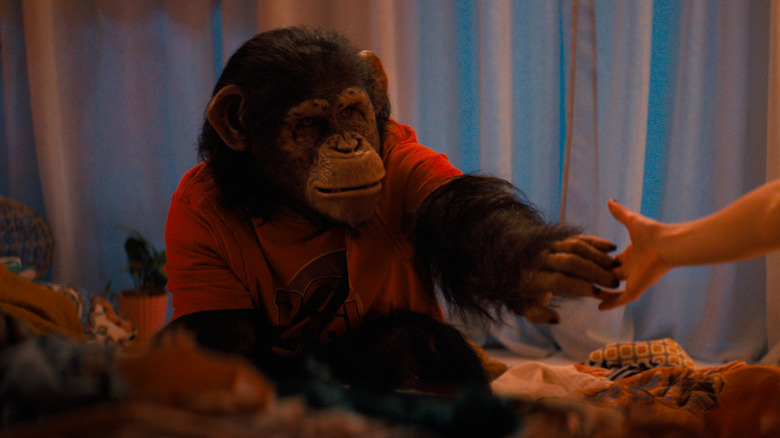
There's nothing like a good creature feature. What's more, there's nothing like a creature feature that doesn't rely on a CGI animal to scare the crap out of you. That's where "Primate" excels. Directed by Johannes Roberts (of "47 Meters Down" fame), this lean, mean, bloody exercise in death by chimpanzee is the best kind of mean-spirited horror we can possibly hope for from a major Hollywood studio.
The movie centers on a group of friends on a tropical vacation who find their trip turning into a nightmare survival situation when the family's friendly animal pal, Ben, turns violent. I was lucky enough to see "Primate" at Fantastic Fest and declared it the first great horror movie of 2026. January is often viewed as a "dump month" for Hollywood, where a lot of trash goes to die. Some might accuse this movie of being trash, but it's the best kind of trash.
Roberts doesn't hold back, delivering moments of truly shocking gore. Ben, however, is the highlight, played by Miguel Torres Umba in a suit, which really makes the whole thing feel even more real. Oscar-winner Troy Kotsur also delivers an MVP performance in this tight, 90-minute gory thrill ride. It gets in, gets out, and gets the job done. It doesn't reinvent the wheel, but it's a damn good wheel, as it were. (Ryan Scott)
Ready or Not 2: Here I Come
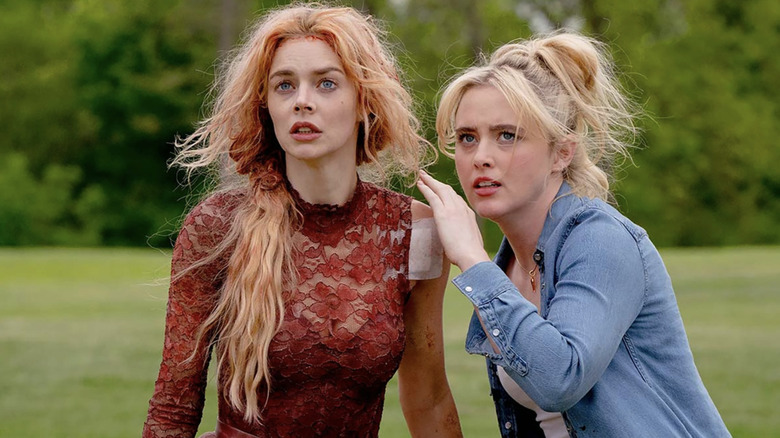
2019's "Ready or Not" was a delightful horror comedy romp, combining nightmare in-laws with the most dangerous game. After such a long gap, was it worth it for directors Matt Bettinelli-Olpin & Tyler Gillett to return and throw Grace MacCaullay (Samara Weaving) into another lethal game of hide and seek? The results say yes.
After some admittedly clunky set-up introducing a whole high council of other Satan-worshipping rich families, "Ready or Not 2: Here I Come" finds its groove once the hunt begins. It escalates like a sequel should, with several competing parties now trying to seek Grace; one walks away from the movie convinced that "Ready or Not" might be horror's answer to "John Wick" and that series' always-escalating scale.
While the bloodbath finale is unforgettable, it's not even the best kill in the movie; let's just say that death by washing machine has never been funnier or scarier than this. The movie's new supporting cast all fit the groove perfectly, especially "Buffy" star Sarah Michelle Gellar as a different kind of slayer.
But once more, the one holding it all together is Weaving as Grace. She's got such precise control over her comic expressiveness and reaction timing that her costar Kathryn Newton (as Grace's sister Faith) struggles to keep up, even if the story of two estranged sisters brought together gives the movie the arc it needs to stand out from the original. (Devin Meenan)
Resident Evil
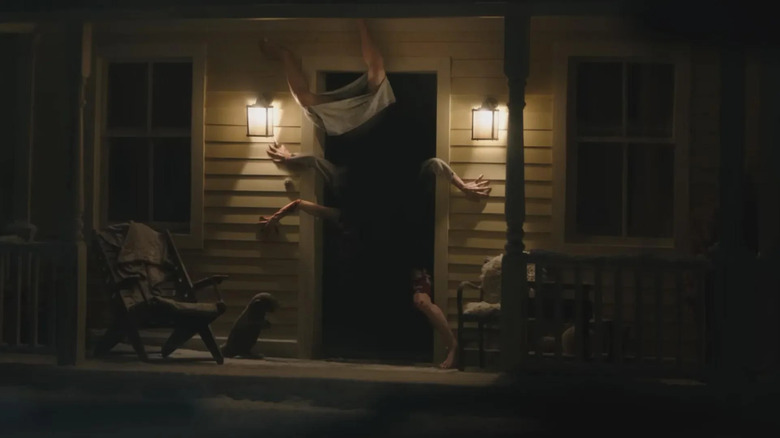
The "Resident Evil" franchise is remarkably robust, boasting eight movies and one eight-episode TV series. When it comes to those adaptations, however, the property has generally balanced out its horror aspects with action elements. It's made the live-action entries exciting and unique, contributing as they do to the action-horror hybrid genre. Yet, none of these adaptations truly translate the foremost tone of the "Resident Evil" video game, which is that of survival horror.
Zach Cregger's "Resident Evil" corrects this oversight in a big way. Instead of a heroic professional, the film follows Bryan (Austin Abrams), an average dude who finds himself on a trek through Raccoon City during the initial outbreak of the T-Virus. Cregger, co-writer Shay Hatten, and Abrams present the survival horror mechanic from the games ingeniously, making us worry alongside Bryan about how many bullets he has in his gun, which way to run to next, and so on. This intense identification with our protagonist makes the horror in "Resident Evil" so intimate and immediate that it doesn't just surpass the scare quotient of the prior films in the franchise, it makes "Resident Evil" (2026) one of the most tense and nail-biting horror movies this year.
Added to that is the way Cregger applies his knack for horror villains to the T-Virus mutations of the film. He always reminds us of their former humanity, so that they aren't merely Lovecraftian beasties. "Resident Evil" is tense, upsetting, and unsettling, making it a consummate horror feature. (Bill Bria)
Send Help
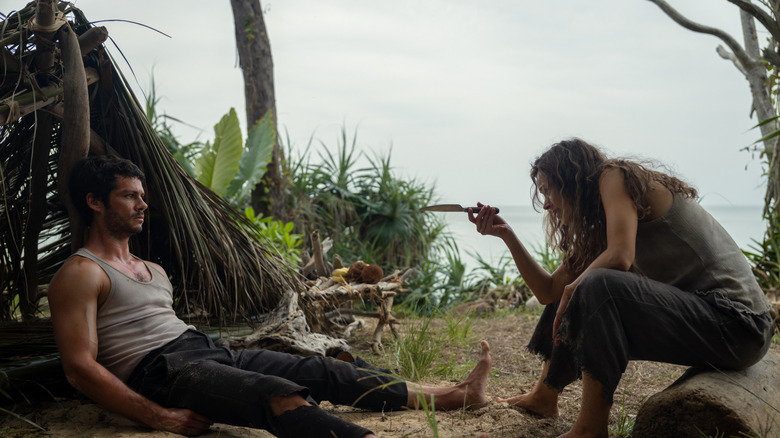
Sam Raimi hasn't actually been away from the director's chair that long (he helmed "Doctor Strange in the Multiverse of Madness" in 2022), but his desert island horror-comedy "Send Help" still feels like a grand return. Raimi hadn't made a movie in the "Evil Dead" vein — gross, funny, and utterly unhinged — since 2009's "Drag Me To Hell," but "Send Help" proves that he hasn't lost his touch.
Though this one doesn't have the PG-13 restrictions that Raimi challenged himself with when he made "Drag Me To Hell," it still catches the audience off-guard by hitting them with grossness from unexpected directions — whether it's tuna sandwiches, corporate office culture, or just a big blast of boar snot. The storyline sees arrogant nepo baby boss Bradley Preston (Dylan O'Brien) and his hard-working but sidelined employee, Linda Liddle (Rachel McAdams), stranded on a remote island after a plane crash. Instantly, the tables are turned: Bradley is completely helpless, while Linda's obsession with "Survivor" has left her with the skills to survive on the island indefinitely. If Bradley wants to survive as well, there's just one skill he needs to learn: submission.
The film bobs merrily along on the electric performances of McAdams (chirpy but lethal) and O'Brien (simmering with impotent rage), and their chemistry is such that you're never quite sure if they're about to kiss each other or kill each other, even right up to the end. "Send Help" is a silly, thoroughly entertaining romp through passive-aggressive hell. (Hannah Shaw-Williams)
Teenage Sex and Death at Camp Miasma
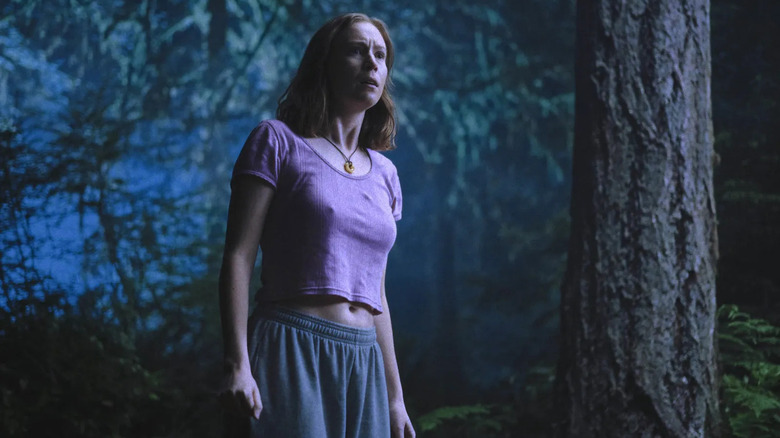
Jane Shoenbrun's "Teenage Sex and Death at Camp Miasma" is an engagingly stylized essay that re-litigates slasher movies — once again — in an age when the genre has already been entirely picked apart. The film's main character is Kris Williams (Hannah Einbinder), a queer filmmaker who's been hired to remake a "Sleepaway Camp"-style horror cheapie titled "Camp Miasma." In an early montage, it's established that the "Camp Miasma" movies have gone through their full, expected lifecycle: The earliest entries were hits but critically reviled, the sequels got increasingly ridiculous, and younger generations see these movies as dated and transphobic. It's refreshing how cynical Shoenbrun's film is about the present-day status of "classic" slasher flicks.
But then, Kris meets Billy Presley (Gillian Anderson), who starred in the very first "Camp Miasma" film and understands there's a reason why people come back to slasher movies, and it has everything to do with sexual anxieties. Sure enough, Kris has lots of sexual anxieties, so she and Billy begin to examine what is being unlocked.
"Teenage Sex and Death at Camp Miasma" isn't as thematically complex as Schoenbrun's last movie "I Saw the TV Glow," and a lot of its ideas have been covered before, but it's a refreshing new page in the book of self-aware horror analysis. It's "Scream" for a new generation, a post-analysis slasher for the 2020s. And its queerness is always right up front. What a fun film to talk about. (Witney Seibold)
Undertone
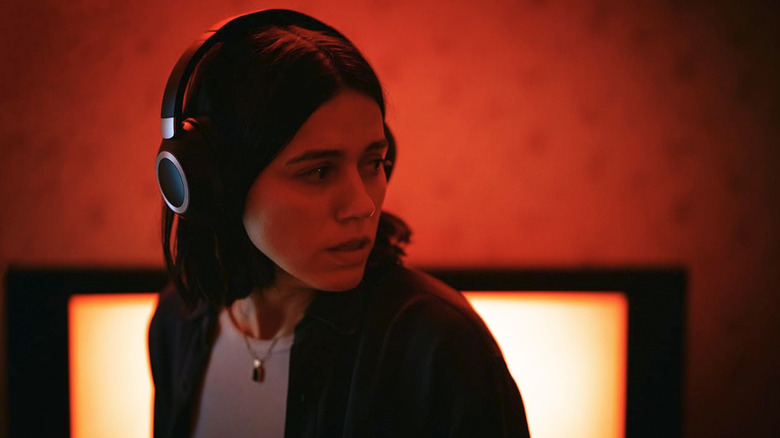
It makes perfect sense that "Undertone" director Ian Tuason is making a "Paranormal Activity" movie next, because "Undertone" is effectively a "Paranormal Activity" movie without the found footage aspect. It's about a pair of podcasters, Evy (Nina Kiri) in Canada and Justin (the voice of Adam DiMarco) in the UK, who record at the witching hour and play through a series of scary audio files. Justin claims the audio is legitimate, while Evy is confident the whole thing is a hoax. But as they progress through the increasingly creepy files, recording their podcast in fits and starts as they learn about a demonic entity named Abyzou, eerie things begin happening in Evy's house, where she's the sole caretaker of her dying mother.
It must be said that Evy's podcasting setup doesn't make any sense. It's in the middle of her dining room, with ludicrous amount of empty space around her and several ways in and out of the room. That would be terrible for audio in real life (imagine the echo!), but it's perfect for a horror movie. Tuason makes the most out of all those dark, empty spaces, framing shots in such a way where the audience is always straining to see if anything supernatural is going to burst into the room at any moment. It's effective and disquieting, and creates a wonderfully tense atmosphere that's sustained for almost the entire runtime. I can't wait to see what kind of spin he puts on the "Paranormal" franchise. (Ben Pearson)
We Bury the Dead
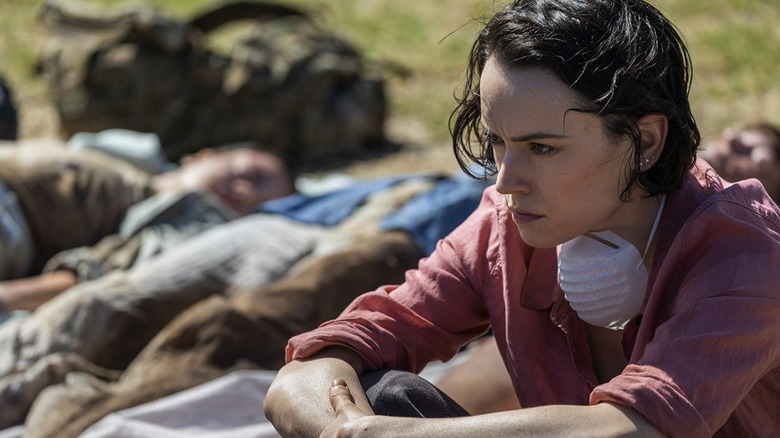
"We Bury the Dead" is not the scariest movie on this list, but it's a handsomely made, unconventional zombie flick. Sometimes, that's all you need. Thankfully, that isn't the only thing this film has to offer — it also features some of the gnarliest sound design of 2026, particularly when the zombies are on screen. The movie doesn't rely solely on the expected gross-out noises that you've heard a million times. Instead, it carves out its own identity by having the zombies constantly grinding their teeth as hard as they can, resulting in a cacophony of crunching and scraping that's enough to make you wince every time you hear it. It's such a specific choice from the filmmakers, and I'll be thinking about it for years.
"Star Wars" veteran Daisy Ridley leads the cast, and while her career has taken some odd turns since leaving the galaxy far, far away, she's good here as an American woman trying to find her missing husband. Unfortunately for him, he'd taken a business trip to Australia before an experimental weapon accidentally imbued newly dead people with the ability to come back to erratic, often violent life. There are some effectively melancholy scenes in the film, along with a couple of tense set pieces. This one didn't get much of a marketing push when it came out in the first week of January, but it's worth seeking out if you're a zombie movie fan. (Ben Pearson)
Whistle
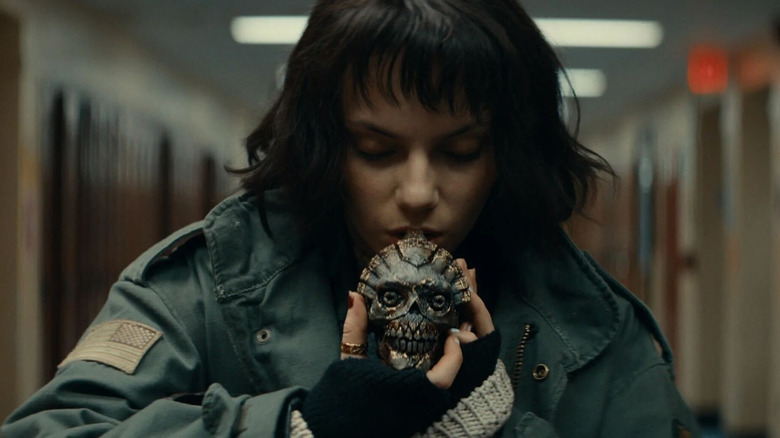
One of the simplest pleasures of horror can be watching some dumb, unlucky teenagers die, and Corin Hardy's "Whistle" is here to offer just that. Said teens find an ancient Aztec death whistle used for human sacrifice, and hearing it condemns them all. Like a mix of "Final Destination" and "Flatliners," "Whistle" suggests our deaths are predetermined, that when we're born, a "death" is born too, spending all our lives trying to find us. Blowing the whistle is like a GPS for that death.
"Whistle" has some of the best horror kills of the year (my favorite: someone sucked into and eviscerated by an invisible industrial grinder), but death hangs over the movie's atmosphere too. The picture is set in a dying industrial town, the kind that made Bruce Springsteen sing to Wendy, "We gotta get out while we're young" in "Born to Run." The movie's establishing shots feature a factory pumping smog into the air and poisoning the land. Lots of young people today feel they don't have a future, and "Whistle" plays on that dreadful feeling.
While this is the kind of movie that has part of you rooting for the main kids to die, "Whistle" does a strong job making its leads so sympathetic that you're rooting for them to cheat death. Our romantic leads Chrys and Ellie, played by bona fide scream queens Dafne Keen ("Logan") and Sophie Nelisse ("Yellowjackets"), offer heart in a movie that could've coasted without it. (Devin Meenan)