

All 13 Star Wars Animated Shows, Ranked
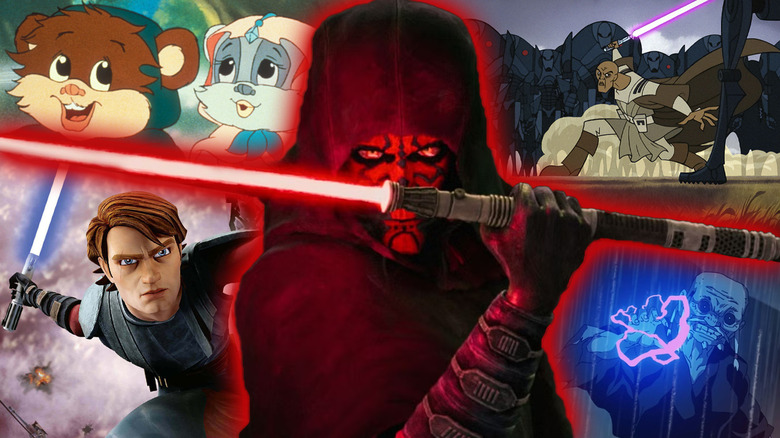
If one thing has remained consistent throughout the first 10 years of the Disney "Star Wars" era, it's the quality of the franchise's animated output. When the House of Mouse first launched its own branded streaming service, it put forth two Lucasfilm projects early on: "The Mandalorian" and the long-awaited final season of "Star Wars: The Clone Wars." More than effectively defining the kinds of "Star Wars" projects the streaming era would bring us, the time of their release (just before "The Rise of Skywalker" tanked the franchise's once-dominant cinematic identity) positioned them to dictate what stories would be told through the latter half of this decade.
While the legacy of "The Mandalorian" is decidedly uneven, animated shows like "Star Wars: Maul — Shadow Lord" continue to give fans everything they want. This doesn't surprise us, having considered the highs and lows of the franchise's animated output in its entirety for this very ranking. Looking back all the way to the "dark ages" of the 1980s through to the present, a galaxy far, far away has been kept alive in large part by the medium of animation.
13. Young Jedi Adventures
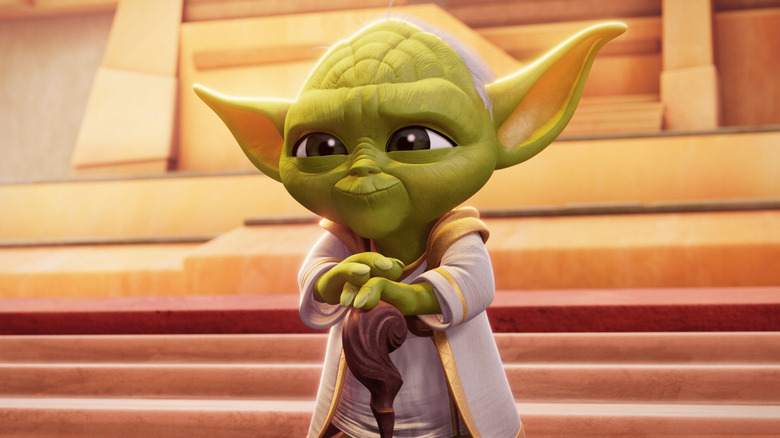
The first Star Wars series made for preschoolers, "Star Wars: Young Jedi Adventures" premiered in 2023 on Disney+ and Disney Junior. You've probably never seen it.
That might not necessarily be because the show is "bad" in the expected sense. In fact, for adult "Star Wars" fans, this series is something of a godsend. It follows Kai Brightstar (Jamaal Avery Jr./Jecobi Swain/Ja'Siah Young), a youngling training under Master Yoda during the High Republic era roughly 200 years before "The Phantom Menace." It's an admittedly unique setting for a "Star Wars" series — only "The Acolyte" has dared to take the story back that far. Then again, any show about younglings kinda has to go back that far, lest it run head-first into the most horrifying series finale one could imagine.
Bottom line, this is a competent series made exclusively for preschoolers. There's no serious claim to be made about why it's objectively bad or worthy of derision, but anyone who would fold their arms at our placement and argue anything different would have to ignore how fundamentally empty this show is. Not devoid of quality or care, but of stakes, drama, and impact. There's no reason to watch this series if you and/or your children are above the age of five.
12. Ewoks
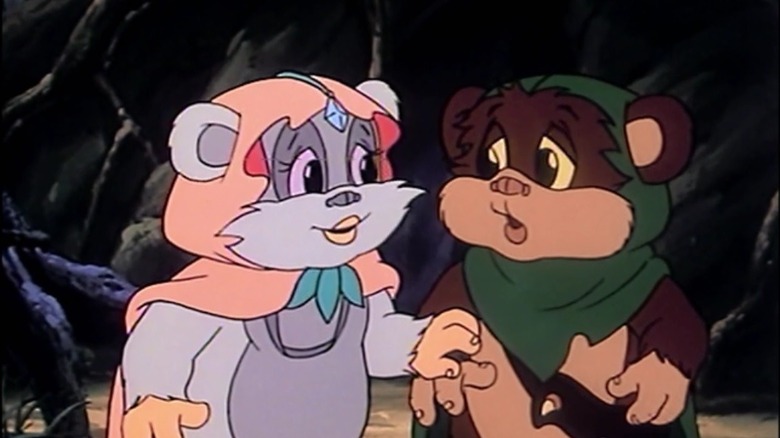
It may be hard for us to imagine now, but there was a time when "Star Wars" fans were in a depressing drought of media. In the 1980s, after the release of "Return of the Jedi," novels and comic books were doing most of the heavy lifting for the franchise's cultural endurance. But on television, all fans had was "Ewoks."
Produced by Toronto's Nelvana for Lucasfilm and none other than then-future "Batman: The Animated Series" writer Paul Dini, "Ewoks" is surprisingly bland. The series takes place before "Jedi" and is set on Endor, where a young Warrick (the main Ewok from "Jedi," voiced by Jim Henshaw and Denny Delk) goes on adventures with his fuzzy friends and family.
The real selling point of the show is its animation. "Ewoks" is a traditional, hand-drawn series for the better. There are also some fantasy elements folded in here — particularly non-force systems of magic — that go on to become major factors in later "Star Wars" shows. At the same time, like "Young Jedi Adventures," this is a children's series that has little to offer a modern "Star Wars" fan outside of being a pop culture museum piece.
11. Droids
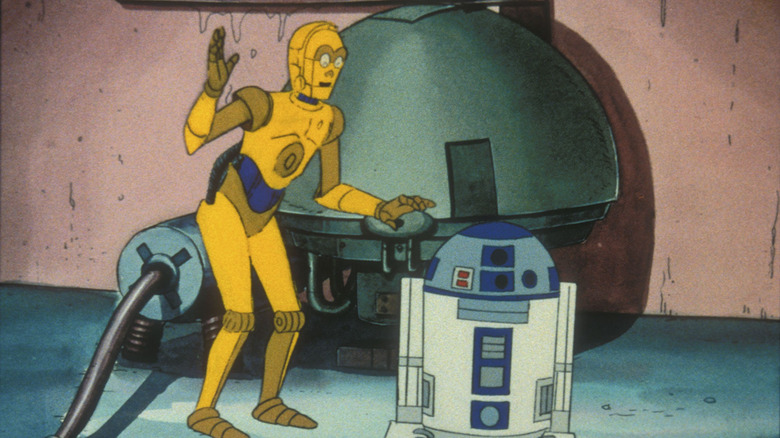
"Droids" is exactly what it says on the tin. Set prior to "Star Wars: Episode IV — A New Hope," the show chronicles the many misadventures of C-3PO (Anthony Daniels) and R2-D2 after they're abandoned by their former master. It was produced long before "The Phantom Menace" retconned them as being part of the personal droid arsenal of Anakin Skywalker.
While it has the same nostalgic charms as "Ewoks," this series feels much closer to an actual "Star Wars" movie than the former. In addition to having Daniels return to provide his iconic voice for one of the leads, the episodes show the droids encountering the kinds of characters you'd expect to see from this franchise: bounty hunters, desert outlaws, Imperial soldiers, and so on.
Story-wise, it doesn't offer anything that much more sophisticated than "Young Jedi Adventures" or "Ewoks," and which of the three a reader might actually enjoy comes down to atmosphere. One offers weightless lightsaber action that feels vaguely adjacent to modern "Star Wars" canon; another offers '80s forest-fantasy vibes with occasional space opera interludes. But "Star Wars" fans are most likely to appreciate the synthy sci-fi and recognizable iconography of "Droids."
10. Resistance
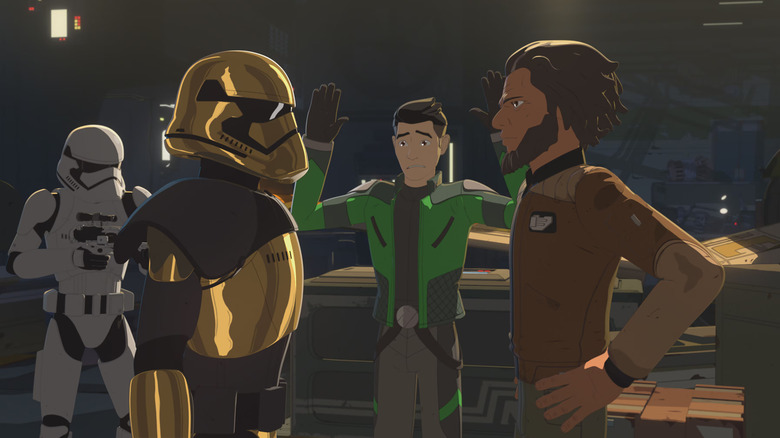
Throughout Dave Filoni's early tenure as the core creative mind behind the "Star Wars" animated projects, there was always a clear tension between two diverging ideas of what his shows would be. On the one hand, Lucasfilm (and, later, Disney) were producing animated programs intended for a young audience, meaning they had to be appropriate and accessible for the kids and tweens watching Disney XD. At the same time, Filoni's best and most enduring work from the period came from him pushing past this boundary to tell more complicated and, in some ways, "adult" stories.
The bizarre thing about "Star Wars Resistance" is that, despite being the last of Filoni's animated series to be produced with this tension, it struggles with it more noticeably than "Clone Wars" or even "Rebels." The series has a decent setup. The chronological setting, parallel to "The Force Awakens" and "The Last Jedi," gives it a stronger argument than the previous two shows for contemporary canonical significance, and the overarching espionage storyline had the potential to take advantage of Filoni's best writing instincts. But, perhaps because "Star Wars" was a little too rudderless as a franchise by this point, "Resistance" can't sustain compelling drama.
The characters and storyline feel flat and inconsequential, even when they manage to pull in someone like Gwendoline Christie or Oscar freaking Isaac to reprise their roles from the films. For a series that was set during the then-ongoing and under-explored era of the sequel trilogy, "Resistance" should have felt more exciting than it did. Its lack of import to the current canon (now largely shaped by Filoni) cements its place at the floor of his animated "Star Wars" efforts.
9. Tales of the Empire
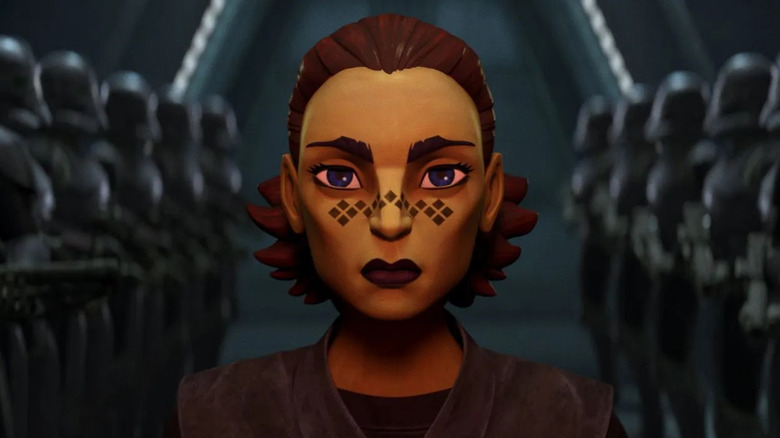
While it's hard to passionately recommend any of the below "Star Wars" series, the remainder of the franchise's animated output is, impressively, well worth considering for most hardcore fans. We'd even argue that each of them has a level of narrative and artistic execution that a casual "Star Wars" viewer would find engaging, depending on what kind of stories they enjoy. And if they happen to be masochists who indulge in tragic stories of pain, corruption, and redemption, then "Tales of the Empire" would be right for them.
Like all three seasons of the "Tales" anthology series, "Tales of the Empire" is effectively split into two parts. It begins by exploring the origins of Morgan Elsbeth (Diana Lee Inosanto), a former Nightsister who witnesses the massacre of her clan at the hands of General Grievous (Matthew Wood). The Disney+ animation bump is real and noticeable in sequences like that. Unfortunately, Grievous' return is also as exciting as her side of the season gets. Dave Filoni and writer Amanda Rose Muñoz craft an emotionally legible negative arc for Elsbeth, but it's not surprising enough to cut above solid retroactive character work. Like the most middling entries in the "Star Wars" canon, it simply fills in minor narrative gaps in a beautiful yet archetypal manner.
The second half of the season is where "Tales of the Empire" really justifies its existence. Of all the random, blink-and-you-miss-them Jedi from the crowded prequel trilogy, Filoni did his best work developing Barriss Offee (Meredith Salenger) during "The Clone Wars." "Tales" finally resolves her character arc through one of the best redemption stories in the canon — and there are a lot of them.
8. Tales of the Underworld
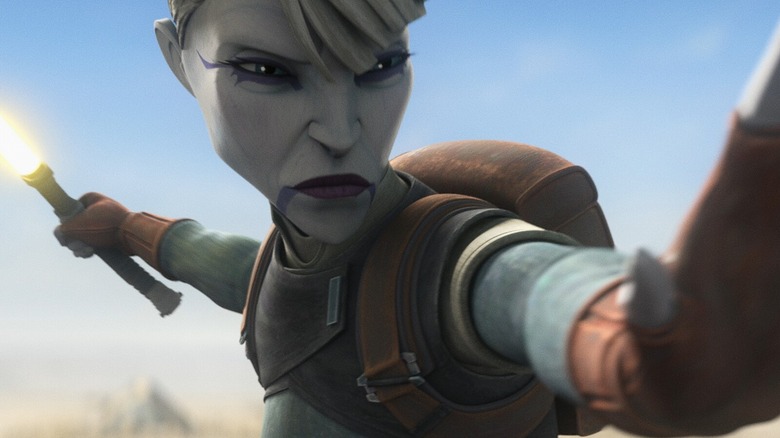
Of all three seasons of "Tales" released so far, the two halves of "Tales of the Underworld" feel the most even. Admittedly, neither half of "Underworld" is as exceptional as the Barriss Offee storyline from "Tales of the Empire" (seriously, "The Way Out" is probably one of the top five episodes of a "Star Wars" series ever made). But, at the same time, neither side of the season drags the project as a whole down. They're both engaging stories that are structured far better than the other seasons of "Tales," eschewing the admirably artistic vignette format in favor of more continuous narratives.
The other key component that raises "Underworld" above "Empire" for us is impact. The resurrection and redemption of Asajj Ventress (Nika Futterman) is a genuinely consequential arc in the "Star Wars" canon that's able to sustain suspense right through to its end. Meanwhile, the unflinching tragedy of Cad Bane (Corey Burton) is slightly undercut by his apparent, underwhelming death in "The Book of Boba Fett," but "Tales" still reinvigorates the character and introduces novel background that would justify exploring him further.
7. The Bad Batch
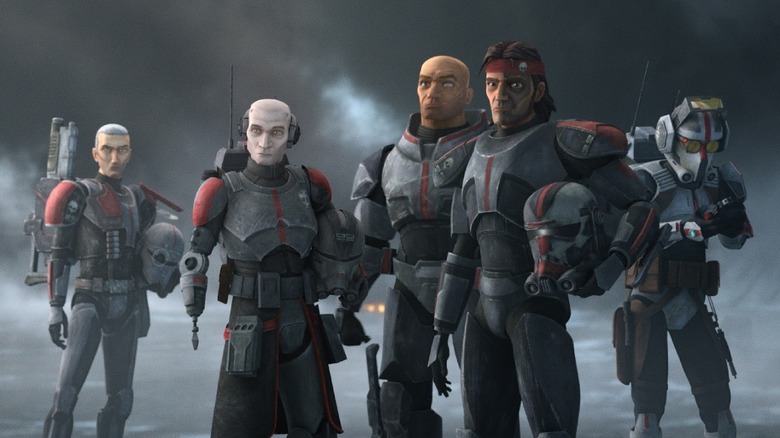
After testing the waters with the final, final season of "The Clone Wars," Dave Filoni now had an opportunity to create a new, original show for the audience he had spent a decade willing into existence. Finally, Disney was convinced that enough "Star Wars" fans would show up for an adult-leaning animated series with more textured animation and cinematic visuals. The show he should've made at that time was arguably one of the next two on our list — instead, he made "The Bad Batch."
It starts off feeling like a better-looking "Resistance" – a great premise undercut by a story scared of putting its characters in too much danger. But where the former series stalled, "The Bad Batch" steadily matured over the course of its first two seasons into a version of the war stories Filoni only got to tell in small arcs on "Clone Wars." It's hard to even knock it for losing momentum in the third season when that's a problem created by a second season that punched far above its weight class. As for its finale, we acknowledge it left some fans feeling like a lot was left on the table. What payoff it does provide for the core "Batch" (all played by Dee Bradley Baker) is satisfying enough within the show's ambitions.
6. Tales of the Jedi
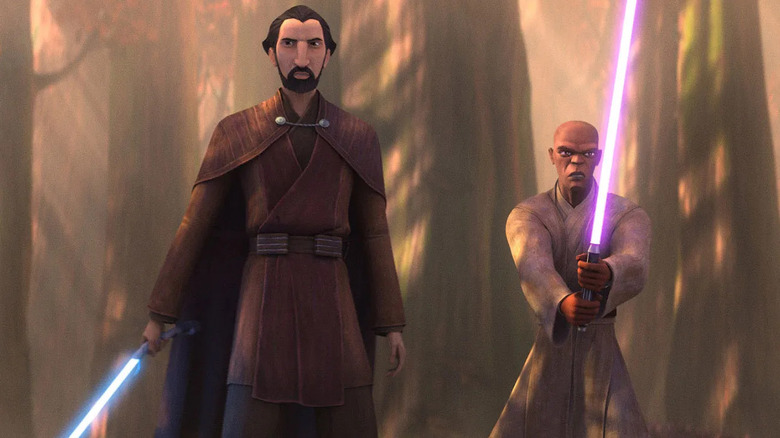
There's a reason why "Tales of the Jedi" is still the gold standard of the "Tales" anthology series. It's a rarity in the Disney era of "Star Wars" in that its backward-facing narrative doesn't merely force fans to watch this franchise swallow its own tail. Far from it, the twin narratives of "Jedi" add something revelatory to the story.
This is especially true for the dark side portion of the season, which focuses on Count Dooku (Corey Burton). The character was never the most compelling part of the prequel trilogy and rarely rose above hand-wringing villain status in "The Clone Wars," despite it being implied throughout that he had one of the more complicated falls from grace in the galaxy. Thankfully, however, "Jedi" finally tells the tale of how Dooku was repulsed by the Republic. Its focus on senatorial corruption (a key complicating factor of the Clone Wars that feels strangely vague in the politics-heavy prequels) is effective, justifying Dooku's disillusionment enough to deepen even his original appearances.
Ahsoka Tano's (Ashley Eckstein) episodes in "Jedi" do less, narratively speaking. Still, they work well as a compliment to the Dooku half, exploring how someone more vulnerable than him saw the same rot and chose the harder path to healing it.
5. Maul - Shadow Lord
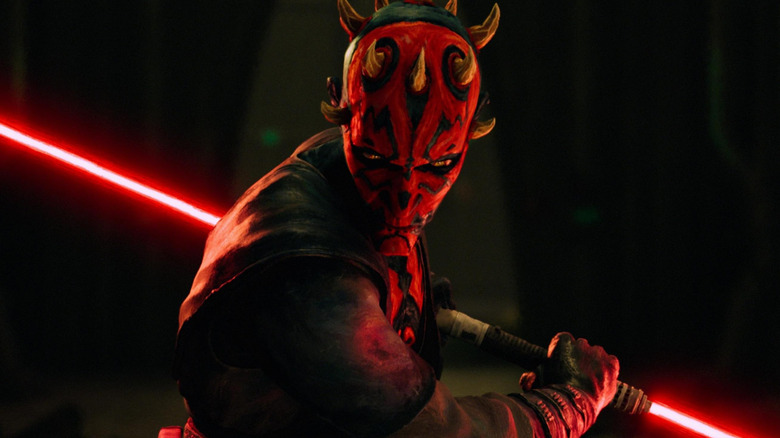
This placement deserves a decent asterisk. There is, of course, only one season of "Maul — Shadow Lord" out as of writing. Even so, it already feels like the kind of "Star Wars" show Disney+ should have been putting out this whole time.
Despite how much we already know about Maul's (Sam Witwer) entire life at this point, "Shadow Lord" proves that the character is still compelling enough to continue exploring. It rightfully leans on his status as an outsider within the new Galactic Empire. He's the cruel, selfish coward he's always been and seems to be in his chronologically subsequent appearances on "Rebels." At the same time, having been tortured and betrayed by the Sith throughout the Clone Wars, he isn't just opposed to this new regime; rather, he's violently passionate about tearing it apart.
This dramatic architecture gets to the heart of why Maul has been such a fan favorite since his return in "The Clone Wars." So long as "Shadow Lord" keeps sight of its character's righteous anger and tragic inability to grow beyond it, the show will continue to be powerful.
4. Visions
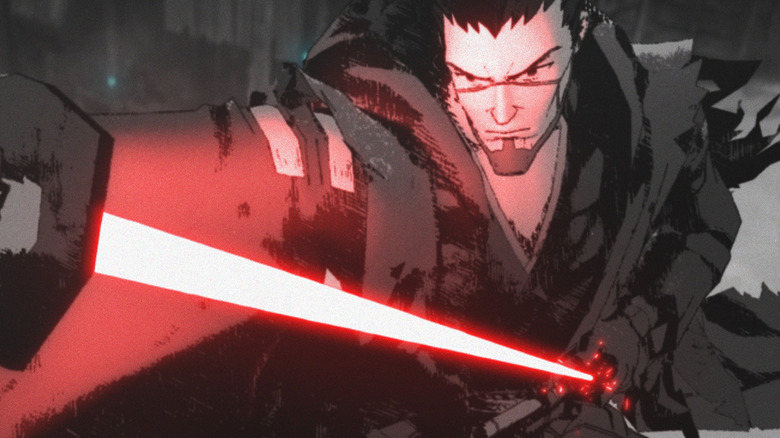
When "Star Wars: Visions" first premiered on Disney+, it felt like the franchise's answer to Marvel's "What If...?" The key difference between the two was the former's willingness to jettison the canon — in doing so, it freed itself to search for essential elements of a "Star Wars" story, i.e. those which inspire the same excitement without all the lore.
Like any episodic anthology, not every entry rises to the same heights as the series' best episodes. Still, "Visions" deserves credit for how much of it clears its own standards. Disney and Lucasfilm should also be lauded for how much creative freedom they've given to the animation studios working on the project. Episodes range from tight, efficient stories like "The Duel" and "Tatooine Rhapsody" in Season 1 to "BLACK," a nigh-incomprehensible short at the end of Season 3 that might just be the most haunting "Star Wars" story ever told.
"Visions" is, by all accounts, entirely separate from the "Star Wars" canon ... though some of it shouldn't be. It returns a sense of wonder and unpredictability to the galaxy, proving that the franchise's projects don't always need to be rooted in grand sagas to grow into something worthy of admiration.
3. Genndy Tartakovsky's Star Wars: Clone Wars
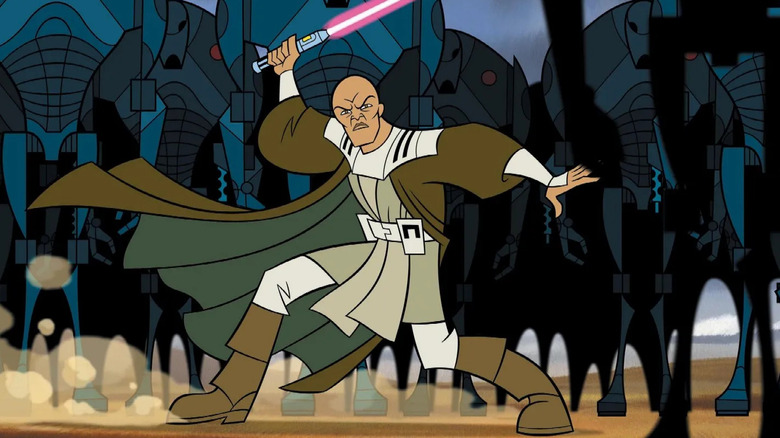
We wouldn't have most of the series on this list without Dave Filoni's "Star Wars: The Clone Wars." However, we likely wouldn't have gotten that series without "Star Wars: Clone Wars" from Lucasfilm Animation's almost-onetime boss Genndy Tartakovsky. The Emmy Award-winning series was the first "Star Wars" animated project that attempted to bridge the gap between the medium's young fanbase and the complicated, dark themes the prequel trilogy was grasping at.
Like the Filoni follow-up, Tartakovsky's "Clone Wars" explores the violent, military drama of the Clone Wars more than "Attack of the Clones" or "Revenge of the Sith." Before the latter film hit theaters in 2005, it established the idea of clone troopers with unique personalities. It's a deceptively simple feat, given the depersonalized clones of the prequels are a huge reason why the war narrative feels so distant.
Guns and glory aren't all "Clone Wars" has to offer. Through some of the best moments in "Star Wars" animation, Tartakovsky elevated characters like Mace Windu and General Grievous beyond what they were in the live-action films. But its most consequential character is undoubtedly Asajj Ventress, who was created for the series and has since become one of the most popular post-prequels "Star Wars" villains.
2. Rebels
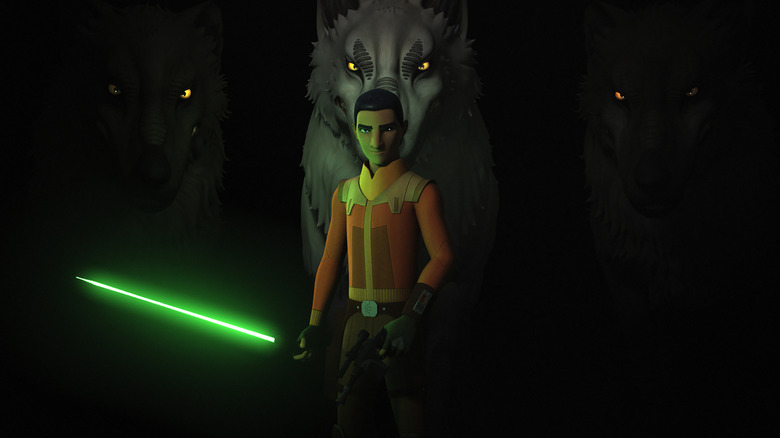
The only issue with "Star Wars Rebels" is that it takes an unforgivable amount of time to get started. Produced back when fans were asking Lucasfilm to focus less on lightsabers and Jedi and more on the old-west gunslingers of the Rebel Alliance, Season 1 translates this appetite into a relatively quaint story that lacks the danger and gravity of other shows on this list.
By Season 2, however, the series found its footing as a successor to "The Clone Wars," exploring how fractured the rise of the Empire left the galaxy. Key characters like Ahsoka, Maul, and Darth Vader (James Earl Jones) return broken. And where other cameos or resurrections in the "Star Wars" franchise feel like fan service, the use of "Clone Wars" characters in "Rebels" always feels vital. From the discovery of Master Luminara to Maul's pilgrimage on Tatooine, the prior series' presence is tragically haunting and evocative.
The series finale was quietly divisive compared to its middle seasons. It can also be argued that, beyond maybe Kanan Jarrus (Freddie Prinze Jr.), the core characters are individually overshadowed by the leads in "Clone Wars." As a unit, though, they were a great vehicle for some of the best "Star Wars" stories ever told.
1. The Clone Wars
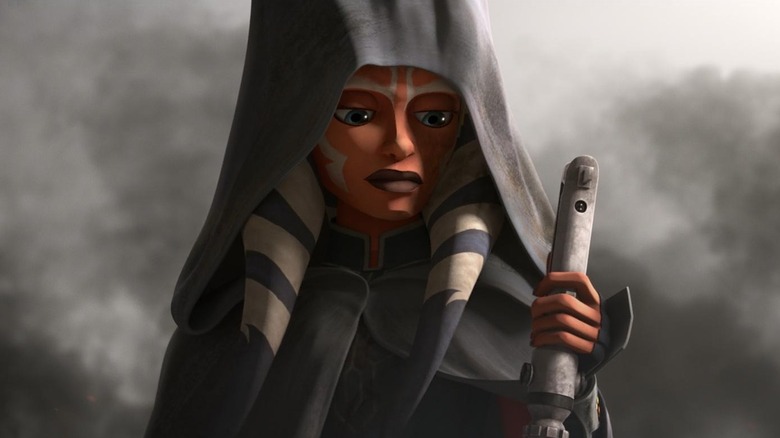
In a lot of ways, "The Clone Wars" has no right to be as good as it is — not least of all because the 2008 film that began its story is probably the worst "Star Wars" movie ever made. What followed it, however, stands as one of the greatest examples of what happens when franchises trust passionate creative leaders with vision.
The broad humor and casual emotional stakes of the film were eventually allowed to mature into the qualities of a serious TV series that invited "Star Wars" fans of all ages to experience the galaxy far, far away as they never had. As strange as it feels to say for a show marketed toward kids watching Cartoon Network, it was the first "Star Wars" project to confront war from a contemporary, post-9/11 American point of view. It seriously considers themes of moral injury, the justification of state violence, political corruption, and, occasionally, American imperialism (at least to the extent that a non-"Andor" "Star Wars" series will structurally allow).
The essential episodes of "The Clone Wars" easily stand alongside the live-action films in terms of quality. More than the sequel trilogy, it is arguably the single "Star Wars" project that has sustained the franchise's goodwill into the modern era.