

10 Worst TV Show Finales Of All Time, Ranked
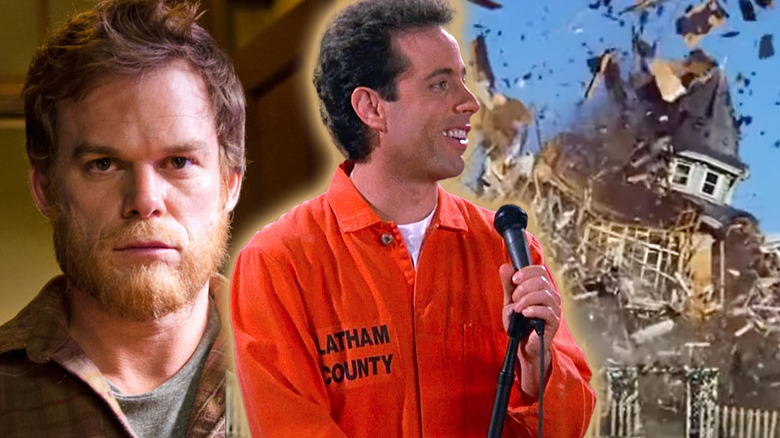
Sometimes even the most beloved television series completely botch the landing, derailing their respective legacies. Whether its a payoff that left audiences desperately wanting more or with creative directions that baffled fans, some destinations don't live up to the journey to get there. The burden of expectation runs higher the more popular a show is, but that doesn't excuse a decidedly bad series finale. A lackluster ending runs the risk of tainting a celebrated show's story, crumbling under the pressure of giving viewers a rewarding coda.
We're highlighting the shows that ended their runs on notoriously mediocre notes, unable to provide audiences with a satisfying conclusion. This list focuses on relatively popular shows with terrible endings. If a show was never that well-received to begin with, no one expects its finale to be any different. Some of these finales do have their own vocal defenders, but looking back at them, these episodes marked a huge swing and a miss creatively.
Ending each of these series on an embarrassing or head-scratching last note, these are the worst TV show finales of all time, ranked.
10. Little House on the Prairie
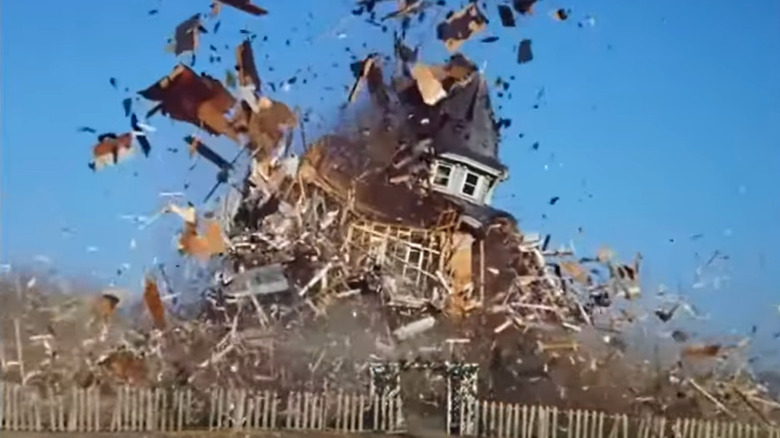
For nine seasons, "Little House on the Prairie" provided audiences with wholesome period piece Wild West drama centered on the Ingalls family as they relocated to 19th century Minnesota. The Ingalls' rural homestead was near the frontier town of Walnut Grove, with the community steadily developing over the course of the series. In the series finale "Hello and Goodbye," written by series star and executive producer Michael Landon, the town was seized by land baron Nathan Lassiter (James Karen). With the courts ruling in Lassiter's favor and the military poised to enforce the land grab, the community decides to dynamite their sleepy little town and go their separate ways.
The last scenes of "Little House on the Prairie" could retitle the series "Smoldering Husk of a Fan-Favorite Community on the Prairie," and it'd fit. Landon was reportedly furious at the decision to cancel the series, and rather than let the sets be used by other productions, destroyed them at the show's major filming locations. While this reflects the defiant decision made by the show's characters, it makes for a thoroughly pyrrhic finale, especially given how much audiences got invested in Walnut Grove. The story continued on in a line of television movies, but the main series' ending leaves a bad taste in wrapping a show about a community coming together.
9. Battlestar Galactica (2003)
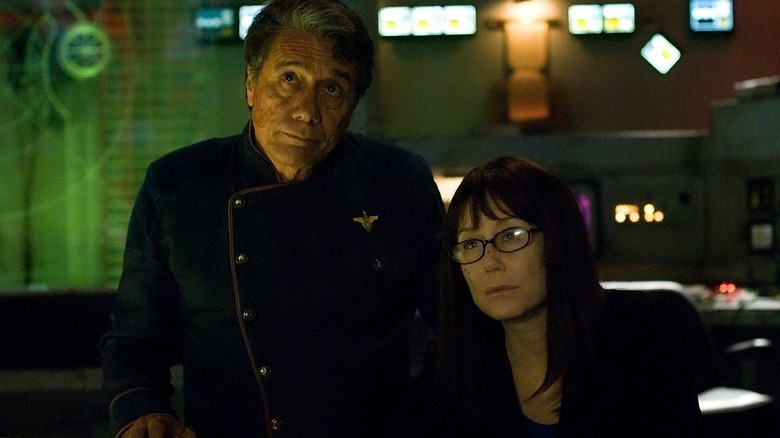
To be clear, the 2003 reimagining of "Battlestar Galactica" is one of the best sci-fi shows of all time, but even greatness can fall short of a solid ending. The show had always telegraphed that its human characters were in search of the fabled planet Earth after their home was destroyed by the villainous Cylons. This journey finally comes to an end in the three-part finale "Daybreak," with the traveling ensemble finding Earth's human population in its primitive prehistoric era. The refugees decide to blend in with the indigenous humans, eventually leading to the development of modern civilization, while Starbuck (Katee Sackhoff), having lived out her divine purpose, vanishes.
There's a lot going on in "Daybreak" that makes less and less sense, even in revisiting the finale nearly 20 years after its initial airing. The idea of the Cylons giving up their hunt of humanity and humanity's decision to blend in with local society are well-intentioned but feel largely forced in their execution. Similarly, the idea that the advanced civilization from Caprica would lead to the creation of modern Earth society raises a lot of confusing questions in light of the clear anachronisms. Just an all-around unsatisfying wrap-up to one of the most acclaimed sci-fi shows ever, "Battlestar Galactica" proves the journey was much better than the destination.
8. Seinfeld
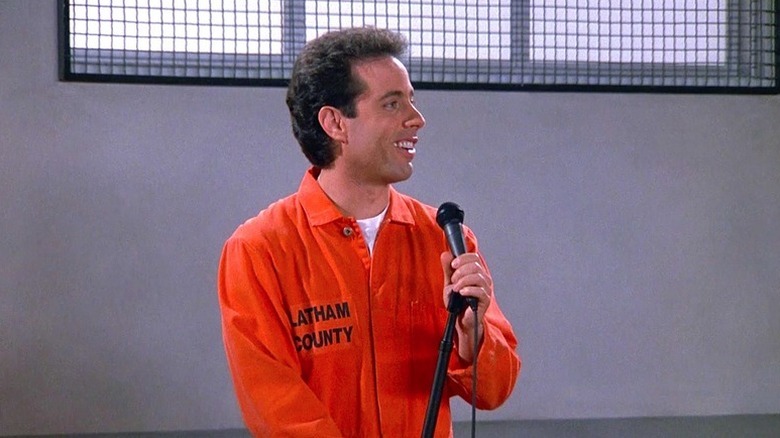
"Seinfeld" is one of the definitive sitcoms in the history of the genre, much more than a show about nothing as it was widely reputed to be. The series' double-sized ending, appropriately titled "The Finale," took its main ensemble, and plenty of guest stars, outside of the show's usual Manhattan setting. On a stopover in a small Massachusetts town, the group not only taunts a man being mugged but film the incident from a camcorder. Arrested for violating the town's Good Samaritan law, all of the figures wronged by Jerry Seinfeld and his friends participate in the resulting trial.
"The Finale" proved to be divisive upon its premiere in 1998, feeling like an extended clip show punctuated by a parade of returning guest stars. This distinction is reinforced by the fact that the preceding double-length episode, "The Chronicle," was also a clip show, albeit a much more explicitly presented one. Even Jerry Seinfeld has regrets about the "Seinfeld" finale, particularly the decision to end the series with its main quartet behind bars. For a show about self-centered malcontents exacerbating daily mishaps, "The Finale" might've been a bit too on-brand, swapping out a full story for a nostalgia-driven supersized ending.
7. Game of Thrones
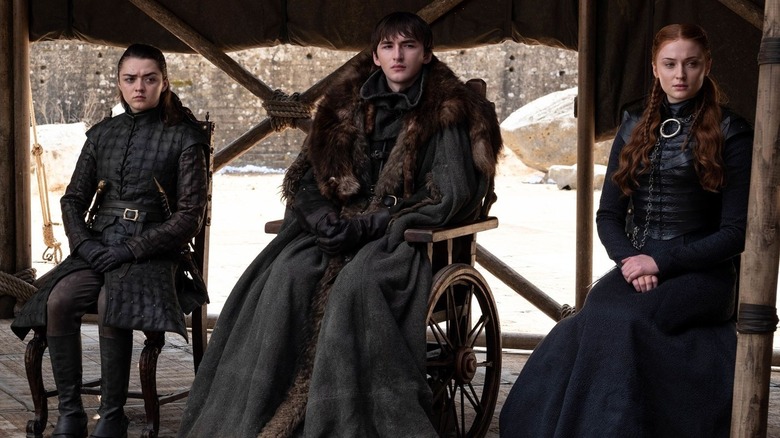
"Game of Thrones" has become a full-on fantasy franchise, with multiple television shows and merchandising making a household name out of author George R.R. Martin. The main series' eighth season saw its longstanding plot threads come to a head, culminating in Daenerys Targaryen (Emilia Clarke) devastating the city of King's Landing with her dragon. In response to the wanton death, Jon Snow (Kit Harington) murders a remorseless Daenerys before she can launch her planned merciless rule. Representatives from the different kingdoms plan the rebuilding of King's Landing, with Bran Stark (Isaac Hempstead Wright) named as the new regent.
So much of the final season "Game of Thrones" felt rushed and contrived as the show moved beyond Martin's published material. This made things like Daenerys' fiery heel turn feel overly abrupt and forced, rather than giving it the time it needed to develop. The finale doesn't ameliorate this feeling, hurrying to position its main characters in their next steps without properly articulating why and how. Only one "Game of Thrones" cast member was happy with their character's ending, and audiences were understandably even less impressed than the actors.
6. Quantum Leap (1989)
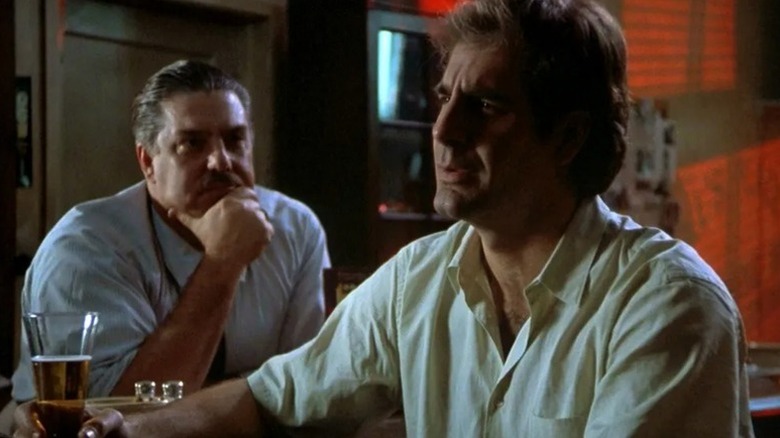
One sci-fi show marking the transition from the '80s to the '90s was "Quantum Leap," starring Scott Bakula as scientist Sam Beckett. Each episode had Beckett leap into the body of a different person throughout history, using his limited time in control to rectify some grave incident in their lives. In the finale, Beckett arrives in a strange town full of seemingly familiar faces from past leaps, presided over by Al (Bruce McGill), a bartender who may be God. Though Beckett is able to give his best friend and companion Al Calavicci (Dean Stockwell) a happy ending, a closing title card reveals that Sam Beckett never returns home himself.
That somber and plain concluding title card proclaiming Beckett's fate is the ultimate downer for anyone who got invested in the character across five seasons of "Quantum Leap." The implication from the finale, titled "Mirror Image," is that Beckett uses this time and his unique ability on a never-ending quest to right wrongs through his leaps. This noble silver lining does little to take away from the abruptness or ominous tone conveyed by the show's last shot before the end credits. With Scott Bakula not appearing in the 2022 "Quantum Leap" revival, any update on Beckett's fate remains an unsatisfyingly open question.
5. Dallas (1978)
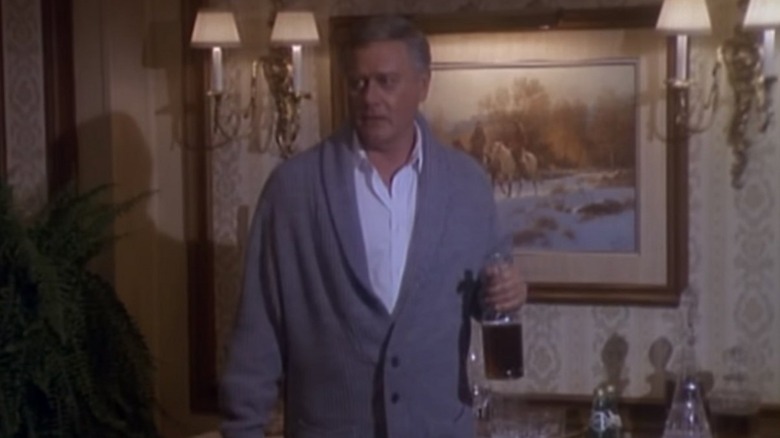
As far as primetime soap operas go, "Dallas" maintained a popular presence on the air for 14 seasons from 1978 to 1991. The series ended with the finale "Conundrum," written and directed by longtime series showrunner and producer Leonard Katzman. The episode centers on the show's iconic antihero J.R. Ewing (Larry Hagman), whose fortunes have swiftly crumbled as his numerous sins have finally caught up to him. While contemplating taking his own life, J.R. witnesses what the world would be like if he hadn't been around, with his final fate left seemingly unknown after a single gunshot is heard.
From its oddly whimsical second half to its frustrating ambiguous conclusion of J.R.'s arc, "Conundrum" was a lackluster way to end "Dallas." The abrupt cliffhanger with J.R.'s brother Bobby Ewing (Patrick Duffy) reacting in shock to his sibling's off-screen fate was eventually resolved as a fake-out in a 1996 continuation television movie. This helped explain away the puzzling way to wrap the main series, but nobody had asked for a "It's a Wonderful Life" riff to a salacious soap opera. "Dallas" had loads of ludicrous moments that frequently strained believability, but "Conundrum" deprived fans of a meaningful ending for both J.R. and the overarching story.
4. Roseanne
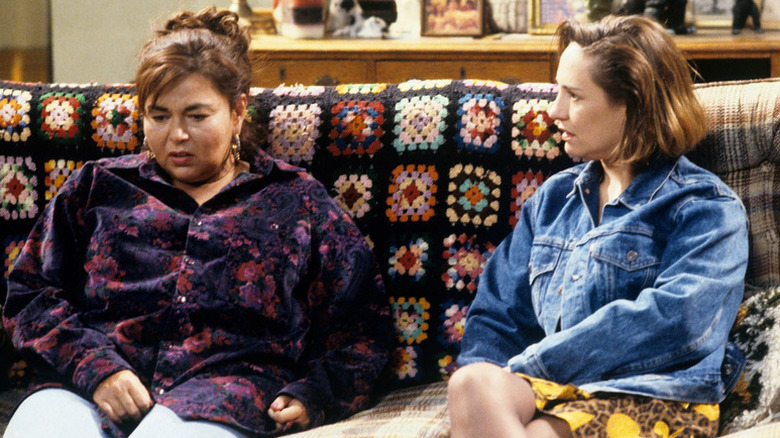
The 1988 series "Roseanne" led the charge of American network sitcoms being so clean-cut with its main characters. Instead, the show centered on the dysfunctional Conner family, a blue-collar ensemble struggling to make ends meet while living in suburban Illinois. The start of the show's ninth season saw Roseanne Conner (Roseanne Barr) and her husband Dan (John Goodman) seemingly win the lottery, suddenly catapulting them into a life of luxury. The finale "Into That Good Night" unveiled the shocking twist that the season was largely a fantasy concocted by Roseanne to cope with Dan dying from a heart attack.
Not only did the "Roseanne" series finale pull a "Dallas" and nullify an entire season through a contrived it-was-all-a-dream setup, but it ended on a huge downer. Just when the Conners finally seemed poised to reach their happy ending, the rug was completely pulled out from under them in a fugue state fantasy. The 2018 "Roseanne" revival brought John Goodman back from the dead by revealing Dan's demise was a fiction conceived by Roseanne for her novel. While this effectively makes the original show's final season a dream-within-a-dream, we'll take it over the untimely fate for Dan Conner.
3. Star Trek: Enterprise
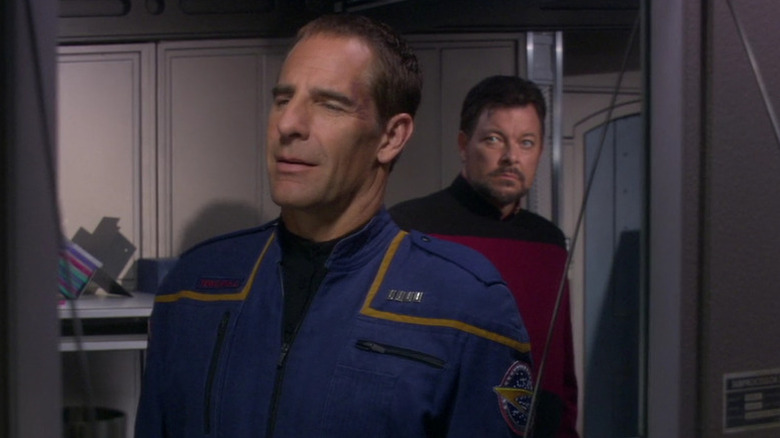
The first "Star Trek" prequel show was 2001's "Star Trek: Enterprise," set roughly a century before the events of "The Original Series." Captain Jonathan Archer (Scott Bakula) and his Enterprise crew become pivotal figures in humanity's growing role in the galaxy, forming the precursor to the United Federation of Planets. The show's finale, "These Are the Voyages..." has William Riker (Jonathan Frakes) create a Holodeck simulation of Archer's final adventure captaining the Enterprise to address his own crisis of leadership. Riker's simulation includes a mission resulting in the death of Archer's close friend and chief engineer Trip Tucker (Connor Trinneer).
With respect to Scott Bakula, because it's not his fault, and he wasn't thrilled by it either, but he's starred in some of the worst sci-fi finales ever. Though "Enterprise" co-creator Brannon Braga still enjoys the controversial finale, "These Are the Voyages..." makes the show's main cast feel like supporting characters in their own series. This separation makes Trip's death feel all the more hollow and emotionally cloying while Riker's return to the franchise feels shoehorned in. A divisive end that began a lengthy hiatus for "Star Trek" for television for over a decade, "These Are the Voyages..." shortchanges "Enterprise" in bidding its own farewell.
2. How I Met Your Mother
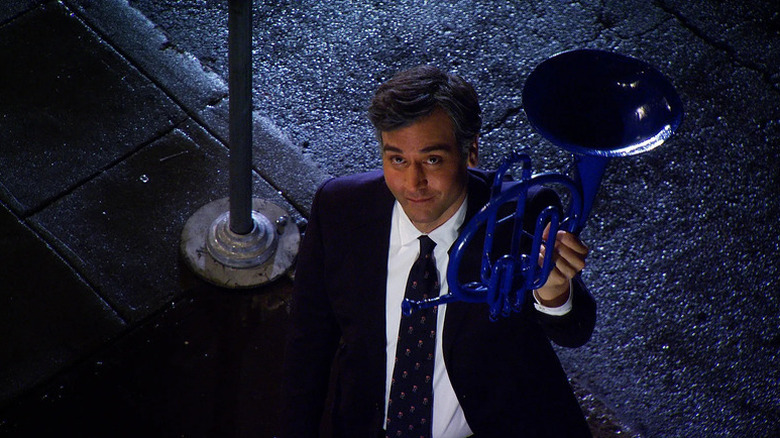
For eight seasons, "How I Met Your Mother" kept sitcom audiences on the hook to finally learn the identity of protagonist Ted Mosby's (Josh Radnor) eventual wife. When the long-anticipated mother, Tracy McConnell (Cristin Milioti), was finally unveiled, fans had to wait for all of the final season until she and Ted met at last. This meeting, in the double-sized finale "Last Forever," quickly gives way to heartbreaking developments spinning out of the wedding of Barney Stinson (Neil Patrick Harris) and Robin Scherbatsky (Cobie Smulders). Flash-forwards reveal that Barney and Robin get divorced in three years, while Tracy eventually passes away from an illness, with Ted rekindling his romance with Robin years later.
While some viewers may feel that the "How I Met Your Mother" finale was judged too harshly, "Last Forever" is an anticlimactic ending. The Barney and Robin relationship that the show had audiences invest in for years abruptly ruptures, and though Tracy's death was telegraphed, it still feels like a morbid turn. After the widespread negative response, "How I Met Your Mother" included an alternate ending for its home video release, providing Ted and Tracy with a much more pleasant conclusion. Not every sitcom needs a picture-perfect happy ending, but "Last Forever" did feel excessive in how it tried to subvert expectations on multiple fronts.
1. Dexter
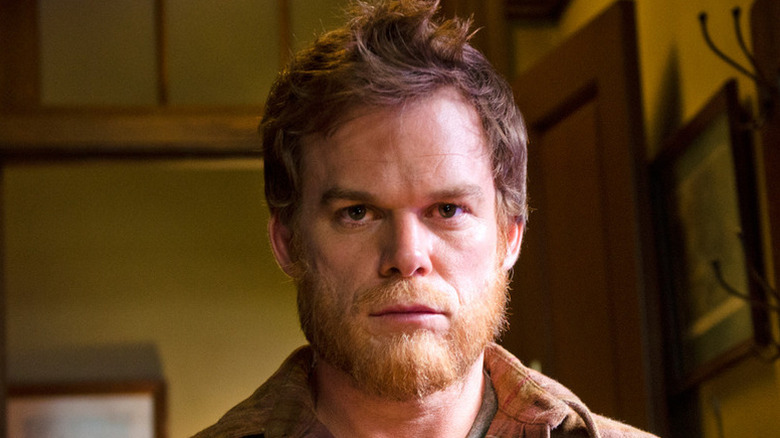
Running for eight seasons from 2006 to 2016, the crime thriller "Dexter" is one of the best TV shows on Showtime. The show followed the exploits of Miami forensic specialist Dexter Morgan (Michael C. Hall) who secretly murdered nefarious figures that evaded the law. In the series finale, "Remember the Monsters?," Dexter contends with serial killer Oliver Saxon (Darri Ingólfsson) while shaken by the loss of his adoptive sister Debra (Jennifer Carpenter). Accepting that he destroys everyone close to him, Dexter seemingly drives a boat headlong into a hurricane, only to resurface months later under an alias as a lumberjack in Oregon.
In fairness, the last three seasons of "Dexter" had increasingly become a law of diminishing returns as it tried to keep its story going in uninteresting and ludicrous ways. This all comes to a head in the series finale, with the pacing all over the place, a relatively boring final antagonist, and head-scratching decisions by Dexter himself. Backlash to the ending was so bad that Showtime eventually developed the revival "Dexter: New Blood" to give the story a proper finale. The original "Dexter" series ends with its titular murderer contemplating his bizarre life choices, and we're inclined to agree with that confusion, wondering just where everything went wrong.