

Every Captain Of The Enterprise In Star Trek, Ranked
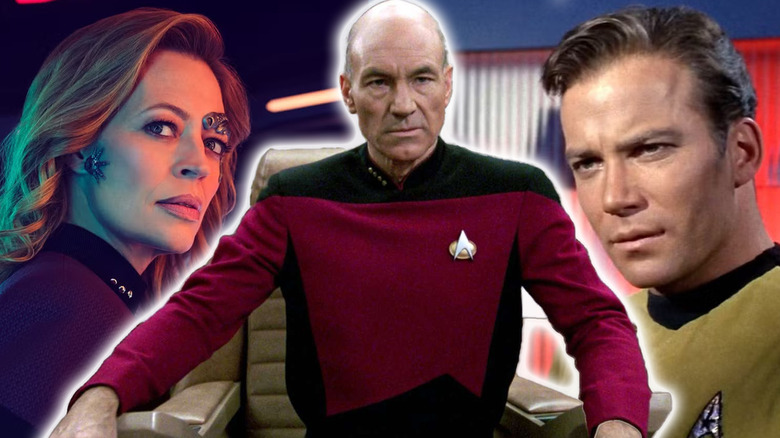
While the "Star Trek" franchise has long since expanded its scope to feature other starships, the Enterprise still looms the largest. There are a number of versions of the starship Enterprise in "Star Trek," evolving with Starfleet's place in the galaxy. Every Enterprise, of course, has its own captain, commanding their crew to explore the cosmos and defend the United Federation of Planets. But as all "Star Trek" ships are not designed equally, not all captains are as effective leaders as others.
To clarify, we're only focusing on captains that we've seen officially hold the role of Enterprise captain. Acting captains are not included in this list, though multiple characters here have served as acting captains before. Even with that distinction in mind, some of these characters have only been seen briefly in the franchise, though they still certainly qualify to be included.
Here is every captain of the Enterprise in "Star Trek," ranked from worst to best.
12. John Harriman
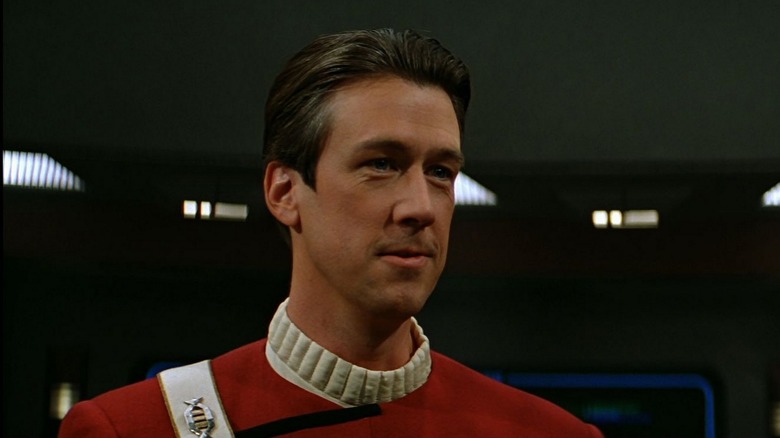
The 1994 movie "Star Trek Generations" opened with the maiden voyage of the USS Enterprise-B in 2293. On board as distinguished guests are retired Starfleet officers James T. Kirk (William Shatner), Montgomery Scott (James Doohan), and Pavel Chekov (Walter Koenig). Though more of a commemorative occasion, the starship receives a distress signal from a vessel endangered by a spatial anomaly known as the Nexus. With the Enterprise-B's Captain John Harriman (Alan Ruck) visibly unsure of himself and how to handle a crisis, Kirk steps up to take control of the situation.
Harriman is a character that exists to give Kirk the excuse to seize command of the Enterprise one last time. The character's low ranking is certainly not an indictment of Ruck's performance for someone who was always depicted as a weaker captain. Harriman is visibly out of his element in the captain's chair, even for something as seemingly routine as a ship-to-ship rescue mission. A portrait of command indecisiveness, Harriman barely makes a footnote in the history of the Enterprise.
11. William Decker
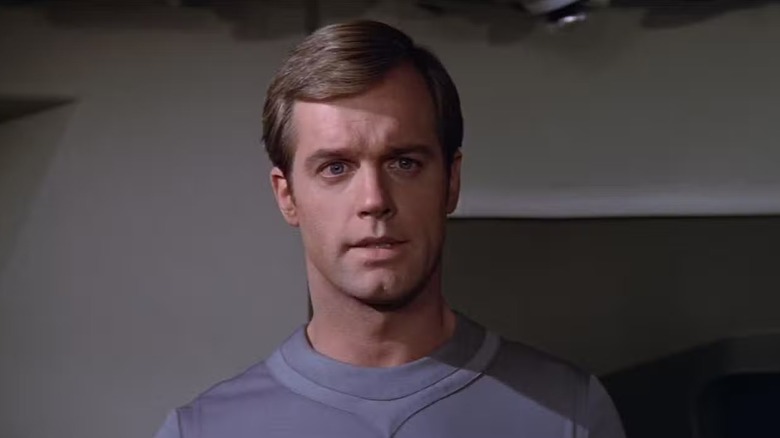
At the start of 1979's "Star Trek: The Motion Picture," the Enterprise is commanded by Captain William Decker (Stephen Collins). Will is the son of Commodore Matt Decker (William Windom), who met his tragic end in the "Star Trek: The Original Series" episode "The Doomsday Machine." When Admiral James T. Kirk relieves him of his command, Decker is understandably frustrated but helps on the bridge, even saving the ship from an incident with a wormhole. In the ending to "The Motion Picture," Decker volunteers to merge with the sentient machine V'Ger, effectively creating a new lifeform that vanishes into the unknown.
Decker is another character who exists to be replaced from their command position on the Enterprise by Kirk, but Decker at least brings more to the table than Harriman. It's Decker's quick-thinking on the bridge that saves the ship and his sacrifice that stops V'Ger's approach to Earth. Even with that in mind, the character has a noticeable chip on his shoulder and clashes with Kirk once the superior officer takes charge. Yet another one-and-done captain, William Decker is quietly forgotten by the time the crew reconvenes for the subsequent sequel like nothing happened at all.
10. Rachel Garrett
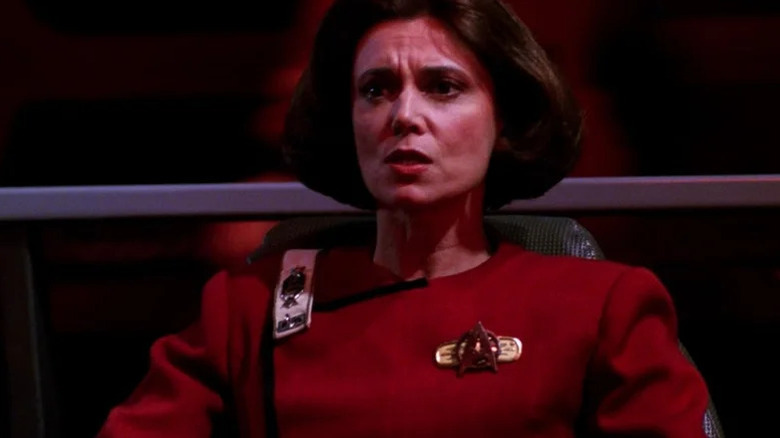
Another often overlooked Enterprise captain is Rachel Garrett (Tricia O'Neil), captain of the little-seen Enterprise-C, which disappeared approximately 20 years before the start of "Star Trek: The Next Generation." In the "TNG" season 3 episode "Yesterday's Enterprise," the Enterprise-D encounters a rift in spacetime from which the Enterprise-C emerges. This time-displacement causes significant alterations to history which immediately become evident on the Enterprise-D, as the Enterprise-C is destined to be destroyed in the past. The Enterprise-C proceeds with its fateful sacrifice to restore the timeline, though Garrett is killed before the mission is completed and replaced by Richard Castillo (Christopher McDonald) as acting captain.
Rachel Garrett is the first female Enterprise captain in history, though this auspicious distinction is undercut severely by the nature of her story. That Garrett agrees to return to her own time, even aware of her grim destiny, is a noteworthy moment, but she doesn't even get to see that mission through. Ultimately, the Enterprise-C is successful, but it's Castillo and Tasha Yar (Denise Crosby) who are responsible for the accomplishment. Rachel Garrett was always dealt a poor hand to play, though she at least handled it with solemn dignity and acceptance.
9. Robert April
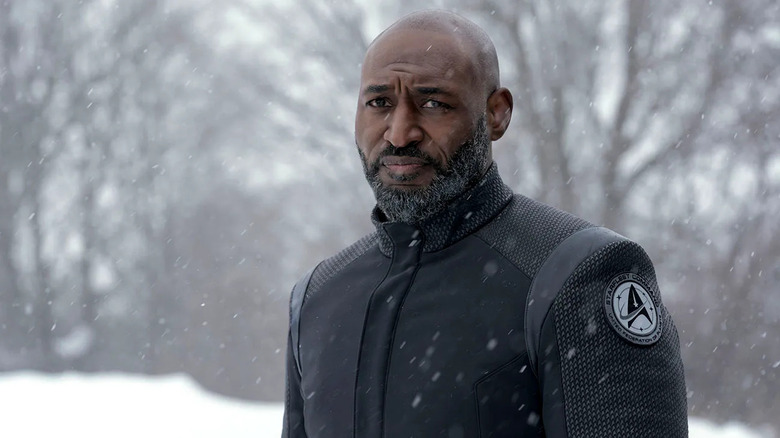
Admiral Robert April has been cited in various "Star Trek" ancillary material, both canonical and apocryphal, as being Christopher Pike's direct predecessor as the Enterprise's captain. The character's on-screen debut was in a "Star Trek" episode many likely never saw, the series finale to "Star Trek: The Animated Series." Voiced by James Doohan in his animated appearance, April is a decorated admiral who temporarily reclaims command when Kirk and his crew are de-aged after entering an alternate universe. The character is introduced in live-action in "Star Trek: Strange New Worlds," played by Adrian Holmes, retaining his history largely intact, though it's never seen.
April holds a slightly higher position on this list because he has an esteemed reputation, even though his captaincy has yet to be depicted on-screen. Holmes brings an effective gravitas to his performance as the character while maintaining a solid rapport with his successor, Chris Pike (Anson Mount) in his capacity as his superior officer. The "Star Trek: Discovery" episode "Choose Your Pain" lists April among the most decorated Starfleet officers in the organization's history. That suggests he played a pivotal role in the Federation's growing presence in the galaxy, though the exact nature of his service is still unknown.
8. Spock
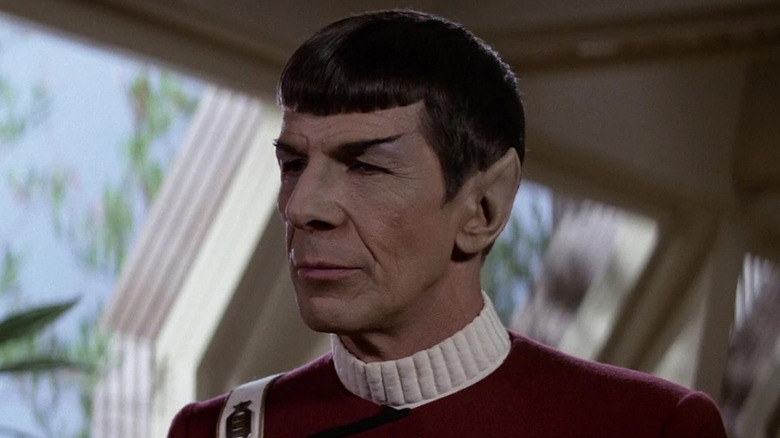
One of the unseen developments between "Star Trek: The Motion Picture" and "Star Trek II: The Wrath of Khan" is Spock (Leonard Nimoy) being promoted to captain of the Enterprise. At the beginning of the 1982 film, Spock is seen leading a cohort of Starfleet Academy cadets on a shakedown cruise. This is waylaid when the Enterprise receives a distress signal from space station Regula I where the top-secret Genesis Device is being developed. Recognizing his best friend's need to take charge again, Spock voluntarily relinquishes command of the Enterprise to Kirk.
To be clear, if this was a list based on the strength of the character alone, Spock would rank much higher. But in his official capacity as captain, the character is barely seen in his leadership position in "The Wrath of Khan." Kirk is back in the captain's chair for the majority of the film, with Spock famously dying in "The Wrath of Khan's" ending. Following his resurrection, Spock resumes his role as Kirk's first officer until eventually retiring from Starfleet to shift to diplomacy, making his captaincy a brief highlight in his long career.
7. Christopher Pike (Kelvin Timeline)
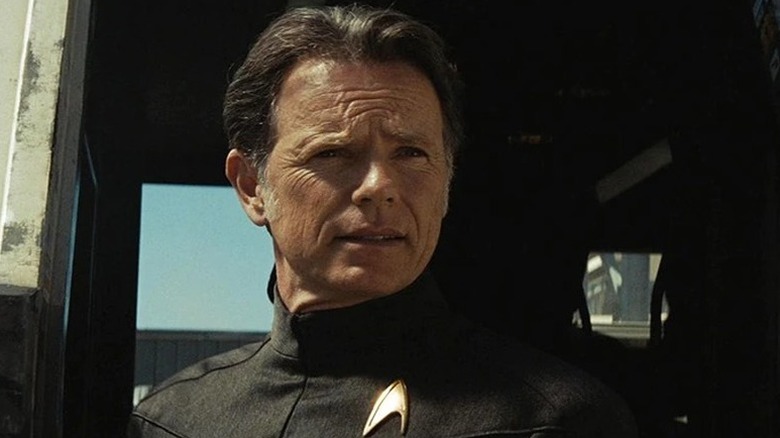
The Kelvin Timeline in "Star Trek" is one of the more divisive periods in the franchise's extensive history, with the divergent timeline launching with the 2009 soft reboot "Star Trek." Formed because of significant alterations to history caused by the villainous Nero (Eric Bana), this alternate reality featured noticeably different iterations of the familiar characters from "The Original Series." Among these was Christopher Pike (Bruce Greenwood), the captain of the Enterprise who personally recruits James T. Kirk (Chris Pine) to enroll in Starfleet Academy. Pike names Kirk as acting captain before being kidnapped by Nero and, shortly after retaking his command in "Star Trek Into Darkness," is murdered by Khan Noonien Singh (Benedict Cumberbatch).
The Kelvin Timeline Pike exists as a figure to get the plot moving in the first two installments of the rebooted film trilogy. In the 2009 movie, Pike not only recruits Kirk but names him as his direct successor, while its sequel has his death galvanize Kirk and his crew into pursuing Khan. Greenwood does a reliably good job with the role, but the character really stands as a mentor figure destined to step aside for a new generation to lead. Pike helps his young crew realize their full potential, but it would've been nice to have seen more of him directly in action.
6. Seven of Nine
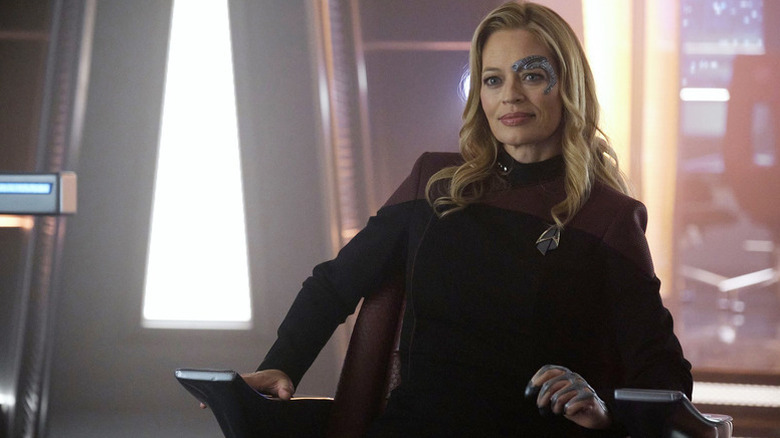
At the start of the third and final season of "Star Trek: Picard," Seven of Nine (Jeri Ryan) is on the USS Titan-A, serving under Captain Liam Shaw (Todd Stashwick). As Admiral Jean-Luc Picard (Patrick Stewart) uncovers an insidious alliance between the Borg Collective and the Changelings, the Titan plays a pivotal role in the final battle. In the series finale, Shaw dies heroically battling the Borg, with Seven replacing him as captain, while the starship is rechristened the USS Enterprise-G. With a new crew, including her love Raffi Musiker (Michelle Hurd) as her first officer, Seven takes her starship into the cosmos ready for her next adventure.
Like many of the preceding characters on this list, we don't get to see a lot of Seven as the Enterprise's captain. But in a way, "Picard" was always leading up to her taking the captain's chair, having quit Starfleet at the start of the series before becoming reinstated at Picard's recommendation. Seven and her adventures as the Enterprise's latest captain were intended to be explored in the proposed "Star Trek: Legacy" continuation series, though no discernible development on it has occurred. While we hold out hope for "Legacy" to one day move forward, the Enterprise and Seven's adventures are continued in a comic book.
5. James T. Kirk (Kelvin Timeline)
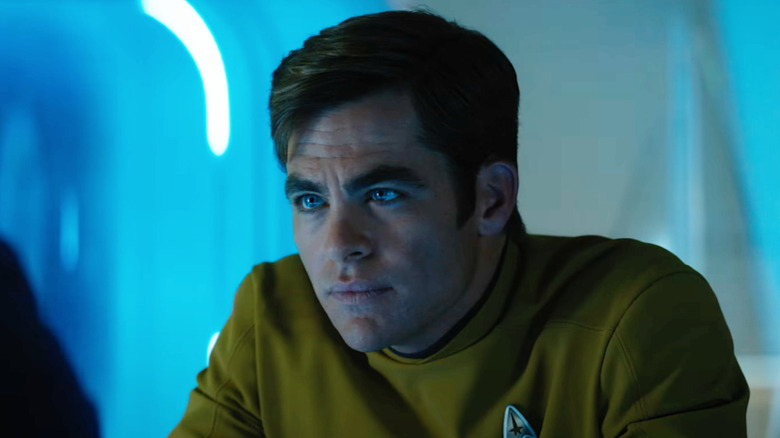
Just like Pike, we're counting the Kelvin Timeline's Kirk as a separate character, given the visible alterations to his history and personality. This Kirk is a brash rule-breaker who gets the job done even if it flagrantly violates the ultimate order, or the Prime Directive. This tenacity and, frankly, recklessness gives Kirk an edge over most of his opponents, including Nero and Khan. This defiant streak also temporarily costs Kirk command of the Enterprise at the start of "Star Trek Into Darkness," though he is quickly reinstated in the wake of Pike's death.
The Kelvin Timeline Kirk dials up the cockiness and impulsive behavior in comparison to his prime timeline counterpart. This distinction makes him feel noticeably more immature, with a clear chip on his shoulder that drives a lot of his decision-making. In that sense, this Kirk feels more cut from the Han Solo cloth than that of the iconic starship captain that he's based on, though not without his own merits. If the Kelvin Timeline wasn't truly and officially dead, maybe we'd see a much more mature Kirk, but the prime timeline will have to suffice on that score.
4. Jonathan Archer
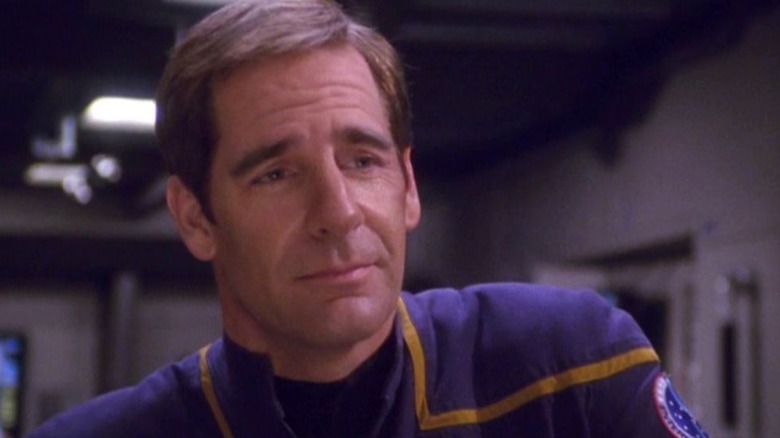
Jonathan Archer captained the Enterprise NX-01, the first Starfleet vessel to bear the name Enterprise, inspiring the more iconic Enterprise NCC-1701. Initially only capable of a maximum speed of warp five and manned by a crew of 84, Archer's captaincy of the Enterprise comes at a pivotal point in human history. Within a few short years, the Enterprise begins using its experimental transporter to teleport personnel, and is equipped with phase cannons and photonic torpedoes. Archer himself made first contact with dozens of alien species, became an instrumental figure in the Xindi War, and helped bring together the founding of the United Federation of Planets.
If we were scoring on just historic achievement alone, Archer would be at the top of the list. But Archer is more of a foundational starship captain for what Starfleet looked for in its leadership, not quite as well-rounded as several of his successors. All at once, Archer is an explorer and a wartime commander, but he is a more visibly flawed captain than many in the franchise. If Scott Bakula's rumored "Star Trek" return does indeed come to pass, perhaps we'll see a side to the 22nd century captain that we never saw before.
3. Christopher Pike (Prime Timeline)
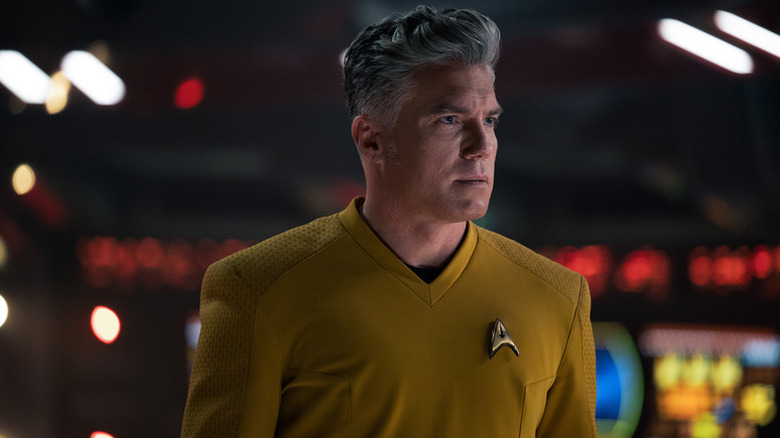
In "The Original Series," Christopher Pike is only seen in the original pilot for "Star Trek," after a horrific accident left him muted and confined to a wheelchair. "Star Trek: Discovery" season 2 reintroduced Pike (Anson Mount) while he was still very much captain of the Enterprise, though aware of his tragic destiny. Pike leads his crew as they explore the galaxy while defending the Federation from hostile forces like the Gorn. At the same time, Pike is finely attuned to his crew's needs, providing an empathic touch to his leadership style.
Mount does a terrific job in bringing Christopher Pike to life, playing him as a man who tries to do as much as he can with the time that he has left. That said, there are implications that Pike isn't always the best captain suited for the job, at least not in the Enterprise's future. The season 1 finale of "Star Trek: Strange New Worlds" reveals that the more assertive Kirk was needed to captain the Enterprise and avoid war with the Romulans. This highlights the main difference between Pike and Kirk, hinting that as good a leader as Pike is, there are better captains out there.
2. James T. Kirk (Prime Timeline)
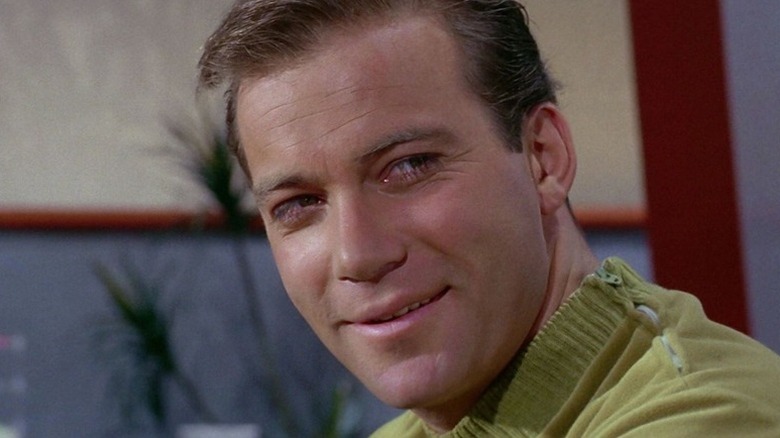
Speaking of Kirk, the very first Enterprise captain that audiences ever saw remains one of the best in the entire franchise. First played by William Shatner in "The Original Series," Kirk leads the Enterprise on a five-year mission to explore the galaxy on behalf of Starfleet. In this capacity, Kirk and his crew save the Federation from numerous extinction-level threats, from energy consuming giant amoeba to rogue artificial intelligence programs. After saving the Earth in "Star Trek IV: The Voyage Home," Kirk is temporarily demoted to captain to allow him to captain the USS Enterprise-A, a posting he happily accepts.
The best James T. Kirk episodes showcase a captain who is more than ready to leap into action himself, both physically and with his quick-thinking. Like Archer before him, Kirk definitely has his character flaws, from obsessively pursuing a vampiric cloud that terrorized him as a young officer to his prejudice against Klingons. But even when his judgement is compromised, Kirk always snaps back into focus to save the day as best he can. Just as likely to lead with his fists as his keen puzzle-solving strategy, Kirk is one of the best officers Starfleet ever saw.
1. Jean-Luc Picard
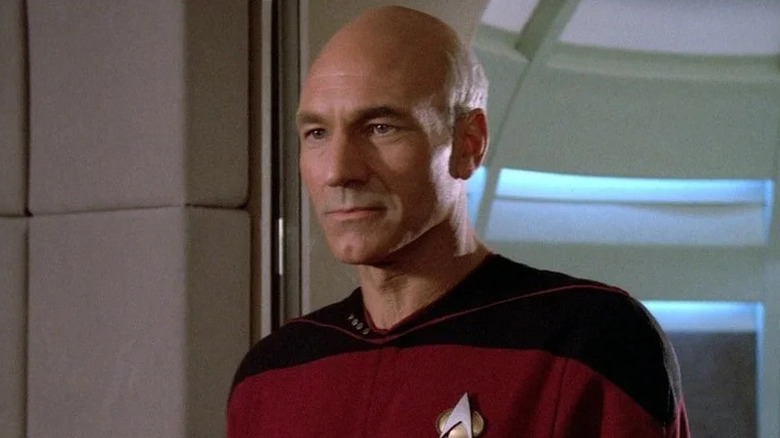
When it comes to a character that brings even-keeled judgement and a paradigm in upholding the principles that Starfleet is built upon, nobody does it better than Jean-Luc Picard. Captaining the Enterprise throughout "Star Trek: The Next Generation" and its four subsequent films, Picard is the full package when it comes to being a Starfleet officer. The best Jean-Luc Picard episodes highlight his skills as a diplomat, a tactician, a quick-thinker, an explorer, and a stoic intellectual. This firm stance has led Picard to confront rogue officials within Starfleet on more than one occasion, reminding them of the ideals that the Federation celebrates and espouses.
This all isn't to say that Picard is the perfect Starfleet officer — there is no character who embodies that — but he does set the standard for the fleet. Compared to the devil-may-care Kirk from either timeline or the more cautious Pike, Picard is a man of principles and a well-balanced approach to his command. This isn't to say that Picard isn't a man of action, as his role in "Star Trek: First Contact" more than confirms he's physically capable and assertive. Starfleet values personified, even if it puts him at odds with his superiors, Jean-Luc Picard is the best captain of the Enterprise.