

10 Best Westerns That Flopped At The Box Office
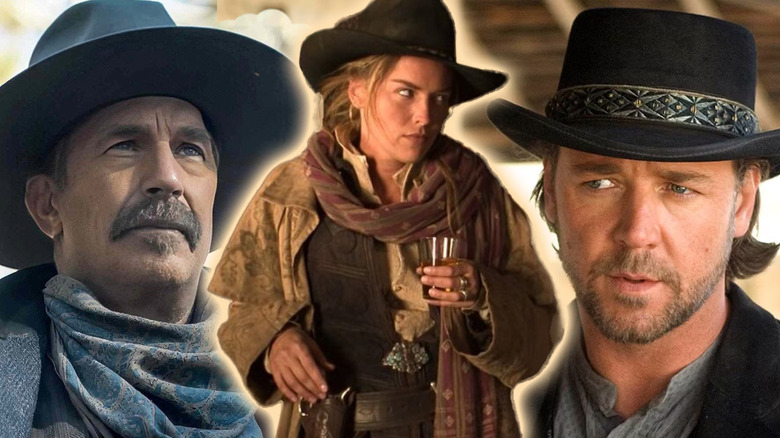
Westerns are nearly as old as the cinematic medium itself, with the common tropes and archetypes from the genre continuing to live on in movies today. Like any genre, sometimes even the best Westerns, unfortunately, don't get the audience attention that they deserve during their theatrical release. Quality is never a guarantee for strong box office performance, and some of the most acclaimed and subsequent enduring movies in the genre struggled to turn a commercial profit. Given how Westerns have lost the cultural ubiquity that they held for decades in film and television, that disinterest in the genre has affected particularly strong movies.
Sometimes it's postmodern Westerns that go too far against type, alienating the genre's usual fans, which kills a movie's theatrical momentum. Sometimes a movie has bloated production budgets that would've been hard-pressed to become profitable even in the best of circumstances. Whatever the case, there are plenty of Westerns that just couldn't connect with audiences when they were first released, making them veritable box office bombs. Here are the 10 best Westerns that flopped at the box office during their initial theatrical run and definitely deserve a watch.
The Great Silence (1968)

Several of the best Western movies of all time are Spaghetti Westerns, the common term for genre movies produced in Europe with largely Italian film crews. One of the more criminally overlooked European Westerns from the '60s is 1968's "The Great Silence," directed and co-written by Sergio Corbucci. The movie follows a mute gunslinger, nicknamed Silence (Jean Louis Trintignant), who travels to a snow-ridden frontier town to get his revenge on the murderous Henry Pollicut (Luigi Pistilli). This is complicated by a group of merciless bounty hunters led by the unhinged Loco (Klaus Kinski) targeting the town's poor community, who resorted to theft to survive.
Corbucci was no stranger to making controversial Spaghetti Westerns, but he took things to the next level with "The Great Silence." The movie has one of the bleakest endings of any major Western, which reportedly dissuaded it from getting distributors in English-language markets, including the United States. This meant the movie never got the international profile and acclaim that contemporary Italian filmmaker Sergio Leone's films got. Corbucci's under-appreciated masterpiece, "The Great Silence," is one of the grimmest Spaghetti Westerns ever made, making it all the more haunting.
The Ballad of Cable Hogue (1970)
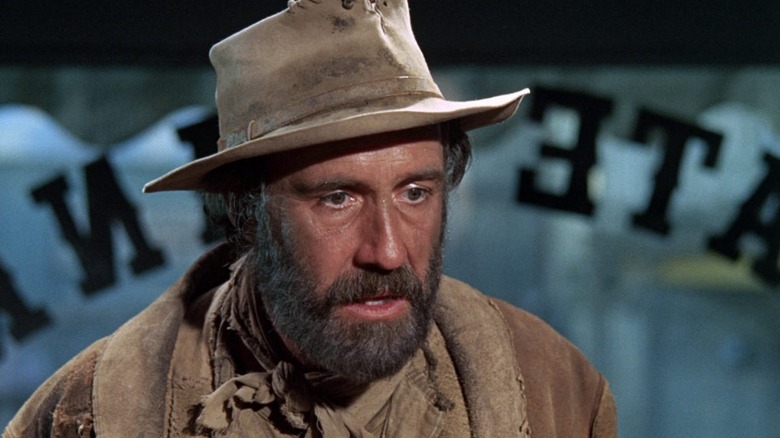
After filmmaker Sam Peckinpah shot "The Wild Bunch," his next directorial project was a very different kind of Western. 1970's "The Ballad of Cable Hogue" is set during the twilight years of the Wild West in 1905. After drifter Cable Hogue (Jason Robards) discovers a vast supply of water in a seemingly worthless piece of desert, he buys the land around it. As Cable and his associates build a thriving establishment around the resulting wellspring, he endures the end of the Wild West, along with gunslingers against whom he holds a grudge.
In contrast to the startlingly violent "Wild Bunch," Peckinpah essentially delivered a period piece screwball comedy with "The Ballad of Cable Hogue." The stark tonal shift caught audiences off-guard and only earned $5 million at the worldwide box office, barely equaling its production budget before factoring in marketing and distribution costs. The movie was well-received by critics, but this didn't appear to significantly boost the movie's commercial prospects. Unfortunately, the next time Peckinpah tried to make a gentler movie in the Western genre, he proved to be even less financially successful.
Junior Bonner (1972)
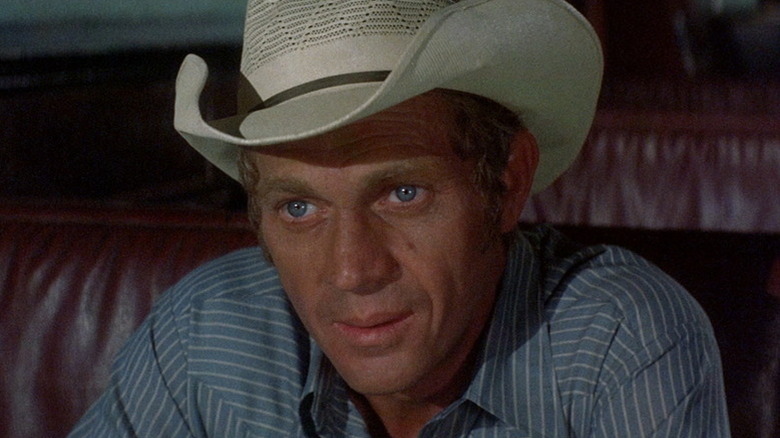
After directing the controversial Dustin Hoffman movie "Straw Dogs," Sam Peckinpah returned to the Western genre with the 1972 movie "Junior Bonner." A contemporary take on the genre, the movie stars Steve McQueen as veteran rodeo rider Junior Bonner, whose age is hindering his career prospects. Junior also contends with his estranged family, including his father Ace (Robert Preston), who dreams of relocating to Australia to become a gold miner. Amidst the family drama, Junior prepares for another shot at riding a notoriously rambunctious bull named Sunshine.
Just as Peckinpah was more known for his graphically violent films, Steve McQueen was widely recognized as being a too-cool-for-school action star. Audiences weren't anticipating the duo's first collaboration to be a gently paced slice-of-life modern Western, with the climactic sequence involving McQueen riding a bull. This failed to attract an audience, and the movie was listed as a bomb for the studio as it shared its performance and costs in May 1973. One of the best Steve McQueen movies and certainly among the more underrated, "Junior Bonner" is a beautifully unassuming and against-type collaboration for its director and star.
Heaven's Gate (1980)

After the critical and commercial success of "The Deer Hunter," filmmaker Michael Cimino wrote and directed 1980's "Heaven's Gate." The movie centers on the war between land barons and financially struggling European immigrants in Wyoming during the 1890s, loosely based on the historical Johnson County War. Joining the immigrant defenders is James Averill (Kris Kristofferson), a Harvard-educated gunfighter persuaded to help stand up to the cruel corporate figures and mercenaries they've hired. With an exorbitant production budget of $44 million, "Heaven's Gate" was critically lambasted as a bloated, overindulgent movie and earned $3.5 million as a huge commercial dud.
Though one could argue that it had been in decline for years, "Heaven's Gate" definitively killed the Western genre, at least in terms of consistent big studio projects. More visibly, the movie killed United Artists, which had been one of Hollywood's most iconic studios, with MGM buying the beleaguered studio the following year. But for as much as the movie became synonymous with big-budget bombs for years, it's actually a beautiful and visually striking portrait of the Wild West. Though United Artists and Cimino's career never fully recovered, "Heaven's Gate" is an engrossing Western epic that remains wholly under-appreciated.
Wyatt Earp (1994)
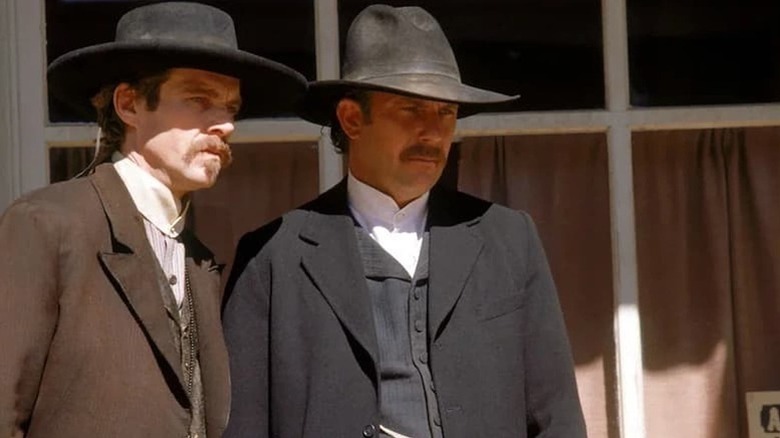
Within a six-month window, audiences were treated to not one but two different biopics centered on 19th century lawman Wyatt Earp with 1993's "Tombstone" and 1994's "Wyatt Earp." The latter was produced by and starred Kevin Costner, playing the titular gunfighter as his big return to Westerns after his multi-hyphenate success with 1990's "Dances with Wolves." Running for over three hours, the movie chronicles Wyatt's teenage years before he moves west for a fresh start with his brothers. Befriending the sickly gunslinger Doc Holliday (Dennis Quaid), Wyatt becomes a deputy marshal and confronts outlaws throughout the Wild West.
Kevin Costner had almost killed "Tombstone" in favor of his own project, though the 1993 movie proved much more successful. Comparatively, "Wyatt Earp" failed to recoup its $63 million production budget, quietly heralding the beginning of the end of Costner's box office dominance. That said, though overlong, Costner's Earp-centric biopic offers a more sweepingly dramatic look at its historical figure, albeit without the sense of fun permeating throughout "Tombstone." For his part, Kevin Costner regretted the rivalry between the Wyatt Earp movies in retrospect, with his stance likely mellowed by time and box office returns.
The Quick and the Dead (1995)
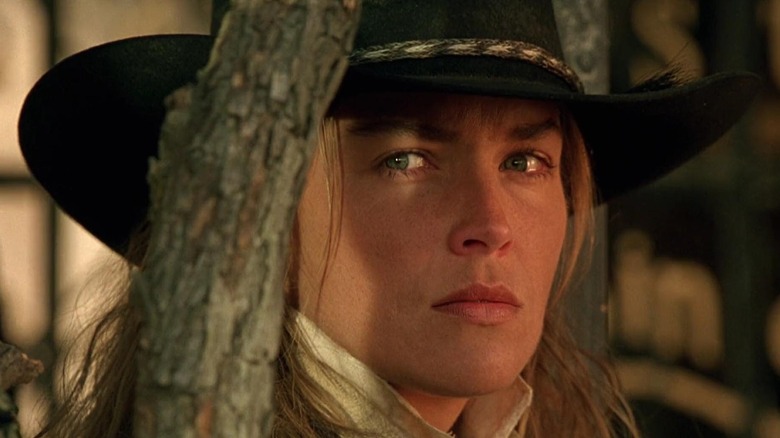
When she was putting together 1995's "The Quick and the Dead," Sharon Stone's one condition to star in the Western was hiring Sam Raimi as its director. Raimi was best known in Hollywood at the time for his horror projects, offering a unique visual style that breathed new life into the Western genre. Stone plays a gunfighter known simply as the Lady, who arrives in a remote frontier town to participate in its lethal quickdraw duel tournament. The Lady, along with many of the contestants, holds a grudge against the tournament's cruel overseer, John Herod (Gene Hackman), seeking their revenge.
Even though Russell Crowe and Leonardo DiCaprio would become absolute Hollywood powerhouses, they were relatively unknown in 1995, failing to attract more attention to "The Quick and the Dead." The movieearned $18 million at the domestic box office on its $35 million production budget, though it fared a bit better overseas. Stone's eye for talent, both in casting and choice of director, makes the film stand out considerably, even decades later. This is exemplified in the final shootout in Sam Raimi's "The Quick and the Dead," worth the price of admission alone.
3:10 to Yuma (2007)

A remake of the 1957 Western of the same name, itself an adaptation of an Elmore Leonard story, 2007's "3:10 to Yuma" retains the basic narrative premise. The movie opens with notorious outlaw Ben Wade (Russell Crowe) apprehended and set to take the 3:10 train to Yuma Territorial Prison in Arizona. Cash-strapped rancher Dan Evans (Christian Bale) volunteers to help escort Wade to the train station to help pay off his debts. Across the arduous journey, a begrudging respect forms between Wade and Evans while the group is stalked by Wade's gang of deadly gunslingers.
Despite its star-power, released in the midst of Bale's tenure as Batman, "3:10 to Yuma" only earned $71 million worldwide at the box office on a $55 million production budget. The lackluster commercial reception was somewhat ameliorated by the movie receiving widespread critical acclaim, with Roger Ebert giving the Western a rare perfect score. In addition to reliably strong performances from Crowe and Bale, the movie had a deceptively well-developed level of emotional depth and an unforgettable last run to the train station. Fortunately, the film found its audience on streaming platforms, with "3:10 to Yuma" killing it on Netflix when it arrived on the service.
The Assassination of Jesse James by the Coward Robert Ford (2007)
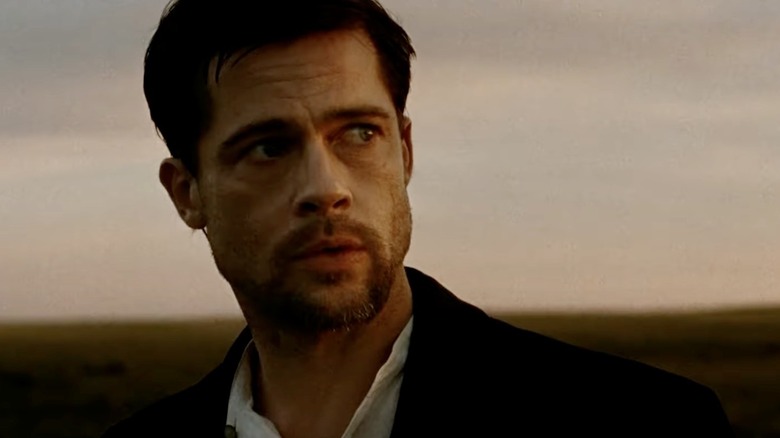
An adaptation of the 1983 historical novel by Ron Hansen, 2007's "The Assassination of Jesse James by the Coward Robert Ford" is a meditative revisionist Western. As heralded by its verbose title, the movie follows Bob Ford (Casey Affleck), who admires and follows infamous outlaw Jesse James (Brad Pitt) in the 1880s. Initially trying to join the James Gang, Bob gradually becomes more disillusioned with James and the crooks he runs with through his treatment of him and others around him. This change of heart leads Ford to work with the authorities to capture or kill James, with Ford promised a pardon and sizable bounty if successful.
When it greenlit the movie, Warner Bros. thought "The Assassination of Jesse James" was going to be a shoot-'em-up in the tradition of "Unforgiven" or "Tombstone." The movie, written and directed by Andrew Dominick, with Pitt producing, is an engrossing character study rather than an action-heavy spectacle. Audiences didn't turn out for the more dramatic piece and its nearly three-hour runtime, with the film only earning $15 million at the box office on its $30 million budget. The film's reputation has quietly improved over time, with "The Assassination of Jesse James by the Coward Robert Ford" one of the best movies of the 2000s.
Appaloosa (2008)
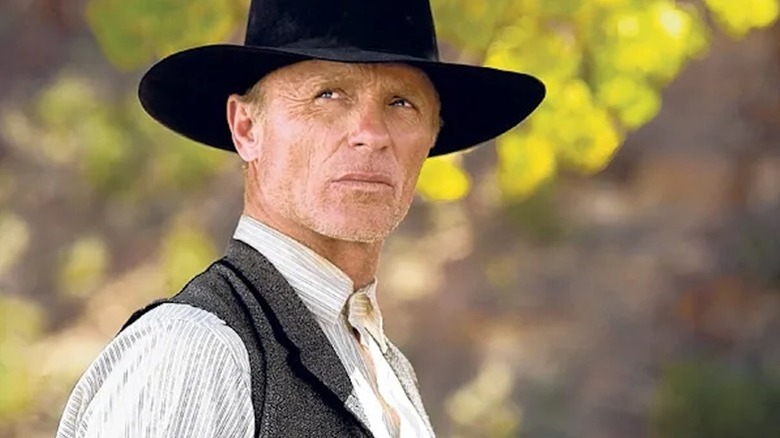
Before he starred as the sinister Man in Black in "Westworld," Ed Harris' first Western was the 2008 movie "Appaloosa," which Harris also directed, produced, and co-wrote. Harris stars as Virgil Cole, a lawman who comes to the titular New Mexico town with his deputy Everett Hitch (Viggo Mortensen) to restore order. Opposing them is powerful rancher Randall Bragg (Jeremy Irons), whose extensive connections protect him from legal repercussions, including murdering the previous town's marshal. Complicating Cole and Hitch's efforts to bring Bragg to justice is Cole's burgeoning relationship with local widow Allie French (Renée Zellweger).
In an era where revisionist takes on the genre have dominated its cinematic stories for the past several decades, "Appaloosa" is a relatively straightforward Western. What elevates the 2008 movie is its all-star cast and messy interpersonal dynamics, beyond the usual action. The rapport between Harris and Mortensen's characters is particularly well-delivered, illustrating a well-worn friendship between the two men. A criminally underrated Western directed by Ed Harris, "Appaloosa" provides a quietly back-to-basics approach to the genre.
Horizon: An American Saga - Chapter 1 (2024)
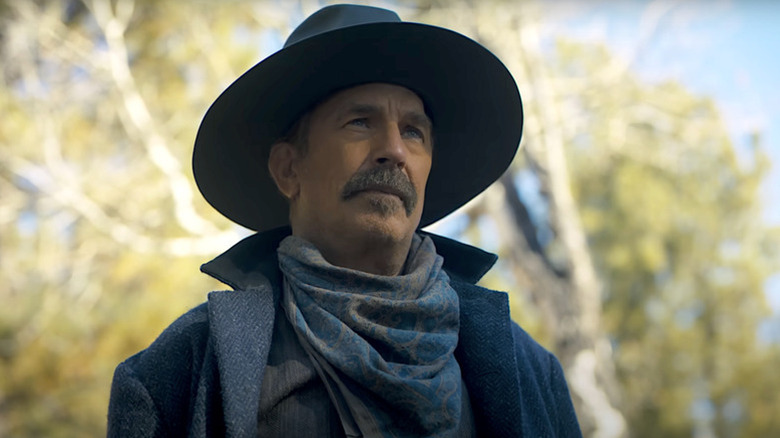
A passion project of filmmaker Kevin Costner for decades, "Horizon: An American Saga" is envisioned as a four-movie series chronicling the settlement of the American West. Directed, co-written, and produced by Costner, including financing out of his own pocket, the first installment opens with the frontier town of Horizon in Arizona. The narrative branches out to multiple perspectives of figures along the expanding frontier, each facing their own dangers. This ranges from escalating conflicts with the indigenous populations to deadly outlaws preying on the vulnerable in the largely lawless territories.
Upon its theatrical release in 2024, Costner's "Horizon" bombed at the box office, putting the status of its sequels in doubt. While initially moving at a slower pace and perhaps 20 minutes too long, the first installment of this "American Saga" definitely picks things up after its opening act. Kevin Costner's "Horizon: An American Saga" would find success on VOD platforms, but it's still unclear if the full four-film series will unfold as planned. In the meantime, the first intended chapter remains a strong reminder that Costner still knows how to make an entertaining and sweeping Western.