

15 Best Western Movies Of The 2020s (So Far)
We may receive a commission on purchases made from links.
The Western may be the prototypical American film genre, but it's long past its glory days. While Hollywood's Golden Age saw Westerns produced at an exponential rate compared to other genres, it has been on the defensive since the old studio system's collapse and the arrival of New Hollywood auteurs in the '70s. America was ready to move on from the old-fashioned forms of mythology it had been fed for decades.
However, the Western has never truly died. Every decade since then has seen attempts to spin the genre anew, many of which stand out as essential modern entries. We already have a list of the 15 best Western movies of the 21st century, but we want to take a look at our current decade so far. The year 2020 has, admittedly, been a light stretch for the genre, but we still have a worthy list of movies that embrace Hollywood's most established genre conventions or, more often than not, subvert them to communicate something new.
Here are the 15 best Western movies of the 2020s (so far).
Butcher's Crossing
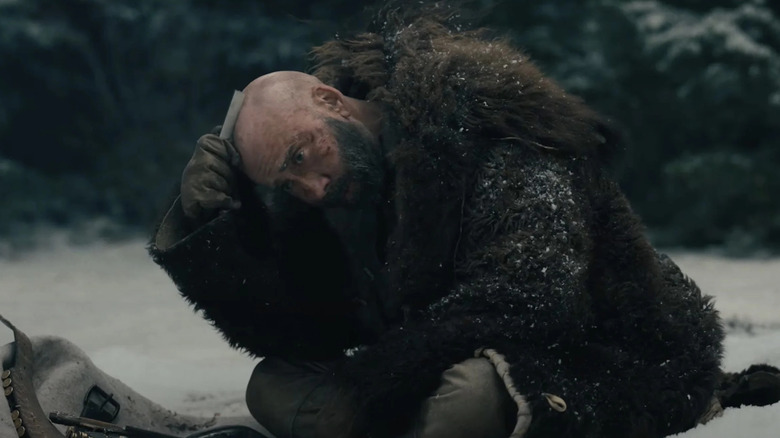
As the /Film team writes, "Butcher's Crossing" is a bleak, brutal, abstract Western well-suited to an actor like Nicolas Cage, who's spent most of his career proving he'll take on almost any project. Gabe Polsky's adaptation of John Williams' 1960 novel lets him play a haunted frontier obsessive who finds himself in bleak circumstances. He plays Miller, a buffalo hunter in 1970s Kansas who convinces Will Andrews (Fred Hechinger), a Harvard dropout hungry for real-world experience, to bankroll a trip to a hidden Colorado valley where thousands of animals graze undisturbed. It's a get-rich-quick scheme, but two men's hubris against nature soon leads to self-destruction.
Polsky strips the Western of its mythic romance and ties the frontier's bounty to a body count. Though you may expect a Cage freakout in the isolation of the Western wilderness, he keeps things relatively restrained, evoking his true movie-star days when he could tell worlds of stories with just a look on his face. It's worth checking out for getting to see him in the zone alone.
Cry Macho
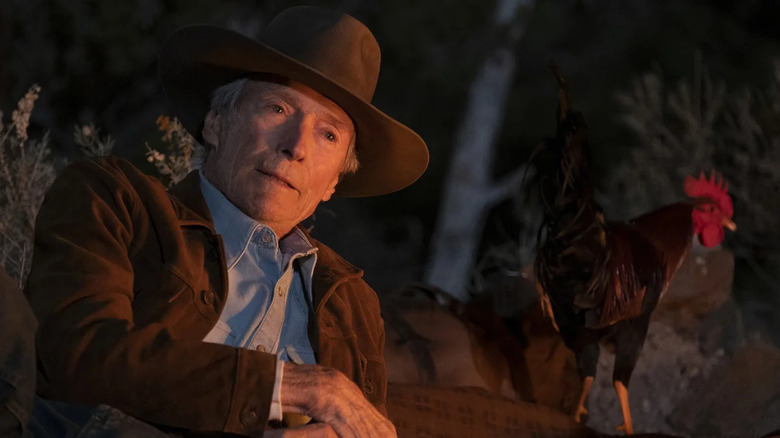
We can get this out of the way: "Cry Macho" is not Clint Eastwood's best Western. Of his directorial efforts in the genre, it almost certainly sits at the bottom. That it flopped in theaters isn't surprising, though its release in the wake of the COVID pandemic had something to do with that as well. But there's something disarming about a 91-year-old icon directing himself in a movie that so directly interrogates his own mythology and screen image. Eastwood plays Mike Milo, a washed-up rodeo star in 1979 who's hired by his old boss (Dwight Yoakam) to retrieve the man's teenage son, Rafo (Eduardo Minett), from his mother in Mexico. The kid, who comes with a pet rooster named Macho, doesn't want to be saved, and the whole situation sets up a slow, low-stakes tale about late-life redemption.
Based on N. Richard Nash's novel, which Hollywood tried to adapt for decades, Eastwood becomes one of his downbeat, late-career larks: a handout movie about unlearning manhood's toxic institutions. Mike spends most of the movie learning the facets of humility that bring him closer to himself and others. All the way to the end, Eastwood has been making movies about the ability to change, no matter the age.
The Dead Don't Hurt
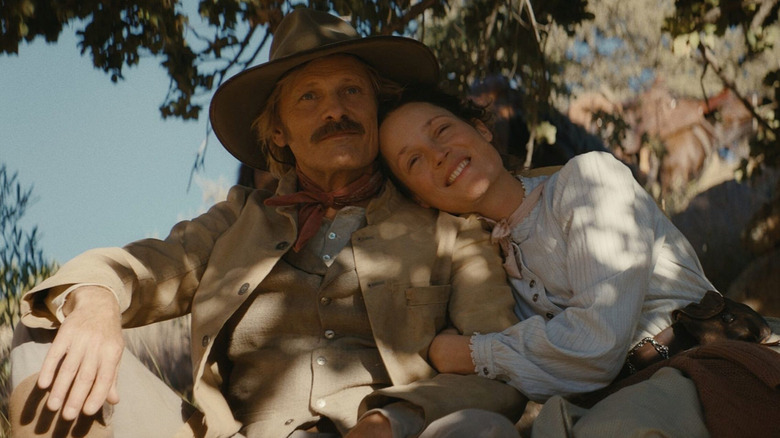
Viggo Mortensen already had an overlooked Western in his repertoire with 2004's "Hildago." Now, this melancholic entry into the genre, which he wrote, directed, starred in, and scored, joins its ranks. It's an admirable display of one-man ambition from a star whose career has always been off the beaten path since "The Lord of the Rings." He turns "The Dead Don't Hurt" into a muted, poignant frontier love story. Vicky Krieps plays Vivienne Le Coudy, a fiercely independent French-Canadian woman who falls for Holger Olsen (Mortensen), a gentle Danish carpenter, in 1860s San Francisco. She follows him to a Nevada town, where he leaves to fight in the Civil War.
Mortensen shuffles the timeline, letting the film drift through memory, grief, and the small tragedies of separation by war. It's a magnificent role for Krieps, who gives Vivienne a sharp, self-possessed spark that keeps the movie from drifting into the weepie malaise of a woman simply waiting for her lover's return. It's a patient, humane Western that examines the consequences of violence.
Eddington
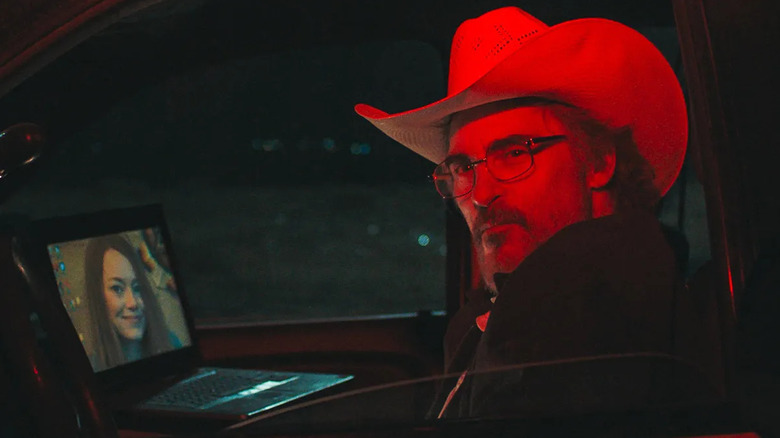
If most Westerns champion or interrogate the foundational institutions of how the country came to be, "Eddington" ruthlessly grills us as we are now, or more specifically, how we were in the year 2020. The titular New Mexico town is a pressure cooker of mask mandates, Black Lives Matter protests, and conspiracy-brained doomscrolling. At the center is Joaquin Phoenix's flailing sheriff, Joe Cross, whose lawman bluster masks his inability to reconcile with the world around him. Nevertheless, he decides to run for mayor against the sly incumbent (Pedro Pascal) as Eddington unravels all around him.
It's all dressed up in Western iconography: the sheriff's hat, the dusty main street, the standoff. And yet its savage satirical swings in the face of every facet of the political spectrum, and how it contributes to a greater sense of an unmoored and neglected social contract, are unique for the genre. The film captures how it felt to live inside the fraying American mind during the pandemic, when everyone was convinced of their own dogmas. "Eddington" is divisive, provocative, and infuriating, and in the process, it captures something true about the contemporary American spirit.
First Cow
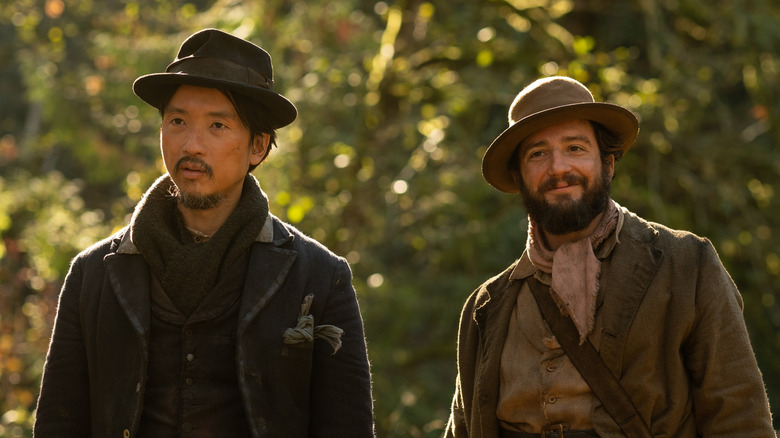
Only Kelly Reichardt could make a Western about cake. Indeed, her gentle, fleeting, and tragic "First Cow" rewrites the rules of the American Western for the better. Set in the 1820s Oregon Territory, it follows Cookie Figowitz (John Magaro), a taciturn cook, and King-Lu (Orion Lee), a Chinese immigrant on the run, who form a quiet friendship and a small-time criminal enterprise: sneaking out at night to milk the area's lone cow, owned by a wealthy Englishman (Toby Jones), and selling the cakes they bake with the milk. Adapted from Jonathan Raymond's novel "The Half-Life," it's a Western that emphasizes human connection against the imminent crush and control of capitalist frameworks.
Reichardt is a magician at capturing a kind of anti-mythic restraint; she did it to an effect of dread in "Meek's Cutoff," and here she affords it an enchanting sense of sadness. The tenderness between the two outcasts at the center gives their quiet friendship such richness, moving and breathing in long, hushed stretches that act as meditations. It's a kind movie that recognizes the world's harsh conditions and yearns for a peaceful respite amid the animosity.
The Harder They Fall
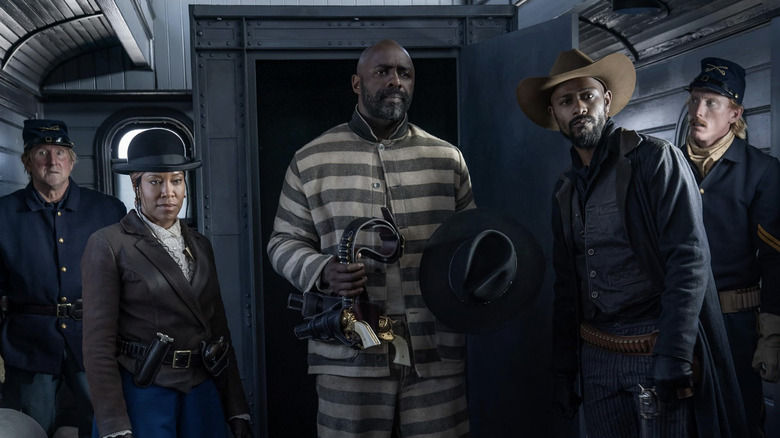
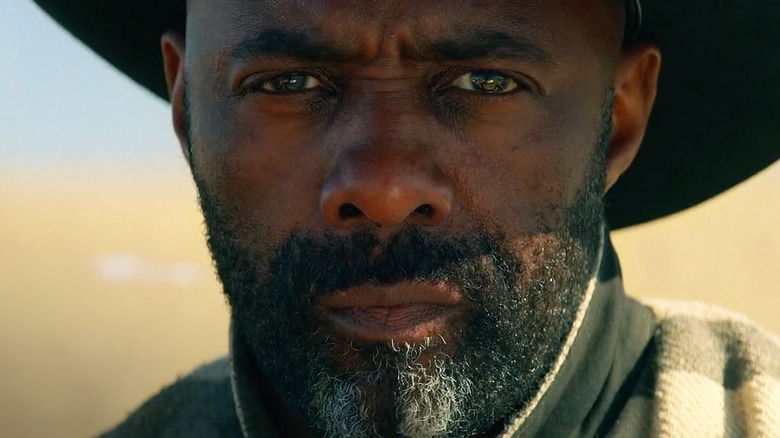
"The Harder They Fall" makes its cheeky sensibility clear from the jump: It opens with a title card stating, "While the events of this story are fictional, these people existed," then throws a Black Western all-star team into a flashy revenge tale. Jonathan Majors' Nat Love hunts down Rufus Buck (Idris Elba), the outlaw who killed his parents, setting off a showdown that pulls in Zazie Beetz's Stagecoach Mary, Lakeith Stanfield's Cherokee Bill, Regina King's Trudy Smith, and Delroy Lindo's Bass Reeves. These were all real people, and there's a glee in smashing them together like action figures.
Jeymes Samuel directs with the heightened style of someone who grew up watching spaghetti Westerns and music videos in equal measure, and the soundtrack he co-produced with Jay-Z contributes to the film's personality. The story is thin, and the violence is more stylish than weighty, but Samuel's intention is to make a pop action movie that corrects the Western's whitewashed history by giving long-ignored figures the pulpy, gun-slinging spectacle they've long been denied. Like many movies on this list, it's been somewhat forgotten, but it deserves another look.
Horizon: An American Saga – Chapter 1
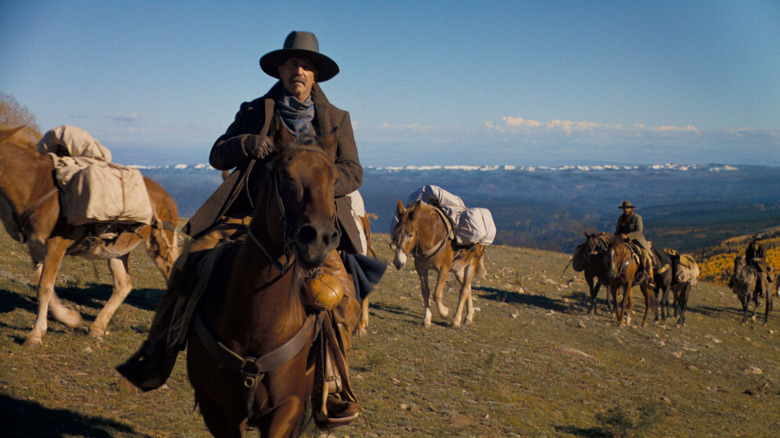
The title of this one feels like a bit of a cruel joke, since it's up in the air whether we'll see any more of "Horizon" beyond "Chapter 1." (Though "Chapter 2" screened at a couple of film festivals, no one has heard anything about it since.) Whether it's crueler for the audience or for Kevin Costner is up in the air, since the legendary actor reportedly bet his own money, a good chunk of his fortune, on this multi-part epic. This first chapter plays like what it is: a monster-sized passion project that indulges in all the minutiae of the sprawl it sets up.
"Chapter 1" is honestly quite good, as Costner has proven himself perfectly adept at depicting the dusty texture and varied characterizations of the Western frontier, starring as a mysterious drifter who finds himself in the crosshairs of multiple intersecting plot lines. It has a patient, widescreen love of the genre that becomes infectious, and the filmmaking has a classical sense of sweep you don't see much anymore. Whether the full saga ever comes to fruition is unclear, but it would be genuinely regrettable if we didn't get to see more. Maybe Costner needs to learn not to blindly back huge projects in the future, though: This isn't even the first Western he's bankrolled that bombed.
Killers of the Flower Moon
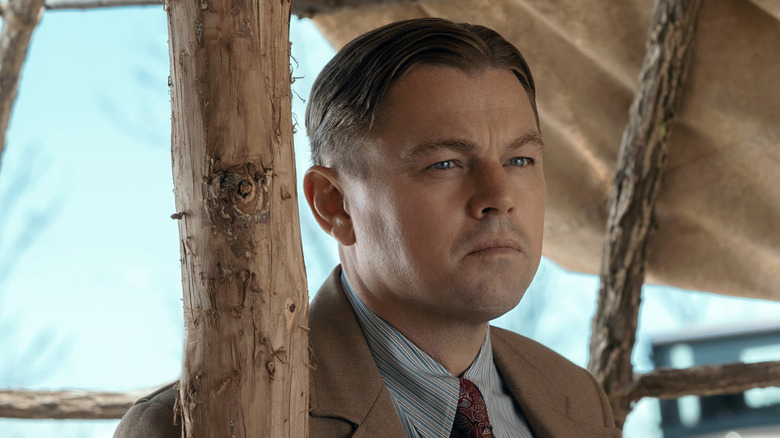
Martin Scorsese's late-career turn to the Western offers no gunslinging or high-noon showdowns, just a relentless, brutal reckoning with the generational racial violence built into the capitalist systems on which America is built. His 3+ hour epic is harrowing, depicting one of our nation's darkest chapters. Based on David Grann's 2017 nonfiction bestseller, it is, unfortunately, very accurate to the real story. It concerns the 1920s Osage murders in Oklahoma, where white settlers systematically killed members of the oil-rich Osage nation to take their wealth. Leonardo DiCaprio's Ernest Burkhart, a weak-willed World War I veteran, marries Mollie (Lily Gladstone) at his uncle's urging, the sinister "King" Hale (Robert De Niro).
Whereas Grann's book relayed the story as an FBI procedural and mystery, Scorsese bares the terrible reality of the killings from the jump, affording the film its specific, terrible power that separates it from its source material. The banality of evil, the polite smiles, and the slow poison arrive with a grim, chilling inevitability. With its sweeping cinematography and Robbie Robertson's final score, this Western interrogates the mythology of American enterprise and uncovers the dark secrets behind generational wealth.
Let Him Go
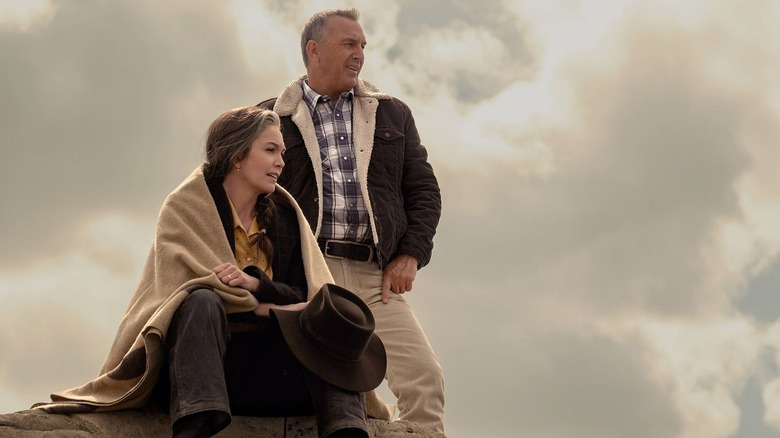
Kevin Costner appears yet again on this list as the man who seems determined to keep the Western alive (he's been consistently dedicated throughout his career, and we have a ranked list of all his Westerns). He and Diane Lane reunite as on-screen spouses after "Man of Steel," and their chemistry is the soul of this slow-burning 1963 Montana neo-Western. They play retired sheriff George and his wife, Margaret Blackledge, who lose their son in a riding accident and then watch their daughter-in-law (Kayli Carter) remarry and vanish with their grandson into the clutches of the menacing Weboy family. Determined to bring the boy back, the couple heads to North Dakota, where they find a clan far more dangerous than they bargained for.
Thomas Bezucha's adaptation of Larry Watson's 2013 novel is quiet and elegiac for most of the runtime, then it erupts into a brutal, tense final act. Lesley Manville stands out as the Weboy matriarch, weaponizing false hospitality and unafraid to exploit other characters' emotional triggers. As a Western about grief, family, and the lengths people go to hold on to what's left, it carries surprising poignancy, while the filmmaking delivers unforgiving suspense.
News of the World
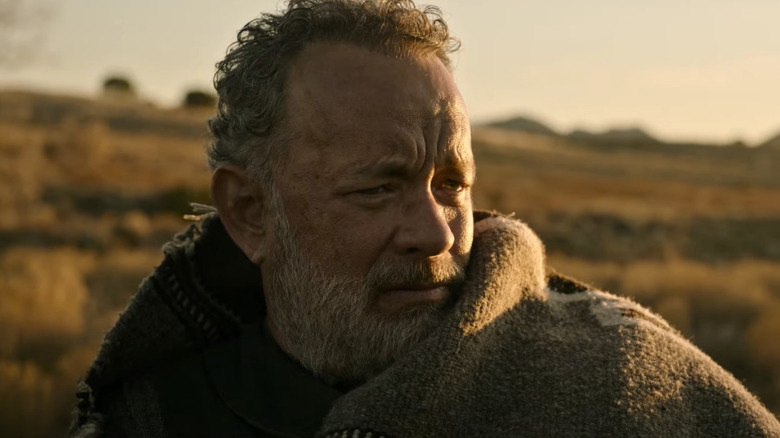
Though known for shaky-cam thrillers like "United 93" and the "Bourne" franchise, Paul Greengrass proved he could do something tender and unhurried in this 2020 adaptation of Paulette Jiles' novel. It helps that it's anchored by one of our great movie stars, Tom Hanks, always reliable, as our ranked list of his 15 greatest movies proves. He plays Captain Jefferson Kyle Kidd, a Civil War veteran who travels through post-war Texas, reading newspapers aloud to weary crowds, offering them a brief respite from their troubles. Then he's asked to deliver Johanna (Helena Zengel in a remarkable turn), a girl raised by the Kiowa after her parents were killed, to relatives hundreds of miles away.
That sets up a familiar odd-couple road-trip dynamic, but Hanks' reassuring tenor and Greengrass' patience with the material add a pleasant warmth. Dariusz Wolski amplifies the world's lived-in qualities with gorgeous, dusty cinematography, earning the film an Oscar nomination. The story's argument that truth and compassion are the real tools on the world's frontier rings true. It feels old-school in all the right ways.
Old Henry
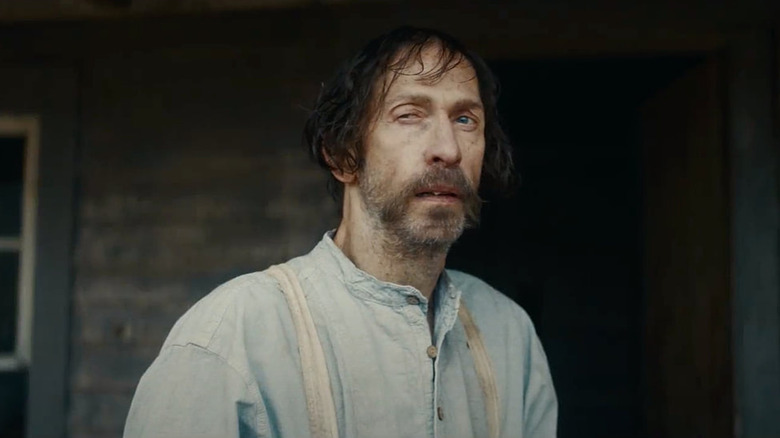
The streaming shelf life is kind to some movies, and this old-fashioned Western starring Tim Blake Nelson has quietly come around to dominate Netflix. Potsy Ponciroli's lean 2021 gem is distilled genre worship, where commitment to the form's tenets transcends pastiche and becomes the real thing. Nelson is Henry, a widowed Oklahoma Territory farmer in 1906 trying to raise his restless teenage son, Wyatt (Gavin Lewis), in peace. That peace evaporates when Henry finds a wounded stranger and a satchel of cash in the dirt, and a smooth-talking Stephen Dorff arrives with a posse claiming to be the law.
Ponciroli works with a small canvas: one farmhouse, a few acres, and just a handful of actors, yet wrings every ounce of tension from it, building to a siege that nods to "Shane" and "Unforgiven." It's indebted to the greats but carves out its own lane, and it still feels refreshing in a decade that's been somewhat slight for the genre. In that context, something this low-key and sharp still stands out.
The Power of the Dog
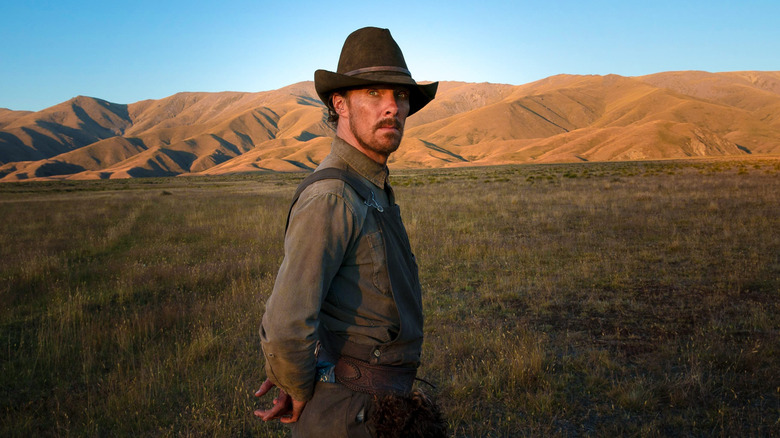
Jane Campion waited 12 years between features, and her break paid off with "The Power of the Dog." That's largely thanks to Benedict Cumberbatch, who delivers a career-best performance, as our review notes. Adapted from Thomas Savage's 1967 novel, the film unfolds on a 1925 Montana ranch, where Cumberbatch plays Phil Burbank, a magnetic, merciless cowboy who rules the land and his men with a lethal mix of charm and contempt. When his gentle brother George (Jesse Plemons) marries widow Rose (Kirsten Dunst) and brings her and her fragile son Peter (Kodi Smit-McPhee) onto the property, Phil sets out to destroy them through cunning, subtle Machiavellian manipulation.
In a genre that orbits the tenets of machismo, this film dismantles manhood from the inside. Campion peels away the armor Burbank wears as he mythologizes himself as the unflappable Western cowboy. Ari Wegner's beautiful cinematography and Jonny Greenwood's typically singular score help depict this. The film earned 12 Oscar nominations and won Campion Best Director, a win that was more than earned for this poignant and effective deconstruction.
The Settlers
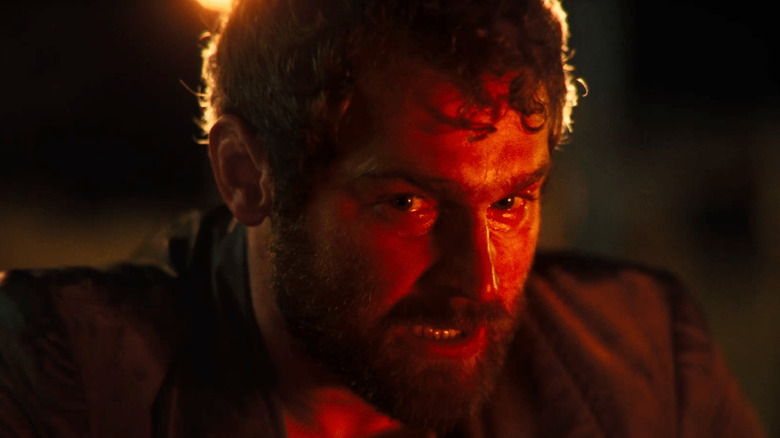
Felipe Gálvez Haberle's debut feature may have flown under the radar, but it resonates with those who see it — it's got a 94% Rotten Tomatoes score and is likely to leave you speechless. Set in early 1900s Tierra del Fuego, at the windswept bottom of South America, it follows three riders hired by sheep baron José Menéndez (Alfredo Castro), a real-life tycoon, to clear a path through his vast holdings: a sadistic British lieutenant, MacLennan (Mark Stanley); an American mercenary, Bill (Benjamin Westfall); and a mixed-race Chilean tracker, Segundo (Camilo Arancibia).
That clearing means the genocide of the Indigenous Selk'nam people, and Gálvez keeps the violence matter-of-fact, with his tight, boxy frame making the gray, gorgeous landscapes feel suffocating. His final verdict is an apt examination of how nations launder their founding atrocities into official history, just as the stories of the American West have been romanticized into our stories of gunfighters, lawmen, and good vs. evil. It's a hard watch but essential because, like the best deconstructive Westerns, it exposes the genre's myths.
Train Dreams
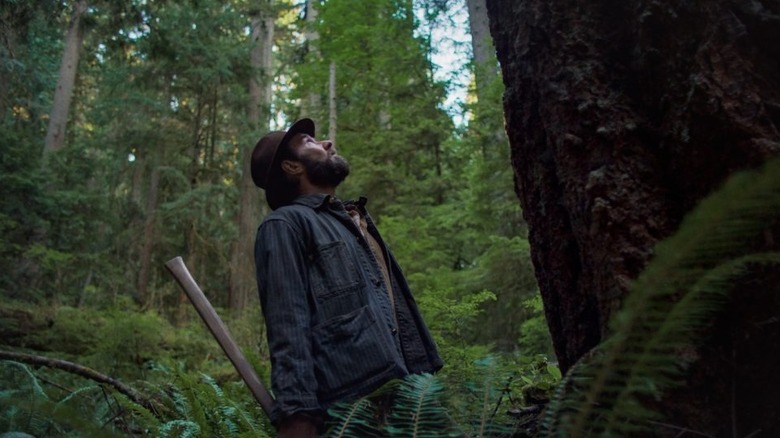
Denis Johnson's 2011 novella barely exceeds a hundred pages, so Clint Bentley's adaptation covers most of a life in under two hours, luxuriating in the small moments and quietude the story demands. Joel Edgerton plays Robert Grainier, an orphaned logger and railroad laborer in the early 20th-century Pacific Northwest who watches the forests he fells and the world he knows get swallowed by progress. He marries Gladys (Felicity Jones), builds a cabin in a river valley, and learns how quickly a wildfire can erase everything, leaving him to live out his decades alone with his grief.
Bentley and co-writer Greg Kewdar lean into Terrence Malick-style lyricism, with Adolpho Veloso's cinematography finding wonder in every shaft of light and Will Patton's gravelly narration carrying the story along like a true American folk tale. It follows the Western tradition of impending anxiety: how a frontier man is meant to integrate into regular society when his way of life inevitably disappears — the world of the Western never lasts forever. It's a standout Netflix production, even if the streamer's algorithm frustratingly hampered its potential for breakout success.
The World to Come
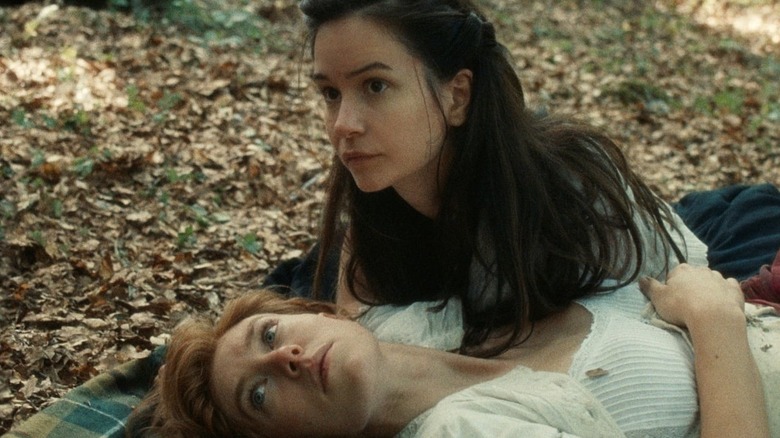
Director Mona Fastvold's 2020 drama reimagines Western tropes as an aching love story, told in the hushed, formal language of a true 19th century period piece. Based on Jim Shepard's short story, it unfolds in upstate New York in 1856, where farm wife Abigail (Katherine Waterston) is numbed by the death of her young daughter and records her days in careful, poetic prose. Her husband, Dyer (Casey Affleck), is a decent, stoic man lost in his own grief, so the arrival of new neighbors Tallie (Vanessa Kirby) and her controlling husband, Finney (Christopher Abbott), jolts her awake.
That, of course, leads to a slow-burning affair between the two women, which blooms in stolen glances and small, camouflaged gestures. Waterston and Kirby are electric and heartrending together, and their bruised dynamic conveys a love story that understands the courage it takes to embrace a feeling the world wants to deny. "The World to Come" arrived alongside "Ammonite" and "Portrait of a Lady on Fire" in a wave of period queer romances, and it earns its place among the crop.