

15 Best Sci-Fi Movies Adapted From Books, Ranked
We may receive a commission on purchases made from links.
It's no secret that the sci-fi genre lends itself to both great literature and great cinema, but imagine what would happen if you got both? Lucky for all of us cultured and erudite fans of great novels and cinema, many of the best sci-fi films of all time are adapted directly from books, reimagined on the silver screen, introduced to a new audience, and given the chance to build an even greater cultural legacy.
We may have a list of the best sci-fi films ever made, but it's time to look at the ones that came straight from the vivid worlds of literature, showcasing which directors have made the best films from sci-fi text. From animation to live-action and from drama to horror, these adaptations run the gamut and have earned the distinction of being some of the greatest pieces of sci-fi media in their own right.
Here are the 15 best sci-fi movies adapted from books, ranked.
15. Paprika
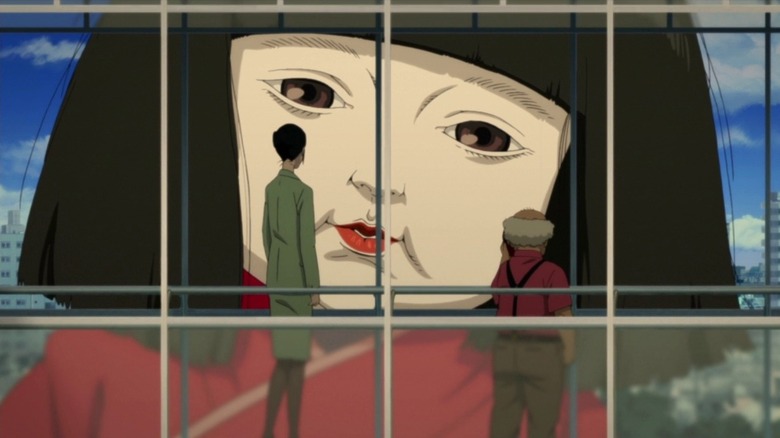
Satoshi Kon's career of blurring the line between dreams and reality was never as splendid as in "Paprika." Adapted from Yasutaka Tsutsui's 1993 novel, the film follows Dr. Atsuko Chiba, a brilliant psychotherapist who uses an experimental device called the DC Mini to enter her patients' dreams, where she becomes the impish, free-spirited Paprika. When the device is stolen and begins wreaking havoc on unsuspecting minds, she races to catch the thief before the threshold between dreams and waking life collapses entirely.
The plot may be a tidy technological thriller, but "Paprika" is a feast of imagination, sending a wonderfully strange parade of outré visualizations and hallucinogenic ideas, complete with stunning animation. Its surrealist logic has drawn plenty of comparisons to "Inception" — and it's true that Nolan's film is a perfect companion piece — but Kon's film is looser, wilder, and far more unpredictable. The last feature Kon completed before his death in 2010, it's the perfect swan song for his dizzying, joyful sensibilities.
14. The Iron Giant
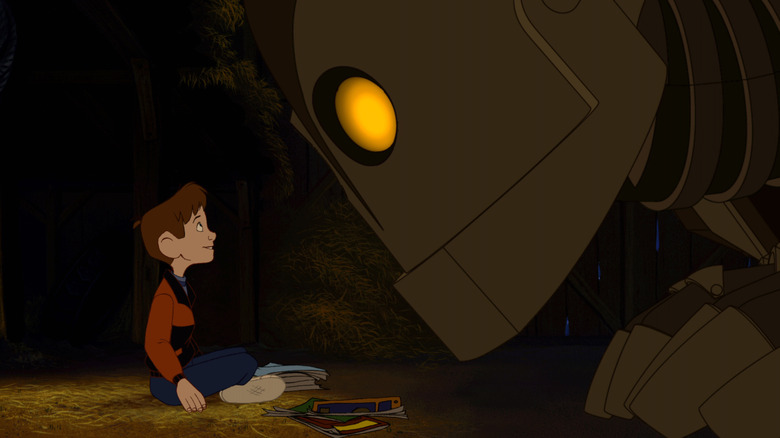
Sometimes your cult-classic animated family films about the tender relationship between a boy and his giant robot best friend are actually Cold War allegories. Brad Bird's feature directorial debut is loosely adapted from Ted Hughes's 1968 novel "The Iron Man," moving the story to 1957 Maine in the paranoid wake of Sputnik. Young Hogarth Hughes (Eli Marienthal) meets a towering metal visitor from space (Vin Diesel) who devours scrap metal and has forgotten where he comes from. As Hogarth teaches him about comic books and the significance of life on Earth, a federal agent (Christopher McDonald) becomes convinced the Giant is a fatal threat and pushes the town toward panic.
The warmth of Bird's hand-drawn animation conveys a sense of place and specific texture that many studio-animated films have largely lost in the transition to modern CGI. A muted marketing push from Warner Bros. led to a disappointing box-office run, but it's since been reclaimed as a modern classic — all this time later, "The Iron Giant" matters more than ever.
13. Arrival
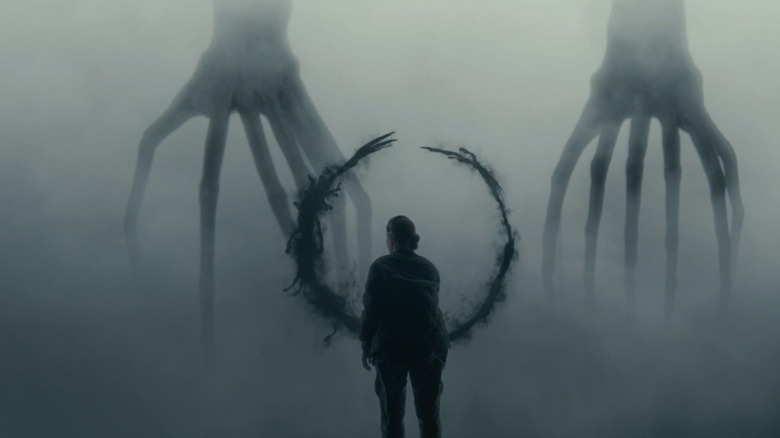
Denis Villeneuve's quietly shattering "Arrival" is adapted from Ted Chiang's 1998 novella "Stories of Your Life," in which 12 enormous alien vessels appear around the globe without explanation. Amy Adams plays Louise Banks, a linguist recruited by the military, alongside physicist Ian Donnelly (Jeremy Renner), to decipher the visitors' strange language and learn why they've come before global tensions boil over into war.
"Arrival" is a notable, thought-provoking piece of intellectual sci-fi that lets linguistics and communication serve as the focal point of an encounter with an alien lifeform rather than action spectacle. Eric Heisserer's script wrestles with the thorny ideas in the source material, and Villeneuve's grounding in a hushed, sobering atmosphere even impressed Chiang himself. It's a smart, emotional story about language and time that recalls the emotional and cerebral alien sci-fi of "Close Encounters of the Third Kind," and Villeneuve updates the mood to the uncertainties of a modern world.
12. Metropolis
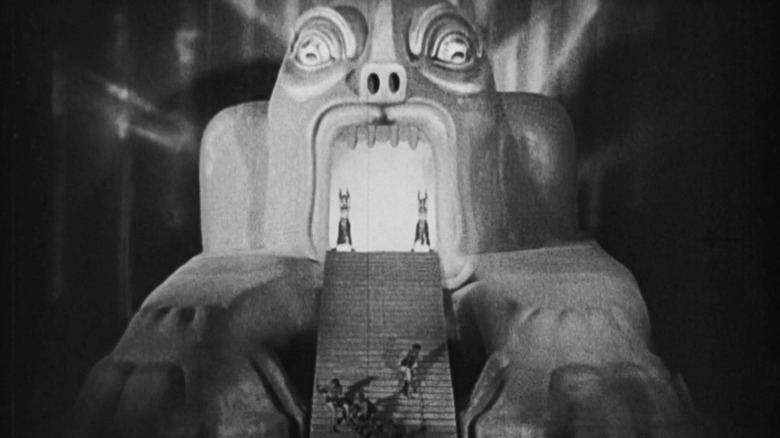
All of modern cinematic sci-fi can be traced back to Fritz Lang's "Metropolis." Based on the novel Thea von Harbou wrote alongside the screenplay, the 1927 silent epic imagines a future city divided between the wealthy elite who live in towering skyscrapers and the workers who toil underground to keep the machines running. Freder (Gustav Fröhlich), the idle son of the city's ruler, ventures below, falls for the saintly activist Maria, and discovers the true extent of the privilege his class affords him, while the mad scientist Rotwang (Rudolf Klein-Rogge) builds a robot double of Maria to sow chaos.
"Metropolis" has a somewhat naive message: "The mediator between the head and the hands must be the heart," a callow enough idea to make legendary sci-fi writer H.G. Wells hate the movie. Yet the film's stunning production design and visuals have made it an enduring influence in on-screen sci-fi. The sets, the miniatures, and Brigitte Helm's iconic robot design have echoed through everything from "Blade Runner" to "Star Wars," and its status as an essential classic of the genre is earned through sheer beauty alone.
11. Dune: Part One & Dune: Part Two
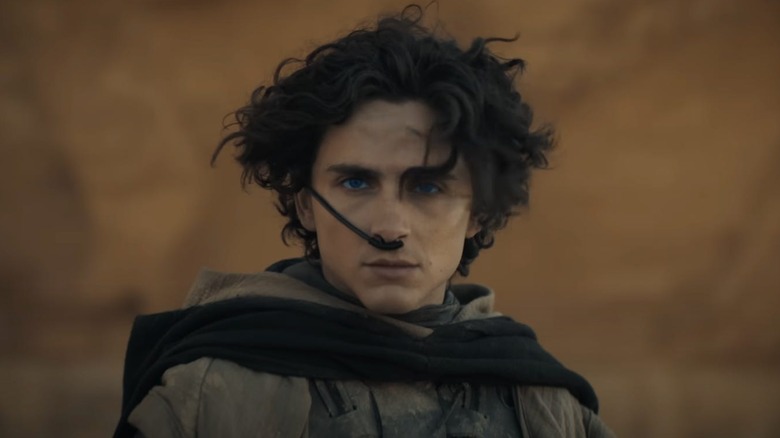
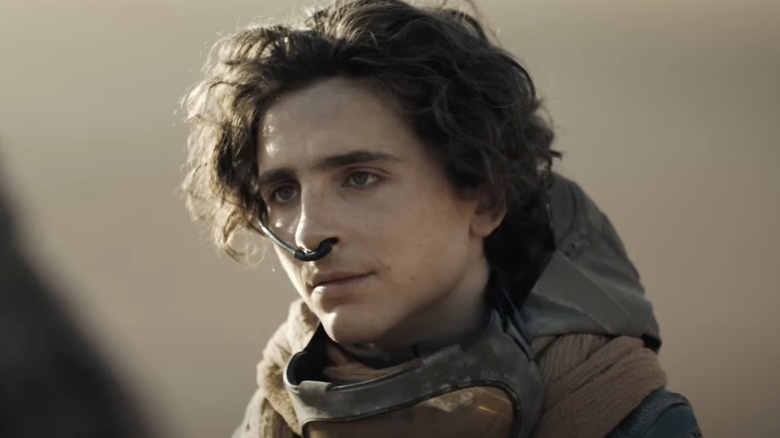
They said it couldn't be done, but Denis Villeneuve refused to accept the "unadaptable" label for Frank Herbert's beloved, alienatingly complex novel, "Dune." Following a mostly failed attempt by David Lynch to adapt the same material in the '80s, Villeneuve is granted the opportunity to spread the story across two parts, with all the scale and grandeur accessible from the modern filmmaking tools at his disposal, making "Dune: Part One" and "Dune: Part Two" the definitive translation of something previously considered unadaptable.
That's not to say Villeneuve doesn't make his own compromises and concessions from the book — and, indeed, "Dune: Part Three" is already being pegged as taking creative liberties from the books — but they're in service of making this elaborate story about fiefdoms, resource conquest, giant sand worms, and the transformation of young Paul Atreides (Timothée Chalamet) from the budding pawn of a political dynasty to the self-mythologizing messiah of the native inhabitants of the planet Arrakis into a blockbuster that successfully plays for general audiences. With "Dune," esoteric, politically-minded sci-fi becomes one of the great spectacles of our time.
10. The Fly (1986)
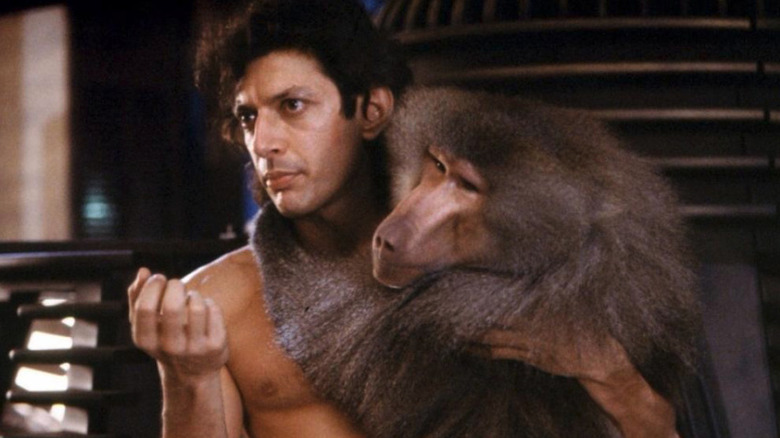
David Cronenberg's famed 1986 adaptation of George Langelaan's short story puts the philosophy that your imagination is scarier than anything a movie could ever show you to the test. This sci-fi horror film is about an eccentric scientist named Seth Brundle, played by Jeff Goldblum, whose testing of a prototype teleportation device goes horribly wrong when he tests it on himself too early, along with a common housefly that smuggles itself along for the testing. You probably know what happens next: Brundle's humanity is slowly stripped away as his being is fused with that of the fly, down to a molecular level.
"The Fly" is one of the great body horror movies — so great that it permanently pegged Cronenberg as the "body horror guy," even if only a couple of his movies actually deal with the subject. It's a special effects showcase of squeamish, grotesque beauty. The special effects team had their work cut out for them too, with the amount of prosthetic makeup, slime and jelly, and full-scale monstrous animatronics they used to make Brundle's transformation horrifically convincing. It's still the ultimate bodily-transformation movie and one of the greatest sci-fi horror movies of all time.
9. Frankenstein (1931)
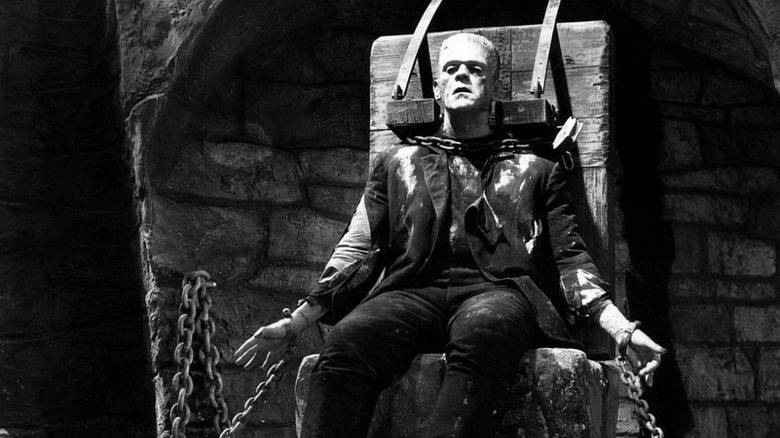
Plenty of "Frankenstein" adaptations and offshoots are out there to watch — and we've ranked the five best — but James Whale's 1931 adaptation of Mary Shelley's classic novel still holds the same power today as it did nearly 100 years ago. It gave horror cinema its most enduring monster, who continues to define a cinematic lineage of creature features. The film follows Henry Frankenstein (Colin Clive), an obsessed young scientist who assembles a creature from stolen body parts and brings it to life with a bolt of lightning. Boris Karloff plays the Monster, who is abandoned by his creator, tormented by Henry's assistant Fritz (Dwight Frye), and set loose on a terrified village with tragic results.
Whale's film strips away much of the novel's philosophical weight, turning Shelley's eloquent, wounded creation into more of a lumbering brute. But Jack Pierce's makeup and Karloff's startlingly sympathetic performance accentuate the Monster's pity as much as his terror, while the gothic, expressionistic sets would become a template for decades of horror to follow. Today, it remains astoundingly atmospheric and lives on as a foundational text of horror and sci-fi.
8. Children of Men
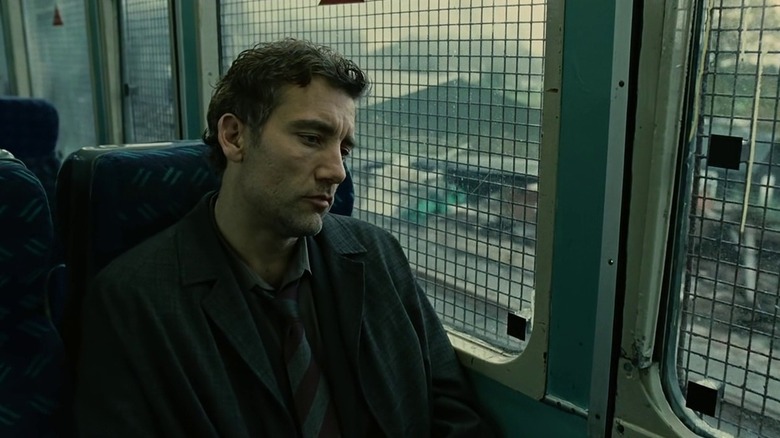
Hope has run out in Alfonso Cuarón's "Children of Men," a perspective that grows more trenchant with every passing year. Adapted from P.D. James's 1992 novel, the film is set in 2027, which is 18 years after the last child was born anywhere on Earth. Britain has become a fortified police state, with refugees rounded up and caged. Clive Owen plays Theo Faron, a burned-out former activist pulled back into the cause when his ex, Julian (Julianne Moore), asks him to escort Kee (Clare-Hope Ashitey), a young woman miraculously pregnant, to safety.
Cuarón finds something distinctly urgent in James's novel, depicting a bleak, lived-in dystopia born of our own current mistakes. Emmanuel Lubezki's roaming long takes, especially a sudden roadside ambush and a harrowing battle through a war-torn Bexhill, invite the viewer directly into the thick of the chaos. Though it bombed at the box office, it has since been recognized as one of the best sci-fi films of the century, with a melancholic sense of hope that feels deeply moving amid continuing uncertainty.
7. The Prestige
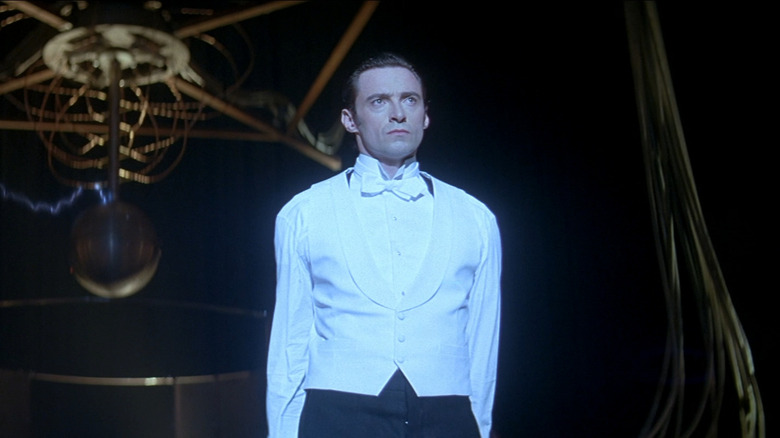
Christopher Nolan conjures his own magic trick in his sci-fi drama about dueling magicians. "The Prestige" is adapted from Christopher Priest's 1995 novel and follows two rival stage magicians in Victorian London: Robert Angier (Hugh Jackman), a gifted showman, and Alfred Borden (Christian Bale), a ruthless craftsman. After a trick goes fatally wrong, their feud escalates into sabotage, obsession, betrayal, and the breaking of the laws of physics and science as their desperate competition drives them to dark methods in pursuit of success.
Co-written by Nolan and his brother Jonathan, the film follows the three-part structure of a magic trick — the pledge, the turn, and the prestige — and the shuffled timeline and mosaic-like editing that are now typical of Nolan ("The Prestige" in particular feels like a stylistic precursor to "Oppenheimer") reward repeat viewings. The film's shift from ground-level tricks and theatrics to full-fledged science fiction is masterfully executed and still chills you by the final moments. "The Prestige" may have only been a modest box office hit, but it's one of Nolan's best films.
6. Stalker
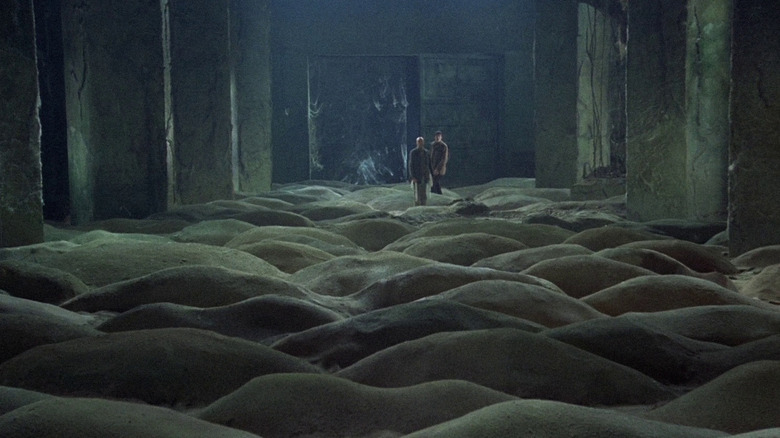
Andrei Tarkovsky doesn't care much for spectacle in "Stalker." Loosely adapted from Arkady and Boris Strugatsky's 1972 novel "Roadside Picnic," which the brothers reworked into the screenplay, the film follows a guide known as the Stalker (Alexander Kaidanovsky) as he leads a cynical Writer (Anatoly Solonitsyn) and a weary Professor (Nikolai Grinko) into the Zone, a forbidden, desolate region where reality has been altered by an unexplained supernatural/scientific event. At its center is a Room said to grant visitors their deepest desire.
Tarkovsky drops the novel's alien-visitation backstory and leaves the Zone's origins a mystery, turning the material into a patient meditation on faith, doubt, and what people truly want. The long takes and the shift from sepia to color are mesmerizing. The troubled production, which required a total reshoot after the original footage was damaged during processing, added to the film's mythic reputation. It's endlessly interpretable and doesn't care to explain itself to the viewer — much of its purpose is that whatever you take away from it directly correlates with what you put into it. One of the most philosophically minded films ever made, it's also the most influential sci-fi movie ever.
5. Under the Skin
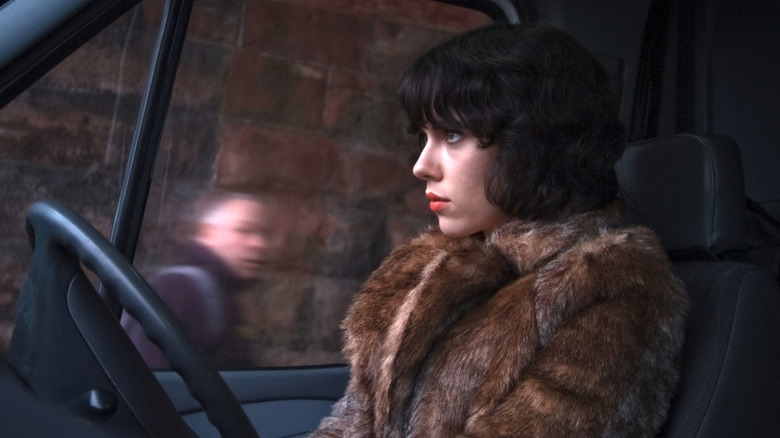
Jonathan Glazer's strange, polarizing alien-invasion drama gives regular sci-fi tropes the full weight of art-house gravity. Adapted from Michel Faber's 2000 novel, it stars Scarlett Johansson as an unnamed alien who drives a van through Scotland, luring lonely men back to a dark, liquid void where she traps them and seemingly harvests their meat. As she spends more time among humans, her detachment erodes, and she grows more curious about her own body and the world around her.
Glazer discards much of Faber's plot and dialogue, opting for the sustained vibe of a long, melancholic drone as Johansson drifts across Scotland, enacting scenes on real Scottish streets, shot via hidden cameras with real, unsuspecting locals. In that way, it's a film that sees humanity from the outside, made more uncanny by Mica Levi's screeching score. It's cold and cryptic, with images among the most haunting in recent sci-fi. It's one of the best sci-fi films of the century, though some will wish that Faber's novel had received a more loyal adaptation.
4. The Thing
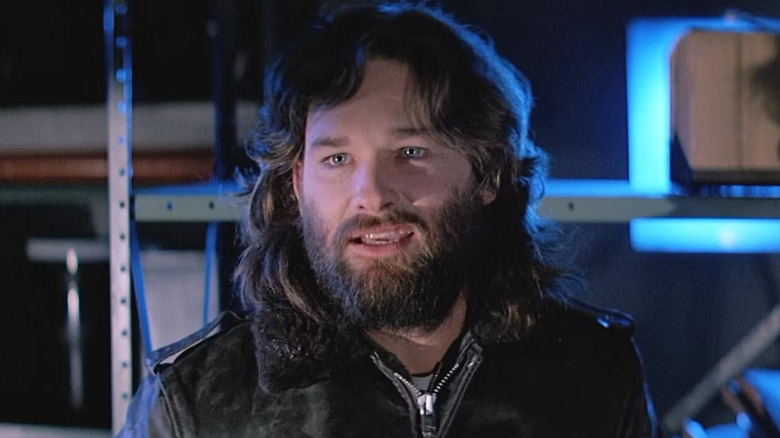
"The Thing" will always rule. Sci-fi horror doesn't get much more paranoid and grotesque than John Carpenter's '80s body-horror masterpiece about a group of Arctic researchers beset by an alien creature that disguises itself in organic matter, turning the men into a set of suspicious, mania-induced suspects. Adapted from John W. Campbell Jr.'s 1938 novella "Who Goes There?" — which had previously inspired 1951's "The Thing From Another World" — Carpenter takes the premise and turns it into analog gross-out beauty.
Rob Bottin's practical creature effects remain an astonishing, monstrous, unforgettable showcase of slime, tentacles, and bodies tearing themselves apart. Current audiences will forget that "The Thing" was a complete bomb on release. Critics were hostile, and audiences stayed away as it opened right alongside the more optimistic "E.T.: The Extra-Terrestrial." The film has gotten its due through years of reappraisal and is now considered one of the best out-and-out horror films of all time, let alone with the additional sci-fi label. It's one to return to again and again, especially to keep litigating its ambiguous ending.
3. Jurassic Park
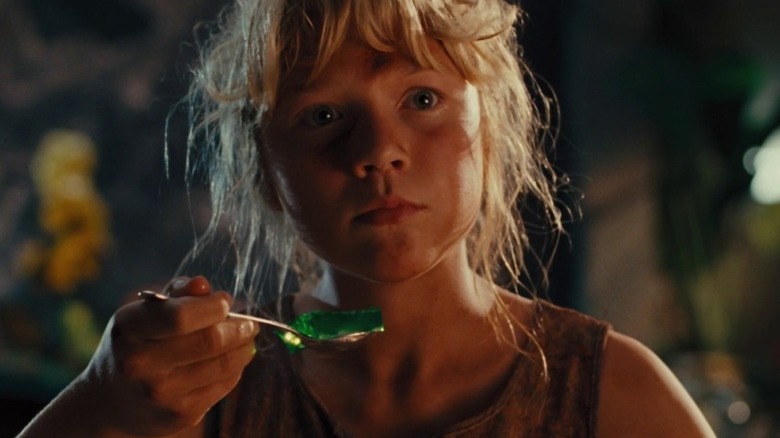
Steven Spielberg fine-tuned the summer blockbuster with "Jurassic Park," creating one of the enduring popcorn-movie classics of all time. Adapted from Michael Crichton's 1990 novel and co-written by Crichton and David Koepp, it follows paleontologist Alan Grant (Sam Neill), paleobotanist Ellie Sattler (Laura Dern), and mathematician Ian Malcolm (Jeff Goldblum), who are invited to preview billionaire John Hammond's (Richard Attenborough) island theme park filled with living, cloned dinosaurs. When a sabotaged security system sets the animals loose, the guests must survive a stormy night face-to-face with a whole league of dinos, including Hammond's two grandchildren.
The film trims Crichton's darker, more technically minded material but retains the central warning that scientific ambition can outrun responsibility. That doesn't take away from the continued awe the film inspires: Industrial Light & Magic's computer-generated dinosaurs blend beautifully with Stan Winston's detailed animatronics, while John Williams's soaring score expands the film's scope and sense of wonder and horror. The film permanently changed how Hollywood approached digital effects, and it's still nearly ageless. It remains thrilling and enormously fun, with none of its sequels coming close to matching what it accomplished (though we ranked all of them anyway).
2. Invasion of the Body Snatchers (1978)
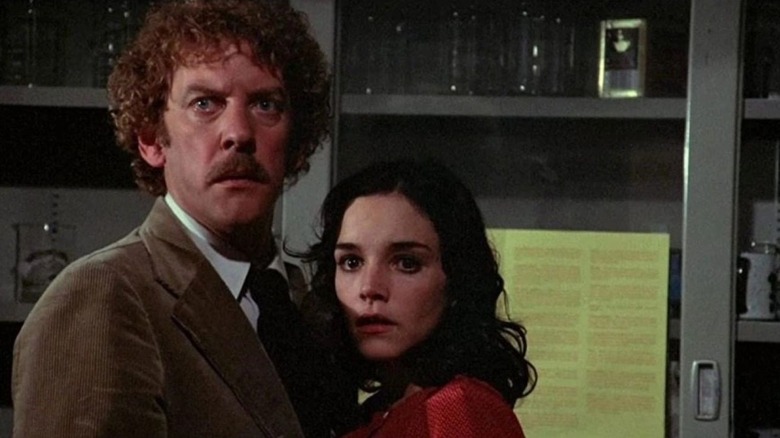
One of the best sci-fi horrors of all time is also one of the greatest remakes ever conceived. Philip Kaufman's 1978 "Invasion of the Body Snatchers" adapts Jack Finney's novel and remakes Don Siegel's 1956 film based on the same material, creating an unsettling masterpiece about social mistrust and paranoia, in which the people and world you thought you knew have suddenly become something far more sinister. There are no contemporaneous real-world comparisons for that, right?
Where Siegel's film was often read as a Red Scare allegory, Kaufman's version captures post-Watergate distrust and the cold conformity of the self-help era, with Leonard Nimoy memorably cast as a smooth pop psychiatrist in one of his best sci-fi performances. Off-kilter camera angles and a creepy, inventive sound design keep the paranoia simmering, while Jeff Goldblum and Veronica Cartwright inject a potent sense of urgency with their desperate performances. Its chilling final shot endures as one of the great movie endings, as the alarming alien screech sends audiences back into a world that suddenly looks much more ominous.
1. Blade Runner
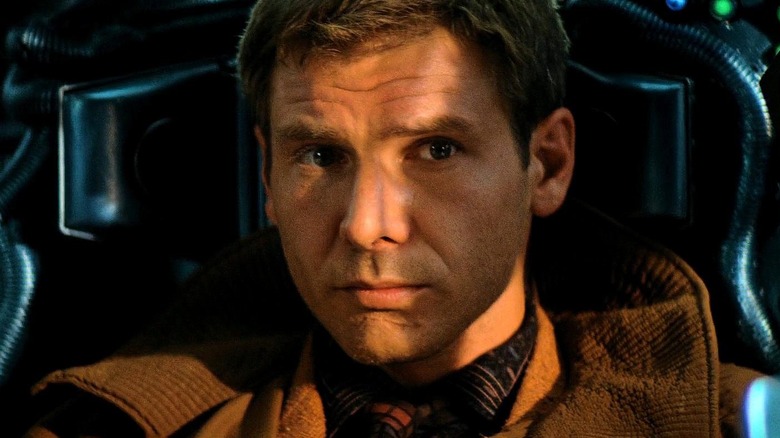
Ridley Scott's "Blade Runner" is loosely adapted from Philip K. Dick's 1968 novel "Do Androids Dream of Electric Sheep?" and set in a rain-soaked, neon-lit Los Angeles in 2019. Harrison Ford plays Rick Deckard, a former cop called back to hunt four rogue replicants, bioengineered humanoids who have escaped from off-world colonies, led by the defiant Roy Batty (Rutger Hauer). Along the way, Deckard meets Rachael (Sean Young), a replicant who believes she's human.
The film drops some of the book's details and its religious contours but retains the central focus on what makes us human. Syd Mead's production design and Vangelis's synth-heavy score would go on to influence decades of sci-fi, and Hauer's final speech is among the most significant moments in sci-fi movie history. Though an initial box-office disappointment, the film's legacy is now undeniable, with fans constantly debating which of the several existing cuts is best. Its essence has helped it grow into one of the most influential science fiction films ever made. It's so good that it's even one of Ridley Scott's favorite movies.