

The Sci-Fi Book That Inspired Scarlett Johansson's Alien Movie Deserves A More Loyal Adaptation
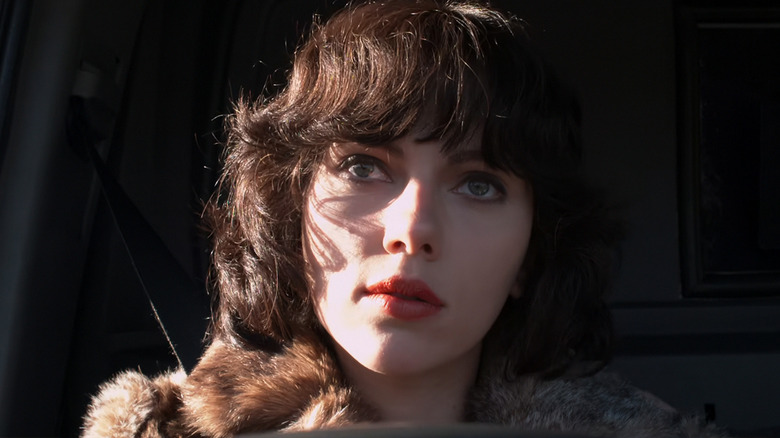
Michel Faber's 2000 novel "Under the Skin" received a film adaptation in 2013 that was met with critical acclaim. Long before he won an Academy Award for "The Zone of Interest," director Jonathan Glazer took the lineaments of Faber's story to construct a deeply disturbing sci-fi horror film. It was an extremely effective exploration of consent, sexual assault, and identity, but it also left room for a full big screen realization of the original book.
The movie version of "Under the Skin" is full of uniquely unsettling moments that stay with you long after viewing. In that sense, you can't fault Glazer for his take on the story, which sees Scarlett Johansson play a mysterious woman named Laura who scours Northern Scotland for men to kidnap. What she needs these men for remains somewhat unclear even after we witness their harrowing final moments. We do find out that Laura is actually some sort of alien being who lures men to a derelict house where they're subsumed by a murky liquid. There's also a shady individual on a motorcycle (Jeremy McWilliams) who follows Laura, ensuring she successfully ensnares her victims. But the exact purpose of this macabre practice remains mysterious.
Glazer is more content to establish a supremely creepy tone and live in it, all of which is heightened by the naturalistic interactions in the movie — a result of Glazer using guerilla filmmaking methods and non-actors. The film therefore feels at once strikingly realistic yet uncanny and deeply uncomfortable. It's brilliant and one of the best sci-fi movies for non sci-fi fans. But it's also not the same story Faber originally told.
The book version of Under the Skin and its film adaptation are two different stories
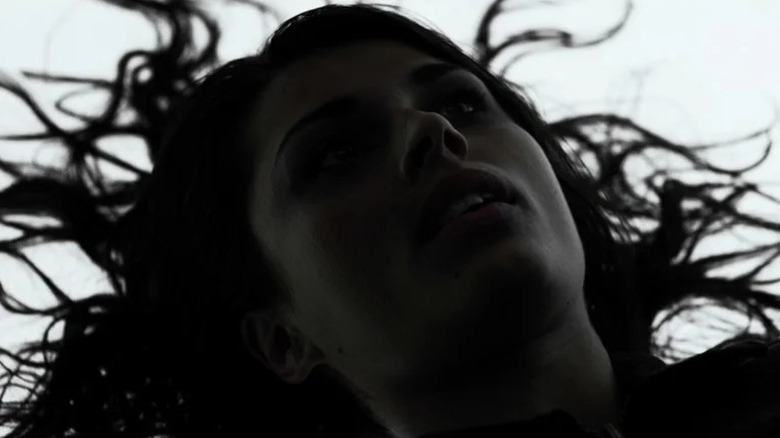
"Under the Skin" wasn't just one of the best sci-fi movies of the 2010s, it was also one of the best slow burn movies of all time. That doesn't mean a full adaptation of Michel Faber's book should be off the table, though. Like the film, the novel is set in Scotland, where an alien in human form drives isolated stretches of the highlands in an old Toyota picking up men. Unlike in the movie, however, the alien is named Isserley and we know why she's on our home planet. That is, we slowly discover that she's been surgically altered to resemble a human by her superiors and sent to Earth to farm men. Those she captures are sent back to the Elites on her planet and turned into meat called voddissin, a delicacy among her kind.
Isserley initially views humans the way many humans do non-human animals: inferior and ripe for culling. But as she continues her mission, she becomes increasingly upset, seeing elements of her and her kind in her prey. In that sense, the book challenges a human-centric view of the world, in addition to commenting on factory farming and, more generally, our moral obligation to those with less power, influence, or ability.
There are similar themes in Jonathan Glazer's "Under the Skin" (which took a decade to make). But his was a more ambiguous story wherein the factory farming allegory is much less obvious, if it's even there at all. The film is more concerned with empathy and connection to others as defining characteristics of what it means to be human, and sexuality is a much more prominent theme. It's excellent, but it's also very much Glazer's, rather than Faber's, vision.
The world needs a more faithful Under the Skin adaptation
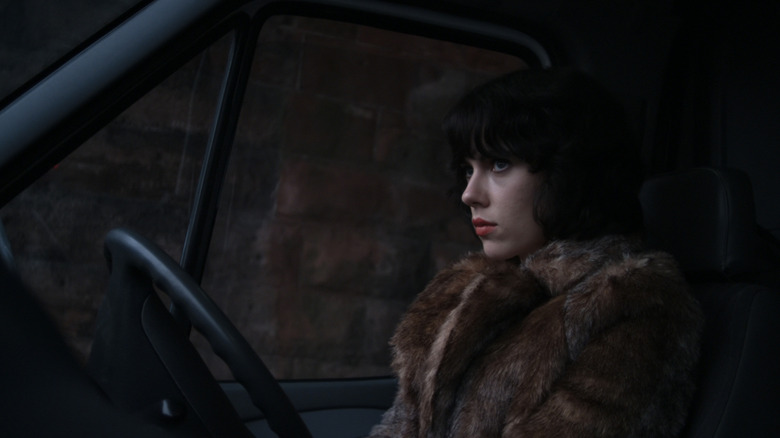
Partly inspired by Michel Faber's own experience of moving from a thriving Australian city to the solitude of the Scottish highlands, and the accompanying anxiety and alienation he felt, "Under the Skin" was a haunting and surprisingly powerful novel. In 2020, Faber wrote a piece for The Guardian, reflecting on the story as being about "war and racism," "the horror of factory farming," and "the vulnerability of the lost and unloved people pushed to the peripheries of our herd." "'Under the Skin' is not about the evils of eating meat," he said, "but about the evils of evading moral responsibility for the decisions we make."
That was definitely a part of Jonathan Glazer's film, but as Faber himself acknowledged, the director's vision was a very different take. In a 2014 interview with Gabriel Valdez, the author praised Glazer for taking a different route. "A mediocre or weak adaptation that tried to be faithful would have upset me," he said. "A strong adaptation that took wild liberties made me very happy. I've been lucky so far." The author even likened it to what he termed, the "ideal book-into-film adaptation": "Apocalypse Now," Francis Ford Coppola's loose adaptation of Joseph Conrad's 1899 novella "Heart of Darkness." As Faber put it, Coppola's film was "ruthlessly unfaithful and yet true to the essence." That seems to be how he viewed Glazer's "Under the Skin."
Still, since the 2013 movie did take such "wild liberties," there's plenty of room for a more loyal "Under the Skin" adaptation. Given the state of the world, a film reminding us about "the evils of evading moral responsibility" seems like it could become one of the best sci-fi movies of the 2020s.