

10 Worst Alternate History Movies Of All Time, Ranked
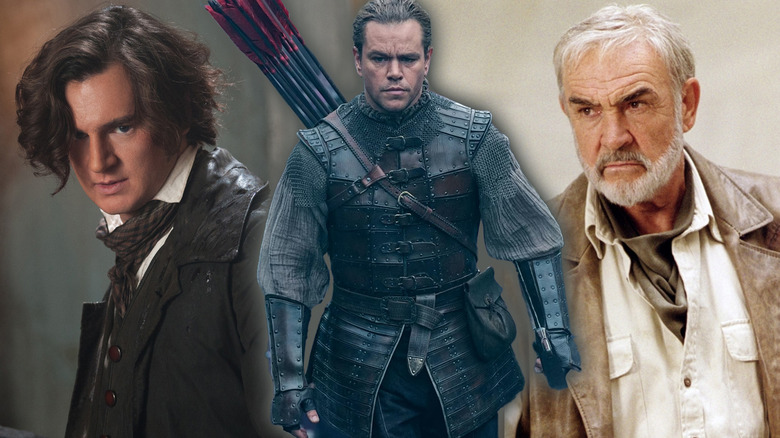
We may receive a commission on purchases made from links.
There's a thrill to the idea of an alternate-history movie. The subgenre always finds success directly from the level of intrigue it generates via the novelty of speculation — the wondering about how different the world would be if things went just a little bit differently. Some alternate history movies are, indeed, very good. Some others... not so much.
Just as there can be an appealing sense of fascination held within a big-budget production visualizing an alternate version of familiar history and events, so too can that conceit fall flat on its face, lame or trite in its attempts to find sleekness or profundity in its what-if scenario. Alternatively, the film can simply be poorly made, as no film is immune to a great idea with shoddy execution. The films on this list run the gamut from shallow ideological exercises to lackluster adaptations to concepts that weren't done justice, all in the name of wondering what might have been. They might have you wondering about an alternate history where any of these movies were actually any good.
Here are the 10 worst alternate history movies of all time, ranked.
10. Anonymous
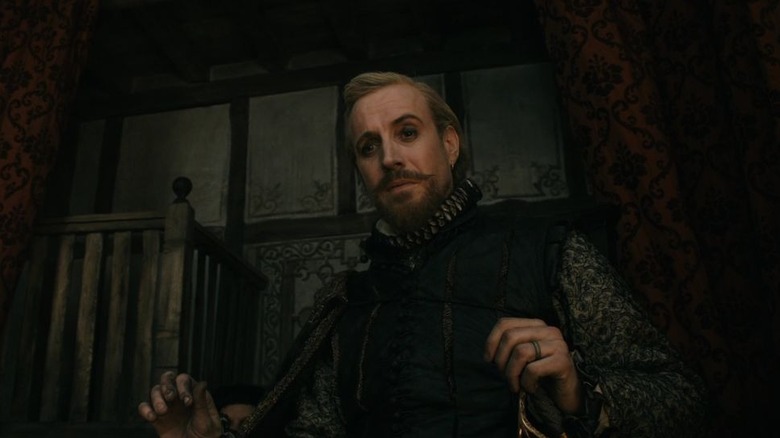
There's a persistent theory among stubborn conspiracy theorists that Shakespeare didn't actually write all those plays. You see, how could a simple commoner from Stratford-upon-Avon possibly achieve artistic success with such a lack of education and aristocratic background? This is, of course, a woefully classist perception of artistic ability, suggesting that the poorer classes of the world are too great of failures to even have good creative sense.
But that's the mindset that "Anonymous" engages with down to the bitter end. This may be a more lush movie for disaster-movie director Roland Emmerich ("Independence Day") to helm, but its ideological assumptions are just as tacky and tasteless as any of his other big-budget maelstroms of bombast (though it's still probably not his worst movie). At least, it features visual spectacle in its lush recreation of Elizabethan London, with costuming and production design intricate enough to make it hard to totally turn your nose up at it.
However, its humoring of the idea that Edward de Vere, Earl of Oxford, was the true writer of Shakespeare's plays fundamentally disregards half of the appeal and sensation of Shakespeare: that a regular man could be such an enduring visionary. As an alternate-history political thriller, "Anonymous" has its appeal in its incorporation of the shape, structure, and aesthetics of movies about courtly scheming and the power struggles of the English Renaissance, plus it's got a rock-solid cast including Rhys Ifans, Vanessa Redgrave, Rafe Spall, David Thewlis, and more. But even they can't pick up the slack left by the film's tasteless speculation.
9. The Great Wall
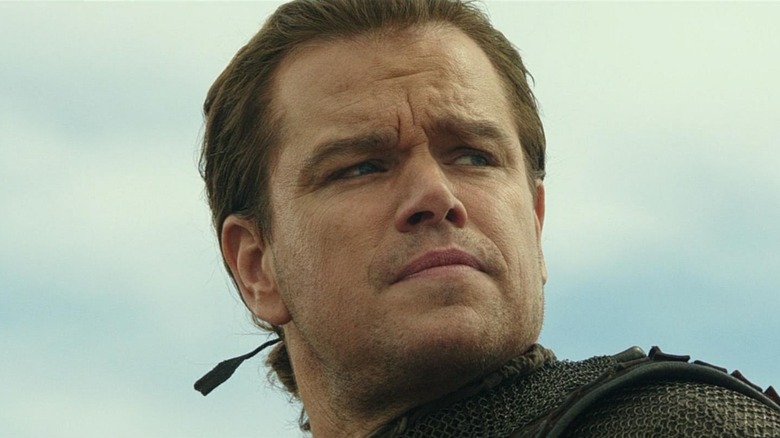
"The Great Wall" has its defenders — how could it not, given that it's from Zhang Yimou, the director responsible for some of China's most impressive cinematic output in the 20th century: "Hero," "Raise the Red Lantern," "To Live," and numerous others. With his first (and so far only) production entirely in English, Yimou sought to reach across borders, adopting and blending Western and Eastern stylistic ideas to create a historical sci-fi blockbuster that would, I don't know, unite the world?
That's some undue derision, to be fair. Yimou's aims are noble, but the result is decidedly goofy. It's a fantasy-action movie about a group of European mercenaries, led by Matt Damon and a pre-cultural-blow-up Pedro Pascal, who are taken prisoner at the Great Wall of China and enlisted to assist their captors when it's revealed that the wall's purpose is to keep out the man-eating reptilian aliens known as the Tao Tei.
That premise is ridiculous enough to have some innate pleasures, especially as Yimou still displays a capable hand in action filmmaking, with particularly striking landscape and set-piece cinematography by Zhao Xiading and Stuart Dryburgh. But in marrying the melodrama and balletic choreography of wuxia filmmaking to the stuffy sheen of Hollywood blockbuster action, "The Great Wall" dilutes the admirable aspects of both. The film also faced controversy for its potential white-savior implications in centering Matt Damon, who stars in what may just be his worst movie.
8. Cowboys & Aliens
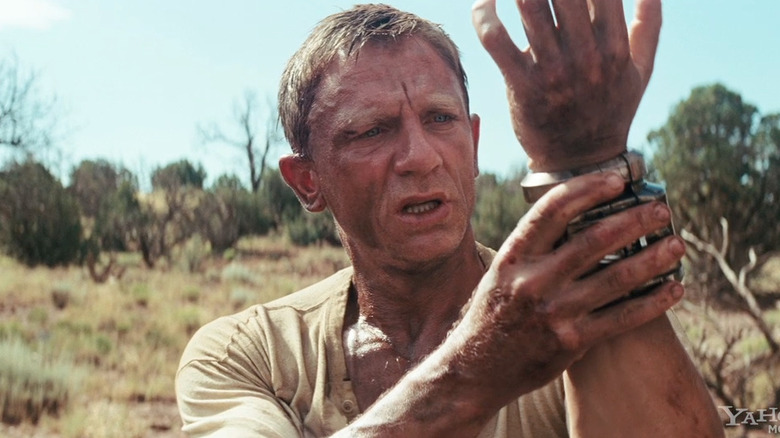
"Cowboys & Aliens" conveys its entire deal through the title. This is a genre novelty object, brazenly combining two disparate identities of pulp filmmaking into one misshapen whole, looking for fun in the curiosity of seeing stock Wild West personas — led by Daniel Craig and Harrison Ford — put up against the concerns of alien abduction. That may have been fun on the page, as originally seen via the 2006 Platinum Studios graphic novel by Scott Mitchell Rosenberg, but director Jon Favreau's adaptation loses sight of the genre indulgence with which this film should engage.
Craig stars as a Man With No Name-style stranger named Jake Lonergan, who wakes up with little memory of his past and no idea where he is, finding a strange, high-tech bracelet secured to his wrist. Turns out he's an outlaw, and when the frontier town of Absolution is attacked by marauders from the sky, he's forced to team up with the ruthless cattle rancher Colonel Woodrow Dolarhyde (Ford), as well as a mysterious woman with a weird amount of knowledge about the aliens, played by Olivia Wilde, in order to fight this new, unknown threat.
"Cowboys & Aliens" was a flop upon release that some of its stars didn't even understand. While not devoid of potential in mixing the archetypes and iconography of two mainstay yet often separate forms of genre entertainment, the film is too straight-laced to have any fun. It's natural to look toward the towering masterworks of the genre to riff on, but when your self-admitted approach is to try to make "Unforgiven" with aliens, you've lost the plot a little.
7. The League of Extraordinary Gentlemen
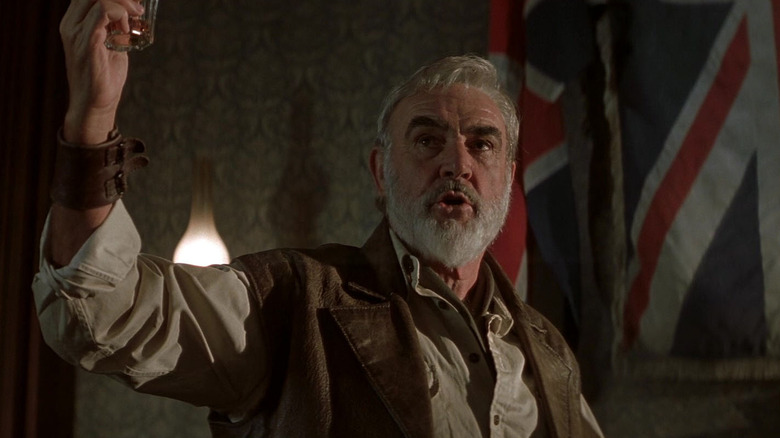
"The League of Extraordinary Gentlemen" is a notorious blockbuster flop. For one thing, the production's poor reception prompted legendary screen star Sean Connery to retire from acting altogether, and this would be his last role in a film. For another, it's an adaptation of the famed comic book series by Alan Moore and Kevin O'Niell, setting expectations it duly failed to meet. In attempting to translate their detailed, brainy, meticulously built alternate history, director Stephen Norrington and writer James Robinson were on the back foot from the get-go.
The film adheres to the comic's Avengers-style team-up of luminaries from classic literature across countries, styles, and eras, as well as the source material's steampunk adventure quality, though it charts its own course as far as the story. Worked into the fold are the likes of Allan Quartermain (Connery), Captain Nemo (Naseeruddin Shah), Tom Sawyer (Shane West), Mina Harker (Peta Wilson), Dorian Gray (Stuart Townsend), and more, as they're put on the path of a mysterious "Fantom," with aims of starting a new world war.
It's inherently a little silly, especially when you remove the core aspect of Moore's more intellectual style of writing from the equation. Under the purview of humdrum Hollywood filmmakers, "The League of Extraordinary Gentlemen" was always primed to miss the mark in achieving the specific cross between cartoony and clever, and it has an anonymous cast in which no one sticks out as memorable. At least it has impressive, baroque production design and costuming — maybe some of those aspects can be reused in the upcoming reboot.
6. Abraham Lincoln: Vampire Hunter
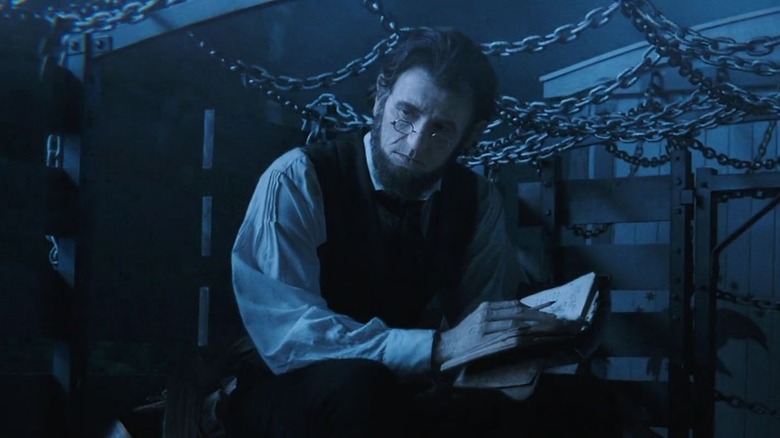
Yes, I hate to be the one to break it to you, but it's true: Abraham Lincoln did not really fight vampires. But it's a fun, if somewhat tacky idea for a genre movie, if only "Abraham Lincoln: Vampire Hunter" had landed on the right side of the "fun" and "tedious" demarcation that separates stupid movies.
With a screenplay by the author of the source novel, Seth Grahame-Smith, this Timur Bekmambetov-directed film stars Benjamin Walker as Abe Lincoln himself, who, in between his day job as the 16th U.S. President during the Civil War, moonlights as a killer of the undead, spurred on by his mother's death at the hands of a vampire when he was a child. As the war rages on, he becomes privy to a conspiracy: the Confederate army is being supported by a secret vampire society.
Though HBO Max subscribers gave this historical supernatural horror flick a small resurgence, the film itself offers little to recommend. It carries a solemn tone that contradicts the inherent absurdity of the central premise, and it's another genre-history mashup that seems afraid to have fun with its own premise. The self-seriousness mashes together historical drama and moody vampire action in a way that suggests an attempt to adhere to good taste, as if audiences showing up to a film titled "Abraham Lincoln: Vampire Hunter" had a single care for such discernment.
5. Wild Wild West
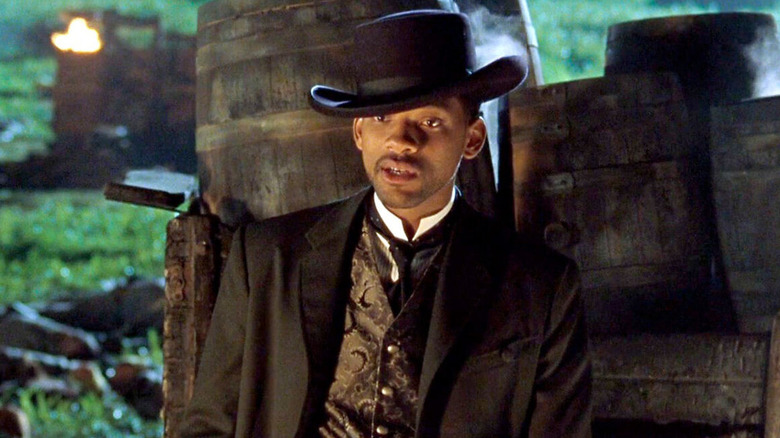
Summer 1999 is remembered as one of the biggest blockbuster seasons to ever exist: "The Matrix," "Star Wars: Episode I: The Phantom Menace," and "The Sixth Sense" were all in the lineup of anticipated franchise projects and unexpected new visions alike. "Wild Wild West" was there too. Barry Sonnenfield, coming off the success of "Men In Black," reunited with star Will Smith for this steampunk reimagining of the 1965 CBS series, trading the show's modest Western spy-fi charm for nine-figure spectacle that falls flat on its face.
Smith and Kevin Kline play mismatched Secret Service agents chasing Dr. Arliss Loveless (Kenneth Branagh), a legless, wheelchair-bound Confederate scientist plotting to assassinate President Ulysses S. Grant (also Kline) with a mechanical tarantula the size of a small building. The premise has camp potential, and the hardware looks appropriately expensive. But the script never settles on what kind of movie it wants to be, ping-ponging between buddy-comedy banter, halfhearted romance with Salma Hayek, and action sequences that have scale but no impact.
Smith reportedly passed on "The Matrix" to make this instead, a decision that curbed the seemingly unstoppable power of his stardom during this era. Unlike its visionary peers, "Wild Wild West" is a late '90s genre disaster that more resembles the chaotic fiasco of the then-recent "The Island of Dr. Moreau" — much like that film, "Wild Wild West" had an endlessly ballooning budget, making it an enormously expensive washout to boot.
4. Dracula Untold
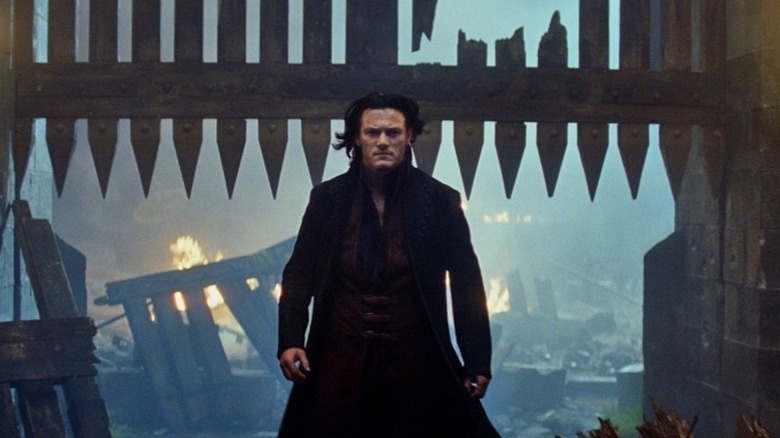
You may remember Universal Pictures' attempt to launch a doomed "Dark Universe" of updated, mature, darker takes on their classic monster properties, which pretty much died on arrival with the release of the Tom Cruise-starring "The Mummy" in 2017. But it failed before that too: "Dracula Untold" was meant to be the beginning of this new cinematic universe upon its 2014 release, but it performed so poorly that the studio decided to scrap it and start over. Such clumsiness is why the branding is now being used for an area of the Universal Studios theme park instead.
The film recasts Vlad III of Wallachia (Luke Evans) as a tragic king willing to damn himself for the people he loves, rather than a ruthless monster. Evans portrays him as a reluctant warrior who trades his soul to a cave-dwelling ancient vampire (Charles Dance) for the strength to repel an invading Ottoman army that demands his son as tribute. Director Gary Shore's film reorients Vlad's transformation into the blood-sucking creature as a sacrifice rather than damnation, which means the historical figure's true brutality is sanded down to basically nothing to make him more sympathetic.
What you're given is an origin story built backward from franchise necessity, more interested in setting up MCU-style sequels than in the individual movie itself. If the careless, commercialized revisionism isn't enough to stave off interest, a defanged Dracula blockbuster with such a generic coat of paint will do the trick. The Dark Universe truly deserved better than this dreck.
3. White Man's Burden
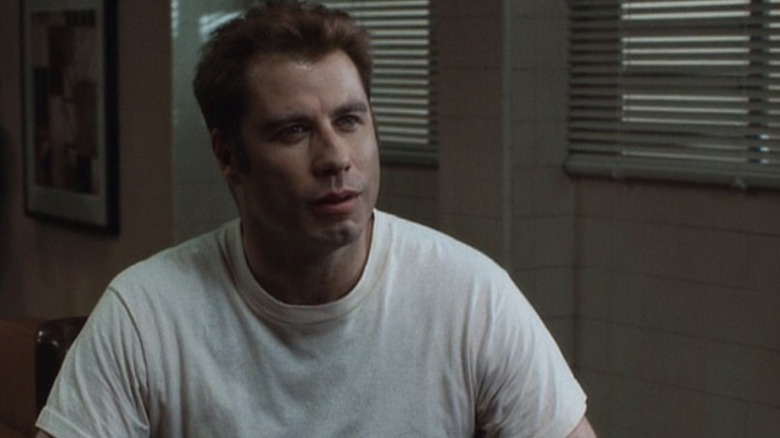
What if white people were Black and Black people were white? That's the intellectual extent of the speculation in writer and director Desmond Nakano's "White Man's Burden," which posits an alternate history in which the social hierarchy in America is flipped, meant to teach us something about the brutal realities of racism. Borrowing its title from Rudyard Kipling's 1899 poem about America's supposed moral obligation to colonize and civilize unclaimed territories, it lacks the cunning to weaponize that irony.
The film follows Louis Pinnock (John Travolta), a white factory worker whose life unravels after a misunderstanding with his Black boss (Harry Belafonte) costs him his job. The film seeks to function as an empathy machine, by making white audiences feel the sting of systemic racism by inverting who holds power. But treating racism as simply a matter of which group holds power erases the specific histories that produced American racial inequality. It has no interest in the complicated realities of how racism installs social hierarchies that last for generations or the violence and disenfranchisement that lead to the perpetual lack of resources and opportunities within marginalized communities.
Nope, this just indulges the obvious, blundering college-dorm-room-style philosophizing of its hypothetical scenario. The film's central gambit flattens centuries of structural harm into an almost insulting simplicity, a role reversal that has no actual engagement with the intellectual ideas hovering on its periphery. It's one of the worst types of superficial race-based morality tales.
2. Red Dawn (2012)
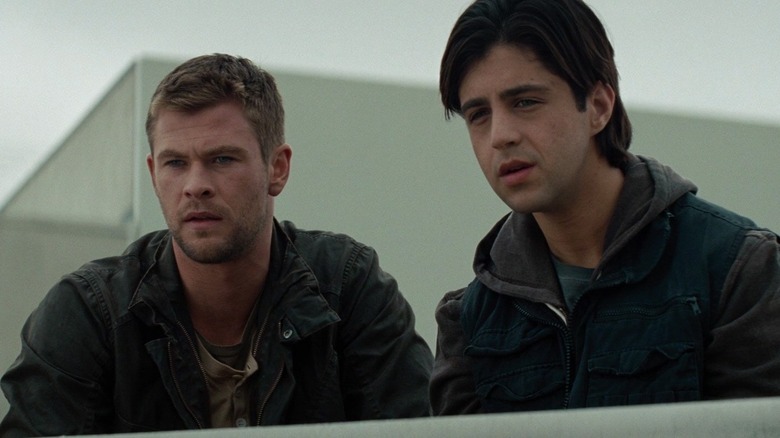
Not even the director of the original film that "Red Dawn" is remaking had many nice things to say about it. The original 1984 film was pure Cold War nationalist fantasy, a high-school-kids-with-guns daydream that at least had the courage of its Reagan-era convictions. This version, directed by stunt coordinator Dan Bradley, wanted the same jingoistic thrill without picking a real enemy — the invading force was shot as Chinese, then digitally scrubbed and redubbed as North Korean in pre-production once MGM got nervous about the Chinese box office. In the process, they chose an enemy too weak to plausibly stage the expansive brigade depicted on screen.
Maybe that nonsensicality could lend itself to a certain tongue-in-cheek absurdism in the film's nationalist fervor, but it plays its events far too straight for that to ever have been a consideration. Chris Hemsworth, fresh off "Thor," leads a cast of stock teens — Josh Hutcherson, Josh Peck, Adrianne Palicki, Isabel Lucas — as Spokane high schoolers turned guerrilla fighters in the midst of the occupation. No one offers this silly material any gravitas or enough presence to even enjoy it as pleasurable nonsense.
On top of everything else, the film was shot in 2009 and shelved for three years by MGM's bankruptcy, and it arrived even more stale than it would have if it had made it to cinemas on time. It's an action movie with nothing to say about occupation, resistance, or fear of a foreign power beyond, "Hey, this would be pretty scary if it happened here." Thanks for that trenchant insight, "Red Dawn."
1. Jonah Hex
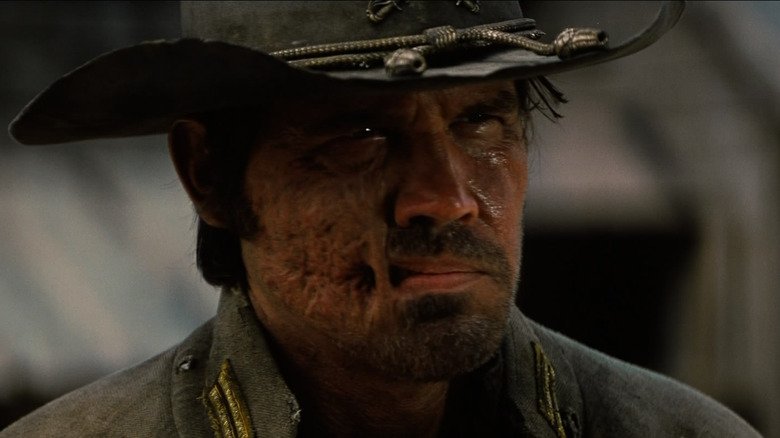
The only thing "Jonah Hex" has going for it is that, upon release, it was such a disastrous bomb that it's now recognized in the annals of moviemaking history as one of the great filmic catastrophes. But maybe having its name kept alive in such castigatory terms is worse than simply being lost to time, a fate that was equally possible given how stringently it resists being remembered in any capacity. Instead, its legacy has gone down as the worst DC Comics adaptation.
Adapting Alan Moore-adjacent DC/Vertigo grit is no easy task, but this movie hardly tries. Josh Brolin plays the scarred title bounty hunter, a former Confederate soldier with the supernatural ability to interrogate the dead, hunting down Quentin Turnbull (John Malkovich), the Confederate general who killed his family and has schemes to reignite the Civil War during the nation's 1876 Centennial by assassinating President Grant and Congress with a doomsday weapon. One of the many great things about "Jonah Hex" is that all of that is crammed into a scant 72-minute runtime.
"Horton Hears a Who" director Jimmy Hayward simply never finds a tone in this mess, whiplashing between spaghetti-western nihilism and Marvel-lite spectacle. Reshoots and the studio further gutted the film, reducing Megan Fox's role to near-cameo status and letting narrative momentum wither and die. Between its meager runtime and the chopped-to-bits quality of its characters and story, this is more of a shambolic supercut idea of what a "Jonah Hex" movie could look like than the movie itself.