

10 Best Alternate History Movies Of All Time, Ranked
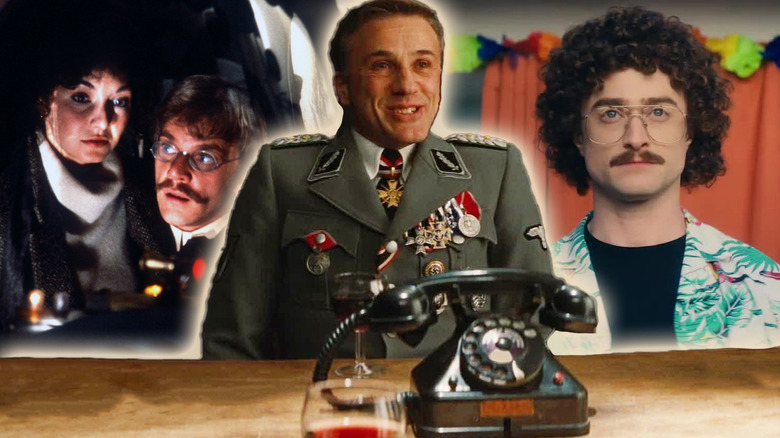
Alternate history films are a very specific subset of science fiction cinema. Some might argue that just about every movie set in an earlier time is alt-history, as they're bound to get details wrong, but mistakes, whether intentional or not, aren't enough to qualify a film as alternate history. The historical inaccuracy of it all needs to be both sizable and relevant — and likely intentional.
For our purposes here, a film needs to hit two specific criteria to count as alternate history: First, there needs to be a very real historical event or figure involved, the more and the bigger the better. Second, the event or figure need to be altered in some way. It doesn't need to be a major change, but it should be one that has a tangible effect on the film's story and/or characters.
Kkeep reading for a look at 10 of the best alternate history movies.
10. The Final Countdown
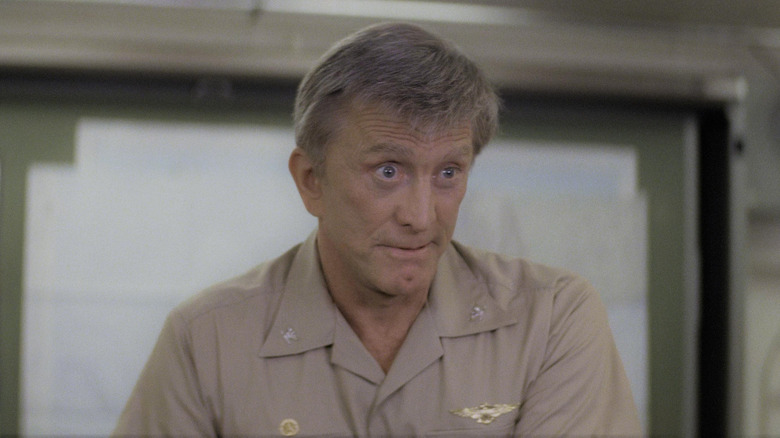
The USS Nimitz heads out to sea from its berth in Oahu for naval exercises around the Hawaiian Islands. It's 1980, and the ship's crew have no expectations of combat situations ahead, but that changes when a strange storm transports the Nimitz back in time to 1941... right before the Japanese forces attack Pearl Harbor.
Don Taylor's "The Final Countdown" was a minor success in theaters back in 1980, and there's a good chance that one of the people in the audience was a young, 15-year-old Michael Bay. It's an assumption, to be sure, but the mashup of genre premise and full access to U.S. military ships, jets, helicopters, and servicemen just screams Bay. It was filmed aboard the actual USS Nimitz, and some of its biggest thrills come from the use of real military hardware including aerial faceoffs between F-14 Tomcats and replicas of Japanese Zeros.
The action sequences and flight visuals deliver the big money shots, while a pretty killer cast tackles the drama and character beats surrounding the story itself. Kirk Douglas, Martin Sheen, James Farentino, Katharine Ross, Charles Durning, and Ron O'Neal all do good work as people caught up in a fascinating what-if scenario.
Could a single modern-day aircraft carrier fend off the Japanese threat at Pearl Harbor? There's much debate and talk about the theoretical pitfalls of changing the past, but a few skirmishes aside, the film ultimately avoids answering that question in favor of making some smaller changes to the events. Bay would have shown it, obviously, but he's likely uninterested in getting anywhere near Pearl Harbor again these days, as suggested by where his "Pearl Harbor" lands on our ranked list of his films.
9. Anastasia
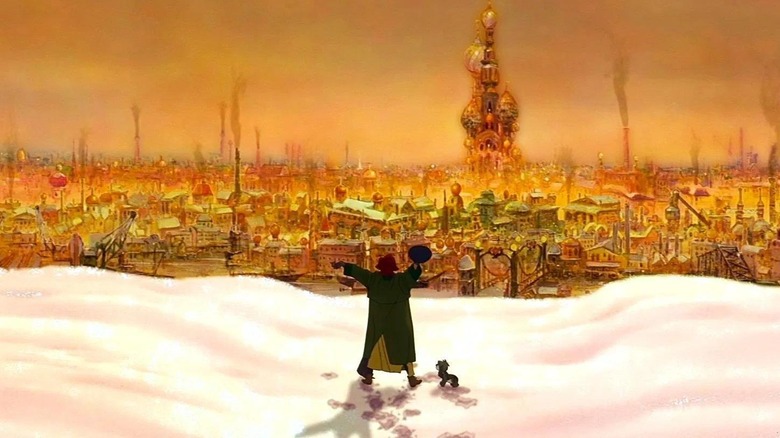
Anastasia Romanov (Meg Ryan) was just a young girl when her home was attacked by a mad monk named Rasputin (Christopher Lloyd) and her family was murdered. She escapes alongside her grandmother, but the two are separated, and young Anya is left with amnesia. An adventure kicks off a decade later that reveals her truth and brings her face to face with Rasputin once again.
The target audience for 1997's "Anastasia" might be too young to understand the alternate history implications in a story about Russia's Bolshevik revolution and the subsequent slaughter of the royal Romanov family, but their parents will appreciate the added complexities within this animated hit. Rumors of Anya's survival began swirling almost immediately after her death, and numerous claims and questions remained all the way up through 2007 when DNA was used to confirm the identity of her teenaged corpse. The film takes a happier route, though, by turning the mystery into a romantic adventure with a hefty splash of the supernatural.
John Cusack gives voice to Anya's love interest, and while neither he nor Ryan sing, their characters do. Both actors had some rom-com hits during their respective careers, and it's a shame that this is their only pairing, as their chemistry is quite good. (Cusack's performance is also one of the reasons we consider his character to be among the best animated love interests.) If the romance, songs, and adventure fail to grab the little ones, the film's big bad villain and his talking bat sidekick (voiced by Hank Azaria) are sure to do the trick. It's a fun time with a positive, uplifting spin on an alternate history take.
8. Walker
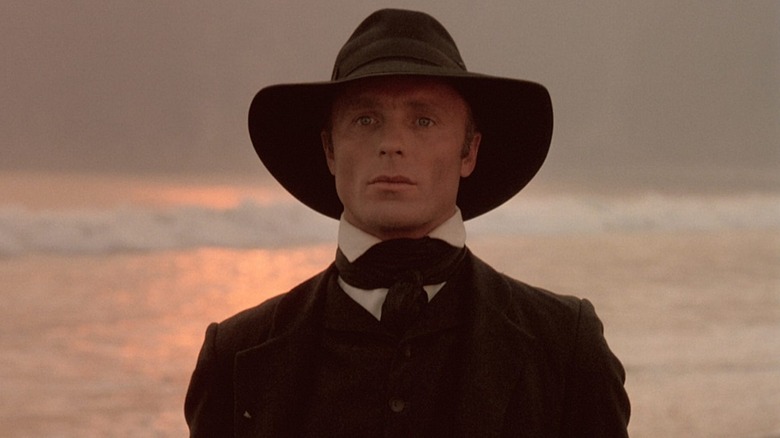
William Walker (Ed Harris) is an American soldier of fortune prone to taking any job that promises him money and the chance to unleash hell, but he finds his true calling after being hired to rein in the chaos in Nicaragua. He does just that before deciding chaos — under his own presidential control — is just what the situation calls for.
Not all alternate history films are created equal, and Alex Cox's "Walker" is a fantastic example of that genre maxim. The core story here is quite true — Walker did lead a mercenary attack on Nicaragua in the mid 19th century and install himself as president before eventually being overrun and executed — but Cox plays fast and loose with plenty of details. More importantly to the point of this list, he also employs an increasing abundance of anachronisms to drive home his thesis, including Newsweek magazine, Coca-Cola, helicopters, and more. Made in the 1980s as Ronald Reagan's administration was meddling in Central American affairs, the film is a scathing commentary on the United States' inability to mind its own business (that effectively tanked Cox's career).
The Monroe Doctrine — the idea that anything occurring in the North, Central, and South Americas is the province of the United States — gets a much-deserved drubbing here as Cox makes it clear that the events of the 1800s aren't actually too far removed from today. The changes to the historical details are deliberately absurd and work to create an off-kilter rendering of the past. Knowledge of such things adds to the experience of watching the film, but even without it, the movie is a thrilling, often hilarious ride with a powerhouse lead performance.
7. Watchmen
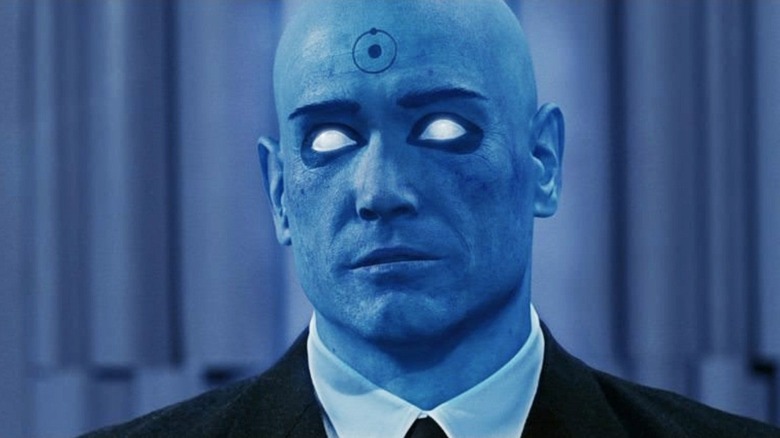
Superheroes had a good run from the years before World War II to the late 1970s, but as the Cold War rages on throughout the following decade, those heroes are now regarded as unwanted vigilantes. When one of them is murdered, the old superhero team comes together to investigate and discovers a devastating truth.
It took two decades of trying to get "Watchmen" from the pages of the graphic novel to the big screen, and while opinions vary as to its value as an adaptation, there's little denying that it's a terrifically creative and engaging piece of alternate history. Zack Snyder's "Watchmen," with plenty of moments and sequences that remain standouts today, puts fictional heroes and villains up against real-life historical figures and events, creating some compelling what-if scenarios regarding American history. Richard Nixon being in his fifth term as president is just one of the notes that strikes a bit too close to home these days.
The film also works as a deconstruction of the superhero myth. Most of these heroes are simply men and women dressed up in fancy costumes, and the film moves behind their masks to highlight strengths and weaknesses that are every bit human. It's an at times beautifully crafted rendering of an ugly world and uglier truths, and while its core elements — including the god-like Doctor Manhattan (Billy Crudup) — sometimes stretch beyond possibility, it remains a grounded look back at an altered past.
6. Time After Time
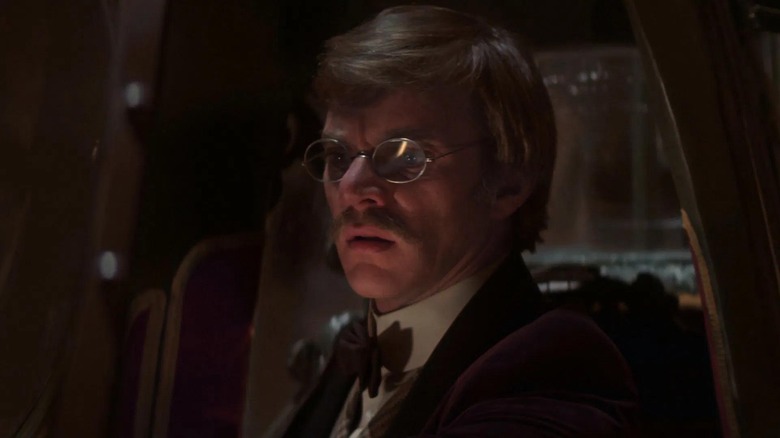
H.G. Wells (Malcolm McDowell) is a celebrated writer in the late 19th century known for his sci-fi tales. What few people know, is that he also built a working time machine in his basement. His good friend, Dr. John Leslie Stevenson (David Warner) is discovered to be Jack the Ripper and escapes into modern day San Francisco with Wells' machine.
Jack the Ripper is a historical figure whose identity was not confirmed for over 130 years, and that mystery can make for fascinating art, such as Bob Clark's "Murder by Decree" and the work of author Robert Bloch, who explored the killer in short stories, a novel, and even an episode of "Star Trek." Writer/director Nicholas Meyer (who coincidentally directed the best "Star Trek" movie) goes for a similar blend of sci-fi and thrills with "Time After Time," but also succeeds beautifully in adding elements of both comedy and romance.
McDowell, in a rare leading role as the hero, is perfection as an intelligent man forced to chase a friend into the future — our present — and Warner is equally effective as the murderous madman who discovers the modern world is far more receptive to his interests. Mary Steenburgen also shines as the woman swept up in it all. The alternate history element is arguably limited to Wells' invention and giving the Ripper a fantastical escape from the 19th century, but it sure does explain why it took so long to identify him in real life. Fans of the film should check out some other underrated time travel movies.
5. Operation Avalanche
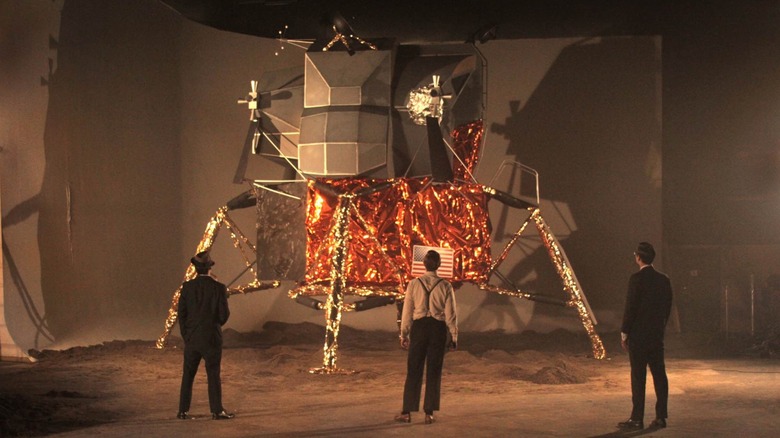
It's 1967, and the U.S. is in a race against the Soviet Union to see who can reach the moon first. The CIA sends undercover agents into NASA in the hopes of finding a Russian mole, but they instead discover that the upcoming Apollo 11 mission is doomed to fail unless Matt Johnson (Matt Johnson) and his fellow agents can somehow fake the moon landing.
Matt Johnson is arguably Canada's greatest unsung export. From "The Dirties" to the outstanding "Nirvanna the Band the Movie" — the latter being arguably the best and most creative film of the year so far — Johnson and friends have shown a real knack for using the faux doc format to deliver smart, insightful, and hugely entertaining films about nothing short of the human condition. That condition has ranged from the tragic to the mundane, but Johnson adds an alternate history notch to his filmmaking belt with "Operation Avalanche."
Some scenes were actually filmed at NASA, as they believed that he was shooting a student film, and it adds genuine authenticity to the film's conspiratorial thrills. Johnson and his crew maintain a terrific sense of period as they tap into the real conspiracy, and characters even visit Stanley Kubrick's production of "The Shining" for tips they can apply towards their fake footage. It's funny and absurd at times, but it grows increasingly suspenseful as Matt starts to suspect the agency is working to clean up loose ends. Pair it with 1977's "Capricorn One" for a double dose of naughty NASA shenanigans, and you'll be left both entertained and paranoid.
4. Weird: The Al Yankovic Story

Weird Al Yankovic (Daniel Radcliffe) is the greatest and most successful musician in the history of the world, but how did he get there? Join us as we look back at the childhood and early years that shaped him to the highs and lows of fame. Not even a drug-fueled love affair with the pop star Madonna (Evan Rachel Wood) could stop him from becoming the musical giant we all know and love.
It's strange that other musician biopics have come out in the four years since "Weird: The Al Yankovic Story" was released, because none of them have even a hope of reaching its highs. Granted, Eric Appel's film has the benefit of focusing on an endlessly talented and controversy-free artist, but that just gives Appel and Yankovic free rein when it comes to telling the man's life story. The facts are there, from his discovery of the accordion as a boy to his hit parodies and Garmmy wins, but the fun is in the filler.
Yankovic's actual life has no juicy elements, and the only real drama is the tragedy of his parents' simultaneous death from an accidental carbon monoxide leak. The film instead fuses fact with fiction to create an alternate history of his rise to fame, including all the sex, drugs, and criminal antics you'd expect from a hard-living rock star. The results are quite funny as we enjoy the extremes alongside wholly fictional sequences highlighting the creation of his biggest hits. It's the silliest alternate history film you're ever going to see.
3. It Happened Here
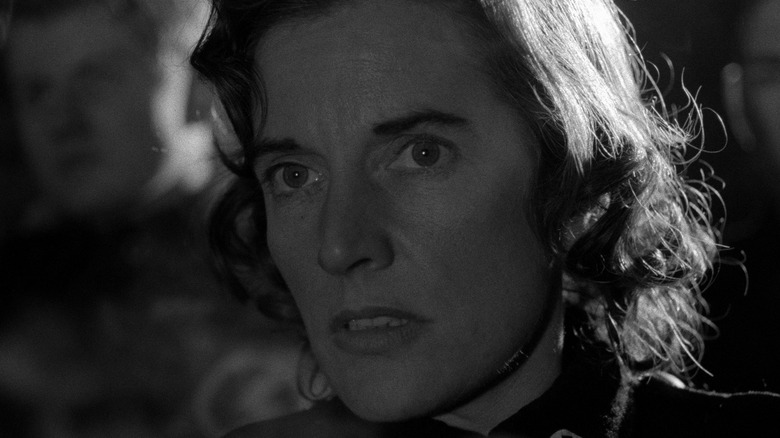
British forces, having been forced to retreat from Dunkirk, are all but decimated by the encroaching German army leaving the Axis powerhouse in occupying control of Great Britain. British collaborators assist the Germans in enforcing this new order and attempting to squash all efforts at resistance. Pauline, a nurse caught in the struggle, finds compelling reasons on both sides.
1964's "It Happened Here" is easily the most straightforward of the alternate history films on this list in that it's imagining the now cliched trope of Germans triumphing in World War II. At the time, though, this was a rather shocking and uncomfortable piece of fiction. Part of the reason why is that the film's focus is less about entertaining thrills and more of a commentary on just how frighteningly easy it is for people to embrace fascism.
Co-directors Andrew Mollo and Kevin Brownlow, both just teenagers when they began working on the film, took inspiration from Sinclair Lewis' 1935 novel, "It Can't Happen Here," for both their title and their thesis. In the film, many of the British citizens seem to accept their new fascist leaders out of some combination of fear, self-preservation, and the belief that maybe the German way is the better way after all. Pauline, the viewers' proxy, is a smart woman who still finds herself convinced, at least temporarily, that collaborating is the right thing to do. The observation is brutal in its honesty as we've seen all too frequently in the real world.
2. Inglourious Basterds
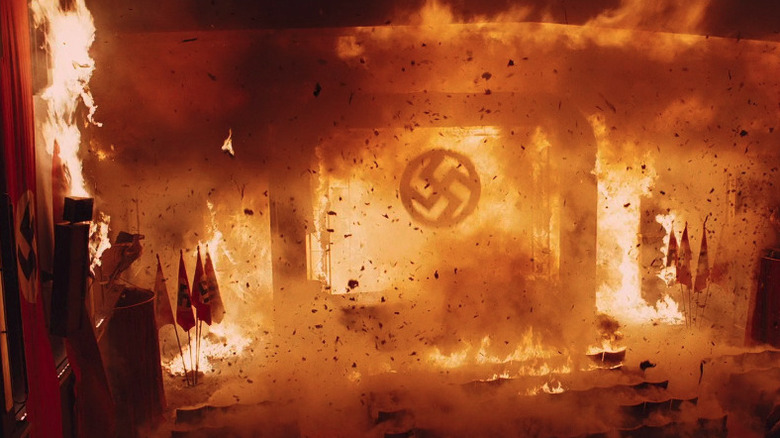
Lt. Aldo Raine (Brad Pitt) leads the Basterds, a group of soldiers with various origins who are united on a mission to terrify, kill, and scalp Nazis throughout France. They leave some alive with swastikas carved into their foreheads so they can't escape their pasts after the war. Their latest mission sees them targeting Adolph Hitler and his top commanders.
Quentin Tarantino's "Inglourious Basterds" is a terrifically entertaining World War II romp that plays relatively within the bounds of history for much of its running time (and earns a spot on our list of the best World War II movies in the process). The protagonists may not have been real people, but there's nothing necessarily outlandish about the carnage, combat, and compelling dramas endured by soldiers and civilians alike during the war. It's that turn in the back half, though, that allows Tarantino to take a massive swing into alternate history territory.
Sending soldiers after Hitler is one thing, but actually letting your heroes unload multiple machine gun rounds into his pale, stupidly mustachioed body before blowing up his corpse for good measure? Well, that's just pure Entertainment with a capital E. Tarantino knows it, too, as evidenced by the final line in the film that sees Raine mark a Nazi and say that this might just be his masterpiece. It's a big, thrilling ride filled with heroes and villains, victories and losses, and it sends viewers back out into the light on an alternate history high.
1. Once Upon a Time in Hollywood
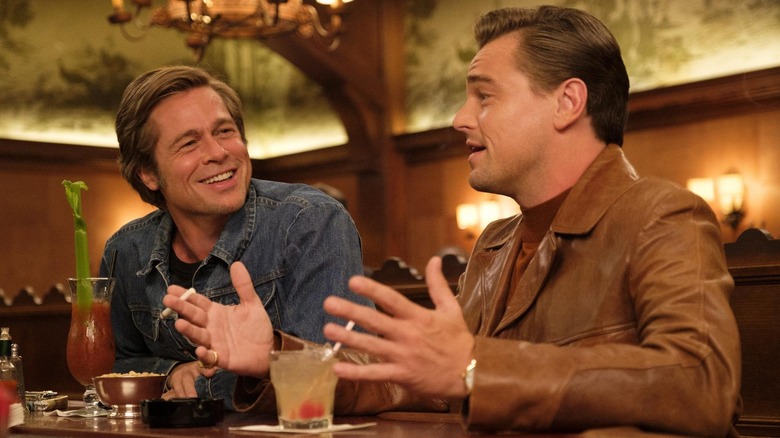
It's 1969, and two friends are lamenting their fading careers in Hollywood. Rick Dalton (Leonardo DiCaprio) was once an in-demand actor, and Cliff Booth (Brad Pitt) was a busy stunt performer, but interest in both — whether due to Dalton's acting talent or Booth's antics on and off set — has dwindled. Life takes a turn, though, when they cross paths with Charles Manson.
If "Inglourious Basterds" leaves audiences on a high, Quentin Tarantino's "Once Upon a Time in Hollywood" doubles down with an even more satisfying and cathartic ending. While Dalton and Booth are fictional creations, their time in late 1960s Hollywood sees them interacting with real people in ways that help shape and give life to the world that Tarantino is creating here. It's a fun, loose, and endearing look at a purer Tinseltown than the corporatized one we have today, and it's an entertaining time for folks familiar with past talents and events.
The presence of Sharon Tate (Margot Robbie), Manson (Damon Herriman), and his murderous lackies (Mikey Madison, Austin Butler, Madison Beaty) — the ones who slaughtered a pregnant Tate and her friends in real life — suggests that tragedy is looming, but Tarantino has other ideas. He gives Tate the Hollywood "ending" she never had while giving audiences a hugely satisfying and brutally violent catharsis that also serves to lift up our two leads. It's as over the top and violent as it is sweetly beautiful, and it's alternate history employed to benefit characters over all else. Our lives wouldn't be changed by this course of events, but theirs would, and that's more than enough.