

10 Greatest Late Night Talk Show Hosts Of All Time, Ranked
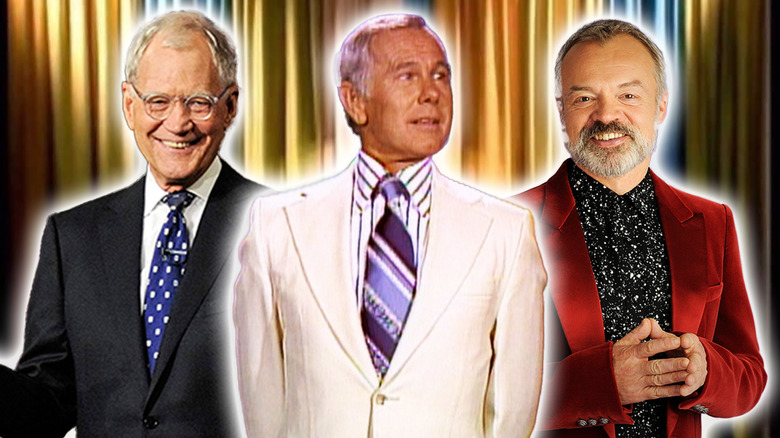
Late night talk shows have been a fixture of American television, practically from the very beginning. The format typically mixes conversational interviews with comedy bits, games, and musical guests, all presented by a charismatic and entertaining master of ceremonies. However, despite many people trying their hand at being a great late night talk show show host, there are an elite few who stand out as the best of the best.
Now, just because a program airs after the clock hits double digits and features some elements of a traditional late night show doesn't mean that they're gonna make the list. John Oliver missed the cut, not because of a lack of greatness, but because his show only airs once a week, giving it less of a spotlight than most of the other late night hosts. Instead, as the landscape of late night continues to change and (hopefully) evolve, we're looking at the all-time greats of the more traditional evening talk show format and its evolution over the years, many of whom defined the genre as we know it today.
Joan Rivers
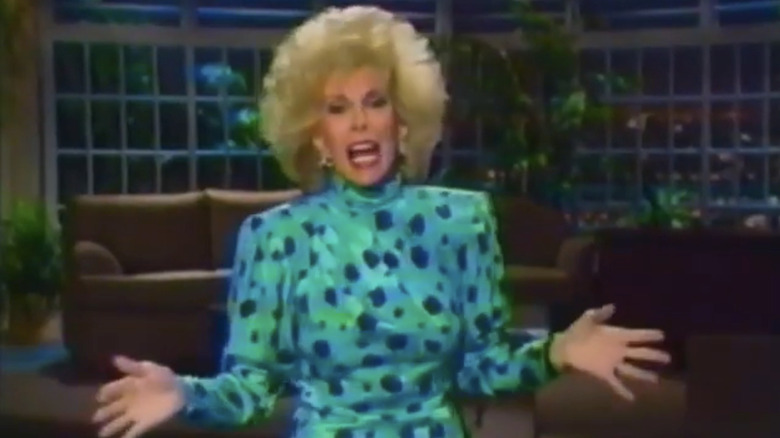
Late night television has been dominated by men since the very beginning. However, Joan Rivers changed the game after appearing as a guest on "The Tonight Show" in 1965. After appearing on the show several times after that, she and Johnny Carson would form a close bond. The comedian would soon become a mentee of the legendary host as she gained more and more success. Then in 1983, Rivers would become the permanent guest host for "The Tonight Show" whenever Carson was unavailable.
Unfortunately, Carson and Rivers would have a falling out just three years later, when Fox offered her a show of her own. "The Late Show Starring Joan Rivers" premiered on October 9, 1986, making her the first woman to host her own late night talk show on a major network. But because of her 11:00pm ET time slot, she was in direct competition with her mentor. Rivers didn't give Carson any heads up about the situation, so he felt betrayed and never spoke to her again. He also banned Rivers from appearing on "The Tonight Show," which was upheld until 2014 when Jimmy Fallon took over the desk.
Despite the controversies, Rivers would go on to have a legendary career as a host and TV personality. She would expand beyond late night by taking her self-deprecating and sarcastic humor to daytime television and red carpets. Still, her impact on late night would pave the way for Chelsea Handler, Samantha Bee, Lily Singh, Amber Ruffin, Taylor Tomlinson, and other incredibly talented women trying to make their mark on the genre.
Arsenio Hall
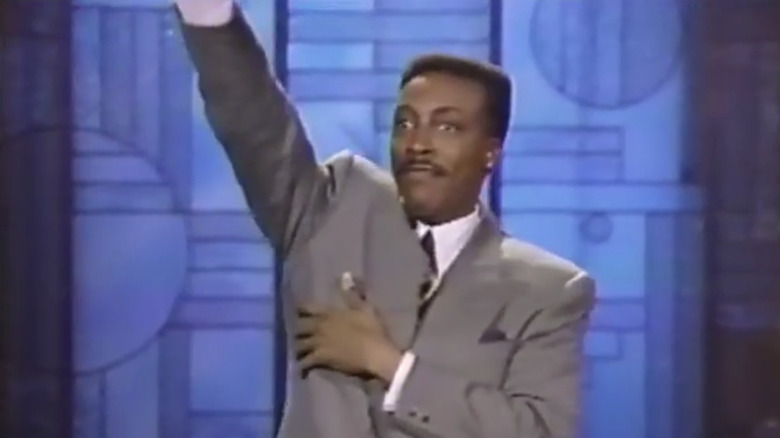
"The Late Show Starring Joan Rivers" only lasted for seven months. After she departed the series, Fox attempted to rebrand the late night talk show with several different hosts, including Suzanne Somers, Frank Zappa, and Howard Stern. However, Arsenio Hall stood out in a big way and propelled him into a stellar career as a talk show host.
Hall originally travelled to Los Angeles to pursue a career in comedy, which led to starring roles in "The Real Ghostbusters" and "Coming to America" during the late 1980s. But in 1989, Fox capitalized on his late night popularity by launching "The Arsenio Hall Show." Unlike the hosts that came before him, Hall targeted a much younger and more urban demographic as his audience. He even offered an alternative to traditional applause as he borrowed the Cleveland Browns' raucous "woof woof woof" chant and accompanying fist pumping motion.
Because of his hip and modern approach to late night television, Hall attracted guests that other talk shows typically wouldn't feature such as Jason Voorhees (the character, not actor Kane Hodder), then-presidential candidate Bill Clinton playing "Heartbreak Hotel" on the saxophone, and WWE superstars like "Macho Man" Randy Savage and the Ultimate Warrior. In an effort to use his platform in a positive way, Hall often spoke out against the worldwide prejudice against HIV and AIDS, after Magic Johnson's diagnosis.
Though it would be cancelled in 1994 (and revived for one season in 2013), "The Arsenio Hall Show" cemented its host's place in pop culture history and stands as proof that late night TV isn't exclusively for white guys.
Jon Stewart
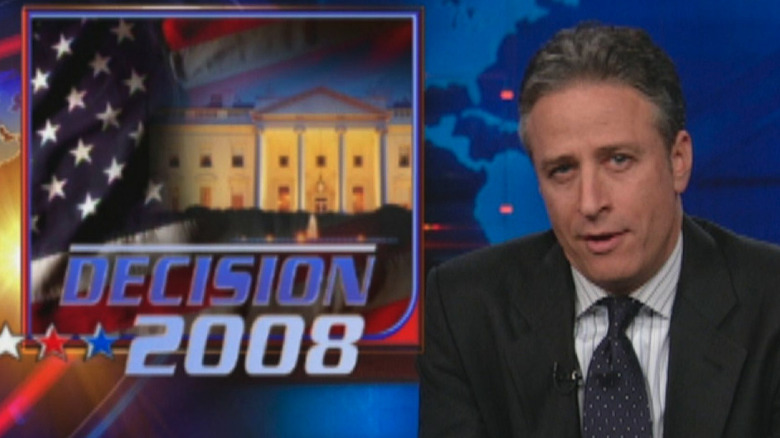
Arsenio Hall may have ushered in the MTV Generation into late night talk shows, but Jon Stewart certainly kept them around and interested.
The comedian's first notable hosting gig was MTV's "The Jon Stewart Show." While it went through some format changes during its run from 1993 to 1995 as it transitioned from a 30-minute show to a 60-minute show, both iterations featured celebrity and musical guests who were more counterculture than those who would appear alongside his network TV counterparts. The most memorable guest though was probably Marilyn Manson, who sparked controversy by setting a lunchbox that looked like a Bible on fire.
During this time, Stewart caught the attention of David Letterman, who was the final guest on "The Jon Stewart Show." After frequently appearing as a guest host on "The Late Late Show," many assumed that Stewart would replace Tom Snyder as the new host. But when that didn't happen, Stewart focused more on acting while occasionally hosting events.
Then came "The Daily Show." When Craig Kilborn left in 1999 to replace Tom Snyder on "The Late Late Show," Stewart became the new face of Comedy Central's satirical late night series. Although, rather than continue Kilborn's pop-culture focused commentary, the new host targeted politics and world news. Considering America was beginning the George W. Bush era, there was plenty to joke about while keeping the audience informed through the laughter. Throughout his initial run on the show that lasted until 2015, then again during his second tenure beginning in 2024, Stewart became one of the most popular hosts on TV, late night or otherwise.
Ed Sullivan
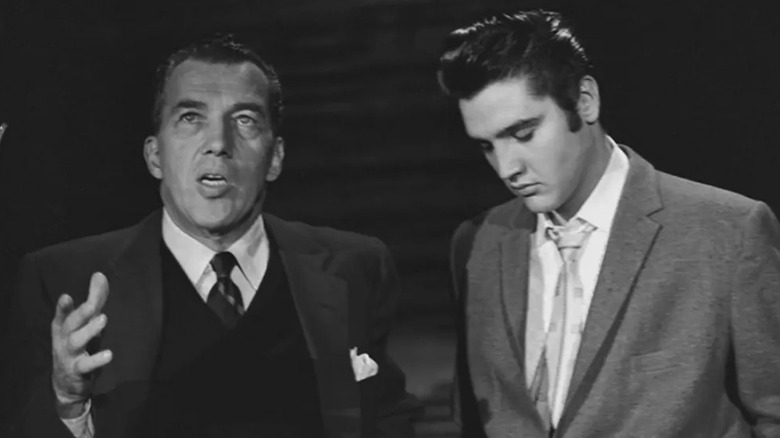
Long before influencers flooded your feeds to tell you what is currently cool, the only person anyone needed to hear from in the early days of television was Ed Sullivan. After working as an entertainment journalist throughout the 1920s and 1930s, he would eventually branch out into radio as he became the host of a weekly CBS variety show called "Summer Silver Theater." But by 1948, he would transition into television by hosting "Toast of the Town." Eventually, it would evolve into "The Ed Sullivan Show," a legendary staple of late night TV from 1948 to 1971.
When he first appeared on CBS, critics gave Sullivan poor reviews and stated that he had no personality. However, his impeccable eye for talent was enough to earn the trust of his viewers as he would bring iconic rock and roll acts such as The Beatles, The Doors, and Elvis Presley in front of a wider American audience.
However, he also took great care to showcase talented performers from all genres, disciplines, and races. Whether it was Jim Henson's Muppets, Rodgers and Hammerstein's latest musical direct from Broadway, classically trained violinist Itzhak Perlman, or previously overlooked solo female country artist like Loretta Lynn and Bobbie Gentry, Sullivan offered something for everyone in the audience. He was also very adamant about showcasing Black entertainers when doing so wasn't as commonplace. Along with more mainstream acts like Sammy Davis Jr. and the Jackson 5, the show would frequently welcome The Supremes, Fats Domino, Sam Cooke, and many other prominent Black performers, no matter what Southern station managers or sponsors had to say about it.
Steve Allen
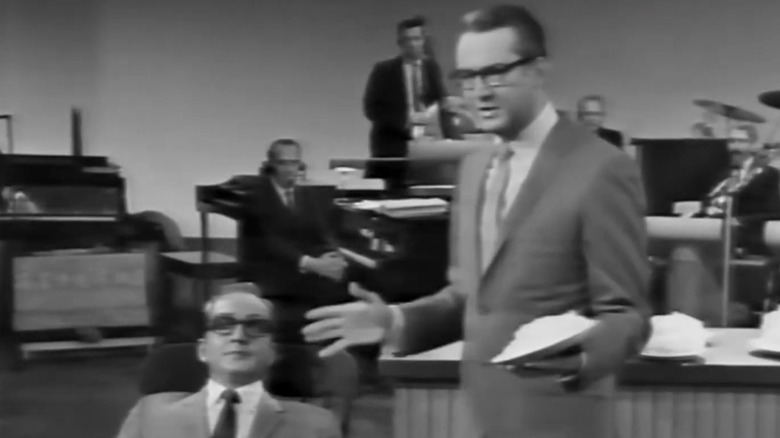
"The Tonight Show" is an institution of American late-night television. After premiering in 1954 and continuing its legacy through multiple generations, it has also become the world's longest-running talk show. Though many will likely think of Johnny Carson, Jimmy Fallon, or (for better or worse) Jay Leno as the first face they associate with the franchise, none of it would be possible without Steve Allen.
The late night pioneer started his career in radio during the 1940s before making the jump to TV in the 1950s. After spending some time as a pro wrestling announcer, the comedian followed in Ed Sullivan's footsteps by making the jump from radio to TV at CBS. He would go on to guest host "Arthur Godfrey's Talent Scouts," appear as a regular panelist on game show "What's My Line?", and host the talent show "Talent Patrol." Although no matter what position he filled, Allen proved to be a star thanks to his charisma and witty repartee.
Finally, after making the jump to the local NBC affiliate station in 1953 to host "The Steve Allen Show," his talk show was renamed "Tonight Starring Steve Allen" for the move to NBC's nationwide programming. As part of the show, the host would deliver an opening monologue, present comedic segments with audience participation, and bring his cameras outside of the studio to conduct "man on the street" interviews. While he only stuck around "Tonight" for two and a half seasons before moving on to other networks like PBS and The Disney Channel, he firmly established these bits as integral elements of late night television that endure to this day.
Graham Norton
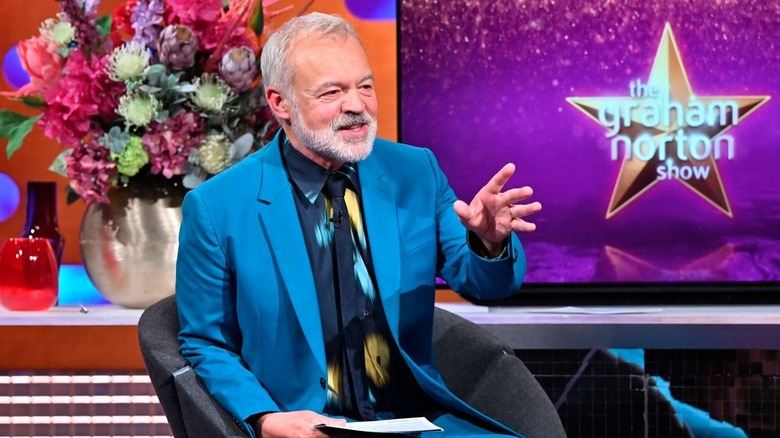
This list primarily consists of hosts that operate in the United States of America. Though this next late night fixture did spend a little bit of time hosting a show on Comedy Central in 2004, Graham Norton's body of work is best represented by his acclaimed chat show in the United Kingdom.
The award-winning Irish comedian first appeared on people's radars in 1992 as he performed at the Edinburgh Festival Fringe in drag as Mother Teresa. From there, as Norton appeared as an actor, a talk show panelist, and an occasional guest host on various channels in the UK, Channel 4 took notice of his work and offered him his own show in 1998. "So Graham Norton" and "V Graham Norton" (and to lesser degree, "The Graham Norton Effect," which only lasted for 13 episodes in the US) firmly established him as one of the standout voices in British comedy.
Since then, Norton has been tapped to host several notable events around the UK such as Comic Relief and Eurovision. He would also continue to act here in there in projects including the Netflix film "Eurovision Song Contest: The Story of Fire Saga." Although, he has built up his fanbase by primarily serving as the host of "The Graham Norton Show" on BBC since 2007.
Amidst his flamboyant presentation, irreverent humor, and questions that cut surprisingly deep, he manages to cultivate an environment that is both humorous and insightful. Norton weaves his guests' stories together, masterfully navigates through delicate moments that can go from awkward good to awkward bad, and generally creates a fun, party-like atmosphere for everyone in his West London studio.
Stephen Colbert
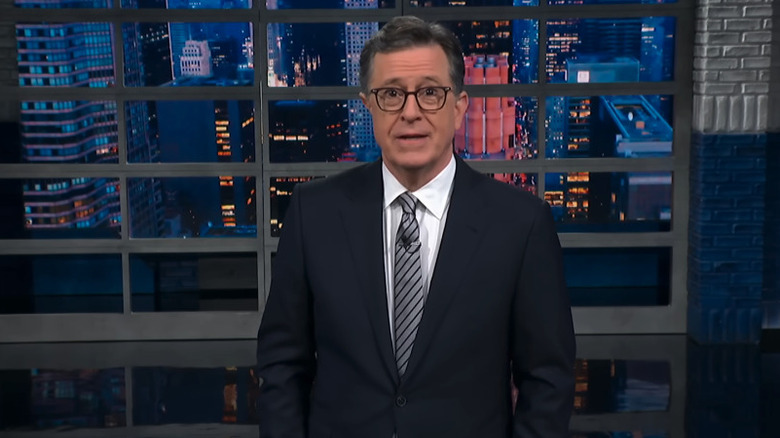
Late night television is filled with characters. We're not just talking about the ones featured in sketches and bits during the shows. The hosts themselves fit into that category as well. Arguably, no one understands this better than Stephen Colbert.
While studying at Northwestern University in Chicago, Colbert discovered improv thanks to the world-renowned troupe at Second City and "Yes and"-ed his way around the Windy City by playing several characters during those days. Eventually, this would lead to jobs on "The Dana Carvey Show" and "Strangers With Candy." However, his breakout moment came when he joined "The Daily Show" as a correspondent before spinning off into his own satirical news program "The Colbert Report."
From 2005 to 2014, Colbert parodied conservative political pundits like Bill O'Reilly and Sean Hannity by portraying a "well-intentioned, poorly informed, high-status idiot" that shared his name. Through this character, the show was able to keep its audience up to date by taking full advantage of comedy as a mirror of society and keeping his audience laughing through some politically rough times.
Eventually, the real Stephen Colbert took center stage as he became the successor to David Letterman on CBS' "The Late Show" in 2015. Though he certainly had big shoes to fill, he did so with a personable aura, a genuine interest in his guests, and a hint of mischief. Despite building up a massive fan base and well-respected reputation among his peers in the industry, the network controversially decided to cancel his show after 11 seasons and the whole late night talk show franchise all together after 33 years. Regardless of the way it ended (for now), Colbert's run on late night TV solidifies him as one of the all-time greats.
Conan O'Brien
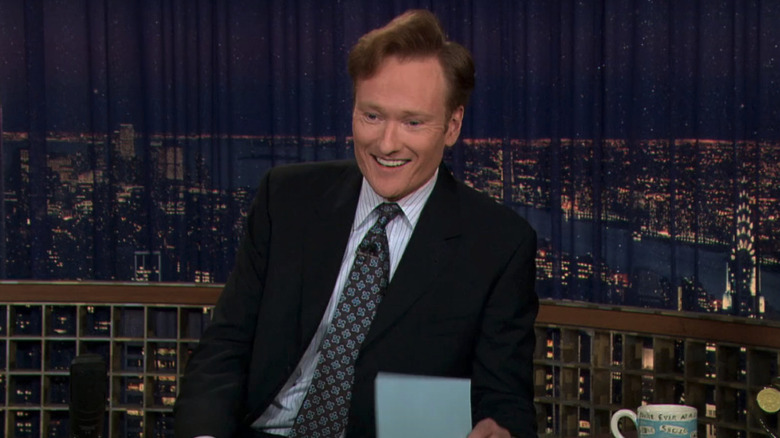
It is often said that you need to know the rules in order to break them. When it comes to comedy, Conan O'Brien received an unparalleled education that undoubtedly taught him every rule in the book and then some. So after he served as the president of the legendary publication "The Harvard Lampoon," a staff writer for "Saturday Night Live," and a writer/producer for "The Simpsons," the eccentric comedian took his talents to late night television, where he proceeded to break the rules for nearly 30 years.
O'Brien brought a unique hosting style to "Late Night" on NBC after taking David Letterman's spot in 1993. The show was injected with spontaneous, awkward, and self-deprecating humor that stood out compared to his contemporaries at the time. Armed with a cavalcade of zany characters, lewd yet elegant remote segments, and a whimsical approach to interviews, the then-unknown host became an influential figure in alt-comedy that would resonate with a younger, more hip audience for years to come.
His popularity only grew with the rise of the internet, so the network was ready to take things to the next level. During his 2004 contract negotiations, it was decided that O'Brien would take over "The Tonight Show" from Jay Leno in 2009. However, after executives began to get antsy about ratings, NBC would famously bring Leno back in January 2010 with his own show and push O'Brien to a later time slot. This would ultimately lead the beloved entertainer to leave his dream job.
Although, this wasn't the end of O'Brien's career. He would host "Conan" on TBS from November 2010 to June 2021 before transitioning to a weekly podcast "Conan O'Brien Needs A Friend" and HBO Max travel series "Conan O'Brien Must Go."
David Letterman
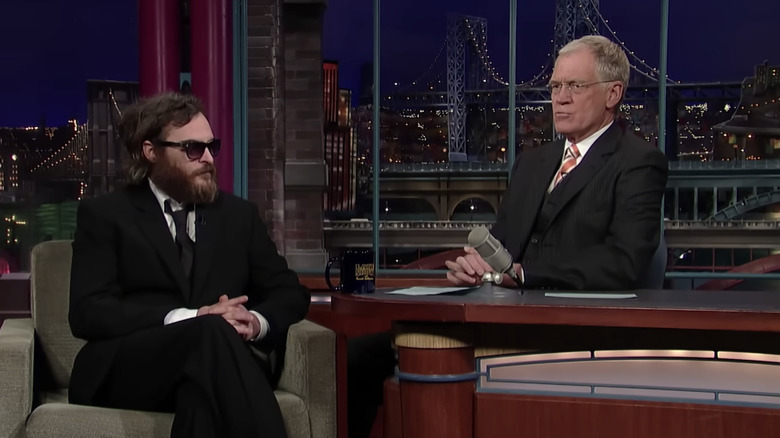
David Letterman is a trailblazer in the realm of late night hosts. The comedian changed the face of late night television by being offering a true alternative to the hosts and shows that proceeded him. Basically, he ran so Conan O'Brien and Stephen Colbert could walk.
Following his move to Los Angeles in 1975, Letterman was working towards a career as a comedy writer. Although, as he showcased his trademark dry, sarcastic humor around town in various roles, he caught the attention of Johnny Carson and "The Tonight Show." He would regularly appear as a guest on the show before becoming a go-to guest host between 1980 and 1981 before landing a morning show of his own on NBC. But when the network launched the "Late Night" franchise in 1982, he transitioned to hosting late night.
The relationship with NBC would sour in 1991 though. After his mentor Carson announced his retirement, many assumed that Letterman would take over the hosting duties on "The Tonight Show." However, allegedly against the exiting host's wishes, Jay Leno ended up getting the job. This resulted in Letterman jumping to CBS in 1993 in order to launch "The Late Show" as direct competition for Leno.
Throughout his 22-year tenure on "The Late Show," Letterman continued to push the boundaries of what a late night show could be by utilizing an acerbic yet absurd style that attracted the coveted younger demographic to his show. Whether he was interviewing people on the street, from behind his desk, or even through a drive-thru window, Letterman remained cool and edgy in a way that inspired just about every modern host, interviewer, and comedian who grew up seeing him on their TVs (and eventually streaming on Netflix).
Johnny Carson
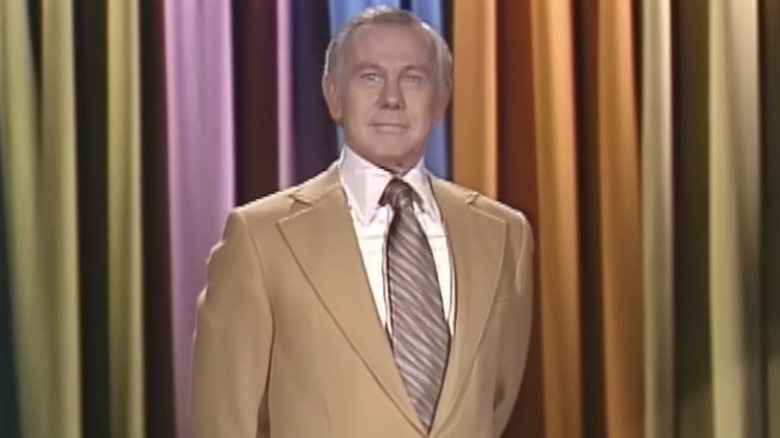
While there have been plenty of excellent late night talk show hosts over the years, none of them hold a candle to Johnny Carson. Although, he's not just an icon of late night. He's one of the most influential people in the history of comedy.
Carson pursued a career in entertainment after serving in the US Navy. Initially intending to be a magician, he hosted various radio and television programs throughout the 1950s. After hosting ABC's "Who Do You Trust?" from 1957 to 1962 (where he first met sidekick Ed McMahon), NBC tried to enlist him to replace Jack Parr on the program that would come to be known as "The Tonight Show." Surprisingly, the man known for his quick wit and casually genuine interviews declined the offer because he was concerned about interviewing celebrities for an extended amount of time.
These doubts continued throughout his first year on the job, but Carson must not have been that bad, since NBC kept him around for 30 years. In that time, the host established the modern format for late night talk shows. He also launched the careers of many legendary entertainers. If a comedian was good enough to make it to "The Tonight Show Starring Johnny Carson," they were hot topics around the water coolers the following day. In addition to launching the careers of several late night hosts on this list, he also propelled George Carlin, Andy Kaufman, Jim Carrey, Eddie Murphy, and many others into superstardom. Carson even gave the rub to Krusty the Clown on "The Simpsons." Of course, that's because he's the benevolent King of Late Night.
Long live the king!