

5 Biggest Mistakes In The Stranger Things Series Finale, Ranked
Was there ever any doubt that the "Stranger Things" finale was going to upset at least some fans? This is a show that's so massively popular it basically defined the streaming age, becoming a cultural phenomenon that reliably brought in mass audiences with each season. Add to that the fact the Duffer Brothers packed their series with tons of characters, plot lines, and lore, and you've got a show that seemed designed to fall short of expectations from the start.
Unsurprisingly, then, the "Stranger Things" finale was a divisive debacle, prompting outrage from some fans, confusion from others, and leaving so many lingering questions it's sort of impressive just how many things the Duffers managed to overlook. On the other side, many viewers felt the "Stranger Things" finale was almost perfect, and if your only guide to how mass audiences reacted is social media, you're probably getting a distorted view of things.
Still, it's sort of amazing just how many mistakes and outright blunders there were in this episode, which failed to explain the fates of multiple major characters and gave us some of the most obvious character deaths possible. Aside from leaving "Stranger Things" fans with a litany of unanswered questions and some less-than-ideal answers from the creators, the finale also managed to work in a few logical inconsistencies just to make things extra confusing. As such, it's about time we highlighted some of the most egregious aspects of the finale.
5. The whole Eleven in a tank scene was filled with mistakes
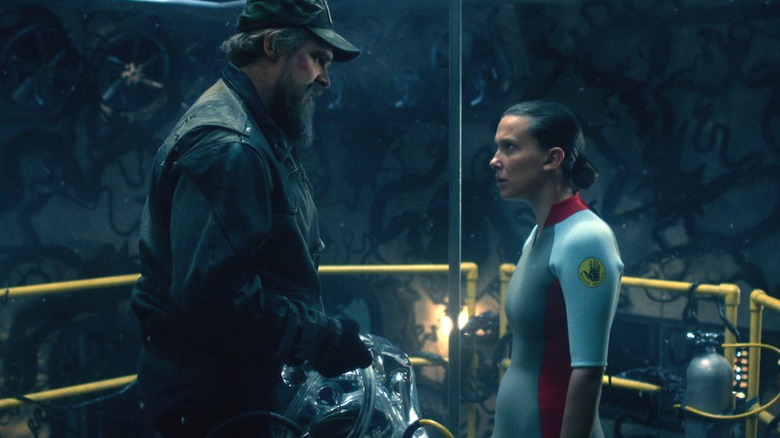
In the finale, David Harbour's Jim Hopper and Milly Bobby Brown's Eleven use a large tank full of water in the Hawkins Lab to allow Eleven to use her full mental abilities. The only issue is that the lab and this tank are in the Upside Down, which prior to the finale had been depicted as a landscape devoid of any water.
In the season 4 episode "Chapter Six: The Dive," we're shown the Upside Down version of Lover's Lake, which had been completely drained of water. Otherwise, there's been a distinct lack of any liquid in this terrifying alternate dimension. That is, until the finale, when Hopper and co. seemingly have no issue sourcing a significant amount of H2O to send Eleven into her mental fortress.
Aside from that particular continuity error, the entire deprivation tank element of the plot was somewhat confusing. At one point, Jamie Campbell Bower's Vecna appears to Hopper via an illusion and tricks him into thinking that he shot Eleven in the tank. That moment immediately raises the question of how Vecna was able to pull off such a trick, considering he'd had no prior mental connection to Hopper. Then there's the question of why Vecna didn't appear to everyone else standing atop the radio tower and trick them into walking off the edge. Finally, we're left to wonder how Hopper managed to shoot the glass of the tank without actually wounding Eleven.
Considering the lackluster explanation given by the Duffer Brothers as to why the Demogorgons vanished in the "Stranger Things" finale, I'm not sure the answers to these questions would be all that satisfying even if we did get them.
4. The Abyss being a hospitable planet
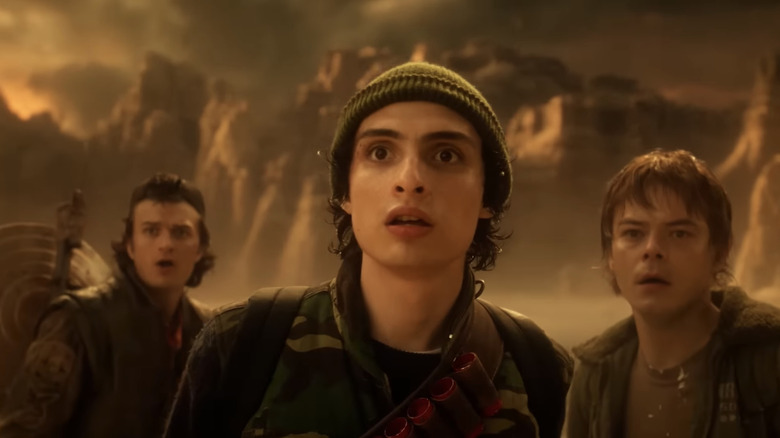
This particular issue isn't the most obvious mistake, and fans certainly aren't as enraged by it as they are furious about Eleven's fate in the finale. But the more you think about it, the more it sort of sums up the problem with the way "Stranger Things" ended.
Prior to The Party entering the Upside Down and launching their attack on Vecna in the Abyss, we got a substantial scene whereby the crew brainstormed their plan to take the fight to their nemesis. Several ideas were tabled in favor of Steve Harrington's (Joe Keery) idea to scale the radio tower and cross through a rift in the Abyss after that alternate dimension descended low enough to reach the tip of the structure. But nobody seemed to consider what awaited them in the Abyss itself.
Did you know that if we were to stand on Mars without some sort of protective suit, the planet's thin atmospheric pressure would cause the gasses in our blood to fizz and bubble, resulting an a horrifically painful death in seconds? The Abyss — the planet full of unknowable cosmic horrors and the source of all the scariest monsters in "Stranger Things" — is apparently perfectly hospitable to human life. So much so that our heroes were able to trek across the barren landscape unsupported and fight a giant beast without any issues whatsoever.
I get it. "Stranger Things" is a show about demons and alternate dimensions. The Duffers aren't exactly adhering to reality here. But once you think about how haphazardly The Party planned their attack and the way in which the show transformed from a more grounded, horror-tinged series to a spectacle-filled festival of logical inconsistencies, it's easily one of the most frustrating oversights of the finale.
3. Machine gun fire hurts the all-powerful Mind Flayer
In episode 4 of "Stranger Things" season 5, we learn that Will Bowers (Noah Schnapp) has telekinetic powers after he snaps the limbs of several Demogorgons and saves his friends from a violent fate. Why did Will need to intervene? Because the military, with its vast arsenal of machine guns, couldn't fend off the rabid beasts, who reacted to a hail of bullets with little more than a collective flinch. At one point, a Demo is fired upon by several dozen soldiers and it simply reacts with a frustrated roar before laying waste to the entire platoon.
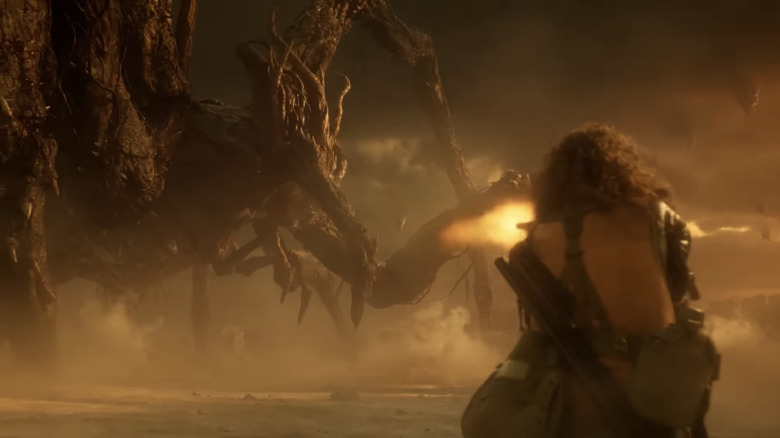
When the Hawkins kids finally make it to the Abyss and confront Vecna, they're horrified to discover that his lair was actually a hibernating Mind Flayer, who comes alive just as they arrive to seemingly ruin their plans. How did the gang manage to defeat this most terrifying of all "Stranger Things" monsters? Well, machine gun fire apparently was a big part of it. At one point, Natalia Dyer's Nancy Wheeler peppers the beast with bullets, which hardly stops it in its tracks but clearly hurts it.
While many fans have pointed out that the bullets, flare guns, and spears used to help defeat the Mind Flayer weren't what ultimately killed it (the final defeat came from Eleven beating Vecna), the point is that machine guns should have barely, if at all, registered to this colossal beast and certainly wouldn't have been enough to distract it from anything. Apparently, though, it's more sensitive to machine gun fire than the Demogorgons. Oh, and it forgot to actually flay any minds during the final battle, which was pretty convenient for our heroes.
2. Max graduating high school

The 40-minute epilogue in the "Stranger Things" finale wraps up most of the main characters' story in a suspiciously ideal way. The military apparently let these kids go free after they ruined decades of government research, killed multiple soldiers, and collapsed the only bridge to the Abyss. After that, everybody's story ended in a happy-ever-after fashion (except Finn Wolfhard's Mike Wheeler, who's apparently fated to be alone for the foreseeable future).
While Mike pines after his lost love, Eleven (who's potentially alive and trekking through Iceland), Sadie Sink's Max Mayfield is enjoying reconnecting with boyfriend Lucas Sinclair (Caleb McLaughlin), having apparently graduated from high school after being in a coma for two years. This girl has been completely out of action in the real world, and has spent most of her time hiding in a cave in Vecna's mind. While that was surely a tougher task than making it through high school, I'm not sure it helped her rack up enough credits to actually gain her diploma.
It might be a tad nitpicky to focus on Max graduating, but given the amount of small oversights in this finale, it's just another unbelievable aspect of the show — and not unbelievable in a cool cosmic horror sci-fi way, but in a "did the Duffers just forget she was in a coma?" way.
1. The kids' whole plan to defeat Vecna made no sense
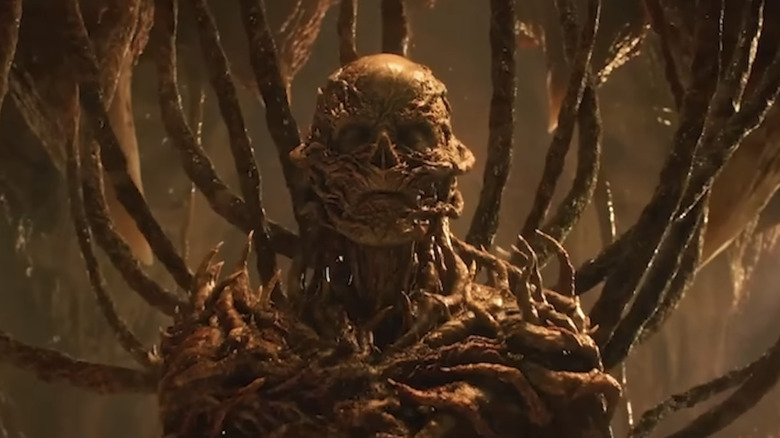
Aside from the fact nobody thought about whether a distant planet packed with cosmic monstrosities might not be the most friendly to human life, The Party's plan to finally do away with Vecna was riddled with potential pitfalls.
"Operation Beanstalk" relied on the whole gang making it through a rift in the Abyss via the WSQK radio tower, but there was absolutely no guarantee the tower would line up with said rift. Still, Steve's plan was met with unanimous praise by the group. What happened when they finally got to the top of the tower? It didn't line up with the rift, and Steve almost died.
Steve's plan also involved a major downside that left the gang with little to no time to stop Vecna. By the time the Abyss reached the tip of the tower, Vecna had managed to bring his dimension perilously close to our own and the crew had a greatly diminished window to defeat him before the two worlds collided. You'd think the Duffers would mine that for tension, cutting back and forth between the Abyss inching towards Earth as the kids traverse the Abyss in search of the villain, but the whole thing is sort of forgotten about once they make it into Vecna's world.
Then there's the truck. Why did these kids, who previously used a rift covered by a giant metal sheet to surreptitiously transition into the Upside Down, devise a plan that involved ramming their way through an Army base in a truck to use a heavily guarded portal to the alternate dimension? Considering Matt Duffer regrets most of his answers to these questions, it's probably better we don't know.