

All 10 Luca Guadagnino Movies Ranked (Including After The Hunt)

Luca Guadagnino is one of the most acclaimed auteurs in the contemporary filmmaking industry. He's also one of the busiest.
The Italian director and occasional screenwriter's output has increased dramatically in terms of frequency and diversity of genre since the release of his 2017 masterpiece "Call Me By Your Name." Most recently, as of writing, he released three films in the span of 18 months: the popular sports drama "Challengers," the well-reviewed but financially stifled period drama "Queer," and the critically and commercially underwhelming "After the Hunt." Looking forward, he's been attached to more projects than we can feasibly list here. To name a few, there's a "Scarface" remake, a new "Lord of the Flies" adaptation, as well as Rooney Mara's Audrey Hepburn biopic, an OpenAI biopic, and a remake of "American Psycho" starring Austin Butler.
Hollywood seems to be casting a wide net with the director, perhaps unsure of what projects best suit a filmmaker who portrays intimate dramas about forbidden love and supernatural horror stories with the same haunting tenderness. In looking back at his filmography to rank all of his feature films (including "After the Hunt"), one can't help but appreciate how his films can be unified (for the most part) by an impassioned, steady desire to empathetically understand how people connect to one another.
Here are all of Luca Guadagnino's movies ranked.
10. Melissa P.

Of all the movies in Luca Guadagnino's filmography, "Melissa P." is the only one so bad it feels like it should be disqualified from his resume entirely. Aside from being a coming-of-age drama that vividly explores complicated and potentially uncomfortable themes of sex and emotional isolation, the 2005 film doesn't really feel like it belongs alongside Guadagnino's other work.
The titular protagonist (María Valverde) is a young girl saddled with a largely clichéd character arc that is, in both composition and execution, functionally interchangeable with those of the countless hysterically tragic "do you know where your daughter is" TV movies you'd see on Lifetime (Guadagnino is one of three writers credited on the film, alongside Cristiana Farina and Barbara Alberti).
When Melissa is emotionally rebuffed by another student (Primo Reggiani) after losing her virginity, she descends down a path of rapidly escalating promiscuity that traumatizes and endangers her. Its depiction of sex is vacantly grim and oddly alarmist, especially considering the kind of stories Guadagnino would go on to tell. This would make "Melissa P." an intriguing outlier if the film weren't so punishing, predictable, and transparently didactic. The experience of losing and re-learning emotional intimacy after such vulnerable betrayal deserves more care than is afforded by anyone on this creative team.
Otherwise, the film has visually aged rather poorly, save for a truly well-composed shot here and there (if there's one thing that makes this a worthy Guadagnino film, it's his exceptional ability to capture the natural beauty of Italy). The cast is fine enough but lacking a powerhouse performance that might redeem "Melissa P." enough to make it worth the watch.
9. The Protagonists
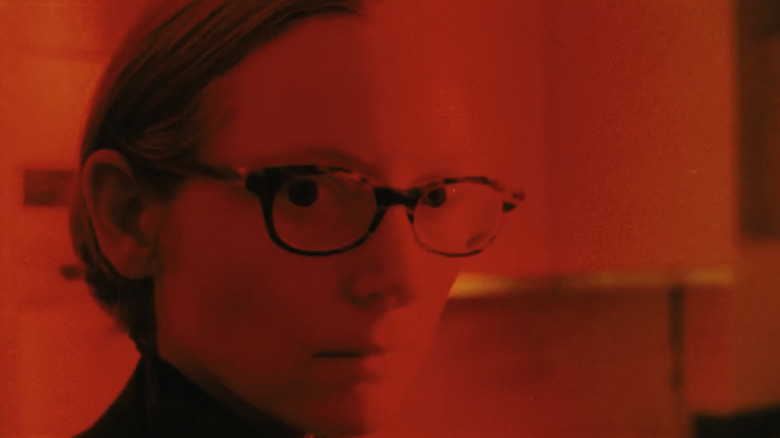
While "Melissa P." falls so short of what moviegoers now expect of the director as to be unwatchable, "The Protagonists" (though in many ways just as difficult and potentially unpleasant) is ambitious, strange, and revealing enough about who Guadagnino is as a filmmaker and artist that we would argue it as required viewing for anyone seriously interested in his work. We wouldn't venture as far as to call it misunderstood or underrated, but even the most indulgent or alienating aspects of its presentation are far more compelling than what's offered by his 2005 follow-up.
Released in 1999, "The Protagonists" stars a then-ascendant Tilda Swinton in her first of many collaborations with Guadagnino. Playing either herself or an unnamed artist who is all but indistinguishable from the actor, she is the de facto leader of a filmmaking troupe attempting to use the art of dramatized storytelling, performance, and occasionally documentary filmmaking to better understand a real and disturbing crime that had freshly rocked the UK at the time.
In 1994, college student Richard Elsey convinced his friend Jamie Petrolini that he was being brought into the British Special Air Service (SAS), and needed to kill a stranger as part of his assignment. They traveled together to London, killed 44-year-old father, husband, and restaurant owner Mohamed el-Sayed, and escaped with little probability of being caught due to (as Swinton and Guadagnino marvel in the film) the perfect randomness and detachment of the crime.
It's a heavy subject with a lot of complicated history, none of which is particularly serviced by "The Protagonists." Uncharitably, it can feel like an irresponsible and indulgent expression of an artist using tragedy as clay for a project that has no clear aim beyond exploring vague thoughts about storytelling that he is convinced are profound.
8. A Bigger Splash
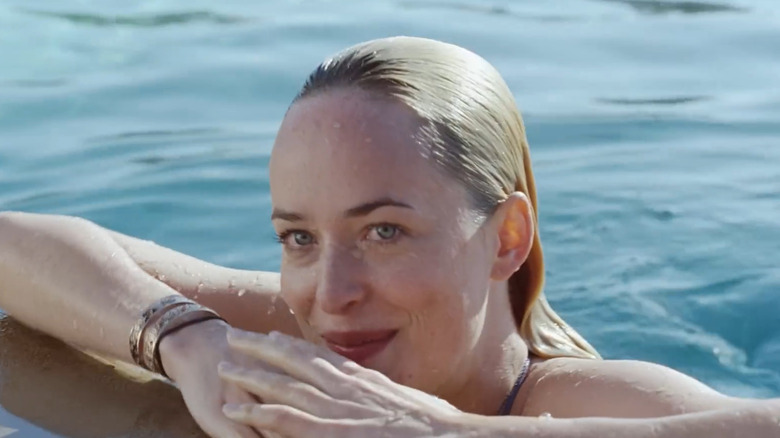
Finally, we get to Guadagnino in top form — visually speaking, at least. Released in 2015, just before the director was about to begin breaking out as one of the most lauded and sought-after directors in Hollywood, "A Bigger Splash" is Guadagnino and writer David Kajganich's take on a story that has floated around the world of cinema since the 1969 Jacques Deray film "La Piscine." And while their interpretation of this classic but somewhat under-known tale of seduction, longing, and regret might be the best apart from the original, it simply doesn't feel as fresh as the rest of Guadagnino's filmography.
Once again Tilda Swinton stars, now joined by Matthias Schoenaerts, Ralph Fiennes, and Dakota Johnson, playing a quartet of quietly unsatisfied people retreating to Italy. Swinton is predictably captivating but underutilized as vocally recovering musician Marianne, whose own desires and history — which, emotionally, seem capable of anchoring the film — take a back seat to the subtle jealous feud that grows between her lover Paul (Schoenaerts) and her intrusive and openly seductive ex Harry (Fiennes). Schoenaerts and Fiennes are marvelous, with the latter in particular giving a recklessly vibrant and perhaps even petulant performance, the likes of which moviegoers seldom get to see from the actor. Johnson, who plays Harry's daughter Penelope, holds down a delicate supporting role.
Performances aside, however, "A Bigger Splash" is a fairly plain story told exceptionally well. It is only momentarily shocking, though its twists might leave some viewers wishing Guadagnino and Kajganich weren't as constrained to the original story beats so that they could instead explore these relationships in more interesting ways.
7. After the Hunt
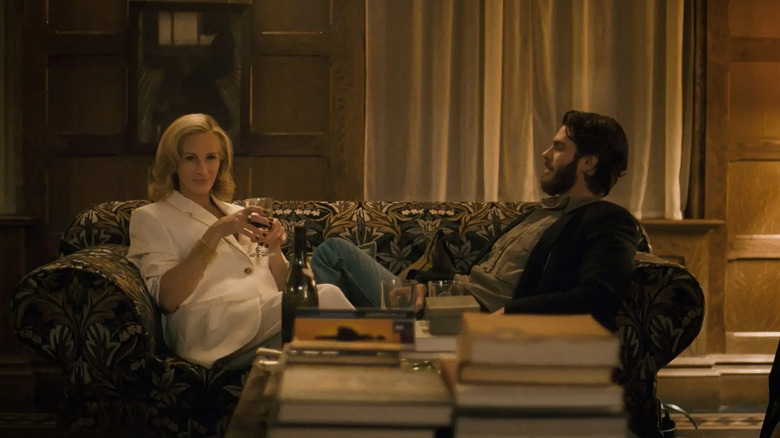
It was immensely difficult to determine whether to place "After the Hunt" above or below "A Bigger Splash," seeing as the latter marks the start of our venture into Guadagnino's better work. For many readers, his most recent film, as of writing, deserves to be at the bottom of that list. However, it's far from being as uninspired as "Melissa P." or as accosting as "The Protagonists," yet it's also frustrating in so many ways that even a film as basic but effective as "A Bigger Splash" deserves primacy. At the moment, aside from arguably being Guadagnino's most thematically transgressive film, "After the Hunt" is the kind of movie that needs more time to breathe before a final judgement can be passed.
The worst one could say about the 2025 film is that, in its exploration of cancel culture, self-censorship, and institutional sexual misconduct, "After the Hunt" is an all-too-similar yet unsatisfying and far less effective in its examination than Todd Field's 2022 drama "Tár." Both films deal with these themes in intentionally challenging and, occasionally, ambiguous or individually interpretive ways to evoke the sense of painful confusion that exists in the aftermath of sexual misconduct accusations, though "After the Hunt" does so from the perspective of a college professor (Julia Roberts' Alma Imhoff) who is a trusted friend to both the accuser and the accused.
The denial of clear resolution by the film is equally understandable and upsetting — on the one hand, people are so often left to pass their own judgements without definitive closure or justice. On the other hand, Guadagnino's specific handling of this uncertainty leaves his own vision feeling confused and unconfident, even when the questions the film poses are inescapably arresting.
6. I Am Love
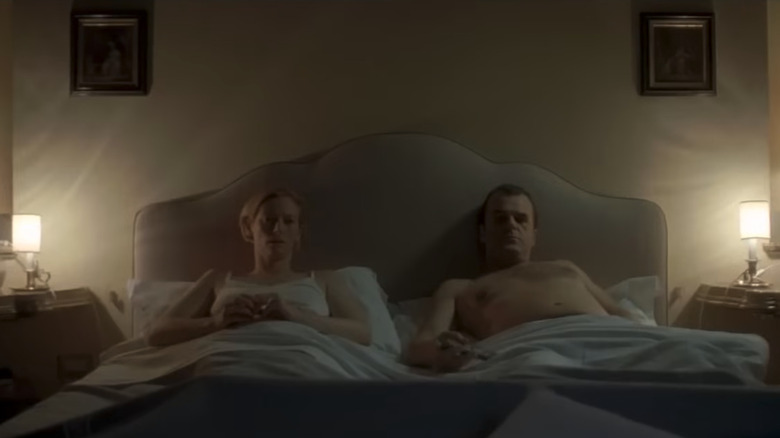
After back-to-back stumbles with "The Protagonists" and "Melissa P.," Guadagnino's 2009 romantic drama "I Am Love" finally showcased his potential as a filmmaker. Tilda Swinton joins him for the second time playing Emma, a woman who married into a large, complicated, and wealthy family in Italy. Though she remains loyal to her increasingly distant husband (Pippo Delbono) and loves their children, a period of change for them all gives way to latent feelings of dissatisfaction. Readers are most likely to recognize Swinton among the cast, and her character's inevitable affair takes center stage for most of the plot, but the film as a whole could be seen as more of an ensemble piece (with stellar performances across the board) that examines this family's uncomfortable evolution through her eyes.
Guadagnino's aesthetic eye is far more confident than in his previous work, indulging in the beauty of his locations and the subtle performances of his actors in every scene. It moves significantly slower than much of his work, and relies heavily upon his and his cast's ability to create a cinematic life that is quietly and almost voyeuristically compelling for how uncanny it is, as opposed to relying on louder plot beats and twists to move the audience emotionally. The effect might be too muted for some, even if they can admire the beauty of Guadagnino's lavish portrait of forbidden passion.
5. Bones and All
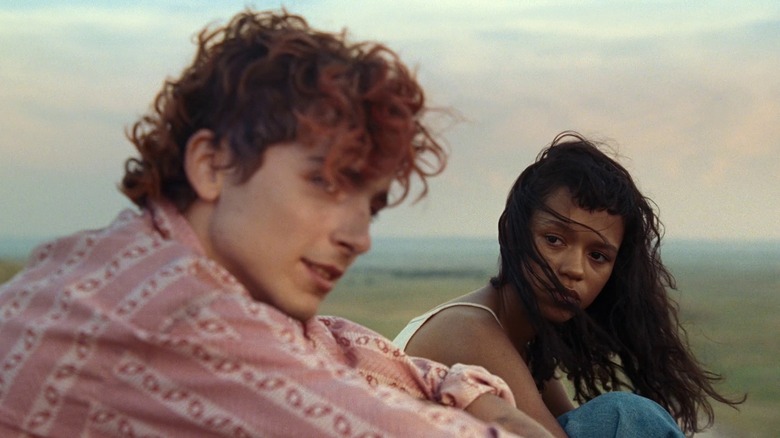
Credibly belonging to both the horror genre and the psychological drama genre, few films feel like "Bones and All." It's deeply unsettling, tense, and at times, disgustingly gory like a blockbuster slasher (Guadagnino was partially inspired by the grounded horror of legendary filmmaker George A. Romero). But it's also as tender, nuanced, emotionally complex, and well-acted as an award-worthy romantic epic.
Reuniting with "A Bigger Splash" scribe David Kajganich, "Bones and All" is Guadagnino's bittersweet love letter to outsiders. Taylor Russell and Timothée Chalamet star as Maren and Lee, two young drifters alienated from society by an uncontrollable compulsion to eat other people. It's a slightly unusual role for Chalamet in his post-"Dune" era, though one he fearlessly devours. Guadagnino immediately recognized Lee as Chalamet while first reading the script, and he has since come to see "Bones and All" as a companion piece to their earlier collaboration.
As they travel together across the country, the pair find themselves as deeply in love with one another as they are at war with their true nature. The discovery of other cannibals (including a brilliant and terrifying Mark Rylance) and revelations about their past lives further complicate whatever future they might have together, despite both of them ultimately longing for someone to see and love them "bones and all." It's a film for anyone who wants to find themselves misty-eyed and horrified in one cinematic experience.
4. Queer
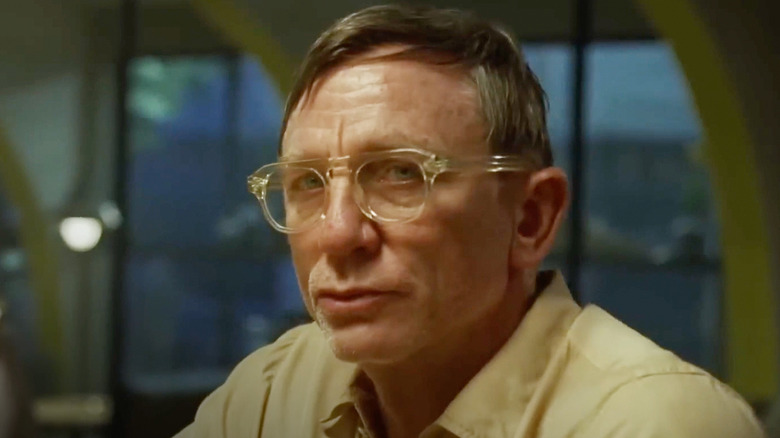
It's somewhat of a shame that "Queer" was released when it was. The 2024 feature was not only dropped into cinemas during a rather sleepy November punctuated by massive box office siphons "Wicked" and "Moana 2" but released just months after Guadagnino's last picture (more on that next). Its predecessor was a brighter, viral hit aimed at a much younger and broader audience — and also just so happens to be the better of the two films, in our opinion. While we can't say for sure if releasing two films in the same year destined one to overshadow the other (marketing did little to connect them for audiences pleased by the first, despite the fact that they even shared a screenwriter in Justin Kuritzkes), "Queer" wound up grossing just $7 million worldwide — less than a tenth of the total brought in by Guadagnino's previous film and far less than this film's estimated €48 million budget.
Despite this unenthusiastic reception, readers absolutely must give Guadagnino's "Queer" a chance if they haven't already. At first glance, it seems like familiar territory for the director — Daniel Craig gives a devastating turn as William Lee, an older, seductive man spiritually adrift in 1950s Mexico, whose vitality is suddenly revived by a newfound obsession with a young American soldier named Eugene (played by "Outer Banks" alum Drew Starkey). Their relationship, though as emotionally fraught and sexually tense (if far less outwardly expressive in that regard) as many other Guadagnino lovers, stands out for the refreshingly imaginative ways the filmmaker visually represents Lee's unrequited longing. It is a beautifully painful film that subtly showcases the elasticity of Guadagnino's signature style.
3. Challengers
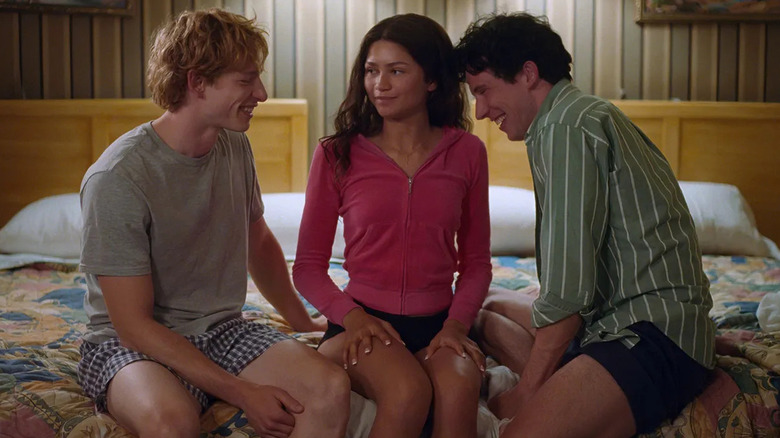
Broadly speaking, "Challengers" doesn't necessarily appeal to the same audience as "Queer," and comparing the two films does a disservice to them both. However, in terms of how cohesive, impactful, and novelly-thrilling the final product is, we have to give a slight advantage to this bizarrely entertaining psychosexual sports dramedy.
"Challengers" recounts the intertwining careers and romantic lives of three young tennis pros, bouncing back and forth between past and present (like a kind of ball, perhaps, in a court of some kind... bear with us, we'll come up with a metaphor eventually). Best friends and doubles mates Patrick (Josh O'Connor) and Art (Mike Faist) are two of the hottest rising talents in the youth boys' tennis world, and on the girls' side of things, the courts are singularly dominated by the ferociously competitive Tashi (Zendaya). The pair are instantly attracted to her, leading to a complicated love triangle that shifts and twists over the years.
By the time of the film's "present" timeline, Art and Tashi are married, but he struggles to maintain his place in the sport as his passion wanes, while she (sidelined by an early injury) coaches and partially manages his career. Patrick, meanwhile, had stagnated as a player, living in his car with barely enough money to his name for a pre-match breakfast. As the story unfolds across time, the narrative is anchored by Patrick and Art's tense rematch at a challenger event.
Though Guadagnino trades in classic Hollywood seduction, he mixes it with transgressive sexuality and a wonderfully startling vibrancy of pace and staging, each scene needing to be followed like the match itself. Justin Kuritzkes' words are also delivered by this unbeatable cast with verbal rackets, volleying carefully and powerfully until the time comes for the fatal slam.
2. Suspiria
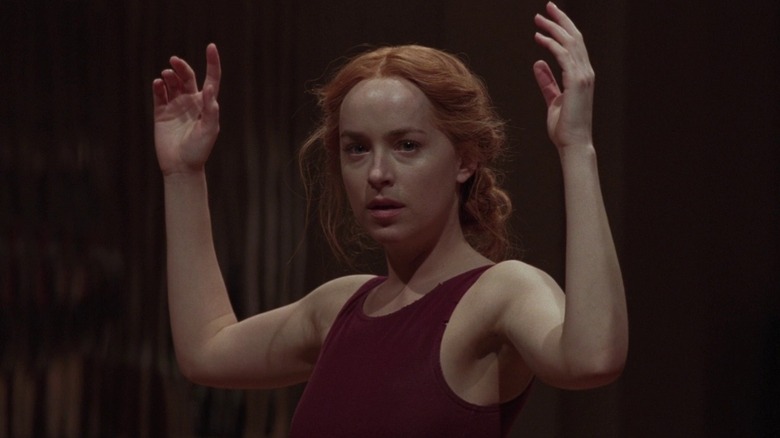
If there were just one reason for readers to test their mettle with "The Protagonists," it would be to better appreciate what Guadagnino achieved with "Suspiria." On the surface, the two films share little in common, save a rangey and technically confounding performance by Tilda Swinton at the center. However, the 2018 film once again sees the filmmaker (with "A Bigger Splash" and "Bones and All" screenwriter David Kajganich) using audacious imagery, transgressive creative choices, and several dashes of ambiguous storytelling to communicate a similarly upsetting emotional experience. Yet this time around, with two decades of filmmaking experience and an Academy Award nomination under his belt, Guadagnino gives the audience a thematically rich masterwork of horror that's worth what it asks of them.
A loose remake of the classic Italian horror film of the same name from Dario Argento (who is, incidentally, not a fan of Guadagnino's work), "Suspiria" follows an aspiring dancer's (Dakota Johnson) descent into a reclusive, cult-like dance company in post-war Berlin. As the company's exacting leader (Swinton) takes greater interest in her talent, it becomes apparent that their work exists under the evil influence of a murderous coven hiding in their ranks. It is an admittedly demanding watch, but one that defies the viewer not to be arrested by its unrelenting and mysterious sense of dread, foreboding historical overtones, haunting orchestrations (from Radiohead frontman Thom Yorke), and nightmare-inducing sequences of supernatural horror.
1. Call Me By Your Name
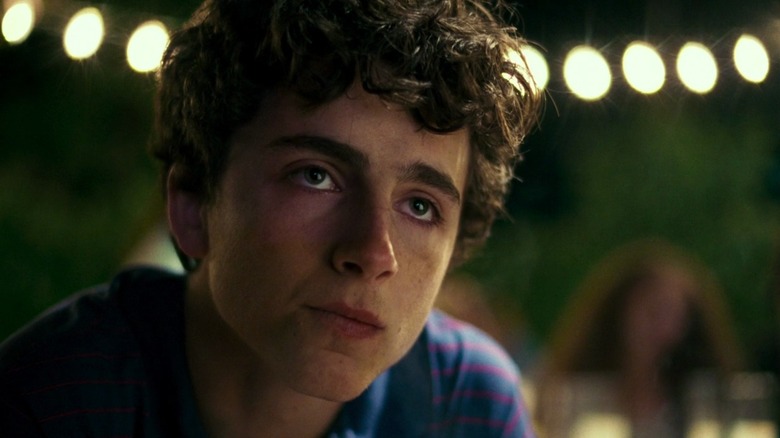
There is no denying that, going on a decade after its release, "Call Me By Your Name" remains Luca Guadagnino's most culturally enduring and impactful film. Written by Academy Award-nominated director James Ivory, the 2017 romantic coming-of-age drama was an absolute sensation upon its release, minting both Guadagnino and star Timothée Chalamet as prestige Hollywood talents on the rise. The latter plays Elio, a teenager living in Italy who falls in love with an older graduate student (Armie Hammer) visiting his father during the summer of 1983.
Much was said of the sexual content of "Call Me By Your Name" at the time, both seriously (with regard to its romantic and fearlessly erotic depiction of homosexuality) and unseriously (the peach jokes... oh, the peach jokes). As important as it was for a film with such explicitly gay content to be celebrated by moviegoers at large, it bears emphasizing how profoundly universal its central themes are thanks to Guadagnino's blend of sentimentality and stark inner turmoil. The stumbles Elio experiences, whether they be the mistakes he makes in other relationships or the injury he suffers when his affections are rebuffed, make his ultimately fantastical romance feel real. As a result, the film isn't simply erotic escapism, but a vivid, total rendering of fleeting love — as well as the pain that stays once it finally leaves you.
"Call Me By Your Name" was Guadagnino's most financially successful film at the time (it has since been unseated by "Challengers") and earned the filmmaker his first and, as of writing, only Academy Award nomination for Best Picture (for his part, Ivory won the award for Best Adapted Screenplay). Today, it is a perfect, sensual synthesis of nearly everything that makes Luca Guadagnino a defining voice in romantic filmmaking.