

All 13 Wes Anderson Movies Ranked
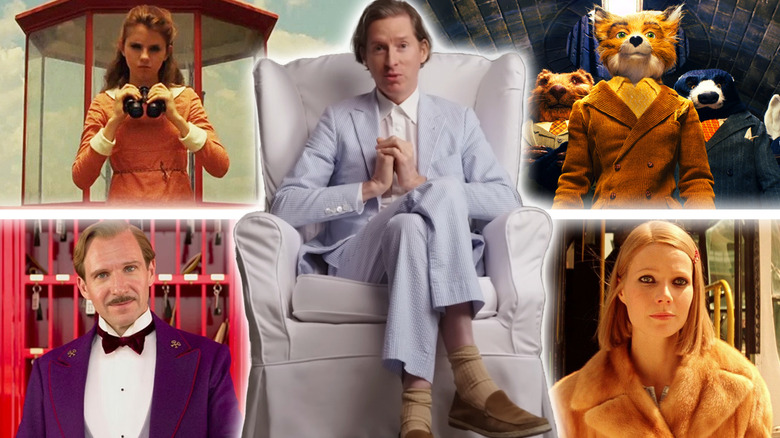
Auteurs can often be divisive figures in filmmaking. But while anyone can argue about the controversial violence of Quentin Tarantino, the confounding narratives of Christopher Nolan, or the boundary-breaking production processes of Stanley Kubrick, no director will have die-hard cinephiles and casual moviegoers alike debating the finer elements of filmmaking like Wes Anderson.
Whether one finds his style distractingly pretentious or captivatingly unique, his method is so precise and recognizable that it draws the audience's focus to elements they might otherwise miss: meta-fictional framing devices; blunt, repetitive dialogue delivered with an almost affected directness in tone; symmetrical shots captured by static cameras, with choreographed bursts of movement; color palettes that capture mood and accentuate period and setting.
Anderon's work is so exhaustively intentional that anyone who considers his work openly and carefully will find themselves appreciating the art form as a whole — even if his films specifically fail to strike a chord. With this in mind, we've taken our own journey through the filmmaker's remarkably consistent career, ranking each of his movies to better understand what makes Wes Anderson one of Hollywood's most peculiar, enduring, and irreplaceable talents.
Here are all of Wes Anderson's movies ranked!
13. The Darjeeling Limited
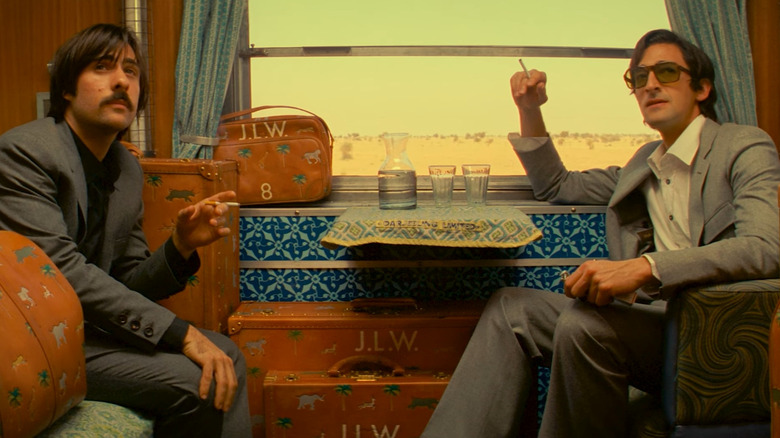
Any filmmaker worth their camera would kill to have their most disappointing movie be as good as "The Darjeeling Limited." The 2007 film follows a young man Francis (Owen Wilson) as he attempts to force a reconnection with his two brothers by all but holding them hostage on a train ride that takes them on a journey through India.
Visually, "The Darjeeling Limited" is, for the most part, every bit as striking as Anderson fans would hope, with the titular locomotive alone providing all the atmosphere and aesthetic style lesser films have in a single scene. The issues come almost entirely from the screenplay, which misuses Anderson's idiosyncratic dialogue by trying to make it the emotional foundation of each scene. Both the dialogue itself and the focus afforded to it by the script and direction gives one the feeling that the characters are aware that they're in a movie, and that the line they're about to say is so brilliantly simple and understated in its profundity that an appropriate reaction from the audience is ever imminent.
It isn't a bad film by any means but perhaps one that's just too aware of how good it had the potential to be. But like all of Anderson's films, "The Darjeeling Limited" has its ardent defenders, including among those here at /Film.
12. The Wonderful Story of Henry Sugar
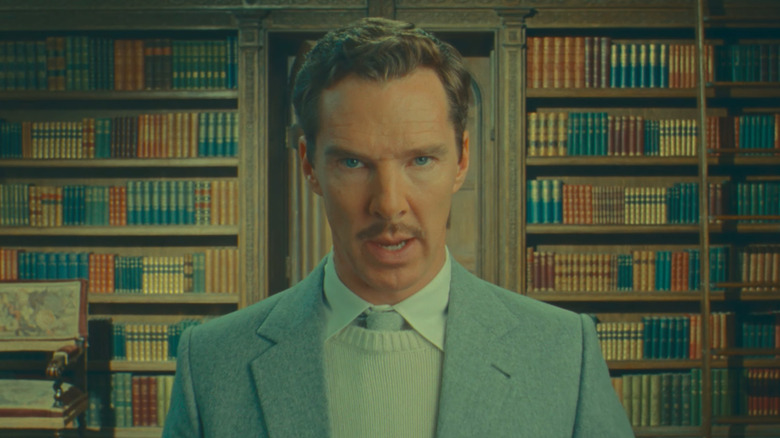
It's difficult to know whether it is more fair to assess "The Wonderful Story of Henry Sugar and Three More" as a single anthology film or to disassemble it and judge each of its stories individually. In ultimately choosing to take the former route, we considered this collection's effectiveness as a cohesive viewing experience — and at the very least, it's impressive in that regard.
After 10 years of stewing over how to adapt the titular Roald Dahl story, Anderson's "Wonderful Story" arrived on Netflix in the fall of 2023 to a much warmer critical reception than his other film that year. As for the "Henry Sugar" segment of the anthology (in which Benedict Cumberbatch stars as a wealthy, amoral gambler who learns to master the ability to see through physical barriers), it is indeed one of the filmmaker's most entertaining and technically exhilarating works.
The other shorts included in the anthology are similarly interesting to look at but little more than amusing on a narrative level. Without an emotionally compelling narrative, these films also strain Anderson's use of self-narrating dialogue. We would hardly begrudge any viewer for being swept up in Anderson's imaginative and adoring treatment of Dahl's stories, but they just don't surpass any other films in the director's career.
11. The Phonecian Scheme
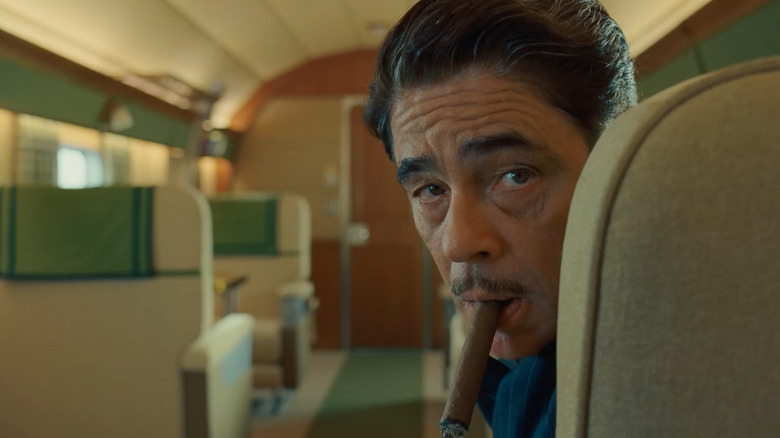
Simplicity is a reliably excellent color on Wes Anderson, as a filmmaker — predictability, on the other hand, is not. The beauty of his filmmaking style is that all that over-complicated, hyper-stylized camera choreography, dialogue, and plotting usually works in the service of a very earnest and deeply felt emotional resolution. The same is technically true for his 2025 film "The Phoenician Scheme," but the trajectory of its characters is so easy to anticipate that it feels like that emotion is supposed to come secondary to all the usual Anderson bells and whistles.
Despite lacking novelty in its themes and resolution, "The Phoenician Scheme" is a hilarious romp that owes much of its success to the casting process. Benicio del Toro makes a wonderful Anderson protagonist as the unexpectedly villainous Anatole "Zsa-Zsa" Korda, a businessman coming to grips with his own mortality and morality (or lack thereof) as he attempts to bully his most ambitious project into existence. Mia Threapleton counters him as his estranged daughter Liesl, a nun with a very un-Christ-like temperament. In the fall of 2025, /Film ranked it as one of the best films of the year thus far.
10. Isle of Dogs

The lesser of Anderson's two stop-motion animated efforts, "Isle of Dogs" is a great story dragged down by disappointing execution. The 2018 film is set two decades into a future where dogs carry a dangerous strain of the flu, compelling one corrupt Japanese mayor (voiced by Kunichi Nomura) to have the canines living in his city exiled to an island of literal trash. Heartbroken over the abduction of his best friend, a young boy (Koyu Rankin) manages to fly himself to the island, where he works with a pack of tragically banished pups to rescue his pet.
With an entirely different setting, visual tone, and narrative scope to Anderson's previous stop-motion flick, "Isle of Dogs" is a massive technical achievement that's difficult to overstate. The story itself is also one of his most emotionally moving, admittedly because it's impossible not to become attached to an ensemble made up almost entirely of adorable dogs and a couple heroic kids. Sadly, Anderson undermines the tremendous effort of "Isle of Dogs" by failing to do justice to its Japanese setting and cultural influences. His cartoonish and occasionally stereotype-laden depiction of the country clouds the filmmaker's artistic intent and will leave some viewers feeling uncomfortable and disappointed.
9. The Life Aquatic with Steve Zissou
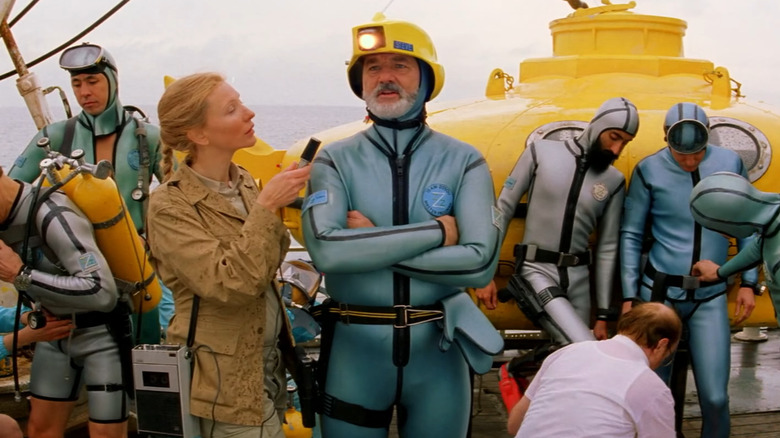
Inspired in part by an explorer from the real world, "The Life Aquatic with Steve Zissou" stars Bill Murray in the title role, a legendary and eccentric oceanographer who sets out to make a documentary about the hunt for — and eventual execution of — the shark that took the life of his friend. Before they can disembark, however, Steve is ambushed by a kind and well-meaning gentleman named Ned (Owen Wilson) who, in the wake of his mother's passing, has sought out Steve as the man who could potentially be his long lost biological father.
Written by Anderson and Noah Baumbach, "The Life Aquatic" is a relentlessly chaotic film that may understandably overwhelm some viewers. And yet, as we briefly touched upon while discussing "The Phoenician Scheme" above, that chaos can be used as an elevating force that externalizes the complicated, turbulent emotions that arise from more accessible emotional experiences, like trying to work through grief, reckon with ego, or understand a father figure.
Overall, it's a film that manages to be as ambitious in its execution as its protagonist is in his quest to exact revenge against a fish. Murray, for that matter, delivers a nuanced leading performance that ranks among his best work, imbuing Anderson's dialogue with a mixture of dry madness and inescapable self-loathing that makes the challenging Zissou empathetic.
8. Bottle Rocket
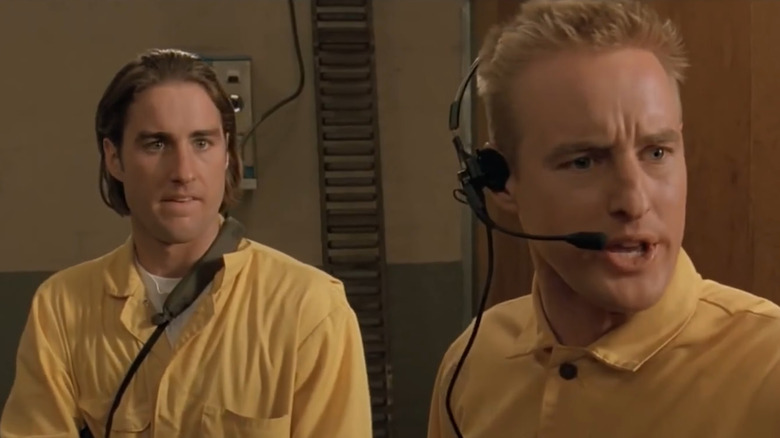
If you've ever felt like Wes Anderson relies too heavily on his recognizable filmmaking style, you should do yourself a favor and check out a film where his vision is stripped to its barest essentials. Released in 1996 as Anderson's directorial debut, "Bottle Rocket" is a feature-length remake-expansion of the crime comedy short film he made three years earlier with brothers Owen and Luke Wilson. The trio reunited for the feature (with Owen Wilson co-writing the screenplay with Anderson) and took a shot at mainstream success with their first multimillion-dollar project — which wound up grossing a little over $560,000 when it bowed theatrically.
Though the financial returns were so poor that Anderson was convinced his filmmaking career was finished as soon as it had begun, "Bottle Rocket" was received warmly by contemporary critics – as well as Martin Scorsese himself. While some less-inclined to appreciate Anderson's style may find themselves antagonized by his later work, this film defies any viewer not to be charmed by its aw-shucks story about small-time, underdog burglars just doing their best. It's a surprisingly sweet story given the subject matter and stakes, making it as singular, bizarre, and carefully-peopled as a Coen Brothers crime flick but with a more optimistic moral bent.
7. Asteroid City
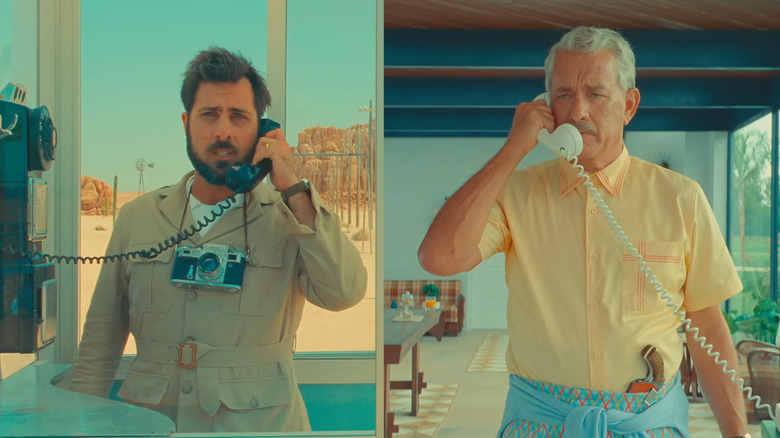
Likely the most polarizing film released in the last decade of Anderson's career, "Asteroid City" is an admittedly tough movie to love — even the director himself concedes that it's kind of hard to experience the first time you watch it. But when you are finally able to settle into all that it has to offer, it's an endlessly rewarding and life-affirming work of art that many Anderson fans are sure to count among their personal list of favorites.
From a technical standpoint, Anderson is at the peak of his powers as a filmmaker, showing off his singular style in a science fiction comedy that hides a moving (and disarmingly meta) existential drama running in the background. Similar to how Anderson presents "The Wonderful Story of Henry Sugar" as a fictional television special or "The Royal Tenenbaums" as a fictional novel, "Asteroid City" is presented as a fictional play that was apparently developed and staged with great effort and emotional turmoil in the early-to-mid 20th century.
As the plot of the play unfolds (itself following a desert town quarantined after a UFO makes contact with them during a scientific convention), the behind-the-scenes drama surrounding the play asks bigger questions than Anderson usually seems keen to tackle. And yet, in doing so in his own offbeat way, the filmmaker is able to create an experience that feels authentically dizzying and uncertain in its search for answers.
6. The French Dispatch
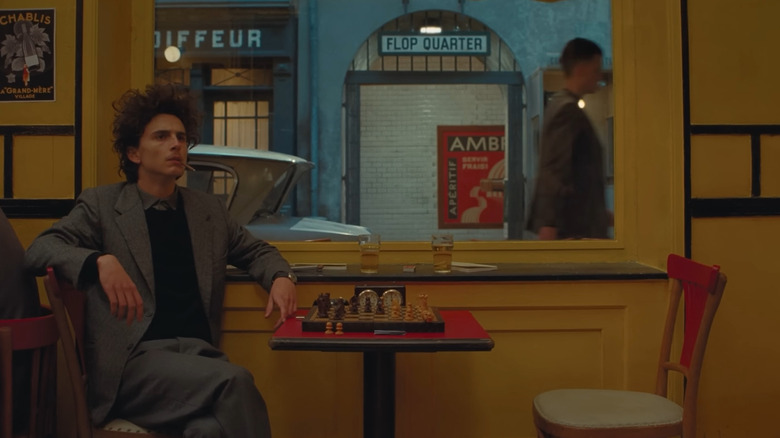
A wide-open love letter to the world of magazine writers (particularly those employed by The New Yorker during its earlier years), "The French Dispatch" is proof that Anderson can thread multiple, shorter stories together in a manner that makes them greater than they would be on their own. The quasi-anthological approach this film takes may have thrown off some moviegoers at first, but his exhaustive, unyielding dedication to making each vignette as memorable, visually striking, and individually satisfying as the last — all while maintaining a framing narrative that provides deeper meaning to them all — is what makes "The French Dispatch" effective as a unified feature film.
It is also the film in which Anderson relies most heavily on his ability to assemble an ensemble of top-tier actors. Benicio del Toro anchors one story as a brilliant artist living through incarceration, who becomes the obsession of a wealthy art dealer (played by Adrien Brody). In another, Frances McDormand plays a journalist who gets too close to her subject, a student revolutionary named Zeffirelli (Timothée Chalamet). In the last, Jeffrey Wright's Roebuck recounts a brazen crime that took place while he was attempting to profile a renowned police chef (Stephen Park). Their presence makes the alternate history of "The French Dispatch" feel larger and uncannily credible, not to mention each actor on screen is using the exceptional material to flex every artistic muscle they can.
5. Rushmore
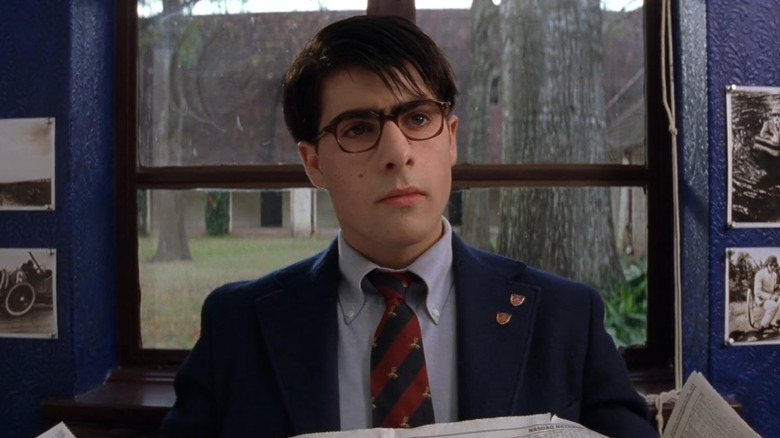
Despite the poor financial performance of "Bottle Rocket," it apparently made enough waves to earn Wes Anderson and Owen Wilson the chance to shop around another story: the deeply personal coming-of-age comedy "Rushmore." A chance encounter between the film's casting director and the Coppola family connected Anderson to his future collaborator Jason Schwartzman, who had yet to appear in a feature film at the time. He was cast as Max Fischer, a struggling student at titular preparatory school who is entirely distracted from his studies by endless extracurriculars, his passion for staging elaborate school plays, and his love for his teacher Rosemary (Olivia Williams).
"Rushmore" sees Anderson coming into his own stylistically, but it isn't in our top five simply because it represents a creative milestone for the filmmaker. Rather, "Rushmore" is a story perfectly suited to Anderson's sensibilities, his bend toward innocence and innate knack for portraying tenderness and eccentricity allowing him to make a teen comedy that transcends the subgenre itself. While it may not be our favorite Bill Murray-Wes Anderson film, it does have our favorite Murray performance in an Anderson film, with his dysfunctional and lost Herman Blume working as an unexpectedly perfect foil for Schwartzman's swaggering protagonist.
4. The Royal Tenenbaums
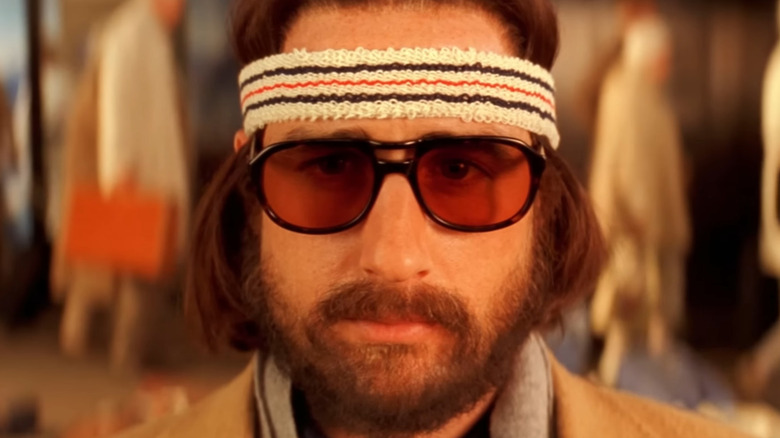
Many of Anderson's films explore the nature and impact of dysfunctional families, but none nearly as thoroughly or as entertainingly as "The Royal Tenenbaums." Gene Hackman anchors the film as Royal Tenenbaum himself, a disgraced former lawyer and nakedly narcissistic father figure who might just be the greatest character in any Wes Anderson film to date. When he reassembles his formerly prodigious, presently spiraling children (a triad of burnt-out gifted kids, played by Luke Wilson, Gwyneth Paltrow, and Ben Stiller) to inform them of his swiftly approaching death from cancer, the family is dissolved into farcical mayhem as they reckon with the reality of either laundering new relationships with one another by sweeping the past under the rug or accepting their family for the broken, seemingly unsalvageable mess that it is.
"The Royal Tenenbaums" is an exquisite feature and arguably the film that established Anderson as a serious auteur (it was also his first commercial home run, earning over $70 million worldwide). Hackman gives one of the greatest performances of his historic career as a deeply flawed patriarch who nonetheless is motivated by a moving fear of having no connection to the struggling family he raised.
3. Moonrise Kingdom
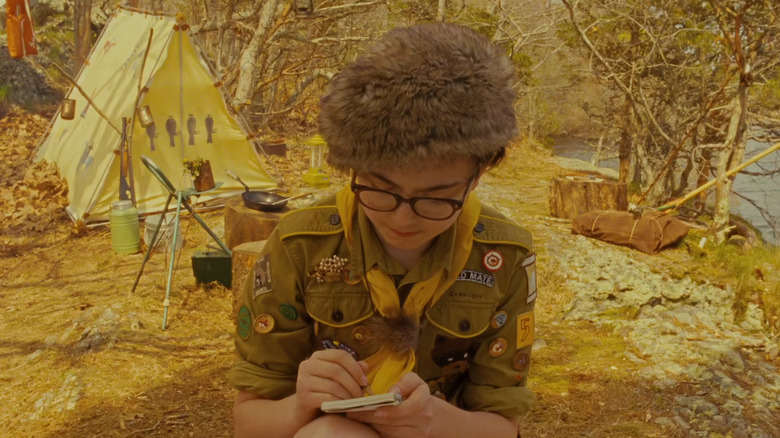
Raising the stakes of "Rushmore's" nostalgic romanticism even higher, "Moonrise Kingdom" is a wistful (and occasionally autobiographical) display of cinematic longing for that time in every person's life when love felt simple, innocent, and more important than anything else in the world. During the last days of the summer of 1965, a young scout (Jared Gilman) sends his troop into a frenzy when he deserts his summer camp to be with the love of his life (Kara Hayward). Concerned that the young girl fled from her home to hide in the wilderness with a strange boy, her parents (Frances McDormand and Bill Murray), the local police captain (Bruce Willis), and the boy's scout master (Edward Norton) do everything they can to recover the children and thwart their romantic escape.
Anderson's ability to use absurd storytelling to render an earnest emotional experience is on full display in "Moonrise Kingdom." His vision of childhood — full of pain, well-intentioned mistakes, and beautiful, exciting memories that can never be fully reclaimed or replaced — creates a haunting cinematic spell, the effects of which linger like a pleasant pang of pure heartbreak, all at once inevitable and completely worthwhile.
2. Fantastic Mr. Fox
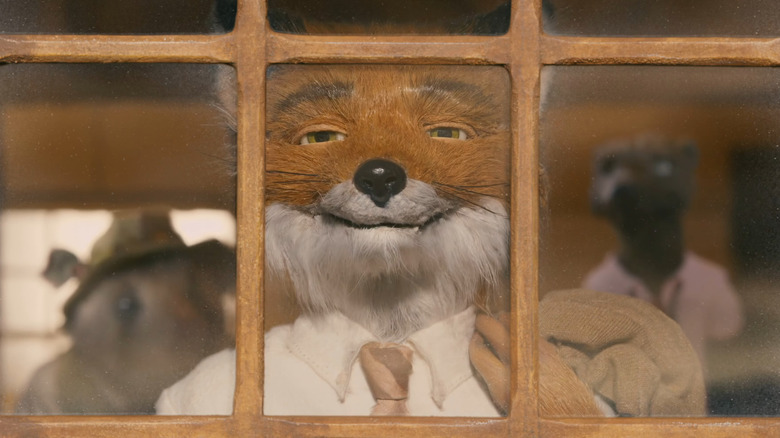
In a filmography filled with stories that explore the untold complexities of youth and the consequences in store for those who cannot move beyond it in their time, "Fantastic Mr. Fox" — ironically his most family-friendly film by far, complete with a PG rating — stands out from Anderson's other work as arguably his most adult film. No, it isn't as dark or violent as "The Phoenician Scheme" or steeped in history as our number one pick, but it confronts themes of aging, regret, and legacy in an insightful and shockingly grounded manner for a film that stars a family of foxes.
George Clooney voices the titular Fox, a retired thief upset by how little he has seemingly been able to make of himself since settling down with his family (Meryl Streep and Jason Schwartzman) in a hole in the ground. He thus plots to revive his spirit and fatten his food stores by staging audacious robberies against the powerful farmers who live nearby. Though the film hardly made a scratch at the box office, this thrilling tale — gorgeously animated by Anderson and his team for the director's stop-motion debut — is a one-of-a-kind caper with insight for audiences of all ages.
1. The Grand Budapest Hotel
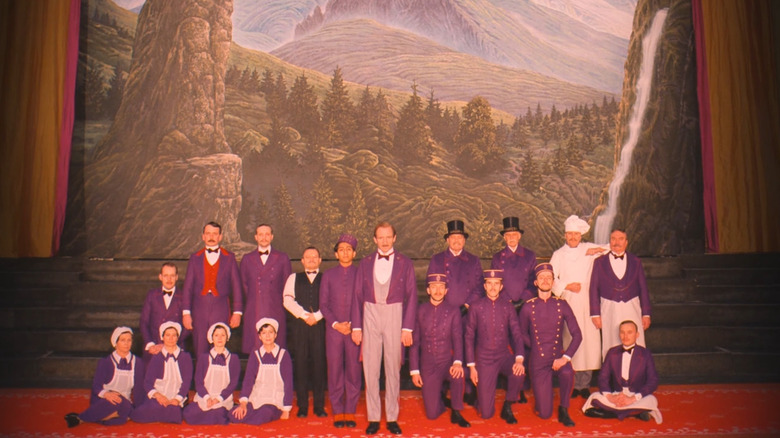
"The Grand Budapest Hotel" is as sweeping, transportive, delicate, and immaculately designed as the titular locale itself. Framed as the bittersweet recollection of the Grand Budapest's aging owner (F. Murray Abraham, playing an older Tony Revolori) as told to an inquiring author (Jude Law), this unabashedly sentimental 2014 film charts the daring escapades of the enigmatic concierge Gustave H. (Ralph Fiennes) as he charms his way through a false accusation of murder, imprisonment, escape, and the looming threat of rising fascism in 1930s Europe (all with the help of his professional ward, Zero).
Where many Wes Anderson films feel like stories brought to life by the director's quirks, "The Grand Budapest Hotel" is a story that breathed new life into his filmmaking style. It is unmistakably Anderson in every way — and yet, the ultimate cohesion of aesthetic, narrative, theme, and execution is so perfect it allows him to finally disappear into his work.
For each entry that preceded this point on our list, there is worthy discussion to be had about possible alternate placements of every film. We can imagine a certain ranking depending on a person's love or loathing of Anderson's style; whether they're drawn to his warm, escapist stories or offbeat sense of humor; whether they hate dogs or love them. But when it comes to "The Grand Budapest Hotel," however, there can be no debate — it is the greatest film Wes Anderson has ever made.