

Only 6 Directors Have Won The Best Picture Oscar With Their First Movie
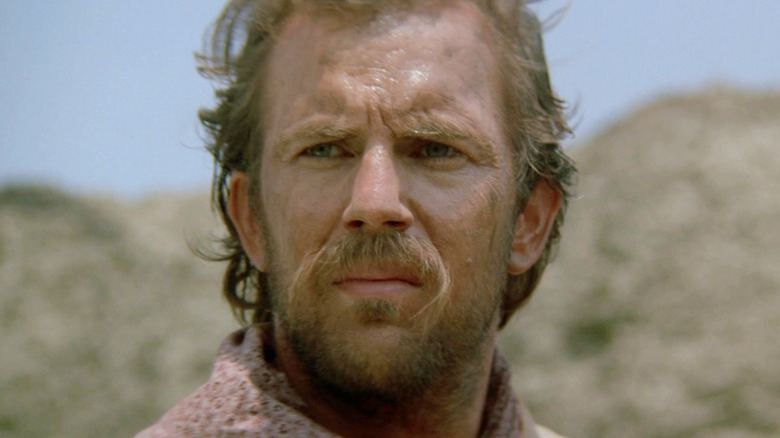
The first Academy Awards ceremony was held on May 16, 1929, and gave out awards to the best movies released from August 1, 1927, to August 1, 1928. (The Academy wouldn't shift to proper calendar years until 1934.) That means we're creeping up on the Oscars' centennial, although that may spark a note of ambivalence among many cineastes. Some might not know, but the Oscars were initially created for a specific (and cynical) purpose. Namely, film mogul Louis B. Mayer concocted them to distract Hollywood workers from unionizing. And, besides, the Oscars are really more of a barometer of what kind of movies the industry would prefer to be remembered for than anything else.
But at the same time, folks love the Oscars (including the "prom night" aspects of the annual event), and it's fun to speculate about the winners. Many among us even have office pools and still tune into the Oscars every year, despite knowing our favorites are bound to be ignored (assuming they're up for any prizes to begin with).
The Oscars tend not to award first-time filmmakers, either, at least not in the Best Director category. Most Best Director nominees tend to be established names. If a first-timer is nominated and/or wins, it's very rare, and it's rarer still for their movie to be nominated for and win Best Picture to boot. It's only happened six times: Delbert Mann for 1955's "Marty," Jerome Robbins for 1961's "West Side Story," Robert Redford for 1980's "Ordinary People," James L. Brooks for 1983's "Terms of Endearment," Kevin Costner for 1990's "Dances with Wolves," and Sam Mendes for 1999's "American Beauty."
Marty (1955)
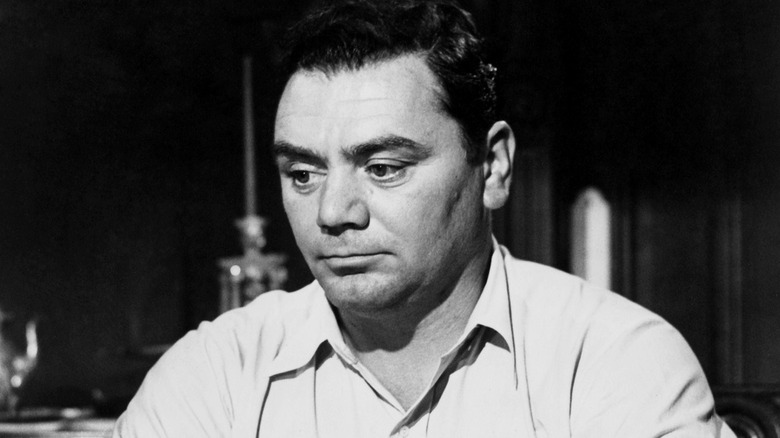
The first time a novice director's movie won Best Picture at the Academy Awards was when Delbert Mann's "Marty" unexpectedly (but rightfully) took the top prize in 1956. It was up against heavier dramas like "Love is a Many-Splendored Thing," "The Rose Tattoo," and "Picnic," and, of the nominees, was the "fluffy" one. Mann won Best Director as well, while Ernest Borgnine won Best Actor for playing the titular role.
"Marty," if you're unlucky enough to have not seen it, is about, well, Marty, a kind, slightly awkward, average-looking butcher from the Bronx who, at age 34, sees no romantic prospects for himself. Early in the film, he notes that whatever it is women want in a man, he ain't got. He lives with his worrisome mother (Esther Minciotti), who is concerned that he cannot get dates. Then, unexpectedly, he finds romance with Clara (Betsy Blair), a schoolteacher who also suffers from the same confidence issues. From there, the movie traces their very sweet, very honest attempts at connecting and falling in love.
At just 90 minutes, "Marty" is the shortest film to have ever won the Best Picture Oscar. It doesn't need a second more. Like Marty and Clara themselves, the movie is gorgeous the way it is. It's no wonder it was a smash hit.
As for Mann, he would go on to enjoy a prolific film directing career, helming movies like "Separate Tables," "That Touch of Mink," and the 1979 TV movie adaptation of "All Quiet on the Western Front." Starting a directorial career with "Marty" was a stroke of good luck.
West Side Story (1961)
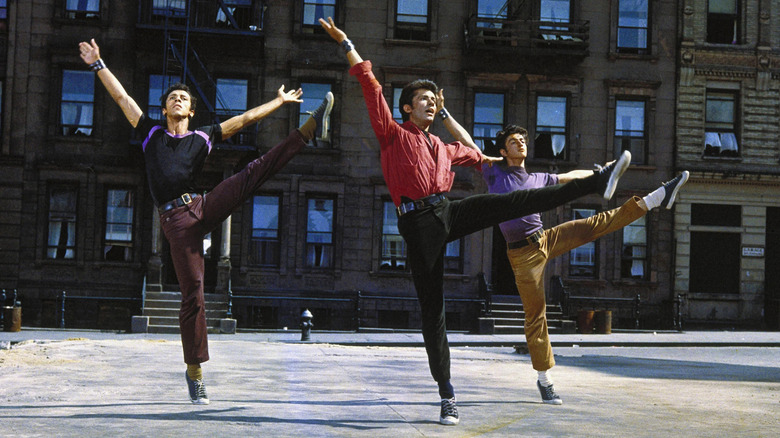
Robert Wise and Jerome Robbins' 1961 film adaptation of "West Side Story" only makes this list on a technicality, as both the film's directors were seasoned directorial veterans when they made it. Robbins, you see, had already overseen many stage productions, and even oversaw the original Broadway production of "West Side Story." Legend has it that Wise was only brought in as a reliable backup director, as Robbins hadn't ever helmed a film before. Wise, of course, was a seasoned movie director by that point, already having helmed "The Day the Earth Stood Still," "Helen of Troy," Run Silent, Run Deep," and many others. But, because this was technically Jerome Robbins' first feature film, it counts.
As for "West Side Story" itself, the film hardly needs an introduction. Boasting hummable tunes by Leonard Bernstein and Stephen Sondheim, the movie transposes the story of William Shakespeare's "Romeo and Juliet" to 1950s New York City. The two households, both alike in dignity, are now two street gangs: the mostly caucasian Jets and the Sharks, a group of Puerto Rican immigrants. The Romeo and Juliet of the story are Tony (Richard Beymer) and Maria (Natalie Wood), who fall in love despite being associated with the Jets and the Sharks, respectively. Also, like in "Romeo and Juliet," things end very badly for everyone.
Ultimately, Wise and Robbins' "West Side Story" movie won the Best Picture Oscar in 1962, with Robbins co-winning the prize for Best Director and even getting a special Oscar for his choreography. He moved back to the stage after that.
Eventually, Steven Spielberg made another film version of "West Side Story" that was itself nominated for but did not win a Best Picture Oscar. All the same, Spielberg's "West Side Story" is pretty awesome, too.
Ordinary People (1980)
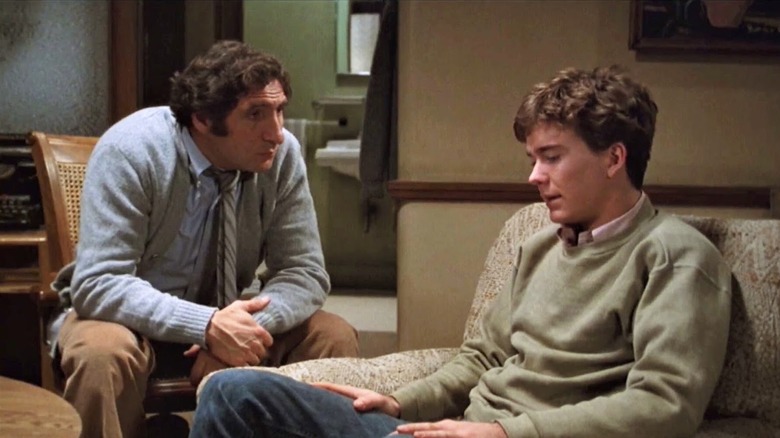
1980 brought us Robert Redford's Best Picture Oscar-winning box office hit "Ordinary People." The film is about a wealthy Chicago household that struggles with family deaths, suicidal thoughts, and other tragedies. Donald Sutherland and Mary Tyler Moore play Calvin and Beth Jarrett, a rich couple from Chicago who are reeling from the recent accidental drowning of their teenage son, Buck. Additionally, their other son, Conrad (Timothy Hutton), recently tried to die by suicide and had to spend several months in a psychiatric hospital. Calvin encourages Conrad to see a shrink, Dr. Berger (Judd Hirsch), while Beth has essentially checked out, turning more and more to despair.
The title of "Ordinary People" denotes that this kind of familial angst was common, or at least growing more common, at the time. Redford's film was released a year after the dated but powerful divorce drama "Kramer vs. Kramer," so people in the United States were clearly interested in the way familial units were dissolving and the nuclear family was exploding. Still, while its success makes sense when revisited from the vantage of the present, it came as a bit of a shock at the time.
Of course, Redford had been a Hollywood heartthrob for years by then, having starred as the reliable, handsome, ultra-charming leading man in multiple hits in the 1960s and '70s. So, it's only natural that audiences wanted to see him make his directing debut as well. No doubt, it helped that Redford was also a thoughtful, gentle, soulful filmmaker able to draw grand performances out of his casts. Indeed, Hutton won an Oscar for his performance, while Moore and Hirsch were nominated.
Terms of Endearment (1983)
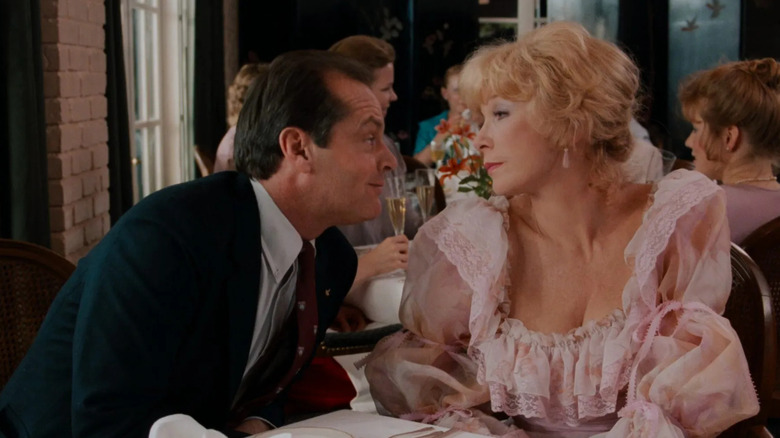
James L. Brooks' first film as a director was the 1983 blockbuster "Terms of Endearment." It won Oscars for Best Picture, Best Director, Best Screenplay (by Brooks), Best Actress, and Best Supporting Actor. This thing was a freight train.
As with "West Side Story," though, Brooks was hardly a neophyte when he sat down to make "Terms." He was already an experienced TV writer, having begun his career in the mid-1960s, writing for sitcoms like "My Mother the Car," "My Three Sons," "The Andy Griffith Show," and many others. Then, in 1970, he co-created the gigantically popular "The Mary Tyler Moore Show," which, by itself, would have cemented his legacy. Instead, Brooks went on to write for "Taxi," "Rhoda," "The Tracey Ullman Show," and, of course, "The Simpsons" (which he co-developed). So, when Brooks decided to direct a feature film, it was essentially a story of "TV guy makes good in Hollywood."
"Terms of Endearment" stars Shirley MacLaine as Aurora, a widow who closely oversees her daughter, Emma, played by Debra Winger. Emma's life becomes very difficult very fast as she has two children in rapid succession, only to become pregnant yet again (prompting her mom to encourage her to get an abortion). From there, Aurora enters a fling with a crass ex-astronaut played by Jack Nicholson, while Emma begins having an affair with a kind man named Sam, played by John Lithgow. Did I mention that this is a comedy? It's all very light yet very heavy at once.
In short, Brooks not only took to directing movies very well, he knocked it out of the park with his first go. From there, he helmed the also-very-good "Broadcast News," the stinker "I'll Do Anything," and then the 1997 Oscar darling "As Good as it Gets."
Dances with Wolves (1990)
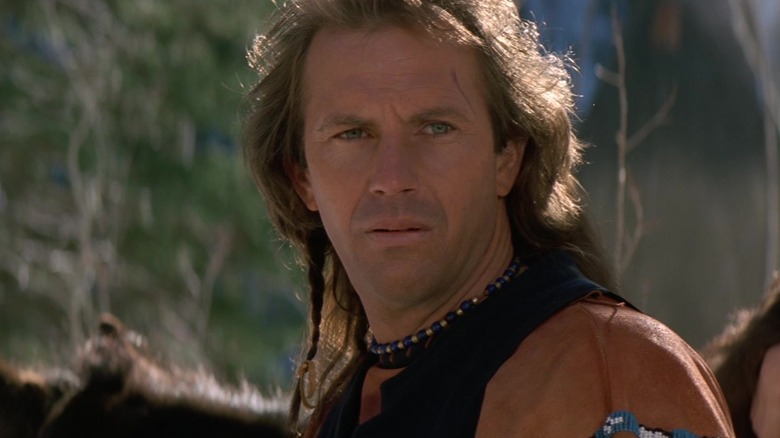
Kevin Costner began acting in movies in the early 1980s, having made his big screen debut in the 1981 comedy "Sizzle Beach, U.S.A." By 1987, though, he had proven himself to be a legit movie star with Brian De Palma's "The Untouchables" and scored big hits thereafter with films like "Bull Durham" and "Field of Dreams." After that, Costner was on everyone's radar, and, like Robert Redford before him, he was a handsome matinee idol and widespread crush object.
Needless to say, when Costner sought to break into directing, all eyes were on him. His choice of material was novel, as he directed the 1990 Western "Dances with Wolves," a drama about a former Union soldier who, despondent over the violence of the American Civil War, is assigned to a distant outpost on the U.S. frontier. There, he forms a friendship with the local Sioux, and the bulk of the movie involves him learning to communicate with and understand them before eventually deciding to live with them. Yet, despite its problematic "white man goes Native" narrative, it holds up way better than you'd think. Costner did his homework, wanting to make sure the Sioux people were depicted as accurately as possible.
Perhaps unexpectedly, "Dances with Wolves" swept through the popular imagination and sparked office conversations everywhere. Costner, it seemed, was, in fact, a good director. He's since directed multiple equally ambitious projects, but none of them have become the mega-hit that "Dances with Wolves" was. His multi-film project "Horizon: An American Saga" was even cut short after it bombed at the box office. Of course, Costner's role on the popular TV series "Yellowstone" has kept him endeared to the public of late.
American Beauty (1999)
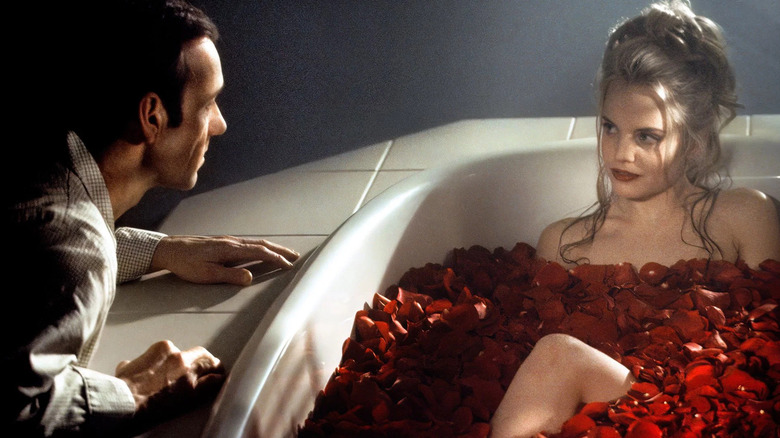
In 1999, Sam Mendes surprised everyone with "American Beauty." A dark mid-budget dramedy, the movie unpacks the miseries of 1990s American suburbia, revealing the darkness therein. The film might come across as dated today, but in 1999, it seemed capital-I-important. It felt like the false idealism of Reagan's America was finally crumbling. A commercial smash, "American Beauty" drew a wide panoply of college students and their parents alike. Yes, that scene where Wes Bentley films a "dancing" plastic bag once struck folks as unbearably profound.
It's hard, however, to think of a film that has aged as poorly as "American Beauty." Not only are its ideas about a horrific suburbia trite in the 2020s, one has to watch the ousted Kevin Spacey in the lead role as well, and the movie's "edgier" parts about teen sexuality now feel more icky than daring. Despite all this, though, "American Beauty" remains a fascinating window into the public's mindset at the end of the millennium. It's also proof that Mendes, a first-time feature director, is assured and confident with the cinematic craft. "American Beauty" won five Oscars, Best Picture among them. That's damn impressive.
Mendes, in becoming an Oscar darling right out of the gate, continued to explore his art to mixed success. His gloomy follow-up film, "Road to Perdition," was nominated for six Oscars but not Best Picture. Mendes then made the war drama "Jarhead," the suburban hell drama "Revolutionary Road," and the romance "Away We Go" before stopping twice in blockbuster country to helm the James Bond movies "Skyfall" and "Spectre." From there, he dove back into prestige with the Oscar darling "1917," and he's currently working on a quartet of movies about the different members of The Beatles. The man has always been fascinating.