

15 Best '90s Movies Nobody Talks About Anymore
We may receive a commission on purchases made from links.
The '90s saw a rise in more high-profile dramatic movies, led by film festivals like Sundance and studios like Miramax. This was just juxtaposed by memorable blockbusters, from high-octane action franchises like "Jurassic Park" to the renaissance of Disney animation. Simply put, it still felt like studios were taking major creative risks in the '90s, with auteur filmmakers flourishing during the decade. But while we've extensively covered popular movies from the '90s that are still widely beloved today, there are countless films that have seemingly fallen out of the public consciousness.
This time around, we're not necessarily talking about the best movies of the 1990s, but the excellently crafted films from the decade that people hardly seem to remember these days. Many of the films here were commercial successes, starred the biggest names in Hollywood, and even scored award season recognition, but they seem to have been somewhat forgotten over time.
These are the best '90s movies nobody talks about anymore, and each is worth checking out.
The Fisher King
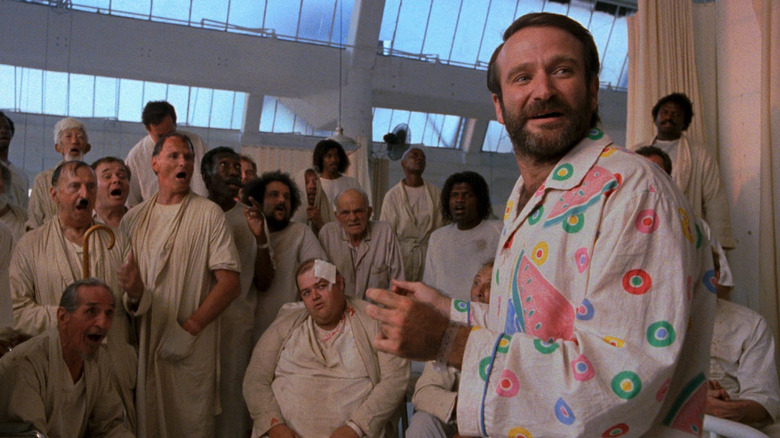
Filmmaker Terry Gilliam's movies can be a mixed bag in regard to their quality, though they're always at least interesting in what they bring to the table. One of Gilliam's movies that hits the mark is his 1991 urban fantasy story "The Fisher King." The movie stars Jeff Bridges as washed-up shock jock Jack Lucas who is saved from his rock-bottom by eccentric vagrant Parry Sagan (Robin Williams). Parry is convinced that he's destined to recover the Arthurian Holy Grail, and Jack reluctantly finds himself helping him.
"The Fisher King" stands as one of Terry Gilliam's best movies and certainly the greatest film he directed in the '90s. Yet the movie stands largely overshadowed by Gilliam's later work in the decade, especially "Fear and Loathing in Las Vegas." Williams gives one of the more nuanced performances of his career and finds a fantastic foil in Bridges, who is similarly delivering strong work. A dramedy deconstructing Arthurian legend in contemporary Manhattan, "The Fisher King" has its cast and crew at the top of their respective game.
The People Under the Stairs
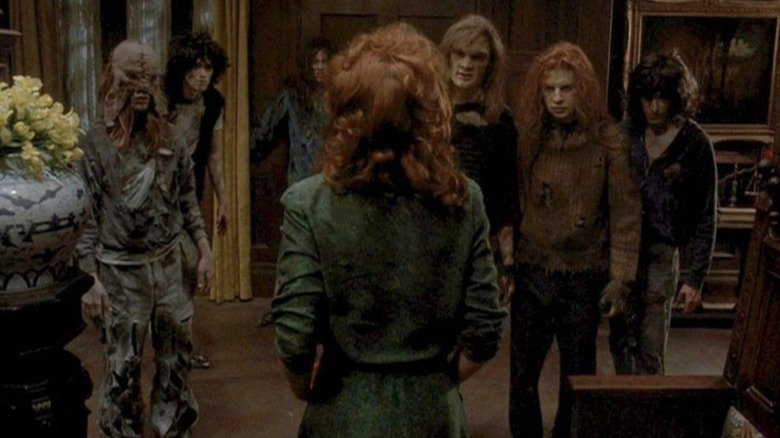
Before completely revitalizing the slasher genre with "Scream," filmmaker Wes Craven delivered his most unconventional horror movie yet with "The People Under the Stairs." Premiering in 1991, the movie has Fool Williams (Brandon Adams) and his family facing eviction from their Los Angeles home. Breaking into his eccentric landlords' home with two thieves to steal money for his mother's medical treatment, Fool discovers the disturbing truth behind the couple. This includes a group of children being held captive under the stairs who have resorted to cannibalism to survive.
Though "The People Under the Stairs" is one of Craven's most overtly comedic horror movies, it still brings plenty of gruesome violence to the screen. Craven himself was worried the cult classic would get an NC-17 rating over its content, including cannibalism and implied sexual abuse, though the movie eventually received an R. Beyond the macabre mayhem, the movie is also Craven at his most pointedly political, addressing the division of wealth and the dangers of unchecked cannibalism. One of the most underrated horror movies of the '90s, "The People Under the Stairs" is a must-watch for genre fans.
Bugsy
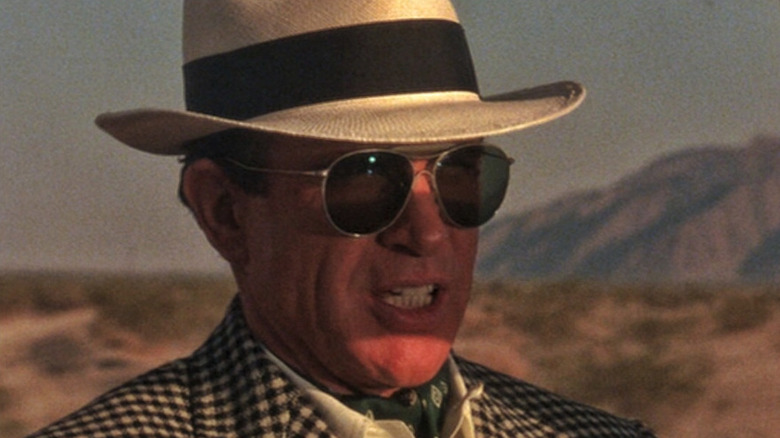
In the wake of "Dick Tracy" released the previous year, Warren Beatty starred in a very different kind of mob movie with "Bugsy." Beatty plays real-life '40s gangster Bugsy Siegel, with the 1991 biopic charting his rise in the Los Angeles criminal underworld. As Siegel spearheads turning Las Vegas into a luxury gambling getaway, he faces mob pressure when the costly investment proves disastrous. This spiral is heavily fueled by Siegel's tumultuous dynamic with his unstable lover Virginia Hill (Annette Bening).
Compared to "Goodfellas," also released the preceding year, "Bugsy" offers a much less flashy and violent mob movie with a more personal focus. Beatty brings a more nuanced touch than his usual tough-guy roles, playing Siegel as a complicated and flawed man rather than putting him on a pedestal. Beatty and Bening's on-screen chemistry thoroughly steals the entire show, with the two actors marrying shortly after the movie's release. A mob movie that warrants more attention, if only for the electricity that Beatty and Bening bring to the screen, "Bugsy" is a thoughtful take on the genre.
The Prince of Tides
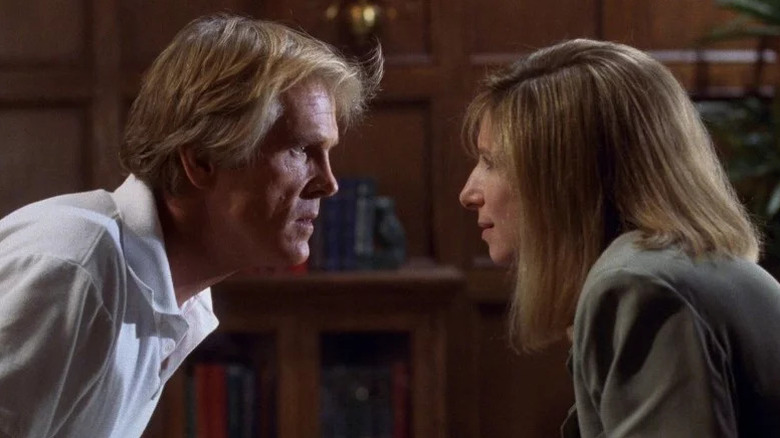
In addition to her acting and musical work, Barbra Streisand has directed three movies across her extensive career. The second of these is the 1991 drama "The Prince of Tides," which she also produced and starred in. Streisand plays New York City psychiatrist Susan Lowenstein who helps Tom Wingo (Nick Nolte) address the deeply repressed trauma he's held onto for most of his life. During this recovery process, the two fall into a tumultuous affair despite both of them being married to other people.
"The Prince of Tides" is arguably the best of the three movies that Streisand directed and certainly her best on-screen work in the '90s. Streisand delivers an effectively subdued performance while the movie also showcases Nolte at his most vulnerable. Apple TV announced an adaptation of "The Prince of Tides" was in development back in 2022, but apart from that, the movie's legacy hasn't extended into the 21st century. Cementing Streisand as an underrated creative force behind the camera, "The Prince of Tides" is a highlight in her career.
The Player (1992)
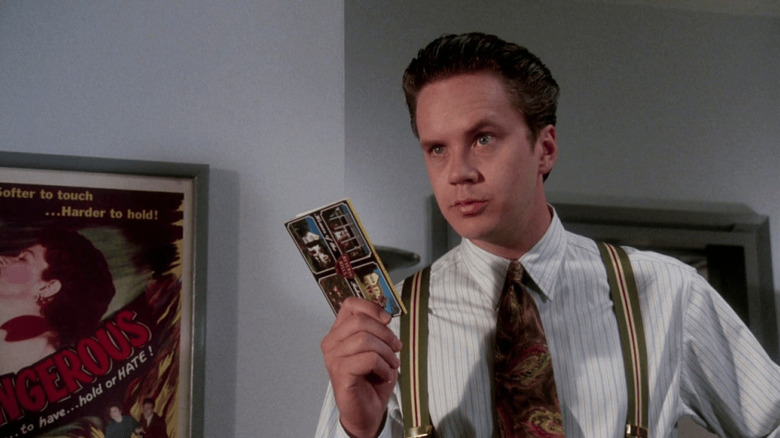
While filmmaker Robert Altman's career never quite recovered from the production nightmare that was "Popeye" in 1980, he continued making movies. Among Altman's fantastic films is "The Player," a neo-noir comedy released in 1992. Tim Robbins stars as Griffin Mill, a studio executive who reviews script submissions for potential greenlighted projects. After receiving threatening messages from an apparently jilted screenwriter, Griffin gets sucked into a mystery in the dark underbelly of Hollywood with a rising body count.
Having worked within Hollywood for decades before helming "The Player," the movie brings a knowing satirical edge to the film industry. But even for those not familiar with the inner workings of tinseltown, Altman presents audiences with a wickedly funny mystery. These comedic elements are backed by a strong supporting cast, including Whoopi Goldberg and Fred Ward. Altman at his most sharp, "The Player" stands as the venerable filmmaker's last big masterpiece.
Presumed Innocent
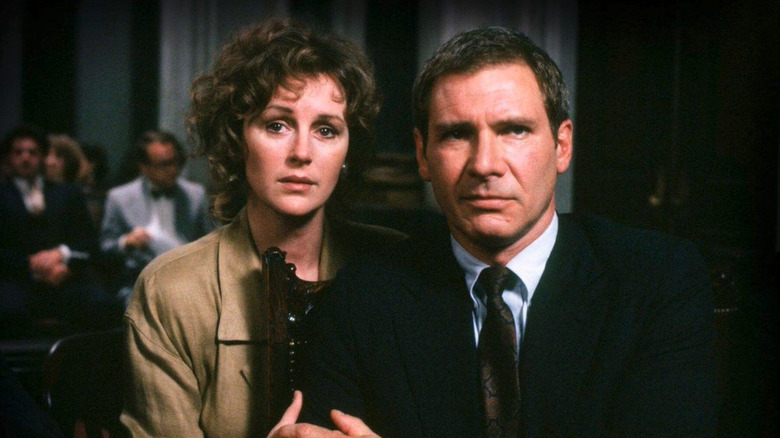
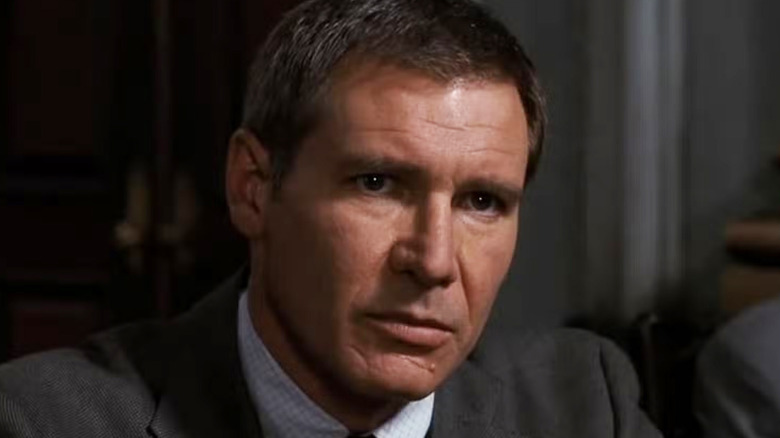
Between movies like "A Few Good Men" and "The Pelican Brief," legal thrillers dominated the '90s. One genre movie from the decade that hasn't gotten its well-earned roses is the 1990 film "Presumed Innocent," adapting the 1987 Scott Turow novel. Harrison Ford stars as Rusty Sabich, who assists a local high-powered prosecutor only to find himself accused of murder. While under trial for the killing of his former lover, Rusty finds different parties exploiting the public profile around the case and the setup.
"Presumed Innocent" is one of the best legal thrillers in cinema history, though it's largely overshadowed by subsequent movies in the genre. The writing is particularly sharp, and the movie's cast takes advantage of its murky exploration of morality and dark secrets. Ford is a standout in one of his more underrated performances, bringing an air of subtlety to his character's plight even as the case grows more dire. Featuring one of the best twist endings of any legal thriller of its era, "Presumed Innocent" definitely sticks with viewers after the credits roll.
The Last of the Mohicans (1992)
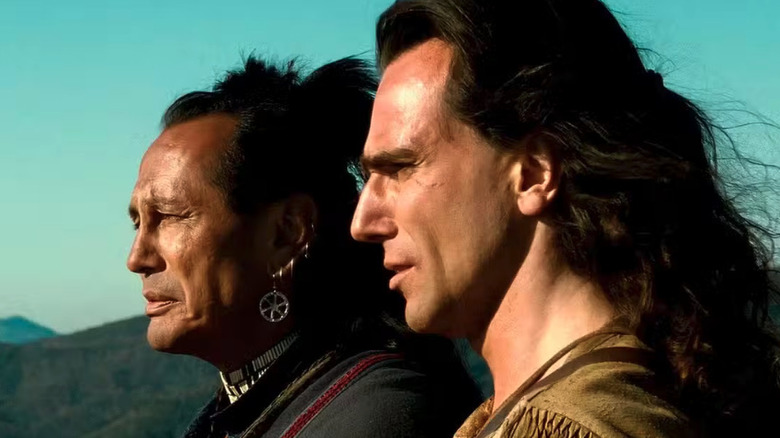
With filmmaker Michael Mann best known for helming crime thrillers like "Heat" and "Collateral," the director took a departure in subject matter with "The Last of the Mohicans." Adapting the 1826 James Fenimore Cooper novel, the 1992 movie covers the escalating Seven Years' War during the mid-18th century in upstate New York. Tracker Hawkeye (Daniel Day-Lewis), along with his adoptive Mohican family, escorts a pair of women to a British fort in the region. This is complicated by the group being hunted by the Huron warrior Magua (Wes Studi) who has been massacring colonists and British soldiers.
Michael Mann had to get creative when adapting "The Last of the Mohicans," consciously deviating from the more prejudiced elements of the source material. Instead, Mann delivers a largely authentic depiction of the conflict while retaining the broad strokes of the story. Day-Lewis provides a reliably committed performance as Hawkeye, matched by Studi's sheer intensity as the murderous Magua. Mann directed some of his best movies in the '90s, but it still feels like "The Last of the Mohicans" gets left out of that discussion.
Damage (1992)
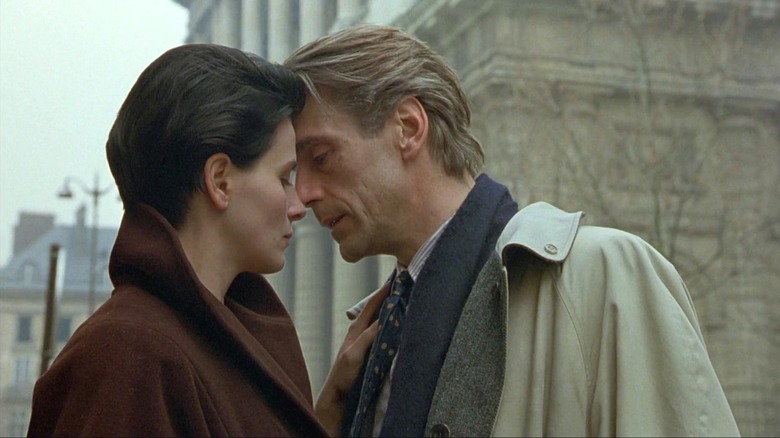
One of the most torrid movies of the '90s is the aptly titled "Damage," based on the novel by Josephine Hart. The 1992 movie stars Jeremy Irons as Stephen Fleming, a married British politician living in London. After meeting his adult son's girlfriend Anna Barton (Juliette Binoche), Stephen begins a stormy secret affair with her. Stephen's feelings for Anna only intensify when she becomes engaged to his son, threatening his family and political career.
Between both of their work throughout the decade, Jeremy Irons and Juliette Binoche excelled at playing characters overcome by sheer emotional anguish in the '90s. Both are very much in fine form in "Damage," joined by Miranda Richardson playing Stephen's wife Ingrid. Understandably, this level of lurid fare won't be for everyone, but with what the movie tries to convey, it does so very well. Top-tier dramatic work for all parties involved, "Damage" is a movie full of self-destructive yearning and hurt feelings and is all the better for it.
The Piano
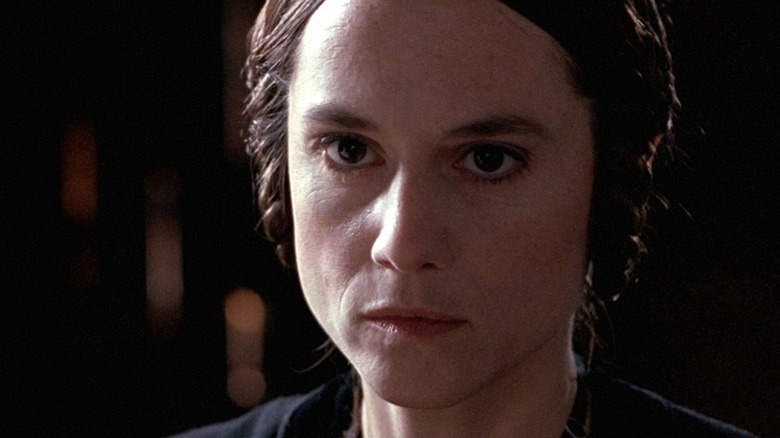
The late, great Sam Neill had a particularly fantastic run in the '90s, including starring in two very different standout movies in 1993. Though everyone certainly remembers "Jurassic Park" and its industry-changing box office impact, Neill also played a prominent role in "The Piano." Written and directed by Jane Campion, the movie is set in 19th century New Zealand as mute mother Ada McGrath (Holly Hunter) enters an arranged marriage with Alisdair Stewart (Neill). However, Ada falls in love with retired sailor George Baines (Harvey Keitel), incurring jealous wrath from Alisdair.
"The Piano" won Holly Hunter her Academy Award for Best Actress but everyone in the cast delivers award season-worthy performances. Neill is at his most mercurial on screen while Anna Paquin, playing Ada's daughter from a previous relationship, brings a needed vulnerability to the piece. Under Campion's direction, the movie just sits and breathes with its characters and their complicated interpersonal dynamics, letting audiences appreciate the full breadth of the story. Outstanding work from all major parties involved, "The Piano" still stands as Campion's greatest film.
The Age of Innocence (1993)
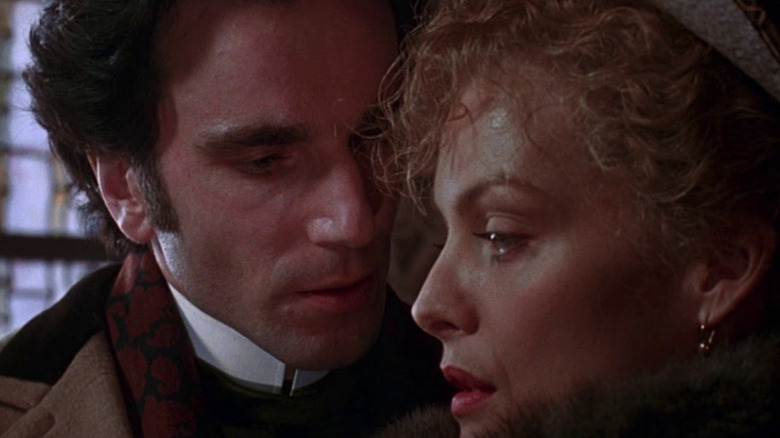
Martin Scorsese is another filmmaker who delivered some of his best work in the '90s, predominantly in the crime genre with flicks like "Goodfellas" and "Casino." The most overlooked Scorsese movie from the decade is his 1993 adaptation of the 1920 Edith Wharton novel "The Age of Innocence." Set in New York City during the 1870s, the story centers on wealthy socialite Newland Archer (Daniel Day-Lewis) as he prepares to marry May Welland (Winona Ryder). However, when May's scandalous cousin Ellen Olenska (Michelle Pfeiffer) arrives in town, Archer finds himself falling hopelessly in love with her.
Looking back, Daniel Day-Lewis' forgotten romance movie deserves more love by modern audiences and not just because of his starring role. As fantastic as Day-Lewis is, the movie is elevated by Ryder and Pfeiffer in contrastingly sumptuous performances, capturing the repressed passion in the face of decorum. Scorsese brings his meticulous eye for detail, with the movie itself among his more consciously restrained, working well to the story's overarching themes. "The Age of Innocence" features everyone involved delivering excellent work and serves as a strong reminder of Scorsese's storytelling range with a top-notch cast.
Nell
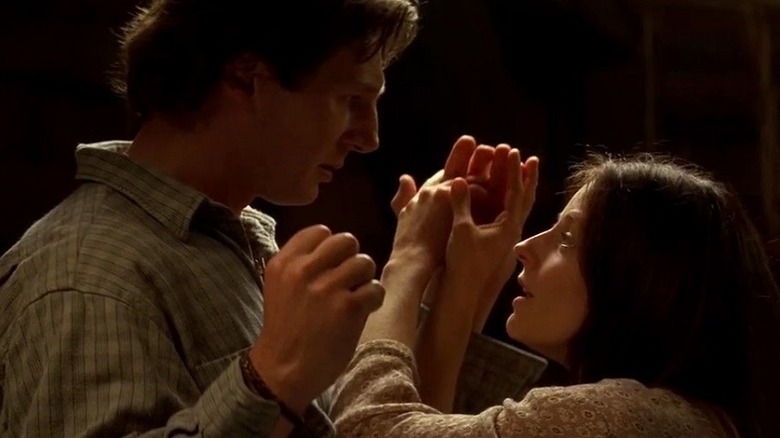
Stepping up as both producer and star, Jodie Foster took on the title role of the 1994 drama "Nell." Foster's character is a young woman who grew up secluded in the mountains of North Carolina, fending for herself after the deaths of her mother and twin sister. Local town doctor Jerry Lovell (Liam Neeson) discovers Nell and, working with researcher Paula Olsen (Natasha Richardson), learns how to communicate with her. This is complicated when the outside world also becomes aware of Nell and wants to have her institutionalized.
In playing the title character, "Nell" garnered Jodie Foster her fourth Academy Award nomination, a distinction that's well-earned. The movie could've very easily been cloying award season bait, but Foster finds the innocent humanity behind her character to great effect. This is matched by a reliably strong performance from Neeson who, along with his real-life wife Richardson, guide viewers in getting to know the movie's unusual protagonist. A reminder that Jodie Foster is the best actor ever, "Nell" is a showcase for its cast's talents.
The Crucible (1996)
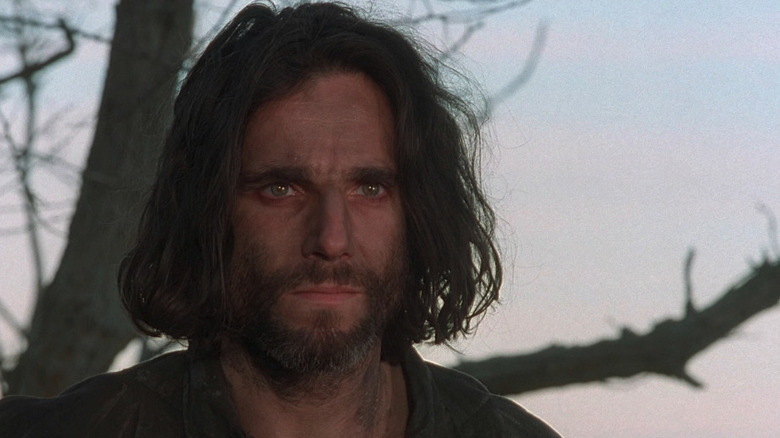
Yes, we've got another Daniel Day-Lewis picture on this list, but it really does feel like his '90s work is under-appreciated today, other than "In the Name of the Father." The 1996 adaptation of "The Crucible" is an underrated flop that deserves a second look, despite its commercial performance. Day-Lewis stars as John Proctor, a man caught up in the 1692 Salem Witch Trials in Massachusetts. Because of Proctor's adulterous relationship with Abigail Williams (Winona Ryder), a local girl accused of witchcraft, he finds himself drawn into the deadly religious fervor.
A faithful adaptation of the Arthur Miller stage play, "The Crucible" is elevated by a strong ensemble cast. Day-Lewis steals every scene that he's in, of course, giving what is arguably his most tortured screen performance of the '90s. Joan Allen complements this wonderfully as Proctor's suffering wife Elizabeth, helping illustrate the human cost of the incident. A fantastic realization of Miller's work for the screen with an unbeatable cast, "The Crucible" helps cement Day-Lewis' reputation as one of the greatest actors of his generation.
The Ice Storm
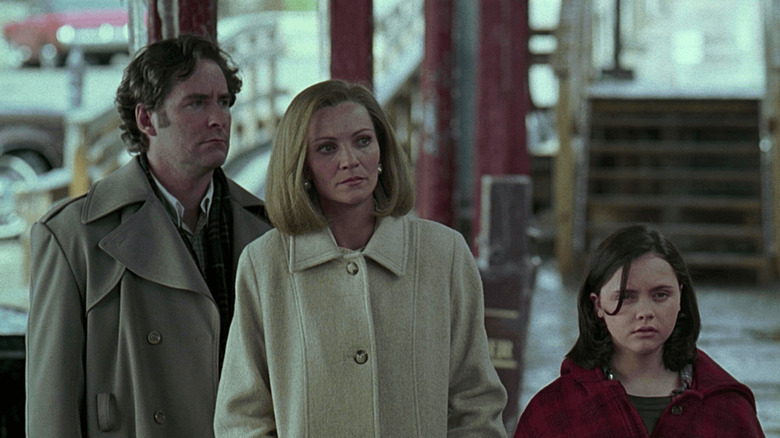
The dark side of suburbia and middle-aged malaise fuels much of the 1997 drama "The Ice Storm." Directed by Ang Lee, the movie follows two Connecticut families during Thanksgiving weekend in 1973, both mired in the ennui of their daily lives. As both the adults and teenage children of the Hood and Carver families get messily entangled, they assemble for a neighborhood party. During this get-together, all these pent-up tensions and jealousies come to the surface before tragedy strikes.
Lee has a whole murderers' row of actors as part of his ensemble, including Kevin Kline, Joan Allen, Signourney Weaver, and Elijah Wood. Weaver is particularly top form, reminding audiences just how powerful of a dramatic actor she can be. Where Lee and his cast visibly excel is their level of restraint, with those complicated emotions simmering under the suburban facade until they finally pop. A career highlight for the cast and crew, "The Ice Storm" skewers domesticity just as well as "American Beauty" but isn't as widely recognized for it.
Being John Malkovich
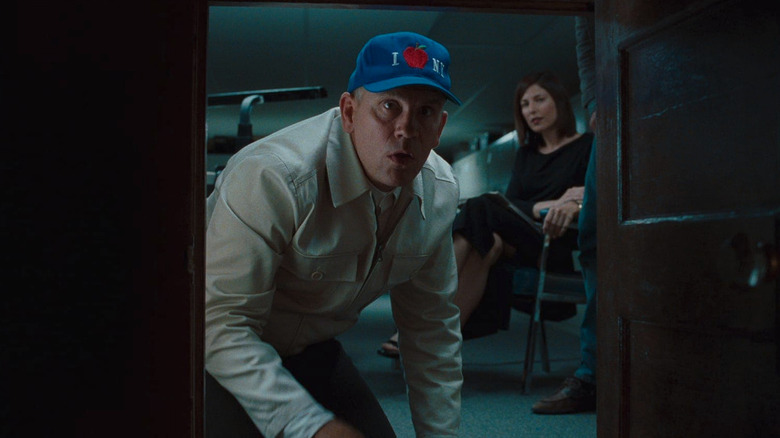
Veering into outright surrealism, the 1999 comedy "Being John Malkovich" is as wonderfully off-beat as they come. The movie's protagonist is Craig Schwartz (John Cusack), a failed puppeteer who works as a file clerk to make ends meet. Discovering a small door at his workplace, Craig investigates and learns that it serves as a portal into the mind of actor John Malkovich, goodnaturedly playing himself. As Craig and people in his life take advantage of this, Malkovich becomes unnerved by the periodic loss of control whenever someone else possesses him.
Screenwriter Charlie Kaufman made "Being John Malkovich" by smashing two scripts together, and that disjointed origin serves this strange story well. On the one hand, the movie is about a sad sack as the odd man out in a love triangle while the other is about possessing an Academy Award-nominated actor. This is all anchored by Malkovich himself, who gamely skewers his own image while playing along with the body-hopping antics. One of the most original comedies ever made, "Being John Malkovich" is Kaufman and director Spike Jonze right in their wacky element.
Magnolia
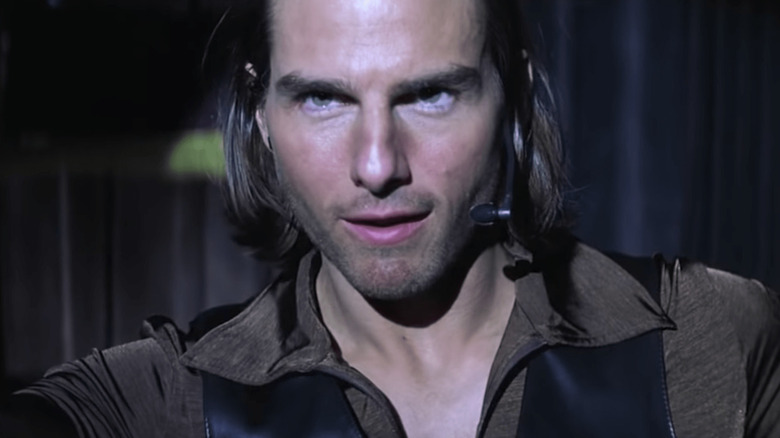
Fresh off the success of "Boogie Nights," filmmaker Paul Thomas Anderson's follow-up was the 1999 drama "Magnolia." The movie is a full ensemble piece, following a group of seemingly disparate figures throughout the San Fernando Valley. This includes misogynistic motivational speaker Frank Mackey (Tom Cruise) and terminally ill television host Jimmy Gator (Philip Baker Hall). Naturally, these character arcs collide spectacularly by the end of the movie, driven by two dying men's one last chance to settle unresolved issues.
"Magnolia" is Anderson at his most ambitious, at least in terms of the number of character arcs that he's juggling. With its meditation on mortality and the contempt that often comes with familiarity, the movie is fueled by messy emotions and doesn't offer its characters any easy answers. But therein lies the charm, even as some measure of reconciliation is achieved when these plot threads begin to inevitably converge. "Magnolia" is Paul Thomas Anderson's masterpiece and certainly the one that deserves wider recognition than it currently receives.