

5 Best Western TV Shows Nobody Talks About Anymore
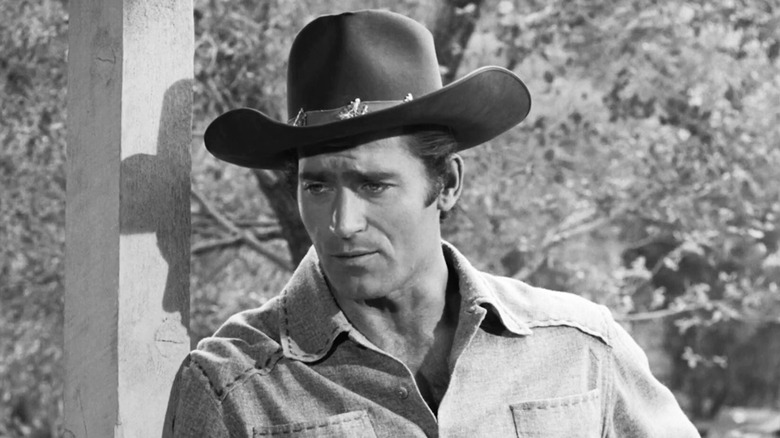
In the mid-20th Century, Westerns dominated TV. The genre was so popular that the best Western TV shows of the era still enjoy recognition today. "Rawhide" will forever be the series that launched Clint Eastwood's career; "Gunsmoke" permeated pop culture with its 20-year run; "Bonanza" bridged the gap between the simplicity of the white-hat-vs.-black-hat era and the more nuanced approach of the revisionist age. Of course, with so many small-screen oaters on offer, many were bound to slip through the cracks — and many of them probably should have. James Garner's swiftly-canceled offbeat Western series "Nichols," for example, was seemingly destined to be forgotten.
But there remains a veritable trove of overlooked oaters just waiting to be rediscovered. Seriously, the amount of TV Westerns is nothing short of staggering when you take a closer look, and there was always going to be some series that got lost in the shuffle, including those that deserved better. Even shows that did well enough in their time, such as "Have Gun Will Travel" or, more recently, "Justified," aren't mentioned quite as frequently as they should be.
Here, we've assembled a list of the best Western shows that simply don't get talked about enough. For whatever reason, these Old West adventures have been mostly lost to TV history. But they're well worth watching today, especially since the genre appears to be undergoing a modest renaissance in the Taylor Sheridan age. Long before the tale of the Dutton dynasty graced our screens, these horse operas helped establish a blueprint that remains as important today as it was in the heyday of the Western series. Here are the five best Western shows nobody talks about any more.
Wanted Dead or Alive
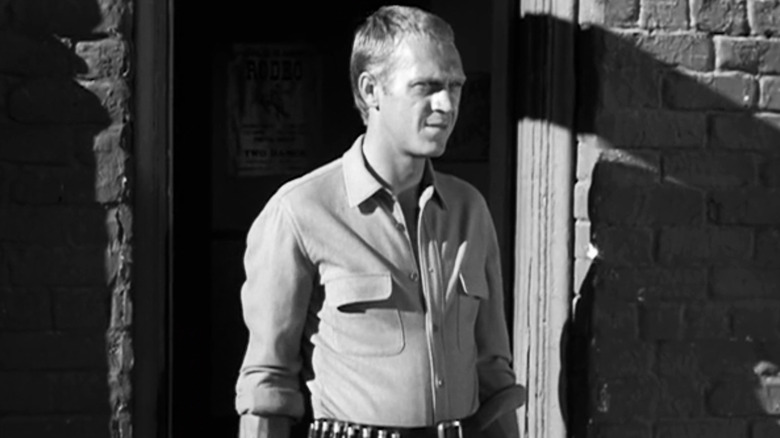
Despite the fact it launched Steve McQueen's career, "Wanted Dead or Alive" just isn't talked about as much as other series of its ilk. We all know "Rawhide" turned a young Clint Eastwood into a cowboy, but what about the show that made McQueen a cowboy before his genre-defining "The Magnificent Seven?" Likewise, we all know McQueen's best movies, but what about the series that set him up to become the "King of Cool?" While Western fans will rightly consider "Wanted Dead or Alive" foundational, it simply isn't as well known as its contemporaries among general audiences.
That's a shame because this show was truly unique for its time. "Wanted Dead or Alive" stars McQueen as Confederate soldier turned bounty hunter Josh Randall, who oscillates between removed cool and warm-hearted samaritan, making him a fascinatingly contradictory protagonist. The series aired for three seasons and 94 episodes on CBS between 1958 and 1961. During that time, Randall got caught up in all manner of debacles that went far beyond merely tracking down bounties. From helping to reunite families to hunting Santa Claus himself (really), Randall's exploits went beyond what audiences typically expected from a Western adventure show at the time.
But while the series' variety was a big part of its appeal, it was McQueen's performance that really made it one of the great shows of its era. The actor's bounty hunter wasn't quite as obviously charismatic as, say, James Garner's Bret Maverick. But he had his own unique cool that contained all the lineaments of what would become a truly iconic screen presence. It doesn't get much better than Steve McQueen hunting wanted men across the Old West with a Winchester rifle.
The Westerner
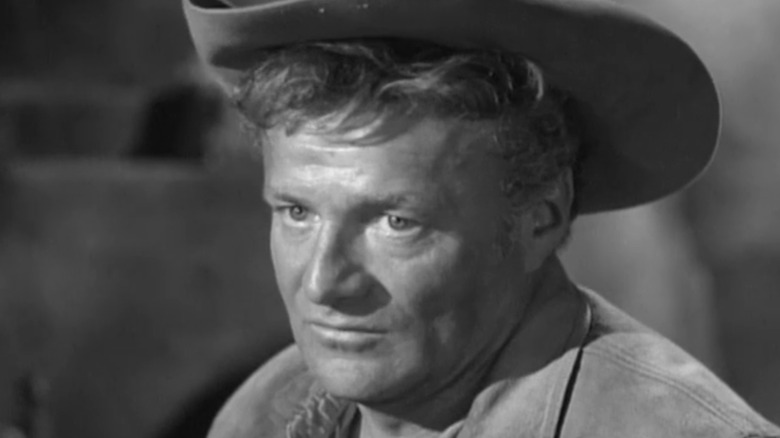
Long before he upset John Wayne with his controversial Western "The WIld Bunch," Sam Peckinpah created, wrote, and directed his own Western TV show. 1960's "The Westerner" follows Brian Keith's Dave Blassingame, a drifter who finds himself drawn into violent conflicts on his travels throughout the Western frontier (despite merely trying to save enough money to purchase a ranch for himself). He's accompanied by his faithful yellow Mastador, Brown (played by the dog, who three years prior, portrayed the titular pooch in "Old Yeller").
The series only ran for 13 episodes before NBC canceled it. But it remains a fascinating entry in the mid-20th Century Western TV canon for several reasons. For one, it showcased Peckinpah's revisionist sensibilities long before they actually came into vogue. The world of "The Westerner" was not the one inhabited by the clean cut cowboy heroes of decades prior. While Peckinpah's show was hardly as brutal as the gruesome finale of "The Wild Bunch," it was notably darker and more mature than other series of the era.
That's not surprising, given the show's genesis. According to a 2004 New York Times article, Peckinpah once said, ”I created 'The Westerner' because of anger." What was he so angry about? Well, long before the United States' actions during the Vietnam War provided a catalyst for "The Wild Bunch," Peckinpah took aim at the "never-miss sheriffs, always-right marshals, [and] whitewashed gunfighters" that populated Western TV series. That makes the short-lived "The Westerner" a unique entry on this list and one that should be much more well known than it is.
Interestingly enough, "The Westerner" started life as a backdoor pilot on CBS's "Dick Powell's Zane Grey Theatre" — which, as it happens, is also a show worthy of a spot on this list...
Dick Powell's Zane Grey Theatre
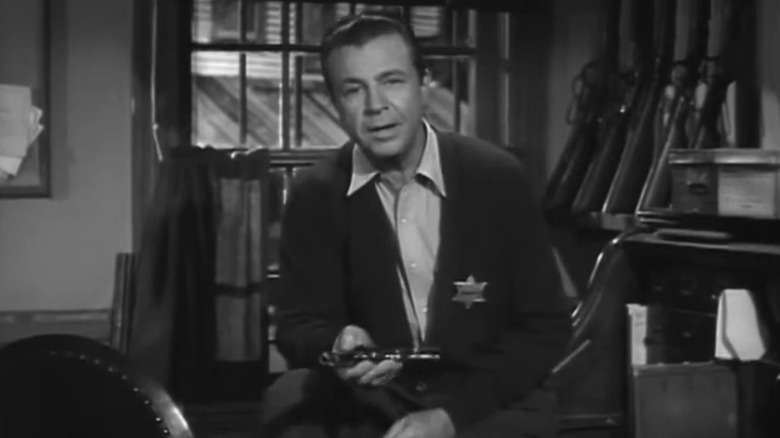
The first Western anthology series on our list birthed some of the great Oaters of the 1950s and '60s. "Dick Powell's Zane Grey Theatre" aired on CBS from 1956 to 1961 and during that time launched the shows "Trackdown," the classic Chuck Connors series "The Rifleman," "Johnny Ringo," "Black Saddle," and, of course, "The Westerner." Oddly enough, the anthology series itself was initially based on the stories of author Zane Grey, who mythologized the Old West and helped establish the kind of simplistic good guy vs. bad guy dynamic that Sam Peckinpah eventually railed against with "The Westerner."
"Dick Powell's Zane Grey Theatre" was, then, a fairly traditional take on the Old West, But its writers quickly realized that compressing Grey's stories into half-hour episodes was a tricky task and began writing their own original scripts early on, telling stories of outlaws, cowboys, sheriffs, and pioneers. That was all it took to impress viewers.
With Dick Powell as host, narrator, and sometimes star, the show debuted to solid ratings and reviews. When it first aired in October 1956, The Billboard hailed "Dick Powell's Zane Grey Theatre" as "one of the strong contenders for the title of most important new show, according to many of its ratings." Each episode told a new tale, and throughout its five-season, 146-episode run, the show welcomed esteemed guest stars like Jack Palance, Ernest Borgnine, Rory Calhoun, Dennis Hopper, and Cloris Leachman. Oh, and Ronald Reagan showed up, too.
This is also the series that indirectly gave us "Wanted Dead or Alive," itself a "Trackdown" spin-off. With all that in mind, "Dick Powell's Zane Grey Theatre" was one of the most quietly influential shows of its time, and it deserves to be more well known than it is today.
Cheyenne
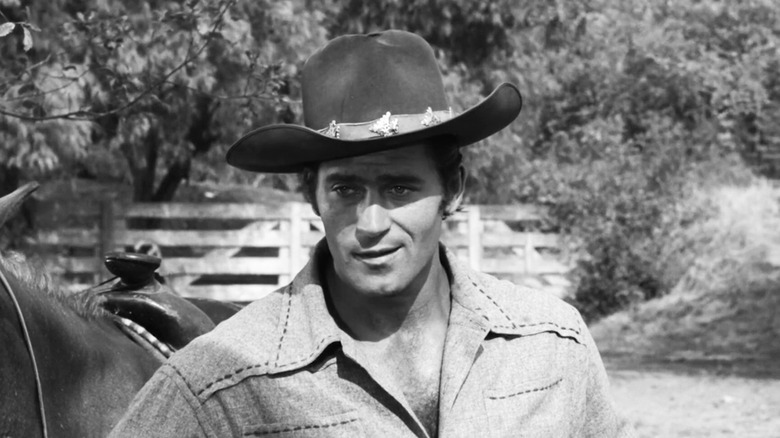
As far as underrated Western TV shows go, they don't get much more emblematic than "Cheyenne." This is the forgotten 1950s Western gem that completely changed television, representing the first hour-long Western series on American TV. It began airing in 1955 and ran for 108 episodes across seven seasons until being canceled by ABC in 1962. All the while, Clint Walker starred as Cheyenne Bodie, a fearless loner cowboy who nonetheless has a sensitive side and often tries his best to help the less fortunate.
That empathetic streak was embedded in the character from the outset. As a young boy, Cheyenne was taken in by the Cheyenne people following the murder of his parents and subsequently developed a much more nuanced understanding of the dynamics of the Old West. This made the show unique in another important way. "Cheyenne" didn't wholly embrace the Native-Americans-as-savages view that had characterized so much of the Western genre up until that point.
What's more, far from representing the taciturn, ruthless anti-hero that would soon come to dominate the Western genre in the years after "Cheyenne" went off the air, Walker's cowboy was a quiet but warm-hearted hero who, like the show in which he appeared, represented something truly unique for the time. After "Cheyenne" came to an end, hour-long Western series had become fairly standard. But this was the show that started that trend. For that, and much more, it deserves to be remembered alongside "Gunsmoke," "Bonanza," and similar titles from Western TV history.
The Lazarus Man
It wasn't just the 1950s and '60s that gave us some of the best forgotten Western series. "The Lazarus Man" is an overlooked '90s gem that even fans of the genre might not remember. This 1996 Western with a fantastic premise was canceled for the tragic reason that its star developed cancer. Prior to its cancellation, however, "The Lazarus Man" was set for a second season, which might have helped this under-seen series gain more recognition than it enjoys today.
Set in post-Civil War Texas, "The Lazarus Man" stars Robert Urich in the titular role. Having been felled during hostilities, Ulrich's character emerges from a shallow grave in the premiere episode with a severe case of amnesia. The former U.S. Army soldier does remember being attacked by a man wearing a derby but otherwise has no recollection of his life before being inexplicably resurrected. The show follows Urich's mystery man as tries to discover the truth about who he is and why he was buried alive. Towards the end of the series' one and only season, we do get some answers in that regard, but I'll spare you the spoilers in case you're one of the many who have yet to see "The Lazarus Man."
Sadly, Urich, who's known for having played Jake Spoon in the groundbreaking Western miniseries "Lonesome Dove," developed cancer in 1996 and after telling production company Castle Rock Television, "The Lazarus Man" was canceled. Urich later sued the company for breach of contract, but regardless, the show ended up running for a single, 20-episode season on TNT. Today, it remains one of the best examples of a '90s Western that still holds up, and it undoubtedly deserves more recognition.