

John Carpenter Wanted To Send Michael Myers To Space – Here's Why Halloween Stayed On Earth
We may receive a commission on purchases made from links.
Welcome to The Best Movies Never Made, a look back at the most fascinating, strange, and tantalizing films that never actually made it in front of cameras — and maybe should have.
"There was talk of me writing and directing ['Halloween 6']. I had an idea for it which would have changed it; correctly and totally changed it forever so that it couldn't go back."
Those are the words of the Horror Master himself, John Carpenter, speaking with Fangoria some years back about his would-be pitch for a sixth installment in the "Halloween" franchise, as recounted in Dustin McNeill and Travis Mullins' book "Taking Shape II: The Lost Halloween Sequels." So, what was Carpenter's idea? It boils down to three words:
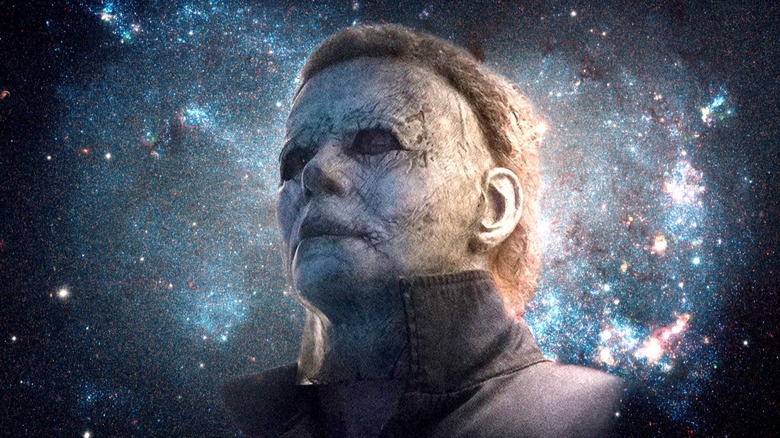
"Halloween" in space.
Horror may not have been the genre Carpenter set out to direct, but he mastered it all the same. He only directed the original "Halloween," eventually leaving the franchise altogether. However, if this wild plan had gone forward, Carpenter would have boldly taken Michael where no slasher villain had gone before.
But before that, we need to flashback to the making of "Halloween 4."
"I received a call from [Halloween co-writer and producer] Debra Hill and she said, 'Dennis, I just wanted you to know that John and I have sold our interest in the title 'Halloween' and, unfortunately, your script was not part of the deal," said screenwriter Dennis Etchison in the documentary "Halloween: 25 Years of Terror." Etchison had been working with Carpenter and Hill on a version of "Halloween 4" — one that would never see the light of day.
At that point, longtime producer Moustapha Akkad gained full control of the series, eventually releasing "Halloween 4: The Return of Michael Myers" in 1988, a full decade after the original slasher classic first hit theaters. It was a return to form after "Halloween III: Season of the Witch" removed Michael Myers from the franchise. "Halloween 5: The Revenge of Michael Myers" was then rushed into production and suffered both critically and commercially. But this is where things get interesting.
John Carpenter wanted to take back control of Halloween in the early '90s
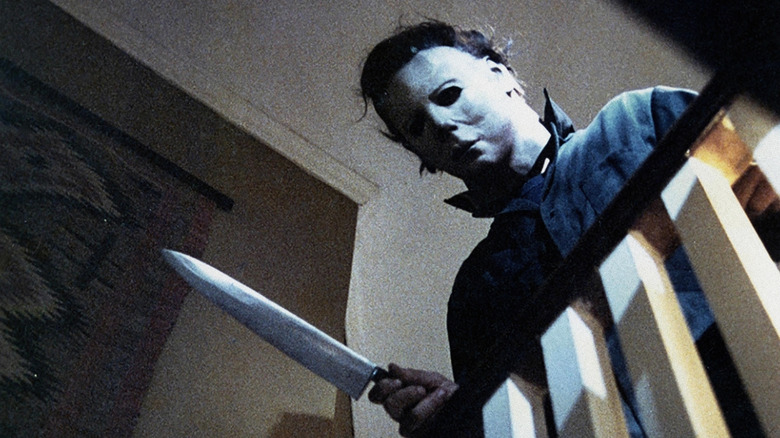
It's important to understand that, generally speaking, John Carpenter was unhappy with the direction of the franchise, particularly after he and Debra Hill sold the rights. In a 2004 interview with Empire Magazine (via MovieWeb), Carpenter made his feelings very clear.
"He'd kick [Freddy and Jason's] asses. Well, the original Michael — my Michael — would. The modern Michael wouldn't stand a chance. These days, all the 'Halloween' movies have xeroxed the formula to the point it isn't scary anymore. It's depressing."
The filmmaker was then asked whether or not he would return to direct an entry in the franchise ever again. "Well, my motto is: never say never. I have some ideas up my sleeve that would blow people away. Watch this space," he said at the time. Fans hung onto Carpenter's curious use of the word "space" at the end of that statement, as he'd several years earlier tried to wrestle the rights back with the intention of bringing Michael Myers to space.
After "Halloween 5" introduced the Man in Black, ending on a strange note, Moustapha Akkad knew he was going to continue the series as there was money to be made, but he took a beat to figure out how best to proceed. Unfortunately, that beat may have been a touch too long. As "Taking Shape II" explains, he had lost the rights to make new "Halloween" movies, quite possibly because of the delay in making a sequel.
Carpenter, then, had an opportunity — and he did his damndest to capitalize on it. Unfortunately, the Horror Master would ultimately fail to wrestle back some control over the franchise he helped create.
What would John Carpenter's Halloween in Space have looked like?
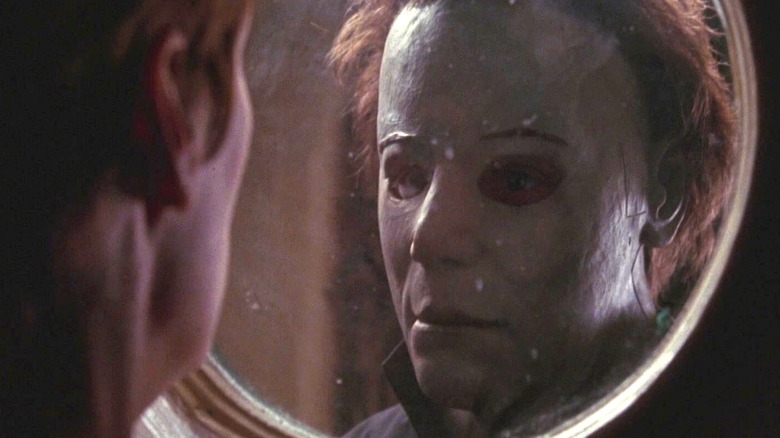
Miramax, the studio that wound up making a version of "Halloween 6," passed on John Carpenter's pitch for a "Halloween" sequel set in space. Unfortunately, very few specifics have been revealed about the pitch or what the story would have looked like, but we do have some idea of what the filmmaker had in mind.
Carpenter revealed the idea publicly to Fangoria in 1994 (via JoBlo), five years after "The Revenge of Michael Myers" disappointed in theaters. "If you can't kill [Michael Myers], what do you do?" he posited. "You send him up into space, except he gets out up there and ends up on a space station."
Carpenter hasn't discussed the concept in detail in the press, but this would be a wild swing. That might explain why he tried to parter with New Line Cinema to get the rights and make his movie. The studio was willing to get weird with its other slasher franchises, making "Jason Goes to Hell" in 1993 and Wes Craven's "New Nightmare," the director's most inventive slasher, in 1994. They were evidently willing to go with Carpenter on this weird, space-set ride.
Crucially, Carpenter wasn't a big fan of what happened with the slasher genre in the wake of the success of "Halloween." Speaking to author Bret Easton Ellis in 2016 (via Dread Central), Carpenter had harsh words for the genre.
"I think the reason that all these slasher movies came in the '80s was a lot of folks said 'look at that 'Halloween' movie. It was made for peanuts, and look at the money it's made! We can make money like that. That's what the teenagers want to see.' So they just started making them, cranking them out ... most of them were awful."
Michael Myers could have won the slasher icon space race
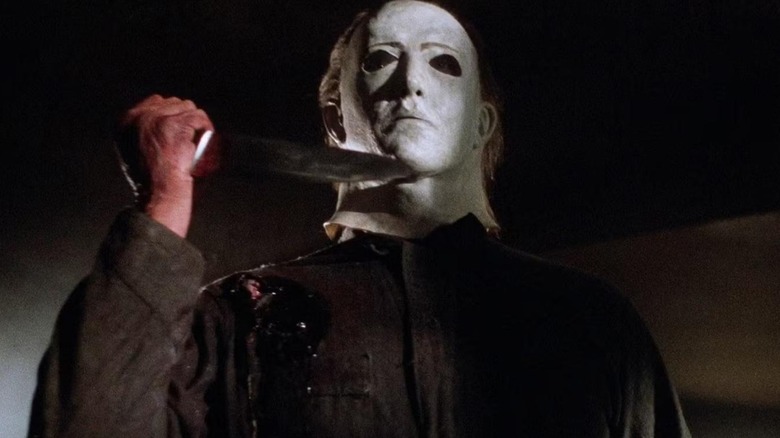
A couple of things stand out when we really consider what putting Michael Myers in space in the mid-'90s would have meant. For one, as silly as it sounds at first glance, a "Halloween" movie in space isn't all that ridiculous, based on John Carpenter's reasoning. The sequels established that Michael was essentially unkillable. What does humanity do with a being like that? It may be outlandish, but yeah, why not send his ass to space?
Carpenter would later make his own, very different horror movie in space: 2001's "Ghosts of Mars," which starred Jason Statham and was a colossal flop. The director had a long-held fascination with space that does back to his first movie, the low-budget "Dark Star." It makes sense that he would try to bring his most iconic creation to space as well.
Beyond that, Carpenter's "Halloween" in space would have potentially made it the first major slasher movie franchise to venture into the final frontier. In 1996, both "Hellraiser: Bloodline" and "Leprechaun 4: In Space" would play with the concept, with wildly different results. Most notably, 2002 saw the release of "Jason X," which took Jason Voorhees from the "Friday the 13th" franchise into space with a remarkably similar premise to Carpenter's initial vision, resulting in one of the best so-bad-it's-good movies of all time.
No script was ever completed, meaning we know little about Carpenter's specific vision. But the most significant part about this unmade "Halloween" sequel is that it would have "totally changed [the series] forever so that it couldn't go back" (to use the director's own words). The slasher that supercharged the entire craze would have been the first to head to the stars, and the result would've been a once earthbound series making the full transition to science fiction. Carpenter wrote the rules, and he would've been the one to remake them.
Halloween in space couldn't happen because Miramax won the franchise rights
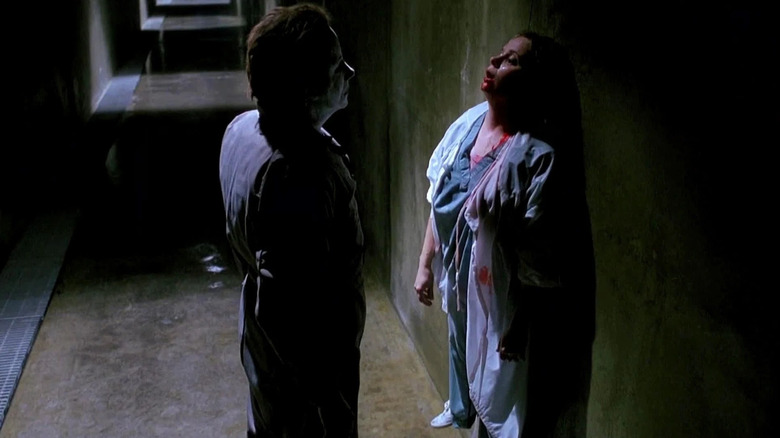
The rights to the franchise were put up for auction in the '90s, likely due to the delay in making "Halloween 6." Moustapha Akkad partnered with Miramax Films to put in a sizable bid. The plan was to release future "Halloween" movies through the relatively new genre label, Dimension Films. But at the same time, John Carpenter teamed up with New Line Cinema in an attempt to outbid them.
Bids were submitted, but in the end, Akkad and Miramax won. In 2015, Dimension would also lose the rights to the "Halloween" franchise, paving the way for Universal and Blumhouse to partner up on director David Gordon Green's trilogy. But that's another story entirely.
Akkad was involved in the first eight Halloween films as an executive producer — the only person to hold that distinction. As the man who helped put up the money for the original horror classic, he wasn't going to let his baby go. With the rights secured, production on the eventual "Halloween 6" continued without Carpenter being directly involved.
"Taking Shape II" also features an interview with Nick Phillips, who was a development executive at Dimension Films at this period in the early-to-mid-'90s. He explained some of the pitches that were considered, including the Michael Myers in space concept:
"I can remember some of the loglines. There were some classics in there. Some usual places you'd think it would go. There was definitely one in space. There was one where Michael Myers was put on a secret government research boat because they were trying to harness his powers — his pure evil — to create super soldiers. There was another where Michael Myers was at an amusement park which is basically what that movie 'Hell Fest' was."
Halloween 6 lingered in development hell for years
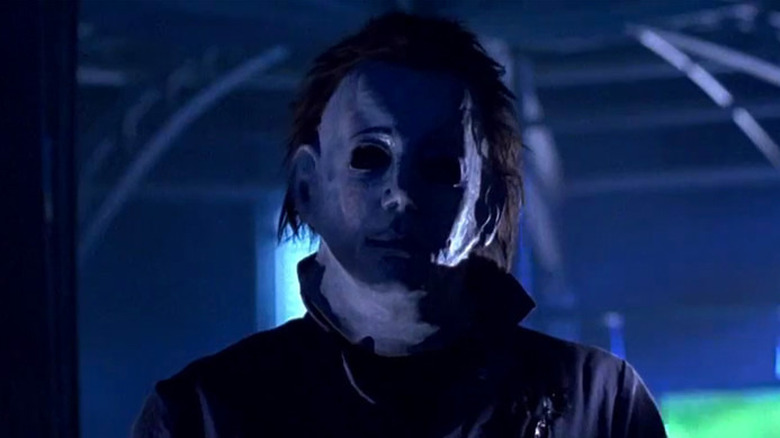
The book "Taking Shape II" also vaguely explains that at some undefined point in time, John Carpenter pitched his "Michael Myers in space" movie again. It was rejected, and that was that. Years later, Carpenter would return as a producer of David Gordon Green's "Halloween" trilogy, in addition to contributing the score for those movies.
Miramax and Moustapha Akkad eventually made "Halloween 6," entitled "Halloween: The Curse of Michael Myers." Directed by relative newcomer Joe Chappelle, it was released in 1995 and was set six years after Michael was presumed dead in a fire. Haddonfield prepares to finally celebrate Halloween again, but — surprise — Michael returns to continue his reign of terror. (It's generally considered to be one of the worst "Halloween" movies.)
The sequel had lingered in development hell for years, in part due to the rights issues, but also because Akkad and Co. couldn't figure out how best to proceed. Many versions were considered and rejected, including "Halloween 666," which had a wild plot beat involving a virtual reality ouija board. Quentin Tarantino was consulted about producing and writing another version that never came to pass. "The first 20 minutes would have been the Lee Van Cleef dude and Michael Myers on the highway, on the road, and they stop at coffee shops and s*** and wherever Michael Myers stops, he kills everybody. So, they're like leaving a trail of bodies on Route 66," Tarantino said to Consequence of Sound in 2019.
Would Carpenter's "Halloween" in space have been better than what we got? It's very difficult to say, but "The Curse of Michael Myers" led to a bit of a reboot in the form of "Halloween H20," which came out in 1998. That wouldn't have been possible if Carpenter did what he set out to do.
"Taking Shape II: The Lost Halloween Sequels" is available to buy on Amazon.