

5 Reasons Why The Mandalorian & Grogu Was A Win For Star Wars At The Box Office
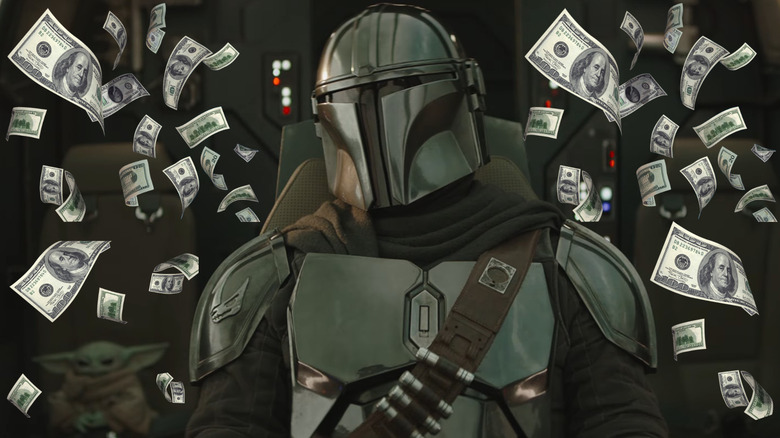
"Star Wars" is back on the big screen and, though it doesn't quite have that same feel that "The Force Awakens" had in 2015, this franchise is always a big deal. In this case, "The Mandalorian and Grogu" is shouldering the weight of being the first "Star Wars" movie in nearly seven years, dating back to the complicated $1 billion box office hit that was "The Rise of Skywalker" in 2019. So, how did it shake out? Well, it's a little complicated. At the same time, it's not all that complicated, all things considered.
Directed by Jon Favreau, "The Mandalorian and Grogu" opened with an estimated $81.9 million domestically over Memorial Day weekend. When adding in the Monday holiday, that number grows to $102 million. The movie also added a further $63 million overseas, giving it a $165 million global start. As fate would have it, the silver screen interpretation of the Disney+ TV show "The Mandalorian" carries a reported $165 million production budget.
On the one hand, it's the lowest opening for a Disney-era "Star Wars" movie, trailing slightly behind 2018's "Solo: A Star Wars Story" ($84.4 million three-day/$103 million four-day), which also opened over Memorial Day. But this film also has a lot more upside in the coming weeks/months, despite the fact that critics were largely divided on "The Mandalorian and Grogu."
So, how does this look for Disney and Lucasfilm taking the bigger picture into account? In short, it's a win on multiple fronts, even if it's not a massive win in terms of raw box office dollars. We're going to look at the biggest reasons why this movie's opening is a win for "Star Wars." Let's get into it.
Audiences absolutely loved The Mandalorian and Grogu
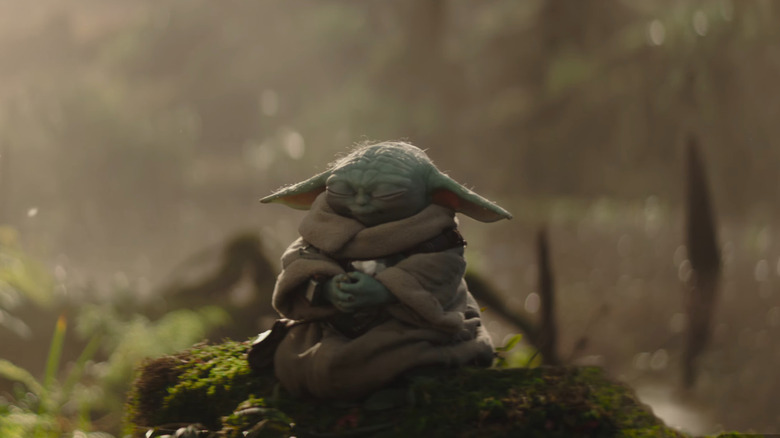
It's not unusual for critics and audiences to disagree on a movie, especially one set in the "Star Wars" galaxy. Both "The Last Jedi" and "The Rise of Skywalker" represented a pretty strong divide between those two groups. But more often than not, the general audience reception matters far more. In this case, "The Mandalorian and Grogu" may have a disappointing critics score on Rotten Tomatoes, but audiences are very much on its side.
Jon Favreau's big screen take on Mando and Baby Yoda holds a so-so 62% critical rating on Rotten Tomatoes but, more importantly, carries an 88% audience rating. That is the highest of any Disney-era "Star Wars" movie to date. "Rogue One" (87%) is close, as is "The Rise of Skywalker" (86%) and "The Force Awakens" (84%). Favreau's latest also earned a solid A- CinemaScore. This movie is very much resonating with the intended audience, which bodes very well for its prospects in the weeks to come.
The movie takes place after the evil Empire has fallen, with Imperial warlords scattered throughout the galaxy. As the New Republic seeks to establish order, they have enlisted the help of legendary bounty hunter Din Djarin (Pedro Pascal) and his young apprentice Grogu.
Whether or not "The Mandalorian and Grogu" can truly usher in a new era for "Star Wars" remains to be seen. But meeting the movie on its own terms and setting aside the unfair burden it has to carry of being the first entry in this franchise in seven years, it's resonating. People really like it. That matters a lot.
The Mandalorian and Grogu was cheap (for a Star Wars movie)
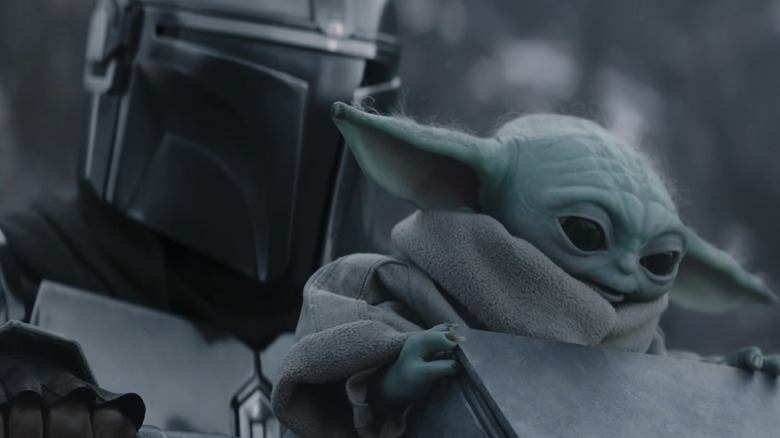
"The Mandalorian and Grogu" didn't fall victim to Hollywood's ongoing budget problem, with franchise movies often arriving with inflated budgets well north of $200 million. That makes profitability difficult. To that end, this movie's net $165 million budget is by far the lowest of any "Star Wars" movie made during the Disney era. That means the break-even number is far lower, too.
In short, this movie doesn't need to be a $1 billion box office hit like "Rogue One: A Star Wars Story." Assuming it doesn't fall of a cliff in the coming weeks (which it probably won't for reasons we'll get into), it should easily be able to make 2.5 times its budget in ticket sales (i.e. around $412 million worldwide), which has often been considered a rough metric for determining success or failure in Hollywood.
Is that low for a "Star Wars" movie? Yes. But with any ongoing franchise, the needle for success can and should be a moving target. In the same way that a cheaper DC movie like the upcoming R-rated "Clayface" shouldn't have to shoulder the same weight as "Superman," this film shouldn't need to meet the same commercial expectations as something like "The Force Awakens."
Disney and Lucasfilm, very wisely, budgeted accordingly when it came to turning "The Mandalorian" into a major motion picture. It seems like a downright bargain compared to the $650 million budget for two seasons of "Andor." That's not a knock on "Andor," which was rightly met with a great deal of praise, but getting actual financial return on that investment is tough. It's easier to see where there's money to be made here.
The Mandalorian and Grogu has way more upside than Solo: A Star Wars Story
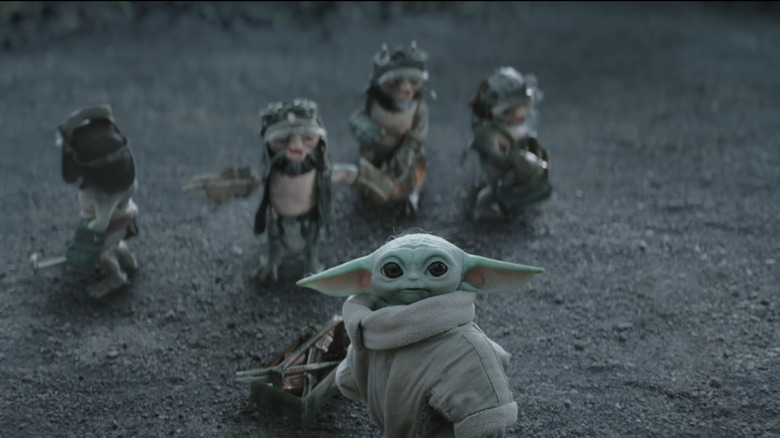
The most consistent thing that has happened in the early going when it comes to the commercial conversation surrounding "The Mandalorian and Grogu" is comparing it to "Solo: A Star Wars Story." Both movies had similar openings so, on the surface, that seems reasonable enough. However, it's not a great comparison if we dig deeper. Mostly because this film has a lot more upside than "Solo," on a longer timeline.
"Solo: A Star Wars Story" bombed at the box office in no small part thanks to its inflated $275 million budget. It made just $393 million worldwide, falling off quickly after its opening weekend. As discussed, "The Mandalorian and Grogu" has resonated with audiences far better in the early going. "Solo," for comparison, holds a 63% audience score on Rotten Tomatoes. Barring the unforeseen, this movie will have better legs than "Solo" did.
The other big thing to consider is that "Solo" was released before the pandemic upended the industry. The global box office hasn't fully recovered since then, and movies that would have previously made money have struggled. So, every film, even a "Star Wars" one, has to be graded on a bit of a curve in the here and now.
Lastly, and with all due respect, "Solo" didn't have a lot of merchandising upside. On the flip side, The Hollywood Reporter notes that Grogu, aka. Baby Yoda, has moved $1 billion worth of merch. This movie is only going to further fuel that particular fire. There's an enormous amount of money to be made beyond the box office here, more than the average blockbuster and certainly more than "Solo." That can't be ignored.
Star Wars successfully brought a TV show to the big screen
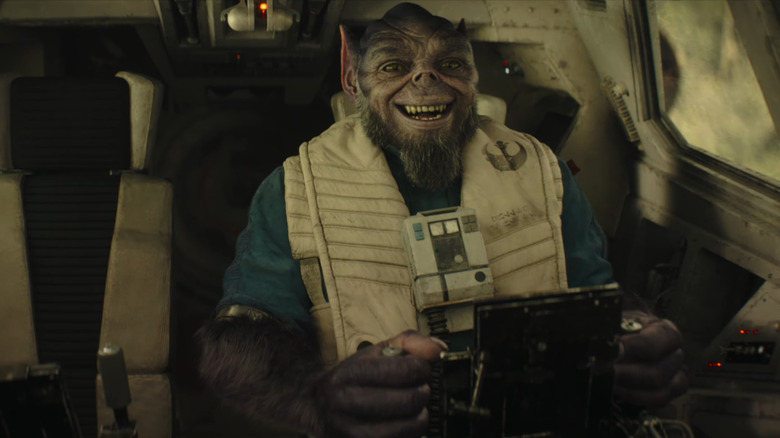
Another element that simply can't be overstated when looking at what "The Mandalorian and Grogu" did (and what it might do) is the fact that it started life as a TV series. In the streaming era, when it's harder than ever to get people to turn up for any movie, getting "Star Wars" fans to show up en masse for a film based on a TV series is impressive. Most impressive.
Some TV shows have made the jump to the big screen in the past, but it's kind of a miracle that this movie didn't suffer from a "we have 'The Mandalorian' at home" attitude from people. For all of its might, even the Marvel Cinematic Universe has struggled to make TV characters matter in its movies. "Thunderbolts*" flopped at the box office partly because of that, as did "The Marvels." It's not an apples-to-apples comparison, but it's something to consider.
This movie required a bit of homework. It's a mostly standalone adventure, yet the majority of people who saw "The Mandalorian and Grogu" watched at least some, if not all, of "The Mandalorian." They also liked it enough to pay money to see a movie centered on its characters. That sets it apart from any other "Star Wars" film before.
Every "Star Wars" movie except for "Solo" has made money for Disney so far. The difference is that "The Mandalorian" was novel because it was the first time "Star Wars" was done in live-action on TV. Bringing Mando and Grogu to the movies wasn't a guaranteed winner. This could have easily been a flop, and unless it falls off a cliff, it's not going to become one. Given the circumstances, that has to be viewed as a win.
It's all relative at the box office, even when it comes to Star Wars

The very nature of "Star Wars" being "Star Wars" sets an almost unreasonable expectation for anything connected to it. This movie almost unfairly had to shoulder the burden of seven years of expectations. But, at the end of the day, it's all relative. On paper, this film is probably going to make money and be a net positive for the franchise. A win is a win.
Moreover, this movie will probably make enough money that it would be considered worth the investment for any Hollywood studio, especially considering the vast merchandising potential. The bar for "Star Wars" can't and shouldn't be $1 billion or bust. In reality, 2002's "Attack of the Clones," once considered the low bar for "Star Wars" at the box office, may be an aspirational comparison. It opened to $80 million and got to $656 million. Again, numbers any studio would take, happily, I might add.
There's also the matter of the demographics. Many "Star Wars" fans may be missing the point with "The Mandalorian and Grogu." It's doing a lot of work to bring in younger fans, which is something the franchise sorely needs. Adults may love "Andor," but that show isn't doing a lot to entice 10-year-olds. Similarly, this movie probably is going to go a lot further to court the next generation than any Disney "Star Wars" movie this side of "The Force Awakens."
In that way, a relatively small win now could come off looking like a much bigger one in the future. At worst, it's harmless, and at best, it could help "Star Wars" thrive when its current generation of fans moves on. That's no small thing.
"The Mandalorian and Grogu" is in theaters now.