

All 7 Seasons Of The Boys & Gen V, Ranked
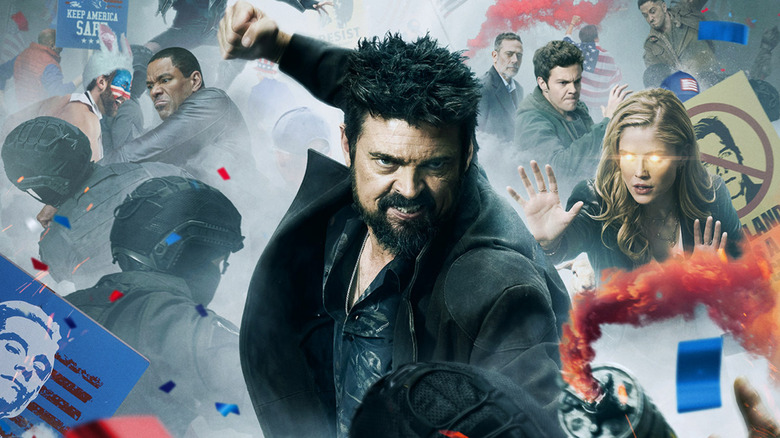
Spoilers for the series finale of "The Boys" to follow.
It's been a bloody wild ride with "The Boys," the television adaptation of Garth Ennis and Darick Robertson's superhero satire comic. During its seven-year run, "The Boys" was never less than vulgar or gruesome, but at its best, it could also be touching or insightful.
The series got to have a grand finale, one that more than delivered on Billy Butcher (Karl Urban) and Homelander's (Antony Starr) promise to share a last battle of "blood and bone." The "Vought Cinematic Universe" (VCU) franchise is going to live on with prequel "Vought Rising" and the spin-off "The Boys: Mexico," but without the parent show to anchor them. We'll see if the momentum can keep up, but now's a perfect time to instead look back.
Of the five seasons of "The Boys," and the two seasons of the now canceled spin-off "Gen V," which ones come out on top? The series had some clear high and low points, and now that we've got the complete picture, do the former moments outweigh the latter?
7. The Boys Season 4
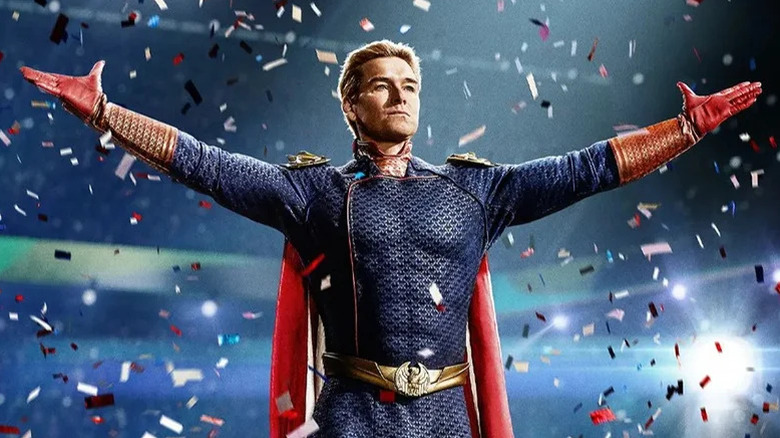
Since "The Boys" Season 4 aired, most folks have come to agree it's the show's worst season. For the harshest critics, it's where the series went entirely off the rails. It's not completely horrible (the redemption arc for Jessie T. Usher's A-Train is a highlight), but most of the criticisms do resonate.
A feeling of stalling pervades the season, like the show is recycling old conflicts or sending its characters off on dead-end sidequests. You can't have the story getting to its climax before the planned Season 5, after all!
Take Ryan (Cameron Crovetti) flip-flopping between his biological dad Homelander or his stepdad Butcher every other episode, or the subplot about Frenchie (Tomer Capone) dating Colin (Elliot Knight). It's the most inconsequential arc in the entire show, adding no lasting development and existing to only keep Frenchie and Kimiko (Karen Fukuhara) apart longer.
The longstanding issues with "The Boys" were on full display in Season 4. Take Episode 4, "Wisdom of the Ages," where Homelander goes back to the lab where he was raised to torment the scientists who poked and prodded his younger self. It's a great show-off for Antony Starr's always incredible villain performance, but it doesn't teach us anything new about Homelander or push him into a fresh direction. The political satire also began to get truly hackneyed, settling for throwing out hot buzzwords ("critical supe theory"? Really?) as if references count as insight.
The Season 4 finale is the most acclaimed episode, and even that one has problems, like the shockingly ill-conceived portrayal of sexual assault by deception. The feeling in that finale, that the show had reached its darkest hour and marched to a bloody endgame, also dissipates in hindsight because Season 5 didn't quite take advantage of the set-up. Speaking of...
6. The Boys Season 5
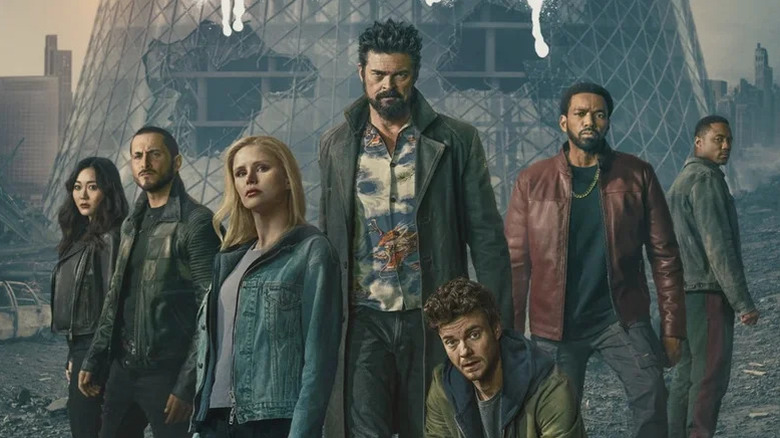
The final season of "The Boys" demonstrates how a strong start and killer conclusion can't completely redeem a sagging middle. The season premiere, "Fifteen Inches of Sheer Dynamite," is quite good, putting the narrative and action at full speed. Watching it for the first time, it felt to me like the show's writers had learned from Season 4.
But then the season kept going, and the same problems arose. The water-treading Episode 4, "King of Hell," and Episode 7, "The Frenchman, the Female, and the Man Called Mother's Milk," are particularly low points. Watching them, you start to wonder how the season will wrap everything up in the time it has left — not because it's taking risks, but because it's wasting time. Many "The Boys" fans have accused Season 5 of having "filler," and it's hard to dismiss that.
Of the slower, more character-focused episodes, only Episode 5, "One-Shots," succeeds, especially due to a knock-out performance from Valorie Curry as Firecracker. Some of the characterization itself is questionable, i.e. putting Butcher back with the Boys immediately deflates him going rogue in the Season 4 finale. Jensen Ackles is still great in his return as Soldier Boy, but his flip-flopping on how much he wants to help Homelander will give you whiplash.
The series finale, "Blood and Bone," is at least a satisfying ending, but its backloaded conclusion only highlights the rest of the season's poor time management. Homelander and Antony Starr's breakout performance ultimately proved to be something of an anchor for "The Boys" — the show kept Homelander alive as long as possible, trying to shove his defeat and Butcher's last dark turn into the finale. It's a good closing note, yet it feels like a condensed version of an even better ending that got to breathe.
5. Gen V Season 1
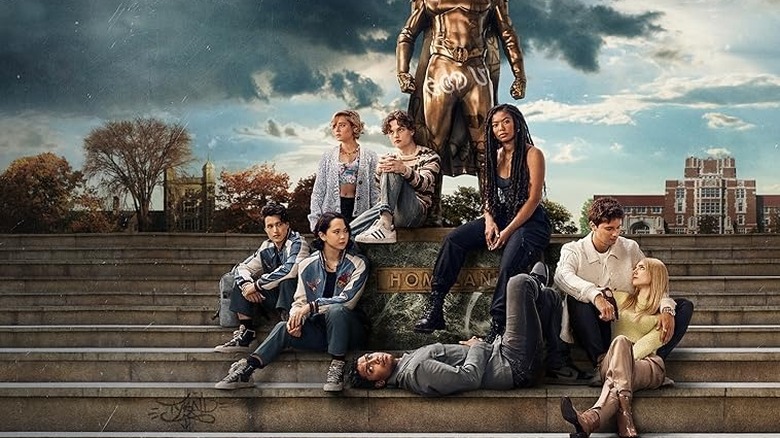
The central satire of "The Boys," both in its comic book and TV series form, is that superheroes are a moneymaker for entertainment corporations. The difference is that, unlike Marvel or DC, Vought has actual superheroes in its employ instead of just fictional characters. Think of what Butcher tells Hughie (Jack Quaid) in the very first episode, that superheroes represent "a multi-billion dollar global industry supported by corporate lobbyists and politicians on both sides."
That satire always made "Gen V" a tough sell. "The Boys" itself mocked the Marvel Cinematic Universe ad nauseam for its endless spin-offs and diminishing returns. Now, it was launching a spin-off itself, and one that was meant to build a "shared universe" of superhero stories? Unfortunately, "Gen V" was never quite good enough to overcome that contradiction itself or let us excuse it in good faith.
That fundamental compromise aside, "Gen V" Season 1 was a fun romp. It managed to offer a POV into the world of "The Boys" through younger eyes, but without toning down the excesses of its parent show. The teen cast was uniformly strong as well, particular series' lead Jaz Sinclair as Marie Moreau and Lizze Broadway as size-shifting comic relief Emma. "Gen V" isn't coming back to school next semester, so, hopefully, its cast can springboard onto brighter things.
4. Gen V Season 2
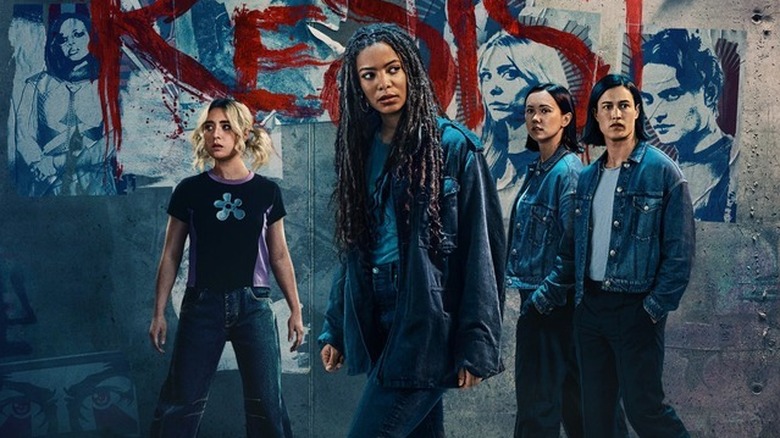
Honestly, both "Gen V" seasons are about tied; they share similar strengths, overlapping weaknesses, and a bad habit of using superhero tropes a bit too earnestly in a universe built on ripping them to shreds. What pushes Season 2 slightly over the edge? The incredible Hamish Linklater as big bad Cipher. A psychic super supremacist, Cipher is the new dean of Godolkin University and is going to make his students into their most powerful selves or kill them while trying.
Cipher steals the scene every time he appears in "Gen V" Season 2. As good as the younger actors like Jaz Sinclair are, it sometimes feels unfair putting them against an experienced master of his craft like Linklater; it's only setting them up to get outshined. Even if the character doesn't pose the same physical threat as Homelander, Linklater makes Cipher as scary as Antony Starr so often is on "The Boys." He's sinister and sardonic, and the latter quality only highlights his unnerving detachment.
Season 2 was also dealt a bad hand when it had to write around the sad death of cast member Chance Perdomo between seasons. Yet, it honored his memory, having his character Andre Anderson die offscreen so the actors could channel their all-too real grief into the season and face it head on.
3. The Boys Season 3
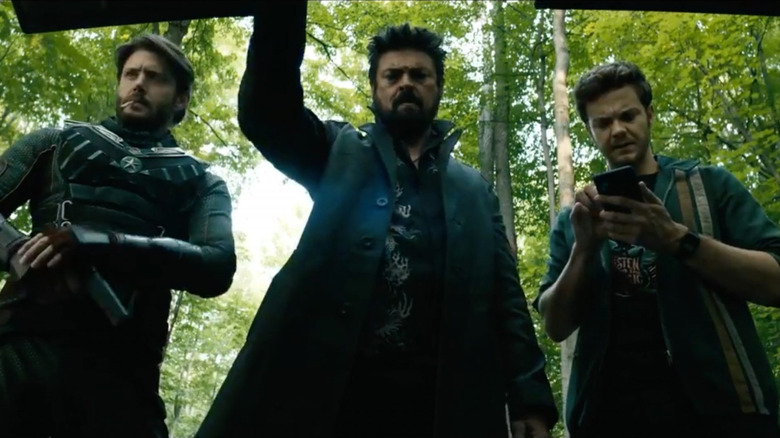
Season 3 of "The Boys" has some of the show's peaks, but its valleys also foreshadowed problems that grew in the seasons that followed.
This season introduced Soldier Boy, the gruff, foul-mouthed, and, shall we politely say, "old-school" supe. He's hardly a good guy, but he quickly became a fan favorite due to Jensen Ackles' movie star level charisma and comic timing. The season's sixth episode, "Herogasm," is still regarded as one of the best episodes of "The Boys." The show's action never got better than that episode's climax, featuring Soldier Boy and a powered-up Butcher tag teaming (pun intended) Homelander.
Homelander's own terror soared to new heights in Season 3. There was a good sense of escalation; he ended Season 2 humiliated, so, by Season 3, he was starting to snap and show his true face in public. The whole series had been building you up to dread Homelander unleashed, and it felt like the chain was finally loose.
What dings Season 3 the most is the finale,"The Instant White-Hot Wild," which chickened out on resolving the season's major conflicts. The episode also strained character motivations to make Soldier Boy the final villain when he's plainly the lesser evil than Homelander. Season 3 was when fans started asking if it was a good idea to keep Homelander around, and it's easy to see why.
In Season 3, "The Boys" also started to lose track of its supporting characters. Frenchie and Kimiko's subplots this season were largely superfluous, even if we got a fun musical scene out of it. Hughie's character arc, becoming obsessed with "saving" his supe girlfriend Annie/Starlight (Erin Moriarty) to deliver a message about toxic masculinity, is likewise a clear case of theme coming before consistent characterization to the detriment of the larger whole.
2. The Boys Season 2
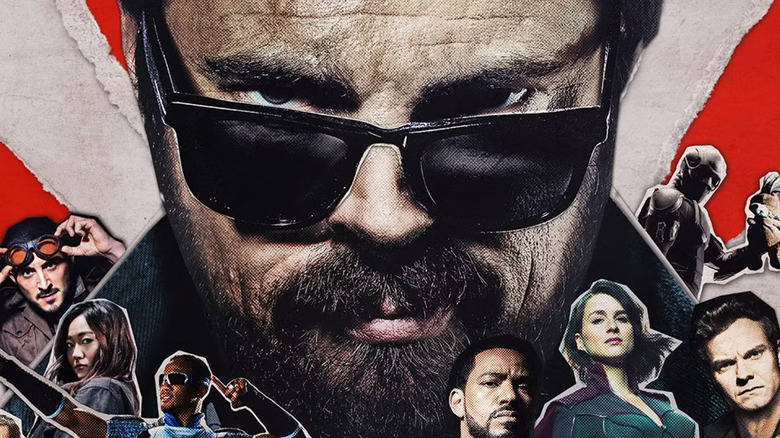
"The Boys" Season 2 had to carry on from the diabolical cliffhanger from Season 1 that Butcher's wife Becca (Shantel VanSanten) was still alive — and raising Homelander's son, Ryan. This twist, not present in the source material, allowed Season 2 to explore stories the show's source comics never did, like Homelander trying to raise a son. If there was one "The Boys" season that cemented the notion the series was "better than the comics" (which, in my experience, is a more contentious view now), it was Season 2.
The season didn't just move the existing cast into compelling new directions, it built out the show's world. Vought CEO Stan Edgar (Giancarlo Esposito) taking a full-time role offered a new kind of foil to Homelander, a mere mortal utterly unimpressed or intimidated by his powers. The season's additions further included the seemingly benevolent politician Victoria Neuman (Claudia Doumit) and the Nazi supe influencer Stormfront (Aya Cash). Some of the show's sharpest satire is its handling of how Stormfront radicalizes people over the internet.
"People love what I have to say! They believe in it! They just don't like the word 'Nazi,'" she proclaims, and it's chilling that she's not totally wrong. In turn, is there a more satisfying scene in "The Boys" than "girls do get it done" in the season finale, "What I Know," where Annie, Kimiko, and Queen Maeve (Dominique McElligott) kick the hell out of Stormfront?
Still, some cracks form in "The Boys" Season 2 as the show spins its wheels. Take the Deep's (Chace Crawford) venture into a Scientology-like cult. It's a good chance to show off Crawford's hilarious performance as a loathsome clown, but also a sign the series will keep amusing characters past their expiration date.
1. The Boys Season 1
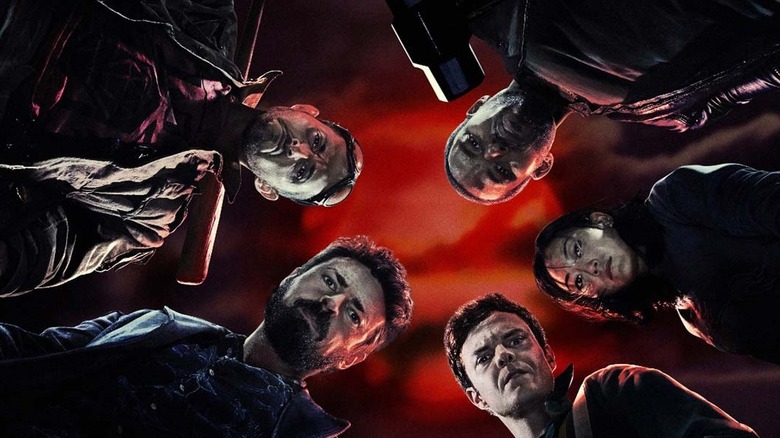
The tightest season of "The Boys" — not to mention the meanest, the grimiest, and the nastiest — was and remains its first. The stakes of the show got bigger and bigger, but the tension felt the most palpable in Season 1. The series somewhat lost sight of its fundamental premise of how terrifying it would be for normal people trying to take on superheroes. The Boys felt like underdogs this season, completely outclassed by their targets.
The supes in "The Boys" Season 1 are dangerous and depraved, while, in later seasons, they sometimes only feel like the latter. In turn, watching the Boys work out how to kill Translucent (Alex Hassell) with his diamond hard skin offered a template for episodic stories the show didn't use enough.
The comedy and satire got broader as "The Boys" went on, and Season 1 (though definitely not subtle) looks incisive in comparison. The social commentary was less about hot button trends and more about the general state of the world — corporations and celebrities evade accountability to us little people, and even when wrongdoing is exposed, they can just pivot with the right public relations, because the public resists the uncertainty of change.
Let's be real, too: Did "The Boys" ever quite surpass the scene in Season 1, Episode 4, "The Female of the Species," when Homelander leaves a crashing plane full of people to die? That's the moment that made him the most terrifying villain on TV, and no matter how much "The Boys" tried to one up it with a more and more unstable Homelander, it's hard to get more chilling than him barking, "I'll laser every f***ing one of you!"
"The Boys" and "Gen V" are streaming on Prime Video.